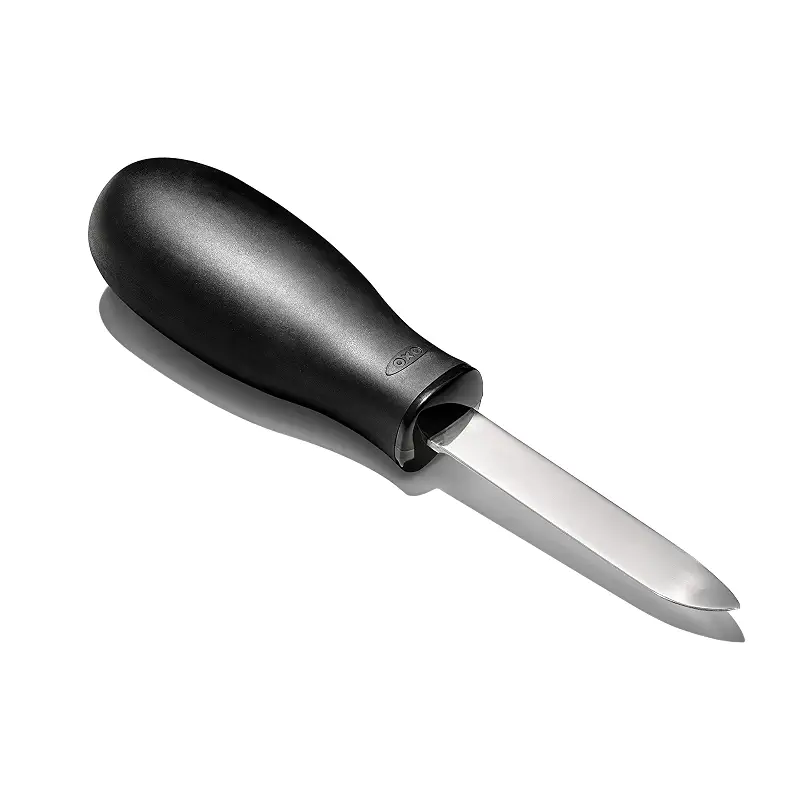
Ideal for: Beginners and home cooks opening oysters a few times a month
The OXO Good Grips strikes a balance that appeals to both beginners and experienced shuckers. The bent tip enters shells predictably, and the soft, non-slip handle doesn't fatigue your hand even after opening three dozen oysters in a row. Stainless steel won't rust if you forget to dry it right away, and the blade has enough stiffness to pry shells open without flex. Buyers consistently praise how quickly they picked up the technique with this knife: several report opening sixty oysters in under an hour after minimal practice.
The trade-off is that the blade sits thicker than some professional-grade options, which means it won't slip into tiny hinge gaps quite as easily as narrower alternatives. For soft-shell varieties or well-gapped oysters, this is rarely a problem. But if you work with densely packed East Coast oysters, you might occasionally feel that thickness when forcing the tip into a tight hinge.
Compared to specialty options like the Murphy Duxbury, the OXO prioritizes comfort and reliability over precision, making it the knife most home cooks will reach for and actually enjoy using.
Pros
Soft handle stays comfortable during extended shucking sessions
Bent tip enters shells easily and reduces shell breakage
Stainless steel resists rust and requires minimal maintenance
Cons
Thicker blade makes entry difficult on tightly-sealed oysters
Less suitable for high-volume professional use
Key features
Bent stainless steel blade with ergonomic grip
Non-slip rubber handle designed for wet-hand control
Dishwasher-safe for quick cleanup
Durable construction rated 4.7 stars across 2,700+ reviews
#2 Pick
Best for Heavy Use
Dexter Outdoors
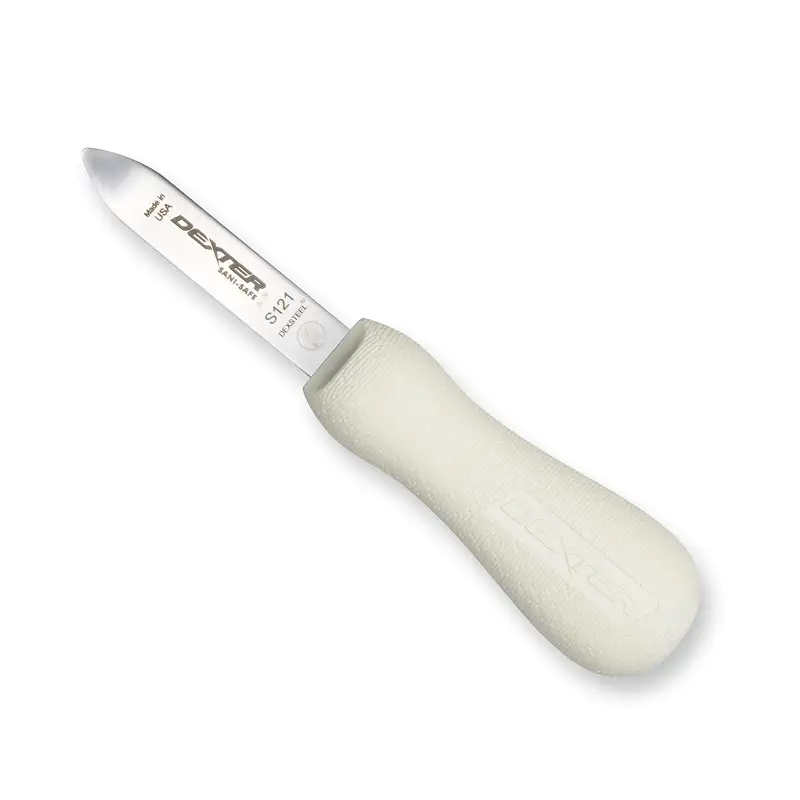
Dexter-Russell Sani-Safe 2.75" New Haven Oyster Knife, Carbon Steel | Classic New Haven pattern blade with bent tip that pops oysters open easily. Slip-resistant grip for raw bar and home use.
4.8(2,155)
Carbon steel workhorse that professionals choose for speed, consistency, and durability through thousands of oysters.
Ideal for: Professional shuckers and home cooks who open oysters frequently
The Dexter-Russell New Haven style has been the backbone of raw bars and seafood restaurants for good reason. The compact 2.75-inch carbon steel blade delivers maximum mechanical advantage: you need less force to pry shells because the leverage geometry is tighter. Rated by the best oyster opener guides as a top professional choice, shuckers who open hundreds of oysters daily consistently rank this knife at the top of their rotation, and many report owning the same one for decades without replacement.
Carbon steel does require a quick hand-dry after use to prevent surface rust, but that's a minor ritual most professionals have perfected. The blade sharpens easily, and when it eventually does dull, maintaining an edge takes minutes. The Sani-Safe handle texture grips securely even when your hands are damp and slippery from oyster juice: critical for maintaining control during volume work.
Where the Dexter differs from the OXO is in precision: the thinner, tapered tip enters even narrow hinge gaps without hesitation, and the shorter blade length gives you more torque. However, if you forget to wipe it dry, you'll find rust spots within hours. This knife demands respect and a bit of maintenance, which is fine if you're serious about oysters. For the value proposition and long-term reliability, the Dexter-Russell compares well to best yanagiba knives in how professionals view their single best tool investment: both are workhorses that repay years of faithful use.
Pros
Carbon steel blade holds a sharp edge and sharpens easily
Compact length provides superior leverage and control
Non-slip Sani-Safe handle excels in wet, fast-paced environments
Cons
Carbon steel requires hand-drying to prevent rust spots
Thinner blade may feel less forgiving to newcomers
Key features
Carbon steel bent tip designed for professional raw bars
2.75-inch blade optimized for torque and precision
Textured non-slip handle for wet-hand security
Built for high-volume daily use and long-term durability
#3 Pick
Best for Precision Shucking
UJ Ramelson Co
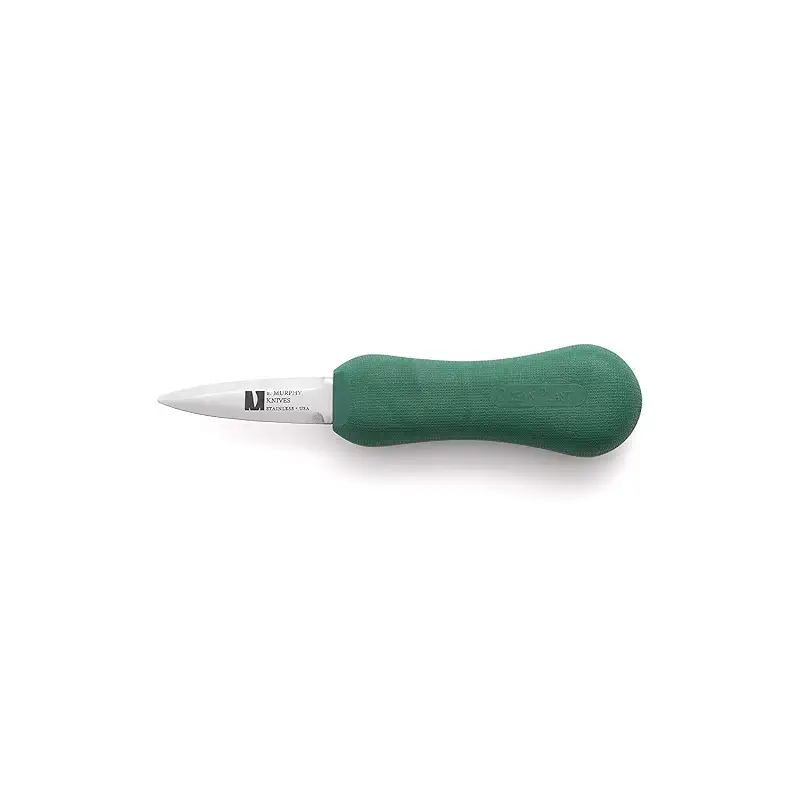
UJ Ramelson Co R. Murphy Duxbury Oyster Knife - As Seen in Bon Appetit Magazine - Shellfish Seafood Clam Shucker Tool - Made in USA
4.7(380)
Sharp, tapered tip and traditional handle excel at clean openings on small to medium oysters with minimal effort.
Ideal for: Detail-oriented shuckers who prioritize clean openings and handle small to medium oysters
The Murphy Duxbury, designed by actual oystermen at Island Creek Oysters in Massachusetts, is the knife for shuckers who value finesse over raw force. The stainless steel blade tapers to a noticeably sharper point than the OXO or Dexter models, making it almost surgical in how it wedges into tight hinges. Restaurant professionals who shuck dozens of oysters daily and care about shell integrity report this knife leaves the cleanest break lines: important when presentation matters.
The trade-off is durability under extreme force. The thinner, tapered blade is more vulnerable to breakage if you're wrestling with oversized or calcified oysters. Several high-volume shuckers mention replacing this knife every month or two versus the Dexter's multi-year lifespan. The ergonomically shaped polypropylene handle feels reassuring in the hand but occupies a middle ground, not quite as cushioned as the OXO, but precise enough to appeal to craftspeople.
If you're choosing between this and the Dalstrong Gladiator, this knife leans toward accuracy and ease of entry, while the Dalstrong opts for brute-force durability on very large specimens. For the typical home cook dealing with restaurant-quality oysters, the Murphy Duxbury will feel like a step up in control.
Pros
Tapered stainless blade enters tight hinges with minimal resistance
Shorter length gives better control for precise cuts
Made in USA with commercial-grade materials
Cons
Thinner blade is susceptible to breakage under extreme force
Less suitable for large, heavily calcified oysters
Key features
Stainless steel with sharp, pointy tip for easy hinge penetration
Ergonomic Murphy Green polypropylene handle
Shorter, sturdy blade optimized for control over leverage
Designed by Island Creek Oysters oystermen in Duxbury, Massachusetts
#4 Pick
Best Premium Option
Dalstrong
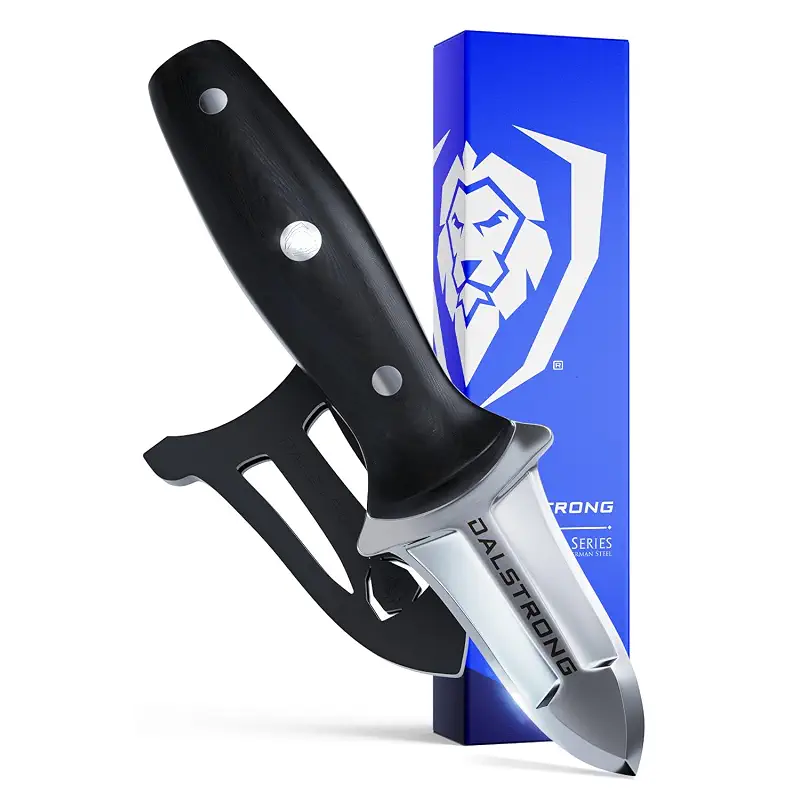
Dalstrong Clam Oyster Knife- 3” Shellfish & Oyster Shucker Clamp Knife - Gladiator Series Elite - Forged HC German Steel - Crab Eating Utensils- G10 Handle - W/Sheath- NSF Certified
4.4(328)
Heavy-duty German steel and military-grade handle deliver confidence and durability for serious seafood prep.
Ideal for: Premium tool collectors and professionals working with large, heavily-shelled oysters
The Dalstrong Gladiator Series brings a different ethos to oyster shucking: unapologetic heft and precision engineering. Forged from high-carbon German X50CRMOV15 steel, the blade is thicker and wider than most oyster knives: built to shrug off the brute-force demands of large, thick-shelled oysters. If you're working with Gulf oysters or farm-raised specimens with heavy shells, this knife excels at cracking them open without the blade flex you might feel with lighter competitors.
The G10 Garolite handle is overkill for casual home use but appreciated by chefs who respect tool quality. Triple-riveted construction and a full tang mean this knife will outlast several cheaper alternatives combined. The sheath and professional packaging suggest an investment piece rather than a utility tool.
The drawback is versatility: the thick, blunt tip struggles with tight hinge entry on smaller or softer-shell oysters, and the blade length and weight make it overkill for casual entertaining. Several reviewers note it's best paired with a thinner-tipped knife for smaller varieties. Compared to the OXO Good Grips, which adapts well to any oyster, the Dalstrong demands you match it with the right specimen size.
Pros
High-carbon German steel resists chipping and holds sharpness
Full-tang, triple-riveted construction ensures multi-decade durability
Heavy blade provides confidence when opening very large oysters
Cons
Thick, blunt tip difficult to insert into small or tight hinge gaps
Overkill for most home cooking and casual entertaining
Key features
High-carbon German X50CRMOV15 steel blade with 16-18° bevel
Full-tang one-piece construction with triple stainless rivets
Military-grade G10 Garolite handle with hand guard
Includes protective sheath and premium gift packaging
#5 Pick
Best Value Set
Wendom
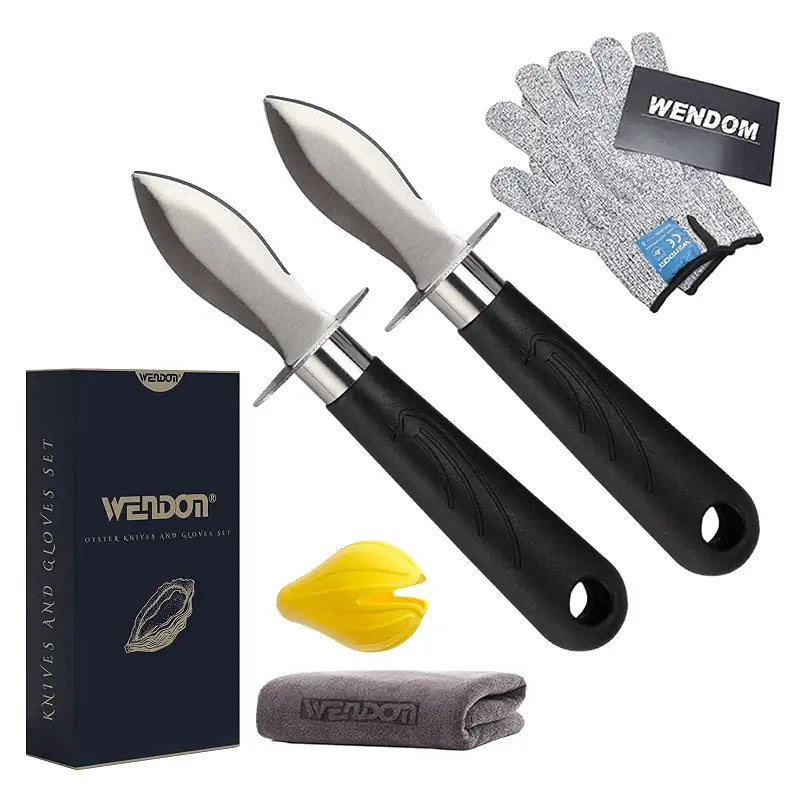
Oyster Knife Shucker Set Oyster Shucking Knife and Gloves Cut Resistant Level 5 Protection Seafood Opener Kit Tools Gift(2knifes+2Glove+1Cloth)
4.5(4,745)
Two knives, protective gloves, and cloth make this the most affordable entry point for households new to shucking.
Ideal for: First-time buyers and households seeking an affordable starter kit with safety gear
The Wendom set answers a different question: what's the cheapest way to get a household equipped to shuck oysters without sacrificing too much quality? You receive two 3CR13 stainless steel knives, a pair of cut-resistant gloves rated Level 5, a non-slip cloth, and a lemon squeezer: enough for a dinner party where guests want to try shucking themselves.
The knives themselves are serviceable but not exceptional. The blade is thick enough to avoid bending on typical restaurant oysters, and the concavo-convex handle pattern prevents slipping when your hands are wet. Many buyers report happy experiences opening two dozen oysters without issue. The gloves are genuinely useful, especially for beginners who worry about cutting themselves: they free you to focus on technique rather than grip anxiety.
The limitation is durability and precision. Under sustained pressure on very tough oysters, the blade can flex in ways that make you question whether it will snap. It's not going to break, but the feeling of flex is unsettling. The lemon squeezer included in the set is largely viewed as filler. Compared to the Dexter-Russell or Dalstrong, this knife won't last through years of frequent use, but if you shuck oysters once or twice a year for entertaining, the value proposition is hard to beat.
Pros
Includes two knives plus protective gloves for a complete setup
Non-slip handle and Level 5 cut-resistant gloves lower injury risk
Stainless steel requires no maintenance or drying
Cons
Blade flexes under sustained pressure on very tough oysters
Not built for frequent use or high-volume shucking
Key features
Two 3CR13 stainless steel knives with concavo-convex handles
Pair of Level 5 cut-resistant gloves for each person
Non-slip cloth pad and lemon squeezer included
Complete set packaged in attractive gift-ready box
How to Choose an Oyster Knife
Four trade-offs that actually matter when matching a oyster knife to your kitchen.
Blade Geometry: Tip and Length Matter
The bent tip is nearly universal, but how much it bends and how sharp it tapers separate knives by their intended use. A sharper, more tapered tip (like the Murphy Duxbury) enters tight hinge gaps with minimal force: ideal if you're opening smaller oysters or working in restaurants where shell integrity affects presentation. A blunter, thicker tip (like the Dalstrong) requires more force to penetrate but provides more confidence when applying leverage against a very large or calcified shell. Blade length also affects leverage: shorter blades (2.75 inches) give you more mechanical advantage for prying, while longer blades (3 inches and up) help you reach the adductor muscle on the bottom shell without switching tools. Choose based on the oyster varieties you'll actually be opening.
Handle Comfort and Grip for Long Sessions
If you're opening a dozen oysters, handle comfort is a minor detail. If you're opening fifty, it becomes the difference between enjoying the task and nursing sore hands. Soft, cushioned handles like the OXO reduce hand fatigue and work well for beginners learning proper technique. Textured, firmer handles like the Dexter's Sani-Safe excel in wet environments where your hands are constantly slippery: the grip texture gives you security. Military-grade materials like the Dalstrong's G10 handle are durability statements, not comfort innovations. Think about your actual use case: dinner party (go soft), regular entertaining (go textured), or high-volume work (durability matters more than cushioning).
Steel Type: Stainless vs. Carbon
Stainless steel (OXO, Murphy Duxbury, Wendom) requires almost no maintenance: wipe it dry and put it away. Carbon steel (Dexter-Russell) requires a hand-dry after every use to prevent surface rust, but it sharpens more easily and professional shuckers often prefer it because it holds a very fine edge. The Dalstrong uses premium German stainless, which resists both rust and dullness but costs more upfront. If you're a casual shuckier who might forget maintenance steps, stainless is your friend. If you shuck frequently and appreciate the ritual of maintaining a fine edge, carbon steel rewards you with superior performance. The same logic applies to specialized knives like yanagiba knives: carbon steel versions demand more care but deliver sharper, longer-lasting performance for users who commit to maintenance.
Durability: Casual Use vs. Professional Demands
A knife that opens fifty oysters per week can survive on blade stiffness and materials alone. A knife that opens three hundred per week needs a complete structural commitment. The Dexter-Russell and Dalstrong are built for that volume; they'll outlast cheaper alternatives by years. The OXO and Murphy Duxbury are reliable but not indestructible: they'll handle regular home use indefinitely but may show wear or even blade damage if pressed into daily commercial use. The Wendom set is honest about its limitations: it's designed for occasional entertaining, not professional kitchens. Match the knife's durability rating to your actual usage frequency.
Frequently asked
Quick answers to the questions readers ask most.
Do I need a special glove when shucking oysters?
Not required, but highly recommended, especially while learning. A cut-resistant glove protects the hand holding the oyster from blade slip, which is the most common injury. Many professional shuckers wear a glove on the non-knife hand as standard practice. The Wendom set includes gloves, and they're an excellent safety investment. Once you're confident with your technique, some experienced shuckers go without, but there's no shame in keeping one on.
How often should I sharpen my oyster knife?
Stainless steel knives (OXO, Murphy Duxbury, Wendom, Dalstrong) rarely need sharpening if you're only shucking occasionally: they maintain an acceptable edge for years. Carbon steel (Dexter-Russell) benefits from occasional honing and sharpening if you shuck frequently. A quick pass on a honing steel before a large shucking session keeps the edge pristine. Professional shuckers sharpen carbon steel knives monthly or more; home cooks typically never need to sharpen their knife if using stainless.
What's the best technique for entering the hinge?
Find the V-shaped hinge point at the narrow end of the oyster. Hold the oyster with the cup side down in one hand (preferably gloved) and wiggle the knife tip gently side-to-side as you apply steady downward pressure. The goal is a rocking motion, not a stab: let the blade's angle do the work. Once the tip penetrates about a quarter-inch, twist the knife to pop the shell. The exact technique varies slightly depending on oyster size and shell hardness, but the principle remains: steady pressure and controlled wiggling, not force.
Can I use an oyster knife for clams or other shellfish?
Yes, the same bent-tip design works for clams, mussels, and other bivalves, though clams often have tighter shells and benefit from a sharper tip. An oyster knife is slightly less ideal for clams because the blade may be thicker than necessary, but it's certainly usable. If you're splitting time between oysters and clams, a medium-taper blade like the Murphy Duxbury or Dexter handles both comfortably. The Wendom and Dalstrong are also marketed as multi-shellfish tools.
What happens if my oyster knife blade bends or breaks?
A minor bend doesn't affect performance if the knife still pries shells open and cuts cleanly. A serious bend or crack means replacement. Stainless steel blades rarely bend unless struck directly; carbon steel bends more easily under sustained pressure but can be carefully straightened by a professional. Professional shuckers who open hundreds of oysters daily factor in occasional blade replacement as a cost of the job. Home cooks shucking once or twice a month should never experience blade failure unless the knife was already structurally weak.