Verdict, analysis, and key features for each pick.
#1 Pick
Best Overall
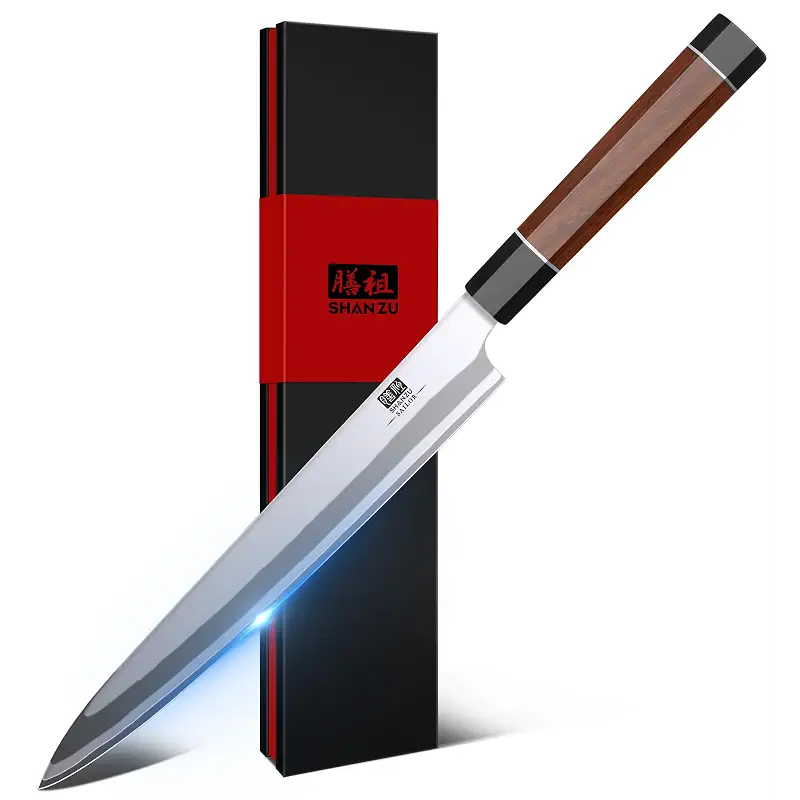
Shan Zu
SHAN ZU 10 Inch Japanese Sushi Knife, 9 Layers 10Cr15MoV High Carbon Steel | Sashimi Knife, Sharp Cutting Yanagiba Knives with Red Sandalwood Handle for Sushi Making, Slicing & Fish Knives
4.6(385)
Exceptional sharpness and build quality with a traditional yanagiba design that earns its premium position.
Ideal for: Home cooks and enthusiasts who prioritize sushi quality and want traditional Japanese design.
The Shan Zu 10-inch stands out for its nine-layer forged construction and Japanese steel core, which delivers the kind of edge retention that lets you make paper-thin slices without constant re-sharpening. The 62 HRC hardness specification signals serious material science behind the scenes. Owners consistently report that this knife cuts with minimal effort, gliding through fish and vegetables alike. The red sandalwood octagonal handle feels traditional in hand and encourages proper pinch-grip technique, which matters more than people realize when you're learning to handle a long blade.
What I appreciate about this knife is how it balances heritage design with real performance. The matte blade finish reduces fingerprints and keeps the knife looking sharp longer, a small detail that pays off during meal prep. Some reviewers note minor inconsistencies in the grind or slight blade warp on arrival, which reflects the reality that even well-made knives sometimes need a light honing stone pass before first use. This is common in this price range and doesn't undermine the knife's capability once adjusted.
Compared to the Kitchen Home non-stick option, the Shan Zu commits fully to the single-bevel yanagiba design rather than trying to be multipurpose. If you're serious about sushi, this focused approach pays off. The handle and packaging also reflect a higher-end experience, which matters if you're buying this as a gift or treating it as a centerpiece tool.
Pros
Exceptional sharpness and edge retention from premium steel
Nine-layer forged construction adds durability and corrosion resistance
Traditional octagonal handle supports proper pinch-grip technique
Matte blade reduces fingerprints and food residue
Cons
Occasional grinding inconsistencies require light honing upon arrival
Requires hand-washing and careful storage to maintain edge
Key features
9-layer forged steel core hardened to 62 HRC
Single-bevel yanagiba blade with precise 12-degree angle
Red sandalwood octagonal handle with full tang design
Matte blade finish reduces fingerprints and staining
#2 Pick
Best for Beginners
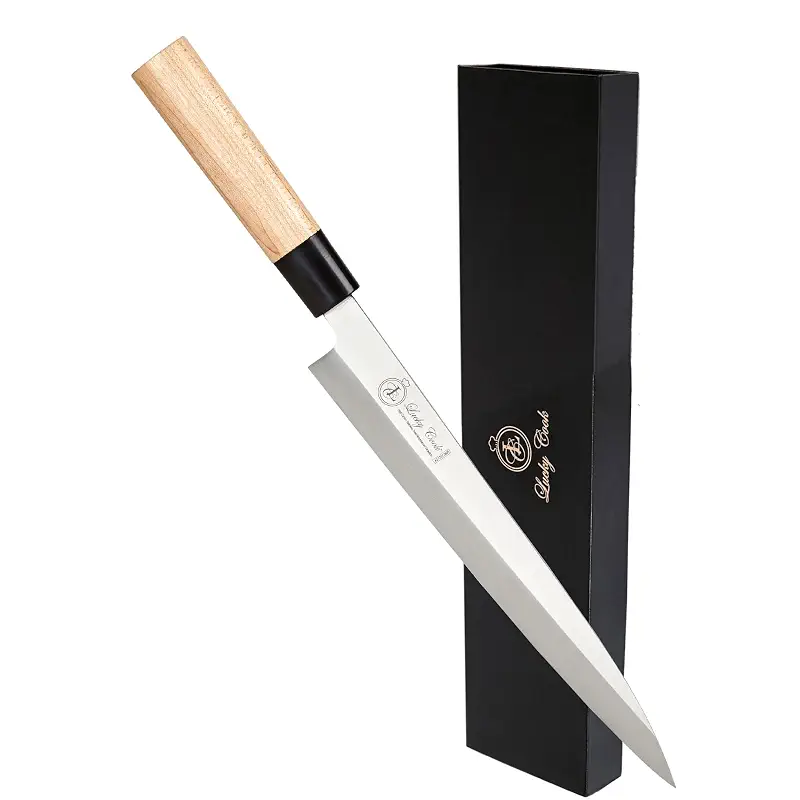
Lucky Cook
10” Sashimi Sushi Knife – Ultra Sharp Traditional Japanese Sushi Knife for Sashimi, Fish Filleting & Precision Slicing – Premium Stainless Steel Blade, Pakkawood Handle & Gift Box
4.6(2,143)
Sharp, well-balanced, and forgiving: a genuine entry point that won't disappoint as your sushi skills grow.
Ideal for: First-time sushi makers and home cooks exploring Japanese knife techniques.
The Lucky Cook 10-inch sashimi knife has built a following among people making sushi for the first time, and the reason is clear: it arrives genuinely sharp, feels balanced in hand, and cuts through rolls without crushing them. Reviewers consistently praise how little effort the blade requires, which matters when you're still learning to control pressure and angle. The single-bevel design and ergonomic Pakkawood handle make it feel more approachable than heavier, more specialized options.
What I like about this knife for beginners is that it doesn't punish you for mistakes. The stainless steel blade is forgiving about honing frequency and storage conditions compared to high-carbon alternatives. Owners report it holds an edge well across dozens of uses, and when it does dull slightly, it sharpens readily on a whetstone. The included gift box doubles as storage, which is a practical touch. One reviewer mentioned the bolster plastic shows stress cracks under heavy professional use, a fair caveat if you're planning to use this knife six hours a day in a restaurant, but irrelevant for home cooking.
Compared to the Sanmeiho option, the Lucky Cook trades slightly less exotic steel for a reputation that's built on broader user feedback and fewer quality-control variances. Both are solid choices for learners, but the Lucky Cook's larger review base and consistent experience make it easier to predict what you're getting. If you're browsing top yanagiba knives to understand the full spectrum, the Lucky Cook sits at the accessible entry point where traditional geometry meets forgiving materials.
Pros
Ships sharp and ready to use without requiring honing first
Well-balanced blade and handle reduce hand fatigue during learning
Stainless steel forgives imperfect storage and maintenance
Includes protective case and tip cover for safe storage
Cons
Plastic bolster can show stress cracks under intense professional use
Slightly thicker blade than traditional yanagiba models
Key features
Single-bevel stainless steel blade with razor-sharp 12-degree edge
Ergonomic Pakkawood handle with slip-resistant grip
Balanced weight distribution for control without excessive force
Included gift box and protective cover for blade storage
#3 Pick
Best Value
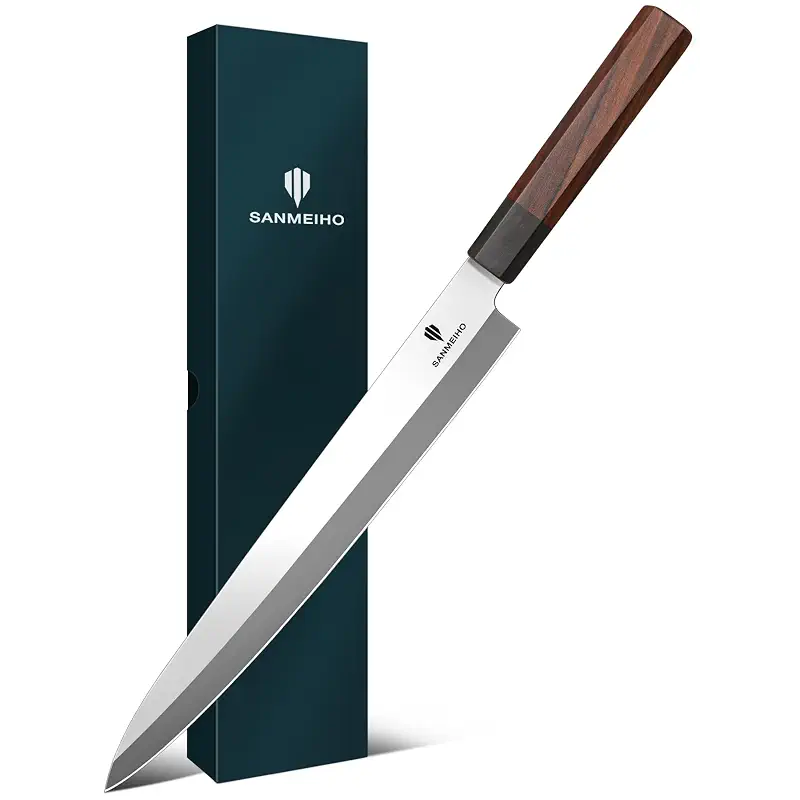
Sanmeiho
10 Inch Sushi Knife, High Carbon Japanese Steel Sashimi Knife | Japanese Knives for Fish Filleting & Slicing, Sushi Making Knives with Red Sandalwood Handle
4.6(87)
Cuts like a much pricier knife while staying accessible: solid everyday performer without compromise.
Ideal for: Budget-conscious cooks who refuse to compromise on actual cutting performance.
The Sanmeiho 10-inch delivers genuine sharpness at a price point that doesn't require justification or apology. The high-carbon Japanese stainless steel and 57 HRC hardness put this knife in the serious-tool category rather than gimmick territory. Reviewers emphasize how cleanly this blade moves through fish, vegetables, and proteins, often comparing the experience favorably to knives at double the price. The octagonal red sandalwood handle mirrors higher-end designs, so you're not sacrificing ergonomics to hit a budget target.
What stands out is consistency: owners report that this knife performs reliably across dozens of tasks without needing special care. The 12-degree cutting angle on both sides (which differs from true single-bevel yanagiba geometry) makes this slightly more forgiving than purist designs while still delivering precision cuts. The hardness means you can go longer between sharpenings. One reviewer did note it came less sharp than advertised, but also observed that after honing it became excellent: a reminder that any stainless blade in this category may need a light stone pass.
Where the Sanmeiho diverges from the Shan Zu is in steel complexity and finish quality. The Shan Zu's nine-layer forging is more elaborate and commands more attention as a design object. The Sanmeiho skips that flourish and focuses on delivering reliable cuts. For home cooks who want a workhorse rather than a display piece, this trade-off favors the Sanmeiho.
Pros
Exceptional sharpness and edge retention for the price
High-carbon stainless steel resists rust and requires minimal upkeep
Octagonal handle provides comfort and control during extended use
Dual-angle blade is more forgiving than single-bevel designs
Cons
May arrive slightly less sharp than premium options and benefit from honing
Not as elaborate or ornate as higher-end models
Key features
High-carbon Japanese 5Cr15Mov stainless steel at 57 HRC hardness
Dual-sided 12-degree cutting angles for precision without sacrifice
Red sandalwood octagonal handle with full tang construction
Ideal for both sushi cutting and general fish filleting
#4 Pick
Best Multipurpose Option
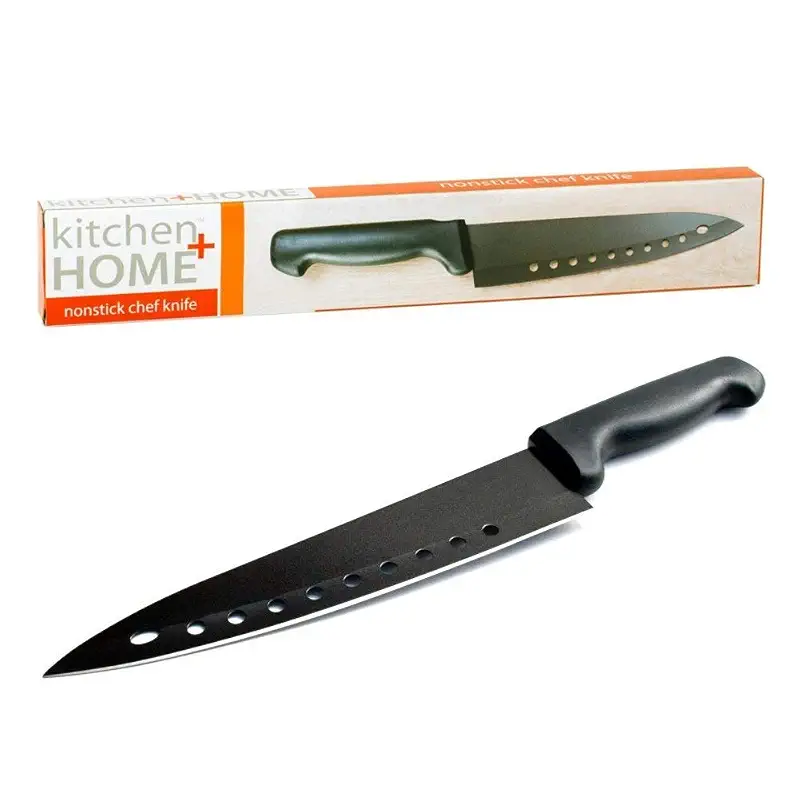
Kitchen Home
Kitchen + Home Non Stick Sushi Knife - The Original 8 inch Stainless Steel Non Stick Multipurpose Chef Knife
4.6(2,146)
Nonstick coating and aerated blade design solve the sticking problem: trade single-bevel purity for everyday versatility.
Ideal for: Home cooks who make sushi regularly and want a blade that also handles general kitchen tasks.
The Kitchen Home non-stick sushi knife solves a problem that pure yanagiba designs ignore: rice and other foods stick to the blade during cutting. The proprietary nonstick coating and ten holes along the edge physically reduce friction, which matters when you're slicing through sticky sushi rice or soft fish. Owners who use this knife for sushi report that cleanup is genuinely easier and that fewer blade-wetting pauses are needed between cuts. The thin, lightweight blade glides through delicate foods with minimal crushing, and the same qualities make it useful for slicing vegetables, cheeses, and even cooked meats.
What I appreciate is the realistic positioning: this knife doesn't pretend to be a traditional yanagiba. It's a specialized multipurpose blade that acknowledges that most home cooks want one knife to handle multiple tasks. Long-term owners (including one who's had the knife for seven years) report that the nonstick coating degrades cosmetically but never flakes or chips, and the cutting edge itself holds up remarkably well with regular honing. The handle is ABS plastic rather than wood, which is easy to sanitize and won't absorb odors, a practical trade-off for people who also use this knife for fish and garlic.
Compared to the Hoshanho chef's knife, the Kitchen Home stays lighter and more specialized toward slicing tasks, while the Hoshanho offers more weight and a wood handle for an all-purpose cutting experience. If your main use is sushi and raw fish, the Kitchen Home's nonstick focus pays dividends. If you want a single knife for chopping, dicing, and slicing everything in your kitchen, the Hoshanho's broader design makes more sense.
Pros
Nonstick coating and aerated blade design reduce sticking
Lightweight and thin for precise cuts through delicate foods
ABS handle is easy to clean and dishwasher safe
Long-lasting edge that holds sharpness with routine honing
Cons
Nonstick coating is cosmetic and degrades over time, though functionality remains
Thin blade may flex excessively on harder ingredients
Key features
Surgical stainless steel blade with PFOA-free nonstick coating
Ten holes along cutting edge reduce friction and sticking
Thin, aerated design provides lightweight control and precision
Ergonomic ABS handle resists odors and simplifies cleaning
#5 Pick
Best Premium Chef's Knife
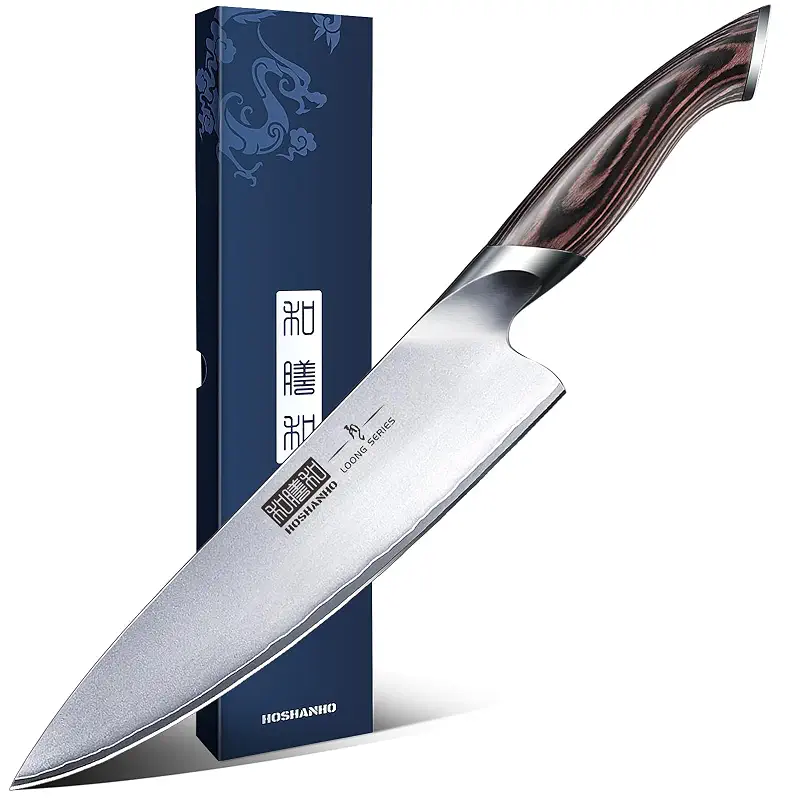
Hoshanho
HOSHANHO Kitchen Knife in Japanese High Carbon Steel, Professional High-Class Chef's Knife 8 inch, Non-slip Ultra Sharp Cooking Knives with Ergonomic Handle | Multifunctional, 10Cr15CoMoV, Home Gifts
4.7(2,722)
Sharper and more versatile than a pure sushi knife, this all-rounder earns its place in any serious kitchen.
Ideal for: Experienced cooks seeking a premium all-purpose blade that excels at sushi and everyday kitchen work.
The Hoshanho 8-inch chef's knife represents a different approach than the yanagiba or sashimi specialists: it's a general-purpose blade that happens to excel at sushi work. Made from Japanese steel at 60 HRC hardness, this knife delivers exceptional sharpness comparable to much pricier options. Owners who cook with intensity report that it cuts tomatoes and onions with gravity alone, and the 13-degree blade angle sharpened on each side gives you versatility that a single-bevel design sacrifices. The wood handle and sloped bolster actively encourage proper pinch grip, which matters whether you're cutting sushi or julienning vegetables.
What strikes me about this knife is the attention to handle ergonomics. The wood construction and curved bolster design reduce wrist strain during extended use, a detail you notice after your twentieth sushi roll or your fiftieth vegetable prep. Professional kitchen staff have adopted this knife into their personal roll, which signals that the performance isn't marketing fluff. The matte blade finish gives it a modern aesthetic without sacrificing function. Owners do emphasize hand-washing and proper storage, but that's expected with any quality steel blade and isn't a drawback unique to this knife.
Compared to the Shan Zu yanagiba, the Hoshanho sacrifices traditional single-bevel geometry to give you a blade that's equally comfortable with a rocking motion for herbs or the slice-and-pull motion for fish. If you're deciding between a specialized sushi tool and a premium all-purpose blade, understanding the best kiritsuke knife category shows how Japanese blade design branches into many specialized forms. Each shape serves different techniques, but the Hoshanho bridges those worlds more effectively than pure specialists.
Pros
Exceptional sharpness and hardness rival knives at much higher prices
Dual-angle blade works for sushi, vegetables, meat, and general cutting
Wood handle and sloped bolster encourage proper grip technique
Matte blade finish resists fingerprints and looks professional
Cons
Thicker blade than single-bevel yanagiba designs limits extreme precision
Requires hand-washing and careful storage to preserve edge quality
Key features
Japanese high-carbon steel hardened to 60 HRC
Dual-angle 13-degree blade geometry for slicing and chopping versatility
Wood handle with distinctive sloped bolster for pinch-grip support
Hand-sharpened factory edge ready for immediate kitchen use
How to Choose the Right Sushi Knife
Four trade-offs that actually matter when matching a knife for cutting sushi to your kitchen.
Single-Bevel vs. Double-Bevel Blade Geometry
Traditional Japanese sushi knives use single-bevel design, where the blade is sharpened on one side only. This creates an extremely acute angle that lets you make paper-thin slices with minimal effort. Double-bevel blades, sharpened on both sides, are more forgiving for learners and work across more cutting styles. Single-bevel designs demand proper technique and more frequent honing, but deliver unmatched precision for sushi. If you're choosing your first knife, a double-bevel or multipurpose option may suit you better than committing to the single-bevel yanagiba geometry right away. As your skills grow, a true single-bevel knife becomes more rewarding.
Steel Type and Hardness Matter for Edge Retention
High-carbon stainless steel (typical in this category) balances sharpness with corrosion resistance, making it forgiving for home cooks who won't baby the blade. Look for hardness ratings between 57 and 62 HRC: higher hardness means the edge lasts longer but requires more careful honing. Japanese or similar specs indicate decent quality without requiring professional sharpening expertise. Carbon steel alternatives are sharper but rust easily and demand obsessive maintenance. For sushi work, stainless or stainless-blend steel keeps you out of trouble.
Handle Comfort Directly Affects Your Cuts
A sushi knife blade is only as good as your grip on it. Wood handles (sandalwood, pakkawood) offer warmth and tactile feedback that plastic can't match, and they encourage proper pinch grip by their shape. Octagonal handles naturally align your hand, while sloped bolsters (the metal guard) actively support the finger position for control. The blade should feel like an extension of your arm, not a tool you're fighting. Spend time feeling different handles before buying: the weight distribution and balance point matter more than specs on paper. When exploring specialized options like best yanagiba knives, you'll notice handle design is central to how each knife controls during the pull-slice motion.
Maintenance Reality: Sharpness Doesn't Last Forever
Every sushi knife in this category arrives sharp but will dull with use. How fast depends on what you cut and how often, but expect to hone every few weeks if you make sushi weekly. The good news is that most of these knives are designed for home honing with a whetstone: they don't require professional sharpening to regain an edge. Hand-washing and prompt drying matter far more than you might expect; even stainless steel can spot if left wet. If you're unwilling to maintain a blade, consider the sushi knife vs chef knife comparison, as different tools have different upkeep demands.
Blade Length and Weight Shape Your Technique
Most sushi knives cluster around 10 inches, which gives you enough length to make clean cuts through a whole roll in one smooth motion. Longer blades let the knife do more of the work; shorter ones demand faster hand motion. Weight varies between light multipurpose designs and heavier traditional yanagiba models. A lighter blade suits quick, precise cuts on delicate fish; a heavier blade lets gravity help you cut through rice without pressing down. Your arm strength and cutting style determine which feels natural. Try holding different weights in a shop if possible: what feels balanced to you will shape which knife becomes your daily workhorse.
Frequently asked
Quick answers to the questions readers ask most.
Can I use a regular chef's knife for sushi instead of buying a specialty knife?
You can, but you won't get the same results. A standard chef's knife is thicker and heavier, and its blade geometry is designed for rocking and chopping rather than the smooth pull-slice motion sushi demands. You'll crush rice rather than cut cleanly through it, and the wider blade makes fine sashimi slices harder to achieve. A sushi knife's thin, long blade and shallow angle let you work with less pressure, which matters when handling delicate raw fish. If you make sushi once a year, a chef's knife suffices. If you do it regularly, a proper sushi knife changes the experience.
How often do I need to sharpen a sushi knife?
Frequency depends on use and what you cut, but expect honing every 2–4 weeks if you make sushi weekly. Honing (using a whetstone) realigns the edge without removing metal and takes 5–10 minutes. Sharpening (removing metal to create a new edge) happens less often, maybe once or twice a year. Most sushi knives in this guide respond well to home honing with a basic whetstone: you don't need professional service unless you damage the blade. Hand-wash and dry immediately after use to avoid spotting and extend time between sharpenings.
What's the difference between a yanagiba and a sashimi knife?
Yanagiba is a specific Japanese knife design with a single bevel and octagonal handle, traditionally used for fish preparation. Sashimi knife is a broader category that includes yanagiba but also other single or double-bevel designs meant for slicing raw fish. All yanagibas are sashimi knives, but not all sashimi knives are traditional yanagiba. If you see a knife labeled yanagiba, you're getting the heritage design with traditional ergonomics. If it says sashimi knife, it might offer more variety in handle style and blade geometry.
Is stainless steel or carbon steel better for sushi knives?
Stainless steel is better for home cooks. It resists rust and staining, forgives imperfect drying, and requires less obsessive maintenance. Carbon steel gets sharper and holds an edge longer, but it rusts if stored damp and develops patina that some people love and others find fussy. For sushi specifically, stainless-blend options (like ) give you most of the sharpness benefits of carbon steel without the corrosion anxiety. Unless you're willing to hand-dry and oil your blade after every use, stainless or stainless-blend keeps the knife enjoyable rather than demanding.
Do I really need to hand-wash a sushi knife, or can it go in the dishwasher?
Hand-wash only. Dishwashers expose the blade to high heat, alkaline detergents, and contact with other items, all of which dull the edge and can damage the handle. The thermal cycling also stresses the steel. A sushi knife's value comes from its sharpness, and the dishwasher undoes that in a single cycle. Rinse under warm water immediately after use, dry with a soft cloth, and store it flat or on a magnetic strip. It takes 30 seconds and keeps your knife sharp for months longer than dishwasher use would.