Best Knife to Cut Squash: Nakiri, Santoku & Watermelon Blades
Find the best knife for cutting squash. Compare nakiri, santoku, and specialty watermelon knives for hard winter squash prep. Top-rated options reviewed.
Verdict, analysis, and key features for each pick.
#1 Pick
Best Overall for Squash
Paudin
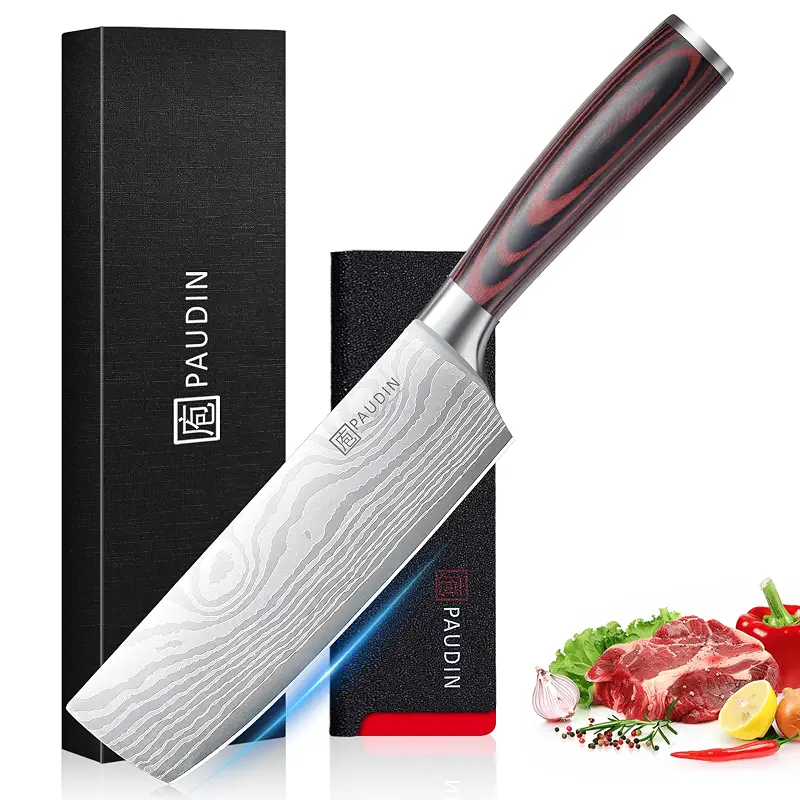
PAUDIN Nakiri Knife - 7" Razor Sharp Meat Cleaver and Vegetable Kitchen Knife, High Carbon Stainless Steel, Multipurpose Asian Chef Knife for Home and Kitchen with Ergonomic Handle
4.6(4,821)
The flat-blade design and sharp edge make quick work of hard squash without slipping or requiring excessive force.
Ideal for: Home cooks who prepare squash and root vegetables regularly and want a single reliable blade.
The Paudin Nakiri is the standout choice for squash specifically. Its wide, rectangular blade and flat profile are engineered for the push-cutting motion that works best on dense vegetables, and buyers confirm it shines on butternut and other winter squash. One reviewer reported slicing a large butternut squash upright from top to bottom with ease, something they'd never managed with any other blade including a much pricier chef's knife. The nakiri's design keeps your fingers safely away from the blade while you work, and the flat edge reduces the slipping that often happens when trying to saw through hard rinds.
What makes this nakiri particularly effective is the combination of sharpness and blade geometry. The 5Cr15Mov stainless steel at 56+ hardness holds an edge well, but it's the wide surface that genuinely transforms squash prep. The slight downward rock motion after you've started the cut is all it takes. The wave pattern on the blade reduces friction, so food doesn't bind as you work: helpful when you're dealing with dense, sticky flesh.
The trade-off is that this knife isn't designed for hard, frozen materials or anything with bones. If you're trying to hack through a frozen squash, you'll want something different. Also, high-carbon stainless steel requires hand-washing and immediate drying; neglect that and you risk discoloration. But for daily fresh-vegetable work, the maintenance is straightforward.
Pros
Razor-sharp edge cuts hard rinds without slipping
Wide flat blade design built for push-cutting motion
Requires immediate hand-washing and drying to maintain finish
Not designed for frozen or bone-containing foods
Key features
7-inch blade in high-carbon 5Cr15Mov stainless steel, 56+ hardness
Wave-pattern surface reduces food friction and sticking
Flat rectangular profile optimized for push-cutting vegetables
Ergonomic pakkawood handle with integrated balance at pinch point
#2 Pick
Best Premium Build Quality
Hoshanho
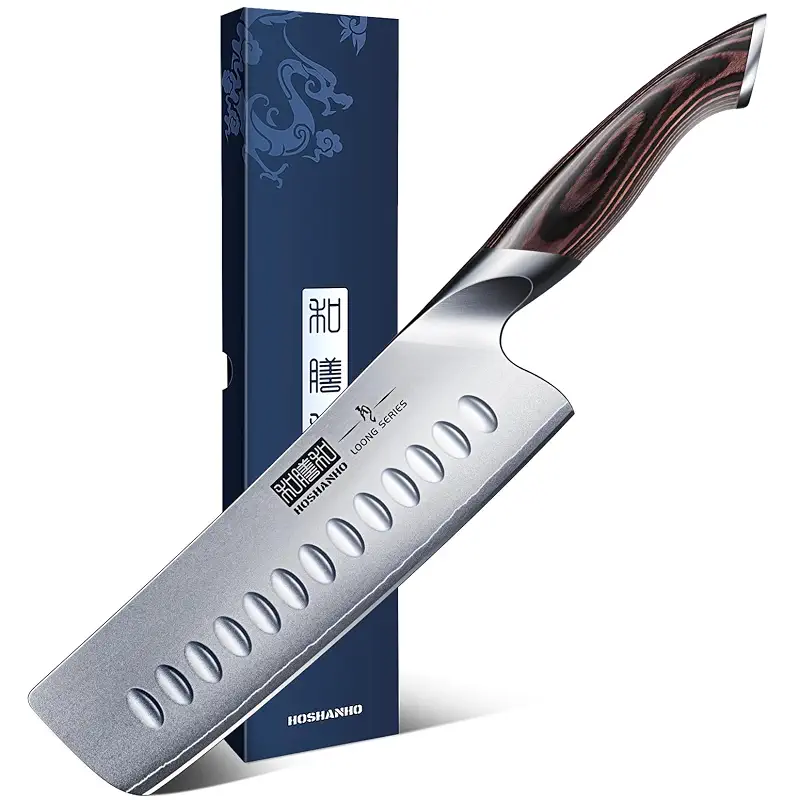
HOSHANHO 7 Inch Nakiri Knife, Ultra Sharp Japanese Kitchen Chef Knife | Multipurpose Japanese High Carbon Stainless Steel Meat Vegetable Sharp Kitchen Knife with Ergonomic Pakkawood Handle
4.7(1,849)
Japanese-grade 10Cr15CoMoV steel and hand-polished 15-degree edge deliver superior durability and sharpness retention.
Ideal for: Regular home cooks seeking premium steel and durability without professional-grade cost.
The Hoshanho nakiri steps up the material game with Japanese high-carbon stainless steel (10Cr15CoMoV) that hardens to 60 HRC after vacuum heat treatment, compared to the Paudin's 56+. That extra hardness translates to longer edge retention between sharpenings: meaningful if you prep vegetables daily. The hand-polished 15-degree edge angle comes sharper out of the box, and owners consistently note how long it holds that sharpness through regular use.
For squash work, the blade dimensions and flat profile are nearly identical to the Paudin, so you get the same push-cutting advantage. The main difference lies in the craftsmanship and material longevity. Buyers who own multiple Japanese knives (and some who own expensive brands) report being surprised by how well this one performs for the price point. The scallop-shaped hollow pits on the blade are more than aesthetic; they create tiny air pockets that help release food during slicing, reducing sticking on sticky ingredients like raw squash flesh.
If you're willing to invest a bit more for better steel and expect to use this knife heavily over years, the Hoshanho justifies the step up. The handle ergonomics and balance are excellent, and the overall feel is noticeably more refined than entry-level options. The downside: like any high-carbon blade, it demands proper care, and that steeper price point matters for casual users.
Pros
60 HRC Japanese steel holds edge longer than standard stainless
Ideal for: Cooks who buy whole, large watermelons, pumpkins, and winter squash and want to handle them in one or two clean cuts.
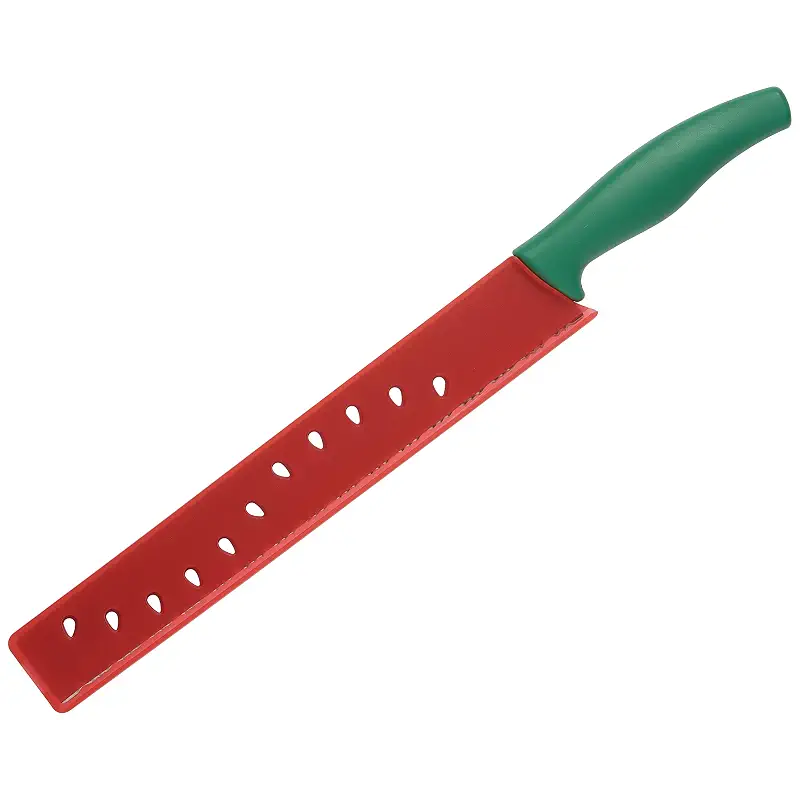
The Kuhn Rikon watermelon knife occupies a different niche than the nakiri blades. If your squash challenge is sheer size (think cutting a whole pumpkin or watermelon in half, then into wedges) this long serrated blade excels where a 7-inch knife would require multiple passes. The serrated edge glides through firm skin and tough flesh without tearing, and the length means you can execute one clean, controlled stroke across the whole fruit from edge to edge.
Owners rave about the leverage this knife gives you. One reviewer who'd been dreading watermelon prep for years said this tool made the job "a breeze" and produced perfectly even slices. The serrated teeth stay sharp far longer than you might expect, and the lightweight design keeps hand fatigue minimal despite the long blade. For squash specifically, it works beautifully on butternut, acorn, and kabocha when you need to halve or quarter the whole fruit before detailed cutting. One buyer even uses it to slice sourdough bread, proving its versatility.
Compared to the nakiri options, this is specialized rather than multipurpose. If you're cutting pre-halved squash into cubes for roasting, the nakiri does that job faster. But for whole-fruit butchering (particularly those monster winter squashes) the Kuhn Rikon's length and serration are unbeatable. The trade-off is that serrated blades require different maintenance and can't be honed the same way as straight edges.
Pros
12–16 inch length cuts whole large fruit in single smooth stroke
Serrated edge grips firm rinds without crushing soft flesh
Stays sharp for years with proper storage in protective sheath
Cons
Specialized tool; less versatile for detailed vegetable prep or meat
Serrated edge requires different maintenance than straight blades
Key features
12–16 inch serrated blade designed for thick-skinned large fruit
Comes with protective sleeve to maintain sharp serration
Works equally well on watermelon, melon, pumpkin, and root vegetables
#4 Pick
Best Value Nakiri
Matrlvibe
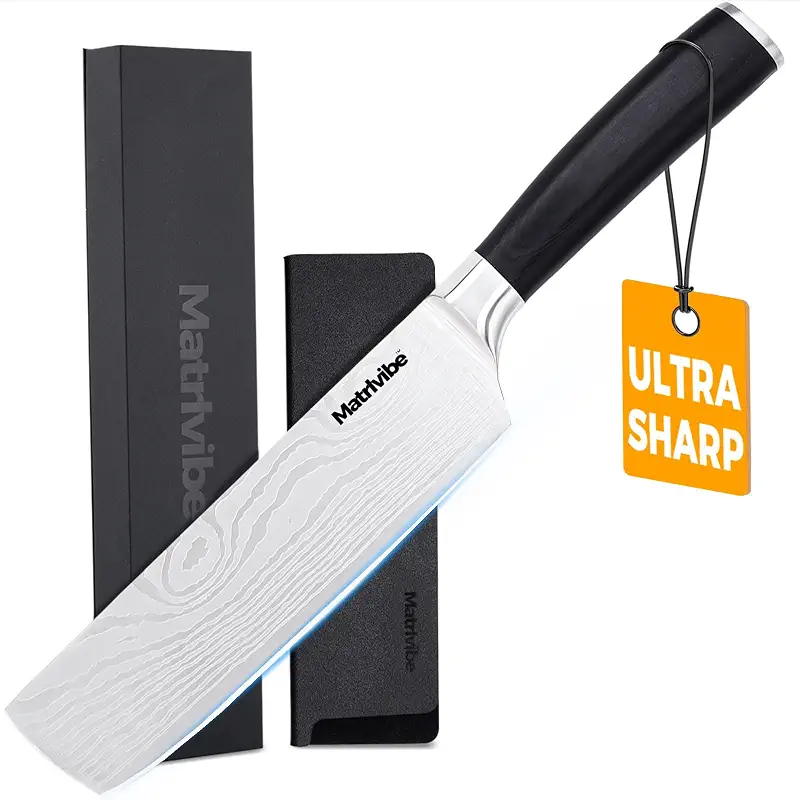
7" Nakiri Knife Ultra Sharp Kitchen Knife For Meat and Vegetable | High Carbon Steel, Economic Handle, with Premuin Gift Box and Sheath, Ideal Gift for Men and Women
4.6(210)
Solid 5Cr15mov steel with hand-sharpened edge and gift packaging delivers nakiri performance at an accessible price.
Ideal for: Budget-conscious home cooks wanting a nakiri's squash-cutting advantage without premium-steel cost.
The Matrlvibe nakiri offers a straightforward value proposition: you get the nakiri blade geometry for squash cutting at a lower entry price than the Hoshanho, though not quite as aggressively priced as the Paudin. The 5Cr15Mov steel (matching the Paudin's material) is hardened to 56–58 HRC and hand-sharpened to 15 degrees on each side, which puts sharpness right in the competitive range. Buyers report that it cuts carrots and potatoes "like butter" and handles meal prep vegetables with ease.
What sets this option apart is the presentation and completeness of the package. It arrives in an elegant gift box with a protective sheath, making it suitable for gifting without additional wrapping. One reviewer who received it as a gift found it so well-balanced and sharp that they wished they'd bought it for themselves. For someone starting a new kitchen or replacing worn blades, the included sheath is a practical plus: proper storage directly affects blade longevity.
Where this nakiri diverges from the Paudin and Hoshanho is in the buyer-signal volume. With only 210 reviews versus thousands for the other options, long-term durability data is less robust. Some early owners note it's "a little on the heavy side," though that's a personal preference. One reviewer with expensive Hatori knives costing ten times more felt this blade was sharper (a compelling endorsement) but another mentioned the edge needed work on ripe tomatoes out of the box. For squash specifically, the blade design is sound and the sharpness is there; just keep expectations calibrated to the price point.
Ideal for: Home cooks seeking a versatile all-purpose blade for vegetables, meat, and fish rather than squash-specific cutting.
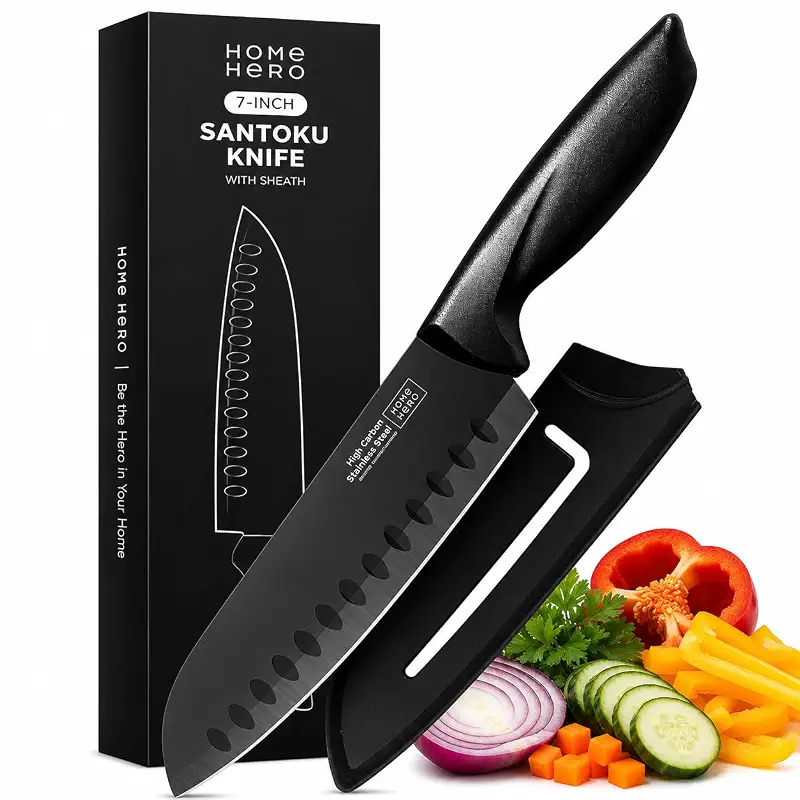
The Home Hero santoku takes a different approach from the broad-bladed nakiri designs. A santoku's narrower, pointed profile excels at slicing and precision dicing: ideal for fine vegetable work, fish, and meat. The nonstick 3Cr13 stainless-steel blade prevents food from clinging during cuts, which sounds helpful but is less critical for squash than for sticky proteins or softer produce.
For squash cutting, the santoku occupies a middle ground. One buyer in the Paudin reviews mentioned that before buying the nakiri, they'd relied on a santoku for tough vegetables like butternut and sweet potato, and it worked, but not as "handily or easily" as the nakiri. The santoku's narrower blade means you're relying more on rocking motions and fine-cutting technique rather than the nakiri's direct, flat-surface push. If you're comparing the nakiri versus santoku for squash, the nakiri wins on pure efficiency and safety, because it keeps your hand further from the blade path.
That said, if you're building a complete kitchen toolkit and want one blade that handles vegetables, meat, and fish equally well, the santoku's versatility makes it a pragmatic choice. The Home Hero set is extremely popular (60,000+ reviews) and buyers consistently praise sharpness and edge retention. The nonstick coating genuinely helps with prep speed on softer items. But if squash is your primary pain point, the nakiri or watermelon knife will solve that problem more directly than a santoku.
Pros
Nonstick blade coating prevents food sticking during cutting
Narrow pointed tip enables precise dicing and detail work
Excellent edge retention with proper hand-wash care
Cons
Narrower blade requires more technique on hard, dense squash
Lightweight feel may feel less secure for heavy-duty chopping
Key features
7-inch santoku blade in 3Cr13 high-carbon stainless steel
Nonstick coating reduces food sticking and speeds cleanup
Narrow pointed blade design for precision slicing and dicing
Includes protective sheath and ergonomic handle for comfortable grip
How to Choose a Knife for Cutting Squash
Four trade-offs that actually matter when matching a knife to cut squash to your kitchen.
Blade Shape and Squash-Cutting Mechanics
The blade shape determines how you'll attack the squash. A nakiri's flat, wide rectangular profile uses a downward push-and-rock motion that doesn't require brute force or the slipping hazard of a knife angled to the side. A santoku's narrower blade demands more rocking and technique. A watermelon knife's length lets you cut through a whole fruit in one stroke. For safe squash cutting techniques, the flat-blade designs give you the best control. If you're working with whole large squash, length matters more than shape; if you're cubing pre-halved squash, the nakiri's design wins.
Steel Quality and Edge Retention
High-carbon stainless steels (5Cr15Mov, 10Cr15CoMoV) hold an edge longer than softer stainless grades and resist rust better than carbon-only steels. The hardness rating (HRC) indicates how long the edge lasts: 56 HRC holds up well for home cooking; 60 HRC lasts noticeably longer between sharpenings. If you prep vegetables multiple times a week, investing in higher hardness pays off. Serrated blades, like the watermelon knife, retain their teeth-shaped edge for years but require different maintenance than straight blades. Consider your use frequency and how often you're willing to hone or sharpen.
Handle Comfort and Fatigue
A comfortable grip and proper balance reduce hand and wrist fatigue during repetitive cutting. Pakkawood handles (used on most nakiri options here) offer durability and a warm feel, while nonstick-blade santoku handles tend to be lightweight plastic. If you have arthritis, smaller hands, or do extended prep work, test the weight distribution: a blade should feel balanced at the pinch point (where thumb and index finger grip), not heavy at the tip. The right handle makes the difference between enjoying meal prep and dreading it.
Maintenance and Care Reality
All of these knives require hand-washing and air-drying immediately after use. High-carbon stainless steel can discolor if left wet. Serrated blades should stay in their protective sheath. A nakiri versus santoku for squash (or any blade choice) assumes you'll hone it regularly on a sharpening steel (quick, between meals) and occasionally sharpen it (less frequent, when honing stops working). If you're unwilling to hand-wash and dry a knife within minutes, or if you want truly minimal maintenance, you might reconsider the investment.
Single Blade vs. Specialty Tool
A nakiri or santoku handles dozens of kitchen tasks beyond squash: slicing meat, dicing onions, prepping herbs, even scoring bread. A watermelon knife does one job exceptionally well but won't help with tomatoes or herbs. The best knife to cut squash depends on whether you want a workhorse multipurpose blade (nakiri) or a specialist tool (watermelon knife). Most home cooks benefit from one strong nakiri in rotation; those buying whole giant squash often add the watermelon knife as a dedicated companion.
Frequently asked
Quick answers to the questions readers ask most.
Can I use a chef's knife instead of a nakiri for squash?
You can, but a chef's knife forces you to use a rocking or slicing motion on the knife's angled edge, which creates slipping and requires more force on hard rinds. Buyers consistently report that even expensive chef's knives pale in comparison to a nakiri for squash specifically. The nakiri's flat profile and wide blade are engineered for the pushing motion that dense vegetables need, so you'll find the work faster and safer with the right tool.
What's the difference between a nakiri and a santoku for vegetable prep?
Both are Japanese-origin blades, but they're designed for different jobs. A santoku's narrower, pointed shape excels at fine slicing, dicing, and detail work on softer vegetables, fish, and meat. A nakiri's wider, flat blade is optimized for push-cutting and chopping dense vegetables like squash, potatoes, and carrots. For nakiri versus santoku for squash, the nakiri wins on efficiency; for overall kitchen versatility and fish or meat work, the santoku edges ahead.
How sharp does a squash knife need to be?
A truly sharp blade reduces the force required and makes the job safer: you're less likely to slip. All of these options arrive razor-sharp and maintain that edge well with proper care. A dull blade actually increases injury risk because you apply more pressure and lose control. If a blade starts requiring excessive force after weeks of use, hone it on a sharpening steel (10–20 strokes per side) before each meal or every few uses.
Can these knives go in the dishwasher?
No. All of these blades are high-carbon or stainless-steel with nonstick or pattern finishes that dishwashers will damage. Hand-wash with warm soapy water and dry immediately with a soft cloth. This takes 30 seconds and is the best investment in keeping your blade sharp and rust-free. Proper storage on a magnetic strip (not in a drawer) also protects the edge.
Which knife should I buy if I only prep squash occasionally?
If you buy whole watermelons or pumpkins once or twice a season, the Kuhn Rikon watermelon knife is your best bet: it does that specific job beautifully and won't collect dust. If you prep diced squash every couple of weeks alongside other vegetables, a nakiri (Paudin or Hoshanho) is the smarter investment because it handles carrots, onions, and peppers just as well. Start with what you'll use most, then add specialty tools as your cooking evolves.