Best Japanese Sushi Knives for Sashimi & Fish Slicing
Find the best Japanese sushi knives for clean, precise slicing. Compare top-rated yanagiba blades with expert guidance on blade steel, handle design, and performance.
Verdict, analysis, and key features for each pick.
#1 Pick
Best Value Overall
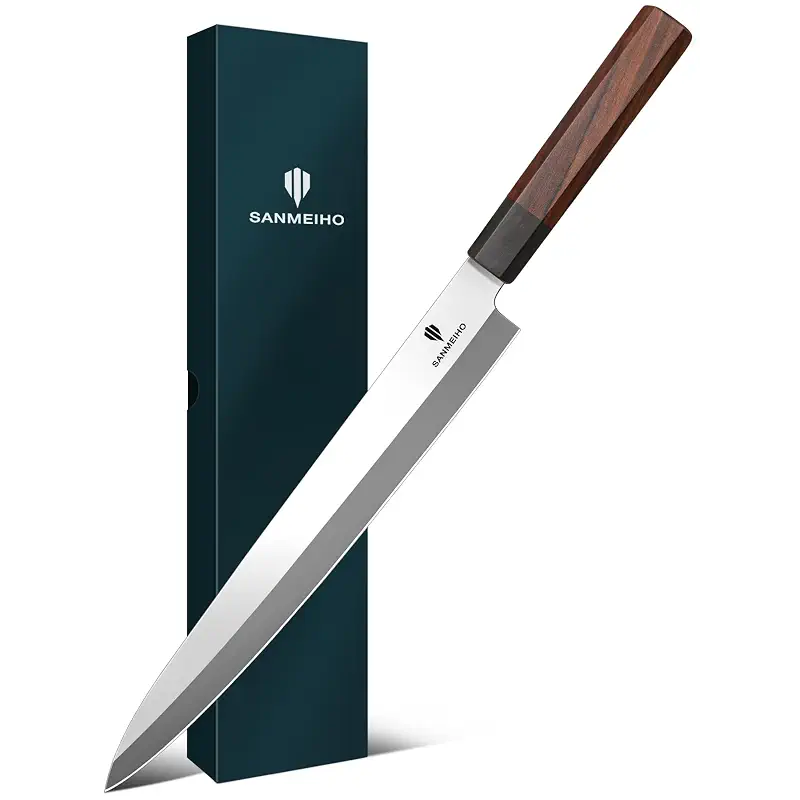
Sanmeiho
10 Inch Sushi Knife, High Carbon Japanese Steel Sashimi Knife | Japanese Knives for Fish Filleting & Slicing, Sushi Making Knives with Red Sandalwood Handle
4.6(87)
Excellent daily-use sushi knife with genuine sharpness and comfortable grip at an entry-level investment.
Ideal for: Home cooks starting with sushi, budget-conscious buyers seeking daily-use reliability.
The Sanmeiho 10-inch strikes the balance most home cooks need. Its 5Cr15Mov steel core hits 57 HRC hardness, which puts it in the sweet spot for edge retention without requiring obsessive maintenance. The octagonal red sandalwood handle feels substantial in hand, and the full-tang construction means the blade won't separate over time. Buyers consistently report that it arrives genuinely sharp and slices through fish with minimal effort.
I'd choose this over pricier alternatives if you're building confidence in the kitchen without a major cash outlay. The 12-degree cutting angle on both sides delivers clean results on sashimi, rolls, and even general kitchen work. Where it trades down versus premium competitors is in absolute edge longevity and the refined steel-layering you get in hand-forged yanagibas, but for occasional to moderate use, that trade-off barely registers.
One caution: a small number of owners report the blade arrived less sharp than others, likely a QC variance in the grinding phase. Even so, a quick pass on a whetstone puts it right. The handle is honest wood rather than decorative, so don't expect the visual drama of higher-end options.
Pros
Sharp out of the box, slices cleanly through fish
Comfortable octagonal sandalwood handle with full tang
Excellent value for moderate home kitchen use
Easy to resharpen and maintain
Cons
Occasional QC variance in sharpness upon arrival
Less edge longevity than premium hand-forged models
Key features
5Cr15Mov stainless steel core at 57 HRC hardness
12-degree cutting angle on both sides for precision
Full-tang octagonal red sandalwood handle design
10-inch blade length for sashimi and sushi prep
Includes gift box for storage and protection
#2 Pick
Best Premium Build
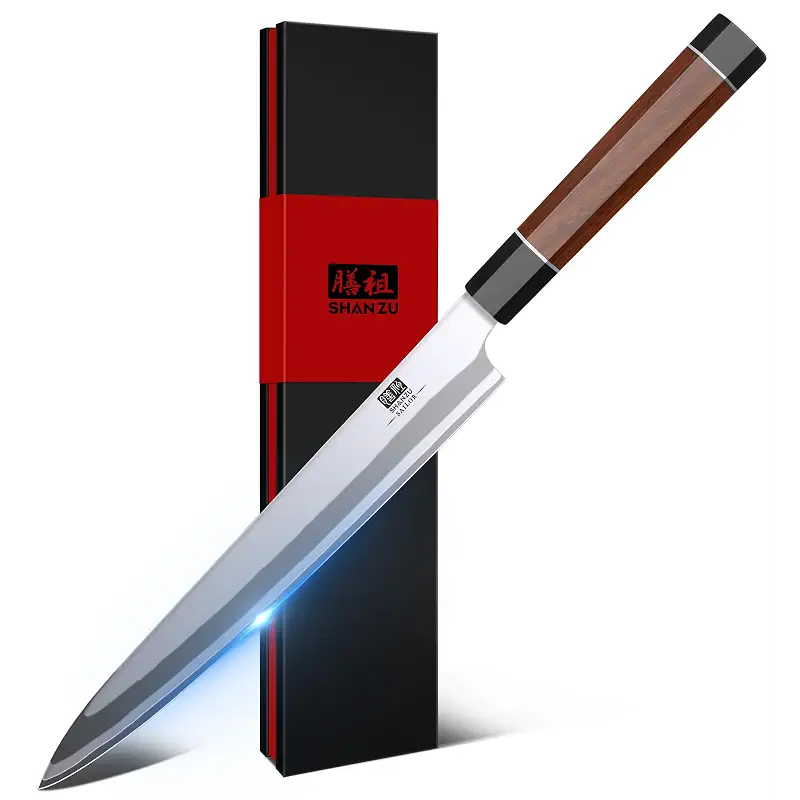
Shan Zu
SHAN ZU 10 Inch Japanese Sushi Knife, 9 Layers 10Cr15MoV High Carbon Steel | Sashimi Knife, Sharp Cutting Yanagiba Knives with Red Sandalwood Handle for Sushi Making, Slicing & Fish Knives
4.6(385)
Hand-forged 9-layer steel with professional-grade sharpness and matte blade finish; top choice for serious home chefs.
Ideal for: Regular home sushi makers, aspiring chefs, cooks who want longer edge retention between sharpening.
Shan Zu's 10-inch Yanagiba represents the jump from entry-level to semi-professional territory. The 9-layer forged structure is where the engineering gets interesting: it combines a Japanese steel core hardened to 62 HRC with outer layers that enhance corrosion resistance and reduce blade chipping. That higher hardness rating translates to longer edge retention between sharpenings, which matters if you're making sushi weekly or feeding guests regularly.
The matte blade finish is a practical detail that serious cooks appreciate. It resists fingerprints and food residue better than polished steel, keeping the knife cleaner during long prep sessions. The 12-degree bevel and tapered spine work together to produce the kind of effortless, smooth cuts that make fish glide rather than stick. Owners consistently report cutting paper-thin lemon slices and executing sashimi with restaurant-level precision.
Compared to the Sanmeiho, you're paying more for durability and refined metallurgy, not just marketing. The downside: the higher hardness means re-sharpening requires more attention and a quality stone. Also, a few buyers noted minor QC issues like slight blade bends or uneven grinding, though most who took time to hone the blade afterward found it performed as well as much pricier knives.
Pros
9-layer forged construction with 62 HRC hardness
Matte finish resists fingerprints and food residue
Exceptional edge retention and slicing smoothness
Ergonomic octagonal handle with natural sandalwood
Cons
Occasional minor QC variances in grind consistency
Ideal for: First-time sushi makers, home cooks seeking confidence without intimidation, gift-givers.
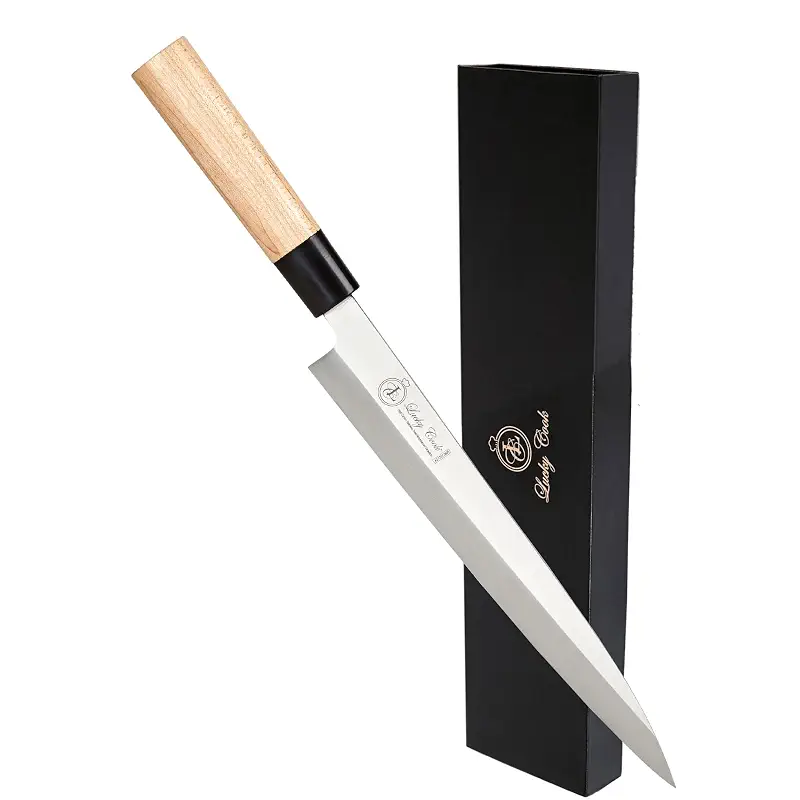
Lucky Cook's 10-inch Sashimi knife has accumulated over 2,100 reviews, and the breadth of feedback reveals a knife that works reliably for newcomers and practiced home cooks alike. What stands out is how consistently buyers report the blade arriving genuinely sharp and the weight feeling "just right" rather than clumsy or fatiguing. The single-bevel design is the traditional choice for sashimi and sushi work, and this knife executes it cleanly.
The Pakkawood handle deserves the emphasis it gets. Pakkawood is a durable composite that resists moisture and splintering better than natural wood alone, making it forgiving for cooks still learning knife care. The ergonomic design reduces hand fatigue during the learning curve, and owners routinely mention that the balance feels immediately natural. Beginners especially praise how the blade's length and weight make cutting sushi rolls almost meditative rather than scary.
Where this differs from premium hand-forged options like the Shan Zu is in the steelwork. Lucky Cook uses a conventional stainless construction rather than multi-layer forging, so edge longevity is solid but not exceptional. Also, a few experienced users noted minor profile inconsistencies at the tip and a slightly squared spine that benefits from light smoothing. But for someone making sushi twice a month or learning the craft, these refinements rarely matter.
Pros
Arrives exceptionally sharp and ready to use
Balanced, non-fatiguing feel for extended prep
Pakkawood handle resists moisture and splintering
Excellent edge for price and use frequency
Cons
Conventional stainless build offers less edge retention than forged steel
Minor profile and spine refinements benefit from initial honing
Key features
Single-bevel yanagiba design for authentic sashimi prep
Premium stainless-steel blade with polished finish
Ergonomic Pakkawood handle for comfort and durability
10-inch length ideal for sushi rolls and fish slicing
Luxury gift box with knife protector included
#4 Pick
Best Aesthetic Choice
Hoshanho
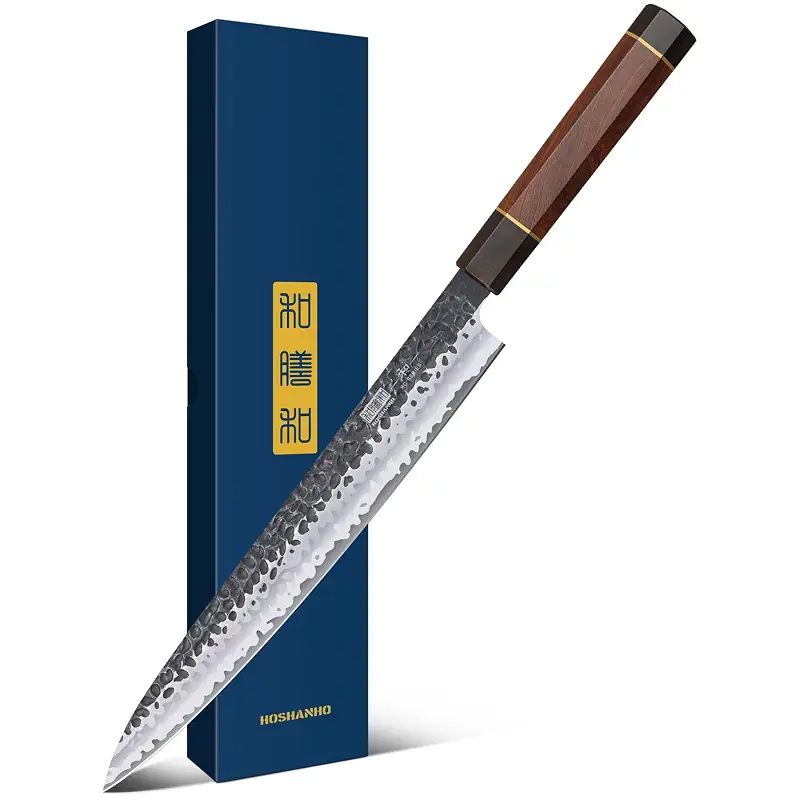
HOSHANHO Sushi Knife 10 Inch, Ultra Sharp Sashimi Knives, Rosewood Handle | Hand Forged High Carbon Steel Yanagiba Knife, Japanese Kitchen Chef Knives for Cutting Sushi & Sashimi, Fish Filleting
4.5(156)
Hand-forged 8-layer beauty with exceptional sharpness, rosewood detailing, and gorgeous blade presentation.
Ideal for: Visual-minded cooks, collectors who use their knives regularly, hosts who value presentation with performance.
Hoshanho's 10-inch yanagiba appeals to cooks who want their tools to look as good as they perform. The rosewood octagonal handle paired with copper wire detailing creates a knife that earns counter display space. But beneath the elegance sits genuine engineering: an 8-layer composite structure surrounding a resilient 10Cr15CoMoV core, hand-polished to 60±2 HRC hardness with a meticulous 12-15 degree edge.
Owners repeatedly describe this knife as "gorgeous" and report that the blade glides through fish with exceptional ease. The hand-polished finish means exceptional sharpness out of the box, and the hardness rating sits between the value options and true premium knives, offering solid edge retention without requiring master-level sharpening skills. It handles delicate ingredients like raw fish, tofu, and soft cheeses without crushing or tearing.
The trade-off versus the Shan Zu is refinement of finish rather than raw performance. This is more of a "display and use" piece where you'll want to hand-wash and dry immediately rather than toss in a sink. A handful of buyers also noted that the handle quality, while visually striking, doesn't quite match the blade's sophistication, and the plastic protective wrap doesn't feel as protective as a proper sheath. Compared to the best yanagiba knives available, this sits at the intersection of beauty and substance.
Pros
Stunning rosewood and copper-wire handle design
8-layer hand-forged steel with excellent edge retention
Exceptionally sharp out of the box from hand polishing
Effortless cutting through fish and delicate ingredients
60±2 HRC hardness with hand-polished 12-15 degree edge
Rosewood octagonal handle with copper wire accents
Double-bevel construction balancing strength and sharpness
Versatile for fish, tofu, soft cheese, and sashimi prep
#5 Pick
Best Premium Performance
Kyoku
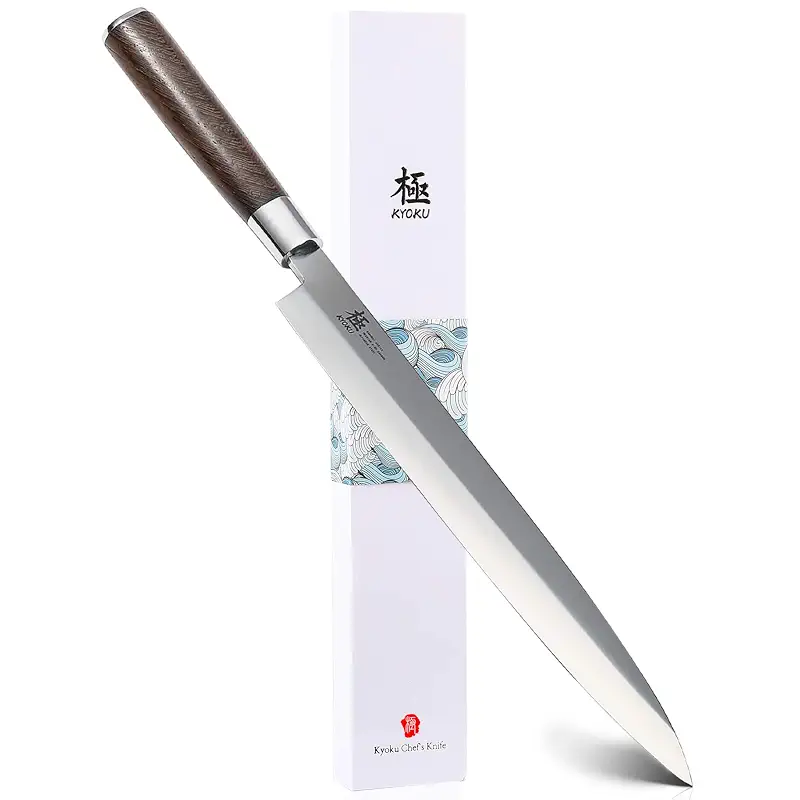
KYOKU Samurai Series - 10.5" Yanagiba Knife Japanese Sushi Sashimi Knives - Superior Japanese Steel - Wenge Wood Handle - with Case | 56-58 Hrc Single Bevel Japanese Steel Blade, Ergonomic Wenge Wood Handle, Precision Raw Fish Slicing Tool With Case
4.5(1,171)
Cryogenically treated cobalt steel with exceptional hardness, museum-quality presentation, and professional edge retention.
Ideal for: Serious home chefs, frequent sushi makers, cooks who sharpen their blades properly, professionals on a controlled budget.
The Kyoku Samurai Series 10.5-inch Yanagiba occupies premium territory with cryogenic steel treatment, something you typically find only in knives priced two to three times higher. That cold-therapy process increases molecular hardness and flexibility simultaneously, which explains why owners report the blade slicing through sashimi and sushi rolls with almost supernatural smoothness. At 56-58 HRC, it sits in the hardness sweet spot: hard enough to hold a razor edge for weeks, flexible enough to handle the slight deflection that fine fish work demands.
The 11-13 degree single-bevel angle is finer than most competitors in this roundup, and when paired with the cobalt-treated steel, it delivers the kind of clean, whisper-quiet cuts that professionals seek. The wenge wood handle is beautiful without sacrificing grip, and the included protective sheath and case signal that Kyoku intends this as a knife you'll treasure. Buyers with experience across multiple high-end knives report that it performs at a level that rivals blades costing significantly more.
What separates this from best yanagiba knives options is the construction philosophy: Kyoku prioritizes edge refinement and hardness over hand-forging drama. That means some users report the blade arrives slightly less sharp than expected and benefit from a quick honing. The knife is also noticeably heavier than competitors, which some find steadying and others find tiring. If you sharpen regularly and appreciate technical excellence over artisanal presentation, this knife rewards that commitment.
Pros
Cryogenically treated cobalt steel for extreme edge retention
11-13 degree single-bevel for whisper-quiet, precise cuts
Excellent hardness-to-flexibility balance at 56-58 HRC
Museum-quality presentation with protective sheath and case
Cons
Heavier than most sushi knives; requires acclimatization
Benefits from honing before first use despite factory sharpening
Key features
Cobalt-added, cryogenically treated Japanese steel core
56-58 HRC hardness for exceptional edge longevity
Single-bevel 11-13 degree edge for precision sashimi slicing
10.5-inch blade length for professional-range work
Wenge wood handle with included protective sheath and case
How to Choose a Japanese Sushi Knife
Four trade-offs that actually matter when matching a japanese sushi knives to your kitchen.
Blade Length and Style
Sushi knives typically range from 8 to 12 inches, with 10-10.5 inches being the sweet spot for home cooks. A yanagiba (single-bevel blade) is the traditional choice for sashimi and sushi work because it produces cleaner cuts and thinner slices than double-bevel knives. The single bevel on one side means less drag and friction, crucial when you're trying to showcase the fish's natural texture. Most models in this category offer yanagiba geometry, though some include double-bevel options for versatility. Longer blades help you cut sushi rolls in one smooth stroke, while shorter blades suit smaller fish or precision work.
Steel Hardness and Edge Retention
The Rockwell hardness rating (HRC) tells you how long an edge lasts before sharpening. Most quality sushi knives range from 57-62 HRC. Higher hardness (60+) means longer edge life between sharpenings but requires more skill to hone properly. Lower hardness (57-58) is easier to resharpen at home and suits occasional cooks. Japanese stainless steels like and 5Cr15Mov are industry standards because they balance hardness, corrosion resistance, and workability. Hand-forged multi-layer construction adds durability and reduces chipping, but conventional stainless blades work reliably for home use. The sushi knife sharpening basics matter more than steel type if you're willing to invest in a good whetstone and technique.
Handle Comfort and Grip
An octagonal handle is nearly universal on quality sushi knives because the angles guide your grip and reduce fatigue during extended prep. Red sandalwood and wenge wood are traditional choices; natural wood breathes and feels warm but requires hand-washing and careful drying. Pakkawood (compressed wood composite) resists moisture and splintering, making it more forgiving for learners. Full-tang construction, where the steel blade extends the full length of the handle, provides better balance and durability than partial-tang designs. Weight distribution matters too: a blade-forward balance (heavier at the tip) suits pushing cuts for sashimi, while a more neutral balance feels lighter and less tiring for longer sessions. Test in hand if possible; comfort directly affects how long you'll actually use the knife.
Sharpness and Edge Angle
Japanese sushi knives typically ship with a 12-15 degree edge per side (24-30 degrees total for double-bevel), which is finer than Western chef knives and contributes to that effortless glide through fish. The finer the angle, the sharper but also the more fragile the edge. Most owners report that quality sushi knives arrive genuinely sharp and require only light honing before use. However, some blades come slightly dull and benefit from a quick pass on a whetstone. If you're new to sharpening, a model that arrives ready to use saves frustration. You don't need expensive tools: a $20-40 combination whetstone (1000/6000 grit) plus a light touch keeps most knives in fighting shape for months.
Presentation and Durability
Premium sushi knives come in luxury boxes with protective sheaths or cases, signaling that you own something worth protecting. This packaging isn't just marketing; it genuinely protects the blade during storage and makes the knife safer to handle. A good protective case also encourages regular hand-washing and drying rather than lazy dishwasher habits, which extends blade life significantly. Budget models sometimes include minimal wrapping, but a sushi knife style comparison shows that protective storage pays dividends regardless of price tier. If you plan to gift the knife or display it, presentation matters. If you're buying for pure kitchen utility, basic protection suffices as long as you commit to hand-care.
Frequently asked
Quick answers to the questions readers ask most.
Can I use a sushi knife for other kitchen tasks?
Yes, most sushi knives work well for general slicing tasks like vegetables, soft meats, and cheese. However, avoid using them on bones, frozen food, or dense cutting boards, as these dull the fine edge quickly. The single-bevel geometry excels at producing clean, thin slices but isn't ideal for chopping or heavy knife work. If you need a true multi-purpose blade, a double-bevel option provides more versatility, though it won't slice quite as cleanly for sashimi. Many home cooks own both a sushi knife and a general chef's knife.
How often should I sharpen my sushi knife?
With proper use and immediate hand-washing, most quality sushi knives stay sharp for 2-3 months of weekly use. A light honing on a whetstone every few weeks maintains the edge between major sharpenings. If you notice the blade gliding less smoothly or requiring more pressure, it's time to sharpen. Using a honing steel designed for Japanese knives (rather than a traditional ceramic steel) preserves the fine edge geometry. Many owners find that one serious sharpening per year, plus regular light maintenance, keeps their knife in restaurant-quality condition.
What's the difference between yanagiba and other Japanese knife styles?
A yanagiba has a single-bevel, flat-sided blade optimized for slicing raw fish and sashimi with minimal cell damage. A deba is thicker and heavier, designed for butchering and heavy fish prep. A kiritsuke has a flat edge with a angled tip, useful for both slicing and detail work. For sushi and sashimi, yanagiba is the gold standard because the single bevel and flat side produce the cleanest, thinnest slices. If you're only buying one sushi knife, a yanagiba covers 90% of home sushi needs.
Should I hand-wash my sushi knife or use the dishwasher?
Always hand-wash immediately after use and dry by hand. Dishwashers expose the blade to corrosive salt, extreme heat cycling, and banging against other items, all of which dull the edge and can cause rust or handle damage. Wash with warm soapy water, dry with a soft cloth, and store in its protective sheath or a blade guard. This takes 30 seconds and dramatically extends blade life and edge sharpness. Many experienced sushi cooks say that proper hand-care matters more than the initial blade quality.
Is a higher price always better for a sushi knife?
Not necessarily. Budget and mid-range sushi knives from established brands often deliver 80-90% of the performance of premium options. The difference above a certain price point is often edge longevity, hand-forging artistry, and handle aesthetics rather than outright sharpness. A $40-60 knife used and maintained properly will serve a home cook excellently for years. True premium territory ($150+) adds cryogenic treatment, multi-layer forging, and museum-quality presentation, which justify the cost for serious practitioners but may be overkill for occasional use. Match the investment to your frequency and commitment level.