Best Sushi Knife Brand: Top Picks for Precision Slicing
Find the best sushi knife brand for your kitchen. Compare Japanese steel, handle designs, and edge retention across top-rated yanagiba and sashimi knives.
Verdict, analysis, and key features for each pick.
#1 Pick
Best Overall
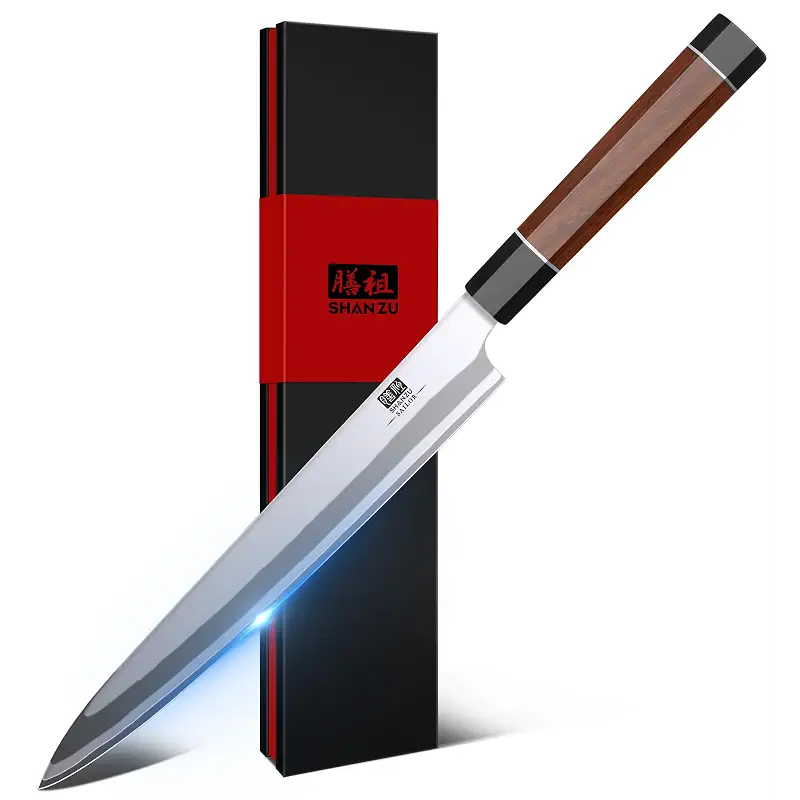
Shan Zu
SHAN ZU 10 Inch Japanese Sushi Knife, 9 Layers 10Cr15MoV High Carbon Steel | Sashimi Knife, Sharp Cutting Yanagiba Knives with Red Sandalwood Handle for Sushi Making, Slicing & Fish Knives
4.6(385)
Nine-layer forged steel with excellent sharpness and a traditional octagonal handle that delivers restaurant-quality cuts at a reasonable price.
Ideal for: Home cooks and sushi enthusiasts ready to invest in a workhorse blade.
The Shan Zu 10-inch yanagiba stands out because it balances serious construction with real-world usability. The nine-layer forged blade isn't just marketing talk; that structure gives you both corrosion resistance and the durability to hold an edge through regular use. Owners consistently praise how sharp it arrives and how well it cuts through fish and vegetables with minimal pressure. The 62 HRC hardness sits in a sweet spot: hard enough to stay keen longer than softer stainless, but not so brittle that chips become a worry.
The octagonal red sandalwood handle feels genuinely comfortable during extended prep work, and the matte blade finish reduces fingerprints and food residue, which matters when you're making multiple cuts in a row. A few reviewers mentioned minor quality-control issues like slight blade misalignment or uneven grinding, but most found these cosmetic and didn't affect performance. If you're stepping up from a generic chef's knife and want proof that Japanese steel construction actually matters, this is where I'd start.
Compared to the Kai Wasabi Black Yanagiba, which is cheaper but plastic-handled and better suited to occasional use, the Shan Zu invites daily work. It comes beautifully packaged, which makes it a natural gift choice, though the real payoff is how it performs when you actually need to slice.
Pros
Nine-layer forged steel resists corrosion and maintains edge
Arrives razor-sharp with minimal hand fatigue during use
Traditional octagonal handle provides secure, comfortable grip
Cons
Occasional quality-control variance in blade alignment
Requires hand washing and proper drying to prevent spots
Key features
10-inch blade with 9-layer steel core hardened to 62 HRC
Single-sided 12° edge angle for effortless one-motion pulling cuts
Red sandalwood octagonal handle with full tang construction
Matte blade finish reduces fingerprints and food residue
#2 Pick
Best Value
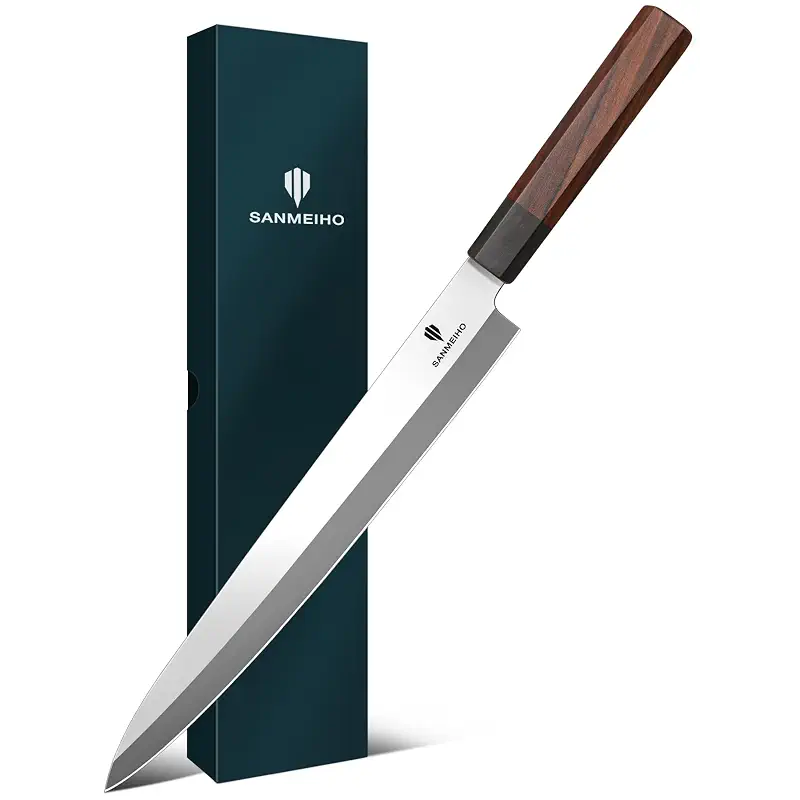
Sanmeiho
10 Inch Sushi Knife, High Carbon Japanese Steel Sashimi Knife | Japanese Knives for Fish Filleting & Slicing, Sushi Making Knives with Red Sandalwood Handle
4.6(87)
High-carbon Japanese stainless steel at entry-level pricing; delivers clean fish cuts with an octagonal handle that feels far better than the price suggests.
Ideal for: Budget-conscious beginners and occasional home sushi makers.
The Sanmeiho 10-inch sushi knife proves you don't need to spend heavily to get a knife that cuts. It pairs 5Cr15Mov high-carbon steel with a 57 HRC hardness that keeps an acceptable edge through regular work, and reviewers who bought it specifically to learn sushi-making report it glides through fish cleanly and without complaint. The 12° cutting angle on both sides (a departure from traditional single-bevel yanagibas, but more forgiving for beginners) makes the knife easier to use correctly out of the box.
The octagonal red sandalwood handle mimics designs found on knives costing three times as much, and the full tang construction means it won't wobble or feel hollow. One reviewer noted a slight sharpness lag compared to marketing claims, but after simple maintenance with a stone, it performed well. This is genuinely good value if you're a home cook who makes sushi once or twice a month and wants to avoid the entry barrier of buying a high-carbon steel blade that demands careful drying.
Where this trades off versus the Lucky Cook 10-inch Sashimi Sushi Knife is in edge retention over heavy use; the Sanmeiho will need sharpening sooner in a professional setting, but for casual home use it's more than adequate.
Pros
Affordable entry point without cheap-feeling construction
Double-sided 12° angle forgiving for technique learners
Full tang octagonal handle feels solid and balanced
Cons
Edge retention shorter than higher-hardness alternatives
May require sharpening earlier with frequent heavy use
Key features
10-inch 5Cr15Mov high-carbon stainless steel blade at 57 HRC
Double-sided 12° cutting angle easier for beginners to master
Red sandalwood octagonal handle with traditional Japanese aesthetics
Anti-rust stainless composition simplifies maintenance and care
#3 Pick
Best Budget Pick
Kai
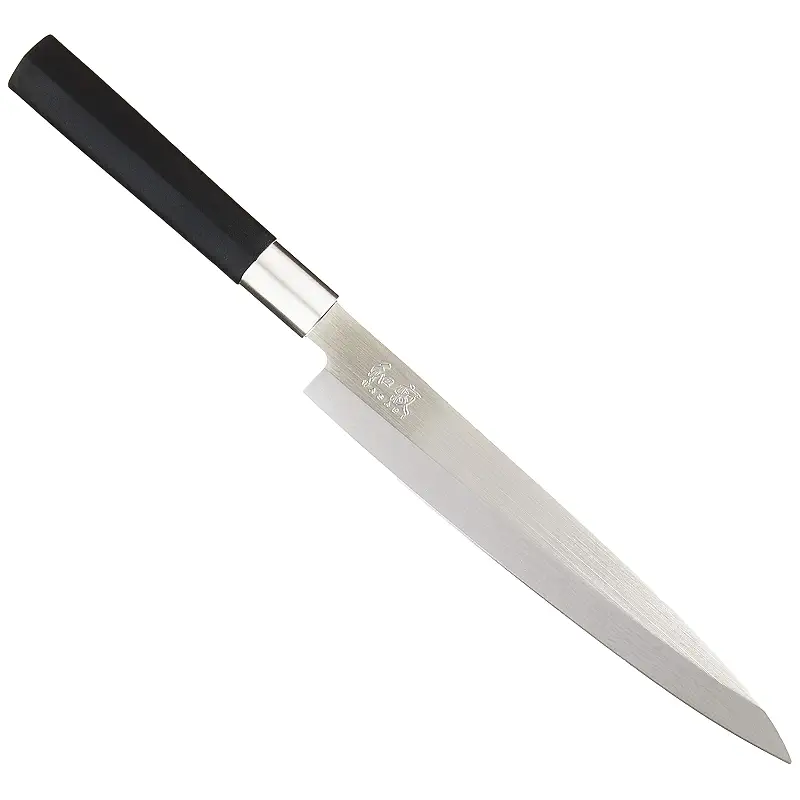
Kai Wasabi Black Yanagiba Knife, 8 1/4-Inch
4.5(777)
Affordable stainless-steel yanagiba backed by Kai's 70-year Japanese reputation; ideal for occasional sushi rolling and sharpening practice.
Ideal for: Beginners testing the hobby and home cooks sharpening on a budget.
The Kai Wasabi Black Yanagiba lives in a unique niche: it's cheap enough to recommend to someone who wants to test whether sushi-making is worth their time, yet solid enough that it won't embarrass you in the kitchen. Kai has been making knives in Japan's blade-forging heartland since the 1950s, and that pedigree shows in the heat treatment and edge profile, even at this price. The high-carbon stainless steel arrives sharp and holds an edge reasonably well for the cost.
Owners often bought this knife specifically to practice whetstone sharpening before investing in a premium blade. That's honest work: the stainless won't rust if you neglect it for a day or two the way a high-carbon blade would, and the softer steel actually responds well to a home stone. The single-bevel grind is correct for traditional sashimi work. The real limitation is the polypropylene handle: it's plain, lightweight, and while some reviewers praised its no-fuss feel, others found it borderline cheap-looking compared to wooden alternatives.
The Mercer Culinary Asian Collection Yanagi Sashimi Knife, at a similar price point, offers a rubber handle that grips better when wet, but the Kai is the pick if you value Japanese brand heritage and sharpenability for practice.
Pros
Genuine Kai Japanese steel at accessible entry-level cost
Single-bevel geometry correct for traditional sashimi cuts
Stainless composition forgives occasional neglect and drying delays
Cons
Plastic handle lacks warmth and premium feel of wood or rubber
Secondary bevel present, requiring flattening for optimal results
Key features
8.25-inch high-carbon stainless steel blade with single-sided bevel
Daido 1K6 steel maintains reasonable edge retention at entry level
Polypropylene handle with bamboo powder for food safety
Traditional Japanese blade styling from Seki City heritage maker
#4 Pick
Best for Learning Technique
Mercer Culinary
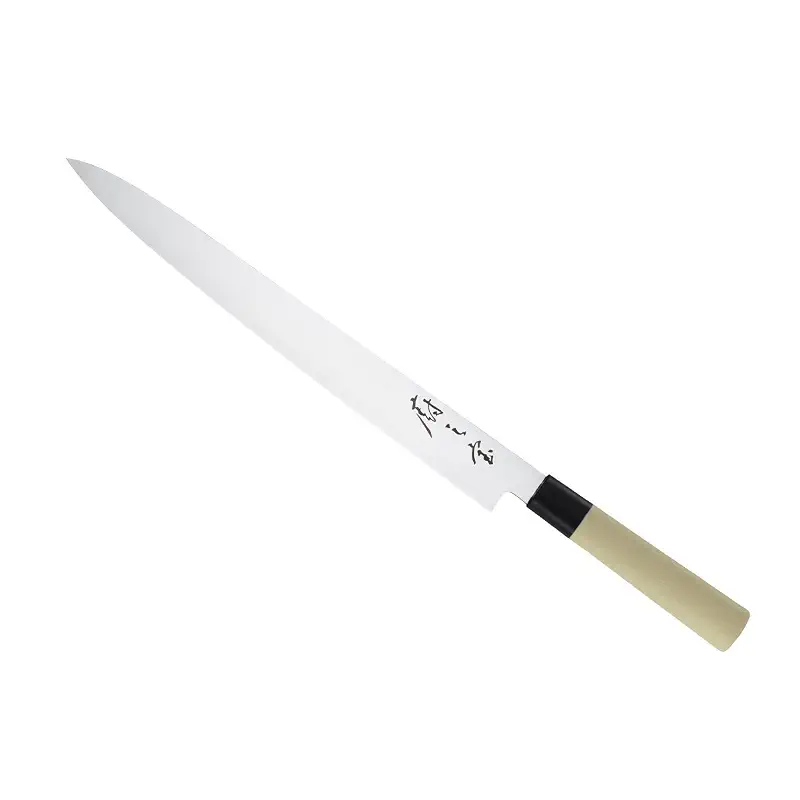
Mercer Culinary Asian Collection Yanagi Sashimi Knife with NSF Handle, 12-Inch
4.5(419)
Twelve-inch German steel yanagi with a rubber handle and forgiving 56 HRC hardness; easier to sharpen at home than traditional carbon-steel blades.
Ideal for: Culinary students and home learners prioritizing ease of sharpening.
The Mercer Culinary Asian Collection Yanagi Sashimi Knife takes an unconventional approach: it borrows yanagiba geometry from Japanese tradition but uses German high-carbon steel and a simplified single-bevel design that's dramatically easier to sharpen yourself than a hand-forged Japanese blade with complex urasuki (concave back) features. The 56 HRC hardness is lower than premium Japanese options, which means it dulls faster under heavy professional use but also means you can quickly restore a razor edge on a home whetstone without special skills.
The rubber Santoprene handle is a major practical win for wet hands: it won't slip the way many wooden handles do when fish juice is involved. At 12 inches, this knife favors the single-pull cutting motion that makes sashimi work beautiful rather than sawing, and reviewers who specifically bought it for tako (octopus) and tough proteins report impressive performance. Culinary students and home learners frequently mentioned this as their first serious sashimi knife, chosen because the geometry and maintenance demands feel less intimidating than a true Japanese carbon-steel yanagiba.
Where the Lucky Cook 10-inch Sashimi Sushi Knife edges ahead is in sharpness and steel quality for the price, but the Mercer's longer blade and more forgiving hardness win for technique development.
Pros
Single-bevel simplified geometry easy to sharpen on home stones
Rubber Santoprene handle provides secure grip when wet
Ideal for: Home cooks wanting one sushi knife that handles everyday kitchen work too.
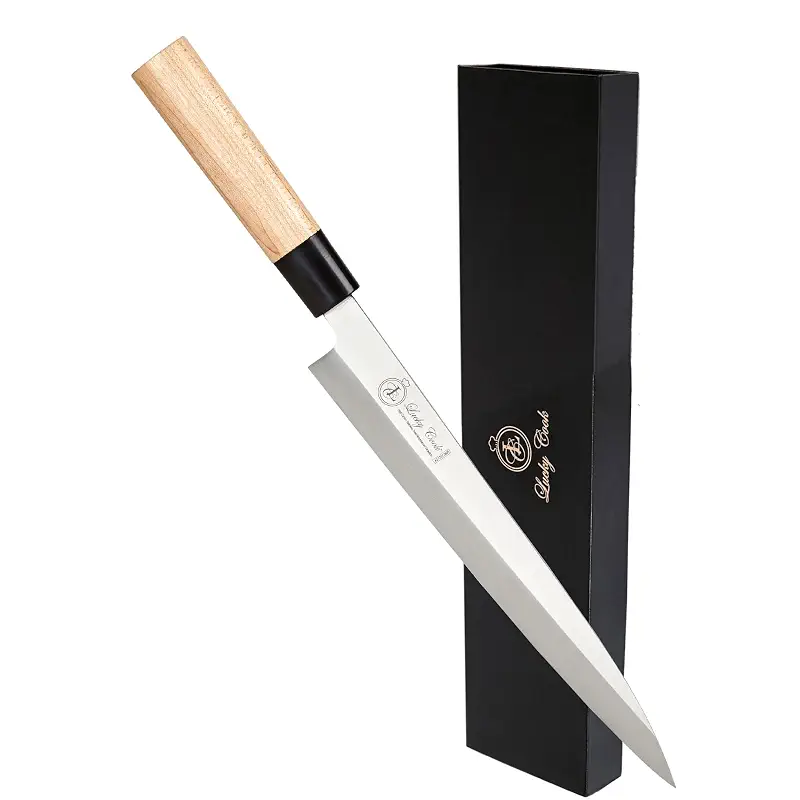
The Lucky Cook 10-inch Sashimi Sushi Knife stands out because it's designed to earn its place in your drawer beyond just sushi night. The premium stainless-steel blade comes handcrafted and sharp enough that owners report mincing tuna, slicing sashimi, and cutting rolls with equal precision. The Pakkawood handle (a composite of wood and resin) resists moisture better than pure wood, provides a warmer feel than plastic, and won't crack or splinter like traditional wood can under heavy use. Multiple professional line cooks noted they've borrowed or ordered this knife for their home kits, which is rare praise at this price point.
Owners consistently mention that the knife holds an edge well even after repeated use, and the single-bevel geometry ensures clean presentation cuts. The blade thickness feels solid without being heavy, so you're not fighting the tool during extended prep. One reviewer who subjected it to professional-level abuse noted the plastic bolster eventually cracked, though they deemed the overall quality remarkable for the price. The luxury gift box makes it presentable, though the real value lives in the blade's performance across fish, meat, and vegetable work rather than sushi-only use.
Compared to the Shan Zu 10-inch Japanese Sushi, which offers traditional sandalwood and ninefold steel, the Lucky Cook sacrifices some artisanal heritage for a more forgiving Pakkawood handle and slightly broader task range.
Pros
Stainless blade holds edge well across diverse cutting tasks
Pakkawood handle resists moisture and provides warm, secure grip
Versatile enough for fish, meat, vegetables, and delicate work
Cons
Plastic bolster may show stress cracks with very heavy professional use
Slightly thicker blade profile less ideal for ultra-delicate sashimi slicing
Key features
10-inch premium stainless steel blade with single-bevel grind
Ergonomic Pakkawood handle balances moisture resistance and warmth
Polished finish reduces sticking and maintains elegant appearance
Includes protective tip cover and luxury gift box for storage
How to Choose the Right Sushi Knife
Four trade-offs that actually matter when matching a sushi knife brand to your kitchen.
Steel Type and Hardness Matter
High-carbon stainless steel offers corrosion resistance without the maintenance burden of true carbon steel, which requires immediate drying and careful storage. Look for hardness between 56 and 62 HRC: softer blades (56 HRC) sharpen easily but dull faster; harder blades (62 HRC) hold edges longer but demand more sharpening skill. Japanese and German steels both perform well: the real difference is sharpening style and maintenance ritual. Japanese blades often feature a single bevel (sharp on one side only), while Western-style options use double bevels that are more forgiving for beginners.
Blade Length and Motion
Most home cooks find 10 inches the sweet spot: long enough for the single pulling motion that defines sashimi cutting, short enough to control in a typical kitchen. Twelve-inch blades suit professionals who portion large fish continuously; eight-inch versions feel cramped for proper technique. The key is learning the pull: you never push a sushi knife down or saw back and forth. Place the blade at the back edge of the fish and pull straight back in one motion, letting the blade's weight and sharpness do the work. Blade geometry (angle and curve) enables this motion; handle comfort keeps your wrist and hand from fatiguing during practice.
Handle Design and Materials
Octagonal red sandalwood handles feel premium and provide traditional aesthetics, while rubber or Pakkawood handles grip better when your hands are wet with fish juice: a genuine safety advantage. Full tang construction (blade steel extending into the handle) ensures the knife won't separate or wobble. Weight distribution matters: a blade-forward bias helps the knife do the cutting for you, whereas a balanced feel demands more hand pressure. Try to hold one in person if possible; a handle that feels secure in your grip is worth the slight price premium.
Maintenance and Sharpening Steps
Before committing to a sushi knife, understand that sushi knife sharpening steps differ from standard chef's-knife maintenance. Single-bevel blades require angling your whetstone to match the bevel angle (typically 12-15 degrees), while double-bevels are more forgiving. Stainless blades sharpen faster but lose edge faster; carbon steel holds sharp longer but rusts if left wet. Hand wash immediately after use and dry completely: never toss in the dishwasher. A ceramic rod or leather strop between uses prolongs edge life without full sharpening. If home sharpening intimidates you, choose a German-steel option with simplified geometry, which professional sharpeners find easier to restore.
Occasional vs. Daily Use
If you make sushi once or twice a month, a budget stainless blade (56 HRC) works fine and forgives neglect if you forget to dry it immediately. Daily professional or semi-professional use demands higher hardness (60+ HRC) and better steel quality to minimize sharpening frequency. Home learners benefit from blades designed for easy sharpening, while experienced cooks often prefer traditional Japanese single-bevel geometry. Consider also whether you'll use the knife beyond sushi: some blades excel at both sashimi and general kitchen work, while specialist blades prioritize that single perfect motion over versatility.
Frequently asked
Quick answers to the questions readers ask most.
What's the difference between a yanagiba and a sashimi knife?
Yanagiba and sashimi knife describe the same tool: a long, thin blade with a single sharp edge, designed for one-motion pulling cuts through raw or cooked fish. The terms are used interchangeably. Traditional yanagibas have a concave back (urasuki) that Japanese craftspeople hand-forge; modern sashimi knives often use simplified single-bevel geometry easier to sharpen at home. Both cut beautifully when used correctly; the real difference is maintenance and price.
Can I use a sushi knife for regular cooking tasks?
Yes, but it's not ideal. A sushi knife excels at precision slicing and single-motion cuts through delicate items like fish, vegetables, and fruits. It's less suited to chopping, dicing, or heavy butchery. The narrow blade and forward blade weight make it awkward for tasks requiring downward force. Treat it as a specialist tool and reach for a chef's knife for everyday work; you'll extend its life and enjoy better results for both tasks.
Do I need to sharpen a sushi knife differently than a regular kitchen knife?
Yes. Single-bevel sushi knives require angling your whetstone to match the bevel angle (typically 12-15 degrees) and sharpening only the beveled side. Double-bevel designs are more forgiving and sharpen like regular knives. If sharpening intimidates you, choose a German-steel option or consider professional sharpening. Never use a steel rod or honing steel on a sushi knife; a ceramic rod or leather strop between uses is safer for maintaining edge between full sharpenings.
What's the best way to care for a sushi knife between uses?
Wash by hand immediately after use with warm water and mild soap; dry completely with a soft towel. Never leave it wet or submerge it long-term. Store in a knife block, on a magnetic strip, or with a plastic blade guard: never loose in a drawer where the edge can hit other utensils. For carbon-steel blades, dry extra thoroughly and consider a light oil on the spine to prevent rust. Stainless blades are more forgiving but benefit from the same care.
Is a single-bevel or double-bevel sushi knife better for beginners?
Double-bevel knives are easier for beginners because they don't require perfect blade angle during sharpening and feel less intimidating in hand. Single-bevel knives produce cleaner cuts and are preferred by experienced cooks, but they demand proper technique and more sharpening skill. Start with a double-bevel or simplified geometry option like German steel, then graduate to single-bevel if you find sushi-making becomes a regular practice. Either choice is valid; it depends on your commitment level and willingness to learn sharpening.