Best Sushi Knife: Top Picks for Sashimi & Fish Slicing
Find the best sushi knife for slicing sashimi and fish. Compare premium yanagiba blades, Japanese steel construction, and ergonomic handles for home and pro kitchens.
Verdict, analysis, and key features for each pick.
#1 Pick
Best Overall
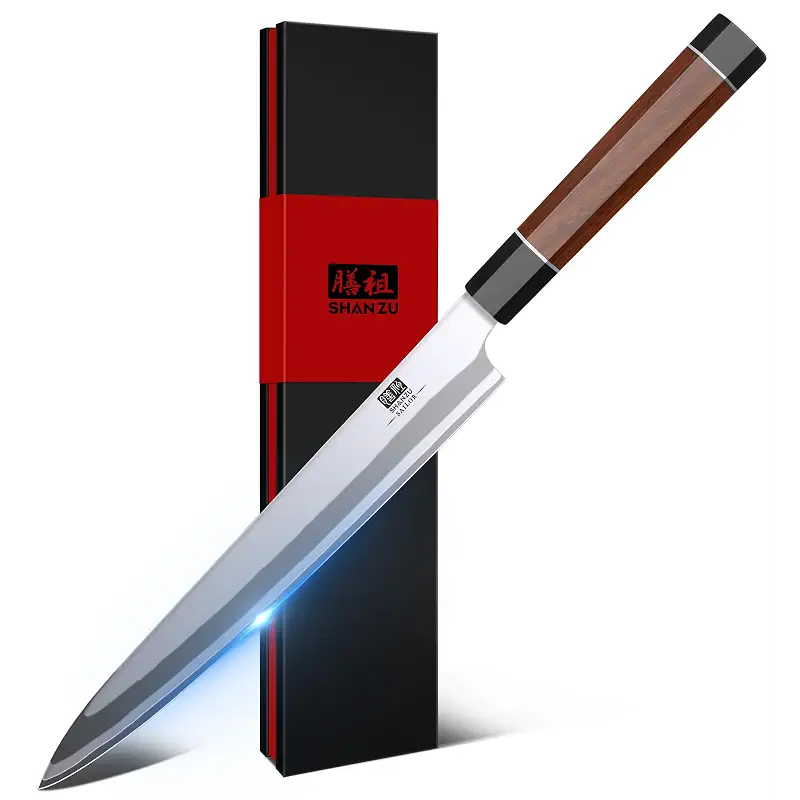
Shan Zu
SHAN ZU 10 Inch Japanese Sushi Knife, 9 Layers 10Cr15MoV High Carbon Steel | Sashimi Knife, Sharp Cutting Yanagiba Knives with Red Sandalwood Handle for Sushi Making, Slicing & Fish Knives
4.6(385)
Superior multi-layer construction and Japanese steel deliver restaurant-quality cuts and edge retention at a compelling value.
Ideal for: Home cooks and sushi enthusiasts seeking professional-grade performance at reasonable investment.
The Shan Zu 10-inch combines a nine-layer forged structure with a steel core hardened to 62 HRC, giving it the durability and sharpness that buyers consistently praise. The traditional octagonal red sandalwood handle sits naturally in the hand, and the matte blade finish resists fingerprints and food residue, keeping the work cleaner. Multiple owners report that it slices through fish, vegetables, and even delicate items like thin lemon slices with remarkable precision right out of the box.
What makes this knife stand out is the balance between build quality and edge performance. The 12° blade angle is gentle enough for sashimi work but aggressive enough to maintain sharpness through regular use. Buyers note minor QC variation in some units (slight blade bend or uneven grind), though these don't seem to affect cutting performance significantly. If you occasionally need to resharpen before expected, the high-carbon steel responds well to honing.
This is a solid entry point for home sushi enthusiasts who want a knife that performs like blades costing considerably more, without the premium investment. The gift box packaging makes it suitable for gifting, and the handle design minimizes fatigue during longer prep sessions.
Pros
Nine-layer forged construction resists chipping and corrosion
62 HRC hardness retains edge through regular cutting sessions
Ergonomic octagonal handle reduces hand fatigue
Cons
Occasional minor QC variation in blade grind or alignment
Occasional resharpening needed sooner than premium high-carbon blades
Key features
Nine-layer Japanese steel with high-carbon core
Hardened to 62 HRC for durable edge retention
Traditional 12° blade angle for sashimi and fish slicing
Octagonal red sandalwood handle with ergonomic design
Matte blade finish reduces fingerprints and food residue
#2 Pick
Best for Beginners
Lucky Cook
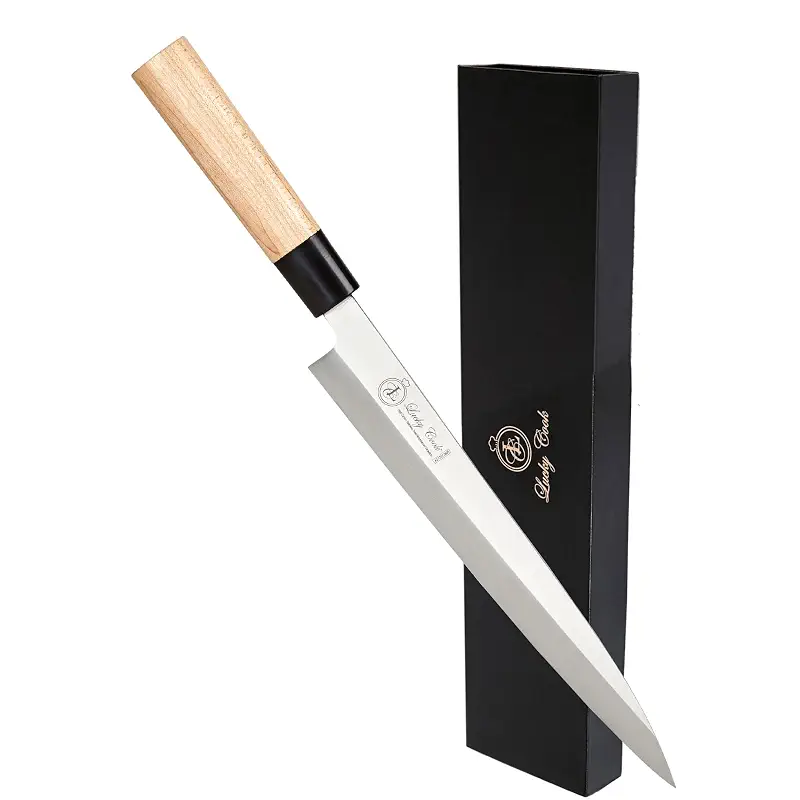
10” Sashimi Sushi Knife – Ultra Sharp Traditional Japanese Sushi Knife for Sashimi, Fish Filleting & Precision Slicing – Premium Stainless Steel Blade, Pakkawood Handle & Gift Box
4.6(2,143)
Exceptionally sharp single-bevel design and balanced weight make this the easiest entry point for first-time sushi makers.
Ideal for: First-time sushi makers and home cooks who value rust resistance and forgiving performance.
The Lucky Cook 10-inch sashimi knife has earned over 2,100 reviews for good reason: it performs well for users stepping into sushi making without overwhelming them. The blade is handcrafted to a razor edge and the single-bevel design (true to traditional yanagiba geometry) means there's less technique required to execute clean cuts. Owners who completed their first sushi rolls report that the knife's length and sharpness make rolling and cutting through finished rolls feel effortless, even with minimal experience.
The stainless steel construction offers rust and stain resistance, which is practical for someone still learning proper knife maintenance. The pakkawood handle is slip-resistant and well-balanced, and the knife comes with a protective tip cover and presentation box, reducing the barrier to safe storage and handling. Multiple buyers note that the knife holds an edge reasonably well during normal use, though some suggest a light honing with a wet stone early on improves consistency. One professional chef using it in a high-volume kitchen confirmed it outperforms much costlier blades for the price, even under demanding conditions.
Compared to the Shan Zu, this knife prioritizes ease of use and stainless steel durability over premium hardness ratings, making it the wiser choice if you're uncertain whether sushi making will become a regular habit. The single bevel also demands less hand angle adjustment as you learn proper technique.
Pros
Razor-sharp single-bevel edge suited to traditional sushi technique
Stainless steel resists rust and stains for low-maintenance upkeep
Well-balanced weight and slip-resistant handle reduce learning curve
Cons
Plastic bolster can crack under intensive professional-level use
Sharpening consistency sometimes requires light honing before first use
Key features
Single-bevel blade inspired by authentic Japanese yanagiba design
Rust-resistant stainless steel for durability and easy maintenance
10-inch length ideal for sushi rolls and sashimi slicing
Ergonomic pakkawood handle with slip-resistant grip
Includes protective tip cover and luxury gift box for storage
#3 Pick
Best Value
Sanmeiho
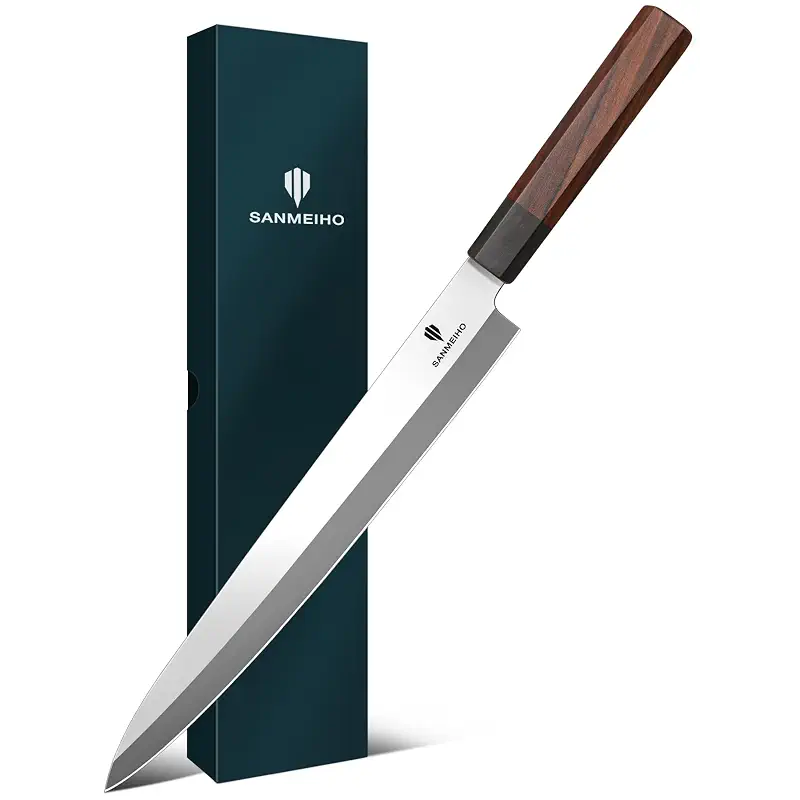
10 Inch Sushi Knife, High Carbon Japanese Steel Sashimi Knife | Japanese Knives for Fish Filleting & Slicing, Sushi Making Knives with Red Sandalwood Handle
4.6(87)
Competent high-carbon blade at an accessible price delivers genuine sharpness without demanding premium wallet space.
Ideal for: Budget-conscious home cooks seeking genuine sharpness without premium feature overhead.
The Sanmeiho offers a streamlined formula: Japanese 5Cr15MoV steel hardened to 57 HRC, a 12° cutting angle on both sides, and an octagonal red sandalwood handle. For buyers looking to avoid overspending while still getting a functionally sharp sushi knife, this hits a sweet spot. Owners describe it cutting through fish cleanly and effortlessly, and the handle design provides comfortable grip during extended prep work. The full-tang construction adds stability and strength compared to partial-tang alternatives.
One area where this knife diverges from pricier options is marketing clarity: it touts both stainless steel properties and high-carbon steel performance, which can create confusion. In practice, the 57 HRC hardness is respectable for a value knife, though it won't hold an edge quite as long as the Shan Zu's 62 HRC or match premium professional blades. Owners note it responds well to resharpening, which is important if you intend to use it regularly. The single most common caution from buyers is to respect the sharpness: several emphasize that this knife will cut skin as readily as fish if hand positioning slips.
If you're weighing this against the Lucky Cook, the Sanmeiho is lighter on features (no protective cover, simpler packaging) but delivers comparable cutting performance at lower cost. It's ideal for occasional home sushi makers or cooks who want to test whether sushi preparation will become a regular part of their kitchen routine.
Pros
Japanese 5Cr15MoV steel delivers strong edge retention for daily use
Full-tang octagonal handle ensures stability through extended sessions
Cons
57 HRC hardness doesn't retain edge as long as premium options
Minimal packaging and accessories compared to similarly priced competitors
Key features
Japanese 5Cr15MoV high-carbon steel with 57 HRC hardness
12° cutting angle on both sides for balanced slicing performance
Full-tang octagonal red sandalwood handle for grip stability
Multi-purpose design suitable for fish, sashimi, and soft cuts
Compact, no-frills presentation suitable for daily kitchen use
#4 Pick
Best for Frequent Use
Hoshanho
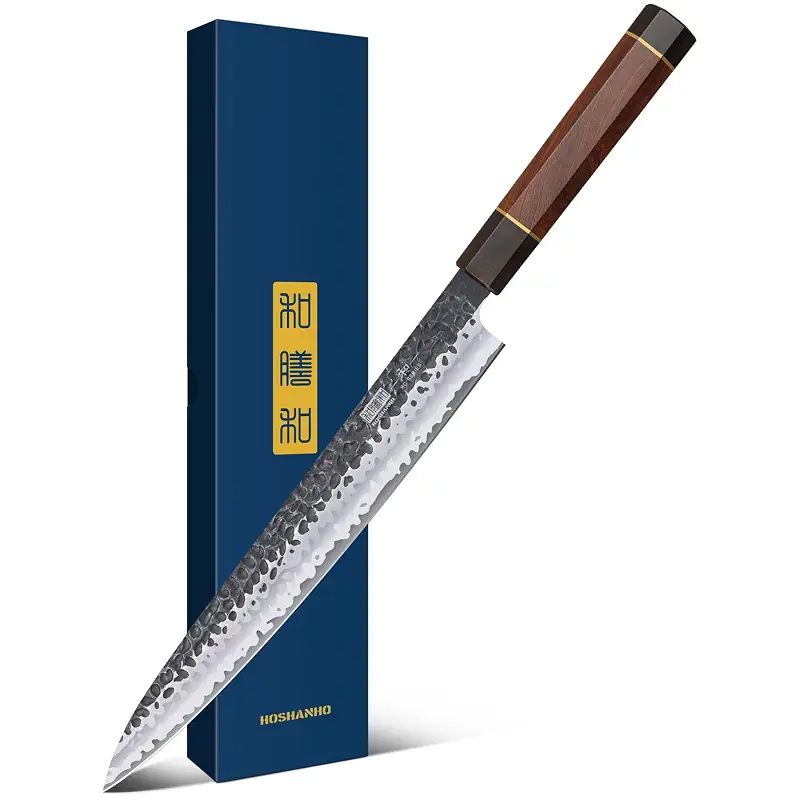
HOSHANHO Sushi Knife 10 Inch, Ultra Sharp Sashimi Knives, Rosewood Handle | Hand Forged High Carbon Steel Yanagiba Knife, Japanese Kitchen Chef Knives for Cutting Sushi & Sashimi, Fish Filleting
4.5(156)
Hand-forged eight-layer construction and 60 HRC hardness balance sharpness and durability for regular sushi prep.
Ideal for: Regular sushi makers and serious home cooks who use the knife multiple times per week.
The Hoshanho 10-inch yanagiba stands out with its hand-forged 8-layer composite steel construction around a 10Cr15CoMoV core, hardened to 60±2 HRC. This gives it higher edge retention than value options while remaining accessible. Owners who use it regularly praise how it glides through sashimi and fish fillets, and multiple buyers report owning multiple Hoshanho knives, which suggests strong durability and satisfaction over time. The octagonal rosewood handle is both practical and visually refined, with copper wire details that add character without compromising grip.
The blade geometry is thoughtfully executed: a 12–15 degree polished edge per side and a truly flat profile deliver the clean cuts sushi demands. What distinguishes this from the Lucky Cook is the higher hardness rating and forged construction, which means it will hold an edge longer during frequent use and resharpen more predictably. However, owners should note that the plastic-wrapped storage (rather than a protective sheath) and some reports of minor handle finish inconsistency suggest it's not quite at premium-tier refinement. One professional sushi chef specifically rated this as one of the better options in its price range, noting its 270mm length as ideal for their preferred technique.
Where this knife edges ahead of the Sanmeiho is in edge retention during regular cutting sessions and in the quality of the handle finish. For home cooks planning to make sushi weekly or for those transitioning to more frequent use, the Hoshanho rewards consistency with better performance longevity.
Pros
Hand-forged eight-layer steel construction enhances durability
60 HRC hardness offers superior edge retention compared to value options
Rosewood handle with copper details provides refined grip and appearance
Cons
Comes with plastic wrap rather than protective sheath or cover
Handle finish quality occasionally shows minor inconsistencies
Key features
Eight-layer hand-forged composite steel with 10Cr15CoMoV core
Hardened to 60±2 HRC for reliable edge retention
Flat blade profile with 12–15 degree polished edge per side
Octagonal rosewood handle with copper wire embellishment
Versatile for sashimi, sushi, and filleting soft ingredients
#5 Pick
Specialty Pick – Sujihiki Double-Bevel
kanngou
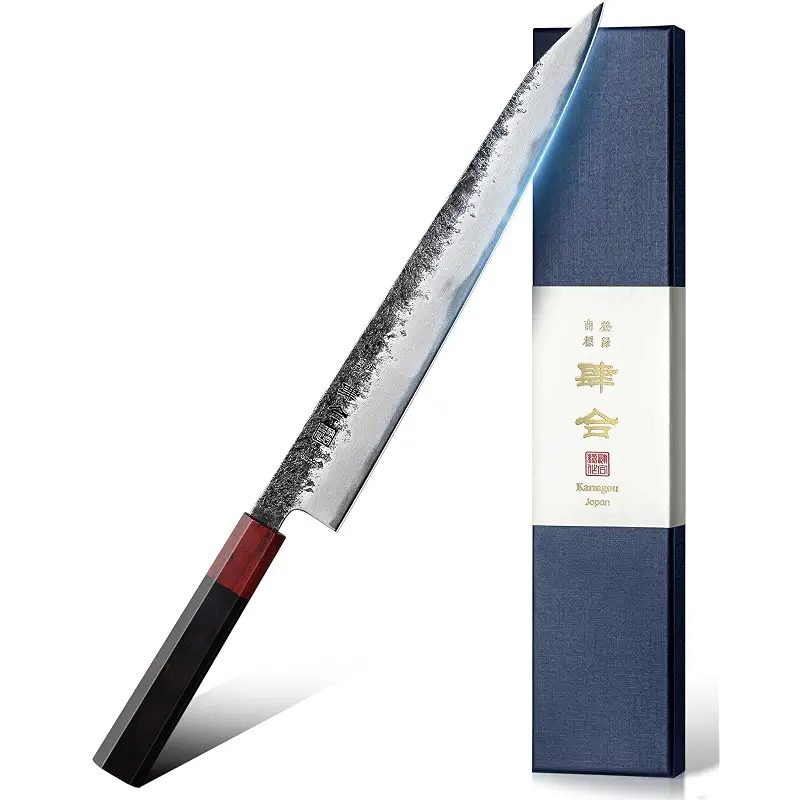
kanngou Sushi Knife 27cm Japanese Carving Knife, AUS-8 Steel Sujihiki Sashimi Knives for Fish Filleting and Meat Slicing, Double Edge Yanagiba Knives with Premium Gift Box
4.4(44)
27cm double-edged carving knife excels at long, clean slicing strokes for sashimi and roasts with greater versatility.
Ideal for: Advanced home cooks and professionals needing a versatile long slicer for sashimi and carving tasks.
The kanngou sujihiki represents a different category entirely: where yanagiba blades emphasize single-bevel precision for sushi, the sujihiki is the Western-adapted double-bevel long slicer. At 27cm, it's longer than standard sushi knives and designed for drawing cuts across large surfaces: think sashimi platters, seared fish, or carved roasts. The AUS-8 Japanese alloy steel (59±2 HRC) is moderate in hardness, trading ultimate edge retention for ease of resharpening and corrosion resistance, making it forgiving for home cooks.
Owners highlight the micro-concaved edge and nearly zero-degree geometry, which produces exceptional cuts through fish and meat with minimal tissue damage. A professional sushi chef confirmed this blade performs very well for the price in its category, and the 27cm length genuinely shines for single-stroke slicing work. The Kurouchi Nashiji (blackened, hammered) finish not only looks striking but also reduces friction during cutting. However, the longer blade and double-bevel design demand more deliberate technique than a standard yanagiba: this is less forgiving for beginners still finding their hand angle. One owner noted unevenness in sharpening quality from the factory, and the AUS-8 steel won't hold an edge as long as the premium high-carbon options in this lineup during intensive use.
Unlike the best yanagiba knives focused purely on sushi preparation, this tool scales up to carving duties and larger presentations. It's the pick if you want a long slicer for both sashimi and occasional roast carving, or if you already have a dedicated shorter sushi knife and want a specialized longer blade for platter work.
Pros
27cm length enables effortless single-stroke cuts across large surfaces
Micro-concaved double-bevel edge reduces tissue damage and tearing
Kurouchi Nashiji finish reduces friction and resists rust effectively
Cons
Length and double-bevel design require more developed knife technique
AUS-8 steel doesn't retain edge as long as premium high-carbon steels
Key features
27cm Japanese sujihiki (carving knife) with long, narrow double-bevel blade
AUS-8 alloy steel hardened to 59±2 HRC, easy to sharpen and maintain
Micro-concaved edge with nearly zero-degree geometry for clean slicing
Kurouchi Nashiji blackened finish reduces friction during cutting
Ebony and red sandalwood handle for balance and refined grip
How to Choose the Right Sushi Knife
Four trade-offs that actually matter when matching a sushi knife to your kitchen.
Blade Length and Style
Most sushi knives range from 8 to 10 inches, with 10 inches being the standard for both home and professional use. Longer blades (27cm sujihiki) suit carving large sashimi platters or roasts with single strokes, while shorter versions offer more control in tight workspaces. The two main blade styles are yanagiba (single-bevel, traditional for sushi) and sujihiki (double-bevel, the Western-adapted carving knife). Yanagiba knives demand precise hand angles but reward technique with ultra-clean cuts. If you're starting out, single-bevel is more forgiving once you understand proper sushi knife types comparison and positioning.
Steel Type and Hardness
High-carbon Japanese steels (, 5Cr15MoV) hold a sharper edge longer but require more careful maintenance to prevent rust. Stainless steels are more forgiving and resist corrosion, making them ideal for beginners or irregular users. Hardness is measured in HRC; 57–60 HRC is practical for home use, while 62+ HRC targets professional kitchens where edge retention matters most. Harder blades hold an edge longer but are also more prone to chipping if struck against bone or a cutting board edge. Consider your skill level and how frequently you'll use the knife before prioritizing maximum hardness.
Handle Comfort and Grip
Octagonal wooden handles (typically red sandalwood or rosewood) are traditional and comfortable for extended work, distributing pressure evenly across the palm. Pakkawood is a composite material that resists moisture and splitting, making it practical for kitchens where humidity varies. The bolster (where blade meets handle) should be sturdy; plastic bolsters can crack under professional-level use, while integrated tangs offer better balance and longevity. Try to hold a knife before buying if possible, as personal hand size and grip preference matter more than specifications. A handle that feels secure in your grip reduces fatigue and cuts safely.
Edge Maintenance and Resharpening
All sushi knives require regular honing between uses to maintain sharpness, and periodic resharpening when honing no longer restores the edge. High-carbon steels are easier to sharpen but need more frequent maintenance and protection from moisture. Stainless steels are more forgiving and slower to dull, but some users find them slightly harder to resharpen to the same acute angle. A sushi knife sharpening guide should be part of your plan if you own a high-carbon blade. Budget for a quality whetstone or honing steel, and expect to spend 5–10 minutes every few uses keeping the edge ready for sashimi work.
Budget and Use Frequency
Entry-level sushi knives (under moderate investment) perform admirably for occasional home use and deliver genuine sharpness without premium pricing. Mid-range options add forged construction, higher hardness, or stainless steel durability, making them wise for regular use. Professional-grade blades cost significantly more and suit commercial kitchens or serious enthusiasts. Match your budget to how often you'll actually use the knife. A beginner making sushi monthly doesn't need a premium blade; a weekly sushi roller benefits from better edge retention. Buying a tool that fits your actual usage pattern prevents both buyer's remorse and underinvestment.
Frequently asked
Quick answers to the questions readers ask most.
What's the difference between a yanagiba and a sujihiki?
A yanagiba is a traditional Japanese single-bevel sushi knife with a flat profile, designed for ultra-clean sashimi slices with minimal hand angle adjustment. A sujihiki (carving knife) is the Western double-bevel adaptation: longer, more versatile for both slicing and carving, but requiring more developed technique. Yanagiba is the standard for sushi prep; sujihiki excels when you need a longer blade for sashimi platters or roast carving.
Do I need to hand-wash a sushi knife, or can it go in the dishwasher?
Always hand-wash. Dishwashers expose the blade to high heat, harsh detergents, and contact with other metal utensils, all of which damage the edge and can cause rust or handle splitting. Rinse immediately after use under cool water, dry with a soft cloth, and store in a sheath or protective case. This simple routine keeps your blade sharp and prevents corrosion far longer than any alternative.
How sharp should a sushi knife feel right out of the box?
A quality sushi knife arrives sharp enough to slice paper or a tomato cleanly without sawing. However, factory edges sometimes vary slightly in consistency. Many experienced users recommend a light pass across a wet stone before first use to ensure uniform sharpness across the entire blade. This takes just a few minutes and sets you up for reliable performance during your first sushi sessions.
Can I use a sushi knife for tasks other than sashimi and rolls?
Yes. A sushi knife works well for slicing vegetables, soft cheeses, and boneless meats. However, avoid using it on bones, frozen items, or hard surfaces: these will chip or dull the blade quickly. The delicate geometry that makes sushi knives excellent for fish is also their vulnerability when misused. Respect the blade's purpose, and it will serve you well across lighter kitchen tasks.
What's the right way to hold and use a sushi knife for clean cuts?
Keep your grip relaxed, with your thumb and forefinger guiding the blade and your remaining fingers curled away from the edge. Use a drawing motion rather than chopping: let the blade's weight and sharpness do the work. Keep the knife slightly damp (not wet) to reduce sticking. Practice one or two strokes per cut, avoiding repetitive sawing. Proper technique transforms even a mid-range blade into a precision tool and prevents hand fatigue during longer prep sessions.