Verdict, analysis, and key features for each pick.
#1 Pick
Best Value Overall
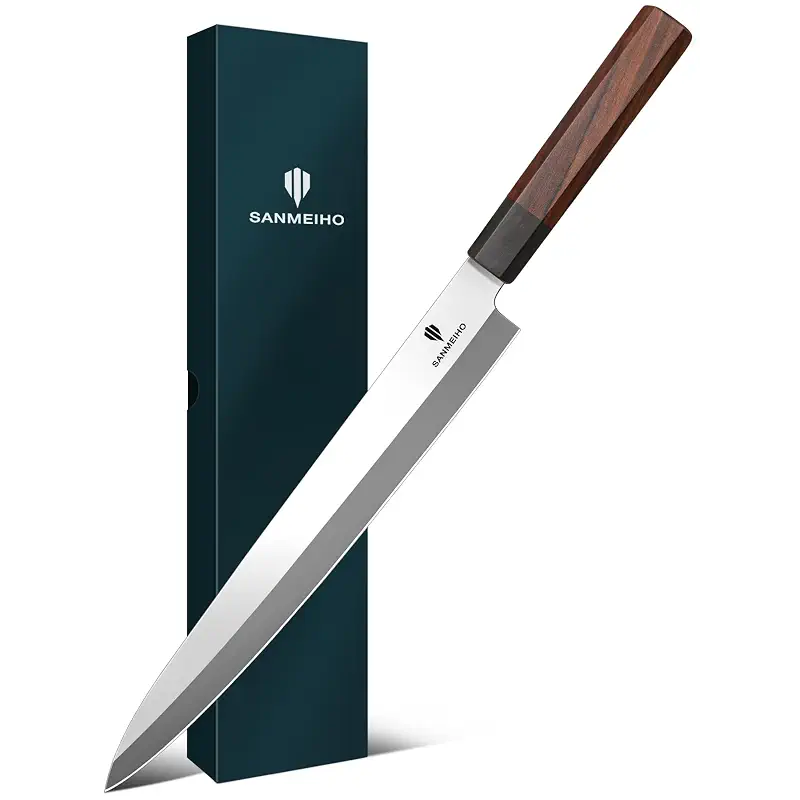
Sanmeiho
10 Inch Sushi Knife, High Carbon Japanese Steel Sashimi Knife | Japanese Knives for Fish Filleting & Slicing, Sushi Making Knives with Red Sandalwood Handle
4.6(87)
Sharp, affordable workhorse that delivers strong cutting performance without premium pricing.
Ideal for: Home cooks seeking a reliable, everyday sushi knife without premium expense.
The Sanmeiho 10-inch stands out for buyers who want genuine performance without spending heavily. Owners consistently praise its sharpness and note it cuts fish cleanly right out of the box, which matters because a dull sushi knife defeats the entire purpose. The 57 HRC hardness and 12-degree cutting angle give it comparable edge geometry to knives twice the price. The octagonal red sandalwood handle is comfortable for extended use, and the full-tang design adds stability.
What you're trading here is some refinement in blade finish and handle details versus higher-priced options. The steel is stainless, which means easier maintenance and less worry about rust, but it won't hold an edge quite as long as carbon-steel alternatives. That's a fair trade for most home cooks who aren't using it daily in a professional setting. Compared to the kanngou, this knife prioritizes accessibility and straightforward function over specialized techniques.
The one legitimate caveat from reviews is that a few buyers found it slightly less sharp than expected, though the majority experienced excellent edge performance. It's also multi-purpose enough for fish filleting, deboning, or even slicing steaks, so you're not locked into sushi-only duty.
Pros
Sharp edge holds up through multiple uses
Comfortable octagonal handle reduces hand fatigue
Stainless steel resists rust and simplifies care
Cons
Edge performance occasionally fell short of advertised sharpness
Less refined blade finish than premium competitors
Key features
10-inch blade with 12-degree cutting angle on both sides
57 HRC high-carbon Japanese stainless steel
Octagonal red sandalwood handle with full-tang construction
Gift box included; multi-purpose cutting capability
#2 Pick
Best for Edge Retention
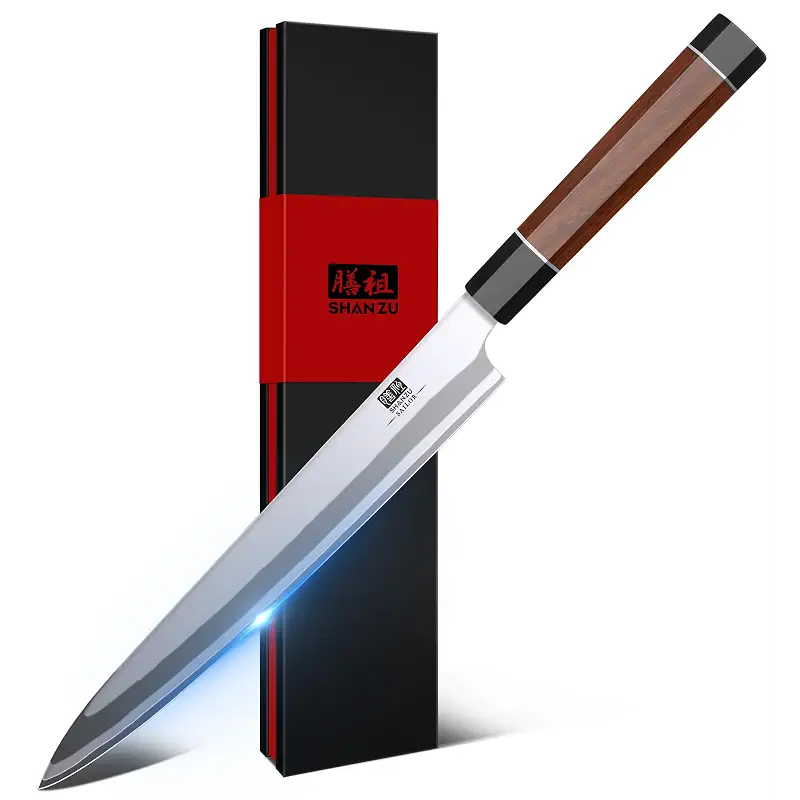
Shan Zu
SHAN ZU 10 Inch Japanese Sushi Knife, 9 Layers 10Cr15MoV High Carbon Steel | Sashimi Knife, Sharp Cutting Yanagiba Knives with Red Sandalwood Handle for Sushi Making, Slicing & Fish Knives
4.6(385)
Nine-layer forged blade with premium hardness keeps its edge longer than standard options.
Ideal for: Regular users who value edge retention and don't mind hand-forged character marks.
The Shan Zu combines a 62 HRC hardness rating (higher than most competitors) with a nine-layer forged-steel construction that resists chipping and warping. Owners report it slices through sashimi-grade fish with minimal resistance and maintains sharpness through repeated use, which is exactly what you want if you're preparing fish regularly. The matte blade finish is a practical touch: it reduces fingerprints and food residue, keeping the knife visibly cleaner during a prep session.
The 12-degree blade angle and tapered spine deliver precision that appeals to both beginners learning proper technique and experienced users who understand how edge geometry affects the final cut. Multiple international reviews (translated from Spanish, French, and German) confirm consistent quality and performance. Some users note minor QC variations like slight blade bends or uneven grinding, which is candid feedback but also reflects that hand-forged knives occasionally show minor inconsistencies. These don't impair cutting performance significantly, but they're worth knowing if you're detail-oriented.
Where this knife differs from the Sanmeiho is durability: the higher hardness and layered construction mean better edge retention for frequent use, though it requires a bit more care during sharpening. If you're comparing it to the Lucky Cook, this one edges out on hold-time but the Lucky Cook offers a single-bevel Yanagiba design that some prefer for sashimi work.
Pros
62 HRC hardness maintains sharpness through extended use
Matte finish reduces fingerprint and food buildup
Nine-layer forged construction increases chip resistance
Cons
Minor QC variations like slight blade bends from hand forging
Requires careful maintenance during sharpening due to higher hardness
Key features
Nine-layer forged steel with core, 62 HRC hardness
12-degree blade angle for smooth, effortless slicing
Matte blade finish reduces fingerprints and residue
Octagonal red sandalwood handle; premium gift box
#3 Pick
Best for Beginners
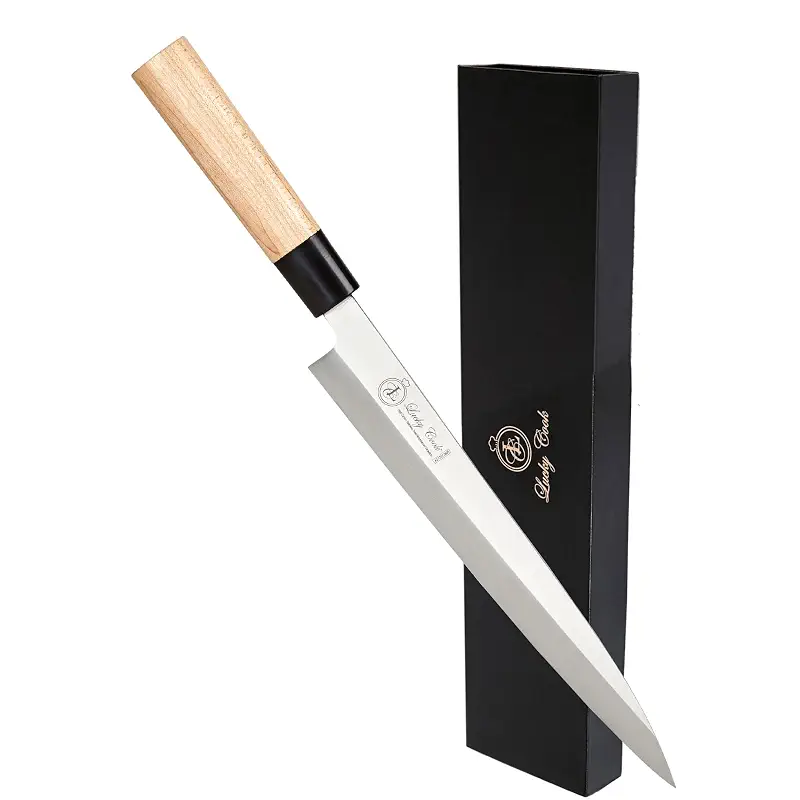
Lucky Cook
10” Sashimi Sushi Knife – Ultra Sharp Traditional Japanese Sushi Knife for Sashimi, Fish Filleting & Precision Slicing – Premium Stainless Steel Blade, Pakkawood Handle & Gift Box
4.6(2,143)
Single-bevel Yanagiba design with exceptional sharpness and balance makes sushi prep approachable.
Ideal for: Home cooks making sushi for the first time or occasional entertaining.
The Lucky Cook has the highest review count in this lineup (over 2,100), and buyers consistently highlight two strengths: it arrives extremely sharp, and the single-bevel Yanagiba blade design produces the clean, paper-thin cuts that define professional sashimi work. First-time sushi makers report that the knife does the heavy lifting for them; the sharpness and balance mean minimal effort is required, which builds confidence quickly. The Pakkawood handle offers ergonomic comfort without the maintenance demands of natural wood, and the included protective sheath and gift box add real value.
Where this knife excels for beginners is the single-bevel geometry, which differs from the double-bevel designs of the Sanmeiho and Shan Zu. That asymmetric edge is closer to how professional sushi chefs actually work, so if you're serious about technique, this design teaches you the right motion from the start. One reviewer who works in San Francisco catering praised it enough to add it to their chef roll. However, the plastic bolster holding the handle to the blade can crack under heavy use or butchering cuts (where you'd be forcing the knife laterally), so it's not ideal for the rough-and-tumble environment of a busy line.
The minor issue is that a few buyers found grind inconsistencies or roughness on the spine that required light finishing with a whetstone. This is entry-level pricing, so minor TLC is expected, but it's good to know upfront.
Luxury gift box; versatile enough for vegetables and meats
#4 Pick
Best Aesthetic Design
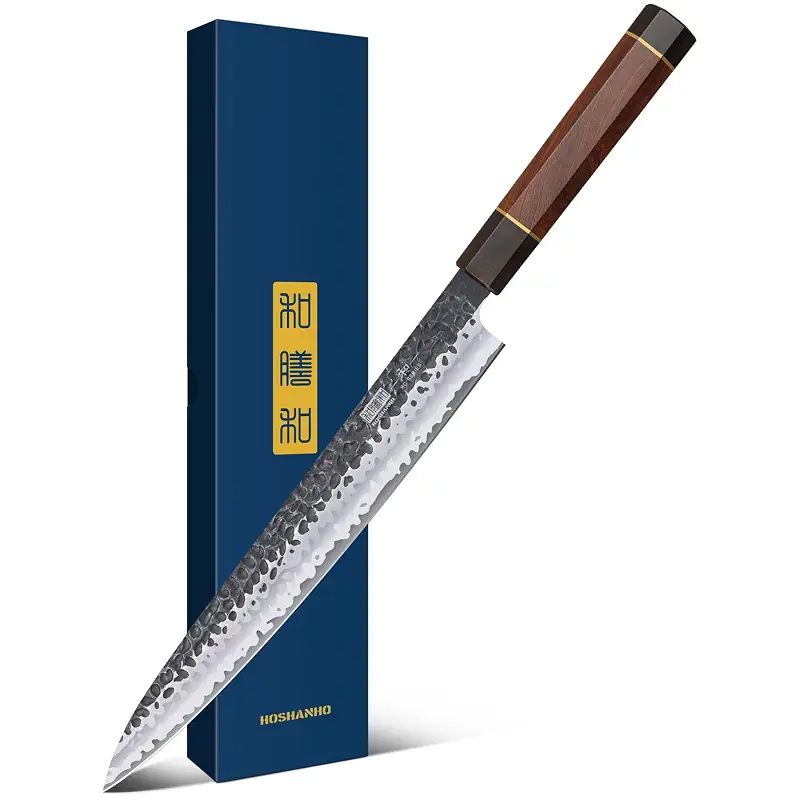
Hoshanho
HOSHANHO Sushi Knife 10 Inch, Ultra Sharp Sashimi Knives, Rosewood Handle | Hand Forged High Carbon Steel Yanagiba Knife, Japanese Kitchen Chef Knives for Cutting Sushi & Sashimi, Fish Filleting
4.5(156)
Hand-forged beauty with 8-layer composite steel and octagonal rosewood handle elevates daily prep.
Ideal for: Aesthetically minded cooks who value a beautiful blade that performs professionally.
The Hoshanho prioritizes visual appeal without sacrificing function. The octagonal rosewood handle with copper wire inlay catches light, and owners repeatedly describe it as beautiful: which matters if your knife lives on your counter or gets reached for in front of guests. The blade itself features 8 layers of composite steel protecting a 10Cr15CoMoV core, achieving 60 HRC hardness with a 12-15 degree per-side polish. In practice, this means sharp, clean cuts through raw fish and soft ingredients like tofu and soft cheeses.
Sharpness is the standout quality: several owners mention the knife is almost frightening in its ability to slice raw chicken thinly without tearing, which translates directly to sashimi work. One customer who already owns six Hoshanho knives speaks to the reliability and consistency. However, a few caveats emerged in reviews: the handle can feel cheap visually despite the copper accents, one unit arrived with a cracked handle, and the plastic wrap protective covering isn't as robust as a proper sheath. The balance point sits further out on the blade than some prefer, which is a personal preference depending on your cutting style but worth testing if possible.
Compared to the kanngou at a similar price point, this knife offers more visual refinement and slightly easier maintenance, though the kanngou's double-edged sujihiki design provides more versatility for carving and slicing both fish and cooked meats.
Pros
Strikingly beautiful rosewood handle with copper wire detail
Hand-forged 8-layer blade achieves 60 HRC hardness and retention
Exceptionally sharp from factory with minimal dulling through use
Cons
Handle aesthetic doesn't always match the quality of the blade
Protective covering is basic plastic wrap, not a proper sheath
Key features
10-inch flat-blade Yanagiba with 12-15 degree hand-polished edge
8-layer composite steel with 10Cr15CoMoV core; 60 HRC hardness
Ergonomic octagonal rosewood handle with copper wire inlay
Specialized for soft ingredients: fish, tofu, cheese; doubles as filleting knife
#5 Pick
Best Specialized Sujihiki
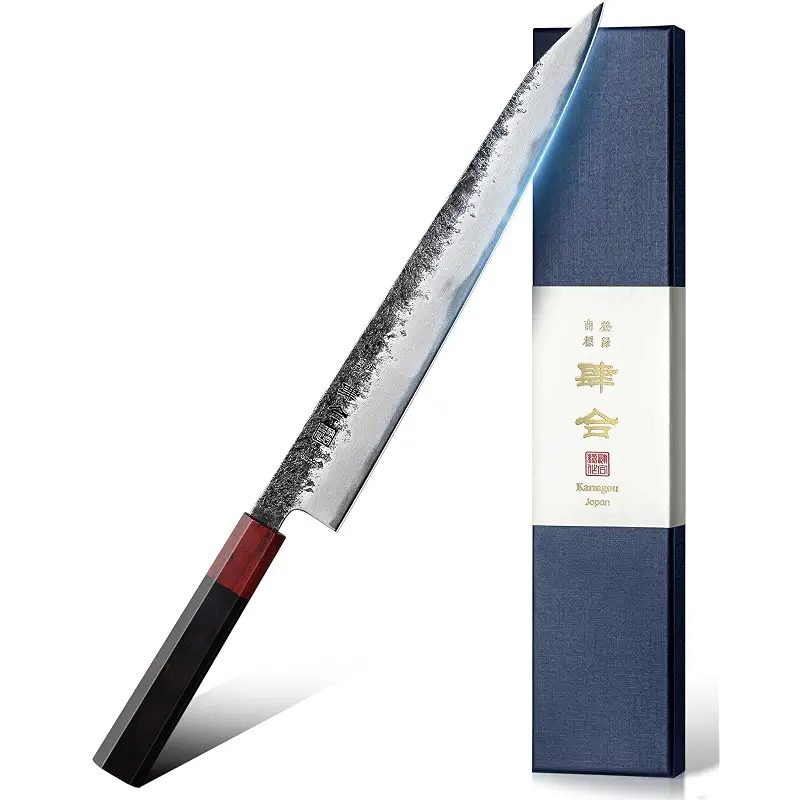
kanngou
kanngou Sushi Knife 27cm Japanese Carving Knife, AUS-8 Steel Sujihiki Sashimi Knives for Fish Filleting and Meat Slicing, Double Edge Yanagiba Knives with Premium Gift Box
4.4(44)
Double-edged 27cm blade excels at single-stroke slicing for fish, meat, and precision carving.
Ideal for: Home cooks and professionals who slice both raw fish and cooked meats regularly.
The kanngou stands apart because it's a sujihiki, not a traditional Yanagiba. The difference matters: where a Yanagiba has a single bevel optimized for raw fish, the sujihiki features a double-edged blade suited to both fish and cooked meats. At 27 centimeters, it's longer than the standard 10-inch competitors, which trades compactness for the ability to slice larger pieces in one smooth motion. Owners in professional kitchens and home cooking alike praise the long blade's utility for carving roasts or slicing thick sashimi blocks without multiple strokes.
The AUS-8 stainless steel at 59 HRC hardness is softer than the premium carbon-steel options here, but that's by design: easier to sharpen, forgiving for mistakes, and low-maintenance for users who won't invest in professional honing equipment. The Kurouchi Nashiji blackened finish and hammered texture add visual character while reducing friction during cutting. One professional sushi chef confirmed it performs well for the price range, though noted the edge won't hold quite as long as pricier carbon-steel knives during extended prep work. A minor QC inconsistency showed up in one review (uneven sharpening), but the overall geometry remained solid enough that cutting wasn't affected.
If you're comparing this to the best yanagiba knives, this sujihiki trades the specialized single-bevel precision of Yanagiba work for broader versatility. The length also means it's less suited to tight workspaces compared to a standard 10-inch blade.
Pros
27cm double-edged blade ideal for single-stroke slicing and carving
AUS-8 steel easy to sharpen and forgiving for home cooks
Kurouchi Nashiji finish reduces friction and adds visual character
Cons
Longer blade requires more counter and storage space than 10-inch options
Lower hardness (59 HRC) means edge retention not as long as premium alternatives
Key features
27cm double-edged sujihiki blade; traditional Japanese carving knife
AUS-8 stainless steel (59 HRC) balances sharpness with ease of sharpening
Blackened Kurouchi Nashiji finish with hammered texture
Ebony and red sandalwood handle; suited for fish, meat, and precision carving
How to Choose a Sushi Knife
Four trade-offs that actually matter when matching a sushi knives to your kitchen.
Blade Length and Shape Matter
A traditional sushi knife is 8 to 10 inches for most home work, though professional setups sometimes go longer. Length affects control and the types of ingredients you can handle efficiently. Single-bevel Yanagiba designs are authentic for sashimi slicing, while double-edged or modified blades offer more versatility for vegetables and meats. Longer blades like the 27cm sujihiki excel at one-stroke carving but demand more counter space and technique discipline. Shorter blades are more forgiving and easier to store.
Steel Type and Hardness Trade-Offs
High-carbon steel holds an edge longer but requires more maintenance and rust prevention. Stainless steel is forgiving, resists corrosion, and suits busy home kitchens where upkeep is secondary to convenience. Hardness ratings (measured in HRC) typically range from 57 to 62; higher hardness retains sharpness longer but is harder to sharpen yourself. A sushi knife sharpening guide walks through the basics if you plan to maintain your blade regularly. For casual use, stainless at 57-59 HRC is practical; for frequent prep, consider 60+ HRC carbon or layered steel.
Handle Comfort and Design
Octagonal handles are traditional and provide better grip control than round ones, reducing hand fatigue during repetitive slicing. Rosewood, sandalwood, and Pakkawood each have different feel and maintenance needs. Natural woods like sandalwood add beauty but require hand-washing and occasional conditioning. Pakkawood and modern composites are low-maintenance and slip-resistant. Test weight and balance if possible; a well-balanced knife feels lighter in hand and lets the blade do the work rather than forcing it. Handle size matters too: smaller hands may prefer lighter, narrower profiles.
Your Use Case and Budget
Occasional home sushi rolling needs a sharp, reliable blade but not professional hardness or refinement. Budget-friendly options deliver excellent performance here. Regular fish prep or sashimi entertaining benefits from better edge retention and aesthetics. Professional or semi-professional use demands premium materials and careful edge maintenance, where the investment pays off over time. Consider whether you're willing to hand-sharpen or prefer a knife that tolerates electric sharpeners, as that affects your long-term costs and confidence in maintaining the tool.
Frequently asked
Quick answers to the questions readers ask most.
What is the difference between a sushi knife and a Yanagiba knife?
A Yanagiba is a specific Japanese knife type with a single, angled bevel designed for slicing raw fish into thin, clean sheets. Most sushi knives sold follow this design, though some are double-beveled for added versatility. Yanagiba blades are typically longer and narrower than other kitchen knives. A sujihiki (like the kanngou in this lineup) is a Western adaptation with a double edge, suited to both fish and cooked meats. For pure sashimi work, Yanagiba is the traditional choice; for mixed prep, sujihiki or double-beveled knives offer flexibility.
How sharp should a sushi knife be out of the box?
A quality sushi knife should arrive sharp enough to glide through sashimi-grade fish or paper with minimal effort. If you can't slice cleanly on day one, either the knife wasn't finished properly or it was stored improperly. Many owners report running new knives lightly across a whetstone to refine the edge and ensure consistency, which is normal maintenance, not a defect. Truly dull knives are rare and usually indicate shipping damage or QC issues warranting a return.
Is stainless steel or carbon steel better for a sushi knife?
Stainless steel is easier to maintain, resists rust and staining, and suits home cooks who won't obsess over care. Carbon steel holds an edge longer and is prized by professionals, but it requires hand-washing, occasional oiling, and careful storage to avoid rust. For most home sushi makers, stainless is practical and sufficient. If you prep fish several times a week and have the discipline to maintain a blade, carbon or high-carbon steel rewards you with longer edge life between sharpenings.
Can I use a sushi knife for other kitchen tasks?
Yes, most sushi knives work well for slicing vegetables, soft cheeses, bread, and boneless cooked meats. However, they're optimized for delicate, single-stroke slicing, not chopping, mincing, or cutting through bone. Using a sushi knife for heavy work dulls it quickly and can damage the blade geometry. Keep it for fish, sashimi, vegetables, and fine slicing tasks. A chef's knife handles tougher jobs better and will extend your sushi knife's life.
How do I store and protect a sushi knife?
Store sushi knives flat in a drawer with a protective sheath, or hang them on a magnetic strip away from moisture. Never place them in a dishwasher or leave them wet. Dry immediately after washing. Many knives come in a gift box or with a plastic sheath; both work for occasional storage. If you use it daily, consider a magnetic strip for easy access and blade protection. Keep the edge away from contact with other metal utensils to avoid dulling or chipping.