Best Knife to Cut Sushi: Top Picks for Slicing & Sashimi
Find the best knife to cut sushi with our expert guide. Compare Japanese sashimi blades, sharpness, and handles for precision slicing and sashimi prep.
Verdict, analysis, and key features for each pick.
#1 Pick
Best Overall Japanese Sushi Knife
Shan Zu
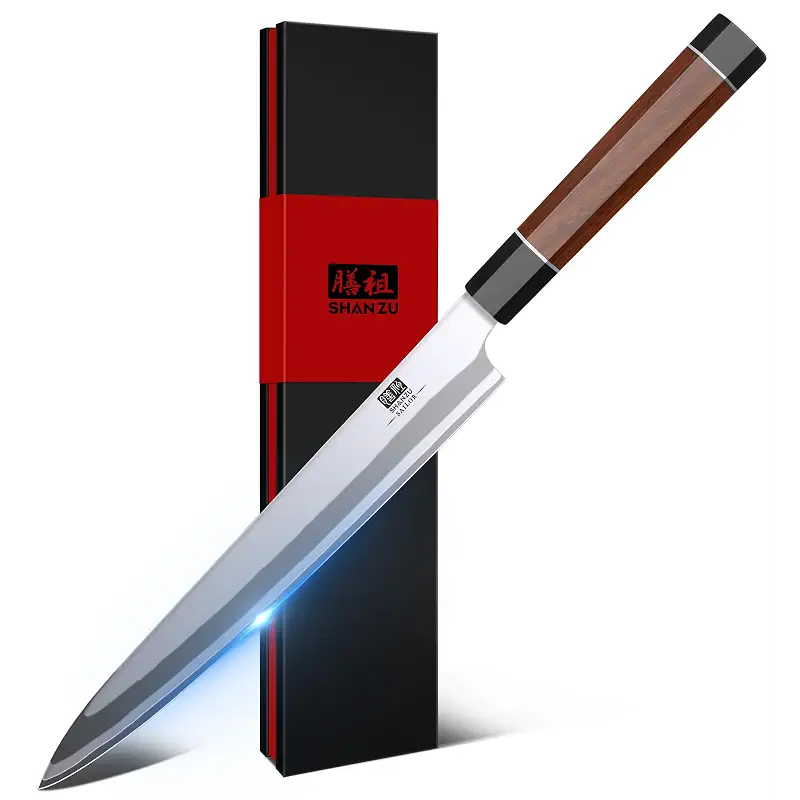
SHAN ZU 10 Inch Japanese Sushi Knife, 9 Layers 10Cr15MoV High Carbon Steel | Sashimi Knife, Sharp Cutting Yanagiba Knives with Red Sandalwood Handle for Sushi Making, Slicing & Fish Knives
4.6(385)
Nine-layer forged steel with 62 HRC hardness and 12° edge angle delivers true sushi-chef performance at reasonable cost.
Ideal for: Home sushi enthusiasts and amateur chefs who want professional-grade performance without premium pricing.
This is the knife that comes closest to what professional sushi chefs rely on. The nine-layer construction isn't marketing: it genuinely strengthens the blade against chipping while keeping the core steel hard enough to hold a 12° edge for weeks of use. Buyers consistently report slicing through sashimi-grade fish with one smooth draw of the knife, no sawing required. The red sandalwood handle feels substantial without being heavy, and the octagonal shape sits naturally in a pinch grip without rolling in your palm.
What sets this above the field is edge retention. Multiple owners note that after weeks of cutting, the blade still splits paper-thin lemon slices. The matte finish resists fingerprints and keeps the blade visibly clean during prep: a genuine quality-of-life detail when you're plating. There is minor variability in initial grind quality reported by some buyers; a few notes that the blade leans slightly right out of the box, though performance hasn't suffered. Compared to the Kitchen Home nonstick option, this is the purist's choice if you want a single-task blade that specializes in what sushi chefs actually do.
The main trade-off is care. Unlike stainless or nonstick rivals, this high-carbon steel blade benefits from hand washing and occasional oiling to prevent surface oxidation. For home cooks who see sushi-making as a hobby they'll return to regularly, that discipline is worth the payoff.
Pros
Nine-layer forged steel resists chipping and holds 12° edge for weeks
Exceptional edge retention; slices paper-thin fish and lemon without effort
Matte blade finish reduces fingerprints and keeps blade visibly clean
Cons
High-carbon steel requires hand washing and occasional oiling to prevent oxidation
Minor grind variability reported by some buyers upon arrival
Key features
Nine-layer forged steel hardened to 62 HRC
Precise 12° blade angle for clean sashimi and sushi roll cuts
Red sandalwood octagonal handle with full tang construction
Matte finish reduces food residue and fingerprints during prep
Comes with protective storage box and blade tip guard
#2 Pick
Best Budget Sushi Knife
Sanmeiho
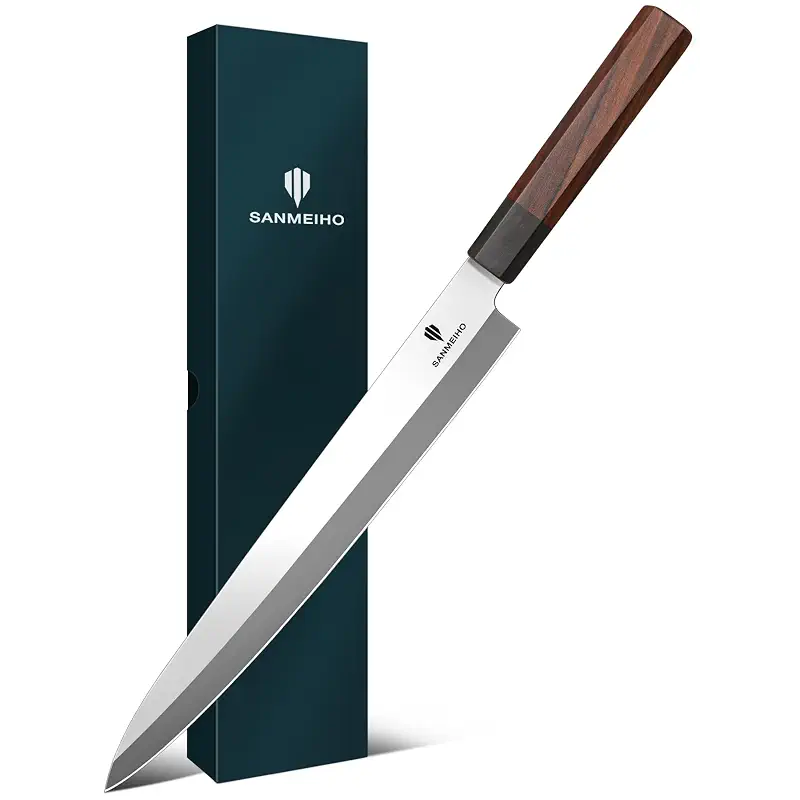
10 Inch Sushi Knife, High Carbon Japanese Steel Sashimi Knife | Japanese Knives for Fish Filleting & Slicing, Sushi Making Knives with Red Sandalwood Handle
4.6(87)
Affordable stainless steel blade with 57 HRC hardness and octagonal sandalwood handle cuts fish cleanly without the upkeep demands.
Ideal for: Budget-conscious home cooks making sushi weekly who prefer stainless steel and want fewer maintenance demands.
This is the sushi knife for cooks who want sharpness and reliability without fussing over maintenance. The stainless steel core at 57 HRC is softer than the Shan Zu's high-carbon version, which means it won't hold an edge quite as long, but it trades longevity for rust resistance and zero corrosion worry. Hand washing is still preferred, but dishwasher survival won't ruin the blade. Buyers describe it as "wonderful" for amateur sushi-rolling and note clean cuts through fish, though a couple mention it wasn't quite as sharp as the advertising suggested out of the box.
The octagonal sandalwood handle and full-tang design match the look and feel of much pricier Japanese knives, which appeals to home cooks who want the aesthetic without the cost. For a knife primarily used for weekend sushi projects, this hits a solid middle ground. If you compare this to the nonstick Kitchen Home blade, the Sanmeiho trades the gimmick of holes and coating for simpler, more traditional construction that focuses on basic steel quality.
The edge does dull faster than high-carbon alternatives, so budget for occasional honing and more frequent sharpening: roughly every two to three months if you're making sushi weekly. That said, the price point makes replacing or re-grinding the blade less of a financial decision.
Pros
Stainless steel resists rust and corrosion; dishwasher-safe
Octagonal sandalwood handle matches pricier Japanese knives in design
Clean cuts through fish with minimal effort and good value
Cons
Softer steel (57 HRC) dulls faster than high-carbon options
Some buyers report edge sharpness not matching advertised claims
Key features
Japanese stainless steel 5Cr15MoV with 57 HRC hardness
12-degree blade angle optimized for fish and sashimi slicing
Red sandalwood octagonal handle with full-tang design
Rust and corrosion resistant; low-maintenance stainless construction
Presented in gift box; suitable for beginner and experienced users
#3 Pick
Best for First-Time Sushi Makers
Lucky Cook
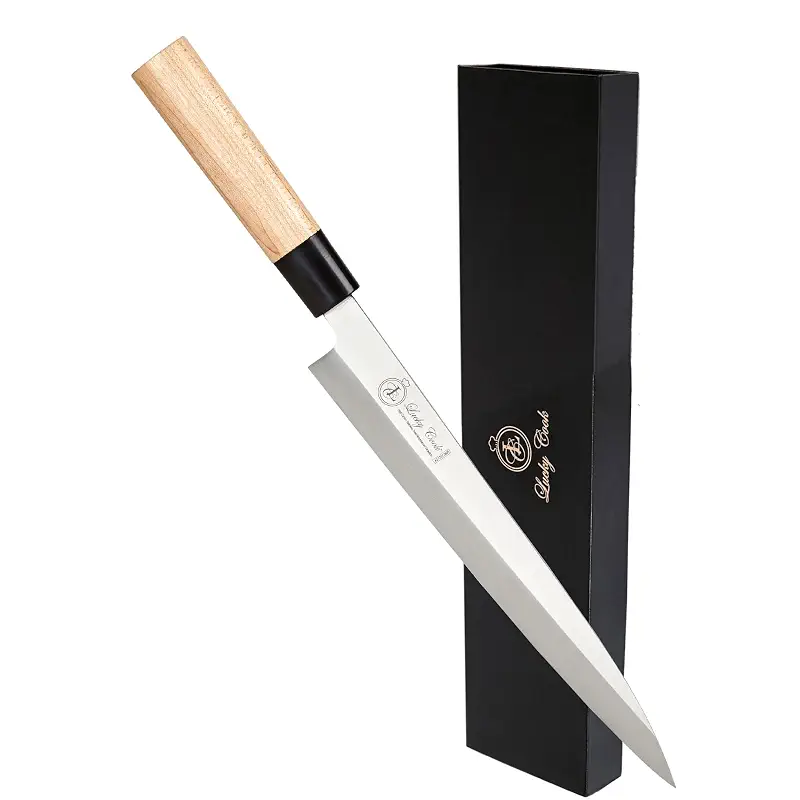
10” Sashimi Sushi Knife – Ultra Sharp Traditional Japanese Sushi Knife for Sashimi, Fish Filleting & Precision Slicing – Premium Stainless Steel Blade, Pakkawood Handle & Gift Box
4.6(2,143)
Single-bevel design with Pakkawood handle and included protective box makes this the most forgiving entry point into sushi slicing.
Ideal for: Beginners taking their first sushi-making class or hobby cooks exploring sushi at home for the first time.
With over 2,100 reviews, this blade has earned trust through sheer volume of home cooks picking it for their first sushi attempt. What strikes most reviewers is how approachable it feels: the Pakkawood handle is slip-resistant even with wet hands, the blade weight is balanced so the knife does much of the work, and the single-bevel design means you're learning on the same geometry pros use. Beginners report moving from intimidated to confident within a few rolls, which speaks to the forgiving learning curve.
The stainless steel holds an edge reasonably well for entry-level work; owners report it staying sharp for weeks of casual use. One sushi-class graduate mentions the knife made precision cuts effortless compared to a regular chef's knife, confirming the value of single-bevel geometry even for novices. A small number of buyers note minor grind inconsistencies or a slightly squared spine (the flat part you don't use), but acknowledge that with a touch of personal sharpening, the knife becomes excellent. If you're deciding between this and other single-bevel designs like yanagiba knives, this model prioritizes approachability and comfort for learners, while purist options focus on absolute sharpness and edge geometry.
The trade-off is durability under abuse. The plastic bolster (the guard between handle and blade) is beginning to show stress after heavy professional use in one review, though home cooks won't approach that intensity. Hand washing and gentle storage preserve the blade.
Pros
Single-bevel design teaches proper sushi-cutting technique from the start
Slip-resistant Pakkawood handle comfortable with wet hands
Well-balanced blade weight; cuts with minimal effort required
Cons
Plastic bolster may develop stress cracks under heavy professional use
Minor grind inconsistencies reported; light sharpening may be needed
Key features
Single-bevel blade inspired by traditional Japanese yanagiba design
Premium stainless steel resists rust and corrosion
Ergonomic Pakkawood handle with full-tang construction
10-inch length ideal for clean sushi roll and sashimi cuts
Includes protective storage box and blade-tip cover for safe handling
#4 Pick
Best Multipurpose Nonstick Knife
Kitchen Home
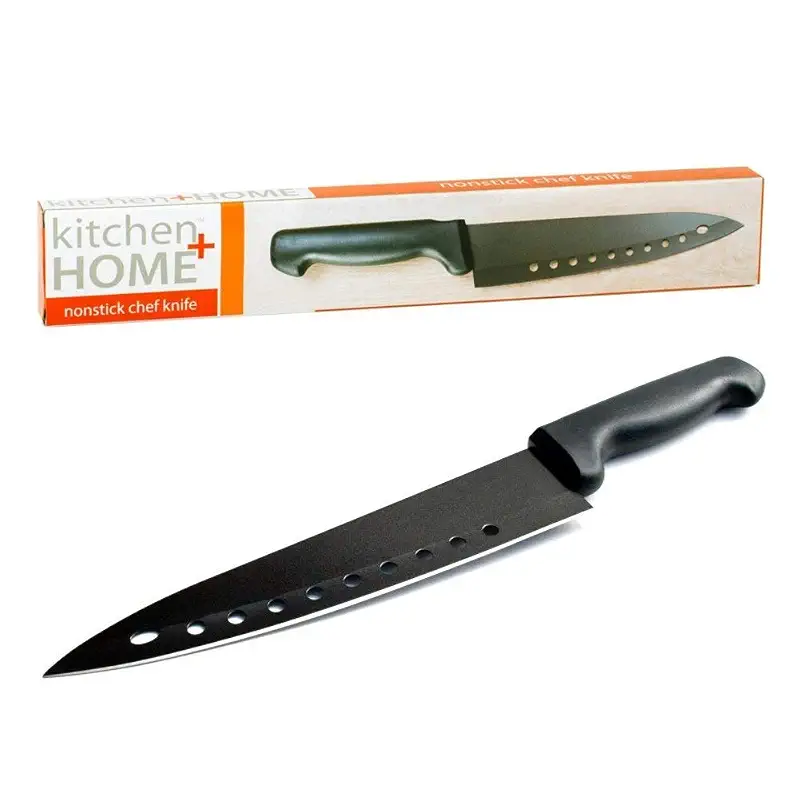
Kitchen + Home Non Stick Sushi Knife - The Original 8 inch Stainless Steel Non Stick Multipurpose Chef Knife
4.6(2,146)
Aerated nonstick blade with perforations cuts through sushi, fish, and vegetables without sticking; lighter and more versatile than single-task designs.
Ideal for: Home cooks making sushi plus everyday vegetables who want one lightweight blade that reduces sticking and simplifies cleanup.
This knife solves a real problem many home cooks face: fish and rice sticking to the blade mid-cut. The nonstick coating combined with ten perforations along the edge genuinely reduces friction during sushi-roll slicing. Owners who use it exclusively for sushi report that cleanup is faster and the blade doesn't require rinsing between rolls as often as traditional steel. That said, the nonstick benefit is modest (a damp cloth is still necessary, not optional) but it's noticeable enough that buyers specifically recommend it for sushi work.
What makes this knife distinct is its versatility. The thin, flexible blade that makes it suited to delicate sushi cutting also glides through soft tomatoes and raw fish with equal ease. Owners who've kept these for seven to ten years say they're still sharp and haven't chipped, chipped, or flaked, which is a strong durability signal. The lightweight design appeals to cooks with smaller hands or anyone tired after repetitive cutting. Unlike specialty blades such as the best kiritsuke knife or traditional yanagiba designs, this is the generalist's pick: you can swap between sushi and vegetable prep without changing tools.
The limits: the plastic handle and overall feel are simpler than Japanese knives with wood handles. Some buyers describe it as "feels cheap," though it performs well. The nonstick coating fades over time (though it doesn't flake, per long-term reviews), and the thin blade, while precise, won't tolerate the same abuse as a heavier steel.
Pros
Nonstick coating with blade perforations reduce food sticking during sushi cuts
Lightweight and thin blade suits both sushi and vegetable prep equally
Seven-to-ten-year durability without chipping, flaking, or rust reported
Cons
Plastic handle feels less premium than wood; overall build feels simpler
Nonstick coating fades with time; still requires damp cloth between cuts
Key features
PFOA-free nonstick coating with ten-hole aerated blade design
High-carbon stainless steel resists rust and corrosion
Lightweight and thin blade for precise slicing and minimal effort
Versatile for sushi, raw fish, vegetables, fruits, and cheeses
#5 Pick
Best Premium All-Purpose Chef's Knife
Hoshanho
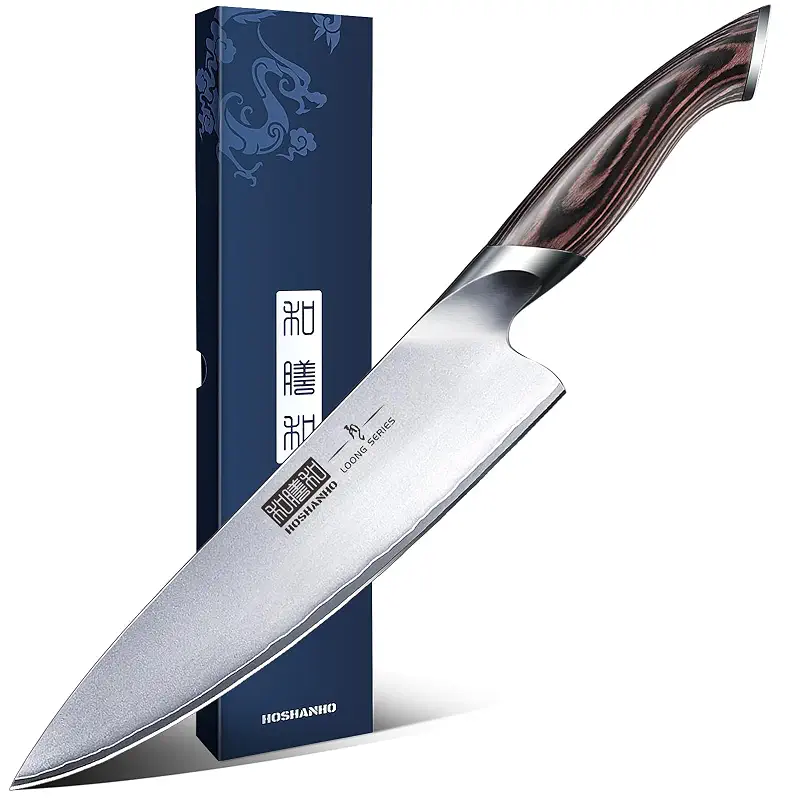
HOSHANHO Kitchen Knife in Japanese High Carbon Steel, Professional High-Class Chef's Knife 8 inch, Non-slip Ultra Sharp Cooking Knives with Ergonomic Handle | Multifunctional, 10Cr15CoMoV, Home Gifts
4.7(2,722)
Japanese high-carbon steel at 60 HRC with ergonomic wood handle and 13° edge angle delivers professional sharpness and comfort for daily kitchen work.
Ideal for: Professional and home cooks who want one excellent knife for daily kitchen work plus occasional sushi prep.
This is the knife for cooks who see themselves using the same blade for sushi prep, vegetable work, and slicing roasts. Owners (including professional chefs) consistently report that the sharpness out of the box matches or exceeds knives costing twice as much. The 60 HRC hardness places it at the high end of the range, so edge retention rivals single-purpose sushi knives. The 13° angle on each side is slightly wider than traditional single-bevel sushi designs, which sacrifices some sushi-specific precision for better all-around performance. A professional chef using this daily notes it cuts through everything easily with no effort, and a home cook with decades of knife experience says it's among the best she's owned.
The wood handle with sloped bolster is specifically designed to encourage a proper pinch grip, and buyers with small hands praise the ergonomic fit. The matte blade finish keeps the look clean and professional. What separates this from the nonstick multipurpose knife is that it's a genuine chef's knife first, sushi knife second: the weight and balance favor chopping and dicing, not the delicate single-draw sushi cut. For cooks who want a true single-purpose sashimi blade, specialty options like top yanagiba knives offer superior geometry; this model trades some sushi perfection for broader kitchen utility.
The trade-off is that this isn't a true sushi knife. The thickness and double-bevel geometry mean you'll get a clean sushi cut, but not the paper-thin perfection of a single-bevel yanagiba. For home cooks, that compromise is rarely a deal-breaker. Like other high-carbon options, hand washing and occasional oiling preserve the steel.
Pros
60 HRC hardness with exceptional edge retention rivals single-purpose knives
Ergonomic wood handle with sloped bolster encourages safe pinch grip
Comes razor-sharp from factory; cuts through fish, meat, and vegetables effortlessly
Cons
Double-bevel geometry not optimized for sushi-like single-bevel alternatives
High-carbon steel requires hand washing and occasional oiling for longevity
Key features
Japanese high-carbon steel hardened to 60 HRC
Hand-sharpened 13-degree edge angle for chopping, slicing, and dicing
Ultra-durable wood handle with sloped bolster for safe pinch grip
Matte blade finish resists corrosion and fingerprints
Presented in gift box; suitable for both professional and home kitchens
How to Choose the Right Sushi Knife
Four trade-offs that actually matter when matching a knife to cut sushi to your kitchen.
Single-Bevel vs. Double-Bevel Design
A sushi knife versus chef knife comes down partly to blade geometry. Single-bevel blades (ground on one side only) are traditional sushi tools: they cut with a single smooth draw and produce the thinnest, cleanest slices. Double-bevel blades (ground on both sides) are more forgiving for beginners and versatile across tasks like chopping vegetables or slicing roasts. If sushi is your primary goal, single-bevel is worth learning; if you want one blade for everything, double-bevel suits multipurpose work. Traditional Japanese sushi restaurants use single-bevel yanagiba or sashimi knives for a reason: the geometry produces unmatched precision. For home use, either works: the choice depends on whether you're committing to sushi-focused technique or hedging your bet with versatility.
Steel Hardness and Edge Retention
Look for knives rated between 57 and 62 HRC (Rockwell hardness). Higher hardness (60-62 HRC) holds a sharper edge longer, ideal if you make sushi weekly. Lower hardness (56-58 HRC) dulls faster but sharpens more easily and won't chip as readily if you abuse the blade. High-carbon steel typically runs harder and stays sharp longer than stainless, but requires more care (hand washing, occasional oiling) to prevent surface oxidation. Stainless steel is lower-maintenance and dishwasher-safe, but often softer and needing more frequent honing. For sushi, the hardness matters more than the type: a 60 HRC stainless blade will outperform a soft 55 HRC carbon steel.
Blade Length and Weight Distribution
Most sushi knives are 8 to 10 inches long. Longer blades (10 inches) let you cut through sushi rolls and large sashimi blocks in one draw, reducing tearing and crushing. Shorter blades (8 inches) offer more control and suit smaller hands. Weight should feel balanced in your palm, not nose-heavy or handle-heavy. A lighter knife requires more technique and reduces fatigue during repetitive cutting; a heavier knife does more of the work but demands better control. Test by holding a knife with a pinch grip (thumb and forefinger on the blade shoulders) and see if your wrist stays neutral. If the tip droops, the blade is too heavy; if the handle pulls down, the handle is too heavy. The best knife disappears in your hand.
Handle Material and Maintenance Demands
Wood handles (sandalwood, Pakkawood) feel warm and traditional but require hand washing and occasional conditioning to prevent splitting or absorbing odors. Plastic or resin handles are dishwasher-safe and low-maintenance, though they feel less premium and may eventually crack. Octagonal handles resist rolling on the counter and encourage the correct pinch grip; round handles are familiar but roll easily. For home cooks, the handle feel matters as much as the blade: if it doesn't sit right in your hand after 10 minutes of use, the blade won't stay sharp long because you'll use poor technique. Ergonomics beat prestige every time.
Budget vs. Performance
A sharp knife is safer and more enjoyable than an expensive dull one. Budget-friendly options (under thirty dollars) often outperform knives double or triple the cost, especially if they're made from decent stainless steel hardened to 57 HRC or higher. Premium knives (over fifty dollars) usually offer longer edge retention, better steel, and nicer handles, but the jump in performance is incremental once you're above a baseline threshold. For sushi-making, a mid-range single-bevel knife (thirty to sixty dollars) with a 57-60 HRC core and wood handle will satisfy most home cooks for years. Spending more buys aesthetics and durability, not dramatically better cuts.
Frequently asked
Quick answers to the questions readers ask most.
Can I use a regular chef's knife to cut sushi?
Yes, but you'll notice a difference. A chef's knife is heavier and thicker, so it crushes rice and tears delicate fish more easily than a thin single-bevel sushi blade. If you only make sushi occasionally, a sharp chef's knife works. If you're making rolls or sashimi regularly, a proper sushi knife (single-bevel or thin multipurpose) will produce cleaner results and feel noticeably easier. The geometry matters more than the price.
How often do I need to sharpen a sushi knife?
Depends on steel hardness and use frequency. High-carbon steel at 60+ HRC may need sharpening every 4 to 8 weeks with heavy weekly use. Softer stainless (57 HRC) needs touch-ups every 2 to 3 weeks. Between sharpenings, hone the edge with a honing rod every few uses: this realigns the blade and keeps it cutting well longer. Hand washing and gentle use extend the interval significantly; dishwasher use accelerates dulling.
What's the best way to clean a sushi knife?
Hand wash immediately after use with warm soapy water and a soft cloth. Avoid the dishwasher, which dulls blades and can corrode steel. For high-carbon knives, dry with a cloth right away to prevent water spots and oxidation. Never let it sit wet in the sink. Store on a magnetic strip or blade guard, not loose in a drawer where it'll bump other tools. A damp (not soaking wet) cloth between sushi cuts reduces sticking and keeps the blade visible during work.
Is a nonstick sushi knife worth it, or is it a gimmick?
It's not a gimmick, but it's not a game-changer either. The nonstick coating and perforations genuinely reduce sticking during sushi-roll slicing, so you'll rinse the blade slightly less often. That said, you'll still need a damp cloth between cuts: no nonstick knife eliminates that step entirely. If you're cutting sushi weekly and tired of constant rinsing, the convenience is worth it. If you make sushi monthly, a traditional sharp blade is fine and probably sharper.
What's the difference between yanagiba, deba, and sashimi knives?
Yanagiba and sashimi knives are similar: long, thin, single-bevel blades for slicing raw fish. Yanagiba has a slightly pointed tip; sashimi is more squared. Both are 8 to 10 inches and designed for the pull-and-slide technique. Deba is shorter, thicker, and single-bevel on one side, used for breaking down whole fish (filleting, deboning) and heavier cutting. For home sushi-making, yanagiba or sashimi works best. Deba is professional gear for prep in restaurants; most home cooks don't need one.