Best Sushi Knife Set: Japanese Blades for Home Cooks
Find the best sushi knife set for home cooking. Compare high-carbon stainless steel Japanese knives, from budget-friendly 3-piece sets to professional 5-piece collections.
Ideal for: Beginner sushi enthusiasts and home cooks exploring Japanese cutlery.
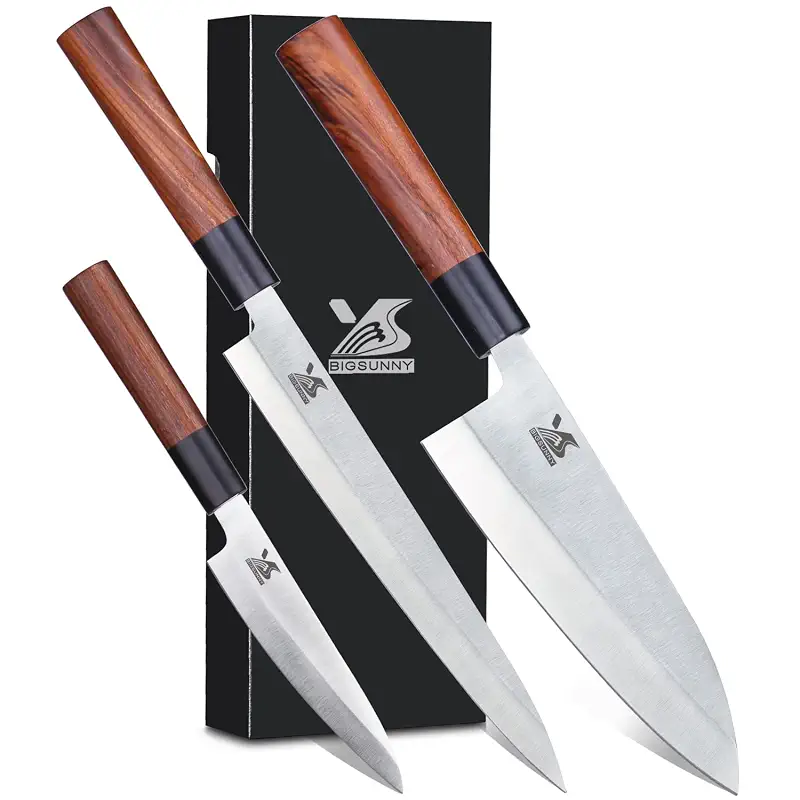
The Msy Bigsunny 3pcs set packs the core trio any sushi cook needs: yanagiba, deba, and utility knife. Hand-forged German high-carbon stainless steel (DIN 1.4116) arrives sharp enough for immediate use, and the rosewood handles follow a sensible human-ergonomic shape that won't fatigue your hand over an hour of prep. For someone curious about Japanese knife geometry but wary of spending heavily, this is a realistic starting point.
But the compact price tag does come with trade-offs. Some reviewers report that the deba and long sashimi blade popped loose from the handle after standard filleting work, which is a durability red flag for a knife that's supposed to handle tough jobs like breaking down whole fish. The blade curve to the back of some models also proves challenging for proper single-stroke sushi cuts if you're still learning technique. If you're willing to hand-sharpen these on a whetstone and treat them with care, you'll get solid value; treat them roughly, and you may replace them sooner than expected.
I'd pick this set if you're experimenting with the sushi knife category before committing to pricier options, or if you want a travel backup that won't devastate your budget if lost.
Pros
Sharp out of the box, minimal breaking-in needed
Rosewood handles reduce hand fatigue during extended work
Includes three essential Japanese blade profiles
Cons
Blade handle joint prone to loosening on heavy filleting
Back curve geometry can challenge proper single-stroke technique
Key features
Hand-forged German high-carbon stainless steel DIN 1.4116
Three-knife set: yanagiba, deba, and utility blade
Rosewood handles designed for ergonomic comfort
Ships sharp; requires regular honing to maintain edge
#2 Pick
Best for First-Time Upgraders
Hiroshi
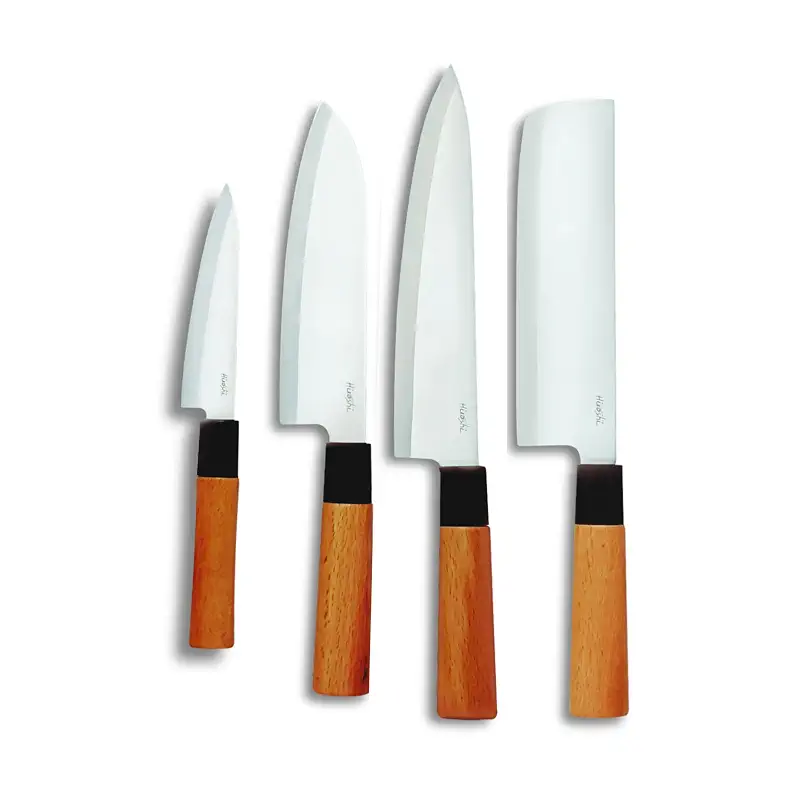
HIROSHI Sushi & Sashimi Knife Set 4-Piece High Carbon Stainless Steel Japanese Chef Knives with Beech Wood Handle Professional Kitchen Knife Set for Precision Cutting
4.1(378)
Four-piece traditional Japanese set with laminated blades and solid mid-range performance.
Ideal for: Intermediate cooks ready to learn sharpening and willing to hand-maintain their blades.
The Hiroshi 4-piece set offers a step up in blade sophistication: each knife features a harder high-carbon core wrapped in softer stainless cladding, a construction that rewards sharper angles and better edge retention than monosteel equivalents. The 40-step hand-forging process and beech wood handles suggest a nod to traditional craftsmanship, and for home cooks, the laminated steel actually gives you sharpening flexibility if you're willing to invest time with whetstones. Compared to the Msy Bigsunny, this set provides more refinement and a larger blade roster to grow into.
One honest caveat: these are made in China, not Japan, though the design draws heavily from Japanese principles. The lamination is thin, so aggressive sharpening will eventually reach the softer skin, which requires either professional resharpening or patience learning waterstone technique on your own. Reviewers who've tested the hardness report a softer skin (around HRC 55) protecting a harder core (around HRC 60), which means durability is there if you don't abuse them, but they're not high-hardness performance knives like premium Japanese brands.
I'd choose this over the Wildmok set if you plan to invest in a whetstone and develop proper sharpening habits.
Pros
Laminated blade design rewarding to sharpen with whetstones
Four-piece lineup covers sashimi, filleting, and utility work
Thin lamination requires careful sharpening technique to avoid damaging cladding
Hardness varies between skin and core, complicating consistency
Key features
Laminated high-carbon stainless steel with harder core and softer skin
Four-knife set: yanagiba, deba, nakiri, and utility
40-step hand-forged process with traditional sharpening
Ultra-light beech wood handles for extended use comfort
#3 Pick
Best Premium Option
Shangdao
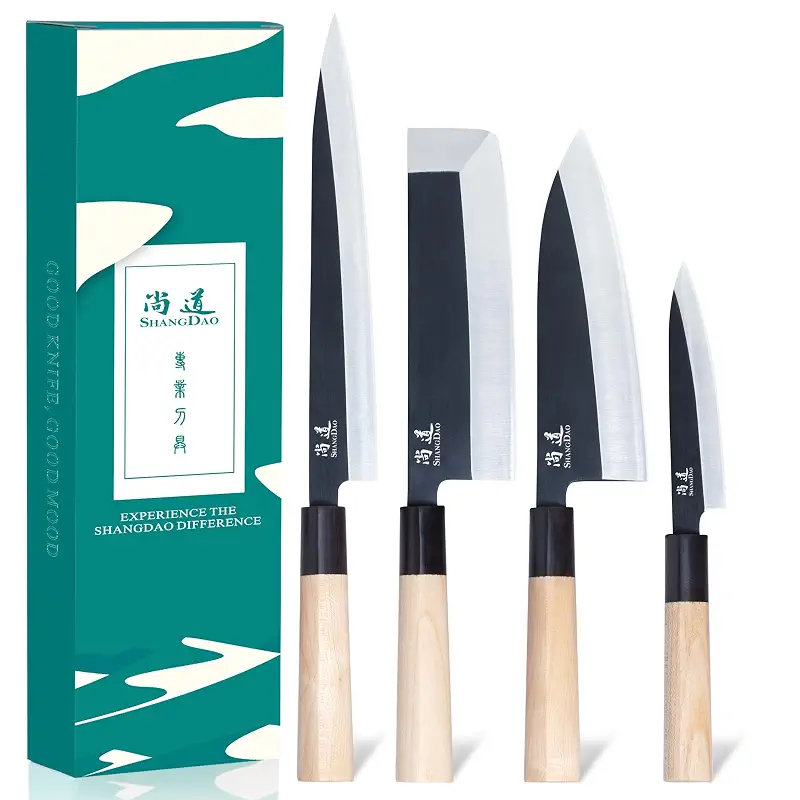
SHANGDAO Japanese Kitchen Chef Set Of 4 Knives Set Sushi Knife Set, Nakiri-Yanagiba-Deba-Utility Kitchen Knife,Fish Slicing Filleting Knife Sets, German Steel
5.0(5)
High-hardness German steel with robust construction and professional sushi-chef alignment.
Ideal for: Serious home sushi cooks and semi-professional kitchen workers.
Shangdao's 4-piece set steps into premium territory with German stainless steel hardened to 58±2 Rockwell, a genuinely respectable number that mirrors mid-range professional knives. The inclusion of a nakiri alongside yanagiba, deba, and utility blade gives you better breadth for both raw and cooked prep work, and hard maple wood handles deliver that traditional aesthetic without the fussiness of softer materials. Cryogenic tempering and advanced heat treatment process suggest real metallurgical care.
The catch is the limited review window: only five buyer samples so far, which means you're operating on faith in the brand's engineering claims rather than long-term durability reports. That said, the Rockwell hardness rating and the promise of edge retention stand up against the Wildmok set, which tops out at 56-58. If you're serious about sushi work and want a step above mid-range Chinese-made sets, the hardness spec gives you the sharpness you need for clean slicing.
I'd step to this if your current best yanagiba knives or top yanagiba knives collection needs a nakiri upgrade and you value blade hardness over proven track record.
Pros
German stainless steel hardened to 58±2 Rockwell hardness
Four-knife set includes nakiri for vegetable and meat work
Cryogenic tempering and advanced heat treatment boost edge retention
Cons
Limited buyer feedback sample makes durability claims harder to verify
Premium positioning without extensive proven field history
Key features
German stainless steel with 58±2 Rockwell hardness rating
Includes 10-inch yanagiba, 7-inch deba, 7-inch nakiri, 5-inch utility
Hard maple wood handles with traditional right-hand design
Cryogenic tempering and advanced heat treatment for durability
#4 Pick
Most Versatile Professional Set
Wildmok
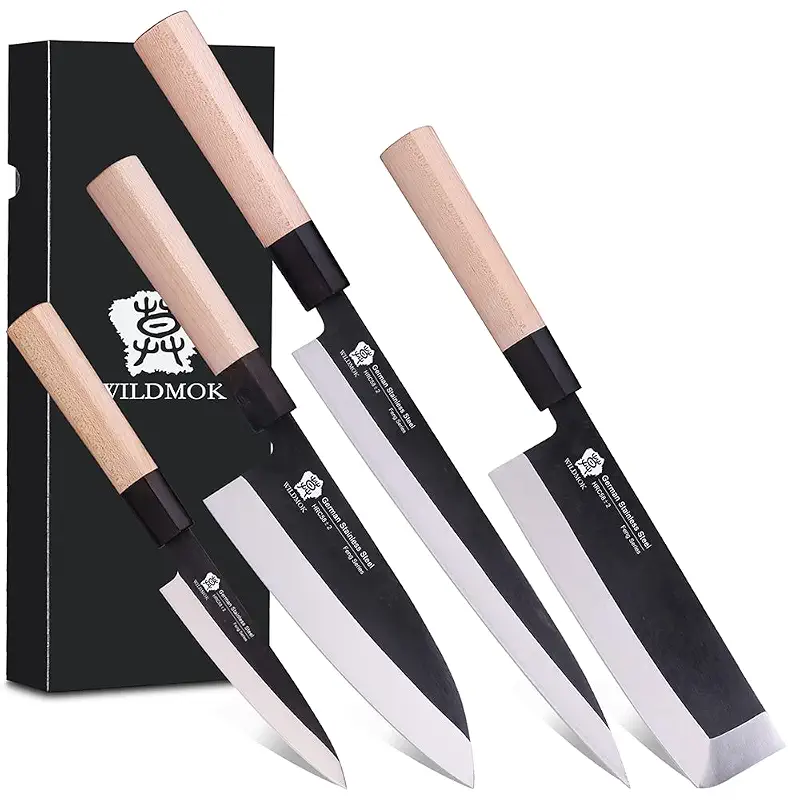
WILDMOK Set of 4 GYUTO Sushi Chef Knives-Yanagiba-Deba-Nakiri-Utility Kitchen Knife, Fish Slicing Filleting Knife Sets with German Steel Blade & Traditional Wooden Handle
4.3(8)
Four-piece German steel collection with 10-12 degree edge and reliable mid-range hardness.
Ideal for: Home cooks and culinary students who prioritize sharp edges and balanced versatility.
The Wildmok set balances sharpness and durability with a 10-12 degree edge angle and German stainless steel heat-treated to 56-58 Rockwell hardness. That narrow bevel angle is precisely what sushi work demands, and the vacuum heat treatment plus ice tempering process suggests metallurgical discipline at this price tier. The 4-piece configuration mirrors Shangdao's breadth, but Wildmok's edge-angle specification makes the geometry transparent and buyer-friendly. Where Shangdao emphasizes hardness, Wildmok leads with edge engineering, and that focus on the actual cutting angle speaks to kitchen reality.
The durability concern worth noting: one reviewer reported rust after normal use, which raises a flag about stainless consistency or potential issues with the passivation process that prevents corrosion. Given that the set includes stainless steel blades, rust shouldn't happen unless water sat on an unrinsed blade for days. Hand-wash and dry immediately, and this shouldn't repeat; but it's a signal that quality control may be uneven across production batches.
I'd lean toward Wildmok over Shangdao if you care more about proven edge geometry than Rockwell specs, or if you want four knives with a track record from more than five reviews.
Pros
10-12 degree edge angle optimized for sushi-style slicing
Four-knife set with hard maple handles and traditional craftsmanship
Vacuum heat treatment and ice tempering for consistent hardness
Cons
Rust reported by one user under normal storage conditions
German steel (56-58 HRC) trades slightly lower hardness than premium options
Key features
German stainless steel with 56-58 Rockwell hardness
10-12 degree edge angle for precise sushi and sashimi cuts
Four-knife set: yanagiba, deba, nakiri, and utility
Hard maple wood handles with hand-forged traditional techniques
#5 Pick
Best Complete All-Purpose Set
Kakusee
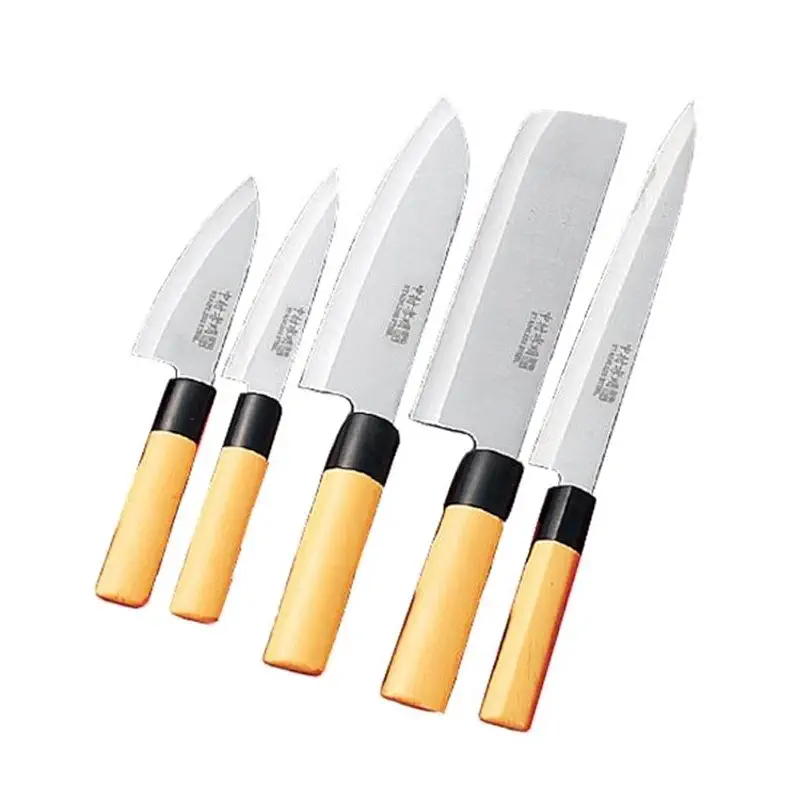
Japanese Kitchen Knife Set of 5 (Wooden Box Case) Mr. Takaaki Nakamura
4.4(1,973)
Five-knife Japanese collection in wooden box with proven track record and beginner-friendly maintenance.
Ideal for: Kitchen beginners and home cooks who want variety without sharpening intimidation.
The Kakusee 5-piece set is the outlier here: instead of chasing hardness specs, it leans into variety and accessibility. You get yanagiba, deba, nakiri, chef's knife, and petty blade all in one box, plus a wooden presentation case that doubles as storage. The stainless steel is softer (which isn't a liability for beginners; it actually makes sharpening easier on home whetstones), and the 1,973 reviews provide a depth of real-world feedback that the newer Shangdao simply can't match yet. Home cooks and even professionals on the road report these hold an edge reasonably well with basic maintenance and stay sharp enough for vegetable work, fish prep, and general chopping.
The trade-off is obvious: softer stainless steel means you'll touch up these knives more often than harder German or laminated options. Reviewers note that the handle paint flakes over time with regular washing, which is a minor cosmetic issue but signals that durability is workmanlike rather than premium. Where the set shines is as a beginner toolkit with zero learning curve: grab a honing steel, run it daily, and these knives will serve you for years without the sharpening commitment that harder blades demand.
I'd choose this set if you want the sushi knife types guide approach of learning each blade's role in context, or if you value proven five-knife versatility over chasing single-specialty hardness.
Pros
Five knives cover sushi, vegetable, and general kitchen work
Soft stainless steel easier to sharpen on home whetstones
1,973 verified reviews provide extensive real-world durability data
Cons
Handle paint can flake off with repeated hand-washing
Softer steel requires more frequent honing to maintain sharpness
Stainless steel with easier maintenance for home cooks
Wooden storage box included for safe storage and display
Hand-wash and hone regularly for best edge retention
How to Choose the Right Sushi Knife Set
Four trade-offs that actually matter when matching a sushi knife set to your kitchen.
Understand Blade Profiles and Roles
A dedicated sushi knife set usually includes three core shapes: the yanagiba (long, slender blade for single-stroke sashimi cuts), the deba (thick, sturdy knife for breaking down whole fish), and often a nakiri or utility blade for vegetables and detail work. Understanding the sushi knife types guide helps you match profiles to your actual cooking: if you mostly prep rolled sushi and sliced fish, yanagiba and utility matter more; if you butcher whole fish, deba becomes essential. Don't assume you need all five knives from the start: a solid 3- or 4-piece set often covers 90 percent of home kitchen needs.
Blade Hardness and Sharpening Commitment
Higher Rockwell hardness (56-60 HRC) means longer edge retention but demands more skill to sharpen. Softer stainless (lower HRC) requires frequent touching up with a honing steel but forgets mistakes faster on a home whetstone. If you're willing to learn waterstone sharpening, a laminated or hard-core blade rewards the technique. If you prefer low-maintenance knives that stay reasonably sharp with just a steel, softer stainless is friendlier. Consider your actual sharpening habits, not the knife specs you think you should use.
Handle Material and Ergonomics
Rosewood and hard maple are traditional and attractive, but they require hand-washing and careful drying to prevent splitting. Comfort matters during extended use: a well-balanced handle prevents finger numbness and wrist strain. Test the balance in your hand if possible, or trust reviews from users with similar hand size. Beech wood and maple both offer light weight, which reduces fatigue; just prioritize hand-drying over the dishwasher.
Budget Tiers and Realistic Expectations
Budget sets (under mid-range investment) arrive sharp but may have durability concerns with intensive use; mid-range options offer solid metallurgy and longer edge retention; premium sets promise hardness and consistency but require confident sharpening skills to maintain. No entry-level set rivals a hand-forged Japanese artisan knife, but several of these will perform better than generic chef's knives if you respect their limitations and maintain them properly.
Frequently asked
Quick answers to the questions readers ask most.
Do I really need a separate sushi knife, or will a sharp chef's knife work?
A sharp chef's knife can slice cooked food, but sushi specifically demands a longer, narrower blade with a specific bevel angle (usually single-sided on the sashimi side) that cleanly separates delicate raw fish fibers without crushing them. Standard chef knives have wider blades and double bevels that work fine for vegetables but tear sushi nori and fish flesh. A dedicated yanagiba or sashimi blade is worth the investment if you prepare sushi regularly.
What's the difference between a yanagiba and a deba?
A yanagiba is long (8-12 inches), thin, and single-beveled for slicing raw fish in one smooth stroke; a deba is shorter (6-7 inches), much thicker, and designed to break down whole fish, penetrate bones, and handle heavy work. They're complementary, not interchangeable. If you only buy one, choose yanagiba for sashimi prep; if you fillet whole fish at home, deba becomes essential.
Should I hand-wash or use a dishwasher?
Always hand-wash Japanese knives. The dishwasher's heat and movement damage wooden handles, dull blades faster, and can cause rust if moisture sits on steel between cycles. Wash immediately after use with mild soap, dry thoroughly with a soft cloth, and store edge-up in a knife block or magnetic strip. This 30-second routine extends blade life by years.
How often do I need to sharpen a sushi knife?
That depends on steel hardness and usage. Softer stainless may need touching up with a honing steel every few sessions; harder German or laminated steel can go weeks between honing. Professional sushi chefs sharpen daily on whetstones; home cooks using a honing steel 2-3 times per week will keep most sets sharp. A good quality whetstone (1000-6000 grit) is a worthwhile investment if you cook sushi weekly.
Can I use a sushi knife set for general kitchen prep?
Yes, many home cooks use sashimi knives on vegetables and cooked proteins too. The yanagiba slices smoothly; the deba works for chopping; the utility and nakiri handle detail work. However, sushi knives aren't meant for high-impact tasks like breaking down raw chicken or crushing garlic. Treat them as precision tools, and they'll perform beautifully across your kitchen; abuse them like a general-purpose blade, and they'll dull and chip faster.