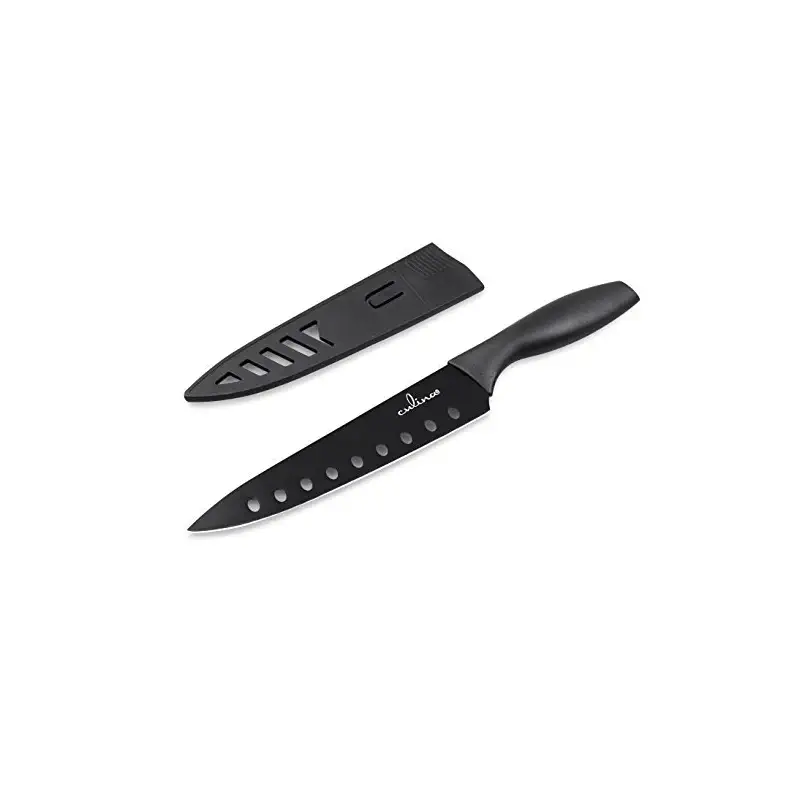
Ideal for: Home cooks making sushi occasionally, seeking an affordable multipurpose kitchen blade.
The Culina 8-inch draws strong approval from home cooks who prize affordability without sacrificing edge quality. The carbon steel blade arrives genuinely sharp and the nonstick coating does reduce the need to rinse between cuts, though not entirely. What buyers consistently flag is that this knife excels at cooked proteins and cheese but struggles with stringy vegetables and softer fruits due to an uneven edge that favors the blade tip over the heel.
This is a pragmatic choice if you make sushi occasionally and want one knife that handles multiple tasks. Owners report it holds an edge well for a carbon steel option if you pair it with regular honing. The plastic handle isn't going to win design awards, but it's lightweight and functional. Compared to the Lucky Cook 10-inch, the Culina trades traditional Japanese geometry for everyday versatility and a smaller footprint.
The trade-off is durability under heavy use. Some reviewers note scratching on the handle after just sharpening, and the blade won't match the edge retention of premium stainless options. For home sushi makers on a tight budget who won't use it daily for professional work, this knife delivers real value.
Pros
Arrives razor-sharp and maintains edge with regular honing
Nonstick coating reduces food adhesion during sushi cutting
Excellent price point with solid customer satisfaction ratings
Cons
Uneven sharpness along blade favors tip over heel
Plastic handle less durable than wood or composite materials
Key features
8-inch carbon steel blade with food-grade nonstick coating
Ergonomic handle designed for comfort and firm grip
Protective plastic sheath included for safe storage
Lightweight construction suitable for everyday slicing tasks
#2 Pick
Best Multipurpose Performer
Kitchen Home
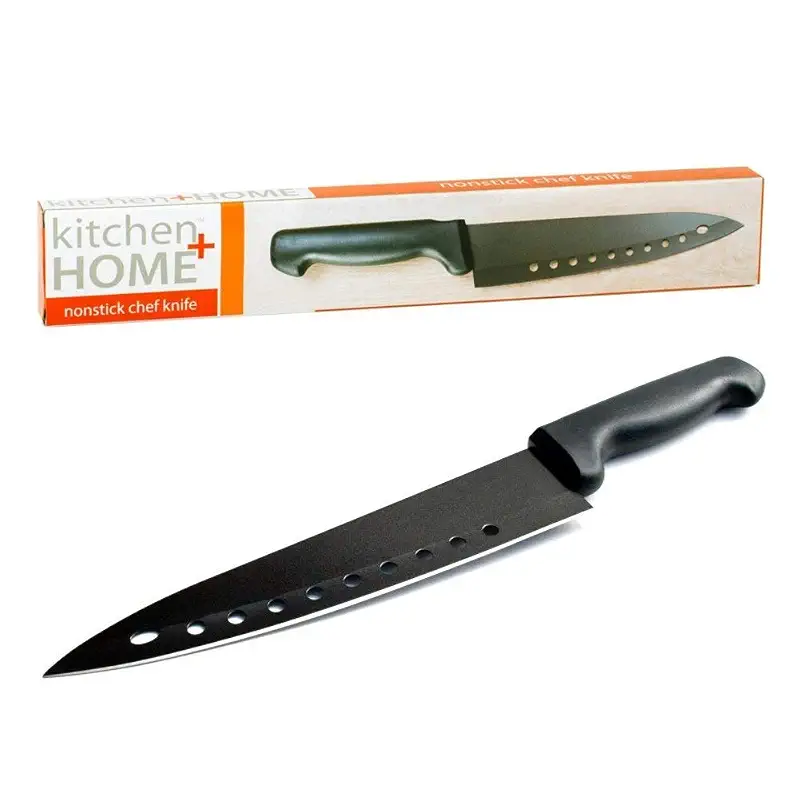
Kitchen + Home Non Stick Sushi Knife - The Original 8 inch Stainless Steel Non Stick Multipurpose Chef Knife
4.6(2,146)
A lightweight stainless blade with aerated holes and nonstick coating that handles both delicate sushi and tougher kitchen jobs.
Ideal for: Home cooks wanting a lightweight all-rounder that excels at sushi and works for everyday vegetable and protein prep.
Kitchen Home's 8-inch knife has accumulated over 2,100 reviews at a strong 4.6 rating, and the reason is clear: owners use it far beyond sushi. The surgical stainless steel paired with ten perforations along the cutting edge creates genuine anti-stick performance. Reviewers report that after 7-10 years of regular use, the blade still slices soft tomatoes cleanly and hasn't chipped or flaked. The thin, flexible design favors slicing over chopping, making it ideal for fish, vegetables, and cooked meats.
Where this knife differs from the Culina is longevity and edge retention. Hand washing is strongly recommended to preserve the nonstick coating, and owners who follow that guidance report years of reliable performance. The aerated blade design genuinely does reduce friction and food drag compared to solid blades. Where it falls short is heavy-duty work, cutting hard cheese, or any task requiring downward force or leveraging; the thin blade simply isn't engineered for that.
If you're choosing between this and the Sanmeiho 10-inch, note that Kitchen Home stays compact and light, perfect for precise work in tight spaces, while Sanmeiho offers more blade length and heft for larger fileting tasks. The learning curve is minimal here, and it pairs well with a honing rod for maintenance.
Pros
Ten perforations plus nonstick coating genuinely reduce food sticking
Exceptional edge retention over years with proper hand washing
Lightweight and thin blade design ideal for precise slicing motions
Cons
Not suitable for chopping or heavy downward-force tasks
Nonstick coating fades over time but doesn't chip or flake
Key features
High-carbon surgical stainless steel with PFOA-free nonstick coating
Aerated blade with ten friction-reducing perforations along edge
Rocker blade design enables mincing and chopping herbs efficiently
Nonporous, nonslip ABS handle for comfortable grip and control
#3 Pick
Best for Traditional Japanese Technique
Lucky Cook
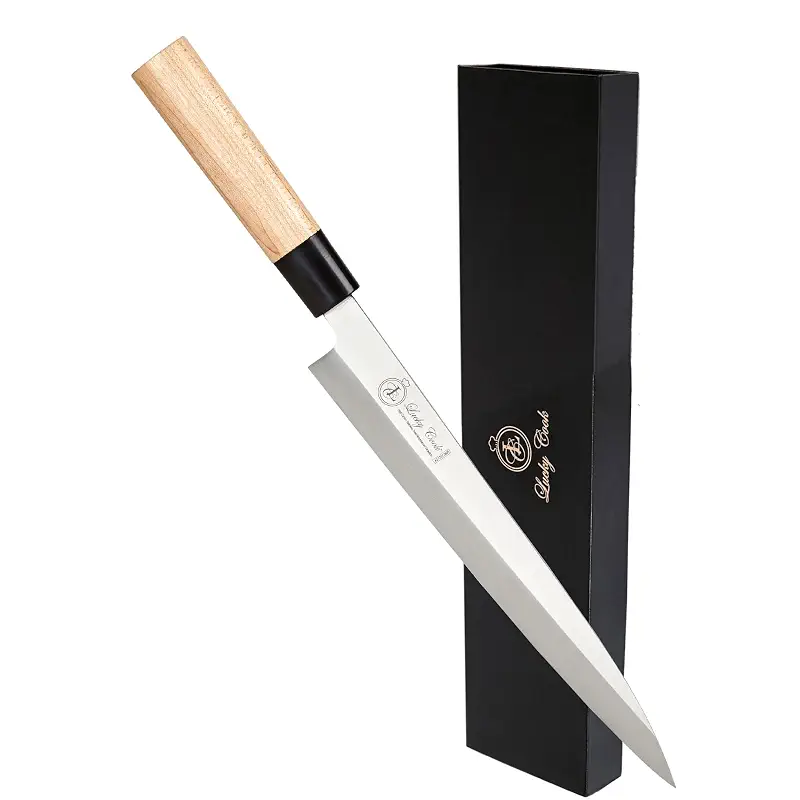
10” Sashimi Sushi Knife – Ultra Sharp Traditional Japanese Sushi Knife for Sashimi, Fish Filleting & Precision Slicing – Premium Stainless Steel Blade, Pakkawood Handle & Gift Box
4.6(2,143)
A 10-inch single-bevel sashimi blade that brings authentic Yanagiba-inspired design and professional-grade sharpness to home kitchens.
Ideal for: Sushi enthusiasts and home chefs ready to invest in proper Japanese technique and blade geometry.
Lucky Cook's 10-inch targets cooks who want to learn and practice real Japanese sushi craftsmanship. The single-bevel blade geometry is the key difference: instead of two symmetrical sides, one side is beveled at approximately 12 degrees and the other flat. This design reduces the area in contact with the fish and creates a pull-through cut rather than a downward chop, yielding cleaner sashimi slices. Reviewers, including a professional sushi roller, praise the edge retention and the fact that it holds up under heavy use without dulling quickly.
The Pakkawood handle offers genuine comfort over extended cutting sessions, and the presentation in a gift box signals quality craftsmanship. The knife comes sharper than entry-level models and users report minimal effort is needed to mince tuna or glide through a roll. However, a few owners note that the plastic bolster (where blade meets handle) shows signs of stress under rigorous fish butchering, and the blade profile at the tip could be refined.
Compared to the Kitchen Home 8-inch, this is a specialized tool with more blade length, more weight, and a learning curve tied to the single-bevel design. It's not a general kitchen knife; it's built for fish and precision work. If you're serious about improving your sushi-making skills, this pays dividends in cut quality and the satisfaction of using a tool designed for the task.
Pros
Single-bevel design creates cleaner sashimi slices than double-bevel knives
Holds edge exceptionally well under frequent professional-level use
Longer 10-inch blade suited for larger rolls and fish portions
Cons
Plastic bolster between blade and handle prone to cracking with heavy use
Blade profile at tip requires light finishing work for optimal performance
Key features
10-inch single-bevel sashimi blade inspired by traditional Yanagiba design
Premium stainless steel resists rust and maintains sharpness long-term
Pakkawood ergonomic handle with full tang construction for stability
Includes protective tip cover and luxury gift box for storage and presentation
#4 Pick
Best Premium Long Blade
Sanmeiho
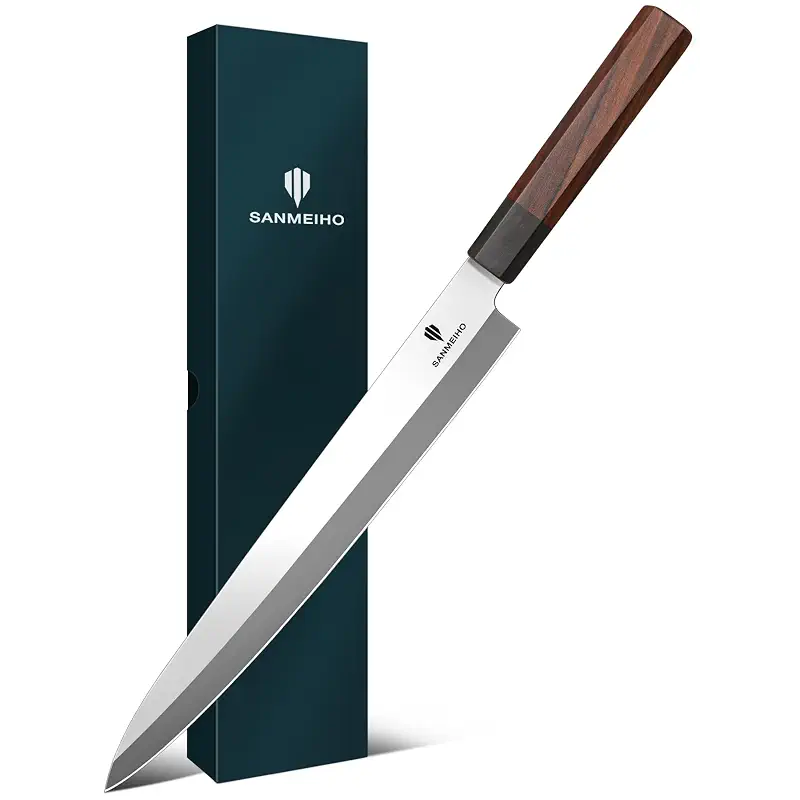
10 Inch Sushi Knife, High Carbon Japanese Steel Sashimi Knife | Japanese Knives for Fish Filleting & Slicing, Sushi Making Knives with Red Sandalwood Handle
4.6(87)
A 10-inch high-carbon Japanese steel blade with excellent hardness and octagonal red sandalwood handle for serious home and professional use.
Ideal for: Home chefs and amateur sushi makers who want a longer blade with premium aesthetics and reliable performance.
Sanmeiho's 10-inch positions itself as a workhorse for both sushi and general fish work. The Japanese 5Cr15Mov steel at 57 HRC hardness sits in the sweet spot between edge-holding and sharpening ease. Reviewers emphasize how sharp it comes out of the box and how it cuts through fish with minimal effort, whether you're slicing sashimi or breaking down larger portions. The octagonal red sandalwood handle is both functional and beautiful, providing visual appeal alongside practical grip comfort during extended use.
The 12-degree cutting angle on both sides (meaning it's double-beveled, unlike the Lucky Cook) makes it more versatile for general kitchen tasks beyond pure sashimi work. It can handle the occasional roast slicing or vegetable prep without requiring technique adjustments. One limitation mentioned is that newer knives sometimes have slight grinding inconsistencies along the edge, meaning light sharpening before first use is worth the time.
Where this stands apart from the Culina 8-inch is blade length, weight, and steel quality. The Sanmeiho's longer profile and heftier feel give it an advantage when processing larger fish or multiple rolls. It's a step up in presentation and perceived quality, though both knives ultimately deliver good value. The red sandalwood handle also signals craftsmanship that plastic handles simply can't match.
Pros
High-carbon Japanese steel at 57 HRC hardness balances sharpness and edge retention
Beautiful red sandalwood octagonal handle with full tang construction
10-inch blade length suits larger fish portions and multiple roll slicing
Cons
Minor grinding inconsistencies on some blades require light pre-use sharpening
Heavier and longer than compact options, requiring drawer space and adjustment
Key features
10-inch Japanese 5Cr15Mov high-carbon stainless steel blade
12-degree cutting angle on both sides for versatile slicing and precision work
Octagonal red sandalwood handle with full tang construction
Includes protective sheath and beautiful gift box for storage and presentation
#5 Pick
Best Compact Starter Knife
Mr Tazoi
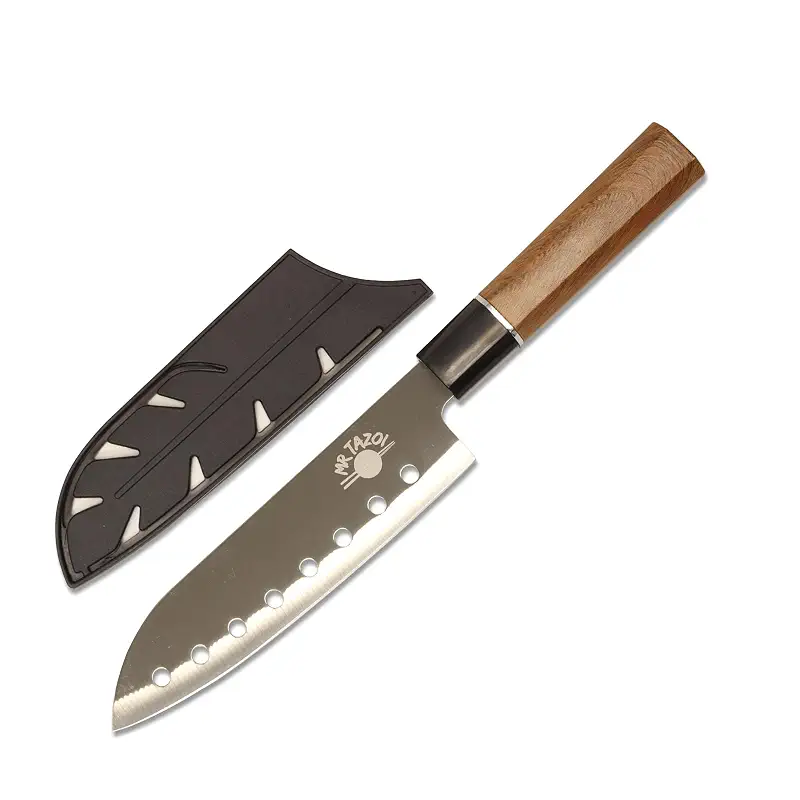
Mr Tazoi 8 Inch Stainless Steel Sushi Chef Knife - Japanese Inspired Design, Sharp & Lightweight, Budget Friendly & Durable - Ideal for Sushi, Sashimi, and Everyday Kitchen Use
4.6(37)
An 8-inch stainless option with friction-reducing holes and lightweight balance, ideal for beginners and small kitchens.
Ideal for: Beginners and small-kitchen cooks starting their sushi journey with a reliable, attractive, budget-friendly blade.
Mr Tazoi's 8-inch takes the friction-hole concept (similar to the Kitchen Home blade) and pairs it with a more traditional aesthetic that appeals to home chefs new to Japanese-style knives. The stainless steel resists corrosion, the wood-style handle feels comfortable for extended prep sessions, and the included sheath means you can store it safely without worrying about drawer damage. Reviewers consistently praise the sharp out-of-box performance and the visual appeal, with several noting that it looks far nicer than the price suggests.
The friction holes genuinely help with food adhesion, though not to the degree that a full nonstick coating provides. For a first sushi knife, this represents a thoughtful middle ground: dedicated design without overwhelming you with specialized geometry, budget-conscious pricing, and looks that won't embarrass you if it sits on the counter. One owner noted that the plastic handle retains water, and the blade doesn't maintain edge quite as long as premium options, but at the entry-level price point, these are acceptable trade-offs.
If you're exploring different specialized kitchen blades, the best kiritsuke knife shares Mr Tazoi's commitment to Japanese design at accessible pricing. Both deliver clean lines and precision performance for home cooks stepping beyond general chef's knives. This stays compact, lightweight, and beginner-friendly, while longer blades command more respect as serious tools. If you're just starting with sushi at home and aren't sure how often you'll actually use a dedicated knife, Mr Tazoi is a lower-risk way to test your commitment before upgrading to a longer or heavier blade.
Pros
Friction-reducing perforations minimize food adhesion without nonstick coating
Attractive wood-style handle with good balance for daily use
Protective sheath included for safe storage and kitchen safety
Cons
Plastic handle can retain water after washing and rinsing
Edge retention shorter than premium stainless or high-carbon options
Key features
8-inch stainless steel blade with Japanese-inspired precision design
Friction holes along blade reduce food sticking and ease cleaning
Lightweight construction with ergonomic wood-style handle for control
Includes protective sheath for safe storage and handling
How to Choose the Right Sushi Knife
Four trade-offs that actually matter when matching a knife to cut sushi rolls to your kitchen.
Blade Length and Weight Matter
An 8-inch blade suits most home cooks and fits easily in typical kitchen drawers, while a 10-inch gives you more reach and heft for larger rolls and fish portions. Longer isn't always better; weight and control matter as much as length. A lighter blade lets you use a smooth pulling motion, which is how professional sushi chefs minimize tears. Heavier blades require more downward force and can crush delicate rice if you're not practiced. Test how a knife feels in your hand if possible, or read reviews from people with similar hand sizes and experience levels to yours.
Nonstick Coating vs. Single-Bevel Design
Nonstick coatings reduce the frequency you need to rinse your blade between cuts, which speeds up work and keeps rice from drying out. Single-bevel blades (where only one side is sharpened) are traditional in Japan and create exceptionally clean sashimi slices, but they require proper technique and maintenance to shine. Double-bevel blades (sharpened on both sides) are more forgiving for home cooks and work well for everyday kitchen tasks too. Choose nonstick if you want low maintenance and versatility; choose single-bevel if you're committed to learning proper Japanese sushi technique.
Steel Type and Edge Retention
Stainless steel resists rust and requires less maintenance, making it beginner-friendly. Carbon steel edges stay sharper longer but can stain or discolor if not dried promptly. High-carbon stainless (a hybrid) offers rust resistance with better edge retention than pure stainless. Read owner reviews about sushi knife blade length comparison to understand how different steel types hold up in your climate and with your maintenance habits. Most home cooks find stainless options less frustrating, while professionals often accept carbon steel's maintenance demands in exchange for superior edge.
Handle Comfort and Safety
A sushi knife's handle should feel balanced and not slip when wet. Wood, Pakkawood (laminated wood composite), and high-quality plastic all work; avoid handles that feel flimsy or too light relative to the blade. A protective sheath is essential for both blade protection and kitchen safety, especially with children around. Practice proper grip and technique, and always cut away from your body. If you're serious about sushi making, consult resources on cutting sushi rolls cleanly to build confidence with whichever blade you choose.
Frequently asked
Quick answers to the questions readers ask most.
What's the difference between a sushi knife and a general chef's knife?
Sushi knives are longer, thinner, and lighter than chef's knives, designed for the smooth pulling motion that minimizes tearing of delicate fish and rice. A chef's knife is heavier and suited for chopping and downward-force tasks. Sushi knives often feature nonstick coatings or friction holes to prevent adhesion. A chef's knife can work for sushi in a pinch, but a dedicated sushi knife makes the job easier and yields cleaner results.
Do I really need an 8-inch or 10-inch blade for home sushi making?
An 8-inch blade covers most home sushi needs and fits standard kitchen storage. A 10-inch gives you more reach and flexibility for larger rolls or fish portions, but it's overkill if you're making small rolls occasionally. Consider your countertop space, drawer depth, and how frequently you'll use the knife. Most beginners find an 8-inch easier to control and maintain.
How often should I sharpen my sushi knife?
Light honing with a honing rod every few uses keeps the edge aligned and extends the time between full sharpening. Most home cooks sharpen a sushi knife every 3 to 6 months with a whetstone or professional sharpening service, depending on use frequency and blade material. Stainless steel typically needs sharpening less often than carbon steel. Always hand wash and dry immediately after use to preserve edge life.
Can I put my sushi knife in the dishwasher?
No. Hand washing is strongly recommended for all sushi knives. Dishwashers expose the blade to high heat, moisture, and abrasive movements that dull edges and can damage handles. Wash with warm soapy water, dry immediately with a soft cloth, and store in a sheath or on a magnetic rack. Hand care takes just 30 seconds and adds years to your knife's life.
What's the best way to prevent food from sticking to the blade while cutting?
Nonstick coatings help, but the most effective approach is keeping your blade slightly damp. Wet a cloth or paper towel with water and gently wipe the blade every 2 to 3 cuts. A sharp blade naturally sticks less than a dull one, so regular honing makes a real difference. Some cooks keep a small bowl of water nearby for quick blade dips between cuts.