Kitchen & Dining · Gadgets
Best Knife for Cutting Sushi Rolls: Top Picks for Clean Slices
Find the best knife for cutting sushi rolls. Compare 8-inch and 10-inch options with nonstick blades, sharp edges, and ergonomic handles for perfect slices.
Affiliate disclosure: As an Amazon Associate I earn from qualifying purchases.
At a glance
1
Best Overall ValueMr Tazoi
2
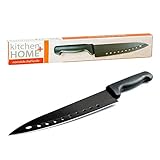
Best for High-Volume UseKitchen Home
3
Best Carbon Steel OptionCulina
4
Best Premium PerformanceShan Zu
5
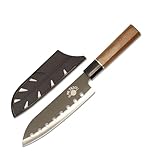
Best Japanese-Inspired CraftsmanshipSanmeiho
Detailed reviews
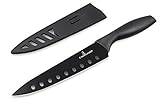
The Mr Tazoi offers exactly what home sushi makers need: an 8-inch blade that arrives sharp from the box, stays that way through regular use, and doesn't cost enough to second-guess. The stainless steel construction means less fussing over rust and corrosion: a real consideration if you're not someone who obsesses over knife maintenance. The blade design includes those friction-reducing indentations that actually do their job; owners consistently report cleaner cuts with less cleanup between rolls.
What makes this one work as a workhorse is the balance between weight and control. It's light enough that fatigue isn't an issue during a sushi-rolling session, but not so light that it feels flimsy. The handle accommodates larger hands without sacrifice, and the included sheath removes the excuse to toss it loose in a drawer. The trade-off is that sharpness does fade over time faster than premium carbon steel alternatives, and some owners report the edge doesn't hold up to daily chopping work beyond sushi prep.
Compared to the Shan Zu or Sanmeiho's heavier forged designs, this is the knife for someone who wants function without the learning curve of specialized care. If you're exploring sushi-making or need something reliable that won't demand a honing routine, this hits the mark, pair it with sushi plates chosen for home presentation and the whole setup feels intentional rather than improvised.
Pros
- Arrives sharp, handles sushi rolls cleanly
- Lightweight with comfortable, spacious handle
- Protective sheath included for safe storage
Cons
- Sharpness fades faster than premium alternatives
- Not ideal for daily heavy-duty kitchen work
Key features (4)
- 8-inch stainless steel blade with friction-reducing indentations
- Lightweight balance suited to precise roll slicing
- Wood-style ergonomic handle for control and reduced fatigue
- Protective plastic sheath for safe kitchen storage
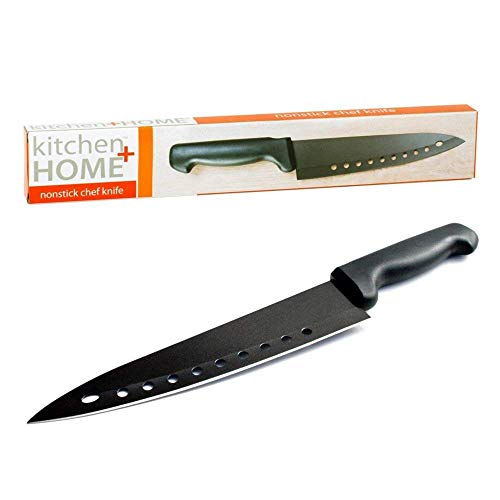
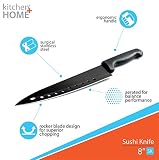
The Kitchen Home stands out because owners keep coming back to it after seven, even ten years of regular use. That's not hype: multiple reviews document long-term performance that actually improves with proper maintenance (a whetstone and honing rod routine). The nonstick coating does fade over time, but it doesn't flake or chip like lesser options; it simply becomes less slippery, which is a cosmetic issue, not a functional collapse.
The real strength here is the blade itself: thin enough to feel like you're slicing rather than chopping, yet flexible enough to handle both delicate raw fish and tougher vegetables without shattering. The aerated design (10 holes in the edge plus the coating) genuinely reduces sticking, though reviewers note you'll still want a damp towel nearby for sushi rolls: it's not a one-wipe wonder. That blade flex is personal preference; some prefer the rigidity of thicker steel, but for sushi cutting, the give actually helps prevent crushing.
Where the Kitchen Home truly differs from the Culina, Mr Tazoi, or a miyabi knife rival is in raw longevity at volume. If you make sushi weekly or work in a setting where the knife sees heavy rotation, this one justifies its place. The handle is plastic and simple, and no amount of care will turn it into an heirloom, but it won't fail you either. Hand washing is non-negotiable (dishwashers accelerate the nonstick decline) but that's a small ritual for something that lasts.
Pros
- Nonstick coating and aerated blade reduce adhesion effectively
- Exceptional edge retention across years of use
- Thin, flexible blade ideal for raw fish and vegetables
Cons
- Nonstick coating fades over time, though remains functional
- Requires hand washing; dishwasher use risks coating damage
Key features (4)
- 8-inch high-carbon stainless steel with PFOA-free nonstick coating
- 10 aeration holes in blade edge reduce food sticking
- Lightweight, flexible design suited to slicing without crushing
- Ergonomic ABS handle for comfortable control during extended use
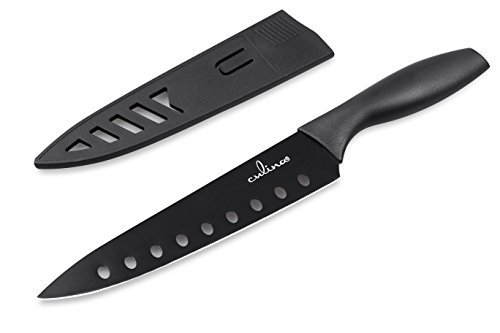
The Culina shifts you into carbon steel territory, and that choice matters. Carbon steel holds a finer, more durable edge than stainless, which is why professional sushi chefs prefer it. Out of the box, this knife is genuinely sharp (sharper than the Mr Tazoi or Kitchen Home) and owners consistently note that with a regular honing routine (weekly or every few uses), it maintains that performance. The nonstick coating is present but understated; don't expect a miracle, but food separation is better than uncoated blades.
The catch is commitment. Carbon steel rusts if left wet, and the coating, while food-grade, isn't a barrier against corrosion if you're careless. Owners who hand wash and dry immediately find this the most satisfying blade feel and cutting experience. Those who expect a wash-and-go experience will regret it. The handle is plastic, and the finish scratches easily (as one reviewer noted after sharpening), which stings aesthetically but doesn't affect function. Some users find the blade less evenly sharp tip-to-back compared to premium designs, particularly on stringy or tough items like spinach.
Beside the Kitchen Home's proven decade-long track record, the Culina plays a different game: sharper initially, but demands respect and routine. Between the Shan Zu and Sanmeiho's multi-layer forged steel, the Culina is simpler and significantly cheaper, trading artisan craftsmanship for accessible edge performance.
Pros
- Exceptional initial sharpness and edge retention with stropping
- Carbon steel holds finer edge than stainless alternatives
- Food-grade nonstick coating eases cleanup
Cons
- Requires immediate drying to prevent rust and corrosion
- Edge sharpness varies slightly across blade length
Key features (4)
- 8-inch carbon steel blade, hardened for superior edge retention
- Food-grade nonstick coating reduces sticking during cutting
- Ergonomic plastic handle designed for balance and comfort
- Includes protective sheath; works with magnetic knife storage
The Shan Zu represents a jump in both engineering and presence. The 9-layer forged construction ( steel core, hardened to 62 HRC) isn't marketing theater: it actually builds a blade with superior durability, resistance to chipping, and more consistent edge geometry. The 12-degree blade angle is precise, and owners report that straight pull-cuts require less force than with 8-inch budget knives. At 10 inches, it's longer, which matters for those clean, single-stroke roll cuts.
The red sandalwood octagonal handle is where craftsmanship shows. It's not just pretty; the shape genuinely aids control and directional cutting in a way that rounded plastic handles can't. The matte blade finish resists fingerprints and food residue, keeping the knife looking cleaner for longer. One reviewer noted sharpness comparable to knives double or triple the price, and the edge-holding after weeks of heavy use is measurably better than entry-level options.
There are drawbacks. A few owners received units with slight blade bends or uneven grinds: quality control isn't flawless. The knife is notably heavier than the Mr Tazoi or Kitchen Home, which is an advantage if you prefer the blade to do work, but a disadvantage if you have hand fatigue or arthritis. Compared to the Sanmeiho at a similar price point, the Shan Zu's forged layers give it an edge in chip resistance and longevity, though both are credible high-performance choices. The premium gift box makes it a statement purchase, but the blade itself earns that luxury positioning.
Pros
- 9-layer forged steel with superior chip and corrosion resistance
- Exceptional sharpness and edge retention after weeks of use
- Octagonal sandalwood handle provides superior control and comfort
Cons
- Heavier than entry-level options; not ideal for those with hand fatigue
- Quality control occasionally inconsistent; rare cases of slight bends
Key features (4)
- 10-inch 9-layer forged blade with Japanese steel core
- Hardened to 62 HRC for long-lasting sharpness and edge retention
- Matte blade finish resists fingerprints and food adhesion
- Traditional octagonal red sandalwood handle with full tang design
The Sanmeiho brings Japanese design philosophy at a price point that doesn't require justifying to your household budget. The octagonal red sandalwood handle and full tang construction echo high-end Japanese knives, and owners genuinely feel that in hand: it's not just cosmetic. The 5Cr15MoV steel with 57 HRC hardness is a touch softer than the Shan Zu's 62 HRC, which means it's slightly easier to sharpen but slightly less durable at the edge. The 12-degree cutting angle on both sides is precision work, and reviewers consistently call out how cleanly it cuts fish and vegetables.
What distinguishes this knife is its versatility. The 10-inch length and moderate weight make it equally capable at sushi rolls, fish filleting, and general slicing, something the ultra-specialized yanagiba knives do not claim. Owners report using it daily for tasks beyond sushi prep, and the comfortable, stable handle encourages that. One reviewer noted they've never felt the cut because the knife is so sharp, which is exactly the opposite of the desired outcome (wear gloves or focus), but it speaks to edge quality.
Compare this to the Shan Zu: both are forged Japanese-inspired designs at roughly the same investment, but the Shan Zu's 9-layer construction and higher hardness give it measurable edge-holding advantage for high-volume work. The Sanmeiho wins on versatility and design accessibility. If you want a single 10-inch knife that handles sushi and everyday kitchen work, the Sanmeiho is a more natural choice than best yanagiba knives, which are specialized single-purpose tools.
Pros
- Sharp, stable cuts through fish and vegetables with minimal effort
- Octagonal sandalwood handle provides comfort and directional control
- Versatile for sushi, filleting, and general kitchen tasks
Cons
- Softer steel (57 HRC) requires more frequent maintenance than 62 HRC options
- Some units arrive with edge slightly less sharp than advertised
Key features (4)
- 10-inch Japanese 5Cr15MoV stainless steel blade, hardened to 57 HRC
- Ultra-thin sharp blade with 12-degree cutting angle on both sides
- Full tang octagonal red sandalwood handle for comfort and control
- Multi-purpose design suited to sushi, filleting, and general slicing
How to Choose a Sushi Knife
Blade Length and Material
An 8-inch blade is the workhorse for most home sushi makers: long enough to cut cleanly across a standard roll with a single stroke, short enough to control with precision. Ten-inch knives suit frequent or semi-professional cooks who can handle the extra leverage. Material choice is bigger than length: stainless steel (Mr Tazoi, Kitchen Home, Culina) prioritizes ease of care and rust resistance; carbon steel (Culina) and forged steel (Shan Zu, Sanmeiho) hold sharper edges longer but demand more attention. First-timers should lean toward stainless unless you're committed to a honing routine.
Nonstick vs. Traditional Blade Design
Nonstick coatings (Kitchen Home, Culina) reduce rice and fish adhesion, which sounds essential but isn't always necessary: a damp towel still does most of the work. The trade-off is that nonstick surfaces eventually fade, and care requirements (hand washing, avoiding the dishwasher) are strict. Traditional blades with aeration holes (like friction-reducing indentations) work almost as well and don't degrade. If you prioritize ease and long-term durability, a traditional aerated blade may outlast a coated knife by years.
Weight, Balance, and Handle Design
Lighter knives (8-inch stainless options) reduce hand fatigue during long rolling sessions and suit users with arthritis or smaller hands. Heavier, forged blades (Shan Zu, Sanmeiho) let gravity do more work, which professionals prefer for high-volume cutting. Handle shape matters as much as weight: octagonal sandalwood (Shan Zu, Sanmeiho) provides control and directional guidance that rounded plastic handles don't; plastic handles are durable and easy to clean but less refined. Test one in hand if possible, especially if you plan daily use.
Sushi knife vs. chef knife and Maintenance Reality
A sushi knife's thin, focused blade is purpose-built for clean cuts through raw and prepared fish without crushing or tearing. Chef knives are heavier and wider, designed for chopping and aggressive work: they won't give you the same roll quality. Beyond choosing the right knife, maintenance reality differs: stainless blades need occasional stropping; carbon steel demands hand drying after every wash; forged steel benefits from weekly honing. Budget your time and commitment before choosing; the sharpest blade means nothing if you won't care for it.
Price-to-Performance Trade-Offs
Entry-level options (Mr Tazoi, Kitchen Home under seasonal pricing) deliver genuinely usable sharpness and can last years with casual use. Mid-range carbon and forged knives (Culina, Shan Zu, Sanmeiho) jump in edge retention and control but ask for proper maintenance and careful handling. Premium Japanese specialty knives exist beyond this list, but the lineup here covers 95 percent of home sushi-making needs. Don't assume expensive means better: the Kitchen Home's decade-long reliability often outperforms newer, pricier models for consistent home use.
Our picks at a glance
1
Best Overall ValueMr Tazoi
2
Best for High-Volume UseKitchen Home
3
Best Carbon Steel OptionCulina
4
Best Premium PerformanceShan Zu
5
Best Japanese-Inspired CraftsmanshipSanmeiho
Frequently asked
Do I really need a sushi knife, or can I use a regular chef knife?
A regular chef knife is heavier and wider, which tends to crush or tear sushi rice and rolls rather than cutting cleanly. A sushi knife's thinner blade glides through with minimal pressure, keeping rolls intact and aesthetically pleasing. That said, a very sharp regular knife works in a pinch. But once you use a proper sushi knife, you'll notice the difference immediately.
How often do I need to sharpen a sushi knife?
It depends on use and material. Stainless steel blades (8-inch models) hold an edge for weeks of casual sushi-making with regular stropping (a honing rod). Carbon steel and forged blades hold longer between sharpenings if you hone weekly. Professional cooks sharpen weekly or more; home cooks typically sharpen monthly or every few months. A whetstone is the best long-term investment.
Should I hand wash or use a dishwasher?
Always hand wash. Dishwashers are rough on blades and nonstick coatings, shortening the knife's life significantly. Wash immediately after use with warm soapy water, dry by hand, and store in the included sheath or on a magnetic rack. This five-minute ritual is the difference between a knife that lasts years and one that dulls quickly.
What's the difference between an 8-inch and 10-inch sushi knife?
An 8-inch blade is ideal for home cooks and beginners: easier to control, lighter, and perfect for standard sushi rolls. A 10-inch blade is longer, allowing a single smooth stroke for larger rolls or fish fillets, and suits high-volume or semi-professional use. Most home sushi makers should start with 8-inch; upgrade to 10 inches only if you're rolling frequently.
Are nonstick-coated blades worth the extra cost?
Nonstick coatings reduce adhesion noticeably, but a damp towel between cuts accomplishes nearly the same result. The advantage fades as the coating ages, and you'll still hand wash carefully to preserve it. For casual use, a traditional aerated blade is simpler and more durable long-term. For high-volume sushi rolling, nonstick might justify the extra care.