Kitchen & Dining · Gadgets
Best Miyabi Knife: Top Japanese Blades for Home & Professional Cooks
Find the best Miyabi knife for your kitchen. Compare Kaizen II, Birchwood SG2, Koh, and specialty blades handcrafted in Seki, Japan.
Affiliate disclosure: As an Amazon Associate I earn from qualifying purchases.
At a glance
2
Best Premium ChoiceMiyabi
3
Best Value for Japanese AestheticsMiyabi
4
Best Specialty BladeMiyabi
5
Best Classic DesignMiyabi
Detailed reviews
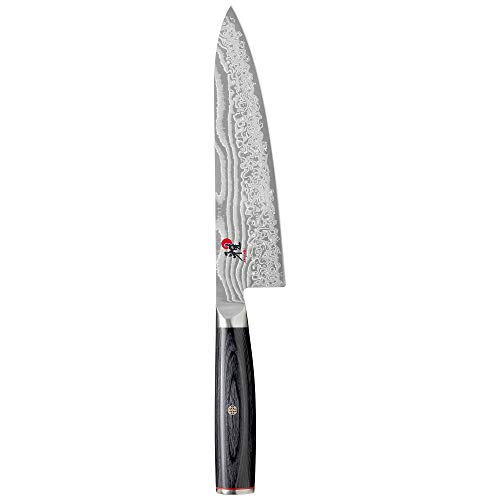
The Kaizen II 8-inch chef's knife strikes the most compelling middle ground in the Miyabi lineup. The FC61 super steel core, protected by 48 layers of damask cladding, delivers the hardness and edge retention you'd expect from a knife at this level, while the double ice-hardening process means the blade resists the chipping and corrosion that plagued some older designs. Owners consistently report that the knife arrives exceptionally sharp and cuts through everything from delicate herbs to tough proteins with minimal pressure required.
What sets this model apart from competitors is the handle ergonomics. The thicker, rounded bolster feels substantial without the weight, and the D-shape grip is comfortable for extended work. The visual presentation matters too, the acid-darkened Damascus pattern is genuinely stunning and earns compliments, but it's functional beauty, not ornament. Compared to the Birchwood SG2, which costs significantly more and demands careful maintenance of a natural wood handle, the Kaizen II offers nearly comparable performance with less fussiness.
One buyer note worth considering: the knife can require honing to maintain that edge between professional sharpenings, particularly if you work with tough vegetables. Still, hand-honing with a ceramic steel is straightforward, and the blade's geometry makes it responsive to maintenance.
Pros
- Hand-honed to 9.5-12 degree edge, razor sharp out of box
- FC61 steel offers excellent edge retention and corrosion resistance
- Ergonomic D-shaped pakkawood handle with secure grip
Cons
- Requires occasional honing to maintain peak sharpness
- Not suitable for cutting through bones or frozen items
Key features (4)
- FC61 super steel core with 48 layers of damask cladding for durability
- Double ice-hardened FRIODUR blade with 61 Rockwell hardness rating
- Hand-honed using traditional Honbazuke method to scalpel-sharp edge
- Black pakkawood D-shaped handle with mosaic pin and logo bolster
The Birchwood SG2 represents the pinnacle of Miyabi's consumer knife offerings. The SG2 micro-carbide powder steel core, cloaked in 100 layers of stainless, produces an edge so sharp it can slice a wet cloth suspended in mid-air without any sawing motion, according to multiple owners. The ice-hardening process locks in that surgical sharpness for extended periods, and the blade's hardness means it responds beautifully to professional sharpening when the time comes.
The Karelian birch handle is where this knife becomes a statement piece. That light, figured wood is the same material Faberge chose for imperial eggs, and it's applied here with equal care. The handle feels warm in hand, perfectly balanced at the bolster, and the overall knife exhibits the kind of flawless fit-and-finish that justifies stepping up from the Kaizen II. Where the Kaizen II plays it safe with modern pakkawood, this model embraces tradition and pays for it.
The trade-off is maintenance. The wood handle demands hand-washing only, immediate drying, and occasional conditioning with food-grade oil to prevent staining and preserve the grain. Owners who understand and respect this requirement consistently report profound satisfaction; those expecting a no-fuss kitchen tool may find the care regimen off-putting. If you're comparing this to the Koh 8-inch, the Birchwood wins on edge purity and aesthetics, but the Koh's stainless cladding means less fussing over the handle.
Pros
- SG2 micro-carbide steel delivers surgical-level sharpness and edge retention
- Karelian birch handle is beautiful, warm, and perfectly balanced
- 100 layers of cladding add durability and corrosion protection
Cons
- Requires hand-washing and regular oiling to prevent handle staining
- Higher brittleness means avoiding chopping through bone or frozen items
Key features (4)
- SG2 micro-carbide powder steel core protected by 100 layers of stainless
- CRYODUR ice-hardening locks in long-lasting edge retention
- Karelian birch handle with exquisite light grain and natural oil finish
- Hand-honed to 9.5-12 degree edge using traditional three-step Honbazuke process
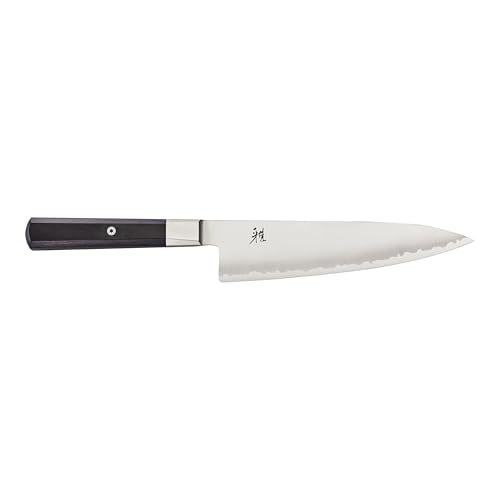
The Koh 8-inch offers a thoughtful compromise between the Kaizen II's accessibility and the Birchwood's luxury. The FC61 fine carbide steel core with double FRIODURx2 ice-hardening delivers performance that professional chefs consistently praise, and the hand-honed Honbazuke edge is genuinely exceptional for the price tier. Where the Kaizen II uses damask cladding for visual drama, the Koh favors understated elegance: a mirror-polished blade with a sandblasted katana edge and embossed logo. Some owners note the minimalist aesthetic actually appeals more than busier Damascus patterns.
The octagon-shaped pakkawood handle is a clear departure from traditional Japanese D-shape, a concession to Western ergonomics that works well for both pinch and conventional grips. It's comfortable, ambidextrous, and doesn't demand the maintenance fussiness of natural wood. The knife balances precisely at the bolster, making it feel lighter and more nimble than its actual weight suggests. Compared to the Birchwood SG2, you're trading some edge-purity and handle prestige for a truly low-maintenance workhorse that still delivers exceptional cuts.
Quality control can be inconsistent: a few owners reported slight asymmetry in the bolster or a very gentle blade curve requiring minor adjustment on arrival. These are exceptions rather than the rule, but worth noting if you're paying close attention to details. The sandblasted finish, while elegant, will show scratches with normal use.
Pros
- FC61 steel with double ice-hardening for excellent durability and edge retention
- Mirror-polished blade with sandblasted katana edge is elegant and functional
- Octagon pakkawood handle is ergonomic, low-maintenance, and ambidextrous
Cons
- Quality control occasional issue with bolster symmetry or minor blade curve
- Sandblasted finish shows scratches and requires protective care during storage
Key features (4)
- FC61 fine carbide stainless steel with 61 Rockwell hardness for chip resistance
- FRIODURx2 double ice-hardened blade offers durability and exceptional sharpness
- Mirror-polished blade with sandblasted katana edge and embossed MIYABI logo
- Ergonomic octagon pakkawood handle with rounded spine and heel for comfort
The Slicing Knife (also called a sushi knife or yanagiba-style blade) opens a different conversation in the Miyabi collection. Where chefs use 8-inch gyuto knives for everyday prep, a dedicated slicer excels at one specific, high-value task: cleaving clean, thin slices from subprimal cuts of meat or raw fish. The SG2 micro-carbide steel core with 100 layers of cladding and the ice-hardening process deliver the same surgical edge as the Birchwood SG2 chef's knife, but with a longer, narrower profile optimized for long, uninterrupted strokes.
Owners who work with protein regularly, whether at home or professionally, report that this knife transforms slicing from a chore into an almost effortless gesture. The weight is notably light, which some prefer for extended work and others find too delicate. The Karelian birch handle matches the chef's knife sibling, so if you're building a coordinated set, the aesthetics align perfectly. The blade geometry also works beautifully for sashimi and specialty cuts, which a professional sushi chef confirms in the reviews.
This is not a general-purpose kitchen knife, it's a specialist tool. If your cooking rarely involves raw fish or large meat fabrication, a quality 8-inch gyuto (like the Kaizen II or Koh) will serve you better. But compared to best yanagiba knives in a similar price range, the Miyabi Slicing Knife holds its own on edge quality and ease of maintenance, while the birch handle adds that touch of luxury.
Pros
- SG2 micro-carbide steel delivers surgical sharpness ideal for clean protein slicing
- Lightweight and well-balanced for extended slicing work without fatigue
- damask cladding with Karelian birch handle is visually striking
Cons
- Specialized tool, not suitable for everyday prep like chopping or mincing
- Light weight may feel too delicate for cooks accustomed to heavier chef's knives
Key features (4)
- SG2 micro-carbide powder steel core protected by 100 layers of damask steel
- CRYODUR ice-hardening process locks in long-lasting edge retention
- Karelian birch handle with exquisite finish and natural grain detailing
- Hand-honed to 9.5-12 degree edge using traditional three-step Honbazuke method
The original Kaizen 8-inch represents the lineage that built Miyabi's reputation. The VG10 super steel core, wrapped in 64 layers of damask, is a time-tested formula that thousands of cooks have relied on for years. The CRYODUR ice-hardening process gives the blade exceptional durability, and professional chefs who've owned this knife for over a decade report that it still takes an edge remarkably easily and holds it for weeks of daily work. This is the reliability option, not a flashy upgrade.
The black linen Micarta handle feels nothing like wood, but it offers genuine advantages: zero moisture absorption, no staining, and a secure grip even when your hands are wet. For a kitchen tool you'll use countless times daily, the linen texture and non-slip properties matter more than prestige. The D-shape is traditional and comfortable, and the red accent spacers give it a refined look that doesn't scream for attention. The knife balances beautifully, and owners consistently report that the sharpness and geometry mean you can slice through butternut squash or tough beets with almost no downward pressure.
Compared to the Kaizen II (the newer iteration), the classic Kaizen offers identical cutting performance but with a proven track record spanning years. If you're hesitant about newer steel formulations or want a knife that's been validated by professional kitchens worldwide, this is the safe choice. The damascus pattern is equally beautiful, just rendered in a slightly different visual register than the newer Kaizen II.
Pros
- VG10 super steel with 64-layer damask is time-tested and proven over years
- CRYODUR ice-hardening delivers durability, edge retention, and easy resharpening
- Black linen Micarta handle is moisture-proof, secure, and low-maintenance
Cons
- Micarta handle lacks the prestige or warmth of natural wood alternatives
- Not ideal for through-bone cutting or chopping frozen items
Key features (4)
- VG10 super steel core protected by 64 layers of flower damask pattern
- CRYODUR ice-hardening process for exceptional sharpness and durability
- Black linen Micarta handle with red accent spacers and steel end cap
- Hand-honed using traditional three-step Honbazuke method to 9.5-12 degree edge
How to Choose a Miyabi Knife
Understand Steel Formulations and Edge Retention
Miyabi uses three main steel types, each with tradeoffs. FC61 (found in Kaizen II and Koh) offers excellent corrosion resistance and durability, making it forgiving for home cooks. VG10 (classic Kaizen) is the proven workhorse of professional kitchens, reliable for years. SG2 micro-carbide (Birchwood and Slicing knife) delivers the sharpest edge and longest edge retention, but demands careful handling and maintenance. Harder steels hold their edge longer but can be more brittle; softer steels are more forgiving but may need resharpening sooner. Consider how frequently you're willing to sharpen and how you'll treat the blade.
Match the Blade to Your Cooking
An 8-inch chef's knife handles roughly 90% of kitchen tasks, making it the right starting point for most cooks. Specialized blades like the Slicing Knife excel at meat and fish work but struggle with daily vegetable prep. If you're building your first Japanese knife, a gyuto (chef's knife) is the investment. Specialty blades come later, once you've developed a sense of how Japanese geometry suits your hand and technique. The damascus versus stainless steel blades debate matters less than your willingness to maintain the handle; natural wood is beautiful but demands care.
Handle Material and Long-Term Comfort
Pakkawood (synthetic composite) is low-maintenance, moisture-proof, and comfortable for extended work. Karelian birch is visually striking and warm in hand, but requires hand-washing, drying, and occasional oiling to prevent staining. Micarta (linen-based) is secure in wet conditions and practically indestructible. Your choice depends on whether you prioritize aesthetics and tradition (birch) or minimal fussiness (pakkawood or Micarta). No wrong answer, but a birch handle knife demands commitment to daily hand-washing and regular conditioning with food-grade oil.
Edge Angle and Cutting Performance
All Miyabi chef's knives are hand-honed to 9.5 to 12 degrees, a steeper angle than most Western chef's knives. This geometry slices more efficiently (less energy wasted) and produces cleaner cuts through delicate items, but the thinner edge is more fragile and demands gentler treatment. If you're used to heavier Western knives, the Japanese profile can feel light and nimble at first, then liberating once your technique adapts. Test holding a Japanese-style knife before committing; the difference in how it feels is real.
Maintenance and miyabi knife care and sharpening
Hand-washing and immediate drying are non-negotiable for all Miyabi knives; dishwasher damage is not a warranty issue. A ceramic honing steel or rod should be used between sharpenings, never a steel meant for softer Western knives. Professional sharpening on a whetstone every 6-12 months (depending on use) keeps the edge pristine. The payoff is that a well-maintained Miyabi blade lasts decades, improving with age. Budget for a honing routine and occasional professional work as part of owning a premium knife.
Our picks at a glance
2
Best Premium ChoiceMiyabi
3
Best Value for Japanese AestheticsMiyabi
4
Best Specialty BladeMiyabi
5
Best Classic DesignMiyabi
Frequently asked
What's the difference between damask pattern and solid steel blades?
Damask (the layered flower pattern) is aesthetic and adds subtle durability, but the functional edge comes from the core steel (FC61, VG10, or SG2). The cladding layers protect the harder core and resist corrosion. A mirror-polished blade (like the Koh) looks minimalist but performs identically to a damask blade with the same core steel. Choose damask for visual beauty and the story of traditional craftsmanship, or polished for understated elegance. Both are authentic Miyabi approaches.
Can I use a Miyabi knife to cut through bone?
No. Miyabi knives are designed for slicing, dicing, and mincing, not hacking through bone. The thin, sharp edges and harder steel are brittle under impact stress. Using a chef's knife on bone risks chipping the edge or breaking the blade, and this damage is not covered under warranty. Reserve your Miyabi for fish, meat, and vegetables. Use a separate cleaver or hacking knife for bone work.
How often do I need to sharpen a Miyabi knife?
With regular honing on a ceramic steel, a Miyabi knife can go 6 to 12 months before professional sharpening, depending on use intensity and cutting surface (wood is gentler than plastic or stone). Honing realigns the edge rather than removing steel, so it's quick and maintains performance between sharpenings. Professional sharpening on a whetstone restores the hand-honed geometry and should happen annually or every 18 months for serious home cooks. The harder steels (SG2, FC61) hold their edge longer than older formulations.
Is a Miyabi knife worth the price compared to Global, Mac, or Tojiro?
Miyabi's pricing reflects Japanese handcraftsmanship, premium steel formulations (especially SG2), and the reputation of Seki, Japan as a cutlery center. Compared to Global (stamped, not forged, typically sharper out of box but less durable edge), Miyabi offers better edge retention and more elegant aesthetics. Mac and Tojiro are strong competitors in the same price range. Miyabi edges them out on fit-and-finish and handle comfort, though personal preference and hand size matter. If durability and beauty matter as much as cutting performance, Miyabi justifies the investment. If you want the sharpest knife for the least money, Global may edge it out on raw edge freshness.
Do I need special equipment to sharpen a Miyabi knife?
A good whetstone (1000-6000 grit range) and basic sharpening technique are sufficient for home maintenance. You'll want a ceramic honing steel for between sharpenings, never a metal steel designed for softer Western blades. Many owners send their knives to professional sharpeners annually to restore the hand-honed geometry, which costs less than a standalone whetstone and guarantees proper angle and finish. If you're new to Japanese knives, professional sharpening is the safer start; learn your own technique once you understand how the blade should feel.