Kitchen & Dining · Gadgets
Best Japanese Sushi Knife: Top Yanagiba & Sashimi Knives
Find the best Japanese sushi knife for your kitchen. Compare top yanagiba and sashimi knives with expert reviews, features, and buyer guidance.
Affiliate disclosure: As an Amazon Associate I earn from qualifying purchases.
At a glance
2
Best for Beginners & Home Sushi MakingLucky Cook
3
Best for Edge Retention & Multi-Purpose UseShan Zu
4
Premium Performance PickKyoku
5
Best Aesthetic & DesignHoshanho
Detailed reviews
The Sanmeiho 10-inch knife lands squarely in the territory where cost doesn't determine cutting ability. Owners report it arrives sharp enough to slice fish cleanly and comes with a protective box that doubles as storage. The octagonal red sandalwood handle sits comfortably in the hand during extended use, and the full-tang construction adds durability that belies the modest investment.
What you're trading here is some of the refinement you'd find in higher-end picks. The steel composition (5Cr15Mov at 57 HRC) is respectable but sits below premium options in terms of edge retention longevity, unlike the top honesuki knife builds that use single-bevel geometry optimized for bone separation. Some reviewers noted it doesn't stay sharp quite as long as knives commanding triple the price, though freshly sharpened it performs admirably. Compared to the Lucky Cook model, this knife lands in the same price bracket but with less brand momentum in the reviews: which doesn't mean it's worse, just less seasoned by high-volume feedback.
We'd steer first-time sushi makers toward this if budget is the opening concern and you want proof that a working blade doesn't require a splurge, a case the top kitchen knives under 50 category makes repeatedly with daily-use options that have genuinely matured. You'll learn whether sushi-making actually sticks before committing more money.
Pros
- Arrives sharp and ready to use out of box
- Octagonal handle offers comfortable all-day grip
- Included storage box protects blade and doubles as display
Cons
- Edge retention doesn't match premium models over time
- Some units reported slightly less consistent sharpness initially
Key features (4)
- 10-inch blade with 12° double-sided cutting angle for precision
- Japanese 5Cr15Mov stainless steel at 57 HRC hardness rating
- Full-tang octagonal red sandalwood handle for stability
- Includes protective gift box for storage and presentation
The Lucky Cook 10-inch sashimi knife comes across as reliable and appealing. Buyers (including professional chefs who use it alongside expensive blades) consistently highlight how it glides through fish rolls and sashimi prep with minimal effort. The single-bevel design is traditionally yanagiba-inspired, which means it performs the job it was built for with genuine finesse. The Pakkawood handle resists moisture and feels slip-resistant even when wet, critical for fish work.
Where we'd differentiate this from the Sanmeiho model: Lucky Cook edges ahead on edge-holding capability and the quality consistency across units. You're also looking at a true single-bevel profile rather than a double-bevel, which purists prefer for sashimi. The trade-off is that the plastic bolster (the collar between blade and handle) is a noted wear point under heavy butchering, not a flaw for home use, but worth knowing. Some users noted minor imperfections in the initial grind that a quick whetstone pass corrected. Compared to the Kyoku option, Lucky Cook lands at a lower price point while holding nearly identical ratings, though the Kyoku carries slightly heavier steel.
This knife makes sense if you're serious about learning sushi technique without overspending. The sharpness and balance reward proper knife work, so you'll develop good habits.
Pros
- Single-bevel edge delivers authentic sashimi-style clean cuts
- Excellent edge retention through regular home kitchen use
- Ergonomic Pakkawood handle stays secure even when wet
Cons
- Plastic bolster can crack under heavy butchering pressure over time
- Minor grinding inconsistencies reported on some units requiring light refinishing
Key features (4)
- 10-inch single-bevel yanagiba-style blade for traditional sashimi slicing
- Premium stainless steel resistant to rust and discoloration
- Ergonomic Pakkawood handle with secure, slip-resistant grip
- Includes protective sheath and luxury gift box for storage
The Shan Zu 10-inch represents a step up in materials science. The 9-layer forged steel with core hardened to 62 HRC outperforms both the Sanmeiho and Kyoku in sheer edge-holding longevity. That hardness rating means the blade stays sharp through more cuts before demanding attention: a real advantage if you make sushi weekly rather than monthly. The matte blade finish cuts down on fingerprints and residue, a small detail that keeps the knife looking premium longer and hygienically cleaner between washes.
The octagonal red sandalwood handle matches what you'd find on several competitors, but the overall blade architecture (that multi-layer forging) is what sets this apart. Owners across multiple languages (Spanish, French, German reviews included) rave about the cutting performance, though a few noted minor QC variations in blade flatness out of the box. Compared to the Hoshanho knife sitting at the bottom of this list, the Shan Zu's layered construction is more visually complex and generally reports better long-term edge retention, while the Hoshanho emphasizes aesthetic rosewood details.
If you're planning to use this knife beyond just sushi (slicing vegetables, proteins, even soft cheeses) the Shan Zu's harder steel and thicker build make it the most forgiving multi-purpose option here.
Pros
- Nine-layer forging provides superior durability and chip resistance
- 62 HRC hardness ensures long-lasting sharpness between sharpenings
- Matte blade finish resists fingerprints and food buildup
Cons
- Occasionally arrives with minor blade flatness variations requiring refinement
- Heavier than some competitors, which takes adjustment for lighter-handed cooks
Key features (4)
- Nine-layer forged high-carbon steel with core at 62 HRC
- Precisely honed 12° blade angle for smooth, effortless slicing
- Traditional octagonal red sandalwood handle with ergonomic design
- Matte blade finish reduces fingerprints and extends cleanliness between washes
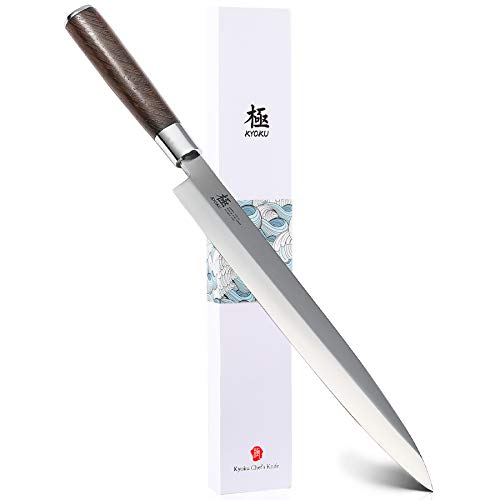
The Kyoku Samurai Series arrives at the intersection of premium manufacturing and accessible pricing. The cobalt-added steel core treated through cryogenic hardening (a process that improves the crystalline structure at sub-zero temperatures) delivers both razor sharpness and legitimate flexibility: a rare combination. At 56-58 HRC hardness, it sits slightly softer than the Shan Zu but that deliberate choice enables the blade to absorb impact without chipping, crucial for longer blades. The wenge wood handle feels distinctly more refined than red sandalwood, and reviewers who make knives themselves have praised the forging quality as unexpectedly excellent.
One consistent note: this knife arrives sharp, but the edge quality isn't perfectly uniform along the entire blade length on every unit. Several owners mention benefiting from a quick whetstone pass before serious use, not a defect so much as an artifact of production. The knife is notably heavier than most competitors (around 265 grams), which some cooks find gives excellent cutting momentum and others find fatiguing. Compared to the Lucky Cook option, the Kyoku costs similar money but emphasizes heft and cobalt steel metallurgy over traditional single-bevel design. Where the Shan Zu maximizes edge-holding, Kyoku maximizes the balance between sharpness and durability under abuse.
Choose this if you value the premium sheath-and-case presentation, don't mind a weighted blade, and want steel that can handle occasional battering without catastrophic failure.
Pros
- Cryogenically treated cobalt steel with excellent edge retention and flexibility
- Well-balanced with satisfying heft that aids cutting momentum
- Includes premium protective sheath and hardcase for long-term storage
Cons
- Heavier than competing models, requiring adjustment from lighter-knife users
- Edge consistency can be slightly uneven initially, benefiting from honing before first use
Key features (4)
- Cobalt-added, cryogenically treated steel at 56-58 HRC for impact resistance
- Mirror-polished 11-13° single-bevel edge handcrafted by artisans
- Wenge wood handle with authentic aesthetic and ergonomic balance
- Includes protective sheath and luxury case for preservation
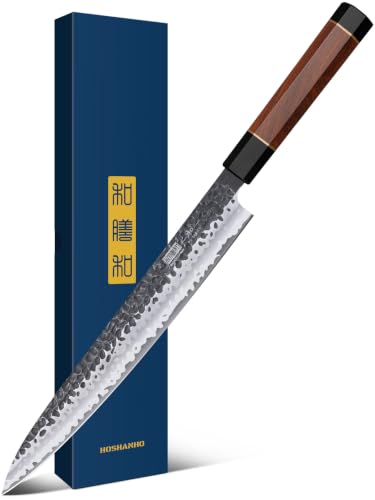
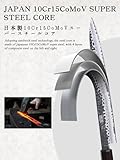
The Hoshanho 10-inch brings visual elegance that the competition doesn't match. The rosewood handle with copper wire inlay edges toward art object territory, and owners repeatedly comment on how gorgeous the blade appears. The eight-layer composite steel construction (10Cr15CoMoV core) and 60 HRC hardness put it in the premium camp, with hand-polished edges at 12-15 degrees per side. For a knife this visually striking, it needs to cut well, and by all accounts it does, slicing raw fish with the finesse the aesthetic promises.
There are real caveats worth noting. A few owners reported the handle felt "cheap" in contrast to the beautiful blade, and one unit arrived with a cracked handle and missing packaging protections. Build consistency seems less rigorous than Kyoku or Shan Zu. The knife also lacks the sheath protection of the Kyoku, arriving only in plastic wrap, meaning you need to source your own storage solution. The balance point sits further out on the blade compared to some competitors, which some cooks prefer and others find unconventional. Compared to the Shan Zu's matte industrial finish, the Hoshanho court aesthetics first, and that preference sometimes means less durability in protection and handling.
If you plan to display this knife prominently and use it for occasional special-occasion sushi prep rather than heavy rotation, the Hoshanho's visual presence justifies its spot. Just expect to invest in a proper blade guard or sheath after purchase.
Pros
- Stunning rosewood and copper-wire handle design stands apart visually
- Eight-layer composite steel delivers premium hardness and edge retention
- Hand-forged blade with polished finishing achieves exceptional aesthetic quality
Cons
- Limited protective packaging; arrives in plastic wrap without dedicated sheath
- Handle durability and construction consistency lag behind premium competitors
Key features (4)
- Eight-layer composite steel with 10Cr15CoMoV core at 60 HRC hardness
- Hand-polished double-bevel edge at 12-15° per side for precision cuts
- Traditional octagonal rosewood handle with copper wire embellishments
- Versatile for sashimi, sushi rolls, delicate proteins, and soft cheeses
How to Choose the Right Japanese Sushi Knife
Single-Bevel vs. Double-Bevel Blades
Traditional yanagiba knives feature a single bevel (sharpened on one side only), which creates cleaner, more precise cuts through delicate fish. Double-bevel blades sharpen on both sides and are easier to maintain at home, making them better for cooks who aren't comfortable using whetstones. Single-bevel edges demand a lighter touch and proper technique but reward you with sashimi-quality slices. If you're buying your first sushi knife and plan to sharpen it yourself, double-bevel is more forgiving. Experienced cooks typically prefer single-bevel for the superior finish.
Understanding Steel Hardness and Edge Retention
Blade hardness is measured in HRC (Rockwell Hardness). Sushi knives typically range from 56-62 HRC. Higher hardness (58-62 HRC) means the edge lasts longer between sharpenings but can be more brittle. Lower hardness (56-58 HRC) stays slightly less sharp but tolerates occasional impacts better. Your sushi knife steel types guide can explain the differences between carbon and stainless options. For home use, 57-60 HRC strikes a practical balance. Japanese stainless steel (like 10Cr15Mov or similar alloys) offers rust resistance without sacrificing sharpness, making it ideal for fish prep where moisture is constant.
Blade Length and Handle Comfort
Most quality sushi knives range from 9.5 to 10.5 inches. The 10-inch size is the sweet spot for home cooks: long enough to slice through rolls in one smooth motion but not so long that control becomes difficult. Handle material matters equally. Red sandalwood is traditional and comfortable; wenge wood feels more premium. Pakkawood resists moisture best. Test the weight distribution if possible: the knife should feel balanced in your hand without requiring constant gripping effort. An octagonal handle provides better directional control than round handles and reduces hand fatigue during extended prep.
Maintenance and Long-Term Care
A sushi knife requires more attention than a standard chef's knife. Hand wash immediately after use and dry completely to prevent rust and staining. Store in a protective sheath or blade guard, never loose in a drawer. Learn about sharpening and maintaining sushi knives before buying, as you'll need either a whetstone (ideal but requires skill) or access to professional sharpening. Stainless steel blades are more forgiving than carbon steel if you're new to maintenance. High-carbon options hold sharper edges longer but demand more consistent care. The protective cases included with premium models help extend blade life significantly.
Price vs. Performance Trade-Offs
Entry-level sushi knives (under moderate investment) cut fish competently and teach proper technique without financial risk. Mid-range options add durability and edge retention that justify the step up for cooks who use the knife regularly. Premium picks differentiate through materials (cryogenic treatment, nine-layer forging) and presentation rather than dramatic performance gains. A knife in the middle of your budget usually offers better real-world value than stretching for the priciest option. Consider how often you'll actually use it: occasional sushi nights? Mid-range makes sense. Weekly prep? The best yanagiba knives justify the investment through longevity.
Our picks at a glance
2
Best for Beginners & Home Sushi MakingLucky Cook
3
Best for Edge Retention & Multi-Purpose UseShan Zu
4
Premium Performance PickKyoku
5
Best Aesthetic & DesignHoshanho
Frequently asked
What's the difference between a yanagiba and a sashimi knife?
Yanagiba and sashimi knife are terms often used interchangeably in the market, though yanagiba technically refers to the traditional design used for fish in Japanese kitchens. Both feature a long, flat blade optimized for slicing raw fish cleanly. The yanagiba traditionally has a single bevel; modern 'sashimi knives' may be double-beveled for easier home maintenance. For practical purposes, a 10-inch yanagiba knife handles both sashimi prep and sushi roll cutting equally well.
Can I use a sushi knife for other kitchen tasks?
Yes, though it's not ideal as an all-purpose knife. Sushi knives excel at slicing soft items like fish, tofu, fruits, and vegetables. They're less suited for heavy chopping, dicing, or any task requiring downward force. Using a sushi knife for bone-in meat or crushing garlic risks damaging the delicate blade. Many home cooks keep a regular chef's knife for general work and reserve the sushi knife for its specialty tasks, which also extends its lifespan.
How often should I sharpen a sushi knife?
Frequency depends on usage and steel quality. A home cook using the knife weekly might sharpen every 4-6 weeks; occasional users less frequently. Most blades benefit from a quick honing (realigning the edge) before each use. Professional chefs sharpen daily. Higher hardness steels (60+ HRC) hold an edge longer. Stainless blades need less frequent maintenance than high-carbon versions. If you're uncomfortable using whetstones, plan for professional sharpening 2-3 times yearly.
Should I buy a sushi knife if I'm a complete beginner?
Absolutely. A good entry-level sushi knife actually helps beginners learn proper technique because the sharp blade rewards good knife work and makes slicing fish genuinely easier. Dull knives demand more pressure and encourage bad habits. Start with a mid-range option, not the cheapest, and give yourself permission to take a basic sushi class if available. The knife investment signals commitment and quality results encourage you to practice more.
What should I look for in a sushi knife handle?
The handle should feel balanced in your hand, not too heavy, not too light. Octagonal handles offer better directional control than round ones. Material choices include traditional red sandalwood, wenge wood (more refined feel), and Pakkawood (most moisture-resistant). The handle should never feel slippery, especially when wet. A full-tang construction (blade material extending through the handle) adds durability. Try to hold a knife before buying if possible; comfort is personal and matters more than brand reputation alone.