Kitchen & Dining · Cookware
Best Honesuki Knife for Poultry and Precision Deboning
Find the best honesuki knife for breaking down chicken and fish. Expert reviews of Japanese boning knives with sharp blades and ergonomic handles.
Affiliate disclosure: As an Amazon Associate I earn from qualifying purchases.
At a glance
3
Best for Filleting and Detail WorkRyoriNinja
4
Best Premium Carbon Steel OptionProduct of Gifu Japan
5
Best Premium PickMasamoto
Detailed reviews
Tojiro has earned a solid reputation in Japan for producing working knives without excessive markup, and this honesuki lives up to that standard. The cobalt alloy steel blade takes a genuine edge once you work through the factory microbevel, and users who've invested time on a waterstone consistently report it becomes a different knife afterward. The laminated wood handle is built for durability over aesthetics, which matters if you're washing it daily and not babying it in a display case.
The single-bevel design means you'll need to learn the technique: this isn't a knife you grip like a Western chef's knife and push straight down. But that's true of the entire honesuki category, and for the money, Tojiro gives you the same learning curve as options costing twice as much, the same value logic that applies when choosing korean chopsticks over premium alternatives. The full tang and wide spine provide heft that genuinely helps when breaking down poultry; the weight does work you'd otherwise do with hand strength.
One caveat worth noting: the blade isn't a layered construction, so there's no "hagane" core wrapped in softer steel. What you get is solid, honest cobalt alloy stainless that sharpens well but won't hold an edge quite as long as premium Japanese carbon-steel alternatives. For home cooks and anyone new to honesuki knives, that's a fair trade for the price and ease of maintenance.
Pros
- Solid edge after proper sharpening on waterstone
- Full tang with heft that aids deboning work
- Durable laminated handle resists warping
- Low barrier to entry for single-bevel learning
Cons
- Requires initial sharpening to reach full potential
- Single-layer blade won't hold edge as long as premium options
Key features (5)
- Cobalt alloy steel blade with chrome stainless cladding
- 5.9-inch blade on 10.8-inch total length
- Single-bevel profile with micro-beveled flat side
- Full tang laminated wood handle with stainless ferrule
- Made in Japan by established cutlery maker
Hezhen's entry-level honesuki delivers on sharpness and cuts through poultry and vegetables with minimal resistance. The three-layer composite steel construction with core sits in that sweet spot where the blade arrives genuinely usable without requiring a waterstone session first. Buyers report slicing through chicken breast and vegetable work without frustration, which is exactly what a deboning knife should do.
Compared to the Tojiro, the Hezhen trades some longevity and precision handling for lower cost and less fussy maintenance. The redwood handle with black buffalo horn details looks more refined than you'd expect at this price point, though some users note the wood feels slightly cheap under close inspection. That said, it works, it grips, and it won't fall apart after six months of use. The black stone-washed blade finish hides minor scratches better than a polished surface, which is practical if you're not treating it like heirloom.
The main limitation is durability: this knife will chip if you're not careful with single-bevel technique, and the edge won't stay sharp quite as long as more expensive alternatives. But for someone dipping a toe into honesuki knives or wanting a second knife for the rotation, the budget positioning makes sense.
Pros
- Sharp out of the box, no immediate sharpening required
- Attractive stone-washed blade finish hides use marks
- Well-balanced for poultry and vegetable work
- Lifetime warranty coverage
Cons
- Handle materials feel less refined than premium options
- Blade chips more easily with improper technique
Key features (5)
- Three-layer composite steel with core
- 5.8-inch blade with 15-degree per-side bevel
- Octagonal redwood handle with buffalo horn accent
- Black stone-washed finish for concealed patina
- Suitable for both right and left-handed use
RyoriNinja's 8.5-inch honesuki extends the reach and profile compared to the traditional 5.7-inch Japanese standard, which changes what the knife does best. The longer blade glides through fish fillets and thin vegetable slicing with a grace that shorter blades struggle to match. The AUS-8 stainless core takes a serious edge right out of the box, and users consistently describe it as so sharp you feel every ligament separate cleanly.
Where this knife diverges from the Tojiro and Hezhen is versatility versus tradition. If you're primarily breaking down chicken, the longer length can feel awkward in tight spaces between joints; the extra blade gets in the way more than it helps. But if your honesuki will also slice translucent fish, portion chicken thighs for salads, or handle precision vegetable work, the added real estate pays dividends. The sakura wood handle with damascus-pattern cladding leans more toward showpiece than workhorse, though buyers report decent grip and balance.
One user noted that the handle is quite round, which means less thumb control than a blade with flatter sides. For filleting, that's sometimes fine; for intricate deboning, it's a consideration. The 9-degree bevel per side is sharper than the Hezhen's 15-degree setup, so edge retention won't match, but the initial keenness is impressive.
Pros
- Exceptional sharpness out of the box for slicing
- 8.5-inch blade extends reach for filleting work
- Visually striking damascus-pattern design
- Single 9-degree bevel offers surgical precision
Cons
- Longer blade less practical for tight poultry deboning
- Round handle reduces thumb control for detail work
Key features (5)
- AUS-8 Japanese stainless steel core blade
- 8.5-inch length with 9-degree single-side bevel
- Sakura wood handle with damascus-pattern cladding
- Vacuum heat treatment for hardness and corrosion resistance
- Designed for precision filleting and thin slicing
Masahiro is one of Japan's legendary cutlery towns, and this honesuki represents the traditional carbon-steel path: a blade that will stay sharper longer than stainless alternatives but requires you to actually care for it. Users who took the knife to a waterstone were rewarded with an edge that's noticeably keener than the budget stainless options, and the blade holds that edge through meaningful work. The weight is light at 4.5 ounces, which some cooks love for delicate work and others find lacking the heft that helps with heavy poultry breaking.
The carbon steel is also the catch: one buyer sardonically noted it rusts if you leave it wet. That's not sarcasm, it's fact. If you're hand-washing immediately and drying before storage, you're fine. If you're tossing it in the sink and walking away, you'll find patina and rust spots that require attention. For someone who respects Japanese knives and has sharpening discipline, that's a feature, not a bug. For someone who wants to treat a knife like a Western chef's knife, this isn't the pick.
Compared to the best yanagiba knives, which also demand carbon-steel care, this honesuki is narrower in profile and designed for deboning rather than slicing whole fish, so it's a more specialized tool. The rose wood handle is attractive without being precious.
Pros
- Carbon steel holds a significantly sharper edge longer
- Light weight aids precise detail work and control
- Traditional Seki construction and quality
- Takes a beautiful edge when sharpened properly
Cons
- Requires immediate hand-washing and drying to prevent rust
- Demands sharpening discipline and waterstone maintenance
Key features (5)
- Japanese carbon steel blade from Seki City
- 5.9-inch blade with traditional triangle profile
- Light 4.5-ounce weight for precision control
- Rose wood natural handle with stainless ferrule
- Designed for deboning and fillet work
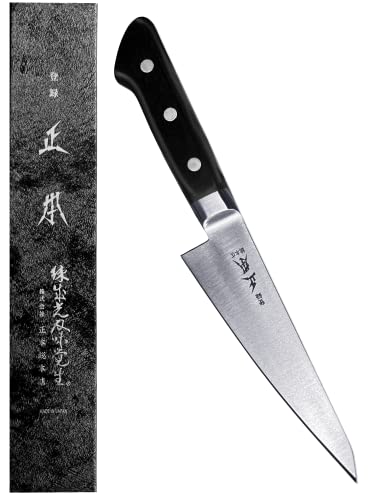
Masamoto has been making knives since 1866, and that history isn't just marketing: professional kitchens and celebrity chefs choose this brand because it delivers. The Hyper Molybdenum Vanadium stainless steel hits 58-59 HRC hardness, which means it holds a serious edge while resisting rust better than carbon steel. The blade geometry is sophisticated, with a thin profile that lets you work delicately around bone without forcing the knife. The POM Duracon handle with full tang and stainless bolster is built for commercial use, which means it'll outlast nearly everything else in a busy kitchen.
The trade-off is cost. You're paying for established reputation and institutional trust, plus Japanese craftsmanship at the premium end. If you're serious about honesuki work (whether professional or a passionate home cook) Masamoto represents the final answer: a knife you won't outgrow, won't second-guess, and can hand down. Compared to the RyoriNinja's longer filleting profile, the Masamoto sticks to the traditional 5.7-inch honesuki proportions, which means it's optimized for poultry deboning rather than broad versatility.
The buyer feedback is sparse because this is a knife that works so predictably that owners don't feel compelled to leave reviews. That quiet confidence is worth something. The black POM handle is understated, purely functional, and completely appropriate for a tool you'll use seriously rather than admire on the counter.
Pros
- Hyper Molybdenum Vanadium stainless steel holds edge exceptionally well
- Full tang with stainless bolster ensures durability and balance
- Sophisticated thin blade geometry for precise deboning
- 150+ year institutional reputation and professional endorsement
Cons
- Premium positioning demands corresponding investment
- Limited buyer feedback reflects niche professional audience
Key features (5)
- Masamoto HMV high-carbon stainless steel, 58-59 HRC hardness
- 5.7-inch blade with thin geometry for precision work
- Full tang construction with stainless bolster
- Black POM Duracon handle for durability and grip
- Made in Japan with 150+ year manufacturing heritage
How to Choose the Right Honesuki Knife
Single-Bevel vs. Double-Bevel Blade
All true honesuki knives are single-bevel, meaning the blade is sharpened on only one side (typically 15 degrees or less). This differs from Western boning knives, which are double-beveled. A single bevel gives you a thinner edge and more precision when working along bone, but it also requires different sharpening technique. If you've never sharpened a single-bevel blade, expect a learning curve. Conversely, the honesuki versus boning knife differences go beyond just bevel angle: Japanese honesuki favor delicate ligament work, while Western boning knives are built to push through tissue and occasional contact with bone. Choose based on what you'll actually cut.
Steel Type: Stainless vs. Carbon
Stainless steel (like Masamoto's HMV or the AUS-8 core in mid-range options) resists rust, requires less maintenance, and works well for home kitchens. Carbon steel (like the Masahiro) holds a sharper edge longer but demands immediate hand-washing and drying to prevent patina and rust. If you want a knife you can leave in the sink occasionally, choose stainless. If you're willing to care for it properly, carbon steel rewards you with superior edge retention. Budget picks often use composite steel cores for balance between performance and price.
Blade Length and Handle Comfort
Traditional honesuki blades run 5.7 to 6 inches, giving you control and maneuverability around poultry joints. Longer blades (like the RyoriNinja's 8.5 inches) extend your reach for filleting and slicing but feel cumbersome if your primary job is deboning chicken. Handle material matters: laminated wood is durable and forgiving; natural rose wood looks refined but requires care. POM (plastic composite) is commercial-grade and won't warp. Test the balance in your hand if possible, as the weight distribution between blade and handle affects precision and fatigue over a full butchery session.
Sharpening and Maintenance Requirements
Out-of-the-box sharpness varies widely: premium knives like Masamoto arrive ready to work, while budget options like Tojiro benefit from a waterstone session first. For honesuki knife sharpening and care, you'll eventually need a whetstone or professional service; a ceramic honing rod won't maintain a single-bevel edge the way it does a double-bevel knife. Budget time and commitment before buying: carbon steel demands more attention; stainless is more forgiving. If maintenance feels like a chore, choose stainless and professional sharpening every 6-12 months.
Budget Positioning and Long-Term Value
Entry-level honesuki knives (under $60) get the job done and let you learn technique without guilt if you chip the blade. Mid-range picks ($60-$150) offer better steel, edge retention, and handles that won't feel cheap. Premium options ($150+) combine institutional reputation with steel and craftsmanship that last decades. Consider not just the purchase price but whether you'll use it regularly: a $40 knife gathering dust isn't a bargain, but a $200 Masamoto you reach for weekly is.
Our picks at a glance
3
Best for Filleting and Detail WorkRyoriNinja
4
Best Premium Carbon Steel OptionProduct of Gifu Japan
5
Best Premium PickMasamoto
Frequently asked
Can I use a honesuki knife for tasks other than deboning poultry?
Yes, but the single-bevel design and triangular blade shape suit specific work. Honesuki knives excel at filleting fish, slicing thin vegetables, and detailed precision cuts where you benefit from the flat side's clean geometry. They're less practical for heavy chopping, mincing, or push-cut tasks where a chef's knife works better. The longer-bladed RyoriNinja model leans more toward filleting versatility; traditional shorter versions focus on deboning. Think of it as a specialist tool, not a general-purpose knife.
How do I sharpen a single-bevel honesuki knife?
Single-bevel knives require a different approach than Western double-bevel blades. You sharpen primarily on the bevel side (the convex side) while maintaining a very light touch on the flat side, just enough to remove the micro-bevel burr. A waterstone (1000-8000 grit progression) is ideal; ceramic rods won't maintain the edge long-term. If sharpening feels daunting, professional services designed for Japanese knives will handle it. Many owners send their honesuki to specialists annually rather than attempting home sharpening.
What's the difference between a honesuki and a garasuki knife?
Both are Japanese single-bevel deboning knives, but a garasuki is significantly larger (7-8 inches) and heavier, designed for breaking down whole birds and handling tougher poultry work. A honesuki is smaller (5.7-6 inches), lighter, and optimized for finer deboning, filleting, and precision cuts around joints. If you're mostly working with chicken portions or fish, a honesuki is the right choice. Garasuki makes sense for whole-bird butchery or larger kitchen operations.
Do I need special storage for a honesuki knife?
A protective saya (wooden sheath) is ideal, especially for carbon-steel models, because it protects the blade edge and prevents accidental contact. For storage, a magnetic strip, knife block, or drawer with blade guards works. Keep the knife dry and away from prolonged moisture. Carbon-steel blades benefit from light oil coating if stored long-term. Stainless options are more forgiving, but edge protection still matters: a dull honesuki defeats the purpose.
Is a honesuki knife worth buying if I mostly cut chicken at home?
Absolutely. A good honesuki transforms chicken butchery from a chore into something almost meditative. The precision and sharpness let you separate meat from bone cleanly, with less manhandling and fewer mistakes. Even a budget honesuki like the Hezhen or Tojiro outperforms a dull chef's knife or multipurpose boning knife for this specific task. If you're breaking down whole chickens weekly, the investment pays for itself in speed and quality. If it's once a year, a cheaper option makes more sense.