Kitchen & Dining · Cookware
Best Gyuto Knives for Home Cooks and Professionals
Compare top-rated gyuto knives from Mitsumoto Sakari, Dalstrong, and Yoshihiro. Find the best Japanese chef knife for your kitchen with detailed reviews and buying guide.
Affiliate disclosure: As an Amazon Associate I earn from qualifying purchases.
At a glance
1
Best OverallMitsumoto Sakari
2
Best Premium ChoiceDalstrong
3
Best for Lightness and PrecisionYoshihiro
4
Best for Visual Beauty and ValueYoshihiro
5
Best Budget-Friendly Entry Pointkanngou
Detailed reviews
The Mitsumoto Sakari checks every box for someone buying their first serious gyuto. The 3-layer San-Mai structure (a high-carbon core wrapped in stainless steel) delivers cutting performance without the rust anxiety that keeps many cooks away from pure carbon blades. The tsuchime hammered finish isn't just decorative; it genuinely reduces drag and food sticking during slicing, which makes a noticeable difference when you're working through a board of vegetables or proteins. The octagonal rosewood handle sits naturally in the hand and guides a comfortable pinch grip.
What impresses us most about owner feedback is consistency. Reviewers with professional kitchen experience (and plenty of them have it) report reaching for this knife constantly: some say they use it for 95 percent of their prep work. The blade arrives sharp enough to slice tomato skin without pressure, and the edge holds through weeks of home cooking before honing becomes necessary. The deep-cryo treatment and HRC 60 hardness balance toughness with sustained sharpness in a way that justifies the modest price.
One caveat: this is a mass-produced Japanese design manufactured in China. If you're seeking hand-forged artisanal work from a single blacksmith in Yokohama, look elsewhere. For the majority of home cooks, though, this distinction matters far less than having a blade that performs reliably every day. The included sandalwood storage box and care materials also signal that Mitsumoto Sakari takes the ownership experience seriously.
Pros
- Arrives razor-sharp and holds edge through weeks of daily use
- Hammered blade reduces food sticking during slicing
- Octagonal handle guides comfortable, controlled grip
- Includes quality storage box, cleaning cloth, and preservation oil
Cons
- Mass-produced in China rather than hand-forged by a single maker
- Requires hand-washing and immediate drying to prevent rust spots
Key features (5)
- 8-inch blade with 3-layer San-Mai construction and core
- Hand-forged tsuchime finish reduces drag and food contact
- HRC 60 hardness balanced for edge retention and toughness
- Octagonal rosewood handle with natural pinch-grip geometry
- Deep-cryo treated blade for stable cutting performance
The Dalstrong Shogun Series X elevates the gyuto into luxury territory without requiring a luxury price tag. The 66-layer Damascus construction with vacuum heat-treated core reads like a spec sheet designed to impress, and it delivers. Owners (including working chefs stocking a commercial kitchen) consistently report that the out-of-box sharpness matches or exceeds high-end Wusthof and Shun knives costing significantly more. The hand-finished 8 to 12-degree edge using the traditional 3-step Honbazuke method explains that performance; the nitrogen cooling and full-tang construction explain why the edge holds through intensive prep.
The Tsunami-rose Damascus pattern is genuinely beautiful and becomes a conversation piece on the cutting board. Where the Mitsumoto Sakari plays the role of reliable workhorse, the Dalstrong leans into prestige and presence. The full-tang, triple-riveted handle is military-grade and built for longevity, though it does run larger than comparable Japanese handles, which some home cooks with smaller hands find less intuitive than the Yoshihiro models in this lineup.
One detail worth noting: a handful of owners have reported minor cosmetic issues (small scuff marks, a rare rust spot in the Damascus layers) arriving from the factory. Customer service responds generously to these reports, often shipping a replacement while letting buyers keep the original. If you value pristine presentation or plan to gift this knife, that's worth factoring in, though the blade performance remains stellar regardless.
Pros
- Out-of-box sharpness rivals premium European chef knives at lower cost
- 66-layer Damascus construction with striking aesthetic appeal
- Full-tang, triple-riveted construction for durability and heft
- core and nitrogen cooling provide exceptional edge retention
Cons
- handle runs larger and may feel oversized for smaller hands
- Occasional cosmetic flaws reported on arrival from factory
Key features (5)
- 8-inch gyuto with 66-layer Damascus and vacuum heat-treated core
- Hand-finished 8-12° edge using traditional 3-step Honbazuke method
- Military-grade handle with full-tang construction
- Nitrogen-cooled for enhanced hardness and corrosion resistance
- Mirrored Damascus finish with decorative lion head stamp on blade
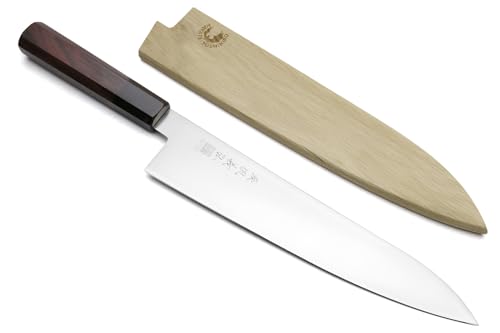
The Yoshihiro Ice Hardened represents a philosophical departure from the previous two gyutos: it trades layered construction and visual drama for unadulterated cutting performance. At 9.5 inches, it's the longest blade in this lineup, and the combination of single-piece AUS-10 stainless steel, ice-hardening treatment, and HRC 61 hardness creates a knife that feels like an extension of your hand rather than a tool you're wielding. Professional sushi chefs and prep-focused cooks consistently praise this model for precision work: the thin profile lets you achieve paper-thin slices that a chunkier blade simply cannot match.
Where it differs from the Dalstrong and Mitsumoto Sakari is in weight and balance. This knife is noticeably lighter, which some cooks adore (less fatigue over long sessions) and others find less satisfying than a blade with more forward momentum. The ice-hardening process draws out the hardness of the AUS-10 core while preserving enough resilience to absorb the impact of intensive cutting without chipping: a meaningful distinction for a single-steel blade. The octagonal rosewood Wa handle is narrower and more traditional than Western-style grips, which guides the pinch grip naturally but requires intention if you prefer a looser, cushioned hold.
Compared to the Dalstrong, this Yoshihiro trades Damascus visual flair for raw cutting purity; compared to the Mitsumoto Sakari, it leans into artisanal handcrafting and lighter-weight geometry. The trade-off: ice-hardened stainless is more reactive than layered blades and requires more attentive care to prevent discoloration. Yoshihiro includes a magnetic wooden saya and offers free first sharpening through their service, which offsets the maintenance demand somewhat.
Pros
- Single-piece AUS-10 steel with ice-hardening for pure cutting geometry
- 9.5-inch length enables extended reach for large vegetables and proteins
- Lightweight and thin-bladed for fatigue-free precision work
- Magnetic wooden saya and free first professional sharpening included
Cons
- More reactive stainless steel requires diligent hand-washing and drying
- Lighter weight lacks forward momentum some cooks prefer for rocking cuts
Key features (5)
- 9.5-inch single-piece AUS-10 stainless steel gyuto, ice-hardened to HRC 61
- Thin blade optimized for push-cuts and precision slicing
- Octagonal Wa-style rosewood handle for traditional Japanese grip
- Double-beveled edge for ambidextrous use
- Includes magnetic oak-wood saya and access to free professional sharpening
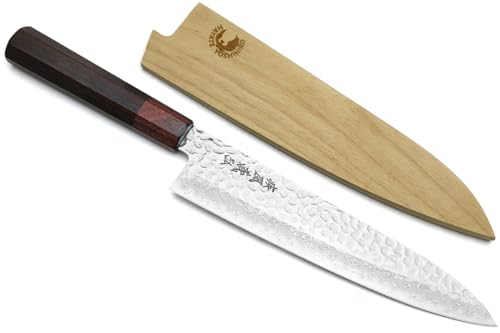
The Yoshihiro 46-Layer Hammered Damascus walks a compelling middle ground: it combines the visual prestige of Damascus layering with the proven reliability of V core steel, all at a price that lets most home cooks justify the investment without guilt. The hammered texture on the blade reduces friction during slicing and genuinely helps food release: reviewers describe the cutting action as "gliding on silk," and that tactile experience motivates people to reach for this knife more often than they might a utilitarian alternative.
V is the steel that Shun, Miyabi, and Tojiro have built their reputations on; it balances edge retention with corrosion resistance in a way that forgiving enough for home use yet sharp enough to satisfy working cooks. The 46-layer Damascus pattern is elegant without being ostentatious, and because each blade is hand-hammered, subtle variations make each knife feel unique. At HRC 60, the hardness is slightly softer than the Yoshihiro Ice Hardened or the Dalstrong, which actually works in favor of durability: there's marginally more flex, which means fewer chipped tips and higher tolerance for occasional missteps.
One recurring note in reviews: the octagonal shitan rosewood handle is beautifully finished and extremely comfortable for extended prep sessions. The 8.25-inch blade length sits between the Mitsumoto Sakari (8 inches) and the Yoshihiro Ice Hardened (9.5 inches), giving it useful reach without feeling oversized for smaller cutting boards. Where this knife excels relative to the Mitsumoto Sakari is in aesthetic presence; where it trails the Dalstrong is in out-of-box sharpness. But for cooks who will spend time honing and maintaining a blade they genuinely enjoy using, that trade-off favors the Yoshihiro.
Pros
- 46-layer Damascus pattern is stunning and unique on each blade
- V core balances edge retention with corrosion resistance
- Hammered texture reduces friction and improves food release
- Octagonal rosewood handle is comfortable and ergonomically sound
Cons
- HRC 60 hardness slightly softer; requires more frequent honing than harder steels
- Some owners report tip breakage under heavy use or impact
Key features (5)
- 8.25-inch gyuto with 46-layer V Damascus steel core
- Hand-hammered tsuchime finish for friction reduction
- V steel at HRC 60 for balanced edge retention and durability
- Octagonal shitan rosewood Wa-style handle
- Natural magnolia wood saya included; proudly made in Japan
The kanngou Damascus represents the most aggressive value proposition in this lineup. For a fraction of what you'd spend on the Dalstrong or either Yoshihiro model, you get a 67-layer Damascus blade with AUS-10 core (more layers than most competitor models) hand-sharpened to a 10 to 12-degree edge using the 3-step Honbazuke method, and presentation packaging that rivals knives costing three times as much. Owners consistently describe the out-of-box sharpness as shockingly good; several note it outperforms entry-level Wusthof and Victorinox knives they own alongside it. The fact that it's extremely lightweight (6.3 ounces versus 9.3 ounces for a comparable German knife) makes it nimble in the hand and reduces fatigue during longer prep sessions.
The ebony and rosewood octagonal handle is comfortable and feels solid, though a few owners note the finish is so polished it reads almost plasticky: a minor quibble given the price. The 8.27-inch blade length and thin spine are well-suited to the Japanese push-cutting style rather than Western rocking motions, so it rewards technique over force. Where this knife stands apart from the Mitsumoto Sakari (which is also affordable but heavier) is in its Damascus visual appeal and the balance point, which sits more into the blade rather than on the bolster: a distinction that matters if you've already trained your hand on Japanese geometry.
Quality control appears less rigorous than Yoshihiro or Dalstrong; one owner noted a small indent near the edge from the factory, and another cited handle and sheath quality concerns. Edge retention so far looks solid. For someone testing whether Japanese gyuto geometry suits their cooking style, the kanngou makes a compelling trial run.
Pros
- 67-layer Damascus construction with AUS-10 core at exceptional price point
- Hand-sharpened 10-12° edge performs impressively out of the box
- Extremely lightweight at 6.3 ounces; reduces hand fatigue
- Premium packaging and included sheath add perceived value
Cons
- Quality control less consistent; occasional cosmetic defects on arrival
- Smaller owner base limits long-term durability data
Key features (5)
- 8.27-inch gyuto with 67-layer Damascus steel and AUS-10 core
- Hand-sharpened 10-12° edge using 3-step Honbazuke method
- Lightweight construction with blade-forward balance point
- Octagonal ebony and rosewood handle; ergonomic design
- Includes premium gift box, leather sheath, and cleaning cloth
How to Choose a Gyuto Knife
Blade Length and Handle Size
Gyutos range from 7 to 10.5 inches, with 8 to 8.5 inches the sweet spot for most home kitchens. Longer blades give you reach and momentum for large vegetables and proteins; shorter ones feel more maneuverable in tight spaces and suit smaller hands. The octagonal Wa-style handles on Japanese gyutos are narrower than Western chef's knife grips and guide the pinch grip naturally, though they require intention if your hands are very large or you prefer a looser grip. Try to hold a candidate knife before buying if possible; even the same blade length can feel drastically different depending on handle dimensions and overall weight distribution.
Steel Type and Edge Retention
Single-steel blades like the Yoshihiro Ice Hardened deliver the sharpest edges but require more attentive maintenance to prevent discoloration. Stainless-clad carbon cores (San-Mai or Damascus layering) protect the core from rust while preserving much of the sharp performance, making them more forgiving for home cooks. V core steel is industry-standard in mid-range Japanese knives and balances hardness with corrosion resistance. AUS-10 runs slightly softer but still holds an edge well and is easier to sharpen at home. Look for hardness ratings (HRC 58-62) rather than layer counts: more layers look beautiful but don't automatically mean better cutting performance.
Maintenance Commitment
All gyutos require hand-washing and immediate drying to prevent rust and staining. Carbon-core blades need a light mineral-oil coating after use if you prep acidic foods frequently (tomatoes, citrus, onions). Stainless-clad gyutos are more forgiving but still benefit from prompt care. If you're willing to invest in a 1000/6000-grit whetstone and learn basic stropping technique, edge retention stretches dramatically: many owners report going weeks without sharpening if they hone regularly. If knife maintenance sounds tedious, a German-style chef's knife might suit you better. Japanese gyutos reward attention; they'll punish neglect.
Cutting Style and Technique
Japanese gyutos excel at push-cuts and fine slicing but are not designed for rocking motions (the flat blade profile doesn't support it). They're optimized for boneless cuts (meat, fish, vegetables, herbs) not for breaking down bone-in poultry or root vegetables requiring heavy impact. If you use best yanagiba knives for sashimi and sushi, a gyuto complements that purchase rather than replaces it. The thin blade and light weight demand a steady grip and deliberate technique; they won't compensate for sawing motions the way a heavier German knife might. Budget first-time buyers should expect a learning curve of 2-3 weeks before the knife feels intuitive in hand.
Budget and Long-Term Value
Entry-level gyutos ($60-$100) often outperform mid-range German knives in sharpness and edge retention, making them exceptional value. Mid-tier options ($100-$200) introduce Damascus aesthetics, hand-finishing, and refined ergonomics that transform cooking into a more deliberate, enjoyable process. Premium gyutos ($200+) pursue incremental gains in steel quality and artisanal finishing rather than transformative performance upgrades. For most home cooks, the sweet spot is $100-$150: enough to get genuine Japanese engineering and materials, not so much that price anxiety discourages daily use. Treat a quality gyuto as a 10-year tool, not a disposable item, and the per-use cost becomes negligible.
Our picks at a glance
1
Best OverallMitsumoto Sakari
2
Best Premium ChoiceDalstrong
3
Best for Lightness and PrecisionYoshihiro
4
Best for Visual Beauty and ValueYoshihiro
5
Best Budget-Friendly Entry Pointkanngou
Frequently asked
Can I use a gyuto to cut through bones or frozen food?
No. Gyuto blades are optimized for clean cuts through boneless proteins, vegetables, and fruits. The thin blade and acute edge angle are vulnerable to chipping or breaking if used on bone, cartilage, or frozen items. For bone-in butchering, a cleaver or heavy-duty chef's knife is the right tool. Attempting to use a gyuto on hard ingredients is the fastest way to damage it and end up disappointed.
How often should I sharpen a gyuto?
With regular honing on a whetstone (5-10 light passes weekly), most gyutos stay sharp for 4-8 weeks of home cooking before requiring a full sharpening. Professional cooks in high-volume kitchens may sharpen weekly. The key is honing between sharpening sessions; a sharp knife that's been honed stays sharp much longer than one that's neglected. If you don't own a whetstone, budget for professional sharpening every 2-3 months depending on use.
What's the difference between Damascus and single-steel gyutos?
Damascus blades (layered steel with a visible pattern) are beautiful but primarily aesthetic; the cutting performance comes from the core steel inside. Single-steel gyutos deliver maximum sharpness and edge retention since the entire blade is one material, but they're more reactive to acidic foods and rust. For most home cooks, a Damascus blade with a high-quality core (V or AUS-10) offers the best trade-off between performance, appearance, and maintenance burden.
Are Japanese gyutos actually made in Japan?
Some are, some aren't. Yoshihiro gyutos are handcrafted in Japan by master artisans and carry genuine prestige. Dalstrong and Mitsumoto Sakari are Japanese companies with manufacturing in China: a distinction that matters if provenance is a priority, but the quality and performance often rival or exceed genuinely Japanese-made alternatives at the same price. Read product descriptions carefully; legitimate companies disclose manufacturing locations transparently.
Should I buy a gyuto if I'm left-handed?
Yes, but confirm the blade is double-beveled (edges on both sides) before purchasing. Most gyutos listed here are double-beveled and work equally well for left- and right-handed users. Single-beveled gyutos (rare in this price range) are designed for right-handed cooks and will feel awkward in a left-handed grip. The buyer guide for double-beveled versus single-beveled geometry is usually buried in product descriptions, so check the specs before checkout if you're left-handed.