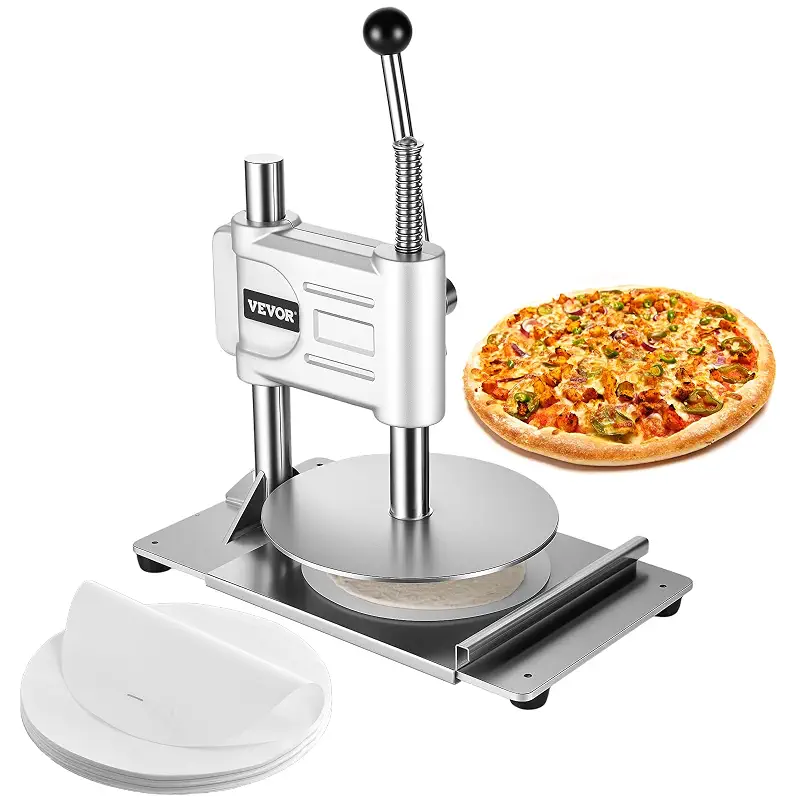
Ideal for: Budget-conscious home bakers and small cafes willing to work through assembly quirks.
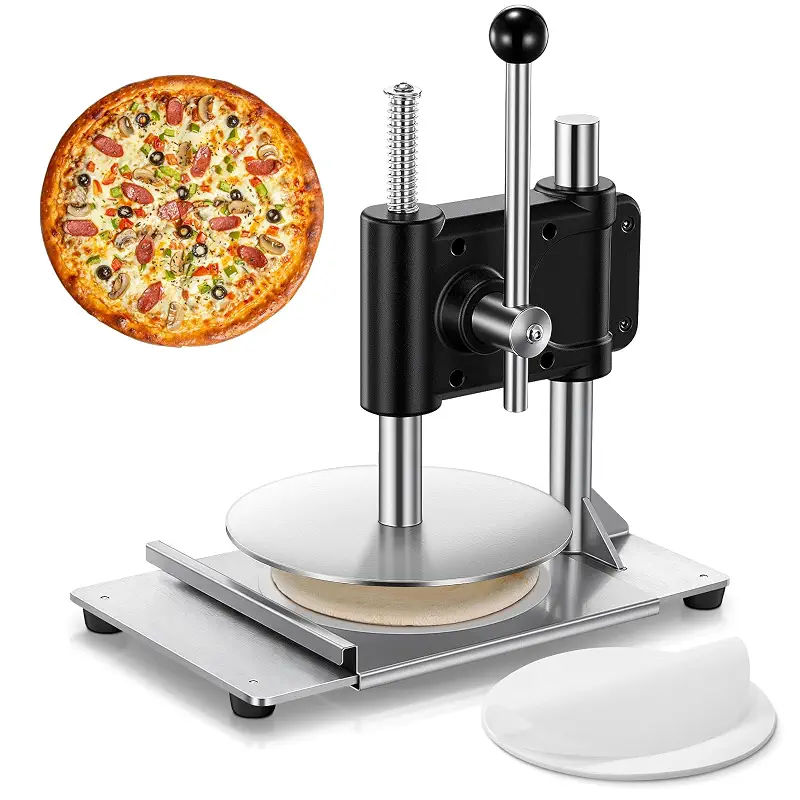
The Vevor manual press lands in the middle of the market: affordable entry point, practical 9.5-inch plate suited to personal and small commercial work, and the courtesy of 100 parchment sheets to start. The lever mechanism is designed for low-effort pressing, and the stainless steel construction resists rust if maintained.
However, buyer feedback reveals real friction points. Several owners report assembly issues, particularly with hinge alignment, and customer service has been unresponsive to production defects. More significantly, dough sticking to the plates is a recurring complaint, even with parchment interleaf, which undermines the convenience pitch. For sicilian pizza pan styles especially, some users find themselves reverting to rolling pins for better thickness control.
If you want a manual press and are comfortable troubleshooting fitment or learning dough-prep workarounds, this is a budget-conscious pick. But compared to the electric alternatives in this lineup, you trade convenience for cost. The inconsistent assembly quality means checking your unit carefully upon arrival.
Pros
9.5-inch plate handles personal to commercial portions
Includes 100 sheets of parchment paper for immediate use
Stainless steel construction resists corrosion
Lever mechanism designed for low-effort pressing
Cons
Assembly issues reported; hinge alignment often misaligned
Dough frequently sticks despite parchment use
Key features
9.5-inch stainless steel pressing plate with vertical spring-return design
Manual lever with effort-saving mechanical advantage
Adjustable thickness via positioning screws up to 1.4 inches
100 parchment paper sheets included for dough release
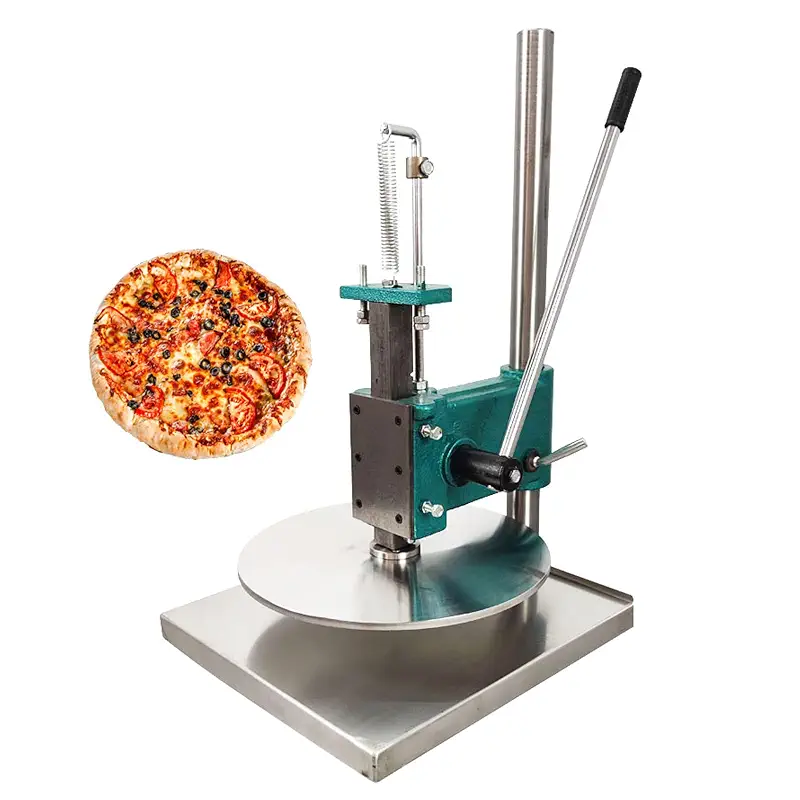
Ideal for: Bakeries and commercial kitchens requiring full-size pizza plates and batch-press efficiency.
The Intbuying press distinguishes itself with a 14-inch disc diameter, the largest in this comparison. This plate size suits someone making full-size pizzas or working in higher-volume settings where bigger batches justify the footprint. The adjustable thickness screw and reinforced tray design suggest thoughtful engineering for stability and precision.
The challenge is that only three buyer reviews exist, all five-star ratings, which raises the question of whether these reflect genuine long-term use or early enthusiasm. Without substantial real-world feedback, assessing durability, actual ease of use, or whether the thickness adjustment mechanism works as claimed is difficult. Where the Hesmax electric models and the manual Vevor have dozens of reviews revealing both strengths and weaknesses, this Intbuying press remains largely unproven in the wild.
I'd recommend this primarily if you specifically need a 14-inch plate and can live with the uncertainty, or if you're willing to be an early adopter. For most home cooks or small operators, the track record of other options in this lineup may feel safer.
Pros
14-inch disc diameter handles full-size pizzas and larger batches
Adjustable thickness positioning screw for consistent results
Reinforced tray design prevents misalignment during pressing
Cons
Minimal buyer reviews limit confidence in real-world durability
No user feedback on assembly difficulty or long-term performance
Key features
14-inch stainless steel pressing disc, largest in class
Adjustable thickness control via positioning screw mechanism
Reinforced tray with secure plate attachment to prevent slippage
Extended drag plate for smooth, stable sliding action
#3 Pick
Best Electric Choice for Ease
Hesmax
8.6" Electric Pizza Dough Press Machine, Stainless Steel Commercial Dough Press, Dough Sheeter for Pizza Bread Pastry Making, Ideal for Bakery Restaurant & Household
5.0(1)
Compact 110V electric press that flattens dough to 2mm with minimal physical effort and low maintenance.
Ideal for: Home bakers and small cafes prioritizing automatic pressing, consistent thickness, and quick cleanup.
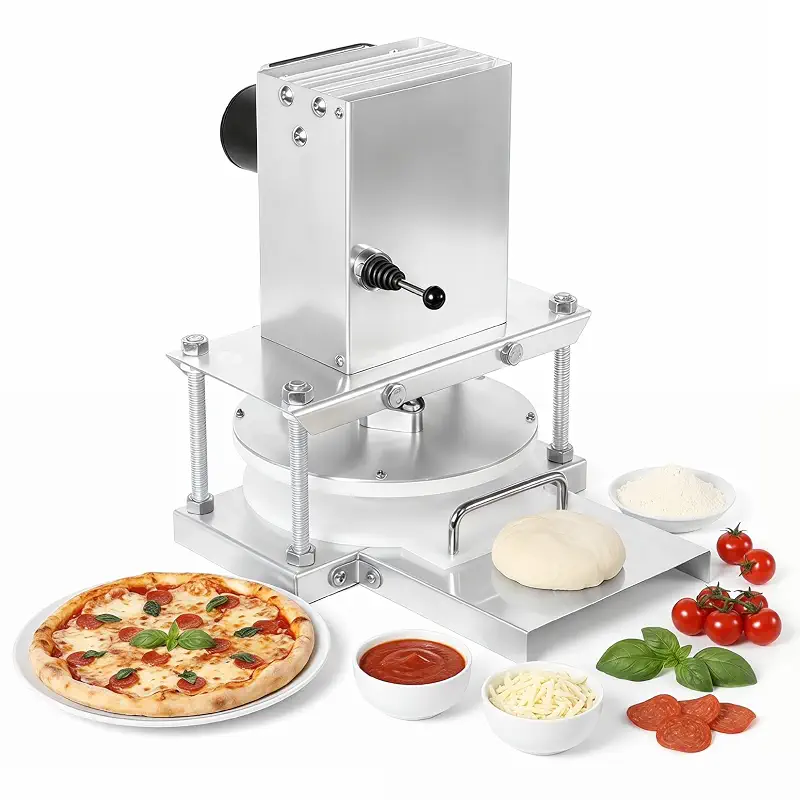
The Hesmax 8.6-inch electric press offers what manual models cannot: true set-and-forget automation. Place dough on the plate, press a button, and walk away. The 110W copper-core motor operates quietly, the stainless steel surfaces wipe clean with a damp cloth (no crevices to trap flour), and thickness adjustment via a single control knob gives flexibility from ultra-thin to thicker crust styles. At only 16 pounds, it's genuinely compact for a commercial-grade tool.
The trade-off is plate size: 8.6 inches makes smaller, personal-size pizzas, not full restaurant rounds. If you're comparing this to the 14-inch Intbuying or 9.5-inch manual presses, you're trading batch volume for hands-off convenience. The single five-star review confirms what the design promises (smooth non-stick surfaces, low fuss cleanup), though one review isn't enough to flag edge cases or durability questions over years of heavy use.
I'd choose this over the manual Vevor if you bake regularly and value consistency and cleanup speed over larger plate diameter. The motor and controls feel more robust than budget alternatives.
Pros
Fully automatic electric operation replaces manual effort
Adjustable thickness from 2mm to thicker crust options
Stainless steel surfaces with no tight crevices for easy cleaning
Compact 16-pound footprint fits standard countertops
Cons
8.6-inch plate limits dough size compared to larger manual presses
Minimal owner feedback on long-term motor reliability
Key features
110V, 110W copper-core motor with quiet, stable operation
8.6-inch stainless steel food-grade pressing disc
Adjustable thickness control knob from 2mm to flexible heights
Compact 16-pound design with widened base for pressing stability
#4 Pick
Premium Electric for Commercial Use
Hesmax
Electric Pizza Dough Press Machine 8.6 Inch, Stainless Steel Commercial Pizza Dough Press Machine, Automatic Forming Processor for Home Kitchen, Bakery & Commercial Restaurant Use
5.0(1)
Full-featured 8.6-inch electric press with heavy-duty stainless construction and robust motor for daily high-volume work.
Ideal for: Bakeries, cafes, and food trucks running high-volume daily pressing with minimal downtime.
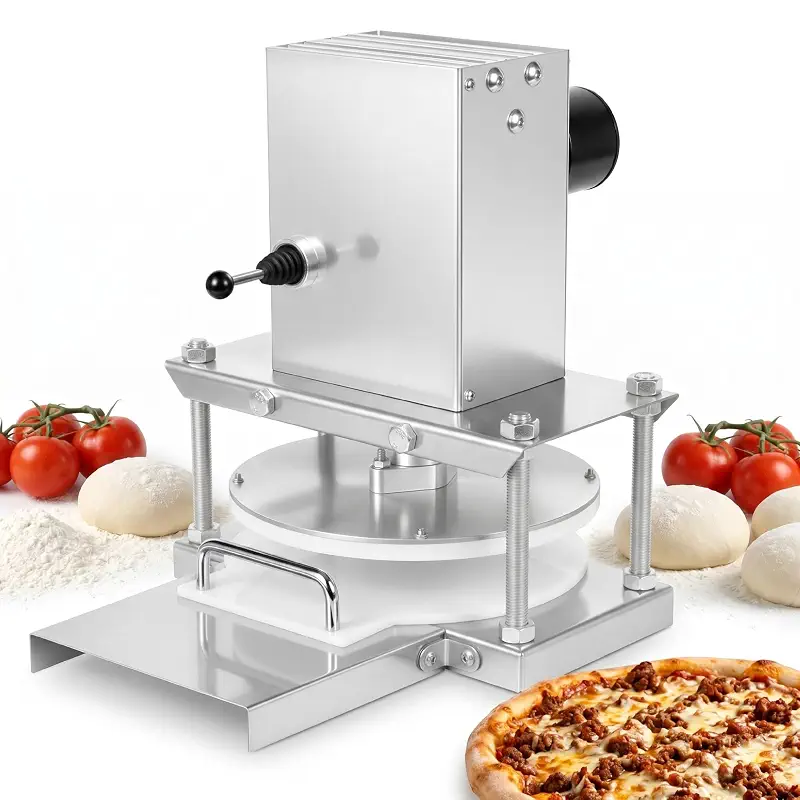
The Hesmax 8.6-inch commercial model reads as a step up from the entry-level electric variant. It emphasizes one-touch automation, full stainless steel construction throughout, a widened base to prevent shifting mid-press, and a copper motor engineered for continuous operation. The buyer feedback confirms the selling points: quiet, reliable motor; zero rust issues; and surfaces that clean in seconds with a damp cloth. For a bakery or cafe running multiple pressing cycles daily, this durability emphasis matters.
Again, the 8.6-inch plate is the constraint. This press makes smaller, uniform pizzas but won't handle the batch sizes or plate diameters that a 9.5-inch or 14-inch manual press can manage. Where the manual Vevor forces you to learn tricks for dough release and deals with assembly headaches, the electric models trade flexibility of size for the luxury of automation and consistency. If you're choosing between a large-plate manual press and this electric unit, ask yourself whether batch speed or hands-off ease matters more to your workflow.
Pros
Full stainless steel body and plates prevent rust and corrosion
Continuous-duty copper motor rated for all-day commercial use
Widened stable base prevents machine drift during pressing
Low-maintenance cleaning with damp cloth, no complex disassembly
Cons
8.6-inch plate smaller than manual 9.5-inch and 14-inch alternatives
Premium positioning reflects higher cost for commercial buyers
Key features
Full stainless steel construction with food-safe pressing plates
Continuous-duty copper motor for high-volume daily operation
8.6-inch standard pressing surface for uniform round pizza bases
One-touch electric activation with low daily maintenance
#5 Pick
Best Manual for Serious Home Use
Fohere
Manual Pizza Dough Press Machine, 9.5 inch Pizza Pastry Press Plate, Stainless Steel Bread Presser, Commercial Chapati Sheet Crust Maker, Upg Base,Forming Machine with Handle,100 Pcs Parchment Paper
3.5(4)
Heavy-duty 9.5-inch manual press with thickness adjustment and robust construction, ideal for enthusiasts willing to master technique.
Ideal for: Serious home pizza enthusiasts and small restaurant makers committed to mastering manual pressing technique.
The Fohere manual press earns its place with a thoughtful design and strong buyer testimonial from a genuine pizza enthusiast. The 9.5-inch plate sits between compact electrics and the outsized 14-inch model, the stainless steel is heavy-duty and rigid, and the adjustable thickness mechanism (via Allen screws on the vertical shaft) gives control from thin to thick crust. Unlike the Vevor, this unit arrived in good condition for the detailed five-star reviewer, who praised its stability and heft.
But it's a press for patient, deliberate users. Dough temperature and consistency matter: pressed too soon after rising, elastic dough springs back; chilling or stiffer recipes hold shape better. The reviewer's workaround of batch-pressing dough into personal pans and refrigerating them before topping hints at the learning curve. Compared to the automatic electric presses, manual work is genuinely involved. One buyer found it merely squeezed air without the flattening effect they wanted, suggesting technique or dough prep is critical.
If you enjoy the ritual of pizza making and want a press that scales your effort intelligently without electricity, this is stronger than the Vevor. The construction quality and detailed assembly instructions inspire confidence. But it demands more from the user than an electric alternative.
Pros
Heavy-duty stainless steel base and column with zero flex
Adjustable thickness via vertical shaft Allen screws up to 1.4 inches
Slide-out tray with concentric guides for consistent dough positioning
Includes replacement spring and 100 parchment paper sheets
Cons
Requires dough-prep technique: temperature and elasticity affect results
Large footprint demands dedicated counter or storage space
Key features
9.5-inch stainless steel vertical pressing design for personal pizzas
Adjustable thickness control via Allen screw mechanism up to 1.4 inches
Removable slide-out tray with concentric circle guides for positioning
Heavy-duty welded base and vertical column prevent machine wobble
How to Choose a Pizza Dough Press
Four trade-offs that actually matter when matching a pizza dough press to your kitchen.
Manual vs. Electric: The Core Trade-Off
The choice between manual vs electric pizza dough often determines your entire experience. Electric presses handle dough automatically, requiring minimal physical effort and delivering consistent thickness every time, but they cost more and occupy fixed countertop space. Manual presses are affordable, need no electricity, and let you control the press force, but they demand active effort and dough-prep skill to avoid sticking or uneven results. Home bakers who press dough occasionally may prefer manual simplicity; cafes running dozens of rounds daily benefit from electric automation.
Plate Size and Pizza Diameter
Plate diameter ranges from 8.6 inches (electric models) to 14 inches (Intbuying), affecting the finished pizza size and batch throughput. An 8.6-inch plate makes personal or appetizer-sized pizzas; a 9.5-inch plate handles 7-to-8-inch personal pans or the base for small family pizzas; 14 inches suits full restaurant rounds. Smaller plates press faster but require multiple batches for family gatherings. Consider your typical baking volume and finished pizza size before committing.
Dough Preparation and Sticking
Dough sticking to the press plates is one of the most common complaints across models. Parchment paper interleaf works for many, though application is fussy; a light oil coating on both plates offers another route. For how to clean and maintain your pizza dough press machine after use, wipe stainless steel surfaces immediately with a damp cloth to prevent flour caking and rust. Dough consistency and temperature also matter: chilled or stiffer doughs resist sticking and spring-back better than warm, elastic dough fresh from the first rise. Experiment with dough prep before assuming the press is at fault.
Construction and Durability
All five presses use stainless steel for the pressing plates and bodies, but assembly quality and motor reliability vary. Heavy-duty manual models feel rock-solid due to thick welds and rigid bases; electric motors in commercial models are engineered for continuous duty. Check owner reviews for assembly defects, hinge problems, or motor noise. Manual presses ship partially assembled and sometimes arrive with misaligned or short hardware, so inspect upon arrival. Stainless surfaces clean easily but require prompt wiping to avoid flour buildup and corrosion.
Space and Storage Considerations
Manual presses are bulky and heavy, occupying significant counter or cabinet space. If your kitchen is cramped, an 8.6-inch electric press may be easier to store or relocate between areas. Commercial models have widened bases for stability but take up more room. Consider whether you'll leave the press out daily or stash it after use; infrequent bakers may prefer compact, light designs; high-volume operators need stability over footprint.
Frequently asked
Quick answers to the questions readers ask most.
Can a pizza dough press handle other doughs like tortillas or flatbread?
Yes. Most presses work well for tortillas, pita, flatbread, pastry shells, and other soft-to-medium doughs. Some owners use them for chapati and dumpling wrappers too. The key is dough consistency and temperature; elastic or overly warm doughs resist flattening and stick more, so chill or stiffen dough before pressing. Manual presses require a bit of technique, while electric models handle variety with less fuss.
How thick can the dough be pressed?
Most manual presses flatten dough to around 5mm by default, with adjustable screws allowing thicker results up to 1.4 inches for personal preference. Electric models offer precision adjustment from 2mm (thin, crispy crust) to thicker profiles. Actual thickness depends on dough ball size, consistency, and how much you compress; smaller dough portions or stiffer mixes yield thicker final crusts at the same press setting.
Do I need to oil or flour the press plates to prevent sticking?
Many buyers use parchment paper interleaf between dough and plates for easiest release. Light oiling of both plates before pressing also works. A few owners found stainless steel plates naturally release better than plastic alternatives. Dough temperature and consistency matter most; cold or stiffer doughs stick far less than warm, elastic dough fresh from rising. Some pressing is trial and error to find your best method.
Is there a significant difference between the 8.6-inch and 9.5-inch plate sizes?
The difference is noticeable for batch volume. A 9.5-inch plate yields roughly a 7-to-8-inch finished pizza; an 8.6-inch yields smaller personal rounds. Over a dozen presses, the 9.5-inch models save time and give you slightly more dough real estate to work with. If you're making full-size 14-inch restaurant pizzas, neither plate will suffice; the 14-inch Intbuying model is your only choice in this lineup.
Do electric pizza dough presses require much maintenance?
Very little. Stainless steel surfaces wipe clean with a damp cloth after each use. Motors in commercial-duty models are sealed and need no oiling. Unplug before cleaning, and avoid submerging the main body. Most owners report zero maintenance beyond regular cleaning. Check the user manual for any specific lubrication points, though quality units have minimal moving parts that require attention.