Best Hamburger Patty Press | Top 5 Picks for Perfect Burgers
Find the best hamburger patty press for your kitchen. Compare stainless steel, aluminum, and multi-purpose burger makers with 100+ patty papers included.
Verdict, analysis, and key features for each pick.
#1 Pick
Best Overall
Brigii
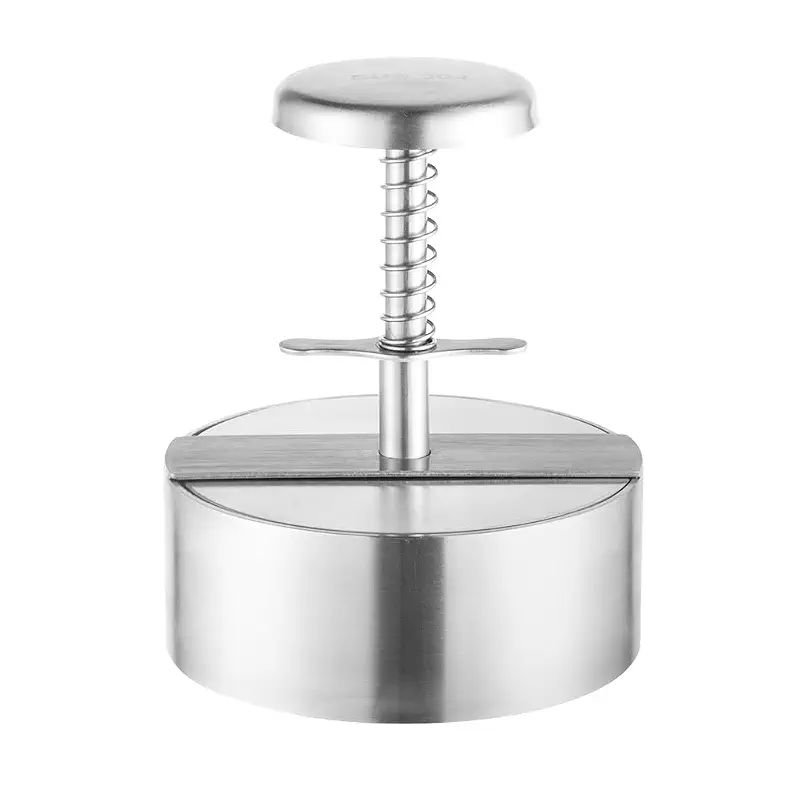
Brigii Burger Press, 4.5" 304 Stainless Steel Hamburger Press Patty Make | Spring back design, thickness guide 100g-400g, easy release, no coating, no rust, dishwasher safe, for ground beef patties
4.6(750)
Durable 304 stainless steel press with spring-back design and built-in thickness guide for perfect patties.
Ideal for: Home cooks making batches of burgers who value speed and consistent patty density.
The Brigii press stands out for its combination of solid construction and practical engineering. The 304 stainless steel body feels substantial without being unwieldy, and the spring-back mechanism handles the mechanical work so your hand doesn't have to. The pre-engraved thickness guide (marking weights from 100g to 400g) removes guesswork: you press to the line and get uniform density every time. Owners consistently praise how fast it works; one reviewer made 20 burgers in five minutes where hand-pressing would have taken 15 to 20. The detachable structure keeps cleanup simple, though some users recommend hand-washing rather than the dishwasher to preserve the nonstick finish.
Where this press shines is repeatability. If you're feeding a crowd or meal-prepping, the ability to produce identical patties in rapid succession matters. The only trade-off is that the spring-back mechanism does require two hands to keep the base steady while pressing: you can't brace it one-handed against the counter. Compared to the GPYG multi-purpose press, the Brigii sacrifices versatility (no stuffed-burger capability) but gains single-task efficiency and a more intuitive thickness guide.
Pros
Spring-back mechanism reduces hand fatigue significantly
Ideal for: Budget-conscious first-time burger makers and frequent grillers who meal-prep in bulk.
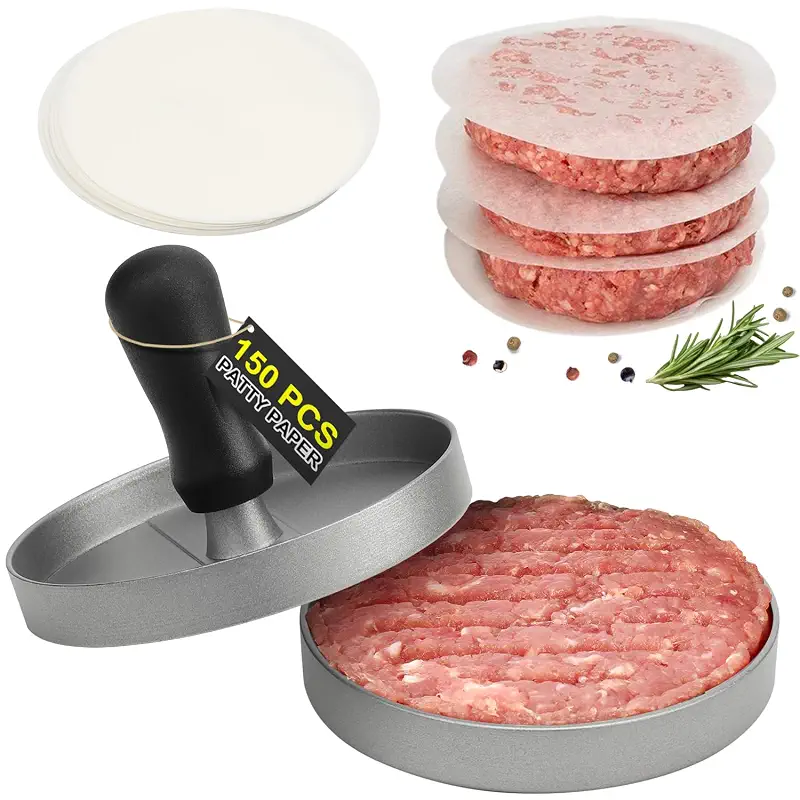
The Tacgea press delivers straightforward functionality at an accessible price point. The food-grade aluminum alloy construction is lightweight and durable, and the non-stick coating works reliably when paired with the included wax papers. The big draw here is the bundle: 150 patty papers means you're not scrambling to buy separators separately, and buyers consistently report that freezing pre-made patties between the papers eliminates the sticky-stacking problem. One reviewer made 36 patties in a single session without any sticking issues, which speaks to the press's throughput when the papers are used correctly.
The removable handle is a convenience for portability and storage, and the aluminum body won't rust or corrode. However, a few owners flagged that the included patty papers are quite thin: some noted they can almost disintegrate into the patty during pressing. The press itself is solid, but paper quality is inconsistent across batches. If you're willing to upgrade to thicker parchment paper (available separately), this becomes a very practical choice. Compared to the Meykers press, the Tacgea is slightly lighter and more portable, but Meykers includes 100 papers and a more robust non-stick surface. For burger prep that pairs well with best meat claws for handling larger cuts of meat before grinding, the Tacgea's lightweight design means less kitchen strain when switching between tools.
Pros
150 wax patty papers included with purchase
Lightweight aluminum alloy body for easy handling
Non-stick surface and removable handle for portability
Cons
Included patty papers are very thin and may tear easily
Non-stick coating less durable than cast aluminum alternatives
Key features
Food-grade aluminum alloy with non-stick coating
Bundle includes 150 pieces of 4.5-inch wax patty paper
Removable, non-slip handle attaches without tools
Grooved patty surface for professional restaurant appearance
Dishwasher safe and compact for easy storage
#3 Pick
Best for Precision
Weston
Weston Single Burger Press For 4 1/2" Diameter Patties, 1/4 lbs to 3/4 lbs | Hamburger, Crab Cakes, Sausage Patties | Spring Ejector For Easy Removal | Non-Stick Heavy-Duty Cast Aluminum | 07-0310-W
4.4(11,729)
Heavy-duty cast aluminum press with spring plunger and four adjustable thickness markings for exact portion control.
Ideal for: Serious home cooks and those making sausage patties or crab cakes who value mechanical consistency.
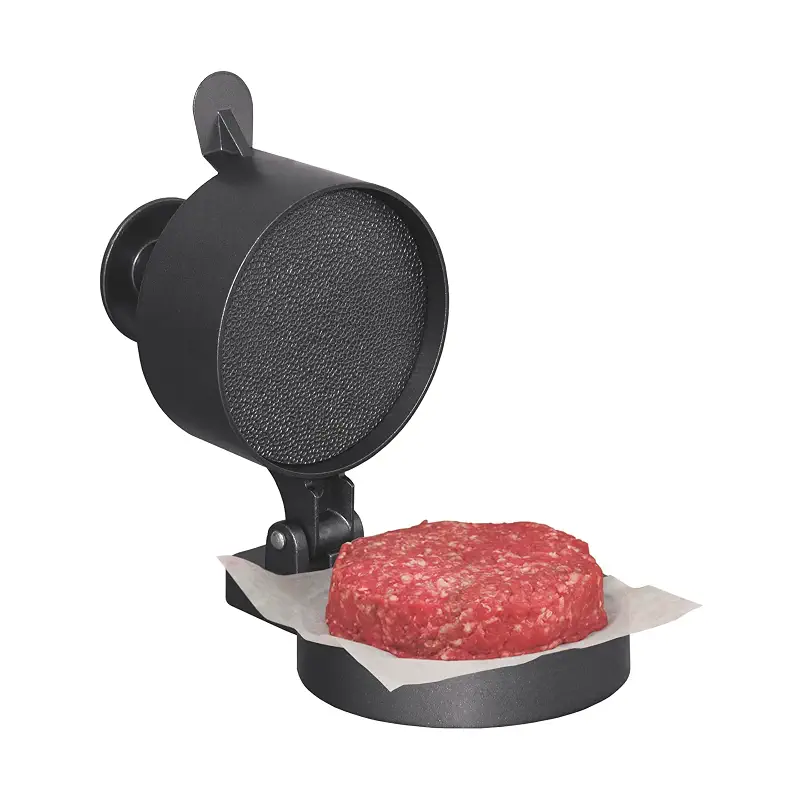
The Weston press is the workhorse of this lineup: it's been a standard in commercial and home kitchens for years, and the 11,000+ reviews reflect proven reliability. The cast aluminum body is heavier and more rigid than plastic or stamped metal competitors, and the mechanical spring plunger does the pressing work uniformly across the entire patty. This matters most when precision matters: burgers made with a Weston come out nearly identical in thickness, which translates to even cooking on the grill. The adjustable markings accommodate quarter-pound (4 oz.), third-pound (5.3 oz.), half-pound (8 oz.), or three-quarter-pound (12 oz.) patties: flexibility that covers most household and catering needs.
There's a real learning curve. The press disassembles for cleaning, and the assembly process takes time if you're in a rhythm. Owners consistently recommend using wax paper and note that pre-forming meat into a ball helps the press seat evenly. Some patties may be slightly thicker on one edge, though this rarely affects cooking quality. Compared to the simpler Brigii press, the Weston requires more mechanical understanding and cleanup time, but delivers the most consistent results for high-volume patty production. Not ideal for quick weeknight burgers, but excellent for meal prep or catering.
Pros
Cast aluminum construction ensures heavy-duty durability
Spring plunger applies uniform pressure across entire patty
Four adjustable thickness settings for portion control
Cons
Disassembles for cleaning, adding prep and cleanup time
Larger footprint requires dedicated storage space
Key features
Cast aluminum with spring plunger ejector mechanism
Adjustable thickness markings for ¼ lb to ¾ lb patties
4.5-inch patty diameter with non-stick surface
Works for burgers, sausage patties, crab cakes, and more
Ideal for: Home cooks who batch-prep burgers for the freezer and value included supplies and detachable storage.
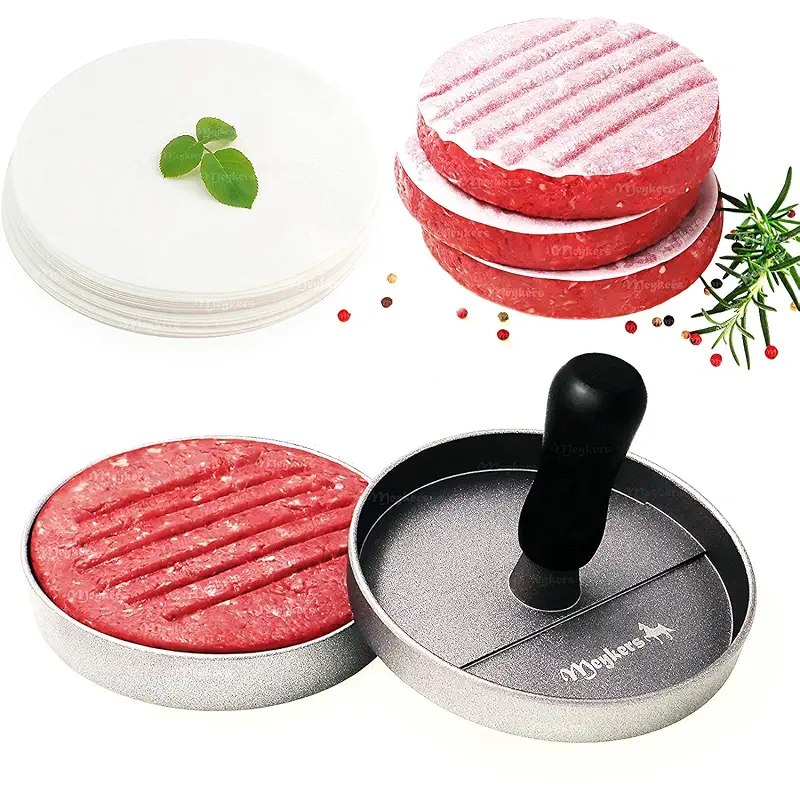
The Meykers press combines a durable cast aluminum body with a genuinely useful paper bundle: 100 sheets of parchment included means you're ready to make and freeze a whole summer's worth of patties. The groove detail on the patty surface isn't purely cosmetic; owners note that the grooves help lock in meat juices during cooking and create that professional burger-joint appearance. The non-stick surface is more resilient than lighter aluminum presses, and reviewers consistently praise how cleanly patties release without tearing. The detachable handle is clever for storage and transport: it nests inside the press when not in use, saving cabinet real estate.
This press shines for bulk prep: one owner and their spouse made a dozen uniform patties in about five minutes using pre-weighed meat balls and the included papers. The non-stick coating holds up well, though a couple of reviewers mentioned that very fatty meat (Wagyu or heavily seasoned sausage) can stick slightly: a light cooking-spray mist solves that. Compared to the Brigii, the Meykers includes patty papers and offers more flexibility in patty weight (it works for any amount of meat you load, not just the pre-marked guides), but lacks the Brigii's spring-back mechanism, so pressing requires more hand strength.
Pros
100 parchment patty papers included in the box
Juice-locking groove pattern for juicier cooked burgers
Detachable handle nests inside for compact storage
Cons
No pre-marked thickness guide; requires manual weight monitoring
Can require significant hand strength on fatty meat
Key features
Cast aluminum non-stick surface for durability and easy release
Includes 100 free parchment paper circles for storage
Juice-locking grooves pattern for professional burger look
Detachable solid plastic handle attaches without tools
Food-grade metal usable as a roast plate or griddle
Ideal for: Creative grillers and entertainer-types who make sliders, stuffed burgers, and batches of cakes or patties.
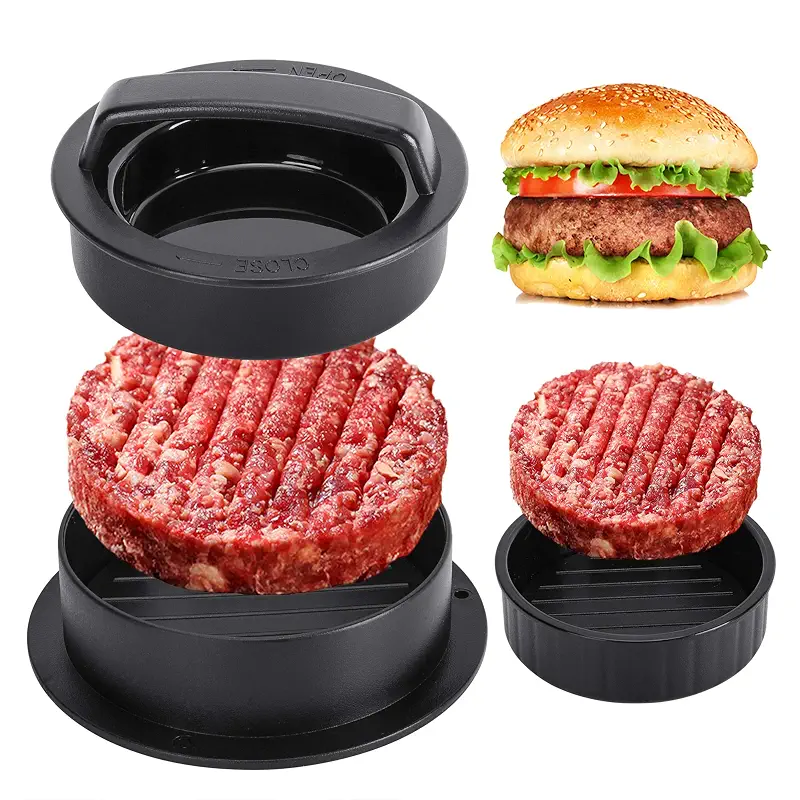
The GPYG press is the multi-tool of this category. It includes two different-sized patty bases (one for standard burgers, one for mini sliders) plus a removable indent press that creates a shallow well in the patty center. This well is the key to stuffed burgers: load meat, add filling (cheese, mushrooms, onions), seal with a second layer, and you've got a pocket burger without separate assembly. Reviewers who embrace the stuffed-burger workflow rave about it. The nesting design stacks all three pieces compactly, and the included 100 parchment papers mean you're ready for both regular and stuffed patties out of the box.
The trade-off is complexity. The burger press types comparison reveals that multi-cavity tools require more attention to loading and pressing sequences than single-purpose designs. Some meat (high-fat ground beef or sausage) sticks slightly, and pre-pressing by hand improves symmetry for thick patties. Owners report that mastering the three-step load-press-stuff-seal sequence takes practice, but once learned, it becomes second nature. BPA-free ABS plastic construction is dishwasher safe but feels less premium than cast aluminum. If you're content with standard burgers and want simplicity, the Brigii press delivers faster results. But for burger enthusiasts experimenting with fillings and slider parties, the GPYG's versatility is hard to beat.
Pros
Two patty sizes plus stuffed-burger well in one tool
Nestable design stacks compactly for minimal storage
100 parchment papers included for both sizes
Cons
Multi-step process requires learning curve for best results
Plastic construction less durable than cast aluminum
Key features
3-in-1 design: standard burger, slider, and stuffed-patty press
Removable indent press creates filling wells for stuffed burgers
Non-stick BPA-free ABS plastic with easy-release bottom base
Includes 100 parchment paper circles for convenient storage
Nestable parts stack inside each other for space-saving storage
How to Choose a Hamburger Patty Press
Four trade-offs that actually matter when matching a hamburger patty press to your kitchen.
Single-Purpose vs. Multi-Tool
The burger press types comparison matters most at the start. Single-purpose presses like the Brigii and Weston excel at speed and consistency: you load, press, and pop out an identical patty in seconds. Multi-tools like the GPYG add slider and stuffed-patty capability, which expands what you can make but adds complexity and learning time. If burgers are your primary use, single-purpose wins. If you grill creatively or host parties where sliders and stuffed versions impress, the multi-tool investment pays off.
Material and Durability
Stainless steel and cast aluminum are the gold standards; both resist rust and last years with basic care. Lighter stamped aluminum works fine but may bend or dent with heavy use. Plastic presses are budget-friendly and dishwasher-safe, but won't handle prolonged pressure from thick patties as reliably. Hand-washing metal presses extends their life. If you're making patties weekly or more, invest in stainless steel or cast aluminum. For occasional use, aluminum or high-quality plastic suffices.
Thickness Control and Consistency
Look for either built-in markings (weight or depth guides) or a spring mechanism that applies uniform pressure. The Brigii's engraved thickness markers remove math: you press to the line and get predictable results. The Weston's spring plunger does mechanical work for you, eliminating hand-fatigue and uneven pressure. Manual presses like some aluminum models require you to monitor doneness by feel, which works fine if you've made hand patties before but can feel imprecise at first. For batch prep, a press with guides or springs saves time and frustration. Learning how to make perfect burger through the right technique and tools makes all the difference.
Paper and Cleanup
Check whether patty papers are included. Bundles of 100-150 sheets are common and mean you're ready to freeze patties without buying separators separately. Quality varies: thicker parchment paper lasts longer than tissue-thin sheets. Always use papers between patties during pressing: they prevent sticking, simplify cleanup, and let you freeze patties without them fusing. Hand-wash metal presses with soap and water immediately after use; trapped meat bits are harder to remove later. Most plastic presses are dishwasher-safe, which speeds cleanup significantly.
Space and Storage
Burger press footprints vary widely. The Brigii and most aluminum presses are compact and fit easily in a drawer or cabinet. The Weston is bulkier and disassembles for storage but still requires dedicated shelf space. Multi-tools like the GPYG nest together to save room. If your kitchen storage is already tight, check the product dimensions before ordering. Detachable handles (on the GPYG and Tacgea) also help with compactness.
Frequently asked
Quick answers to the questions readers ask most.
Do I need to use parchment paper with a burger press?
Yes. Parchment paper prevents sticking to the press and lets you stack and freeze patties without them fusing together. Even presses with non-stick coatings benefit from paper: it makes cleanup faster and protects the coating from wear. Many presses include papers in the bundle, but if yours doesn't, standard wax paper or parchment paper works fine. A light spray of cooking oil on the paper adds extra insurance against sticking.
How much meat should I use per patty?
Most standard presses make 4.5-inch patties. A typical quarter-pound burger uses 4 ounces (113 grams) of ground meat. For half-pound burgers, use 8 ounces. If your press has weight markings, follow those. Otherwise, use a kitchen scale to measure meat portions before pressing: it removes guesswork and ensures consistency across all patties. Pre-forming meat into a loose ball before pressing also helps the press seat evenly.
Can I use a burger press to make other things?
Absolutely. Many presses work well for sausage patties, crab cakes, veggie burgers, and turkey burgers. The Weston is particularly popular for breakfast sausage patties because its spring plunger applies even pressure that hand-pressing struggles to match. Multi-tools like the GPYG excel at smaller shapes like sliders and cakes. Just remember to use parchment paper between items to prevent sticking, and adjust thickness settings if your press offers them.
Are spring-back or spring-plunger presses worth the extra cost?
Yes, if you make patties regularly. Spring mechanisms reduce hand fatigue and deliver more consistent pressure, especially over high-volume batches. A reviewer who made 20 burgers reported finishing in five minutes with the Brigii's spring design versus 15–20 minutes of hand-pressing. For occasional burgers, a simple manual press works fine. But for meal prep or entertaining, the mechanical advantage saves time and reduces hand strain.
What's the best way to store frozen burger patties made with a press?
Stack patties with parchment paper between each one, wrap the stack in plastic wrap or parchment, and freeze. The papers prevent patties from sticking to each other, so you can pull single burgers out without thawing the whole stack. Many reviewers use sandwich-size zip-lock bags for extra protection against freezer burn. Properly stored patties keep well for 3–4 months and go straight from freezer to grill or pan without thawing.