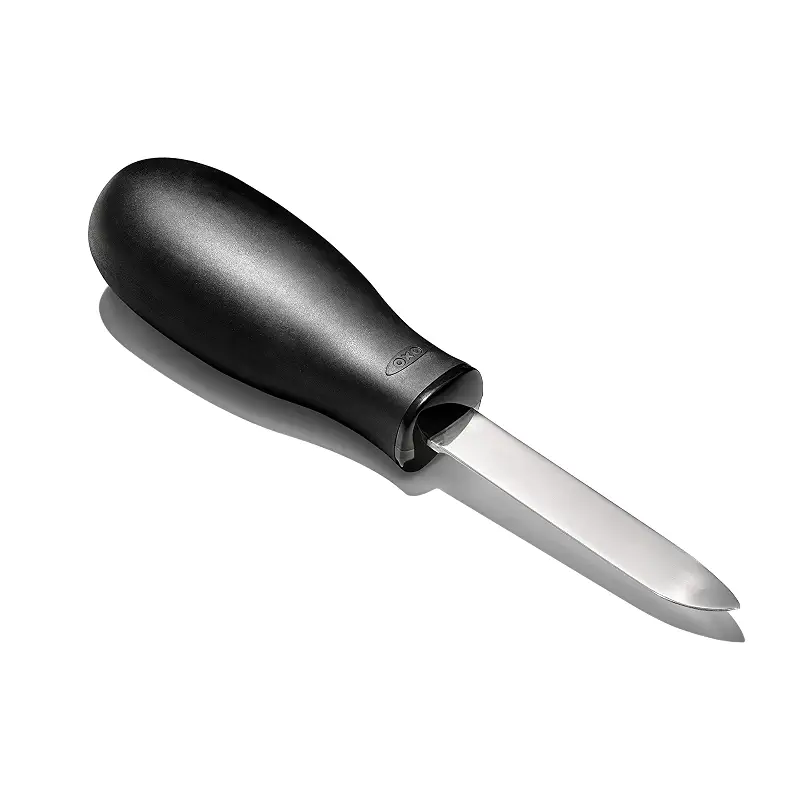
Ideal for: Home cooks, oyster beginners, anyone prioritizing comfort and ease of learning.
The OXO Good Grips stands out as the gateway knife for home cooks and oyster newcomers. Its soft, non-slip handle feels secure even when things get slippery, and the bent-tip blade design does what it promises: it finds the hinge and slides in without heroic effort. Owners consistently report that they went from frustrated to confident within a handful of oysters, which speaks to how well this knife is engineered for learning.
The stainless steel construction means it won't rust in a wet environment, and it resists the corrosion that carbon-steel knives sometimes struggle with in coastal kitchens. The blade thickness is moderate, which gives you just enough leverage without the brittleness that can come with thinner designs. Compared to professional-grade carbon-steel models like the Dexter-Russell, this knife trades some pure piercing power for overall forgiveness and durability in home use.
The only real caveat is that very large, thick-shelled oysters can sometimes demand more torque than this blade comfortably delivers. But for the oysters you'll find at most fishmongers and farmers markets, it handles them cleanly. At this price point and comfort level, it's the knife to reach for if you're building your first oyster-shucking habit.
Pros
Soft, cushioned handle stays secure in wet hands
Forgiving blade design reduces shell breakage for learners
Dishwasher-safe stainless steel; no rust or corrosion worry
Cons
Thicker blade can struggle with very large oysters
Less leverage than shorter, stouter professional designs
Key features
Bent-tip stainless steel blade for smooth hinge entry
Ergonomic handle shaped to fit hand contours naturally
Non-slip grip maintains control even when wet
Dishwasher-safe construction for quick cleanup
#2 Pick
Best Professional Grade
Dexter Outdoors
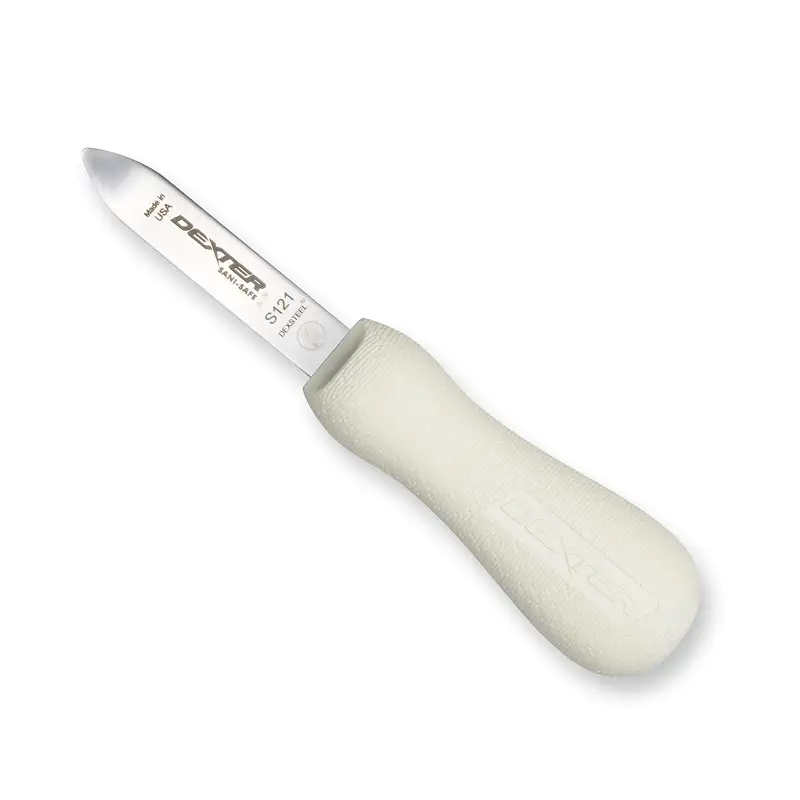
Dexter-Russell Sani-Safe 2.75" New Haven Oyster Knife, Carbon Steel | Classic New Haven pattern blade with bent tip that pops oysters open easily. Slip-resistant grip for raw bar and home use.
4.8(2,155)
Carbon-steel workhorse built for high-volume shucking; preferred by seafood pros and serious enthusiasts.
The Dexter-Russell Sani-Safe has earned its reputation in commercial kitchens and raw bars for good reason. Its compact 2.75-inch carbon-steel blade delivers the kind of penetrating power that cuts through tough hinges with minimal slippage, and the non-slip handle holds firm even after dozens of oysters have passed through your hands. Owners who shuck oysters daily report that the strength of this blade and its balance make the work feel controlled and almost effortless, even when processing hundreds.
The carbon-steel construction, combined with the bent-tip geometry, creates a tool that feels almost surgical in competent hands. Unlike the OXO or other stainless designs, this knife rewards practice and technique, and once you develop a feel for the angle and pressure, it opens oysters faster than most alternatives. The shorter blade also gives you better leverage for the prying motion, which matters when you're working through a full service.
Where this knife differs from the Duxbury model is in blade thickness and forgiveness: the Dexter is stouter and harder to break, making it the choice if you're opening a real variety of oyster sizes and don't want to worry about durability. If precision and finesse matter more than sheer ruggedness, the thinner-bladed Duxbury might actually suit you better. This knife is a lifetime tool for people serious about oysters.
Pros
Durable carbon-steel blade handles hundreds of oysters without fatigue
Compact blade offers superior leverage and control
Textured Sani-Safe handle provides secure grip under heavy use
Cons
Carbon steel requires more care; susceptible to rust if not dried promptly
Steeper learning curve than stainless options
Key features
Strong carbon-steel bent tip designed for easy shell entry
Compact 2.75-inch blade maximizes torque and leverage
Non-slip textured handle for wet, high-speed environments
Built for professional and commercial seafood prep stations
#3 Pick
Most Precise
UJ Ramelson Co
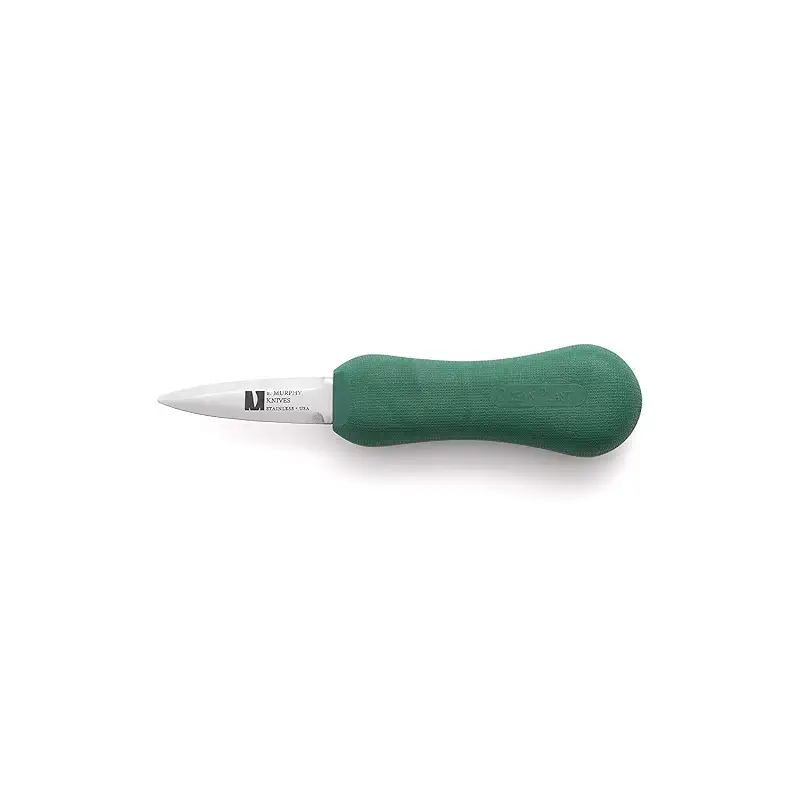
UJ Ramelson Co R. Murphy Duxbury Oyster Knife - As Seen in Bon Appetit Magazine - Shellfish Seafood Clam Shucker Tool - Made in USA
4.7(380)
Razor-pointed blade excels at clean, accurate cuts; favored by oyster bars focused on presentation.
The UJ Ramelson Duxbury, developed in collaboration with Island Creek Oysters in Massachusetts, represents a different philosophy from the broader, heavier designs. Its stainless-steel blade tapers to a sharper, more acute point, which allows you to wedge into tight hinges with surgical precision and sever the abductor muscle with minimum damage. Professional shuckers working high-volume raw bars consistently report that this knife lets them work faster and cleaner because the thin blade doesn't crush or fracture shells the way blunter tools sometimes do.
The trade-off is real: that sharp, narrow tip sacrifices some durability and brute-force capability. Owners note that very large oysters or ones with truly stubborn adductors can bend or break the blade if you're not careful with technique. The ergonomic polypropylene handle feels stable and gives you good control, but the knife demands respect and proper shucking form. Compared to the Dexter-Russell, the Duxbury is lighter-duty but far more elegant, like the difference between a sledgehammer and a surgical mallet.
For home cooks who shuck oysters regularly and care about how they look on the plate, this is the knife that rewards good technique and makes every oyster feel intentional. It's not a beginner's knife, and it's not for battering open oversized specimens, but for those who've learned the craft, it becomes indispensable.
Pros
Thin, sharp-pointed blade enters tight hinges with minimal force
Stainless steel resists corrosion and requires minimal maintenance
Made in USA with commercial-grade construction
Cons
Thinner blade susceptible to breaking under excessive force
Not ideal for very large or stubborn oysters
Key features
Taper-ground stainless-steel blade with precise pointy tip
Designed with oystermen from Island Creek Oysters in Duxbury
Ergonomic polypropylene handle for secure control
Made in the USA with commercial-grade stainless steel
#4 Pick
Best Balanced Handle
UJ Ramelson Co
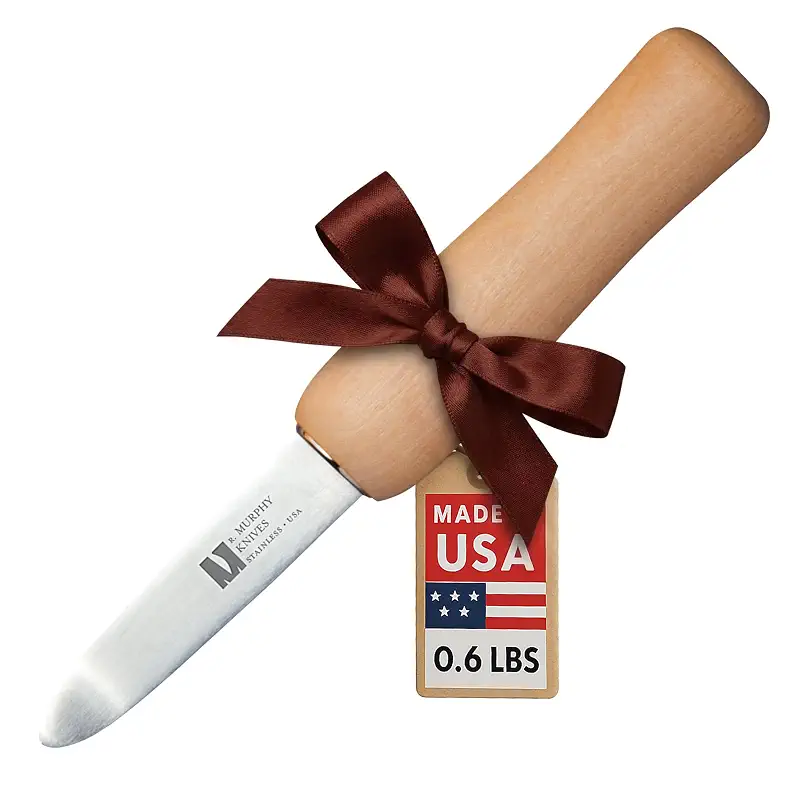
R Murphy Ramelson New Haven Oyster Shucking Knife, Regular, Wood Handle | Shucker Tool Opener, Curved Bent Tip, Stainless Steel Blade, Made in USA
4.6(217)
Wood-handled classic with curved tip; reduces fatigue during all-day shucking sessions.
Ideal for: Traditional-minded home cooks, festival shuckers, those seeking reduced hand fatigue.
The R. Murphy New Haven with its wood handle brings traditional charm backed by solid engineering. The curved New Haven tip design and lightweight balance make it feel almost effortless in your hand, even after hours of work. Home enthusiasts and festival shuckers report that the wood handle absorbs vibration better than plastic, and the overall weight distribution means your hand and wrist fatigue much more slowly than with heavier or poorly balanced designs.
Stainless-steel construction with cutlery-grade metallurgy keeps maintenance simple, though the unsealed wood handle requires a bit more care to stay looking good over time. The 2.6-inch blade is long enough to give you leverage without being unwieldy, and the curved geometry guides you into the hinge naturally. Where this knife differs from the UJ Ramelson Duxbury is in blade thickness: the Murphy is slightly stiffer, making it less prone to bending if you're shucking a wide variety of oyster sizes and conditions.
One owner did report blade chipping early in use, which suggests quality control can be inconsistent from unit to unit. That's a minor caveat on an otherwise well-regarded design. If you're the kind of cook who values the feel and character of a traditional tool, and you're willing to hand-wash and dry promptly, this knife earns its place on the counter.
Pros
Lightweight wood handle reduces wrist and hand fatigue significantly
Curved New Haven tip glides into hinges with minimal force
Stainless-steel blade resists rust and corrosion
Cons
Wood handle requires hand washing and careful drying; not dishwasher-safe
Some reports of blade chipping under heavy use
Key features
Lightweight wood handle with ergonomic balance for comfort
Curved New Haven tip designed for smooth hinge entry
2.6-inch stainless-steel blade stays rigid under pressure
Made in the USA with taper-ground cutlery-grade steel
#5 Pick
Best Complete Kit
Wendom
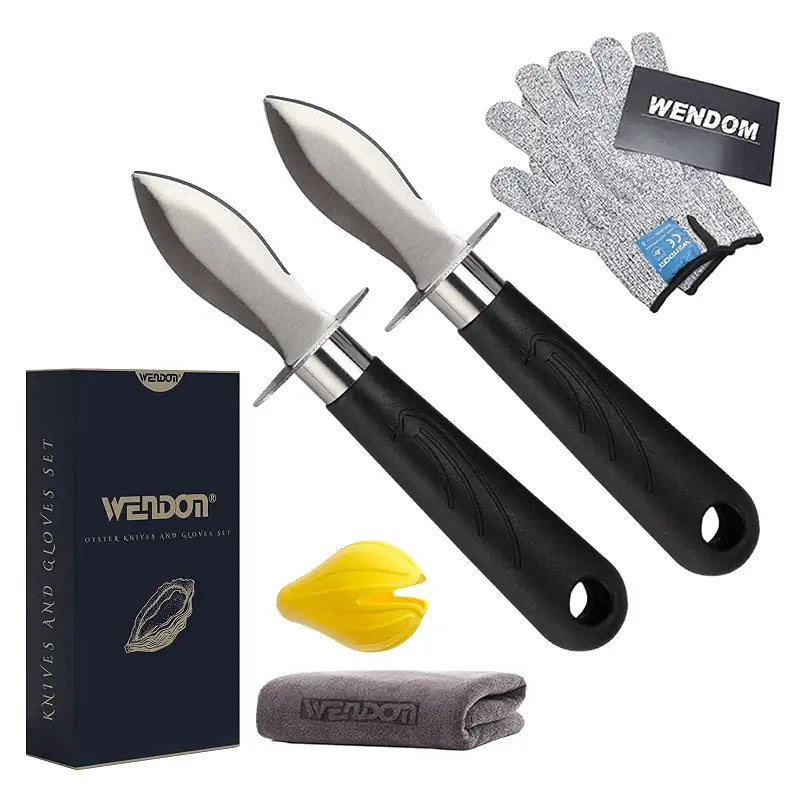
Oyster Knife Shucker Set Oyster Shucking Knife and Gloves Cut Resistant Level 5 Protection Seafood Opener Kit Tools Gift(2knifes+2Glove+1Cloth)
4.5(4,745)
All-in-one set with two knives, gloves, and cloth; ideal entry point for oyster beginners.
The Wendom set takes a bundle approach: you get two oyster knives, a pair of cut-resistant gloves, an anti-slip cloth, and a lemon squeezer, all packaged as a single investment. For someone stepping into oyster shucking for the first time, the gloves alone justify the purchase, as they eliminate the fear of slipping and cutting your hand while holding the oyster. The 3CR13 stainless-steel blades are solid without being exceptional; they're thick enough to pry open most oysters without bending, but they lack the finesse of higher-end carbon-steel or professionally designed models.
Owners appreciate the value and convenience for casual entertaining or vacation use, where you don't want to invest heavily in specialty tools. The concavo-convex handle pattern grips well, and having two knives means one can be drying while you use the other, or you can arm a friend. The downside: the knives themselves are entry-level, and if you're regularly opening oysters, you'll likely find yourself outgrowing them or wishing for sharper, lighter blades within a season or two.
Compared to a professional-grade option like the Dexter-Russell, the Wendom trades depth of capability for breadth of bundle. The lemon squeezer is largely decorative clutter. If you're just starting out and want to avoid injury while you learn, this kit covers you; but if you become a dedicated shucker, your next purchase will likely be a single high-quality knife rather than another set like this one.
Pros
Includes protective gloves to prevent hand cuts and improve grip
Two knives mean one can dry while using the other
Excellent value for a bundled starter kit
Cons
Blades lack the sharpness and finesse of professional single knives
Blade can bend under heavy pressure on tough oysters
Key features
Set includes two stainless-steel oyster knives plus Level 5 cut-resistant gloves
Concavo-convex handle pattern resists slipping in wet hands
Anti-slip cloth and lemon squeezer included in complete kit
Forged 3CR13 stainless steel professionally sharpened at factory
How to Choose an Oyster Shucking Knife
Four trade-offs that actually matter when matching a oyster shucking knife to your kitchen.
Blade Material: Stainless vs. Carbon Steel
Stainless steel (OXO, Wendom, UJ Ramelson Duxbury) offers low-maintenance durability and won't rust if left damp, making it ideal for home cooks who don't want to fuss with care routines. Carbon steel (Dexter-Russell) delivers superior edge retention and piercing power, but it requires prompt drying to prevent rust and patina. If you shuck oysters once or twice a year, stainless is your friend. If you're opening dozens weekly, carbon steel rewards the extra care with faster, cleaner work.
Blade Design and Tip Shape
The bent tip (found on most models here) is standard for a reason: it glides into the hinge more smoothly than a straight point. Thinner, sharper tips like the Duxbury excel at precision and work well for medium to small oysters, while stouter tips like the Dexter-Russell handle larger, tougher shells. Consider what oyster varieties are available where you live. East Coast oysters tend to have tighter hinges. West Coast varieties are often larger and more forgiving. Match your blade to your typical catch, and learn the oyster shucking technique guide to make the most of whatever tip you choose.
Handle Comfort and Grip
A slippery handle turns a simple task into a hand-cramping ordeal. OXO's soft, cushioned grip and the Dexter's textured Sani-Safe handle both excel at staying secure when wet. Wood handles (R. Murphy New Haven) feel traditional and reduce fatigue but require hand washing. If you're shucking for hours, comfort is not a luxury; it's essential. Test a knife in your hand if possible, or read owner feedback carefully to gauge whether the handle suits your hand size and grip style.
Blade Durability and Maintenance
Thicker, stouter blades (Dexter-Russell, Wendom) can handle abuse and won't bend if you're wrestling with oversized oysters or learning proper technique. Thinner, more precision-focused blades (Duxbury) reward good form but can snap under careless force or heavy-duty conditions. Budget accordingly: a professional-grade knife you keep for years costs more upfront but outlasts several cheaper alternatives. Stainless steel means dishwasher-safe convenience; carbon steel demands a quick hand wash and immediate drying to maintain its edge and prevent corrosion.
Beginner vs. Professional Considerations
New shuckers benefit from forgiving designs with cushioned handles and slightly thicker blades (OXO, Wendom). These tools won't punish learning mistakes, and they're less intimidating to hold. Experienced shuckers and professionals often prefer thinner blades with sharper points (Duxbury) and carbon-steel construction (Dexter-Russell) because they allow faster, more precise work once technique is solid. If you're buying a gift for someone just starting out, lean toward comfort and safety; for a seasoned oyster enthusiast, prioritize edge quality and blade responsiveness.
Frequently asked
Quick answers to the questions readers ask most.
Is stainless steel or carbon steel better for oyster knives?
Stainless steel is more forgiving for home use: it resists rust, is dishwasher-safe, and requires minimal maintenance. Carbon steel holds a sharper edge and penetrates tough shells more easily but needs prompt drying to prevent corrosion. Choose stainless if convenience and low maintenance matter; carbon steel if you're shucking frequently and want maximum performance.
What's the difference between a bent tip and a straight tip?
A bent (curved) tip slides into the oyster hinge more smoothly and naturally, reducing the force needed to penetrate the shell. Straight tips require more direct pressure and are less commonly used in modern oyster knives. Nearly all professional and home designs now favor the bent geometry because it's simply more effective and safer.
How do I prevent my oyster knife from rusting?
If you have a stainless-steel blade, rust is unlikely. With carbon steel, wash by hand and dry immediately after use; never let it sit wet in a sink or dishwasher. Store it in a dry location, and consider occasional light oiling of the blade if you live in a humid climate or near the coast. Proper storage prevents the corrosion that can dull or damage the edge.
Can I use an oyster knife to open clams?
Yes, oyster knives work well on clams, especially littlenecks and larger varieties. The bent tip and leverage are equally useful for clams. However, very small clams (like steamers) sometimes have tighter hinges that demand a sharper, thinner point. An oyster knife is versatile enough to handle most shellfish, though dedicated clam knives exist for specialty work.
How many oysters can I realistically shuck in an hour as a beginner?
Most beginners open 10 to 20 oysters in the first hour as they learn the motion and build confidence. With practice over several sessions, that jumps to 30 to 50 per hour. Professionals regularly shuck 100 or more per hour. Speed comes with muscle memory and proper technique, not just a better knife; but the right tool definitely makes the learning curve gentler and faster.