Verdict, analysis, and key features for each pick.
#1 Pick
Best Overall
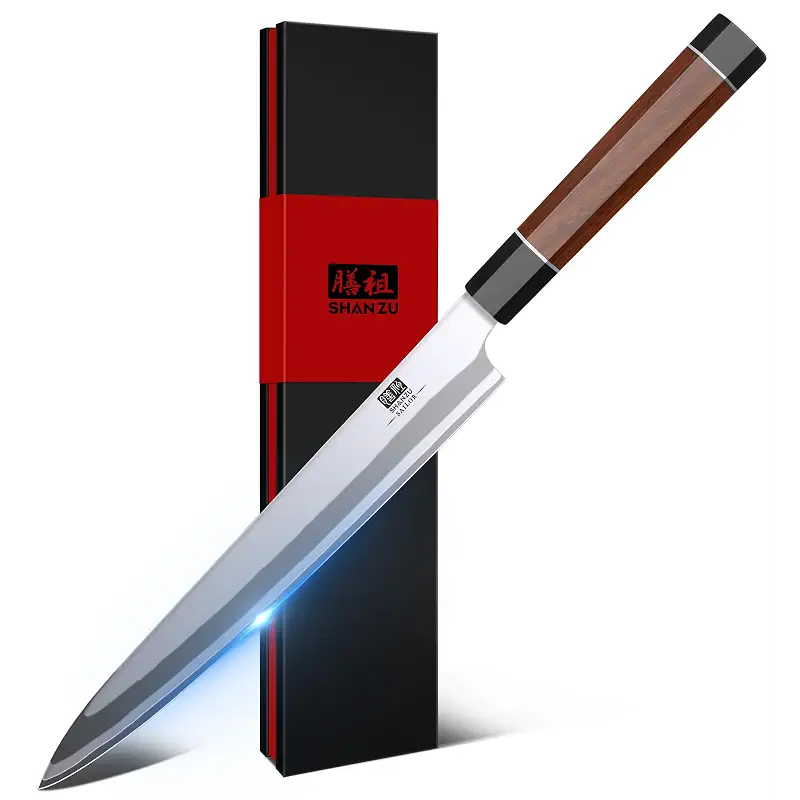
Shan Zu
SHAN ZU 10 Inch Japanese Sushi Knife, 9 Layers 10Cr15MoV High Carbon Steel | Sashimi Knife, Sharp Cutting Yanagiba Knives with Red Sandalwood Handle for Sushi Making, Slicing & Fish Knives
4.6(385)
Exceptional edge retention and authentic Japanese craftsmanship at a compelling value point.
Ideal for: Home cooks and hobbyist sushi chefs seeking authentic Japanese design with excellent edge retention.
The Shan Zu 10-inch yanagiba stands out for its 9-layer forged steel construction and hardness rating of 62 HRC, which translates to a blade that holds its edge through repeated cuts without early dulling. The 12-degree angle paired with the matte finish keeps fingerprints at bay during long prep sessions. Owners consistently report paper-thin slices of raw fish and clean passes through sushi rolls with minimal effort; one reviewer noted slicing lemon paper-thin to near transparency. The octagonal red sandalwood handle feels intentional and comfortable, reducing hand fatigue during the kinds of repetitive motions sushi prep demands.
There are minor QC notes worth considering. A small number of reviewers mentioned slight blade bends or uneven grinding, suggesting some units need honing before first use. This is not uncommon in this category and does not diminish overall performance once corrected, but it's a consideration if you prefer a knife that requires no prep out of the box.
Compared to the Sanmeiho, which offers similar specs at slightly lower volume, the Shan Zu's multi-layer forging and track record of long edge life make it the more dependable choice for someone planning regular sushi work. The gift box presentation is elegant, and the weight feels substantial without being cumbersome.
Pros
9-layer forged steel with 62 HRC hardness for long-lasting edge
Clean paper-thin slices through raw fish and rolls
Matte finish reduces fingerprints during prep
Cons
Some units require minor honing before first use
Heavier than non-stick alternatives, takes more storage space
Key features
9-layer forged steel core hardened to 62 HRC
12-degree blade angle for effortless slicing without crushing
Octagonal red sandalwood handle with full tang construction
Matte finish blade to reduce friction and food residue
#2 Pick
Best Budget-Friendly
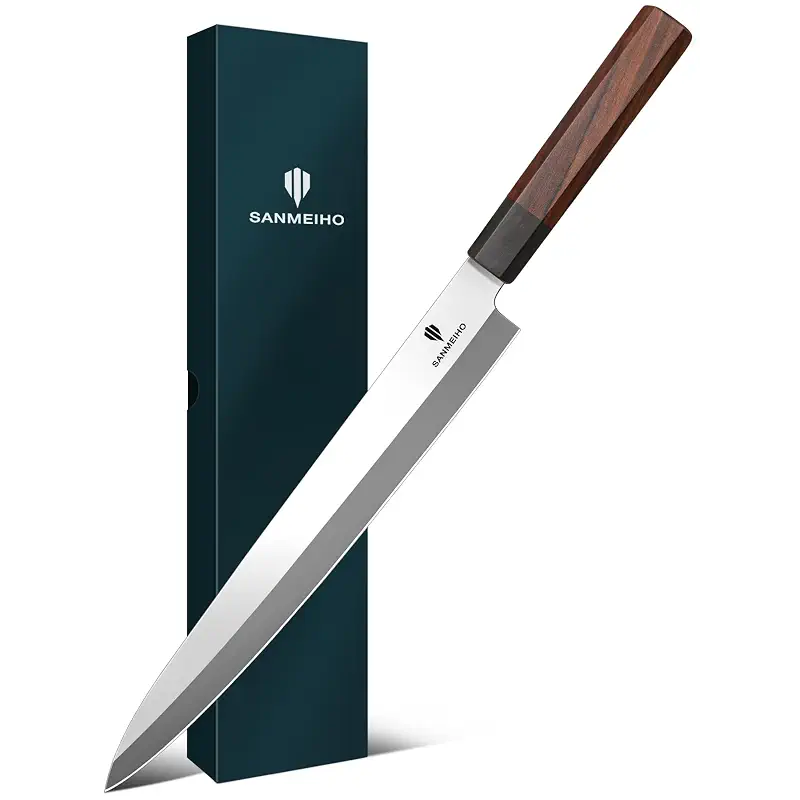
Sanmeiho
10 Inch Sushi Knife, High Carbon Japanese Steel Sashimi Knife | Japanese Knives for Fish Filleting & Slicing, Sushi Making Knives with Red Sandalwood Handle
4.6(87)
Solid performer that delivers sharp cuts and comfortable handling at entry-level investment.
Ideal for: Budget-conscious beginners and home cooks making sushi occasionally or testing the hobby.
The Sanmeiho 10-inch sushi knife offers a genuine value proposition for someone starting out or wanting a secondary blade without major financial commitment. Its 57 HRC hardness in 5Cr15MoV steel and 12-degree cutting angle produce the clean, effortless slices through fish that the category demands. Owners report excellent sharpness out of the box and describe it as intuitive to control, particularly for amateur sushi rollers finding their footing. The octagonal red sandalwood handle and full tang design echo the premium aesthetic at a more approachable entry point.
One legitimate caveat: a small subset of buyers noted that sharpness degraded faster than expected or didn't match initial claims. This suggests the heat treatment may vary between batches or that maintenance routines matter more with this steel spec than with higher-hardness alternatives. Hand-washing and regular stropping will help preserve the edge longer. The 57 HRC rating sits below the Shan Zu's 62 HRC, so this knife will require touch-ups sooner if used frequently.
If you're budget-conscious and willing to invest in basic maintenance, the Sanmeiho competes well. Where the Shan Zu leans on multi-layer forging for durability, this blade relies on consistent geometry and user care, a fair trade-off at this price tier.
Pros
Sharp out of the box with clean cutting action
Comfortable octagonal handle reduces hand strain
Attractive red sandalwood design at modest investment
Cons
Lower hardness means edge dulls faster than premium options
Some batch variation in initial sharpness reported
Key features
5Cr15MoV stainless steel hardened to 57 HRC
12-degree dual-side cutting angle for clean slicing
Traditional octagonal red sandalwood handle with full tang
Full-length blade for cutting rolls and filleting fish
#3 Pick
Most Versatile
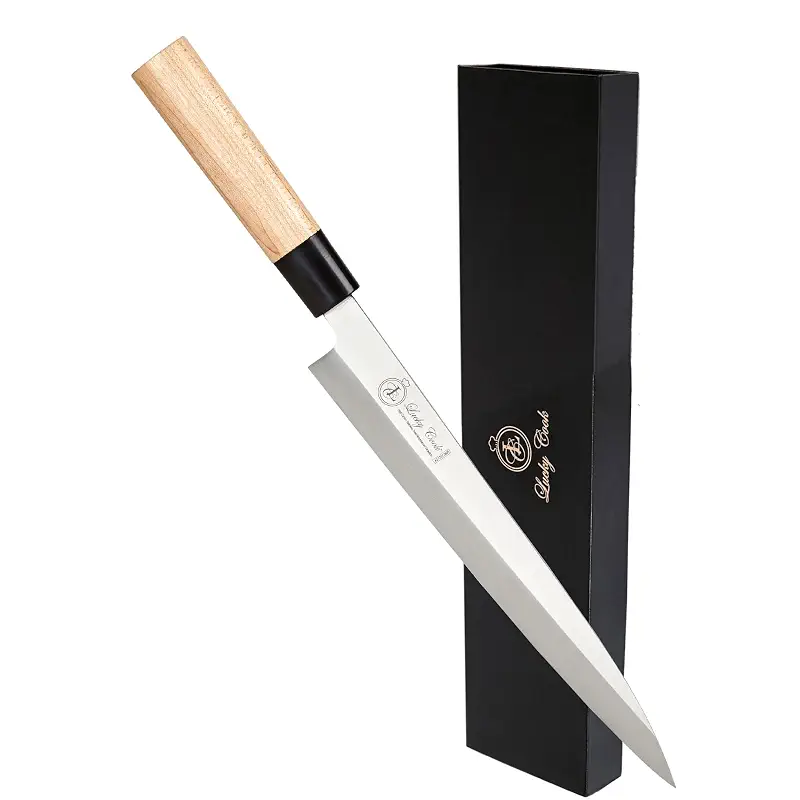
Lucky Cook
10” Sashimi Sushi Knife – Ultra Sharp Traditional Japanese Sushi Knife for Sashimi, Fish Filleting & Precision Slicing – Premium Stainless Steel Blade, Pakkawood Handle & Gift Box
4.6(2,143)
Lightweight, well-balanced blade that excels at sushi and handles everyday kitchen tasks.
Ideal for: Home cooks wanting one sharp blade for sushi and general kitchen prep without premium pricing.
The Lucky Cook 10-inch sashimi knife has earned its place in 2,100+ owner kitchens through consistent performance and multi-purpose utility. The single-bevel yanagiba design delivers precise slicing through sushi rolls and raw fish, but the lightweight construction and balanced feel also work for carving, vegetable prep, and even soft breads. Owners who bought it specifically for sushi report minimal effort when cutting rolls and mincing tuna; professional kitchen workers have brought it into rotation alongside more expensive blades. The stainless steel resists rust and stains, a practical advantage over high-carbon alternatives that demand careful storage.
There are realistic limits worth acknowledging. A few users noted the plastic bolster connecting blade to handle can stress under heavy use or aggressive chopping motions, and the blade profile at the tip is not uniform across all units. One reviewer with professional experience sharpened the tip profile and rounded the spine for comfort, suggesting this knife may need minor rework from someone with knife-maintenance skills. For food service settings or someone making sushi daily, the Shan Zu's forged construction may outlast this one. The Pakkawood handle, while slip-resistant and attractive, doesn't carry the same tactile weight as traditional wood handles on premium alternatives.
What sets this option apart is versatility without sacrificing specialty performance. If you want one blade that cuts sushi cleanly but also handles your weeknight vegetable prep and the occasional meat carving, this balances those demands better than single-purpose rivals.
Pros
Lightweight and well-balanced for both precision and everyday tasks
Stainless steel resists rust and requires less maintenance
Sharp out of the box and cuts rolls cleanly without tearing
Cons
Plastic bolster may stress under heavy or improper use
Blade tip profile requires minor rework for optimal performance
Key features
Premium stainless steel blade with polished finish
Single-bevel yanagiba design inspired by Japanese tradition
Ergonomic Pakkawood handle with slip-resistant grip
Lightweight design reduces hand fatigue during extended prep
#4 Pick
Best for No-Stick Performance
Kitchen Home
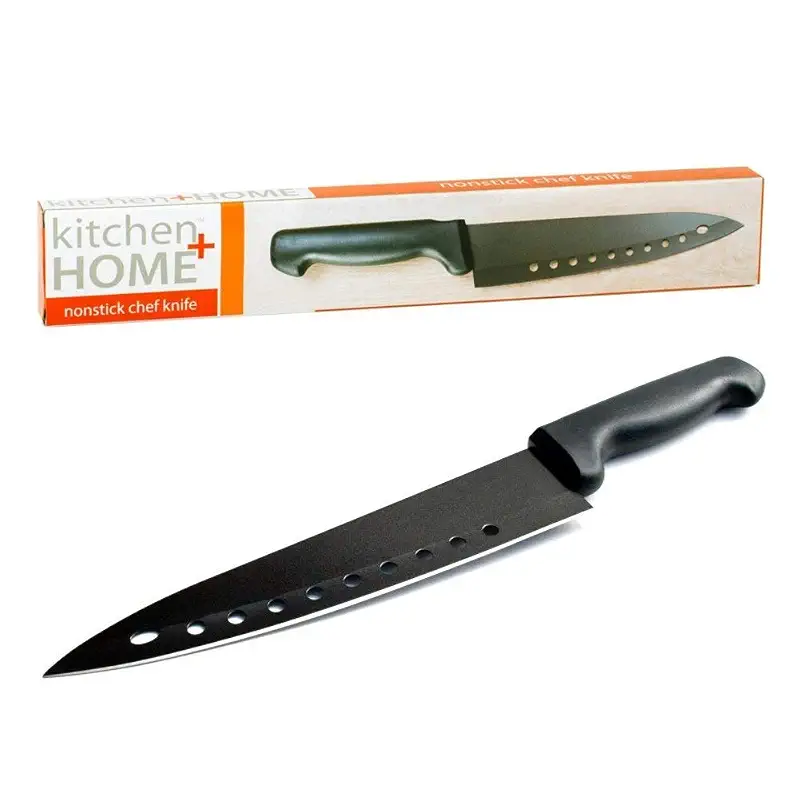
Kitchen + Home Non Stick Sushi Knife - The Original 8 inch Stainless Steel Non Stick Multipurpose Chef Knife
4.6(2,146)
Innovative aerated blade prevents food sticking, ideal for sushi rolling and soft foods.
Ideal for: Sushi enthusiasts wanting a stick-free blade for rolling sessions and soft-food prep.
The Kitchen Home non-stick sushi knife solves a specific problem that frustrates many home sushi makers: rice and fillings clinging to the blade between cuts. The PFOA-free coating combined with ten holes along the cutting edge dramatically reduces friction, and owners confirm they need far fewer wet-blade wipes during a full rolling session compared to uncoated blades. This matters for speed and precision, especially when plating a dozen rolls back-to-back. The thin, aerated stainless steel blade is lightweight and responsive, making it forgiving for beginners still learning proper cutting angles and pressure.
Longevity of the non-stick coating remains the central trade-off. While one long-term owner reported seven years of reliable use with the coating still functional (though faded), other reviewers noted the coating fading or flaking within months of regular use. Hand-washing is mandatory to preserve it; dishwasher cycles will accelerate breakdown. The blade is also thin enough that some users felt it lacked the heft or structural confidence of heavier alternatives. One professional sushi chef used it at home but shelved it after novelty wore off, noting the blade doesn't feel as resilient for harder cutting tasks.
If your kitchen is all sushi and delicate foods, or if you value the convenience of reduced sticking over maximum longevity, the non-stick coating delivers genuine utility. Compared to the Shan Zu's traditional approach, this sacrifices edge-holding duration in exchange for easier prep and cleanup. If you want a comparison with specialty single-bevel options, the best kiritsuke knife offers an alternative blade shape that some prefer for hybrid work.
Pros
Non-stick coating and aerated design reduce food clinging
Lightweight and thin for easy control and minimal effort
Excellent for delicate tasks and soft foods
Cons
Non-stick coating fades or flakes with heavy use over time
Thin blade feels less sturdy for tougher cutting tasks
Key features
PFOA-free non-stick coating with 10 aeration holes
Thin, aerated stainless steel blade for reduced friction
Ergonomic ABS handle, nonporous and nonslip
Lightweight design minimizes fatigue during extended use
#5 Pick
Best Premium Pick
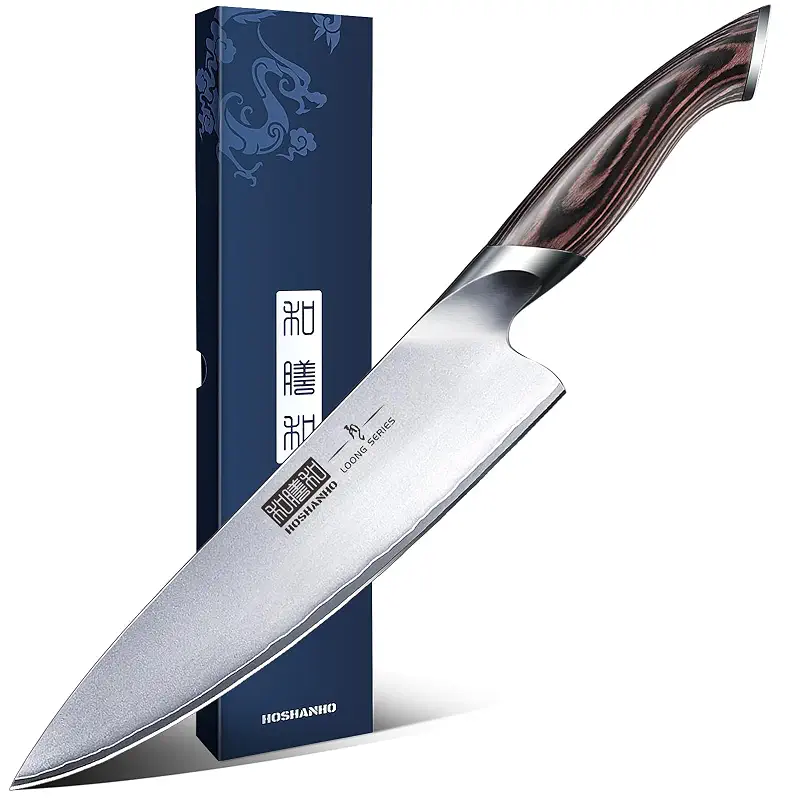
Hoshanho
HOSHANHO Kitchen Knife in Japanese High Carbon Steel, Professional High-Class Chef's Knife 8 inch, Non-slip Ultra Sharp Cooking Knives with Ergonomic Handle | Multifunctional, 10Cr15CoMoV, Home Gifts
4.7(2,722)
Professional-grade sharpness and ergonomic precision at a high-value price point.
Ideal for: Serious home cooks and professionals seeking a premium all-purpose blade with factory sharpness.
The Hoshanho 8-inch kitchen knife represents one of the highest-rated options in volume (2,700+ reviews at 4.7 stars) and earns that standing through consistent factory sharpness and thoughtful design. The steel hardened to 60 HRC sits between mid-range and premium alternatives, yielding an edge that slices tomatoes thin enough to see through while resisting corrosion better than pure carbon steel. The 13-degree blade angle and hand-sharpening create a factory edge many reviewers use straight out of the box without honing. The handle's sloped bolster naturally encourages the pinch grip, a hallmark of professional technique that improves both safety and blade control.
One consideration: this is an 8-inch blade, shorter than the 10-inch yanagiba standard for sushi rolling. This makes it better suited to general kitchen work, dicing, and chopping than to the long, single-stroke cuts that define sashimi slicing. Owners report excellent results on fish and vegetables, but the blade is not specifically designed as a sushi knife. For someone who wants one premium blade that works across the kitchen and occasionally handles sushi, this excels; for dedicated sushi prep, the top yanagiba knives above are more traditional.
The matte finish and wood handle carry aesthetic weight, and professional kitchen workers in the reviews praise its balance and comfort during hours of use. Compared to the Lucky Cook, which emphasizes lightweight versatility, the Hoshanho feels more substantial and serious. If you're investing in a single high-performing blade for your kitchen and want the confidence of factory sharpness and professional-level feedback, this delivers that assurance.
Pros
Exceptional factory sharpness with 60 HRC hardness
13-degree blade angle paired with hand-honing creates precise edge
Ergonomic wood handle with sloped bolster for pinch grip safety
Cons
8-inch length is shorter than traditional sushi knife standards
Specialized for general prep rather than dedicated sashimi work
Key features
Japanese high-carbon steel hardened to 60 HRC
Hand-sharpened 13-degree blade angle for factory-ready edge
Matte finish blade combined with wood handle for professional feel
Four trade-offs that actually matter when matching a knives for cutting sushi to your kitchen.
Blade Length and Shape
Sushi knives typically range from 8 to 10.5 inches. A 10-inch blade is the practical standard for slicing rolls and filleting fish; it provides enough length for smooth, single strokes that prevent tearing rice and nori. Shorter 8-inch blades suit everyday kitchen work and dicing but sacrifice the reach needed for long, clean sushi cuts. The yanagiba (single-bevel) design is authentic and produces the cleanest cuts through raw fish, though double-bevel blades offer easier maintenance for home cooks. Consider your intended use: dedicated sushi work warrants a full-length yanagiba, while occasional rolling and general prep benefit from versatile mid-size alternatives.
Steel Type and Hardness
Japanese high-carbon and stainless-steel blades both have merit. High-carbon steel (like ) holds sharper edges longer and responds well to honing, but demands careful storage to prevent rust. Stainless options resist corrosion and require less fussy care, though they typically dull slightly faster and are harder to sharpen to the same fine edge. Look for hardness ratings between 57 and 62 HRC; anything below 55 HRC will dull quickly under sushi work, while above 63 HRC becomes brittle and prone to chipping. A sushi knife types guide can help you understand the differences between yanagiba, deba, and usuba, each suited to different tasks.
Handle Comfort and Control
Your grip matters as much as the blade. Traditional octagonal red sandalwood handles provide authentic feel and natural grip positioning, while modern Pakkawood or wood-composite options resist moisture and require less maintenance. Test weight distribution: a balanced knife shouldn't feel blade-heavy or handle-heavy when you hold it at the bolster. The pinch grip (thumb and forefinger on the blade spine, other fingers curled around the handle) is the professional standard for sushi knives, so a handle that accommodates this safely with a defined bolster or sloped transition reduces fatigue and improves precision during long prep sessions.
Maintenance and Edge Longevity
A sharper blade out of the box doesn't guarantee lasting performance. Edge retention depends on hardness, steel composition, and your maintenance routine. Hand-washing is essential; dishwashers damage coatings and loosen handles. Regular stropping with a honing rod keeps the edge aligned between proper sharpenings, which should happen every few months depending on use. Non-stick coatings reduce food sticking but fade over time; sushi knife sharpening care guides outline honing techniques that preserve your investment without professional service. If you prefer zero maintenance, a stainless blade with lower hardness may suit your lifestyle better than a high-carbon blade that demands regular attention.
Budget and Value Alignment
Entry-level sushi knives ($20–$50) deliver surprising performance for occasional rolling, though edge retention and build quality don't match premium alternatives. Mid-range options ($50–$100) balance authentic design, solid steel, and durability for regular home use. Premium picks ($100+) offer multi-layer forging, higher hardness ratings, and professional-grade finishes, justified if you cook sushi weekly or want a blade that lasts years without degradation. Consider your actual use: a beginner testing the hobby benefits from an affordable option, while someone making sushi monthly warrants the investment in a blade that holds its edge longer and feels substantive in hand.
Frequently asked
Quick answers to the questions readers ask most.
What's the difference between a sushi knife and a regular chef's knife?
Sushi knives, or yanagiba, are longer, thinner, and sharper than chef's knives, designed for clean single-stroke cuts through delicate fish and rolls without crushing rice or tearing nori. A regular chef's knife is heavier and wider, suited for chopping and dicing but produces uneven cuts through raw fish. The blade angle is also shallower on sushi knives (12–13 degrees versus 20+ degrees on chef's knives), enabling the precision slicing that defines sashimi presentation.
Do I need a real Japanese knife, or will a Western-style blade work?
A genuine Japanese-style yanagiba with single-beveled design produces the cleanest sushi cuts, but quality Western-style double-bevel sushi knives also perform well if sharpness and blade length are adequate. The key is a thin, sharp blade at least 8 inches long and hardness of 57 HRC or higher. Many quality mid-range options marketed as sushi knives blend Japanese and Western design and deliver restaurant-level results at home. Choose based on your comfort with maintenance: Japanese high-carbon blades need careful storage but hold edges longer, while stainless alternatives are forgiving and low-maintenance.
How often should I sharpen my sushi knife?
That depends on use frequency and steel hardness. A home cook making sushi once or twice a month may sharpen every 3–6 months, while someone prepping sushi daily might sharpen monthly. Between full sharpenings, use a honing rod weekly to realign the edge and maintain sharpness. High-hardness blades (60+ HRC) hold edges longer and need less frequent sharpening than softer options. A sushi knife sharpening care guide will walk you through using whetstones and honing rods correctly to avoid damaging the delicate single-bevel edge.
Can I use a sushi knife for other kitchen tasks, or should it stay dedicated?
A 10-inch sushi knife works well for slicing soft vegetables, carving cooked meats, and mincing herbs, but it's not ideal for heavy chopping, dicing hard vegetables, or breaking down raw poultry: tasks that dull the edge faster and risk chipping the thin blade. If you want one multipurpose blade, a shorter 8-inch option with a slightly thicker spine handles broader kitchen work while still performing well on sushi. Dedicated sushi knives deliver the best results when used primarily for fish and rolling, but occasional light tasks won't harm them if you're careful and maintain the edge regularly.
What's the advantage of a non-stick coating on a sushi knife?
A non-stick coating with aerated holes reduces rice and filling from sticking to the blade during rolling, minimizing wet-blade wipes between cuts and speeding up the process. This is genuinely helpful for home sushi makers rolling multiple batches. The trade-off is that non-stick coatings fade or flake over time with regular use and hand-washing; they require careful handling and don't last as long as uncoated blades. If you roll sushi frequently and value convenience over longevity, a non-stick option saves frustration. For occasional use or if you're willing to wet the blade regularly, an uncoated blade will outlast a coated one.