Kitchen & Dining · Gadgets
Best Knife to Cut Salmon: Fillet, Slicer & Carving Picks
Find the best knife to cut salmon. Compare fillet knives, slicers, and carving blades for filleting, slicing lox, and portioning. Expert picks for home cooks.
Affiliate disclosure: As an Amazon Associate I earn from qualifying purchases.
At a glance
2
Best for Slicing Cured SalmonArcos
3
Premium German OptionWüsthof
4
Best for Thick Cuts & CarvingCutluxe
5
Best Value Fillet Knifeimarku
Detailed reviews
The Hoshanho 7-inch fillet knife delivers restaurant-quality performance at a fraction of premium pricing. Owners consistently report it arrives sharper than knives costing significantly more, which matters because you spend less time honing and more time cooking. The 15-degree edge angle and high-carbon stainless steel (10Cr15CoMoV) hold that sharpness through dozens of fish, and the thin, flexible blade adapts beautifully to the contours of salmon whether you're filleting a whole fish or trimming fat from a loin.
The pakkawood handle feels substantial without being heavy, and the frosted texture gives surprising grip even when wet. Most buyers praise the balance and ergonomic shape, noting the knife sits comfortably in the hand during longer prep sessions. One owner with 40 years of filleting experience ranked it second-sharpest among 75 knives he'd owned, which speaks to real craft.
The main trade-off some users mention is that the blade has moderate flex rather than being completely rigid. If you're working with thick, dense cuts or need a stiffer knife for trimming brisket, the Cutluxe carving set might feel more stable. But for salmon specifically, that modest flex is a strength, not a weakness. It lets you follow the contour of the fish and remove skin cleanly without fighting the blade.
Pros
- Arrives razor-sharp, rivaling far more expensive brands
- Thin, flexible blade adapts to fish shape with minimal waste
- Pakkawood handle comfortable and moisture-resistant
Cons
- Moderate blade flex may feel less stable for very stiff ingredients
- Requires hand washing for longest edge retention
Key features (4)
- 7-inch thin blade with 15-degree edge angle on each side
- Japanese high-carbon stainless steel (10Cr15CoMoV) for durability
- Ergonomic pakkawood handle with frosted texture for wet grip
- Flexible design allows adaptation to bone and contour
The Arcos 12-inch salmon knife is purpose-built for a specific, important task: slicing cured salmon so thin you can nearly see through it. The 300mm blade length and graton (scalloped) micro-serrations work together to let you make smooth, continuous slices without the knife dragging or the salmon shredding. Home cooks who make their own lox or gravlax consistently choose this over standard chef's knives because those grooves reduce sticking and the narrow blade bends slightly to accommodate your slicing angle without forcing the issue.
Where this knife differs from the Hoshanho is in application and rigidity. The best knife for cutting sushi rolls follows different design priorities than the Arcos, which is narrower and built specifically for slicing delicate, cured proteins rather than filleting whole fish. The Spanish-made Nitrum stainless steel is durable, though a few owners noted it arrives less aggressively sharp than some Japanese options and benefits from honing before first use. The polypropylene handle is dishwasher-safe and lightweight, which matters if you're working with a long blade for extended periods.
This isn't the knife to grab if you're breaking down a whole salmon or trimming fat. But if you cure salmon at home or regularly buy quality smoked fish and want to slice it yourself rather than pay for deli counter service, this knife pays for itself quickly.
Pros
- Micro-serrated grooves prevent sticking and tearing on delicate fish
- 12-inch blade allows continuous slicing without re-positioning
- Lightweight handle comfortable for extended slicing work
Cons
- Less sharp out of box than some Japanese alternatives
- Not ideal for filleting or general meat trimming tasks
Key features (4)
- 12-inch narrow blade with graton (scalloped) micro-serrations
- Arcos Nitrum stainless steel for edge durability and corrosion resistance
- Flexible design allows angle adjustment while slicing
- Polypropylene handle suitable for dishwasher cleaning
Wüsthof's Classic 12-inch salmon slicer represents a different philosophy: precision forging from a single block of high-carbon stainless steel, tempered to 58 HRC, rather than the Japanese thin-blade flexibility of the Hoshanho. The hollow edge (granton) design reduces drag when slicing, and Wüsthof's Precision Edge Technology (PEtec) yields a blade claimed to be 20 percent sharper and with twice the edge retention compared to previous generations.
This knife comes with institutional pedigree and a lifetime warranty. It's German-made in Solingen, built to last generations, and backed by over two centuries of family-owned cutlery tradition. The synthetic polypropylene handle resists fading and heat, and the full bolster and finger guard add safety in professional kitchens or serious home setups. Owner feedback is sparse but uniformly positive, with users calling out excellent filleting ability and overall quality.
The primary caveat is that Wüsthof knives typically cost considerably more than the Hoshanho or Arcos. You're paying for institutional durability, heritage, and a warranty rather than for sharper-out-of-box performance. For a home cook making salmon once or twice a week, the Hoshanho delivers 90 percent of the performance at a fraction of the investment. The Wüsthof makes most sense if you prize longevity, professional-grade durability, or plan to pass the knife to the next generation.
Pros
- German-forged precision with 58 HRC hardness and edge retention
- Hollow-edge design reduces friction and sticking
- Lifetime warranty and 200+ year institutional heritage
Cons
- Significantly higher cost than comparable Japanese alternatives
- Limited owner feedback due to smaller review base
Key features (4)
- 12-inch hollow-edge salmon slicer with rounded tip design
- Precision forged from single block of high-carbon stainless steel
- Full bolster and finger guard for safety and durability
- Triple-riveted synthetic polypropylene handle, heat and fade resistant
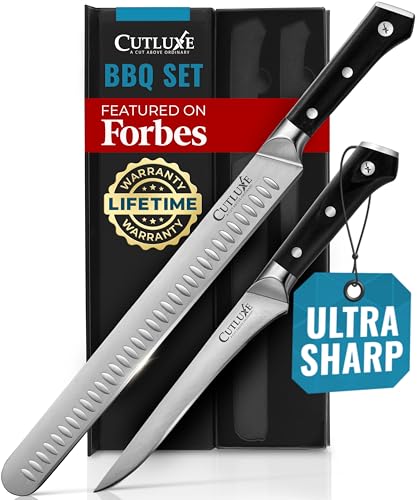
The Cutluxe carving knife set includes a 12-inch slicing knife and 6-inch boning blade, both with granton (scalloped) edges and full-tang construction. This is positioned for brisket and roast carving, but the principles apply directly to salmon steaks and thick portioning. The German steel and high Rockwell score mean the blade holds an aggressive edge suitable for slicing through dense, cooked salmon without tearing, and the granton grooves prevent the meat from sticking to the blade as you work.
Where this differs from the Hoshanho fillet knife is in rigidity and weight. The Cutluxe blade is stiffer, which makes it excellent for carving thick steaks or portioning a whole cooked salmon, but less suitable for delicate filleting work along fragile bones. The full-tang ergonomic handle fits comfortably in medium to large hands, and owners consistently report razor-sharp performance out of the box with good balance. The included velvet-lined box stores both knives safely, a practical touch for keeping the blades protected.
One owner noted that the squared top edge of the blade can catch skin if you press down on the spine, so technique matters. If your salmon work involves mostly whole-fish filleting or slicing cured fish, the Hoshanho or Arcos is more targeted. But if you're breaking down thick salmon steaks for roasting or carving a cooked whole salmon for a dinner party, the Cutluxe carving set gives you a more powerful, rigid blade than fillet knives provide.
Pros
- Rigid, powerful blade ideal for thick steaks and dense roasts
- Granton edge prevents sticking when slicing cooked salmon
- Premium German steel with high Rockwell hardness and edge retention
Cons
- Too stiff and heavy for delicate bone-by-bone filleting work
- Squared top edge of blade can catch skin without careful technique
Key features (4)
- 12-inch slicing knife with 6-inch boning blade in one set
- Granton (scalloped) edge reduces friction and prevents sticking
- Full-tang German steel construction with lifetime warranty
- Includes premium velvet-lined storage box for protection and display
The imarku 8-inch fillet knife sits slightly shorter than the Hoshanho 7-inch but delivers nearly identical performance philosophy: thin, flexible blade in high-carbon stainless steel (10Cr15CoMoV) with a 59 HRC hardness rating for edge retention. Owners praise the sharpness, balance, and the fact that it handles everything from filleting whole fish to deboning poultry to trimming fat from beef. Multiple reviewers mention comparing it favorably to far more expensive Santoku and chef's knives.
The pakkawood handle is FSC-certified and sized for comfort during extended use, and many owners specifically note that the knife is lighter-weight than larger Santoku options, making it easier to maneuver in tight work. The included carrying case protects the blade and makes storage simple. One reviewer with large hands appreciated the comfortable fit, and another noted that the slight tip-heaviness aids in keeping the blade pointed at what you're cutting without creating drag.
Compared to the Hoshanho, the imarku is slightly longer (8 inches vs. 7 inches), which gives you a bit more cutting length for larger whole fish. If you fillet salmon only occasionally and want to save a few dollars while retaining professional quality, the imarku's deeper review base and slightly longer blade make it the safer first choice. The Hoshanho has a slight edge in raw sharpness out of box, but the imarku is sharper than most knives at this price point and holds the edge exceptionally well.
Pros
- 8-inch blade provides extra length for larger whole fish
- Robust confidence in performance
- Thin, flexible design suitable for filleting, deboning, and trimming
Cons
- At 8 inches, slightly longer than some prefer for smaller fish
- Requires hand washing to preserve edge and handle quality
Key features (4)
- 8-inch thin, flexible blade with 59±2 HRC hardness rating
- Japanese high-carbon stainless steel (10Cr15CoMoV) composite steel
- Ergonomic FSC-certified pakkawood handle with moisture resistance
- Mirror-finish blade spine and laser-etched professional styling
How to Choose a Salmon Knife
Filleting Whole Fish vs. Slicing Cured Salmon
The first decision is what you'll actually do with the knife. If you buy whole salmon and break them down yourself, you need a flexible fillet knife with a thin blade that can navigate around bones and follow the contour of the fish. The Hoshanho 7-inch and imarku 8-inch both excel at this. But if you cure your own gravlax or buy smoked salmon and want to slice it paper-thin without tearing, a longer slicer with micro-serrated grooves (like the Arcos 12-inch) prevents the blade from sticking and the delicate flesh from shredding. Understanding your primary task narrows the field immediately. A fillet knife versus salmon slicer serves genuinely different purposes, and buying the wrong type wastes money and creates frustration.
Blade Length and Flexibility Matter
Fillet knives typically range from 5 to 7 inches, while slicing knives run 10 to 12 inches. Longer blades suit larger whole fish and allow you to slice cured salmon in one continuous stroke rather than multiple shorter cuts. Shorter, more flexible blades are ideal for navigating tight spaces around bones and ribs. The Hoshanho's 7-inch length is a sweet spot for most home cooks working with whole salmon, while the imarku's 8-inch blade gives you slightly more reach. If you primarily work with thick salmon steaks or large roasts, the Cutluxe 12-inch carving knife provides the rigidity and length needed to power through denser cuts without crushing texture.
Edge Angle and Sharpness Retention
Japanese knives typically use a 15-degree edge angle per side (30 degrees total), while European knives often run 20 degrees or steeper. The shallower angle feels sharper and requires less force, but can dull faster under heavy use. The Hoshanho and imarku both arrive exceptional sharp out of the box because they use Japanese heat treatment and the 15-degree angle. The Arcos and Wüsthof use different metallurgy and angles optimized for durability over initial sharpness. For home use, the Japanese approach wins on feel and initial performance. For institutional kitchens or heavy commercial use, the German approach wins on longevity and durability. Consider whether you'll hone the knife regularly or prefer one that stays sharp longer between maintenance sessions.
Handle Material and Comfort
Pakkawood (composite wood) handles like those on the Hoshanho and imarku offer warmth and genuine grip, especially when wet, but require hand washing. Polypropylene (plastic) handles like those on the Arcos and Wüsthof are dishwasher-safe, lighter, and more durable against chemicals and heat, but feel less refined in hand. Full-tang construction (blade extends the full length of the handle and is riveted at three points) like the Cutluxe provides better balance and durability than partial-tang designs. If you work with fish regularly and value the tactile experience of a quality tool, pakkawood is worth the hand-washing commitment. If you prioritize convenience and durability in a busy kitchen, polypropylene or synthetic handles are practical. Salmon filleting and slicing technique will improve your results regardless of handle material.
Budget vs. Long-Term Value
The Hoshanho and imarku deliver professional performance at budget-friendly prices, with minimal difference in real-world quality compared to brands costing three times as much. The Arcos offers excellent value for specialty slicing work. The Cutluxe carving set provides two knives and a storage box at reasonable pricing. The Wüsthof is an investment in institutional durability and heritage that lasts generations. For a home cook starting out, the Hoshanho or imarku is the smart choice: you get exceptional sharpness and performance without overpaying for German heritage or institutional warranty. If you fish seriously or plan to pass the knife to family, the Wüsthof justifies its higher cost. If you make cured salmon regularly, the Arcos specializes in a task that most other knives don't handle as well.
Our picks at a glance
2
Best for Slicing Cured SalmonArcos
3
Premium German OptionWüsthof
4
Best for Thick Cuts & CarvingCutluxe
5
Best Value Fillet Knifeimarku
Frequently asked
Can I use a chef's knife instead of a fillet knife for salmon?
In a pinch, yes, but you'll waste meat and struggle with bones. A chef's knife is too tall and rigid to follow the contour of a fish or navigate cleanly around the spine and ribs. A proper fillet knife's thin, flexible blade lets you cut closer to the bone with less waste and cleaner fillets. If you fillet salmon more than once or twice a year, a dedicated fillet knife (like the Hoshanho or imarku) pays for itself in recovered meat alone.
Should I hand-wash or dishwasher-clean my salmon knife?
Hand-wash whenever possible. Dishwashers expose blades to intense heat, abrasive detergent, and contact with other utensils, all of which dull edges and can damage handles. The Hoshanho, imarku, and Wüsthof benefit from hand-washing and gentle drying. The Arcos and Cutluxe have polypropylene handles rated for dishwasher use, but even those last longer if washed by hand. Spend the extra 30 seconds; it doubles or triples edge-retention time between sharpenings.
How often do I need to sharpen a salmon knife?
Japanese high-carbon knives like the Hoshanho and imarku, with proper care, stay sharp for 20 to 50 uses depending on how frequently you cook and what you're cutting. Most home cooks sharpen or hone every 3 to 6 months. Honing (realigning the edge) takes 10 seconds with a honing steel and maintains sharpness between professional sharpenings. If your knife starts to push or slip rather than gliding cleanly through salmon, it's time to hone or sharpen. A professional sharpening service costs $10 to $20 and restores the knife almost to factory condition.
What's the difference between a salmon slicer and a carving knife?
A salmon slicer (like the Arcos 12-inch) has a narrow, flexible blade with micro-serrations optimized for slicing delicate cured fish thinly without tearing or sticking. A carving knife (like the Cutluxe 12-inch) has a wider, more rigid blade designed to power through thick, cooked roasts and steaks cleanly. For slicing gravlax or smoked salmon, the narrower slicer wins. For carving a cooked whole salmon or thick steaks, the carving knife's stiffness prevents crushing texture.
Which knife is best if I'm new to filleting?
Start with the Hoshanho 7-inch or imarku 8-inch. Both are sharp enough to do the work with minimal force, flexible enough to follow bones without binding, and priced low enough that you won't feel anxious about learning. The shorter Hoshanho is slightly easier to control if you have small hands; the imarku's extra inch of blade helps if you work with larger fish. Either one will teach you good technique without frustration or expense, and neither will become obsolete as your skills improve.