Kitchen & Dining · Cookware
Best Japanese Fillet Knife: Top Picks for Fish & Meat
Find the best Japanese fillet knife for filleting fish and trimming meat. Compare top-rated options with sharp blades and ergonomic handles.
Affiliate disclosure: As an Amazon Associate I earn from qualifying purchases.
At a glance
3
Best for Vegetables & Soft CutsPaudin
4
Best Value Fillet KnifeShan Zu
5
Best for Edge RetentionHoshanho
Detailed reviews
The Hoshanho 7-inch fillet knife arrives razor-sharp in a way that stands out even among premium competitors. That's not hyperbole drawn from one review: buyers with extensive knife collections consistently report that this blade rivals knives costing two or three times more. The 15-degree angle per side combined with high-carbon 10Cr15CoMoV steel creates a geometry that cuts through fish flesh and bone with minimal effort and maximum precision, the same steel interaction that defines a strong knife for cutting sushi rolls.
What makes this knife work for home cooks and frequent preparers alike is the flex profile. The blade has enough give to follow the contours of a fish without being floppy, and the thin profile means you're not tearing tissue as you work along the skeleton. The pakkawood handle is shaped for a comfortable pinch grip, and the weight distribution feels balanced rather than blade-heavy or handle-heavy, something that matters during a long prep session.
One realistic limitation: the blade holds its edge longer than most, but it's not infinitely sharp. You'll eventually need to hone it, though many buyers report going months between maintenance. If you want a fillet knife that ships ready to work and handles both fish and meat trimming without compromise, this is the pick.
Pros
- Surgical sharpness from factory; rivals much pricier brands
- Excellent balance of flexibility and control for precision cuts
- Maintains edge through dozens of uses without honing
Cons
- Blade flex is moderate; some prefer more give for curved fillets
- Requires hand washing; not dishwasher safe
Key features (4)
- High-carbon 10Cr15CoMoV steel with 15° double-sided edge
- 7-inch thin blade designed for slicing, boning, and trimming
- Pakkawood handle with ergonomic shape and good corrosion resistance
- Includes protective plastic sheath for safe storage
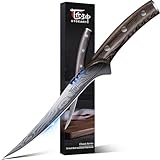
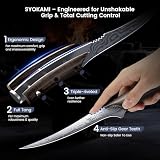
The Syokami brings a different engineering philosophy to fillet knives. Instead of pure sharpness, it emphasizes flexibility (tested to bend over 45 degrees) and a curved finger guard that prioritizes safety during wet, fast work. The 10° double-sided edge is sharper than a standard chef's knife but slightly less aggressive than the Hoshanho, which means it trades some out-of-the-box bite for durability under heavy use.
Where this knife distinguishes itself is design thinking. The blade suspension height keeps it from dragging on the cutting board during prep, and the anti-slip gear teeth on the spine give you control even when your hand is wet or covered in fish slime. The curved rear edge near the handle is a subtle touch that experienced fish handlers appreciate: it lets you do close, detailed deboning work without repositioning your grip constantly.
Compared to the Hoshanho, this knife feels like the premium option because of its FSC-certified wood handle and Damascus-style patterning, which buyers find beautiful. The trade-off is cost and a slightly steeper learning curve if you're used to stiffer blades. It shines for cooks who fillet whole fish regularly and value the refinement of the tool as much as its sharpness.
Pros
- High flexibility with excellent control via curved finger guard
- German-engineered 50CrMoV steel proven under extended use
- Beautiful Damascus pattern and FSC wood handle feel premium
Cons
- Higher price point than comparable all-around options
- Less aggressive edge angle; takes slightly longer to prep
Key features (4)
- Premium 50CrMoV German high-carbon stainless steel
- 10° double-edge angle with pronounced flex for bone work
- Curved finger guard and anti-slip spine teeth for wet-hand safety
- FSC-certified wood full-tang handle with Damascus-style pattern
The Paudin Nakiri is a departure from traditional fillet knives because it's designed for the flat, rocking motion of vegetable prep rather than the sliding technique of filleting. The rectangular blade profile and height make it exceptional for slicing, dicing, and chopping: buyers consistently praise how it handles butternut squash, sweet potatoes, and other tough produce that would tire out a chef's knife. That said, this is included here because many home cooks want one knife that bridges both vegetable work and occasional meat trimming, and the nakiri can do both.
The edge geometry (5Cr15Mov steel at 56+ HRC) keeps a sharp edge through regular use, and the light weight reduces hand fatigue during long prep sessions. The wave pattern is as much aesthetic as functional: it does reduce friction slightly and makes cleanup easier. Where it falls short for fillet work specifically: the blade isn't thin enough to follow ribs precisely, and the profile doesn't give you the control you'd want if you're breaking down whole fish regularly. If your kitchen knife work is 70 percent vegetables and 30 percent meat trim, this makes perfect sense. If you're filleting fish weekly, step toward the Hoshanho or Syokami instead.
Pros
- Exceptional for vegetable prep; rocks through tough squash and root veg
- Light, well-balanced design reduces hand fatigue over long sessions
- Retains edge well; minimal maintenance between uses
Cons
- Blade not thin or flexible enough for precision fish filleting
- Less suitable for deboning work compared to dedicated fillet knives
Key features (4)
- 7-inch flat nakiri blade with 5Cr15Mov stainless steel, 56+ HRC hardness
- Wave pattern reduces friction and aids food release
- Soft pakkawood handle integrated with blade for balanced control
- Rectangular profile ideal for push-cutting and rocking motion
The Shan Zu fillet knife uses traditional laminated-steel construction (a harder core wrapped in softer layers) that you'd typically find only in expensive handmade knives. That layering is visible as marbling on the frosted blade finish, which isn't just attractive; it's evidence of craft that affects how the knife performs. The 12-degree edge angle is slightly less aggressive than the Hoshanho's 15 degrees, trading maximum sharpness for slightly greater edge durability, but the difference is subtle in actual use.
What makes this knife compelling at its price point is the balance. The blade has moderate flex (enough for fish work but not floppy), the handle is ergonomic pakkawood, and the fit and finish feel polished rather than mass-produced. Buyers who compare it to knives double the price report that the Shan Zu doesn't embarrass itself. Where the Hoshanho edges ahead is out-of-the-box sharpness; the Shan Zu is sharp but not in the surgical range. Still, for a fillet knife versus boning knife that you'll use for both fish and occasional meat work, this represents strong value, especially if you're patient about maintenance and willing to hone regularly.
Compared to the Syokami, the Shan Zu prioritizes affordability and still delivers the core performance a home cook needs. If budget is a constraint and you want laminated-steel construction without the premium design elements, this is your knife.
Pros
- Laminated steel construction visible in frosted marbling
- Excellent value; delivers performance of pricier alternatives
- Ergonomic pakkawood handle with artisanal copper rosette accent
Cons
- Moderate flex; some users prefer more or less bend depending on style
- Edge angle less aggressive than premium competitors
Key features (4)
- Japanese G5 () laminated high-carbon steel, 62 HRC hardness
- 7-inch slender blade hand-sharpened to 12° with sharp tapered tip
- Frosted matte finish resists corrosion, heat, and moisture
- Ergonomic pakkawood handle with copper and brass rosette
The Hoshanho appears twice in this lineup because its edge-retention story deserves emphasis. Many Japanese fillet knives arrive sharp but dull quickly under heavy use: the trade-off of extreme sharpness. This one bucks that trend. Buyers report months of regular filleting (whole fish, weekly prep) before they felt the blade needed honing. That's partly the steel (10Cr15CoMoV), partly the 15-degree angle geometry, and partly the heat treatment.
If you're selecting a fillet knife and edge retention is your primary concern: because you don't want to sharpen every few weeks or you're a professional who can't afford downtime: this knife makes the strongest case. The Shan Zu also holds its edge well relative to entry-level options, but the Hoshanho's reputation across hundreds of reviews is more consistent. The downside: you're paying more for that durability, though many users feel it's worth it.
For anyone torn between the Hoshanho and the Syokami, this durability factor might tip the scales if you prep frequently and want to minimize maintenance.
Pros
- Holds sharp edge through extended use; minimal honing needed
- High-carbon steel formula balances sharpness with durability
- Consistent performance across hundreds of buyer reports
Cons
- Premium pricing relative to entry-level fillet knives
- Requires hand care; dishwasher use will degrade blade and handle
Key features (4)
- High-carbon 10Cr15CoMoV steel with 15° double-sided edge geometry
- 7-inch thin blade with moderate flexibility for fish and meat work
- Pakkawood handle resists corrosion and hand fatigue
- Includes plastic protective sheath and arrives factory-sharp
How to Choose a Fillet Knife
Blade Flexibility and Stiffness
Blade flexibility in fillet knives exists on a spectrum, and your choice depends on what you're cutting. A flexible blade follows the contours of fish bones and adapts as you work along the skeleton, reducing meat waste. A stiffer blade gives you more control for precision trimming and works better for meat with smaller, tighter bone structures. Fish filleters typically prefer moderate flex; butchers trimming large cuts often prefer stiffer blades. Test your technique: if you fillet whole fish, prioritize flex. If you trim steaks and chicken, a firmer blade serves you better.
Edge Angle and Initial Sharpness
Japanese fillet knives typically ship with edge angles between 10 and 15 degrees per side. Tighter angles (10-12 degrees) arrive sharper but may dull faster under heavy use. Wider angles (15 degrees) sacrifice initial bite for longevity. Very sharp edges are satisfying but require more frequent maintenance. Consider your workflow: if you fillet once or twice weekly, a sharper blade that needs honing every month is fine. If you prep daily, edge retention matters more. Most home cooks find the sweet spot around 12-15 degrees.
Steel Type and Corrosion Resistance
High-carbon stainless steels like 10Cr15CoMoV and 5Cr15Mov dominate this category. They resist rust better than pure carbon steel and hold an edge longer than softer stainless blends. Laminated construction (harder core with softer outer layers) is prized in Japanese knives because it combines edge retention with some flex. Avoid dishwashers and long soak times: hand wash and dry immediately to prevent corrosion. If you live in a humid or coastal environment, edge retention and corrosion resistance matter more.
Handle Comfort and Grip Security
Pakkawood handles dominate premium fillet knives because the material resists moisture and won't crack from temperature swings. Full-tang construction (blade extends through the entire handle) adds stability and balance. A good fillet knife should sit comfortably in a pinch grip (thumb and forefinger below the blade, other fingers on the handle) and not tire your hand after 20-30 minutes of work. Some knives feature finger guards or textured spines for wet-hand safety: useful if you fillet slippery fish frequently. Test the weight distribution: a handle-heavy knife causes wrist fatigue; a well-balanced blade concentrates effort where it belongs.
Blade Length and Versatility
Most fillet knives range from 6 to 9 inches. A 7-inch blade is the practical sweet spot for home cooks: long enough to work along a whole fish in two or three strokes, short enough to offer precise control for small trimming tasks. Longer blades (8-9 inches) suit professional kitchens and cooks handling large whole fish regularly. Shorter blades (6 inches) work better if you mostly trim meat or debone small poultry. Consider the fillet knife versus boning knife distinction: boning knives are shorter and stiffer, designed for joints and tight spaces. If you want one knife for multiple tasks, 7 inches is the most versatile length.
Our picks at a glance
3
Best for Vegetables & Soft CutsPaudin
4
Best Value Fillet KnifeShan Zu
5
Best for Edge RetentionHoshanho
Frequently asked
What's the difference between a fillet knife and a boning knife?
Fillet knives are longer (usually 6-9 inches), thinner, and more flexible. They're designed to glide along bones and follow the shape of fish or meat. Boning knives are shorter (4-6 inches), stiffer, and pointier: built to work in tight spaces around joints. A fillet knife excels at breaking down whole fish; a boning knife shines at deboning chicken thighs or trimming meat around a bone. Many home cooks get by with a single fillet knife for both tasks.
Do Japanese fillet knives need special maintenance?
Yes, more than European-style knives. Hand wash immediately after use and dry with a towel. Don't soak in water or put in the dishwasher, as that promotes rust and can loosen the handle. Store on a magnetic strip or with blade protection rather than loose in a drawer. Hone regularly with a honing steel (weekly if you use it daily, monthly for casual cooks) to realign the edge. Full sharpening on a whetstone is needed every few months to a year depending on use. This routine keeps the blade performing.
How sharp should a fillet knife be out of the box?
A quality Japanese fillet knife should arrive sharp enough to shave arm hair or slice newsprint cleanly without pressing. You shouldn't need to sharpen it before first use. Some premium options feel slightly less aggressive on arrival because they prioritize edge longevity over maximum initial sharpness: still plenty sharp for work, just not surgical. If a knife arrives dull, contact the seller. A sharp edge is non-negotiable for clean, efficient filleting and safe handling.
Can I use a fillet knife for vegetables?
Yes, but it's not ideal. Fillet knives are thin and designed to follow contours, so they work for slicing vegetables but won't give you the push-cutting power or control of a chef's knife or nakiri. A nakiri or vegetable knife is better for chopping and dicing. That said, a fillet knife shines at fine slicing tasks like cutting thin sheets of cucumber or creating precise garnish cuts. If you want one knife that handles both fish and daily vegetable work, a nakiri or larger chef's knife is a better investment.
What blade length should I choose for filleting fish at home?
Seven inches is the practical standard for home cooks. It's long enough to work across a whole fish in a few strokes, reducing the back-and-forth motion that can damage delicate flesh. It's also short enough to give you precise control for small trimming tasks. If you fillet very large fish (salmon, halibut) regularly, consider 8-9 inches. If you mostly work with small fish or trim meat, 6 inches is sufficient. Most recipes and cooking scenarios work fine with a 7-inch blade.