Kitchen & Dining · Gadgets
Best Knife to Cut Chicken Breast: Top 5 Tested Picks
Find the best knife for cutting chicken breast. Compare fillet, boning, nakiri, and electric knives with expert guidance for home cooks.
Affiliate disclosure: As an Amazon Associate I earn from qualifying purchases.
At a glance
1
Best Overall for PrecisionHoshanho
2
Best Budget-Friendly Professional ChoiceVictorinox
3
Most Versatile Multi-Purpose BladePaudin
4
Best for Speed and VolumeBlack+Decker
5
Best Heavy-Duty Butcher OptionCutluxe
Detailed reviews
The Hoshanho delivers what buyers consistently praise: exceptional sharpness right out of the box and a blade thin enough to slip between skin and meat or follow bone contours with almost no effort. The 7-inch length is ideal for chicken breast work; long enough to handle a whole bird but short enough for detailed control. The 15-degree edge angle keeps it sharper longer than Western chef's knives, and owners who cook regularly report it still cuts cleanly after weeks of use without resharpening.
For chicken specifically, the flex in this blade matters. The spine isn't rigid, so it adapts as you work around joints and bone, reducing the resistance you feel when angling the blade against cartilage. The handle sits comfortably in smaller to average-sized hands, and the pakkawood surface stays tacky even when wet from chicken juice: important when precision is what you're after.
The main trade-off versus the Victorinox is that this blade requires care. Hand washing and prompt drying are not optional; the high-carbon steel will spot or stain if left wet. Buyers accustomed to throwing knives in the dishwasher need to break that habit. And if you prefer a stiffer blade that lets you muscle through work with less finesse, the flexibility here may feel too soft.
Pros
- Surgical sharpness maintained across multiple cooking sessions
- Thin, flexible blade for boning and fat trimming
- Compact 7-inch size ideal for detailed poultry work
Cons
- Requires hand washing and immediate drying to prevent spotting
- High-carbon steel demands more care than stainless alternatives
Key features (4)
- Japanese high-carbon stainless steel with 15-degree edge angle
- 7-inch thin, flexible blade for precision trimming and boning
- Ergonomic pakkawood handle with frosted texture for grip
- Arrives razor-sharp; minimal resharpening needed in regular use
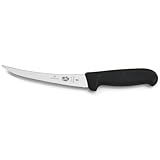
The Victorinox Fibrox curved boning knife is the knife that restaurants and home kitchens reach for when they want professional results without fussing over maintenance. The curved blade follows the natural angle of a chicken breast, and its flex means you can work tight to the bone without slipping off. What sets it apart from similar knives is that the edge holds up through real kitchen work; owners who debone whole chickens report the blade staying sharp enough to slip through joints and tendons without slowing down.
Compared to the Hoshanho, this knife prioritizes practicality. The Fibrox handle is textured and won't turn slick when greasy or wet, the blade is heavier (more stiffness for speed), and it's dishwasher-safe: you can throw it in without worrying. The 6-inch size is slightly shorter, which some find easier to control, though it demands a bit more hand movement on larger cuts. The edge comes at a shallower angle than many Japanese blades, which some kitchens prefer for durability even if it means slightly less initial sharpness.
The one caveat: if you want hair-splitting sharpness or work with delicate trimming tasks, the Hoshanho edges ahead. But for breaking down whole birds on a busy weeknight or when knife maintenance feels like overkill, the Victorinox is the smarter buy.
Pros
- Holds sharp edge through repeated use on poultry
- Curved blade follows bone naturally with built-in flex
- Dishwasher-safe and requires no special handling
Cons
- Slightly less sharp out of the box than Japanese alternatives
- Shorter blade means more hand movement on larger cuts
Key features (4)
- Swiss-made curved flexible stainless steel blade design
- 6-inch length with ergonomic, non-slip Fibrox handle
- NSF certified for professional kitchen standards
- Lifetime warranty against material or workmanship defects
The Paudin Nakiri brings a different approach to the cutting board. Where a boning knife reaches around bone, the nakiri uses its wide, flat profile and push-cutting motion: drop the blade straight down and rock it gently forward. This works beautifully for boneless chicken breast sliced into cutlets or strips, and the height of the blade lets you scoop trimmings off the board directly into a pan. Owners consistently praise it for clean, thin vegetable cuts, and poultry is no exception when you're not wrestling with carcasses and joints.
The nakiri's high-carbon stainless steel (5Cr15MoV) is harder and less flexible than the Hoshanho or Victorinox, which makes sense for its design: you're not meant to angle and bend it around obstacles. On boneless chicken work, this is an advantage; the blade stays true and doesn't twist. But if you're breaking down a whole bird, the wide profile becomes a liability; you can't slip it into tight spaces, and the flat spine won't pivot around joints the way a curved boning knife does. For cooks who mostly slice boneless breasts and handle whole birds rarely, the nakiri is genuinely superior to what most guides recommend as the go-to knife for cutting chicken breast. If you bone birds weekly, reach for the boning knife instead.
Compared to the Victorinox, this is the better choice if vegetable prep is equally important to your cooking rhythm. The flat profile and weight make push-cutting effortless.
Pros
- Exceptional at push-cutting boneless chicken and vegetables
- Wide blade profile doubles as a scoop for transferring food
- Stays sharp through repeated slicing tasks
Cons
- Flat profile and rigidity make boning whole birds awkward
- High-carbon steel requires hand washing and careful storage
Key features (4)
- 7-inch flat nakiri blade with high-carbon stainless steel
- Wave pattern reduces food friction and sticking
- Ergonomic handle balanced at the pinch point for control
- Best suited for push-cutting, not angled boning work
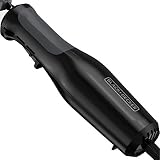
The Black+Decker electric knife solves a different problem. If you're slicing cooked chicken for meal prep, carving a roasted bird for serving, or processing multiple breasts quickly, the reciprocating serrated blades do the work your hand would normally do. The rhythm is simple: guide the knife straight down and let the blade vibrate through the meat. Owners who use this for bread report effortless, uniform slices: the same applies to cooled, cooked chicken.
On raw chicken, the top knife to cut raw chicken is a manual blade, not an electric one. The serrations work on the principle of sawing, which works well for firm, structured cuts but is less precise for boning or trimming fat from delicate areas. It's also louder and bulkier than a manual knife, and once you're done with one task, you need to wash, dry, and store a powered device. For dedicated poultry processing or the occasional carving task, it's a game-changer. For everyday chicken prep alongside other kitchen work, it's overkill.
The Comfort Grip handle is genuinely thoughtful: the non-slip tabs and weight distribution reduce fatigue, which matters if you're slicing multiple birds. The dishwasher-safe blade is another practical win. However, this approach trades the precision of the Hoshanho or Victorinox for pure speed and ease; if finesse matters more than volume, the electric knife is the wrong tool.
Pros
- Effortless uniform slicing through cooked poultry
- Reduces hand and wrist fatigue during high-volume work
- Removable blades are top-rack dishwasher-safe
Cons
- Serrated blade design less suitable for raw meat boning
- Requires power outlet and storage space; noisier than manual knives
Key features (4)
- Stainless steel serrated reciprocating blades for consistent slicing
- Ergonomic ComfortGrip handle with non-slip tabs
- Safety lock button prevents accidental activation
- One-touch blade release for quick changes and cleaning
The Cutluxe 10-inch cimeter is a statement knife: substantial, beautiful, and engineered for serious butchery. At 10 inches and with a full-tang pakkawood handle, it's longer and heavier than any of the other picks here, designed to carry through large cuts of meat with momentum and precision. Owners in commercial kitchens use it to break down whole animals and hold edges for months under daily heavy use. For chicken, it's almost absurdly overpowered; you're using a tool built for beef briskets and pork shoulders to work on a bird that weighs a few pounds.
That said, if you also butcher larger cuts regularly (whole chickens alongside roasts or steaks) this knife earns its space. The curved blade and granton (dimpled) edge prevent food from sticking, and the weight means you're not muscling through bone; gravity and the blade's momentum do the work. Compared to the Hoshanho's delicate precision or the Victorinox's nimble flex, the Cutluxe is all about leverage. On a boneless chicken breast, you'd be using perhaps a quarter of its intended design. On a spatchcocked bird or a pile of thighs and drumsticks, it shines.
The price point and size make this a commitment. It requires the same care as the Hoshanho (hand washing and immediate drying) and the handle's rivets and edges need care so they don't create hot spots in your hand during long work sessions.
Pros
- Substantial weight and curve leverage through heavy cuts effortlessly
- Granton edge prevents sticking and eases cleaning
- Professional-grade German steel holds edge under daily use
Cons
- Oversized for boneless chicken work; excessive for everyday poultry
- Requires hand washing and careful maintenance like other high-carbon knives
Key features (4)
- 10-inch curved cimeter blade with granton dimple design
- German high-carbon steel forged to 56+ Rockwell hardness
- Full-tang pakkawood handle triple-riveted for stability
- Lifetime warranty against material or workmanship defects
How to Choose a Chicken Cutting Knife
Blade Length and Flexibility
For chicken work, 6 to 7 inches is the sweet spot: long enough to handle a whole bird smoothly but short enough for control around joints and tight spaces. A flexible blade adapts to bone contours and reduces resistance; a stiffer blade moves faster but demands more angling and repositioning. Consider what matters more to you: speed (stiffer) or finesse (flexible). Most home cooks find a bit of flex reduces frustration when navigating carcasses.
Boning Knife vs. Nakiri
A boning knife curves and reaches around obstacles; a nakiri slices flat. The boning knife vs. nakiri choice depends on your workflow. If you debone whole birds or trim fat along curves, a boning knife is purpose-built. If you mostly slice boneless breasts or work with vegetables, a nakiri's flat profile and push-cutting motion is more efficient. Many home cooks benefit from having both, but if choosing one, prioritize your most frequent task.
Edge Retention and Care
Japanese high-carbon steel holds a sharper edge longer but requires hand washing and immediate drying to prevent spotting. Western stainless steel edges dull faster but tolerate dishwashers and neglect. If you prefer low-maintenance kitchen tools, choose a stainless option like Victorinox. If you enjoy honing your knives and want surgical sharpness, the high-carbon investment pays off. Be honest about your habits before buying.
Raw Poultry vs. Cooked Carving
If you're breaking down raw chicken or trimming raw fat and skin, a manual boning or fillet knife gives you the control and feedback you need. If you're carving cooked birds for serving or slicing cooled chicken for meal prep, an electric knife's serrated blades cut uniformly with zero effort. Most home cooks find that knowing the chicken breast butchering technique you favor helps determine which tool fits your kitchen best.
Our picks at a glance
1
Best Overall for PrecisionHoshanho
2
Best Budget-Friendly Professional ChoiceVictorinox
3
Most Versatile Multi-Purpose BladePaudin
4
Best for Speed and VolumeBlack+Decker
5
Best Heavy-Duty Butcher OptionCutluxe
Frequently asked
Can I use a chef's knife instead of a boning knife for chicken?
Yes, a sharp 8-inch chef's knife works for slicing boneless breasts, but it's not ideal for boning or trimming. The wide blade crowds joints, and the straight profile doesn't follow bone curves. A boning or fillet knife reaches tighter spaces and adapts to the bird's shape. If you own only a chef's knife, it handles chicken adequately; if you're buying, a dedicated boning knife is worth the extra tool.
How often do I need to sharpen a chicken cutting knife?
With regular hand-washing and storage on a magnetic strip or knife block, a quality boning knife stays usable for weeks of daily cooking. Use a honing rod weekly to realign the edge; it takes 30 seconds per side. True sharpening (grinding away dull steel) happens every few months, depending on use. Serrated electric blades rarely need sharpening and usually aren't user-serviceable.
What's the best grip for cutting boneless chicken breasts?
Use a pinch grip: hold the blade between your thumb and forefinger just above the handle, with your remaining fingers wrapped around for support. This gives you control over the blade angle and direction. For your other hand, curl your fingertips inward (claw grip) so the blade slides along your knuckles, not your fingertips. Let the knife do the work; don't muscle it.
Should I buy a full knife set or individual blades for chicken prep?
Most home cooks benefit more from a sharp boning or fillet knife plus a quality chef's knife than from a full set. Sets often include knives you'll rarely use, and the overall quality is diluted to hit a price point. Buy one excellent boning knife and one chef's knife; you'll use them for 95 percent of your chicken and general cooking work. Add specialty blades only as you identify specific needs.
Can I use the same knife for raw chicken and other foods?
Yes, as long as you wash it thoroughly between tasks. Raw poultry carries bacteria that can cross-contaminate, so rinse the blade with hot soapy water immediately after cutting chicken, before moving to vegetables or other foods. Many cooks keep a dedicated cutting board for raw poultry for the same reason. A good knife is no substitute for food safety hygiene, but it's not an obstacle either.