Kitchen & Dining · Gadgets
Best Knife for Cutting Chicken Breast: Top Picks for Clean Slicing
Find the best knife for cutting chicken breast. Compare boning, fillet, and specialty knives with expert guidance on what works for your kitchen.
Affiliate disclosure: As an Amazon Associate I earn from qualifying purchases.
At a glance
1
Best Overall for Bone WorkMercer Culinary
2
Best Budget Pick for Everyday ChickenVictorinox
3
Best Premium Option for Detailed WorkHoshanho
4
Most Versatile for Mixed Kitchen WorkPaudin
5
Best for Speed and ConsistencyChicken Slicer
Detailed reviews
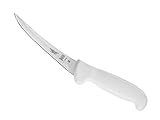
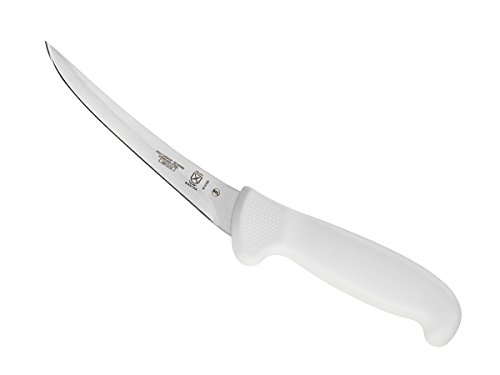
The Mercer Culinary Ultimate White earns its reputation among butchers and serious home cooks for a reason. The curved blade allows your hand to work at a natural angle when following bones, which means less slipping and less meat waste. Owners consistently report that this knife glides through chicken skin and around joints without the dragging that dulls less thoughtful designs. The high-carbon Japanese steel takes and holds an edge longer than cheaper alternatives, and it sharpens easily when needed.
The white Polypropylene handle resists staining and grease buildup better than wood, though it does get slippery when wet (owners note that textured bumps help with grip in those moments). At 6 inches, the blade length is ideal for chicken work without being so large that it's awkward for detail cuts around joints and connective tissue. Several owners mention using this knife more often than expensive Damascus steel knives they own, which speaks to the shape-matters-more-than-price principle.
Compared to the Victorinox, the Mercer trades stainless steel's corrosion resistance for higher-carbon sharpness and edge retention. That trade favors cooks who hand-wash and dry immediately (which any serious knife deserves). If you're willing to care for your tools, this knife rewards that attention with performance that feels almost unfair for the price.
Pros
- Razor-sharp Japanese steel holds edge through multiple uses
- Curved blade angles naturally for bone and joint work
- Textured handle prevents slipping even when greasy
Cons
- Requires hand-washing and immediate drying to prevent rust
- White handle can stain with certain foods or marinades
Key features (4)
- 6-inch curved blade with high-carbon Japanese steel
- Ergonomic Polypropylene handle with textured grip zones
- Flexible enough for precision work, rigid enough for pressure
- Professional-grade edge retention at entry-level price
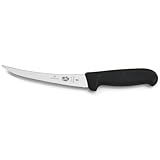
Victorinox earned the nickname 'Old Faithful' from America's Test Kitchen, and owners confirm that reputation holds up for chicken work. The 6-inch curved blade is flexible enough to navigate around bones and joints without demanding the fussy maintenance a high-carbon knife requires. Stainless steel resists staining and corrosion, which matters if your kitchen routine leans toward quick dishwasher cycles (though hand-washing is still recommended for edge longevity). One owner shredded three whole chickens with it and reported it still stayed razor-sharp.
The Fibrox handle is the real standout here. It grips securely even when greasy or wet, which the Mercer owner feedback flagged as an occasional weak point. For cooks dealing with slippery raw chicken, that textured grip buys confidence and safety. The knife is NSF certified, meaning it meets professional sanitation standards, and it carries a lifetime warranty against defects.
Where this trails the Mercer is pure edge sharpness and edge retention over time. Owners note it stays 'sharp enough' longer than bargain knives, but the Mercer pulls ahead if you do heavy boning work. If your chicken prep is more occasional slicing than regular butchering, the Victorinox trades a bit of sharpness for the stainless-steel practicality and superior grip that keeps you safe, a different priority entirely from the best yanagiba knives, whose single-beveled edge exists solely for pull-cut raw-fish slicing.
Pros
- Textured Fibrox handle grips securely even when wet or greasy
- Stainless steel resists staining and corrosion
- Lifetime warranty against defects in material and workmanship
Cons
- Edge sharpness trails high-carbon alternatives over time
- No sheath or storage cover included with purchase
Key features (4)
- 6-inch curved flexible stainless steel blade
- Patented Fibrox Pro handle designed for wet-hand work
- NSF certified for professional sanitation standards
- Swiss-made with lifetime guarantee against defects
The Hoshanho 7-inch fillet knife steps up into genuine high-end territory without the price tag of established luxury brands. The Japanese powder steel (62 HRC hardness) is harder and holds its edge longer than the Mercer or Victorinox, which matters if you're doing restaurant-level or high-volume prep. The tapered, ultra-fine point slips under chicken skin and between connective tissue with minimal pressure, reducing hand fatigue on longer prep sessions.
Owners praise the out-of-box sharpness and the knife's versatility across chicken, beef, fish, and soft vegetables. The ergonomic Pakkawood handle is larger than competitors, which some find more comfortable for extended use, though others may find it bulkier if they prefer a slimmer profile. The knife is slightly longer at 7 inches, which gives you more working surface but requires a touch more board space than a 6-inch blade.
One caveat: this is a specialty blade designed primarily for slicing, deboning, and filleting delicate work. Unlike the Nakiri, it's not an all-purpose kitchen knife. If you're looking for one tool to handle any cutting task, this narrows its appeal. But if chicken work is frequent and you want a knife that handles both raw deboning and precision slicing of cooked meat, the powder steel's edge retention justifies the step up in price.
Pros
- Japanese powder steel (62 HRC) holds razor edge exceptionally long
- Tapered point glides under skin and around bone with precision
- Larger ergonomic handle reduces fatigue during extended prep
Cons
- Specialty blade not suited for heavy chopping or bone cutting
- No protective sheath included with knife
Key features (4)
- 7-inch blade with Japanese high-carbon powder steel (62 HRC hardness)
- Hand-ground 15-degree edge on both sides for ultra-sharp precision
- Ergonomic Pakkawood handle with high-density composite material
- Laser-engraved wave pattern reduces friction during slicing
The Paudin Nakiri takes a different approach to chicken cutting than curved boning knives. The flat, rectangular blade and tall profile work beautifully for push-cutting through chicken breast without that accordion effect you get with some chef's knives where the meat stays partially attached. Owners report using this knife for everything from deboning to slicing cooked chicken to carving prime rib, which speaks to the design's versatility.
The 5Cr15Mov stainless steel (56+ hardness) sits between the Mercer's purity and the Hoshanho's powder-steel premium. It's sharp enough out of the box and holds that edge well for home use, though it doesn't match the longest-lasting performance of higher-hardness alternatives. The wave pattern is laser-engraved (not true Damascus), which is honest marketing and keeps the price down while still reducing food friction during cutting.
Where this differs from the Mercer or Victorinox is that it's less specialized for bone work. The flat profile is fantastic for slicing chicken breast into cutlets or chunks for stir-fry, but the straight edge doesn't hug bones the way a curved blade does. If you want one knife that handles 80% of your chicken prep plus all your vegetable work, the Nakiri fills that role better than a dedicated boning knife. But pure deboning specialists will find the curved alternatives more intuitive.
Pros
- Flat-blade design slices chicken breast evenly without accordion effect
- Lightweight construction reduces hand fatigue during meal prep
- Multipurpose design handles vegetables and soft meats equally well
Cons
- Straight edge less intuitive than curves for detailed bone work
- Stainless steel requires immediate hand-washing to maintain appearance
Key features (4)
- 7-inch flat Nakiri blade in 5Cr15Mov stainless steel (56+ HRC)
- Soft Pakkawood handle with integrated tang for balance
- Laser-engraved wave pattern reduces food friction and cleanup
- Lightweight design allows comfortable extended use
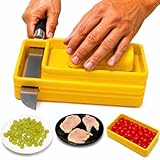
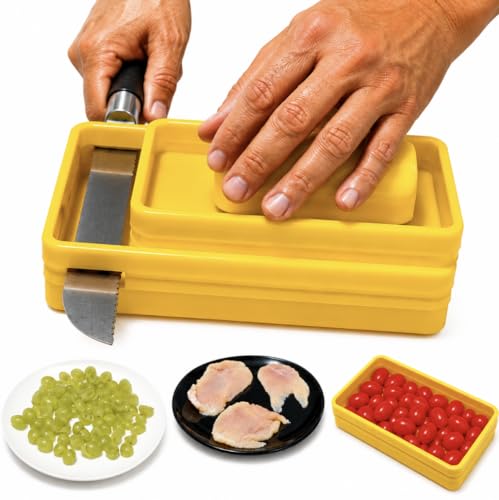
This chicken slicer is fundamentally different from the other four tools on this list. Rather than a freehand blade requiring knife technique, it's a guided-cut gadget that positions the chicken and does the slicing work for you. For meal preppers, busy parents, and cooks focused on consistency over artistry, that simplification is genuinely useful. Owners report slicing cooked chicken breast into meal-prep portions, creating even cutlets for pan-frying, and even using it for grapes and softer fruits.
The learning curve is nearly zero, and safety is higher than free-hand knife work since your fingers stay away from the cutting edge. The compact footprint and quick cleanup appeal to cooks with limited counter space or those doing high-volume prep. For someone training a household member who's uncomfortable with knife skills, this removes that barrier entirely.
The trade-off is obvious: this tool is single-purpose where the best chicken shredder designs focus purely on efficiency. It works best on cooked or partially frozen chicken, not the delicate deboning work that curved boning knives excel at. The blade quality matters less here than the guide mechanism's precision. If your chicken work is mostly portioning cooked meat or creating uniform cutlets from raw breasts, this speeds up that specific job dramatically. But it's not a replacement for actual knife skills, if you want the best knife to cut raw chicken, that requires a different conversation entirely; this is a shortcut for one narrow task.
Pros
- Creates uniform slices and cutlets in seconds without knife skills
- Compact design saves counter and storage space
- Non-slip base keeps chicken stable and safe during cutting
Cons
- Limited to slicing tasks; not suited for deboning or trimming
- Works best on cooked or semi-frozen chicken, not delicate raw work
Key features (4)
- Mandoline-style guide with two adjustable slice-thickness settings
- Non-slip silicone pads prevent chicken movement during use
- Compact plastic design with quick-clean construction
- Multipurpose blade works on chicken, softer fruits, and vegetables
How to Choose the Right Knife for Cutting Chicken
Deboning vs. Slicing: What Your Chicken Work Demands
The task shapes the blade. If you're removing meat from bones or trimming connective tissue, a curved boning knife like the Mercer or Victorinox angles naturally for that work and saves hand strain. If you're slicing raw or cooked chicken into cutlets or portions, a flat blade (like the Nakiri) or a specialty guide (like the chicken slicer) handles those cuts more intuitively. Most home cooks do a mix, which is why the Hoshanho fillet knife and Paudin Nakiri appeal to people who want one versatile blade rather than multiple tools.
Steel Type and Maintenance Reality
High-carbon steel (Mercer, Hoshanho) stays sharper longer but requires hand-washing and immediate drying to prevent rust. Stainless steel (Victorinox, Paudin) is lower-maintenance and forgives occasional dishwasher cycles, but it dulls slightly faster with heavy use. Choose based on your actual habits, not your intentions. If you hand-wash and dry everything, high-carbon rewards that discipline. If you're realistic about reaching for the dishwasher, stainless saves frustration.
Handle Comfort and Grip Security
Raw chicken is slippery, and a handle that holds firm matters for safety and control. Textured Fibrox (Victorinox) and ergonomic Pakkawood (Hoshanho, Paudin) both grip wet hands better than smooth polished handles. If you're dealing with frequent grease or blood, test a handle's texture before committing. The Mercer's bumped zones help, but the smooth sections remain slick. Handle size also affects fatigue: larger handles (Hoshanho) reduce strain during long sessions, while slimmer handles (Mercer) offer more control for detail work.
Budget vs. Specialization Trade-offs
Entry-level boning knives (Mercer, Victorinox under $50) handle chicken work beautifully and outperform expensive chef's knives because shape matters more than price in this category. Stepping to premium powder steel (Hoshanho) or specialty guides (chicken slicer) only makes sense if your prep volume or workflow genuinely demands it. The deboning chicken breast guide offers detailed technique for hand-knife work if you want to maximize the skill investment with any curved blade.
Our picks at a glance
1
Best Overall for Bone WorkMercer Culinary
2
Best Budget Pick for Everyday ChickenVictorinox
3
Best Premium Option for Detailed WorkHoshanho
4
Most Versatile for Mixed Kitchen WorkPaudin
5
Best for Speed and ConsistencyChicken Slicer
Frequently asked
Can I use a chef's knife instead of a boning knife for chicken?
A chef's knife can slice chicken, but it's less efficient than a curved boning knife for deboning work. The straight edge of a chef's knife doesn't hug bones naturally, so you remove more meat than necessary. If chicken work is occasional, a chef's knife is fine. If you debone regularly, even a budget-friendly curved blade makes the work noticeably faster and cleaner.
What's the difference between a boning knife and a fillet knife?
Boning knives have shorter, stiffer blades designed for navigating around bones and joints in thicker meats. Fillet knives have longer, more flexible blades optimized for sliding under skin and following bone contours in fish and thin meats like chicken breast. For chicken work, they're nearly interchangeable, though a fillet knife's flexibility is gentler on delicate chicken skin.
Do I need to sharpen my knife if it still cuts well?
Yes. A dull knife is less safe because it requires more pressure and is more likely to slip. Many owners use a ceramic honing rod after each use to realign the edge, which extends sharpening intervals. Actual sharpening (removing steel to create a new edge) happens less frequently, maybe monthly for home use, depending on volume.
Is it safe to put these knives in the dishwasher?
Hand-washing is always safer for knife blades. Dishwashers dull edges through impact and expose high-carbon steel to moisture that causes rust. Stainless-steel knives tolerate dishwashers better than high-carbon ones, but edge life suffers either way. Most owners report hand-washing takes 30 seconds and keeps their knife performing like new.
Which knife is best if I have arthritis or grip weakness?
Look for larger, ergonomic handles (Hoshanho, Paudin) that distribute pressure across your hand rather than concentrating force in your fingers. Lighter-weight blades (Victorinox, Paudin) reduce arm fatigue. The chicken slicer guide eliminates hand strength requirements entirely, which appeals to cooks with mobility or grip concerns.