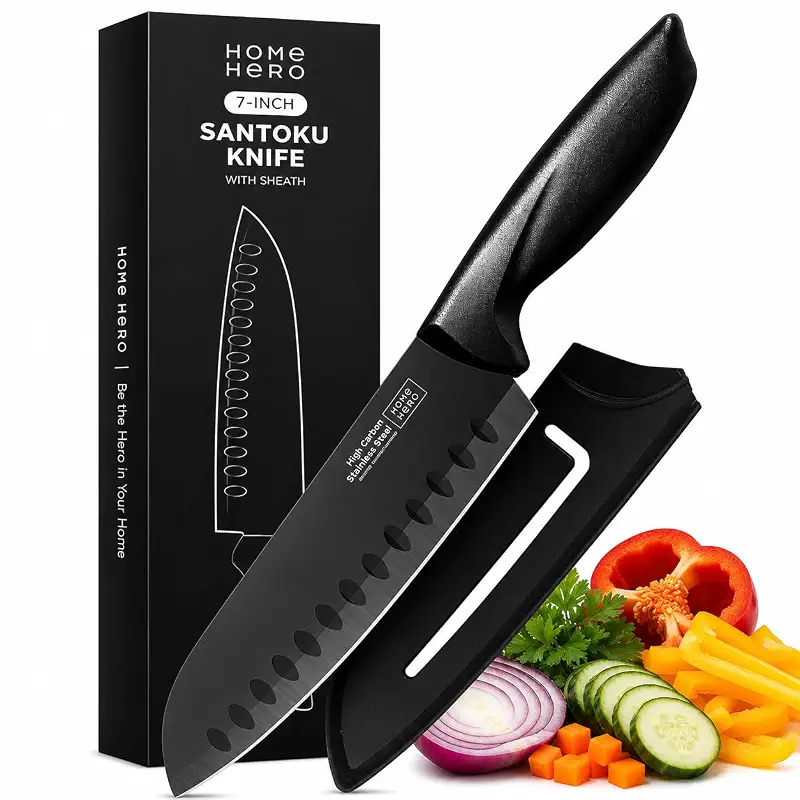
Ideal for: Home cooks prioritizing affordability and daily vegetable prep without fatigue.
The Home Hero Santoku delivers real performance without the premium price tag. Its 7-inch blade and non-stick coating make vegetable prep feel frictionless; food doesn't stick between the blade and your board, which accelerates your work and reduces frustration. The ergonomic handle sits comfortably in most hands, and owners consistently report that sharpness holds up through weeks of regular use. The included protective sheath means safe storage without drawer clutter.
One trade-off worth mentioning: the blade feels lighter than some cooks prefer. If you like weight and heft in a knife (that tactile feedback of a substantial tool) you might find this one almost delicate by comparison. Compared to heavier European-style chef's knives, this santoku favors precision and speed over the chopping power some home cooks expect. Still, for vegetable cutting specifically, that lighter weight reduces hand fatigue over longer prep sessions.
Owners report confidence with tomatoes, peppers, carrots, and soft fruits right out of the box. The non-stick feature is genuinely useful, not a gimmick, especially if you're processing large volumes of vegetables for meal prep. Hand wash only, and you'll keep the edge intact far longer than a dishwasher cycle would allow.
Pros
Non-stick blade prevents food from clinging during cuts
Lightweight design reduces hand strain over long prep sessions
Arrives sharp and holds edge through weeks of regular use
Protective sheath included for convenient storage
Cons
Blade weight feels light compared to traditional chef's knives
Requires hand washing to maintain edge and finish
Key features
7-inch santoku blade with 3Cr13 high-carbon stainless steel
Non-stick coating reduces friction and food adhesion
Ergonomic plastic handle for extended comfort and control
Includes protective sheath and gift-ready packaging
#2 Pick
Best for Heavy Vegetables
Paudin
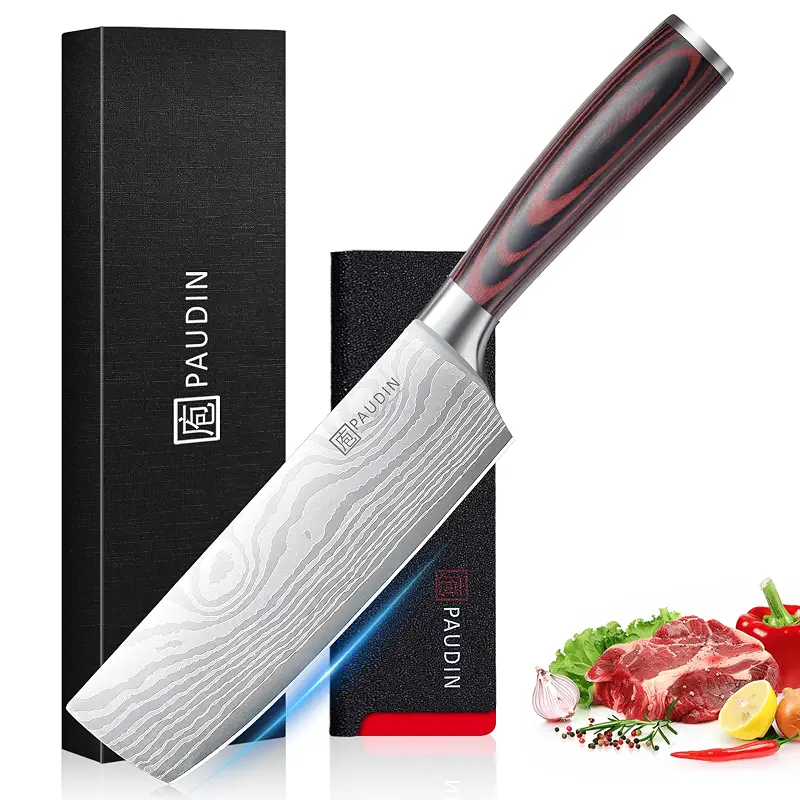
PAUDIN Nakiri Knife - 7" Razor Sharp Meat Cleaver and Vegetable Kitchen Knife, High Carbon Stainless Steel, Multipurpose Asian Chef Knife for Home and Kitchen with Ergonomic Handle
4.6(4,821)
A nakiri designed to power through dense vegetables like squash and root crops with a flat blade that keeps slices intact.
Ideal for: Cooks who frequently prep hard vegetables and dense root crops.
The Paudin Nakiri earns its reputation for one specific task: processing tough, dense vegetables that challenge standard knives. The flat-blade profile and height give you a proper scoop to transfer chopped food to your pan, but more importantly, owners report that this nakiri handles butternut squash, sweet potatoes, and hard root vegetables in ways their other knives simply can't. The rocking motion cuts through dense items with surprising ease, and the blade doesn't chip or dull quickly when working on these tougher cuts.
The 5Cr15Mov stainless steel runs at 56+ hardness, which is respectable for this price range. Hand polishing on arrival ensures the edge comes sharp; many owners note they haven't needed to sharpen it after months of regular use. The wave-pattern etching on the blade is functional, not just decorative: it genuinely reduces drag and makes cleanup faster.
Where this knife differs from the Home Hero is in weight and presence. It has more substance in the hand, which some cooks prefer. However, if your vegetable work skews toward soft items like herbs, tomatoes, and leafy greens rather than hard squash and roots, the Paudin's bulk becomes less essential. For delicate work, the lighter santoku wins; for demolishing a pile of root vegetables, this nakiri is your tool.
Pros
Flat blade design excels at slicing dense vegetables like squash
Wave pattern reduces food friction and cleaning time
Hand-polished edge holds sharpness through extended use
Substantial weight and balance for controlled chopping power
Cons
Heavier profile may fatigue hands during extended delicate work
Blade design less versatile for soft fruits and herbs
Key features
7-inch nakiri with 5Cr15Mov stainless steel, 56+ HRC hardness
Wave-pattern blade reduces friction and food sticking
Flat profile optimized for push-cutting without accordion effect
Pakkawood ergonomic handle with integrated balance point
#3 Pick
Best Japanese Craftsmanship
Hoshanho
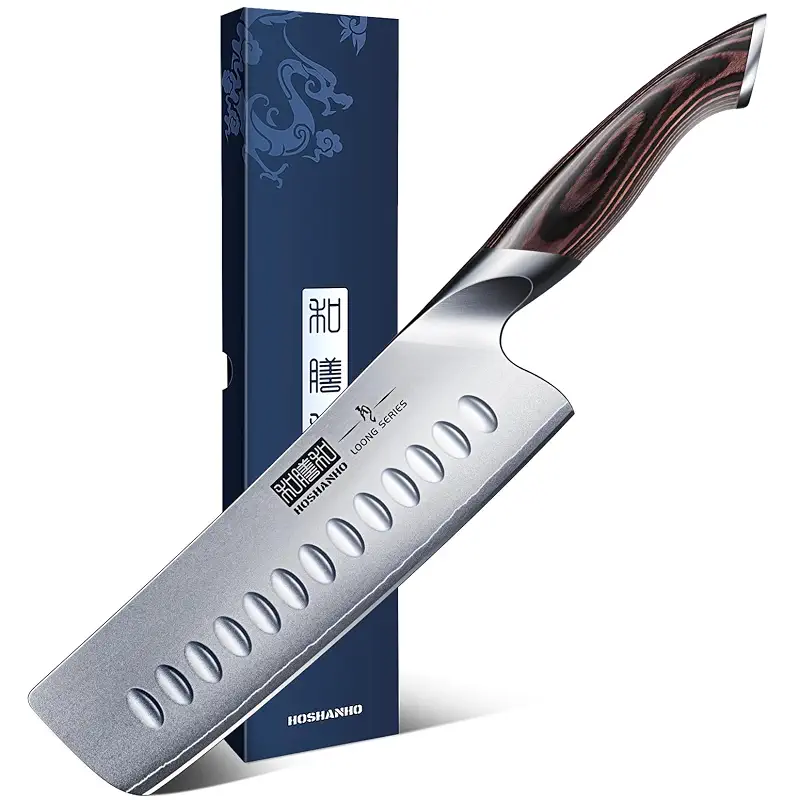
HOSHANHO 7 Inch Nakiri Knife, Ultra Sharp Japanese Kitchen Chef Knife | Multipurpose Japanese High Carbon Stainless Steel Meat Vegetable Sharp Kitchen Knife with Ergonomic Pakkawood Handle
4.7(1,849)
Premium hand-polished edge and superior balance make this nakiri feel like a more expensive knife at a practical price.
Ideal for: Home cooks who appreciate craftsmanship and are willing to hand-maintain their tools.
Hoshanho's attention to hand-polishing details shows in the box and on the cutting board. Each blade receives individual expert attention to achieve a precise 15-degree edge angle, which is sharper than most production knives in this category. The Japanese 10Cr15CoMoV steel runs at 60HRC hardness, making it noticeably more durable than many competitors at the same investment level. Owners report that edge retention is impressive; after weeks of regular vegetable work, the blade still slices tomatoes cleanly without crushing them.
The ergonomic design and balance are genuinely thoughtful. The scallop-pattern hollow pits on the blade reduce food adhesion while adding visual refinement. The pakkawood handle (that warm wood-grain finish) feels more refined than plastic and provides excellent grip control, even during intensive chopping sessions. Where the Home Hero prioritized affordability and the Paudin emphasized raw power, this Hoshanho splits the difference with craftsmanship.
The main caveat is care. This is a tool that rewards maintenance. Hand washing immediately after use and occasional touch-ups on a honing steel keep the edge pristine. Owners who treat it with respect report genuine joy using it; those expecting a no-maintenance knife may feel disappointed. For cooks who enjoy the ritual of caring for quality tools, this nakiri justifies the step up in investment.
Pros
Hand-polished 15-degree edge angle sharper than most production knives
60HRC hardness provides excellent edge retention over time
Scallop hollow pits reduce food sticking while enhancing aesthetics
Superior balance and weight distribution for comfortable extended use
Cons
Requires hand washing and regular honing-steel maintenance
Higher initial investment than budget-friendly alternatives
Key features
7-inch nakiri with Japanese 10Cr15CoMoV steel at 60HRC hardness
Hand-polished blade with precision 15-degree edge angle
Scallop-pattern hollow pits for reduced food adhesion
Premium pakkawood handle with natural grain aesthetic
#4 Pick
Best for All-Around Kitchen Work
Victorinox
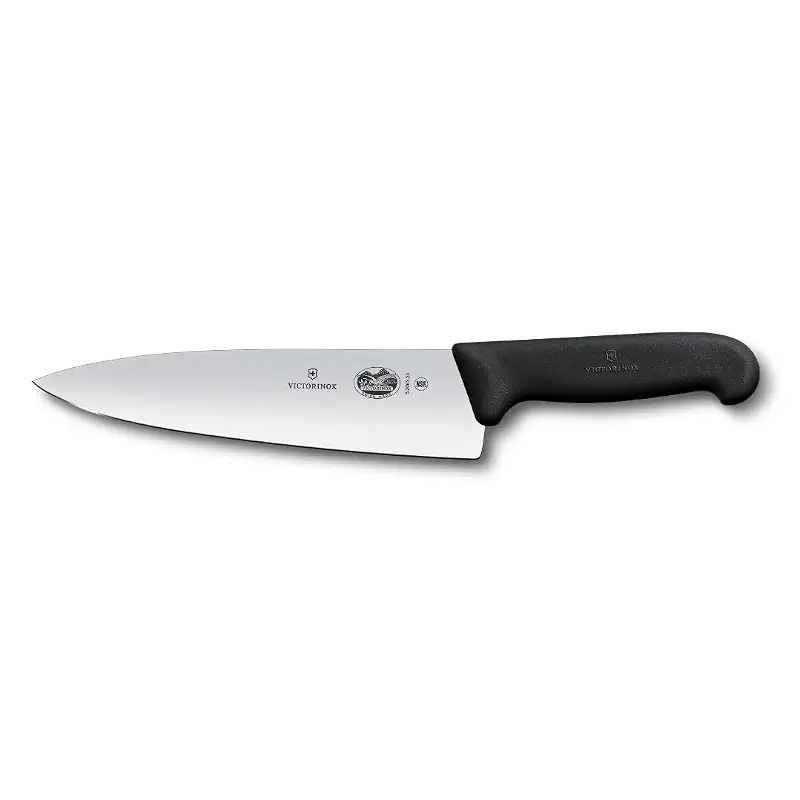
Victorinox Fibrox Pro 8 Inch Chef’s Knife, Dishwasher Safe, Black | Ergonomic TPE non-slip handle for professional chopping, slicing, and dicing. Swiss made, dishwasher safe kitchen tool
4.8(14,880)
A trusted Swiss standard that handles vegetables, meats, and everything in between with consistent, low-fuss performance.
Ideal for: Home cooks who need one reliable knife for vegetables, meats, and everyday kitchen tasks.
Victorinox's Fibrox Pro represents a different philosophy than the specialty vegetable knives above. This is an 8-inch chef's knife built for any task, not optimized for one. For vegetable work specifically, it performs excellently: the blade profile and razor edge slice through carrots, celery, tomatoes, and peppers with minimal effort. Owners note that the lightweight construction (around 5.7 oz) and tapered stainless-steel edge make rocking and dicing feel effortless, and the blade height keeps your knuckles clear of the cutting board.
What sets this knife apart is its dishwasher-safe construction and low-maintenance ethos. The Fibrox handle is thermoplastic elastomer that grips even when wet, and the chromium-carbide stainless steel doesn't require obsessive care. If you're someone who puts knives through the dishwasher or prefers not to hand-wash, this knife forgives casual handling better than its Japanese competitors. America's Test Kitchen's endorsement carries real weight: this knife has a track record in serious kitchens.
The trade-off: it won't hold an edge quite as long as high-carbon Japanese steel. Where the Hoshanho might go weeks before needing attention, the Victorinox may benefit from a touch-up every few weeks of heavy use. But that's the deal you're making: versatility and forgiveness in exchange for slightly faster edge degradation. For vegetable prep alone, the specialized nakiri shapes above have advantages; for a knife you'll use on bones, frozen items, and delicate produce without stress, this chef's knife is the pragmatic choice.
Pros
Dishwasher-safe handle and blade coating for low-maintenance use
Lightweight and well-balanced for extended prep without fatigue
Blade height prevents knuckle contact during rocking cuts
Consistent, proven performance across all food types
Cons
Edge retention shorter than high-carbon Japanese knives
Less specialized for dense vegetables compared to nakiri blades
Key features
8-inch chef's knife with tapered stainless-steel blade
Thermoplastic Fibrox handle grips when wet or dry
Dishwasher-safe construction for practical home kitchens
Swiss-made with lifetime warranty against defects
#5 Pick
Best Premium Value
Paudin
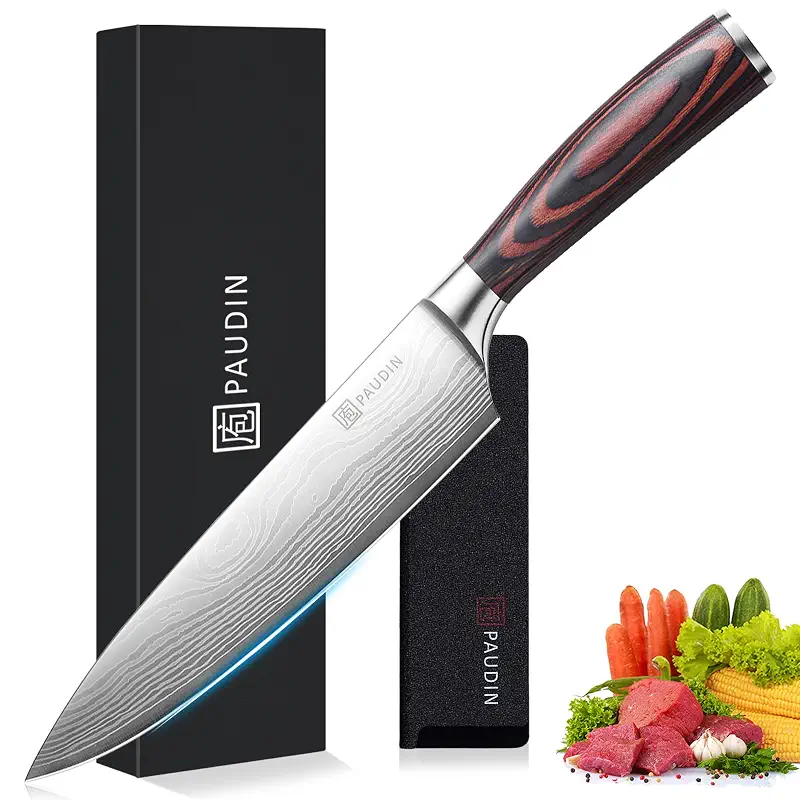
PAUDIN Chef Knife, 8 Inch High Carbon Stainless Steel Sharp Kitchen Knife with Ergonomic Handle, Gift Box for Family & Restaurant
4.7(7,864)
A full-sized 8-inch chef's knife with hand-polished sharpness and wood-grain aesthetics that punches above its investment level.
Ideal for: Home cooks seeking a premium chef's knife for balanced performance on vegetables and meats alike.
Paudin's 8-inch Chef Knife splits the difference between the budget entry and high-end boutique options. The 5Cr15Mov stainless steel (same family as the Nakiri above) gets hand-polished by experienced craftspeople, resulting in sharpness and edge retention that owners frequently compare to knives costing 3-4 times more. The 2mm blade thickness is ideal for both delicate vegetables and tougher prep; it's not so thin that it flexes on hard cuts, and not so thick that it crushes delicate produce.
What catches the eye is the wood-grain etching on the blade: decorative but also functional, reducing friction slightly during cuts. The ergonomic handle balances the blade perfectly, so extended chopping sessions don't tire the hand or wrist. Owners who've tested multiple knives in this range consistently report surprise at the quality relative to the price. The package includes a gift box and protective sleeve, so if you're giving this knife as a present, the presentation matches the tool's quality.
Compared to the Victorinox chef's knife, this Paudin brings sharper edge retention and a more refined aesthetic; compared to the specialty nakiris, it trades some vegetable-specific optimization for broader versatility. Where the knife shows its limitations is on very hard items like bones (you wouldn't want to abuse it that way) but for the vegetable cutting work most home cooks do daily, the sharpness and balance are genuinely impressive. Owners report keeping this as their primary knife for months and only occasionally honing to maintain the edge.
Pros
Hand-polished edge delivers exceptional sharpness and edge retention
Wood-grain blade etching provides aesthetic appeal and functional friction reduction
Optimal 2mm thickness balances delicacy with cutting power
Ergonomic handle design prevents fatigue during extended prep work
Cons
Requires hand washing to preserve blade finish and edge
Blade design less specialized for dense vegetables than nakiri shapes
Key features
8-inch chef's knife with 5Cr15Mov high-carbon stainless steel
Hand-polished by experienced craftspeople for superior sharpness
Wood-grain etching on blade reduces friction while adding refinement
Integrated ergonomic handle with perfect balance point
How to Choose a Knife for Cutting Vegetables
Four trade-offs that actually matter when matching a knife for cutting veggies to your kitchen.
Blade Shape: Santoku, Nakiri, or Chef's Knife
The vegetable knife blade shapes comparison shows three distinct profiles, each with strengths. Santokus (like the Home Hero) are compact and precise, ideal for fine dicing and delicate work. Nakiris (Paudin, Hoshanho) feature a flat blade optimized for push-cutting dense vegetables without accordion-effect slicing. Chef's knives (Victorinox, Paudin 8-inch) offer versatility across all kitchen tasks but aren't specialized for vegetables alone. For vegetable prep specifically, nakiris excel; for overall kitchen work plus vegetables, a chef's knife covers more ground.
Edge Sharpness and Retention
Sharpness at purchase matters. Japanese knives like the Hoshanho arrive hand-polished and sharper than mass-produced Western blades. However, how long an edge lasts depends on steel type and hardness (measured in HRC). Higher hardness (60HRC) holds an edge longer but is harder to sharpen at home. Lower hardness (56HRC) dulls faster but is easier to re-sharpen. For vegetable work, acceptable edge retention is 4-8 weeks of regular use before needing a honing steel or sharpener. Budget knives may require touch-ups every 2-3 weeks; premium options stretch to 8-12 weeks.
Weight, Balance, and Hand Fatigue
A knife's weight and balance point determine how long you can work without tiring. Lightweight knives (5-6 oz) reduce hand fatigue during marathon vegetable prep sessions, while heavier knives (7-8 oz) provide more cutting power and feedback. Balance is equally critical: a blade-heavy knife feels tiring even if light, while a well-centered knife feels effortless. The Victorinox and Paudin Chef Knife both excel at balance despite different weights. For extended prep, lighter is usually better; for dense vegetables, modest weight helps power through tough cuts.
Non-Stick Coating and Food Adhesion
Some knives (Home Hero Santoku, Paudin Nakiri) include wave patterns or non-stick coatings to reduce food from sticking to the blade. This is functional, not just decorative. When processing high-moisture vegetables (tomatoes, zucchini) or starchy items (potatoes), food adhesion slows you down and increases safety risks as you pick stuck pieces off the blade. Non-stick features cut this friction significantly. Japanese knives achieve similar results through wave patterns that disrupt surface tension. If you prep large volumes of vegetables regularly, this feature saves real time.
Maintenance and Care Expectations
Your knife's longevity depends heavily on how you treat it. Hand washing and immediate drying preserve edges far better than dishwashers. High-carbon and premium stainless steel (Hoshanho, Paudin Chef Knife) require more attentive care but reward maintenance with longer edge retention and aesthetics. The knife sharpening and maintenance guide covers touch-up routines, but the key upfront decision is whether you'll commit to regular hand-washing and occasional honing. Dishwasher-safe options (Victorinox) are more forgiving for busy kitchens; specialty knives demand respect to perform their best.
Frequently asked
Quick answers to the questions readers ask most.
What's the difference between a santoku and a nakiri for vegetable prep?
Santokus are shorter (6-7 inches), tapered, and optimized for precision dicing and fine work. Nakiris are wider, flatter-profiled, and excel at push-cutting dense vegetables like squash without crushing them. For most soft vegetables (leafy greens, peppers, tomatoes), either works well. For tough root vegetables and dense produce, nakiris have a clear advantage. Santokus suit cooks who prioritize finesse; nakiris suit those handling heavier prep.
Should I buy a vegetable-specific knife or a general chef's knife?
If you cook daily and process vegetables regularly, a specialty knife (nakiri or santoku) optimizes your workflow. If you need one versatile knife for vegetables, meats, and general kitchen tasks, an 8-inch chef's knife covers all bases. Many serious home cooks keep both: a specialized blade for vegetables and a chef's knife for everything else. Budget-conscious buyers should start with a quality chef's knife; as you expand your collection, add specialty shapes.
How often do I need to sharpen a vegetable knife?
With regular use (4-5 times per week), a sharp knife needs touching up every 2-4 weeks with a honing steel (a quick, 10-stroke maintenance task) and a full sharpen every 3-6 months depending on the steel hardness. Premium Japanese knives hold edges longer than budget options. Most owners report that consistent honing between sharpens extends the blade's working life and keeps effort minimal. The knife sharpening and maintenance guide provides step-by-step routines that keep your blade performing like new.
Can I put these knives in the dishwasher?
Only the Victorinox is explicitly dishwasher-safe. All other knives should be hand-washed immediately after use and dried right away to prevent rust and edge damage. Dishwashers expose knives to heat, harsh detergents, and banging against other items, all of which dull edges and can cause corrosion. Hand washing takes two minutes and extends your knife's life dramatically. If dishwasher convenience is essential, the Victorinox is your best choice.
What makes a knife 'razor sharp' and does sharpness matter for vegetables?
Razor sharpness refers to a blade edge polished to a precise angle (typically 15-20 degrees per side for Asian knives, 20+ degrees for Western). A sharp knife cuts vegetables cleanly without crushing cell walls, preserving texture and moisture: important for both texture and appearance. Dull knives require more pressure, increasing slip risk and hand fatigue. Every knife in this lineup arrives razor-sharp; choosing one is about which also holds that edge longest and which shape suits your specific vegetable work best.