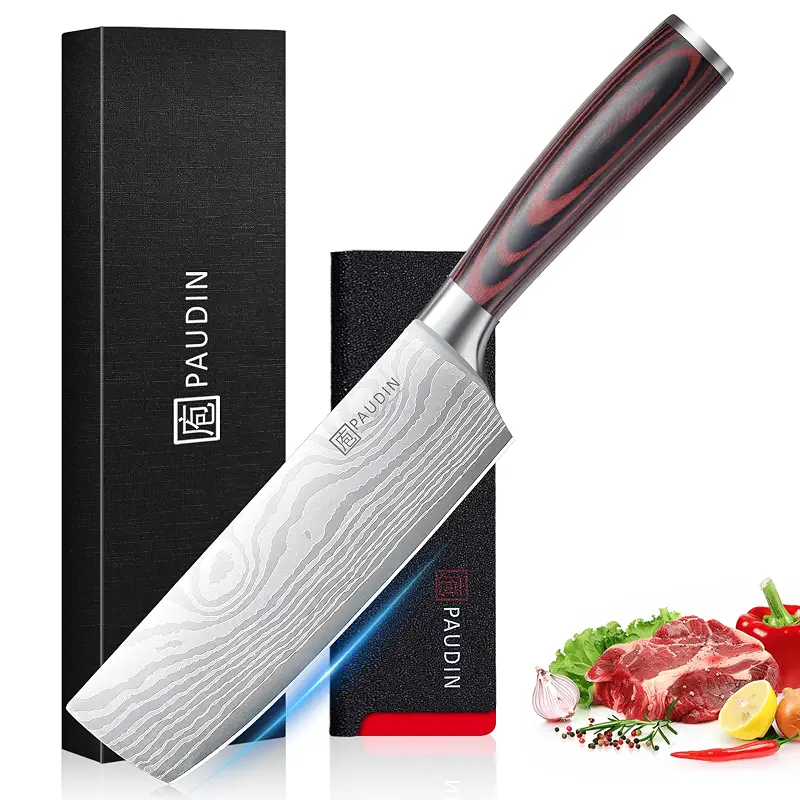
PAUDIN Nakiri Knife - 7" Razor Sharp Meat Cleaver and Vegetable Kitchen Knife, High Carbon Stainless Steel, Multipurpose Asian Chef Knife for Home and Kitchen with Ergonomic Handle
4.6(4,821)
Exceptional nakiri design cuts squash and dense vegetables upright with unmatched ease and speed.
Ideal for: Home cooks who prep vegetables multiple times weekly and value speed over versatility.
The Paudin nakiri excels at what it's designed for: flat-profile vegetable cutting without the accordion effect that plagues slicing with rounded blades. Owners consistently report confidence tackling tough produce like butternut squash and sweet potatoes upright on the cutting board, something they'd struggled with using standard chef's knives. The flat blade geometry applies leverage differently than a chef's knife, pushing vegetables cleanly apart rather than requiring rocking motions.
I'd choose this over the Victorinox Fibrox if you're primarily cutting vegetables and fruit; the nakiri's height and profile are purpose-built for that work in ways an 8-inch chef's knife, however well-regarded, simply isn't. The 5Cr15Mov stainless steel holds an edge well for casual home cooking and is straightforward to maintain. The wave pattern reduces friction and keeps cleanup quick.
One real trade-off: this blade isn't ideal for tasks beyond vegetables and soft flesh. Bones, frozen items, and heavy carving demand a different tool. Owners note it requires hand-washing and careful storage to keep the finish pristine. A few buyers mention the edge can dull if you attempt harder cutting tasks it wasn't meant for.
Pros
Cuts dense vegetables like butternut squash with minimal effort
Sharp out of the box and easy to re-hone with a steel
Lightweight and comfortable for extended meal prep
Cons
Not suitable for bones, frozen foods, or heavy carving work
Requires hand-washing and immediate drying to prevent rust
Key features
7-inch flat nakiri blade reduces food friction and sticking
Wave pattern mimics Damascus appearance, aids food release
Ergonomic pakkawood handle with pinch-point balance
#2 Pick
Best for Everyday Multi-Purpose Cutting
Victorinox
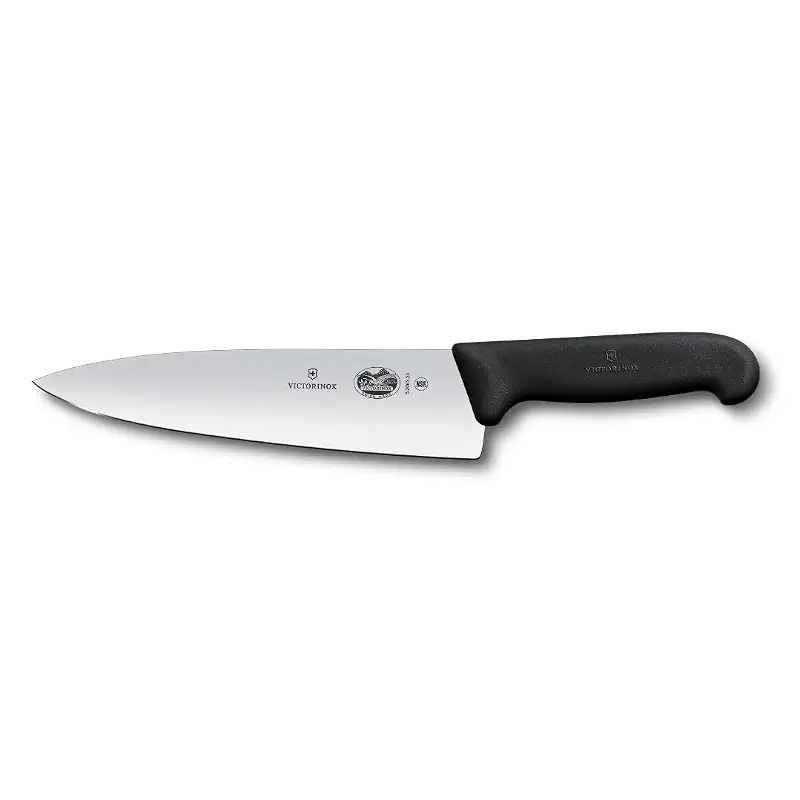
Victorinox Fibrox Pro 8 Inch Chef’s Knife, Dishwasher Safe, Black | Ergonomic TPE non-slip handle for professional chopping, slicing, and dicing. Swiss made, dishwasher safe kitchen tool
4.8(14,880)
Swiss-made workhorse that handles vegetables, fruits, and proteins with consistent, effortless sharpness.
Ideal for: Home cooks who want a reliable, balanced blade for mixed vegetable, meat, and fruit prep.
The Victorinox Fibrox Pro is the choice when you want one knife that does it all reasonably well rather than a specialist tool. Its tapered stainless blade and light weight make it approachable for cooks who aren't knife enthusiasts, yet it delivers performance that earns recommendations from America's Test Kitchen and professional kitchens. The 8-inch length and balanced weight mean less hand fatigue during extended prep, and it slices through tomatoes, onions, and delicate produce without crushing.
Compared to the Paudin nakiri's flat geometry, this chef's knife uses a rocking motion and angle that feels more familiar to cooks used to traditional Western styles. Owners highlight how the thin blade cuts cleanly with less force than heavier knives, making it forgiving for anyone still building confidence with knife skills. The non-slip Fibrox handle stays secure even when wet, a practical detail for busy kitchens. Beyond vegetables, the knife to cut chicken breast and other soft proteins works smoothly, though it's not optimized for heavy bone work.
The main limitation: dishwasher-safe construction means lower edge retention than high-carbon alternatives. Owners expect to sharpen it every few weeks with steady use, which is typical for stainless steel at this price. It's a disposable mindset: efficient and economical for home cooks, less appealing if you want a knife that becomes a heirloom.
Pros
Excellent balance and light weight reduce hand fatigue
Razor-sharp edge arrives ready to use, stays usable for weeks
Stainless steel edge dulls faster than high-carbon alternatives
Not designed for heavy chopping, carving bones, or hard-frozen foods
Key features
8-inch tapered stainless-steel blade with laser-tested edge
Lightweight at 5.7 ounces, well-balanced for reduced fatigue
Thermoplastic Fibrox handle stays non-slip when wet
Swiss-made with lifetime warranty against defects
#3 Pick
Best Premium Nakiri Option
imarku
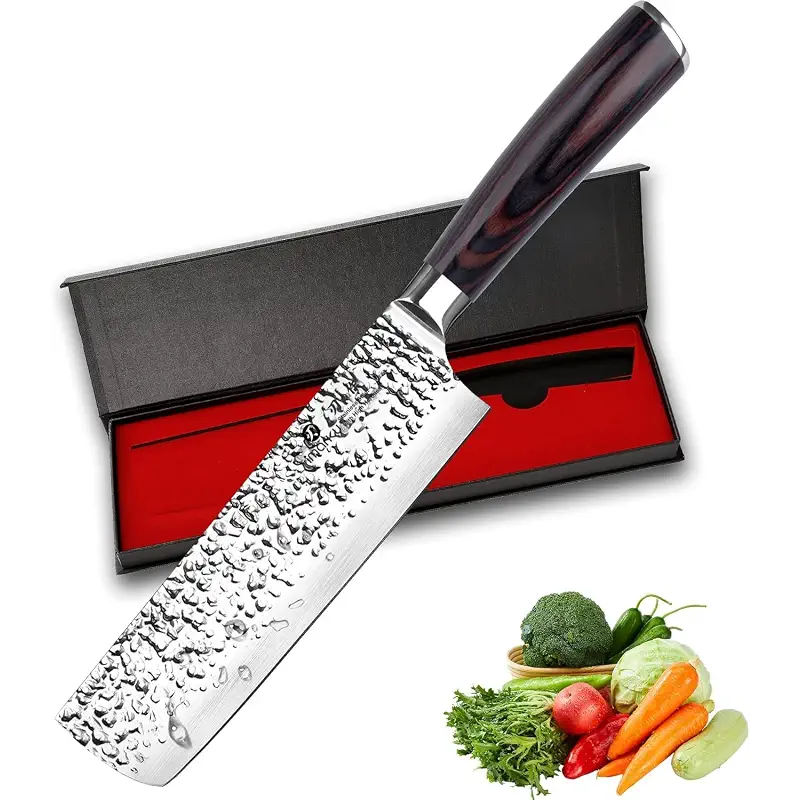
imarku Nakiri Knife 7 Inch,Razor Sharp Japanese Kitchen knife Chef Knife | Multipurpose Japanese High Carbon Stainless Steel Meat Vegetable,Ergonomic Pakkawood Handle,Ideal Gift for Men and Women
4.7(6,455)
High-carbon Japanese steel nakiri with anti-stick design and exceptional balance for serious home cooks.
Ideal for: Experienced home cooks and serious prep enthusiasts who prioritize edge retention and vegetable performance.
The imarku nakiri brings Japanese craftsmanship and high-carbon steel to a mid-tier price point. Where it distinguishes itself from the Paudin is in edge angle (15 degrees per side) and materials; high-carbon stainless steel holds its edge longer and resists staining better than lower-grade options. The hammered finish and hollow-edge design work together to reduce food adhesion, making it particularly useful when slicing sticky ingredients or cutting large batches of vegetables.
Owners praise the balance and weight distribution, noting that even cooks with arthritis find it comfortable for extended use. The ergonomic pakkawood handle is wrapped around a full-tang construction, meaning the steel runs the entire length of the handle for durability. Compared to the Victorinox chef's knife, this keeps focus on vegetables and soft proteins rather than general chopping; the flat profile and height are optimized for that niche.
The trade-off is steeper: hand-wash only, and the edge angle requires respecting the manufacturer's sharpening guidance or risk damage. Owners also note that the knife commands slightly more care and attention than a stainless alternative. For cooks willing to treat it as a valued tool rather than a workhorse, the payoff is noticeably superior edge retention and a blade that stays sharper longer.
Pros
High-carbon stainless steel edge lasts longer than standard stainless
Anti-stick hollow-edge design minimizes food sticking and drag
Full-tang ergonomic handle provides excellent balance and comfort
Cons
Hand-wash only; requires proper storage and maintenance discipline
Edge angle must be respected during sharpening to avoid blade damage
Key features
7-inch high-carbon stainless steel blade with 15-degree edge angle
Hammered finish and hollow-edge design reduce food friction
Full-tang pakkawood handle, FSC-certified wood for durability
Includes protective sheath and gift-ready packaging
#4 Pick
Best Santoku for Precision Work
Cutluxe
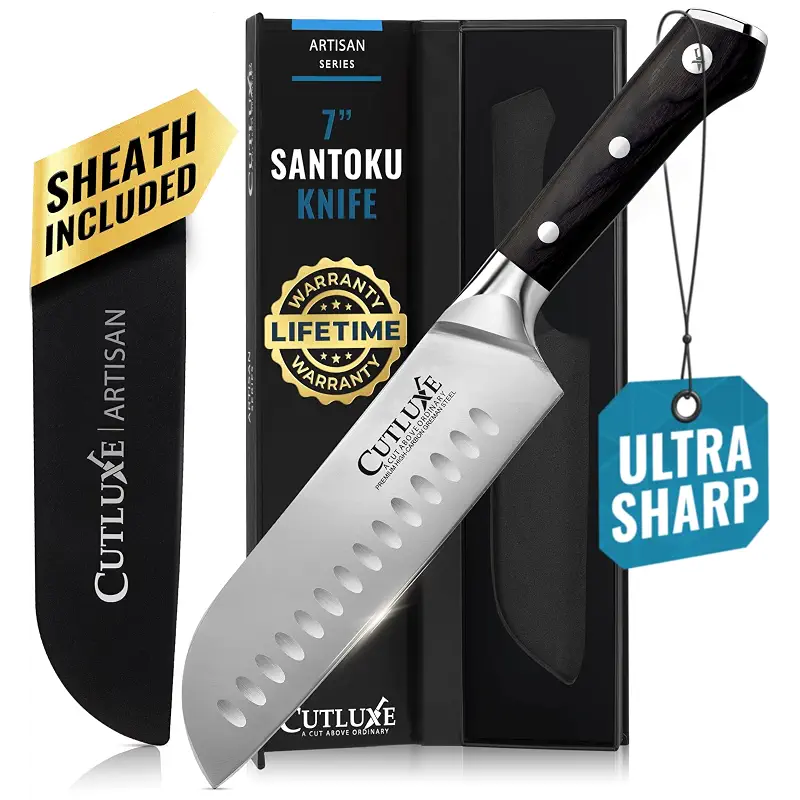
Cutluxe Santoku Knife, 7" Meat & Vegetable Chopping Knife – Sheath Included | Forged High Carbon German Steel, Full Tang Razor Sharp – Ergonomic Handle, Artisan Series
4.7(1,545)
German-forged santoku delivers precision and heft for cooks who value a heavier, more substantial blade.
Ideal for: Experienced cooks who appreciate substantial blade weight and want a versatile santoku for daily prep.
The Cutluxe santoku bridges Japanese design and German steel craftsmanship. At 7 inches, it occupies the middle ground between a chef's knife and nakiri, with a triangular blade profile that excels at slicing, dicing, and mincing without rocking. The high-carbon German steel (56+ Rockwell hardness) and hand-sharpened 14-16 degree edge make it sharp out of the box and stable through extended use.
Owners emphasize the weight and balance; this is not a light knife, but a substantial tool that feels purposeful in the hand. For cooks who find lighter knives fatiguing or lack confidence, the heft provides control and a sense of authority. The dimpled surface reduces food sticking during vegetable prep, though some note vegetables do adhere slightly more than with anti-stick nakiri designs. The triple-riveted pakkawood handle and full tang mean this knife is built to last decades with proper care.
Unlike the Victorinox (which prioritizes ease and approachability) or the Paudin nakiri (which specializes in upright squash-cutting), the Cutluxe performs well across vegetable work but isn't optimized for any single task. It's a choice for cooks who want one excellent blade rather than specialists. Hand-wash only, and it demands respect; the blade will bite if you're not paying attention, which speaks to its sharpness and German engineering.
Pros
Heavy, well-balanced design reduces hand fatigue for heavy prep days
56+ Rockwell hardness edge holds sharpness through extended use
Dimpled surface reduces food sticking during vegetable chopping
Cons
Heavier weight may tire cooks with limited hand strength
Hand-wash required; not dishwasher safe
Key features
7-inch santoku blade, high-carbon German steel at 56+ Rockwell
Hand-sharpened at 14-16 degrees per side for precision
Triple-riveted pakkawood handle with full-tang construction
Includes protective sheath and lifetime warranty
#5 Pick
Best Value Multi-Knife Set
Brewin
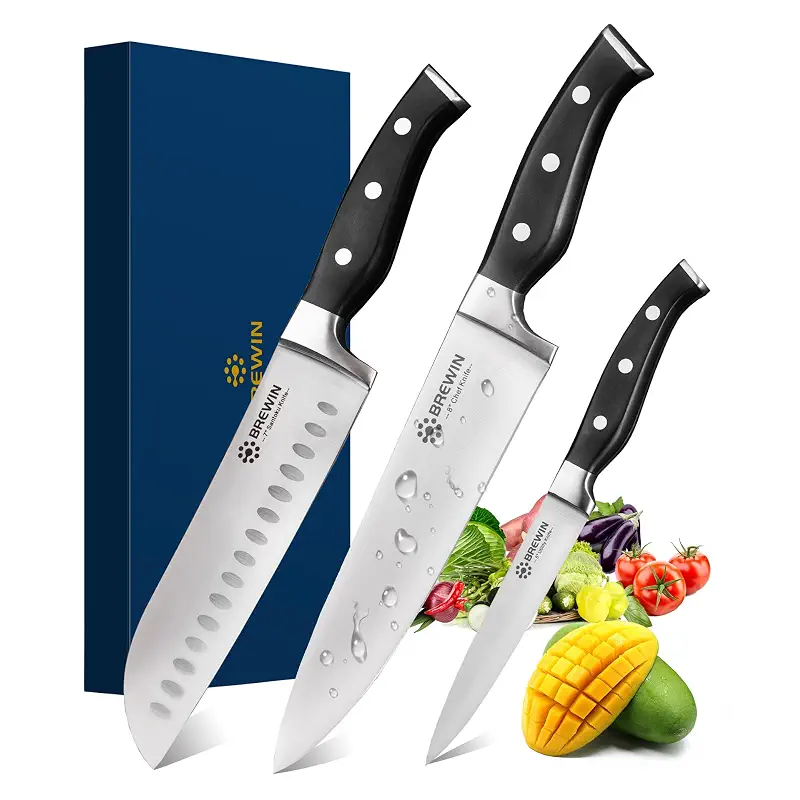
Brewin Professional Kitchen Knives, 3PC Chef Knife Set Sharp Knives for Kitchen High Carbon Stainless Steel, Japanese Cooking Knife with Gift Box
4.7(1,619)
Three-piece German steel set delivers sharp, versatile blades for cooks building a complete knife collection.
Ideal for: Home cooks establishing a knife collection who want multiple tools and don't mind hand-sharpening.
The Brewin set stands apart because it gives you three tools instead of one: chef's knife, santoku, and utility blade. This approach makes sense for cooks who don't yet know which blade style will become their favorite, or who want specialized tools for different tasks without buying separately. Each knife features 56+ Rockwell hardness and is hand-sharpened at 14-16 degrees per side, ensuring consistency across the set.
Owners report that these knives arrive sharp enough to use immediately but genuinely benefit from proper sharpening (using a whetstone rather than a pull-through sharpener) to unlock their full potential. Once maintained that way, they hold an edge through multiple large-scale meal preps. The full-tang ABS handles are ergonomic and triple-riveted, providing the kind of stability and durability that makes these feel like tools rather than disposable implements. Compared to buying the Victorinox alone or a single nakiri, this set gives you range at a lower per-knife cost.
The trade-off is that no single blade in the set is optimized for vegetables the way a dedicated nakiri or chef's knife from another brand might be. You're accepting compromise for versatility. Hand-wash only, and the high-carbon stainless steel requires discipline, but buyers consistently report satisfaction and good long-term performance when they commit to proper care.
Pros
Three knives provide versatility across chopping, slicing, and dicing tasks
Hand-sharpened edges and high-carbon steel hold sharpness well
Full-tang construction and triple rivets ensure durability
Cons
Requires hand-washing and disciplined maintenance; not dishwasher safe
No single blade is specialist-optimized for vegetables alone
Vegetable knives come in three dominant profiles: the flat nakiri (Japanese, rectangular, pushes vegetables apart), the rounded chef's knife (Western, rocks through produce), and the santoku (Japanese hybrid, uses up-and-down motion). Nakeris excel at slicing vegetables upright and reduce the accordion effect. Chef's knives offer versatility beyond vegetables. Santokus split the difference, performing well across tasks without specializing in any. Your choice depends on whether you want a single workhorse or a specialist tool. Vegetable knife blade shapes compared show the trade-offs in detail.
Steel Type and Maintenance
High-carbon stainless steel holds an edge longer than standard stainless but requires hand-washing and immediate drying to prevent rust. Chromium stainless (found in dishwasher-safe knives) tolerates casual care but dulls faster. Japanese high-carbon blades typically use a steeper edge angle (14-16 degrees) than European-style knives (20 degrees), making them sharper but more fragile. If you won't commit to hand-washing and storage on a magnetic strip, a dishwasher-safe option keeps stress low. Serious cooks who maintain their tools invest in high-carbon steel and whetstones.
Weight, Balance, and Comfort
Lighter knives (5-6 ounces) reduce hand fatigue during extended prep but require more technique. Heavier blades (7+ ounces) do more of the work but can exhaust cooks with weaker hands or arthritis. Balance matters more than weight alone; a blade that feels centered at the pinch point (where thumb and index finger meet) prevents wrist strain. Ergonomic handles with soft materials like pakkawood or thermoplastic Fibrox improve control and grip security, especially when hands are wet. Try to handle a knife before buying if possible; comfort is personal.
Sharpness Out of the Box and Edge Retention
Most quality vegetable knives arrive razor-sharp and ready to use. Edge retention varies: stainless steel typically requires sharpening every 2-4 weeks with heavy use, while high-carbon blades last 6-8 weeks before noticeably dulling. Maintaining edge between sharpenings requires a honing steel (not a sharpener) used briefly after each cutting session. If you're unwilling to sharpen, choose a stainless option and accept more frequent maintenance. If you invest in a whetstone and learn proper technique, high-carbon steel rewards you with longer intervals between full sharpening.
Budget and Long-Term Value
Budget knives ($30-$50) deliver surprising performance and suit home cooks who prioritize daily use over heirloom quality. Mid-range blades ($50-$100) offer better edge retention and ergonomics, often with warranty protection. Premium options ($100+) use superior materials and craftsmanship but require the same maintenance as mid-range alternatives. A single quality knife used daily outperforms a fancy set left in a drawer. The best knife is the one you'll actually maintain and use.
Frequently asked
What's the difference between a nakiri, santoku, and chef's knife for vegetables?
Nakiri knives have a flat, rectangular blade that pushes vegetables apart vertically, excelling at slicing dense produce like squash upright. Santokus use a triangular profile with an up-and-down chopping motion, offering precision but less leverage. Chef's knives rock through vegetables with a curved blade, providing versatility but less specialized performance for produce. Choose nakiri for vegetables only, santoku for mixed prep, chef's knife for everyday multi-purpose work.
Should I buy a dishwasher-safe vegetable knife?
Dishwasher-safe knives use stainless steel that tolerates moisture but dulls faster than high-carbon options. They suit cooks who won't hand-wash or maintain blades but expect to sharpen more frequently. High-carbon blades hold an edge longer but require hand-washing and immediate drying. If convenience matters more than edge retention, dishwasher-safe works. If you cook often and want longer intervals between sharpening, invest in hand-wash-only high-carbon steel.
How do I keep a vegetable knife sharp between professional sharpenings?
Use a honing steel (not a sharpener) for 10-20 strokes per side after each cutting session. A honing steel realigns the blade edge without removing material. Whetstones remove material and resharpen the edge itself; use them every 4-8 weeks depending on use. Always hand-wash your knife immediately after use, dry it completely, and store it on a magnetic strip or blade guard. Avoid cutting boards that are too hard (marble, stone); softer wood or plastic preserves edges longer.
Is a heavier knife better for cutting tough vegetables?
A heavier blade can feel more substantial and requires less muscular effort, but sharpness matters more than weight. A sharp 5-ounce knife cuts butternut squash easier than a dull 9-ounce blade. However, cooks with less hand strength or arthritis often prefer lighter options (5-6 ounces) to reduce fatigue. The best knife balances your physical comfort with a sharp edge maintained with a honing steel between uses.
Can I use a vegetable knife for meat and fish too?
Most vegetable knives can slice soft meats and fish without damage, but they're not designed for carving bones or heavy butchering. Nakiri and santoku blades can become chipped or dulled if used on hard or frozen foods. If you need a single blade for vegetables, soft proteins, and fish, a chef's knife is more practical. Reserve specialist nakeris and santokus for their intended purpose to preserve edges.