Kitchen & Dining · Gadgets
Best Knife for Cutting Raw Chicken: Top 5 Picks
Find the best knife for cutting raw chicken. Compare fillet, chef, nakiri, and boning knives with expert guidance on blade type and sharpness for poultry prep.
Affiliate disclosure: As an Amazon Associate I earn from qualifying purchases.
At a glance
1
Best Overall for Poultry WorkHoshanho
2
Best Chef's Knife AlternativeHoshanho
3
Best for Cutting Larger PiecesPaudin
4
Best Budget-Friendly ChoiceVictorinox
5
Best Specialized Boning KnifeMercer Culinary
Detailed reviews
The Hoshanho fillet knife is built for the exact work that poultry prep demands: thin, flexible blade geometry that follows contours without tearing. A 15-degree edge angle on each side (sharper than most European chef's knives) delivers the kind of glide-through sharpness that lets you separate skin, trim fat, and debone with minimal pressure. Owners consistently report it arrives sharper than premium knives costing three times the price, which matters because you spend less time fighting dull metal and more time executing clean cuts.
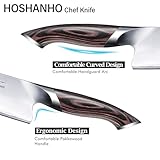
The 7-inch length suits home cooks well: long enough for whole-bird breakdown, short enough for control when working around delicate areas like the joint between thigh and breast. The pakkawood handle resists moisture and provides secure grip even when your hands get wet with poultry juices. Some reviewers note the blade has moderate flex rather than the extreme flexibility of traditional Japanese boning knives, which is actually a strength here; it gives you feedback without the blade bending unexpectedly mid-cut.
Compared to the Mercer boning knife, this fillet blade trades specialization for versatility. Where the Mercer excels at following bone contours on a single piece of meat, this knife handles the full workflow: breaking down a chicken, trimming skin, removing fat, and slicing. If you're starting with one knife and poultry is just one of several kitchen tasks, this is the smarter pick.
Pros
- Razor-sharp edge out of the box, no initial sharpening needed
- Thin, flexible blade follows bone and cartilage without dragging
- Comfortable pakkawood handle with good moisture resistance
Cons
- Requires hand washing and prompt drying to prevent rust
- Blade stiffness is moderate, not as bendable as traditional boning knives
Key features (4)
- High-carbon Japanese stainless steel, 15-degree edge angle per side
- 7-inch blade length for whole-bird breakdown and detail work
- Hand-polished edge maintains sharpness through multiple uses
- Pakkawood handle resists corrosion and moisture during wet prep
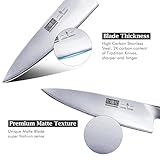
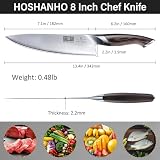
The Hoshanho 8-inch chef's knife targets cooks who want one general-purpose blade rather than a specialty knife. Unlike the fillet knife, this design gives you the weight and depth of blade to handle heavy work (breaking down root vegetables, slicing cooked chicken), yet it keeps the aggressive 13-degree angle that makes light work of raw poultry prep. It's wider and taller than a fillet blade, which means your knuckles clear the cutting board when rocking the knife through joints and connective tissue.
Owners report that the out-of-box sharpness rivals knives costing five times as much, and the high-carbon steel holds that edge through weeks of use. The matte finish looks professional on a knife strip, and the handle shape encourages the pinch grip (thumb and forefinger on the blade spine, not on the handle) that gives the best control when moving around bone. For someone who also preps vegetables regularly and doesn't want to switch between knives, this covers both jobs well.
Compared to the Victorinox chef's knife, this Hoshanho keeps a sharper edge longer due to harder Japanese steel, but it requires hand washing and care. The knife for cutting chicken breast you choose should match your maintenance habits: if you're disciplined about knife upkeep and want maximum edge retention, this Hoshanho wins. The Victorinox is more forgiving if you're careless with storage.
Pros
- 13-degree edge angle combines vegetable sharpness with poultry control
- Full height and weight for breaking down larger cuts without effort
- Hand-polished to surgical sharpness straight from the box
Cons
- Hand washing only; cannot go in dishwasher without risk of rust
- Requires occasional honing to maintain edge geometry between sharpening
Key features (4)
- Japanese high-carbon steel with 60 HRC hardness
- 8-inch blade with matte finish and professional aesthetic
- 13-degree edge angle per side for both precision and food release
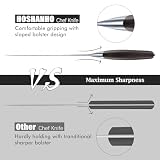
- Ergonomic pakkawood handle with sloped bolster for pinch grip
The Paudin nakiri takes a different approach: instead of a thin fillet or pointed chef's profile, it uses a tall, rectangular blade that shines when you're slicing already-separated chicken parts into cutlets or steaks. The flat edge and width mean you can use a gentle push-cut motion rather than rocking or rolling the blade, which reduces hand fatigue during repetitive prep. Owners report it cuts through raw chicken breast and thigh with minimal effort, and the height lets you scoop cut pieces directly back to the pan without switching tools.
The 56+ hardness and 5Cr15Mov stainless steel are durable enough for daily kitchen use, and the wave pattern is more than aesthetic: it actually reduces sticking when cutting through skin and connective tissue. However, the nakiri's flat profile and height make it less ideal for the detailed work of breaking down a whole bird; the blade doesn't taper to a point, so following the join where wing meets breast takes more care. This is a specialist blade that shines in a specific workflow.
If your poultry work is mostly slicing already-broken-down parts or removing skin in sheets, the nakiri excels. But if you're doing detailed butchering around joints, the Mercer boning knife or Hoshanho fillet knife gives you better precision. Think of this as the ideal complement to a fillet knife, not a replacement.
Pros
- Wide, flat blade reduces friction and prevents accordion-effect slicing
- Tall profile and push-cut motion minimize hand and wrist fatigue
- Wave pattern reduces sticking on skin and soft tissue
Cons
- Lacks tapered point for detailed boning work around joints
- Requires hand washing and storage on magnetic strip to prevent rust spots
Key features (4)
- 7-inch tall, rectangular nakiri blade for push-cutting motion
- 5Cr15Mov stainless steel with 56+ HRC hardness for edge retention
- Wave pattern design reduces food friction and sticking
- Ergonomic pakkawood handle balanced at the pinch point for control
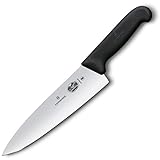
The Victorinox Fibrox is the working-chef's standard for a reason: it trades the surgical sharpness of Japanese high-carbon blades for a practical edge that lasts longer between sharpening sessions and survives occasional dishwasher trips. The 8-inch length and chef's profile work well for breaking down chicken, though the 15-degree European angle means it's not quite as laser-sharp as the Japanese alternatives, which matters when you're separating membrane from meat.
What Victorinox gets right is consistency. Owners report years of reliable service from the same knife, and the TPE handle stays non-slip even when wet and greasy. The balance is excellent: light enough that you don't tire during long prep, heavy enough that you're not muscling the blade through tough skin. If you're a home cook who treats knives roughly, forgets to dry them, or shares kitchen tools with others who don't respect sharp blades, this is the knife that survives.
Compared to the Japanese options, you sacrifice sharpness and edge retention for durability and low-maintenance care. The Victorinox will need sharpening more often, but you can use any standard pull-through sharpener without worrying about angle or technique. It's a trade-off between performance and forgiveness, and for many home kitchens, forgiveness wins.
Pros
- Dishwasher-safe stainless steel requires minimal special care
- Reliable edge that doesn't require professional maintenance
- Light, well-balanced design reduces hand fatigue during prep
Cons
- Edge angle is steeper than Japanese knives, less aggressive sharpness
- Holds edge for shorter period, needs sharpening more frequently than alternatives
Key features (4)
- 8-inch stainless steel blade with 15-degree European edge angle
- Ergonomic TPE non-slip handle, comfortable for extended use
- Dishwasher safe and corrosion-resistant for low-maintenance kitchens
- Laser-tested blade profile ensures consistent cuts across the edge
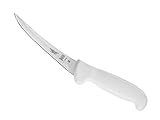
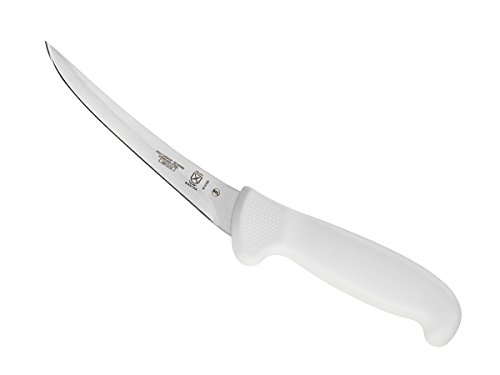
The Mercer Culinary boning knife is built for one job, and it does it better than anything on this list: separating meat cleanly from bone with minimal waste. The 6-inch curved blade and high-carbon Japanese steel combine precision with the flexibility you need when working around irregular shapes. Owners describe it gliding through chicken thighs, drumsticks, and wings with barely a pause, following the contour of the bone naturally without forcing the blade or tearing adjacent meat.
The white polypropylene handle includes textured grip points that work well even with wet, greasy hands: a feature that matters during extended poultry prep. The narrow profile lets you work in tight spaces around joints, and the curve means you're not fighting the blade's geometry the way you would with a straight fillet knife. High-carbon steel sharpens easily on a regular whetstone, and reviewers report it holds an edge through weeks of regular use.
The trade-off is specificity. This knife excels at removing chicken skin and trimming meat from bone, but it's less versatile than the Hoshanho fillet or chef's knives. If you're doing whole-bird breakdown most days and want the fastest, cleanest cuts around joints, the Mercer is worth owning. For occasional poultry prep, the best knife to cut raw chicken depends on versatility: a fillet or chef's knife handles more tasks in your kitchen overall.
Pros
- Curved blade follows bone contour naturally without muscling
- High-carbon steel takes a keen edge and sharpens easily on stone
- Textured handle grip stays secure even when wet with poultry juices
Cons
- Curved blade limits use for slicing and other straight-line cuts
- Requires hand washing and prompt drying; not dishwasher safe
Key features (4)
- 6-inch curved high-carbon Japanese steel blade for bone-following work
- Polypropylene handle with textured finger points for secure grip
- Flexible enough to bend around cartilage without cracking or chipping
- Edge angle optimized for separating meat cleanly from bone
How to Choose a Knife for Raw Chicken
Blade Type and Flexibility
Fillet knives and boning knives have thinner, more flexible blades than chef's knives, which matters when you're working around bone and cartilage. A boning knife's slight flex lets you follow the natural curve where the thighbone meets the drumstick without forcing the blade or tearing meat. Chef's knives and nakiri blades are stiffer, which is fine if you're slicing already-separated portions but makes detailed poultry breakdown harder. Match flexibility to your actual task: if you're breaking down whole birds regularly, prioritize flex. If you're mostly slicing cutlets or trimming skin, a stiffer blade is acceptable.
Edge Angle and Sharpness
Japanese knives typically use 13 to 15-degree angles per side, delivering sharper edges than European knives (which run 15 to 20 degrees). Sharper means less pressure needed to separate skin, membrane, and meat from bone. This matters for poultry because you want clean cuts that don't crush or tear connective tissue. If you're willing to hand-wash and maintain your blade, Japanese steel options like the Hoshanho offer superior edge retention. If you need dishwasher safety and low-maintenance care, the Victorinox trades peak sharpness for forgiving durability. The safe raw chicken cutting technique you choose will benefit from starting with the sharpest blade your maintenance habits can support.
Size and Weight
A 6 to 8-inch blade works best for poultry prep. Shorter blades (under 6 inches) tire your hand during repetitive cuts; longer blades (over 8 inches) become unwieldy around tight joints. Weight also matters: a blade that's too light feels imprecise, while one that's too heavy causes fatigue. The Mercer boning knife at 6 inches is ideal for detail work around bone. The Hoshanho chef's knife at 8 inches handles both breakdown and vegetable prep. Hold or feel the knife in person if possible; balance at the point where your thumb meets your forefinger matters more than raw weight.
Maintenance and Your Kitchen Habits
High-carbon Japanese steel requires hand washing and prompt drying to avoid rust, but it holds a sharper edge longer. Stainless steel is more forgiving if you forget to dry the blade or share tools with others. If you're disciplined about knife care, the Hoshanho fillet or chef's knife rewards you with superior performance. If your kitchen is busy or shared, the Victorinox Fibrox survives neglect better. Consider also your actual kitchen environment: a knife you'll maintain properly will outperform any neglected blade, no matter the material.
Specialty vs. Versatility
The Mercer boning knife is specialized: excellent at one job, narrow at others. The Hoshanho fillet and chef's knives are more versatile, handling poultry and vegetable prep equally well. Choose specialty if poultry breakdown is your main use and you own other knives for different tasks. Choose versatility if you want one or two blades that cover most kitchen work. A nakiri like the Paudin is a middle ground: excellent for slicing raw portions but less useful for detailed butchering.
Our picks at a glance
1
Best Overall for Poultry WorkHoshanho
2
Best Chef's Knife AlternativeHoshanho
3
Best for Cutting Larger PiecesPaudin
4
Best Budget-Friendly ChoiceVictorinox
5
Best Specialized Boning KnifeMercer Culinary
Frequently asked
Is a fillet knife better than a boning knife for cutting raw chicken?
It depends on your workflow. Fillet knives like the Hoshanho are more versatile: they handle whole-bird breakdown, trimming, and slicing. Boning knives like the Mercer specialize in following bone contours and separating meat cleanly, which they do better. If you do whole-bird prep regularly and want one knife, choose fillet. If you only debone pre-separated parts, boning is faster. Many home cooks benefit from owning both.
How sharp does a chicken knife need to be?
Sharp enough to cut through raw skin and membrane with minimal pressure: ideally, the blade should glide through with a gentle rocking or sawing motion, not require muscling. A knife that's too dull forces you to apply pressure, which increases the risk of slipping and crushing meat around bone. Test sharpness by slicing a tomato: a good chicken knife should cut clean, thin slices without crushing the flesh. If the blade drags or crumbles the surface, it's dull.
Can I use a chef's knife for all my chicken prep, or do I need a specialty blade?
A chef's knife works for most poultry tasks, but specialty blades are faster for specific work. The Victorinox chef's knife handles everyday breakdown fine. Japanese chef's knives like the Hoshanho are sharper and more precise. A boning knife like the Mercer cuts around joints 30 to 40 percent faster because its curve matches bone geometry. If you prep chicken once a week, a sharp chef's knife suffices. If you break down whole birds several times a week, adding a boning or fillet knife pays off in speed and cleaner cuts.
What's the difference between high-carbon and stainless steel for poultry knives?
High-carbon steel (used in Japanese knives like Hoshanho) gets sharper and holds an edge longer, but requires hand washing and prompt drying to prevent rust. Stainless steel (like Victorinox) is more forgiving: survives dishwashers and neglect better. High-carbon excels if you maintain your blade religiously. Stainless makes sense for busy or shared kitchens. For poultry work specifically, the sharper edge of high-carbon is valuable, but only if you'll actually care for it.
How do I prevent my chicken knife from slipping when my hands are wet?
Choose a knife with a textured or grippy handle: the Mercer Culinary uses textured polypropylene, and the Victorinox TPE non-slip handle both work well. Wipe your hands on your apron between cuts so the handle stays dry. Use a pinch grip (thumb and forefinger on the blade spine, not on the handle) rather than gripping the handle, which gives you better control with wet hands. Store the knife on a magnetic strip rather than a drawer to avoid accidents when reaching for it with greasy hands.