Best Japanese Meat Cleaver Knife: Top Picks for Home & Pro Kitchens
Find the best Japanese meat cleaver knife for your kitchen. Compare sharp, durable options from Hoshanho, imarku, Matsato, Dalstrong, and Paudin with expert reviews.
Ideal for: Home cooks and culinary professionals seeking a versatile daily blade for everyday kitchen work.
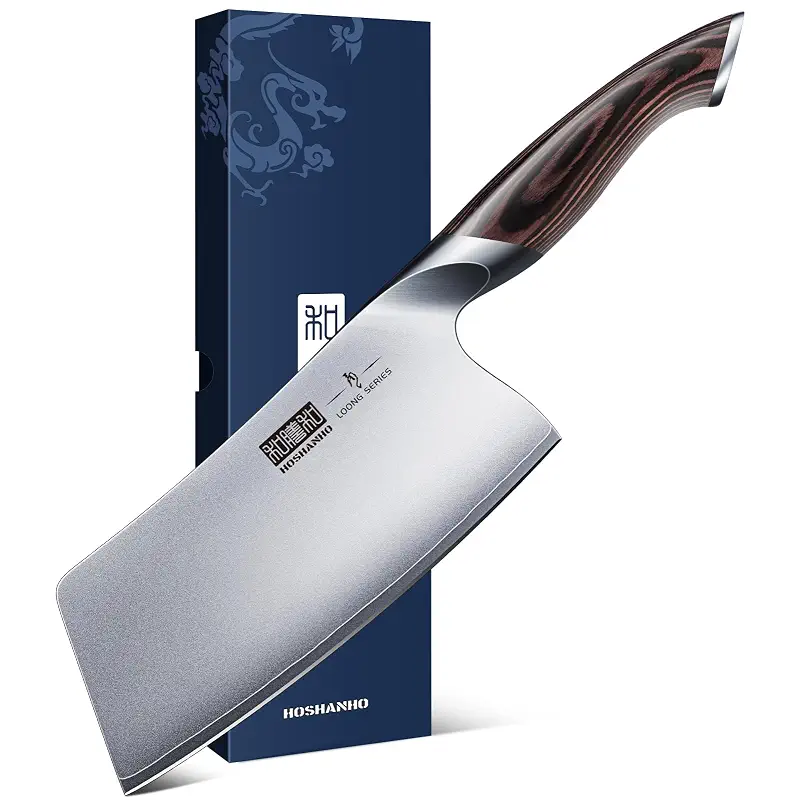
The Hoshanho 7-inch cleaver lands squarely in the sweet spot for home cooks and kitchen professionals who want a multi-tool blade without compromise. Buyers consistently praise the out-of-the-box sharpness and the way the slightly curved edge helps with both rocking cuts on herbs and straight chopping on proteins. The 10Cr15CoMoV high-carbon stainless steel holds its edge longer than standard stainless options, and the 58 HRC hardness gives you durability without brittleness. The ergonomic handle design genuinely reduces hand fatigue during extended prep sessions, which matters more than specs suggest when you're processing vegetables for a dinner party.
What I find most compelling about owner feedback is the consistency. Reviewers note it performs for both everyday vegetable work and tougher cuts of meat, suggesting real versatility rather than marketing speak. The curved blade geometry also makes it slightly more forgiving than a perfectly straight edge if you're still building technique. One caveat: because this is high-carbon steel, it demands immediate drying after washing to prevent patina or light oxidation. That's not a flaw, but it does require the discipline that separates knife owners from knife collectors.
Compared to the Paudin Nakiri, the Hoshanho trades the nakiri's specialized vegetable geometry for a more traditional cleaver profile that handles boneless meat and poultry more naturally. If you want one blade to do everything, this gets the call.
Pros
Exceptional sharpness retention after weeks of regular use
Balanced weight distribution reduces hand fatigue during extended chopping
Curved blade allows both rocking and straight-cut technique
Cons
Requires immediate hand-drying to prevent surface oxidation
Curved edge preferred by some, disliked by those who want straight profile
Key features
10Cr15CoMoV high-carbon stainless steel forged with 58 HRC hardness
7-inch blade with 2.3mm thickness and 15° double-side edge angle
Ergonomic handle designed to reduce hand pressure during prolonged use
Curved profile suited for rocking cuts and straight chopping alike
#2 Pick
Best Premium Option
imarku
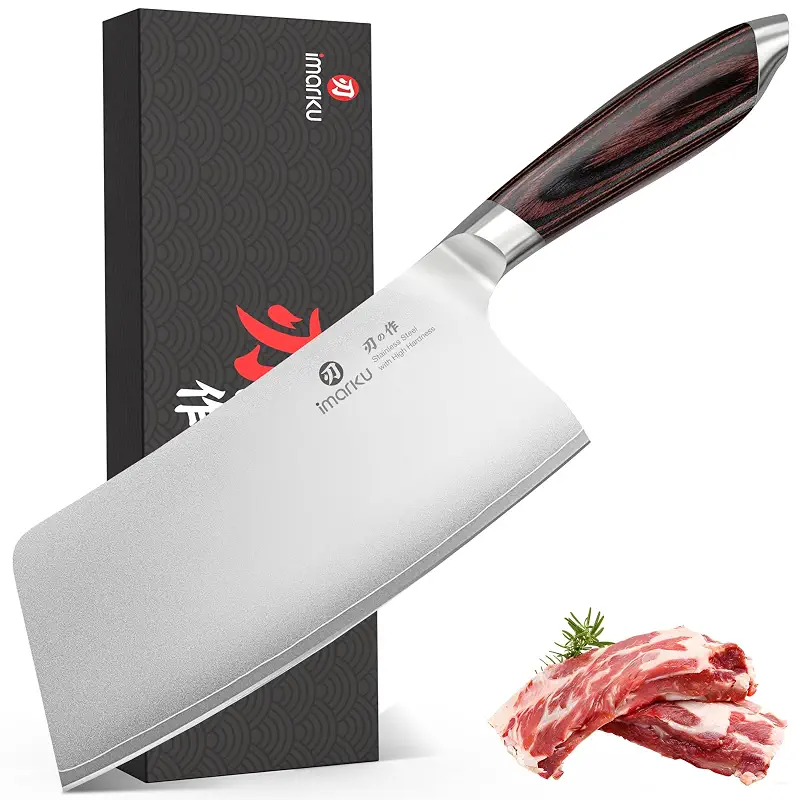
imarku 7.5" Cleaver Knife, Japanese High Carbon Steel, Pakkawood Handle | Stainless Steel Chopping & Meat Cleaver with Non-Slip Handle, Ideal for Home Kitchen & Restaurant, Gift for Men & Women
4.7(2,259)
Professional-grade construction with exceptional blade performance justifies the investment for serious cooks.
Ideal for: Serious home cooks and professionals willing to invest in a blade built for a lifetime of reliable prep work.
The imarku 7.5-inch cleaver targets buyers who view a knife as a kitchen investment rather than a consumable tool. The FSC-certified Pakkawood handle provides the kind of durability and corrosion resistance that keeps a blade feeling premium through years of use, and the 59 HRC hardness sits in that precision band where edge retention and resharpening ease coexist. Owners frequently mention the hand-sharpened 15° angle arriving factory-ready to glide through everything from sourdough crust to chicken bone, without the wedging that lesser blades create.
The 2.3mm thin-yet-strong blade is where imarku's engineering philosophy shows. That taper minimizes surface resistance, so you're not muscling the knife through dense vegetables or thick proteins. The wide blade design also keeps your knuckles safely back from the cutting surface, which experienced cooks appreciate but beginners often overlook. One owner noted the blade showed fine scratches after initial use on bread, suggesting the protective coating may wear quickly; this is cosmetic rather than functional but worth knowing if aesthetics matter to you.
Where the imarku differentiates from the Hoshanho is in hand-finishing quality and handle material. You're paying for a blade that feels more refined out of the box, though both will serve you reliably for years. If durability and that premium feel drive your decision, this justifies the step up.
Pros
Hand-sharpened 15° angle with exceptional precision and gliding cuts
Durable FSC-certified Pakkawood handle resists corrosion and wear
Lifetime warranty coverage ensures free replacement for manufacturing defects
Cons
Premium pricing reflects hand-finishing and materials, not just performance
Protective coating may show fine scratches after initial use on hard crust
Key features
High-grade Japanese high-carbon stainless steel at 59±2 HRC hardness
7.5-inch blade with 2.3mm±0.1 thickness and 15° double-side angle
FSC-certified Pakkawood handle engineered for ergonomic comfort and grip
Hand-finished blade with mirror polish using traditional Honbazuke method
#3 Pick
Best Compact Option
Matsato
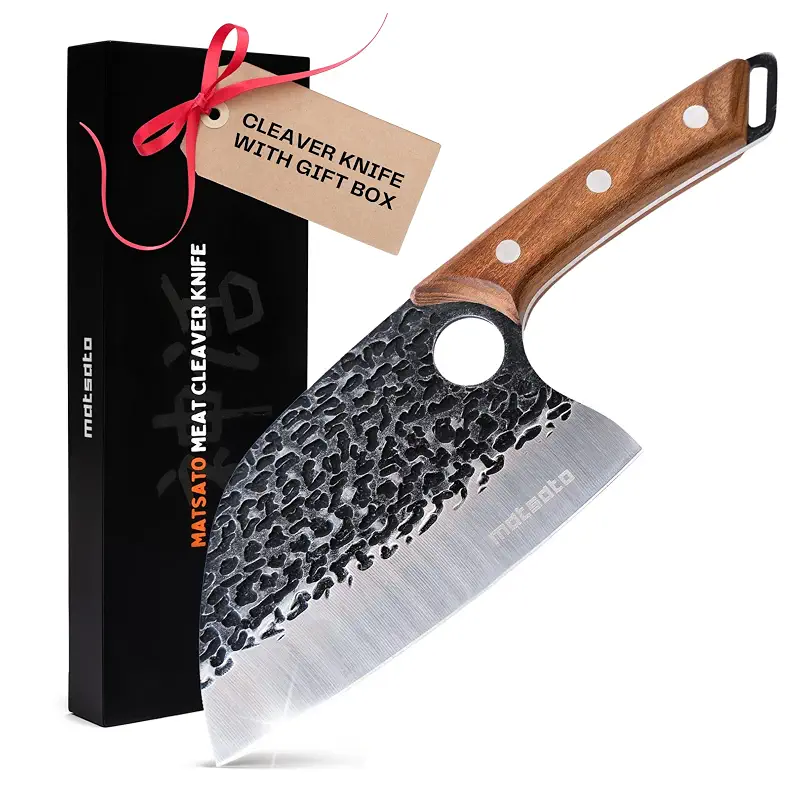
Matsato Cleaver Knife – Japanese Steel Cooking Butcher Knife for Meat & Vegetables Chopping, 5.8 Inch Kitchen Knife, Kitchen Gift for Men & Women | Japanese Steel Cleaver, Butcher and Meat Knife, for Chopping Meat and Vegetables, Kitchen Knife, Cuchillo de Carne, 5.8 in
4.8(405)
Lightweight and maneuverable 5.8-inch design delivers surprising versatility in a minimal footprint.
Ideal for: Home cooks with smaller hands, limited space, or preference for lightweight, maneuverable prep knives.
The Matsato 5.8-inch cleaver targets cooks with smaller hands, limited counter space, or those who prefer a nimble blade over pure chopping power. At just 176 grams, it feels almost delicate compared to its 7-inch cousins, yet owners consistently report it handles chicken breakdown, rib separation, and vegetable dicing with authority. The hammered blade finish isn't merely decorative; the textured surface genuinely reduces food adhesion, so you spend less time scraping carrot residue and more time prepping. The 3CR13 stainless steel sits at a lower hardness range than premium competitors, but Matsato compensates with straightforward, effective geometry.
The unique finger-hole grip design provides something you don't often see in this category: genuinely different ergonomics. Owners praise the balance and control this affords, especially for repetitive tasks like mincing or fine dicing. The carbonized beech wood handle adds rustic charm while delivering durability. One owner noted missing care instructions in their box, suggesting quality control inconsistency, though the blade itself arrived sharp and ready. Compared to the Dalstrong's elaborate Damascus layers and mirror polish, this is honest utility without theater.
This cleaver shines if you want a daily blade that doesn't demand the maintenance of high-carbon steel or the counter presence of a 7.5-inch slab. The trade-off is a slightly lower hardness rating, which means you'll sharpen more often than with premium options, but the compact design makes that maintenance faster and easier.
Pros
Lightweight at 176g with perfect balance for sustained control
Hammered blade finish reduces food sticking and improves cleanup
Unique finger-hole grip provides comfort and precision for detailed work
Cons
Lower hardness relative to premium options means more frequent sharpening
Care instructions sometimes missing from packaging
Key features
Premium Japanese 3CR13 stainless steel with hammered blade finish
5.8-inch blade weighing only 176g for lightweight maneuverability
Ergonomic finger-hole grip and carbonized beech wood handle with hanging hole
Designed for boneless meats, vegetables, and poultry with minimal fatigue
#4 Pick
Best Premium Damascus
Dalstrong
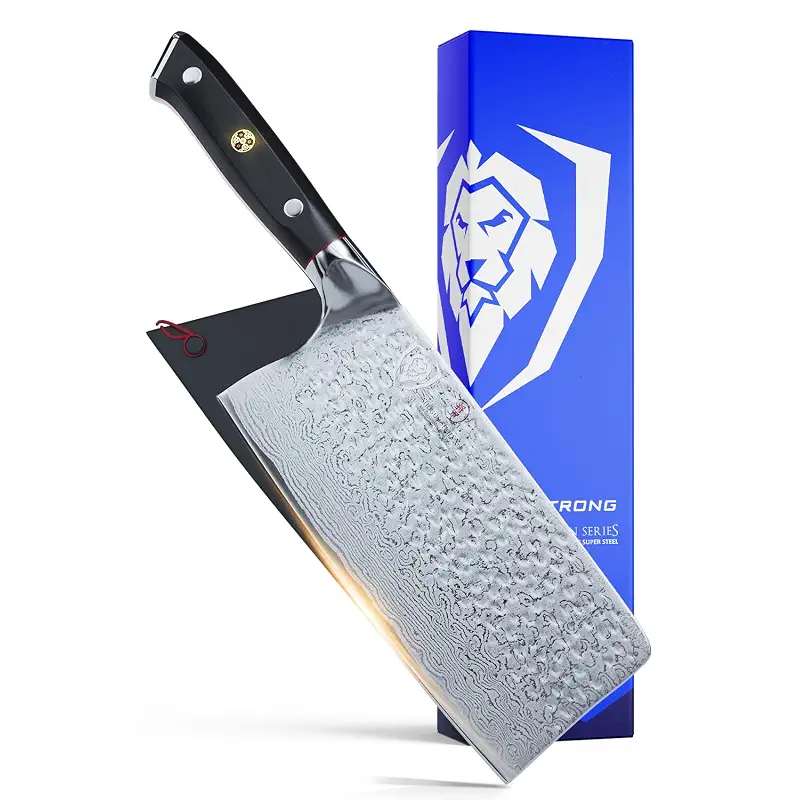
Dalstrong 7" Meat Cleaver Knife - Japanese Super Steel Damascus | Shogun Series Elite - Hammered Finish - Sheath - Razor Sharp - Heavy Duty Gift Cooking Knife
4.7(1,082)
Stunning Damascus aesthetic and performance justify the premium for cooks who value both beauty and function.
Ideal for: Collectors and enthusiasts seeking a heirloom-quality blade combining artistry with professional-grade performance.
The Dalstrong Shogun Series cleaver is where engineering precision meets artistic presentation. The 66 layers of high-carbon stainless steel surrounding an AUS-10V core create the 'tsunami-rose' Damascus pattern that catches light and draws conversation. But this isn't ornamentation masking mediocrity. The 62+ Rockwell hardness at the core delivers exceptional edge retention, and the nitrogen-cooling process enhances both hardness and corrosion resistance in ways standard forging cannot. Owners emphasize how this blade maintains its edge through heavy use without the brittleness that ultra-hard steels sometimes develop.
What sets this apart is the hand-finishing philosophy. The 3-step Honbazuke sharpening method and 8-12 degree angle per side create a scalpel-like edge that glides through boneless proteins and vegetables with minimal resistance. The military-grade Ultra-G-10 handle feels bomber-tough in your grip. One important caveat from experienced owners: this is engineered for boneless meats, vegetables, and fish, not for hacking bones. Use it outside those parameters and you risk chipping the blade despite its hardness. That's not a weakness but a design reality you need to respect.
Compared to the imarku's understated premium approach, the Dalstrong announces itself with visual presence. The Damascus layers and presentation box make it feel like a legacy gift, not just a working tool. If you want a blade that looks as good as it performs during daily kitchen tasks, the investment pays dividends in satisfaction.
Pros
Stunning 66-layer Damascus pattern with tsunami-rose aesthetic design
AUS-10V core at 62+ HRC provides exceptional edge retention and durability
Military-grade G-10 handle and triple-riveted construction ensure decades of reliability
Cons
Not designed for hacking bones; misuse risks blade chipping despite hardness
AUS-10V Japanese super steel core at 62+ Rockwell hardness with 66 stainless layers
7-inch blade hand-finished using 3-step Honbazuke method to 8-12° angle
Tsunami-rose genuine Damascus pattern for distinctive aesthetic appeal
Military-grade Ultra-G-10 handle with hand-polished spine for comfort and control
#5 Pick
Best for Vegetables & Soft Proteins
Paudin
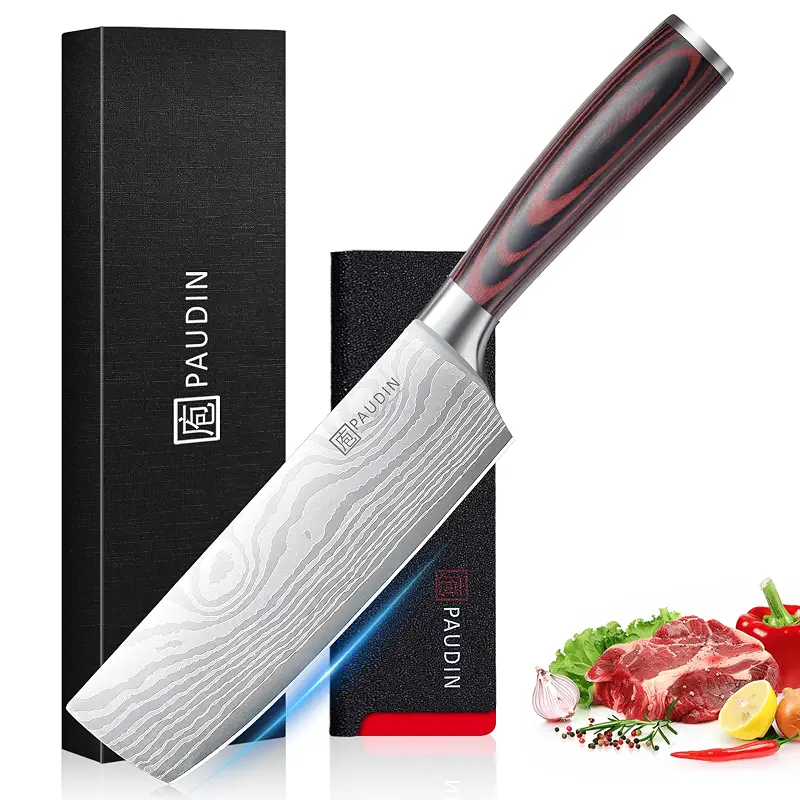
PAUDIN Nakiri Knife - 7" Razor Sharp Meat Cleaver and Vegetable Kitchen Knife, High Carbon Stainless Steel, Multipurpose Asian Chef Knife for Home and Kitchen with Ergonomic Handle
4.6(4,821)
Nakiri geometry delivers unmatched precision for vegetable prep and light protein work at an accessible price.
Ideal for: Home cooks who prioritize vegetable prep and want a specialized blade that outperforms general-purpose knives in that domain.
The Paudin Nakiri approaches the cleaver category from a different angle entirely. Rather than the curved profile optimized for rocking cuts, the nakiri's flat blade and tall profile create a push-cutting geometry specifically engineered for vegetables. Owners rave about how it handles hard squash, sweet potato, and root vegetables that challenge traditional chef's knives. One reviewer described slicing a butternut squash standing upright with ease, a task they'd previously struggled with using costlier blades. The 5Cr15MoV stainless steel at 56+ HRC isn't the hardest option here, but it's tough enough for daily abuse and easy to resharpen when needed.
The wave pattern isn't purely cosmetic. The textured surface genuinely reduces food friction and makes cleanup faster than a flat blade. The soft Pakkawood handle balances the thin blade at the pinch point, giving you control without excess weight. Buyers also praise the blade's scooping ability for transferring chopped food from board to pan, a small detail that compounds into genuine convenience during meal prep. The one caveat: this is optimized for vegetables and soft meats. Don't expect it to handle the cleaver vs nakiri differences with the authority of a true meat cleaver on chicken bones or dense proteins.
If your kitchen rhythm centers on vegetable prep rather than protein butchery, the nakiri delivers better specialized performance than any general-purpose cleaver. It costs less than premium options but outperforms them in its intended domain. Relative to the Hoshanho's all-rounder approach, you're trading versatility for mastery in a narrower space.
Pros
Flat nakiri profile optimized for push-cutting vegetables with precision
Tall blade design acts as excellent scoop for transferring chopped food
Wave pattern reduces food friction and makes cleaning faster than flat blades
Cons
Less suited than true cleavers for breaking down bones or dense proteins
Lower hardness relative to premium options requires more frequent maintenance
Key features
5Cr15MoV high-carbon stainless steel blade at 56+ HRC hardness
7-inch flat nakiri profile with tall blade for push-cutting geometry
Special wave pattern decreases food friction and eases cleanup
Soft Pakkawood handle integrated with blade for comfortable, balanced grip
How to Choose a Japanese Meat Cleaver Knife
Four trade-offs that actually matter when matching a japanese meat cleaver knife to your kitchen.
Blade Length and Weight
Japanese cleavers typically range from 5.8 to 7.5 inches. Shorter blades (5.8 inches) offer control and maneuverability for detailed work and suit cooks with smaller hands or limited counter space. Longer blades (7 to 7.5 inches) provide more chopping authority and scooping capacity, ideal for high-volume prep or breaking down larger proteins. Weight matters too. A slightly heavier blade reduces the effort needed to cut through tough vegetables or dense meat, but excessive weight causes fatigue during extended prep sessions. The best choice depends on your prep volume and physical comfort during sustained cutting.
Steel Type and Hardness Rating
High-carbon stainless steel dominates this category because it balances edge retention, corrosion resistance, and ease of resharpening. Hardness ratings (measured in HRC) range from 56 to 62+ across these options. Higher hardness (60+) means longer edge retention but slightly more difficulty resharpening. Lower hardness (56-59) sharpens more easily but requires maintenance more often. Japanese high-carbon formulations like 10Cr15CoMoV and AUS-10V are engineered for kitchen performance, not just laboratory specs. Consider how often you'll maintain your blade: frequent users benefit from harder steel, while occasional cooks may prefer easier resharpening.
Edge Geometry and Cutting Style
Blade angle and shape dramatically affect performance. Traditional cleavers with curved edges excel at rocking cuts on herbs and push-cutting vegetables, while straight-edged cleavers deliver consistent chopping motion on proteins. Exploring top kiritsuke knife options alongside cleavers reveals how Japanese blade designs each prioritize different cutting motions. The cleaver vs nakiri differences show that no single profile dominates every task. Test or read detailed reviews if a specific cutting motion matters to your prep style. Some cooks prefer the versatility of a slight curve; others demand a perfectly straight edge for consistency.
Handle Material and Grip Comfort
The handle carries your effort through extended prep sessions. Pakkawood (laminated wood and plastic composite) offers durability and corrosion resistance without the maintenance demands of natural wood. Beech wood handles add aesthetic warmth but require more care to prevent drying and cracking. Ergonomic design matters more than material choice. A handle that balances the blade at the pinch point and fits your hand size reduces fatigue and improves control. Finger-hole designs and contoured shapes offer specialized benefits depending on your grip style and the work you're doing.
Maintenance and Care Requirements
Japanese high-carbon steel demands hand-washing and immediate drying after every use to prevent oxidation. A cleaver knife sharpening guide will show you that regular maintenance with a whetstone or honing steel keeps the blade performing longer than waiting until it's noticeably dull. Stainless alloys resist rust better than pure carbon, but none eliminate the need for basic care. Factor in whether you'll sharpen frequently or prefer a blade that stays sharp longer. Premium options with higher hardness ratings hold edges longer, reducing maintenance frequency but sometimes making resharpening slightly more involved.
Frequently asked
Quick answers to the questions readers ask most.
What's the difference between a meat cleaver and a nakiri knife?
A meat cleaver typically has a curved or straight edge optimized for rocking cuts and breaking down proteins, while a nakiri has a flat profile and tall blade designed for push-cutting vegetables. Cleavers excel at boneless meat and poultry; nakiris dominate vegetable prep. The choice depends on your kitchen priorities. If you need one blade to handle both, a traditional cleaver offers more versatility. If vegetable prep is your focus, a nakiri's specialized geometry outperforms general-purpose cleavers in that domain.
How often should I sharpen a Japanese meat cleaver?
That depends on steel hardness and prep volume. High-hardness blades (60+ HRC) may go 2-3 weeks of heavy use before requiring sharpening, while lower-hardness options might need attention weekly. Rather than following a schedule, test sharpness by drawing the blade gently across newspaper or tissue. If it catches or tears, use a honing steel before your next session. Regular light maintenance (honing after each use) extends the interval between full sharpening dramatically compared to letting the blade dull completely.
Can I use a Japanese meat cleaver on bones?
It depends on the specific knife and bone type. Cleavers designed for boneless meats and soft proteins can chip if forced through large bones or hard frozen material. Heavy-duty German-style cleavers are engineered for bone work, but most Japanese options prioritize vegetable and boneless protein performance. Always check the manufacturer's guidance. Using a blade outside its intended purpose is the fastest way to damage an otherwise excellent tool.
Why does my Japanese cleaver need immediate hand-drying?
High-carbon stainless steel, while corrosion-resistant, develops surface patina or light oxidation if left wet. Immediate hand-drying prevents this cosmetic (though harmless) discoloration and keeps the blade looking pristine. Air-drying tempts fate and defeats the maintenance philosophy behind these blades. It's a small discipline that pays dividends in longevity and aesthetics. Stainless alloys resist rust far better than pure carbon, but hand-drying remains the best practice across all high-carbon kitchen steel.
What budget range should I expect for a quality Japanese meat cleaver?
Quality Japanese cleavers span a wide range depending on steel hardness, handle materials, and craftsmanship. Entry-level options deliver solid performance for everyday kitchen work. Mid-range choices add refined geometry and better edge retention. Specialty blades like best yanagiba knives reflect both superior materials and hand-finishing labor. All options in this guide represent genuine value at their respective price points. The best investment is the blade that matches your prep volume and maintenance willingness, not the highest price tag.