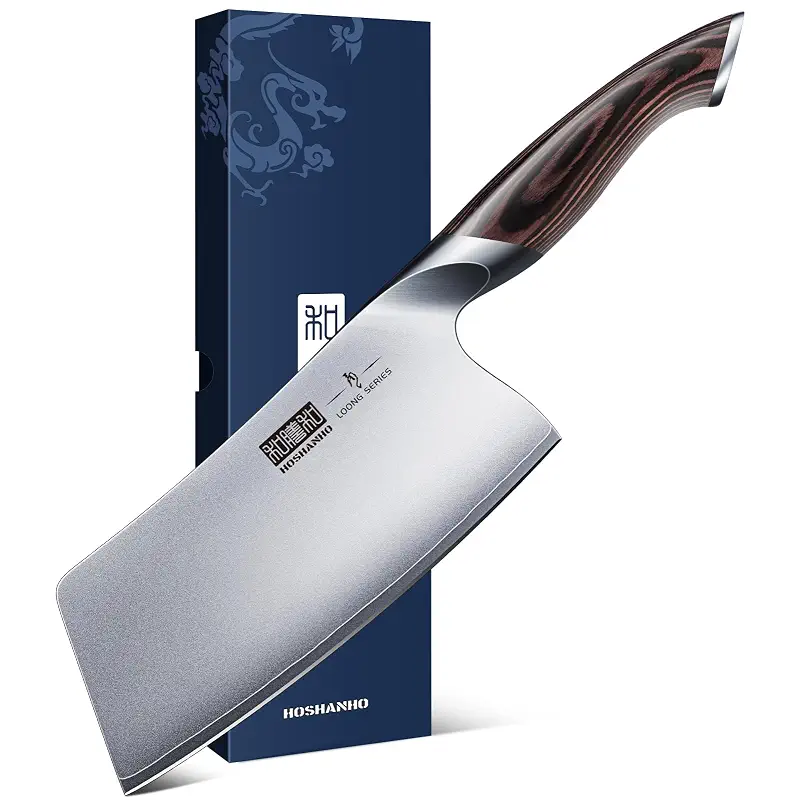
Ideal for: Home cooks and kitchen enthusiasts seeking a versatile, sharp-edged workhorse for daily prep.
The Hoshanho cleaver arrives in exceptional condition, with owners consistently reporting that its sharpness out of the box surpasses what you'd expect at this price. The 10Cr15CoMoV high-carbon steel holds its edge well through regular kitchen work, and the blade geometry makes quick work of everything from herbs to chicken breakdown. The 15-degree edge angle and 58+ HRC hardness give it real staying power without requiring frequent sharpening.
Balance matters enormously in a cleaver, and this one gets it right. The weight distribution between blade and handle keeps your wrist relaxed during longer prep sessions, which translates to faster, more accurate cuts with less fatigue. The slightly curved edge lends itself to a gentle rocking motion for herbs while still performing well with push-cuts on vegetables and boneless meats. I'd reach for this over the Paudin Nakiri if you want a tool that genuinely earns its place in daily rotation.
One real limitation worth noting: the high-carbon steel construction means you must hand wash and dry immediately. Leave it wet in the sink and rust will find the blade. Owners mention this clearly in their care notes, so it's not a surprise factor, but it's a commitment that matters if you're someone accustomed to tossing knives in the dishwasher.
Pros
Exceptional sharpness and edge retention out of the box
Balanced weight distribution reduces hand fatigue during extended use
High-carbon steel holds a fine edge longer than standard stainless
Cons
Requires immediate hand washing and drying to prevent rust spots
Curved edge suits rocking cuts better than purely straight-edge chopping
7-inch blade with 15-degree edge angle for precision cutting
Ergonomic handle designed to reduce hand pressure during prolonged use
Blade thickness of 2.3mm balances durability with cutting finesse
Suitable for vegetables, boneless meats, poultry, and herbs
#2 Pick
Best Compact & Lightweight
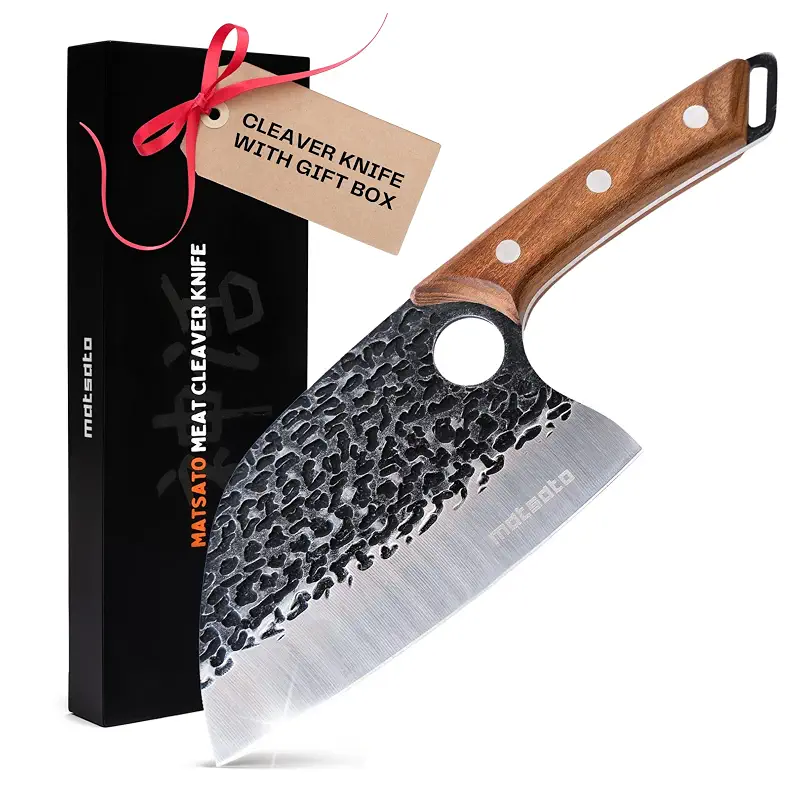
Matsato
Matsato Cleaver Knife – Japanese Steel Cooking Butcher Knife for Meat & Vegetables Chopping, 5.8 Inch Kitchen Knife, Kitchen Gift for Men & Women | Japanese Steel Cleaver, Butcher and Meat Knife, for Chopping Meat and Vegetables, Kitchen Knife, Cuchillo de Carne, 5.8 in
4.8(405)
A 5.8-inch featherweight (176g) with excellent sharpness and unique finger-hole grip for precise, controlled cutting.
Ideal for: Cooks with smaller hands or tight counter space seeking a nimble, lightweight blade for fine vegetable and boneless-meat prep.
The Matsato stands apart for its compact footprint and unusual ergonomic feature: a finger hole in the blade spine that shifts how you grip and control the knife. At just 176g, it feels almost delicate compared to heavier cleavers, yet owners report it slices through chicken and root vegetables with surprising authority. The 3CR13 Japanese stainless steel delivers a razor-sharp factory edge and reasonable edge retention for a mid-range blade.
The shorter 5.8-inch blade works beautifully in tight kitchens or for cooks who prefer nimbler, lighter tools. The hammered finish isn't purely decorative; it reduces food sticking, so you spend less time scraping adhesive bits off the blade. The carbonized beech wood handle adds warmth and durability without the weight of a full metal spine. Where the Hoshanho leans toward versatility, the Matsato opts for finesse and control, making it ideal if your prep work skews toward vegetable-heavy cutting rather than heavy-duty bone work.
One trade-off: the lighter weight means less momentum behind each cut, so tasks requiring heft demand a bit more conscious effort from your arm. Also, the finger-hole design takes a moment to get used to; if you're accustomed to traditional chef's-knife grips, expect a brief adjustment period.
Pros
Extremely lightweight at 176g for reduced arm and wrist fatigue
Unique finger-hole design enhances grip security and control
Hammered blade surface minimizes food adhesion and cleanup time
Cons
Lighter weight offers less cutting momentum for tougher ingredients
3CR13 steel doesn't retain an edge quite as long as premium alloys
Key features
5.8-inch blade in lightweight Japanese 3CR13 stainless steel
Finger-hole grip in blade for enhanced control and safety
Carbonized beech wood handle with hanging hole for storage
Hammered finish reduces food sticking for easier cleaning
Well-balanced design ideal for vegetables, boneless meats, and fish
#3 Pick
Premium Damascus Choice
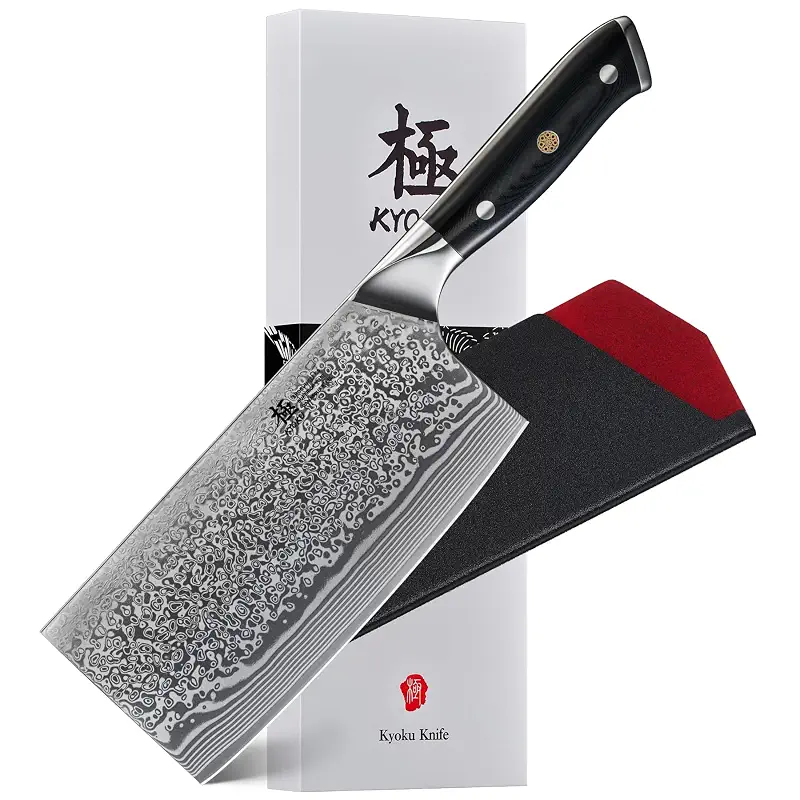
Kyoku
KYOKU Vegetable Cleaver Knife - 7" - Shogun Series - Japanese Style VG10 Steel Core Forged Damascus Blade - with Sheath & Case
4.7(434)
High-end Damascus cleaver with stunning aesthetics, exceptional edge retention, and professional-grade sharpness.
Ideal for: Serious home cooks and culinary enthusiasts who prioritize edge retention, aesthetics, and precision vegetable work.
The Kyoku Vegetable Cleaver represents a significant step up in materials and craftsmanship. The Japanese Damascus steel core, hardened to 58-60 HRC and treated cryogenically, delivers the kind of edge retention that justifies the premium price. The traditional 3-step Honbazuke hand-finishing method creates a mirror-polished edge at 8-12 degrees, which translates to scalpel-like cutting precision. Owners consistently praise how the blade maintains its sharpness over months of heavy use, and the true Damascus pattern (unlike some competitors' laser-etched imitations) is genuinely beautiful.
The straight blade profile suits precise slicing more than rocking cuts, and the G10 handle is military-grade, capable of withstanding temperature swings and moisture without degradation. The triple-riveted construction and full tang spine reinforce durability at a level you don't see in entry-level cleavers. If you're comparing this to the Dalstrong 7-inch model, both are premium options, but the Kyoku edges ahead aesthetically and for pure vegetable work, while Dalstrong has a slight versatility advantage for boneless meats. For those exploring the broader Japanese knife ecosystem, a best kiritsuke knife offers similar blade engineering principles but with a different profile suited to vegetable and protein slicing on a single stone.
The main caveat: this cleaver is optimized for vegetables and soft proteins. It's not designed for hacking bones or hard squash with aggressive force; the high hardness that holds a fine edge comes at the cost of brittleness under impact. Treat it with the precision tool mindset it deserves, and it'll reward you for years.
Pros
Damascus steel with exceptional edge retention over months
Ideal for: Home chefs and semi-professional cooks needing a durable, high-output blade for mixed prep (meats, poultry, vegetables).
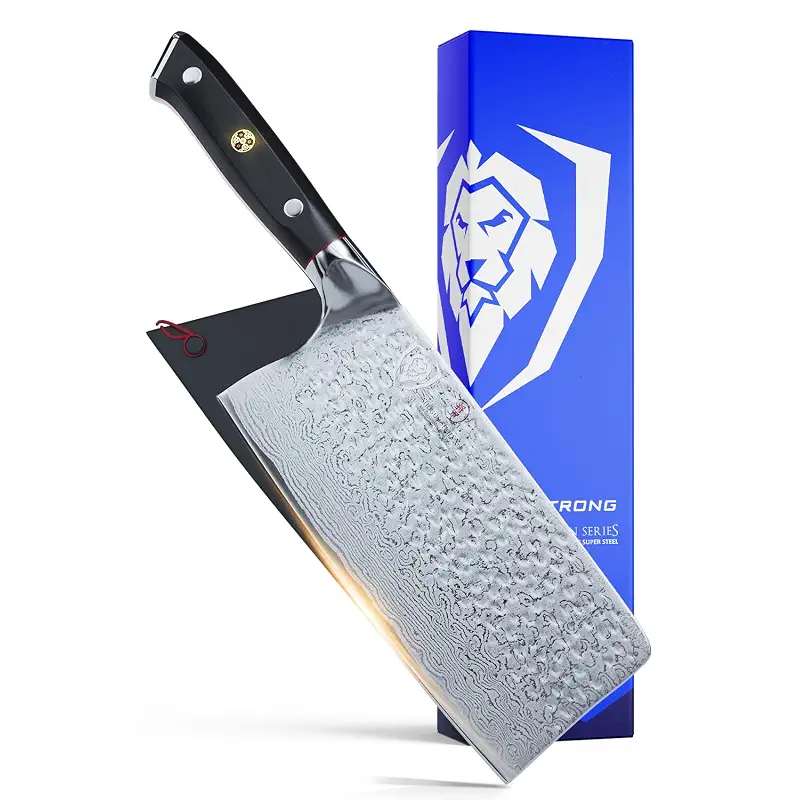
Dalstrong's 7-inch Meat Cleaver is engineered for the cook who wants serious performance without sacrificing aesthetics. The AUS-10V Japanese super steel core, hardened to 62+ HRC and nitrogen-cooled, sits atop 66 layers of high-carbon stainless that give the blade both toughness and corrosion resistance. This isn't just edge hardness; it's structural resilience. The knife can handle heavier workloads than the Kyoku without the brittleness risk, making it a smart choice if your prep includes occasional boneless poultry breakdown alongside vegetable work.
The hammered finish reduces drag and food sticking, and the hand-polished blade spine provides comfort during longer cuts. The Ultra-G10 military-grade handle is built to last a lifetime of kitchen work. Owners emphasize the importance of hand washing and proper care, but with that discipline, the knife maintains its sharpness and appearance remarkably well. I'd choose this over the Kyoku if your cutting tasks demand a bit more robustness, or if you use your cleaver for a broader range of ingredients beyond pure vegetables.
One consideration: at 62+ HRC, the steel is harder and more challenging to sharpen at home. You'll need either a quality whetstone and skill, or a professional sharpening service for periodic maintenance. Owners recommend a ceramic sharpening rod for regular honing between deeper sharpenings, which is a worthwhile addition to your kit.
Pros
AUS-10V super steel at 62+ HRC balances hardness with impact tolerance
Hammered Damascus finish reduces food adhesion and improves aesthetics
66-layer construction ensures toughness and long-term corrosion resistance
Cons
Higher hardness requires careful sharpening, ideally with whetstones or professional service
Heavier blade demands more conscious technique than lighter alternatives
Key features
AUS-10V Japanese super steel core, 62+ HRC hardness with nitrogen cooling
66 layers of high-carbon stainless steel provide strength and corrosion resistance
7-inch blade with 8-12 degree hand-polished mirror finish
Hammered finish minimizes surface resistance and food sticking
Ultra-G10 military-grade handle with triple-riveted full tang
#5 Pick
Best Budget-Friendly Performer
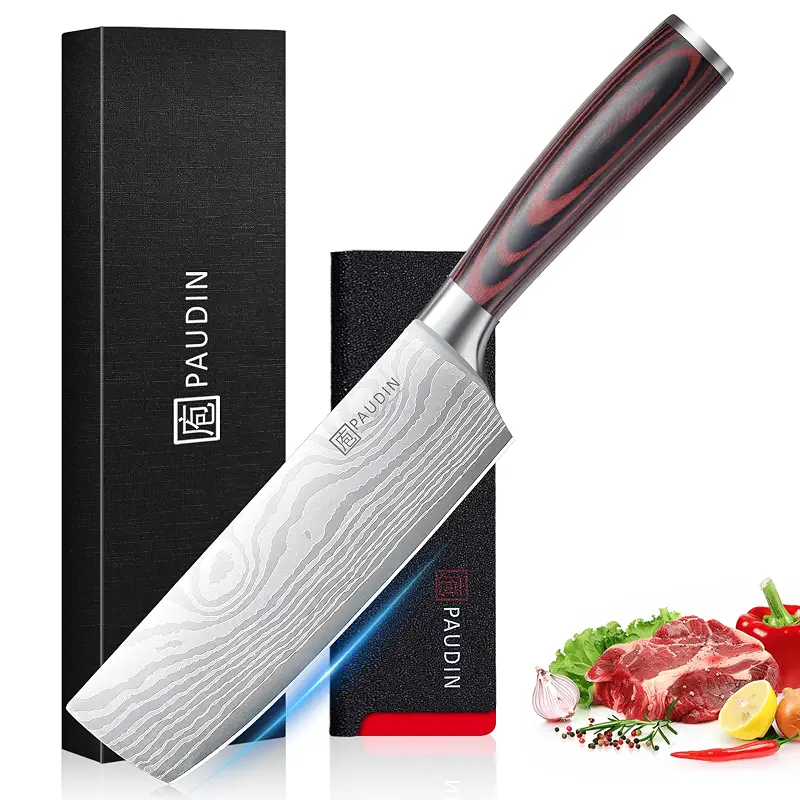
Paudin
PAUDIN Nakiri Knife - 7" Razor Sharp Meat Cleaver and Vegetable Kitchen Knife, High Carbon Stainless Steel, Multipurpose Asian Chef Knife for Home and Kitchen with Ergonomic Handle
4.6(4,821)
Affordable 7-inch nakiri-style cleaver with impressive sharpness and user-friendly design that punches well above its price.
Ideal for: Budget-conscious cooks and vegetable enthusiasts seeking a sharp, low-maintenance nakiri for everyday meal prep.
The Paudin Nakiri offers remarkable value for kitchens on a tighter budget. The 5Cr15Mov stainless steel (the same alloy adopted by major cutlery brands) arrives razor-sharp and maintains a respectable edge through regular vegetable prep. The 56+ HRC hardness is modest compared to premium cleavers, but owners report it handles butternut squash, carrots, and tomatoes with equal ease, and the rocking blade design works beautifully for herbs. The wave pattern is functional, not just decorative; it genuinely reduces food friction and makes cleanup simpler.
Where the Paudin excels is versatility and accessibility. Its flat, tall blade profile is ideal for push-cutting vegetables without the accordion effect that plagues standard chef's knives, yet it's light enough to feel natural if you're new to cleavers. The ergonomic pakkawood handle is integrated directly with the blade, creating a seamless transition that reduces pressure points. Compared to the Hoshanho at the top of this list, the Paudin trades some edge retention and premium materials for a lower price and broader appeal to vegetable-focused cooking.
The main limitation: because the steel is mid-range hardness, the edge does dull faster with heavy use or harder vegetables like butternut squash. Owners who cut a lot of squash note they sharpen more frequently than with higher-end options. It's still maintenance-light by comparison to true high-carbon blades, but not a set-it-and-forget-it choice. Also, while the flat blade is excellent for vegetables, it doesn't handle bones or aggressive hacking; treat it as the vegetable-first tool it's designed to be. If you're exploring specialized Japanese knife profiles, top yanagiba knives focus on the opposing end of the spectrum, designed for precise single-pull slicing of fish rather than the robust chopping these cleavers provide.
Pros
Exceptional sharpness out of the box at a very accessible price point
Flat, tall blade profile ideal for push-cutting vegetables without sticking
Lightweight and balanced, making it comfortable for extended vegetable prep
Cons
Mid-range 5Cr15Mov steel dulls faster than premium alloys with heavy use
Not suitable for bones or hard impact; requires vegetable-first cutting mindset
Key features
7-inch blade in 5Cr15Mov stainless steel, 56+ HRC hardness
Wave-pattern surface reduces food friction and adhesion
Ergonomic pakkawood handle integrated with blade for comfort
Flat profile optimized for push-cutting and rocking herb work
Beautiful aesthetic at a budget-friendly price point
How to Choose a Japanese Cleaver Knife
Four trade-offs that actually matter when matching a japanese cleaver knife to your kitchen.
Blade Length and Weight
Japanese cleavers typically range from 5.5 to 8 inches. Shorter blades (5.5-6 inches) suit smaller hands and tight kitchens, while 7-inch models offer the versatility that most home cooks prefer. Weight matters equally: lighter cleavers reduce fatigue during long prep sessions but sacrifice momentum on tougher ingredients. Consider your primary tasks before defaulting to the largest or heaviest option. A 7-inch, 300-gram blade suits most kitchens; go smaller or lighter only if counter space or hand strength is a real constraint.
Steel Type and Hardness
High-carbon stainless steel (10Cr15CoMoV, 3CR13, 5Cr15Mov, ) is standard in quality cleavers. Higher hardness ratings (56-62 HRC) hold sharper edges longer but require more careful sharpening and are less forgiving with hard vegetables. Mid-range alloys (56-58 HRC) balance edge retention with ease of maintenance, while premium Damascus or layered steels add aesthetic appeal and corrosion resistance. Choose based on how much sharpening you're willing to do and whether you value edge-holding power or simplicity.
Handle Comfort and Control
The handle should feel secure and balanced in your grip. Ergonomic shapes with slight curves reduce pressure on your hand during extended cutting. Materials vary from wood (beech, pakkawood) to military-grade composites (G10). Try to hold a knife before buying if possible; a comfortable handle makes the difference between enjoyable prep and hand strain. Some cleavers feature finger holes or unusual grip designs that take adjustment but reward you with precision control.
Intended Use and Care Requirements
High-carbon cleavers require immediate hand washing and drying to prevent rust, while stainless-heavy blades are more forgiving. Consider whether you'll commit to proper care: hand washing, regular drying, and periodic sharpening. If dishwasher convenience is non-negotiable, a simpler stainless blade is more practical than a premium Damascus option. Also clarify whether your prep is vegetable-focused or includes heavier meats and poultry, as this influences the blade hardness and thickness you should prioritize. For guidance on maintaining your cleaver long-term, the japanese cleaver care and sharpening process ensures your investment lasts years.
Budget and Long-Term Value
Budget cleavers ($50-$120) deliver solid performance for everyday vegetable work but may require more frequent sharpening. Mid-range options ($120-$250) balance edge retention, durability, and ease of maintenance. Premium cleavers ($250+) offer superior materials, aesthetics, and longevity, justifying the cost only if you use the knife regularly. A japanese cleaver vs western butcher comparison can help you decide whether a Japanese cleaver is the right category for your kitchen style, or whether a traditional butcher's cleaver better suits your needs.
Frequently asked
Quick answers to the questions readers ask most.
Can I use a Japanese cleaver to cut through bones?
Most Japanese cleavers are designed for boneless meats, vegetables, and fish. Some can handle softer chicken bones with gentle pressure, but aggressive hacking or frozen bone work will chip or crack the blade, especially in premium high-hardness steels. If you regularly process whole chickens or butcher tougher proteins, choose a German-style butcher's cleaver instead. Japanese cleavers excel in vegetable-forward and boneless meat prep; use the right tool for its intended purpose to avoid damage.
How often should I sharpen a Japanese cleaver?
Frequency depends on steel hardness and cutting volume. Mid-range stainless cleavers may need honing with a sharpening steel after every use and a full sharpening every 2-3 weeks with heavy use. Premium or AUS-10V blades hold edges much longer, requiring professional sharpening or whetstone work every 2-3 months. Most home cooks benefit from a ceramic sharpening rod for quick honing and a whetstone or professional service for deeper sharpening. Regular light maintenance beats letting the blade dull to the point of frustration.
Why is hand washing recommended for Japanese cleavers?
High-carbon and premium stainless steels used in quality cleavers can spot-rust or corrode if left wet or exposed to harsh dishwasher detergents. Hand washing with warm water and prompt drying keeps the blade and handle in peak condition. Dishwasher detergent is both corrosive and abrasive, degrading the blade bit by bit with each cycle. For a knife that costs $100 or more, five extra minutes of hand-washing per week is a small price for preserving your investment.
What's the difference between a nakiri and a traditional Chinese cleaver?
A nakiri is rectangular with a flat edge, optimized for push-cutting vegetables with minimal rocking. A traditional Chinese cleaver has a curved edge and heavier blade, suited for rocking cuts and lighter chopping. Japanese cleavers in this roundup blend both influences: they're taller than chef's knives but more nimble than meat cleavers. For vegetable-focused kitchens, a nakiri profile works beautifully. If you want versatility for both rocking cuts and straight slicing, a 7-inch cleaver with a slight curve offers more flexibility.
Do I need a sharpening steel, or is a whetstone enough?
A sharpening steel (honing rod) realigns the blade edge between deeper sharpening and is quick, ideal for weekly maintenance. A whetstone actually removes steel to rebuild a dull edge and is essential for periodic deep sharpening. Most home cooks benefit from both: a ceramic or steel honing rod for regular touch-ups and a whetstone or professional sharpening every 1-3 months, depending on use. If sharpening intimidates you, professional services are affordable and keep premium knives in flawless condition.