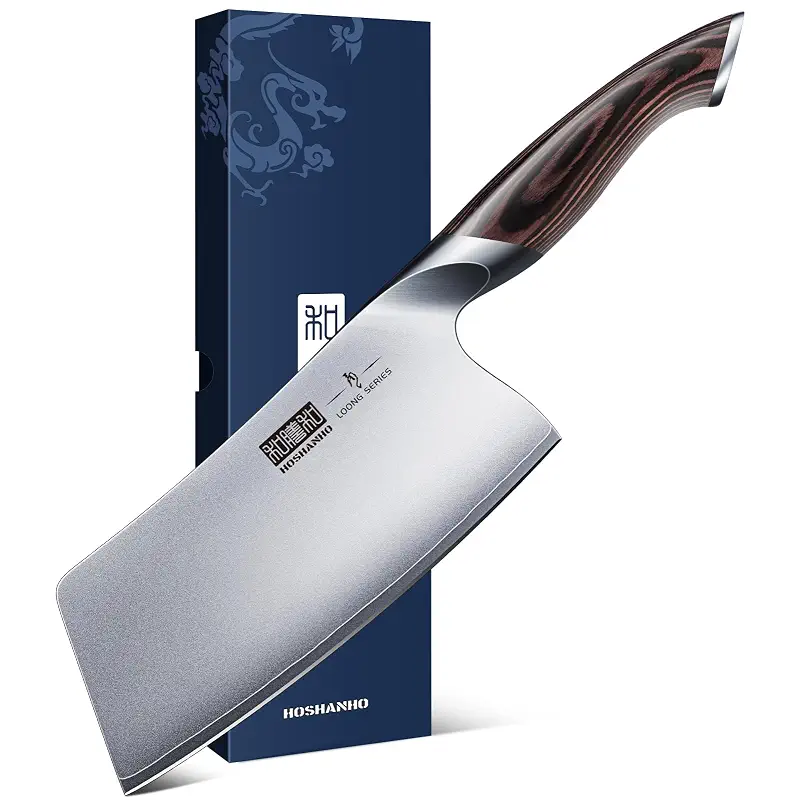
Ideal for: Home cooks seeking a reliable workhorse that handles vegetables, meat, and poultry equally well.
The Hoshanho 7-inch cleaver lands in a sweet spot where it doesn't ask you to compromise. The high-carbon stainless steel (10Cr15CoMoV) delivers the kind of edge retention you'd expect from knives costing twice as much, and buyers consistently report that it arrives razor-sharp and keeps that edge. The blade geometry at 15 degrees per side means it slices through both delicate herbs and heavy proteins without wedging, and the weight distribution feels natural in the hand for both rocking and push-cutting motions.
Where this cleaver excels is in everyday versatility. A home cook picking vegetables one night and breaking down chicken the next will find it more forgiving than specialist blades, yet it still performs close to what you'd see in a professional kitchen. The ergonomic handle is designed to reduce hand fatigue during longer prep sessions, which matters when you're the one doing the work night after night.
One thing to keep in mind: this is high-carbon steel, so it requires hand washing and immediate drying. Left wet in a sink, it will develop patina or rust. For cooks who are disciplined about knife care, that's a non-issue. For those used to tossing knives in the dishwasher, you'll need to shift your routine.
Pros
Arrives exceptionally sharp and holds edge for weeks
Well-balanced weight between blade and handle
Performs across vegetables, meat, and fish without fussing
Cons
Requires immediate hand washing and drying
Curved edge favors rocking over straight chopping for some users
Key features
High-carbon Japanese 10Cr15CoMoV stainless steel with 58+ HRC hardness
Ergonomic handle designed to minimize hand fatigue during extended prep
Wide blade profile allows easy scooping and transfer of ingredients
#2 Pick
Best for Durability and Daily Use
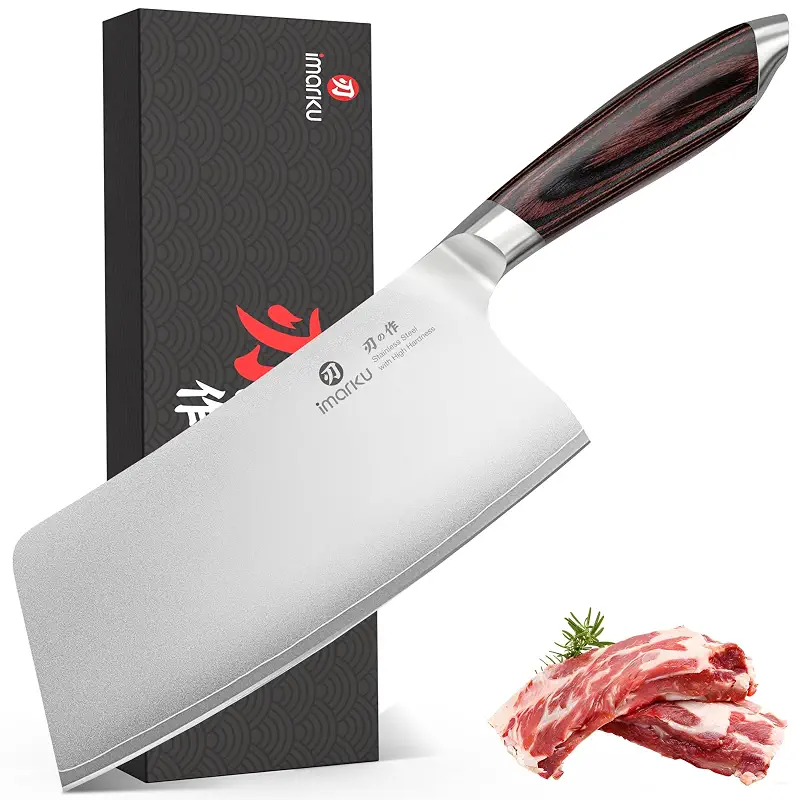
imarku
imarku 7.5" Cleaver Knife, Japanese High Carbon Steel, Pakkawood Handle | Stainless Steel Chopping & Meat Cleaver with Non-Slip Handle, Ideal for Home Kitchen & Restaurant, Gift for Men & Women
4.7(2,259)
Premium Japanese steel with a hand-sharpened edge and FSC-certified Pakkawood handle built to last through years of heavy kitchen work.
Ideal for: Cooks who use a single cleaver daily and want edge retention and durability over years of regular service.
The imarku 7.5-inch cleaver sits one step up in build quality from entry-level options, though it keeps its asking price reasonable. The -grade Japanese high-carbon stainless steel (59±2 HRC) is the same material found in professional-grade knives, and the combination of hand-sharpening at a 15-degree angle and a robust Pakkawood handle means this blade is engineered for kitchens where the knife gets heavy daily use.
What buyers consistently highlight is longevity. Unlike budget cleavers that dull noticeably after a few weeks, this one maintains its edge through months of regular kitchen work. The Pakkawood handle resists moisture and temperature swings better than standard wood, which matters in a working kitchen where knives live near water and heat. The 2.3mm blade thickness with a 15-degree edge gives you precision without making the blade so delicate that it chips easily.
Compared to the Hoshanho, the imarku brings more steel durability and a longer time between sharpenings, though both arrive sharp. If you're someone who uses the same knife five times a week and wants minimal maintenance between uses, this is where the extra investment pays off. The included sheath and lifetime warranty signal that imarku stands behind this tool.
Pros
59±2 HRC hardness offers exceptional edge retention over months
FSC-certified Pakkawood handle resists moisture and warping
Includes protective sheath and offers lifetime warranty coverage
Cons
Requires careful hand washing and drying like all high-carbon steel
7.5-inch blade may feel slightly large for smaller hands or tight cutting boards
Key features
Japanese high-carbon stainless steel at 59±2 HRC for durability and edge retention
Hand-sharpened 15-degree double-side edge with 2.3±0.1mm blade thickness
FSC-certified Pakkawood handle with ergonomic contour for extended prep sessions
Includes protective sheath and lifetime defect warranty for peace of mind
#3 Pick
Best Compact Option
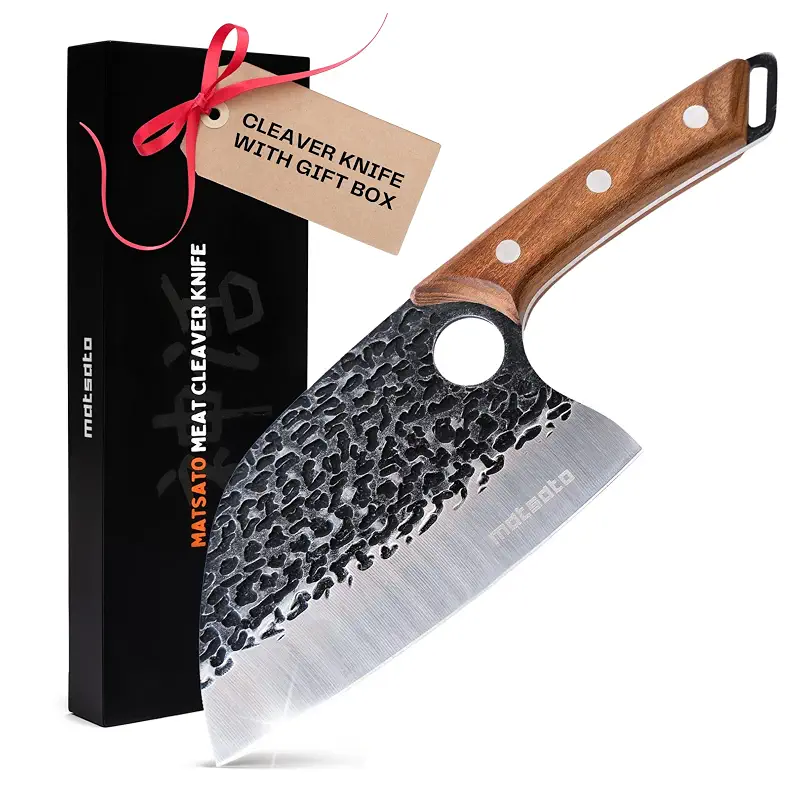
Matsato
Matsato Cleaver Knife – Japanese Steel Cooking Butcher Knife for Meat & Vegetables Chopping, 5.8 Inch Kitchen Knife, Kitchen Gift for Men & Women | Japanese Steel Cleaver, Butcher and Meat Knife, for Chopping Meat and Vegetables, Kitchen Knife, Cuchillo de Carne, 5.8 in
4.8(405)
Lightweight 5.8-inch cleaver with unique finger-hole grip, perfect for precise work on smaller ingredients without heavy fatigue.
Ideal for: Precision-focused cooks with smaller hands, or those who want a specialized blade for detailed vegetable and fish work.
The Matsato represents a different design philosophy from the broader blades above. At 5.8 inches and just 176 grams, it sacrifices some of the scooping convenience of a full-size cleaver for precision and control. The Japanese 3CR13 stainless steel paired with a carbonized beech wood handle and ergonomic finger-hole grip gives it a specialist feel, more akin to specialty knives you'd find in a dedicated Japanese kitchen store.
This cleaver excels when your prep work is predominantly precision-based: breaking down herbs, dicing vegetables into uniform pieces, or handling smaller proteins like fish fillets. The finger hole is not just aesthetic; it genuinely improves grip security during delicate cuts, and the shorter blade tracks more intuitively through smaller workpieces. Buyers report it comes razor-sharp and that the build quality suggests a tool designed more for careful technique than heavy-duty chopping.
Where it differs from the imarku and Hoshanho is scope. If you're doing whole-chicken butchery or preparing five pounds of potatoes, the shorter blade and lighter weight mean more time invested per task. It's best for a cook who values precision work and doesn't mind a second tool for heavier jobs, or for someone with smaller hands who finds full-size cleavers fatiguing. The Matsato shines when technique and finesse matter more than speed, positioning it alongside specialty blades like the best kiritsuke knife for cooks who prioritize controlled, detail-oriented cuts.
Pros
Lightweight design minimizes hand fatigue during precision cutting
Unique finger-hole grip provides superior control for detailed work
Carbonized beech wood handle combines durability with aesthetic appeal
Cons
Shorter 5.8-inch blade less suited for large vegetables or whole proteins
Smaller size means higher prep time for bulk vegetable cutting
Key features
Lightweight Japanese 3CR13 stainless steel at 176 grams for control and reduced fatigue
5.8-inch hammered blade with finger-hole ergonomic grip for precision cutting
Carbonized beech wood handle with hanging hole for convenient storage
Razor-sharp out of the box and holds edge well through regular use
#4 Pick
Best Premium Investment
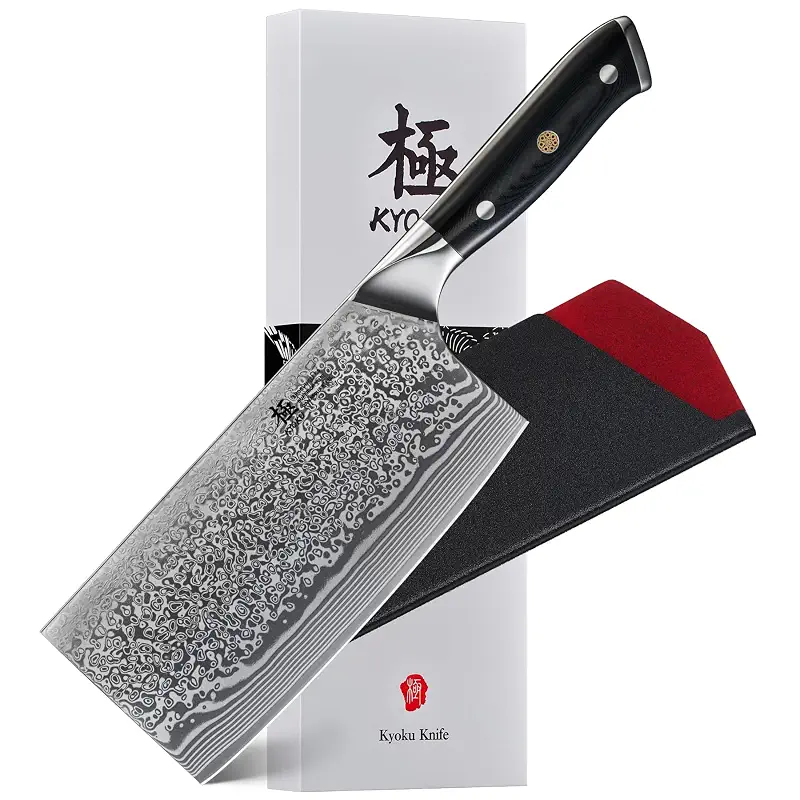
Kyoku
KYOKU Vegetable Cleaver Knife - 7" - Shogun Series - Japanese Style VG10 Steel Core Forged Damascus Blade - with Sheath & Case
4.7(434)
Handcrafted Damascus steel cleaver with mirror-polished 8-12 degree edge and triple-riveted G10 handle, built for the serious home chef.
Ideal for: Experienced cooks committed to knife maintenance who want a premium blade for precision vegetable and soft-protein work.
The Kyoku Shogun Series vegetable cleaver operates in a different category entirely. The VG-10 Japanese Damascus steel core with cobalt and cryogenic treatment (HRC 58-60) is not a marketing flourish; it's genuine material engineering that affects how the blade performs and how it looks on your cutting board. The Damascus pattern is hand-forged, not laser-etched or printed, which explains why buyers consistently comment on its visual striking appearance.
What sets this cleaver apart is attention to detail in sharpening. The 8-12 degree double-sided edge is hand-polished using the traditional Honbazuke three-step method, then cryogenically treated. That precision sharpening angle is sharper than many cleavers you'll encounter, and the cryogenic process makes the edge more resistant to rolling or deformation even under heavy use. The triple-riveted G10 handle has been through heat and moisture treatment, so it won't warp or loosen even in humid kitchens.
The trade-off is cost and maintenance. This is not a knife you casually throw into a drawer or leave wet. It's a tool for someone who already respects knife care and wants to step into higher-end territory. Compared to the imarku, which prioritizes durability at a mid-tier price, the Kyoku asks you to understand that finer edge angles require more careful use (you won't be cutting bones or frozen food). If you're a cook who sharpens regularly and uses whetstones, the Kyoku rewards that discipline with an edge that glides through vegetables and soft proteins with less effort than any other blade here.
Pros
Hand-forged VG-10 Damascus steel with genuine visual pattern and superior edge retention
Cryogenically treated 8-12 degree edge offers exceptional sharpness and glide
Triple-riveted G10 handle resists heat, moisture, and warping through years of use
Cons
Highest price point requires significant investment commitment
Fine edge angle and premium steel demand careful technique and regular maintenance
Key features
VG-10 Japanese Damascus steel core at HRC 58-60 with cobalt and cryogenic treatment
Hand-polished mirror edge at 8-12 degrees using traditional Honbazuke three-step method
Triple-riveted G10 handle with mosaic pin, treated for heat and moisture resistance
Includes protective sheath and case for safe storage and transport
#5 Pick
Best All-Purpose Nakiri Style
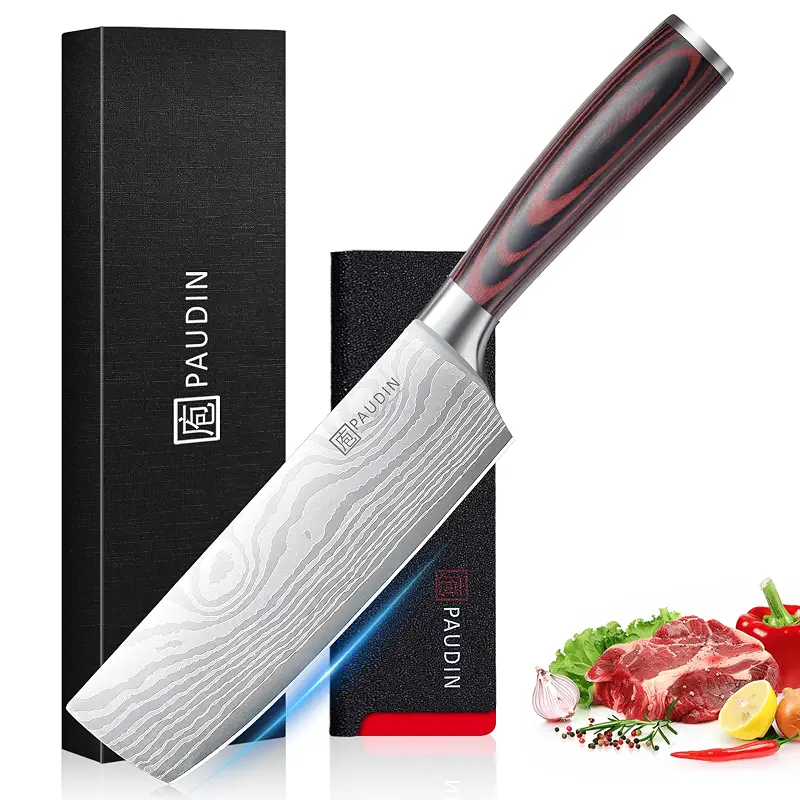
Paudin
PAUDIN Nakiri Knife - 7" Razor Sharp Meat Cleaver and Vegetable Kitchen Knife, High Carbon Stainless Steel, Multipurpose Asian Chef Knife for Home and Kitchen with Ergonomic Handle
4.6(4,821)
Flat-profile 7-inch nakiri with high-carbon stainless steel and wave pattern design, ideal for push-cutting vegetables with minimal effort.
Ideal for: Home cooks seeking a versatile nakiri-style blade for daily vegetable prep and occasional soft-protein work at an accessible price.
The Paudin Nakiri occupies a practical middle ground in both form and function. The nakiri profile (flat blade without pronounced curve) is geometrically different from a traditional rocking cleaver, and it makes a genuine difference if your prep style leans toward push-cutting rather than rock-and-chop motions. With its 5Cr15Mov high-carbon stainless steel at 56+ HRC and wave-pattern surface, this blade excels at slicing vegetables where you want clean, accordion-free cuts: butternut squash, sweet potatoes, leafy greens.
What makes this standout among budget-conscious buyers is versatility without pretense. The nakiri aesthetic draws from Japanese culinary tradition, but the materials and engineering are straightforward and durable. The ergonomic handle balances well at the pinch point, and the blade height (taller than a chef's knife) lets you transfer large quantities of chopped food easily. Buyers report using it for everything from vegetables to soft meats to prime rib carving, which speaks to its flexibility.
Compared to the Kyoku's premium positioning, the Paudin trades a razor-fine edge and hand-forged Damascus pattern for accessibility and everyday performance. The wave pattern reduces food friction without the maintenance demands of true high-carbon steel. If you want a cleaver-adjacent tool that performs across multiple kitchen tasks without fussing, and you're less interested in collecting specialty blades like yanagiba knives or other single-purpose tools, the Paudin delivers excellent value. Its massive review count (4,821) suggests it resonates with cooks who want solid performance without overthinking it.
Pros
Nakiri flat-profile design enables clean push-cutting without accordion effect
Wave pattern reduces food sticking while minimizing maintenance complexity
High review volume (4,821+) reflects proven reliability across diverse cooking styles
Cons
56+ HRC hardness is lower than premium options, requiring more frequent sharpening
Flat profile less ideal for heavy-duty bones or hard vegetables requiring chopping force
Key features
High-carbon stainless steel 5Cr15Mov at 56+ HRC for durable everyday performance
Wave pattern surface reduces friction and simplifies cleaning and maintenance
Ergonomic soft pakkawood handle with integrated design for comfortable grip and balance
How to Choose a Japanese Cleaver
Four trade-offs that actually matter when matching a japanese cleaver to your kitchen.
Blade Length and Weight
Japanese cleavers range from compact 5.8-inch models to full 7.5-inch blades, and the difference affects every cut. Longer blades cover more surface area per stroke, which speeds up prep for bulk vegetables or proteins, but they're harder to control in tight spaces or for detail work. A 7-inch blade hits a practical middle ground for most home kitchens. Weight matters too: heavier blades require more technique but reward precision; lighter ones reduce fatigue during marathon prep sessions. Consider how you actually cook. If you're breaking down whole chickens weekly, a 7-inch mid-weight cleaver earns its place. If your work is mostly dicing and slicing, a lighter 5.8-inch model may serve you better.
Steel Type and Hardness (HRC)
High-carbon stainless steel dominates this category because it balances sharpness, corrosion resistance, and ease of resharpening. Look for 56+ HRC hardness as a baseline; 58-60 HRC is premium territory. Higher hardness means longer edge retention but also more brittleness: you can't use a fine-edged premium blade on bones the way you can a mid-range one. The cleaver versus nakiri differences in steel choice also matter: traditional cleavers lean toward flexible high-carbon, while specialty nakiri blades often feature more delicate edges. If you hand-wash and dry immediately and understand your blade's limits, higher hardness is worth pursuing. If you're cavalier about maintenance, stay in the 56-58 range where durability and forgiveness overlap.
Handle Material and Ergonomics
Your handle choice directly affects how long you can work comfortably. Pakkawood (a compressed wood composite) resists moisture and warping better than raw wood, making it ideal for kitchens where the knife lives near water and heat. Natural beech wood offers aesthetic appeal and warmth but demands more care. G10 material (found on premium knives) is nearly indestructible but can feel colder in the hand. Test the ergonomic shape if possible: some handles favor a pinch grip (thumb and forefinger on the blade's base), others suit a full-hand wrap. A finger-hole design, like the Matsato's, provides extra security during detail work. If you prep for 30+ minutes at a time regularly, handle comfort is not a luxury: it's worth sizing and testing before committing.
Edge Angle and Cutting Style
Most cleavers use a 15-degree double-sided edge, which balances sharpness with durability for general kitchen work. Premium options like the Kyoku drop to 8-12 degrees for exceptional glide but demand careful technique and more frequent maintenance. The blade curve also shapes your cutting motion: a curved edge rocks and chops naturally, while a flat nakiri profile excels at push-cutting. Your body's muscle memory matters here. If you're accustomed to a chef's knife's forward rock, a flat-profile nakiri takes adjustment. If you're new to cleavers, a moderately curved 15-degree blade is most forgiving. Understanding the japanese cleaver maintenance guide becomes critical if you choose a fine-angle blade: that sharpness only stays put with regular stropping or whetstone work.
Budget and Long-Term Value
Japanese cleavers span from under $50 to $200+, and the relationship between price and performance is real but not linear. A $60 entry-level cleaver with 56 HRC steel often outperforms expectations for home use. Stepping to $100-130 buys you better hardness, hand-sharpening, and materials that last years longer. Premium options at $150+ assume you're committing to regular maintenance and expect longevity measured in decades. For most home cooks, the sweet spot is $80-120: high enough to get durable steel and thoughtful engineering, low enough that you're not overthinking a daily tool. Buy the cleaver that fits your usage pattern and maintenance discipline, not the most expensive option.
Frequently asked
Quick answers to the questions readers ask most.
Can I use a Japanese cleaver to cut bones or frozen food?
Most Japanese cleavers, especially those with fine edges or high hardness, are designed for vegetables, soft proteins, and fresh meats. Cutting bones or frozen food risks chipping the edge or rolling the blade. If you need to break down poultry regularly, choose a cleaver in the 56-58 HRC range with a slightly thicker blade rather than a premium option with an 8-12 degree edge. Reserve bone work for a separate meat cleaver or butcher's knife with a thicker, more forgiving blade.
How often do I need to sharpen a Japanese cleaver?
Frequency depends on steel hardness and usage. A 58-60 HRC blade used daily for vegetables may need sharpening every 4-6 weeks with a whetstone. A 56 HRC blade might need it every 2-3 weeks. Between sharpenings, use a honing steel (not a ceramic rod) to realign the edge every few uses. Hand washing and immediate drying extend time between sharpenings significantly. If you hand-wash and dry after each use, you'll notice the difference in edge retention versus kitchen-sink treatment.
What's the difference between a cleaver, nakiri, and chef's knife?
A cleaver has a wide, rectangular blade designed for scooping and transferring chopped ingredients; it rocks and chops naturally. A nakiri has a flat profile and excels at push-cutting without food sticking. A chef's knife is curved and tapers to a point, optimized for rocking and precision slicing. Cleavers and nakiris are specialists in vegetable prep; a chef's knife is more general-purpose. If your prep is predominantly vegetables and you value scooping functionality, a cleaver wins. If you do a lot of delicate slicing or need one blade to handle meat, fish, and produce equally, a chef's knife remains more versatile.
Do I really need to hand wash a Japanese cleaver, or can I use a dishwasher?
Hand washing is strongly recommended, especially for high-carbon stainless steel. Dishwashers expose the blade to prolonged moisture, extreme temperatures, and detergent, which accelerates rust and dulls the edge faster. A quick hand wash and immediate dry take 30 seconds and extend the blade's life significantly. If you regularly throw knives in the dishwasher, you'll be resharpening far more often, which negates the value of a quality blade. Make it a habit.
Should I store my cleaver in a knife block, magnetic strip, or drawer?
Avoid drawers, where blades bang against other utensils and dull quickly. A magnetic strip keeps the blade accessible, protected, and easy to see. A well-designed knife block with slots (not a slot-and-spring design) works well if you have counter space. The key is keeping the blade edge from contact with other metal or hard surfaces. Magnetic strips are the most space-efficient and gentlest on blade maintenance; wooden blocks are more attractive but require more space. Store with the spine outward if using a block, never blade-first into drawers.