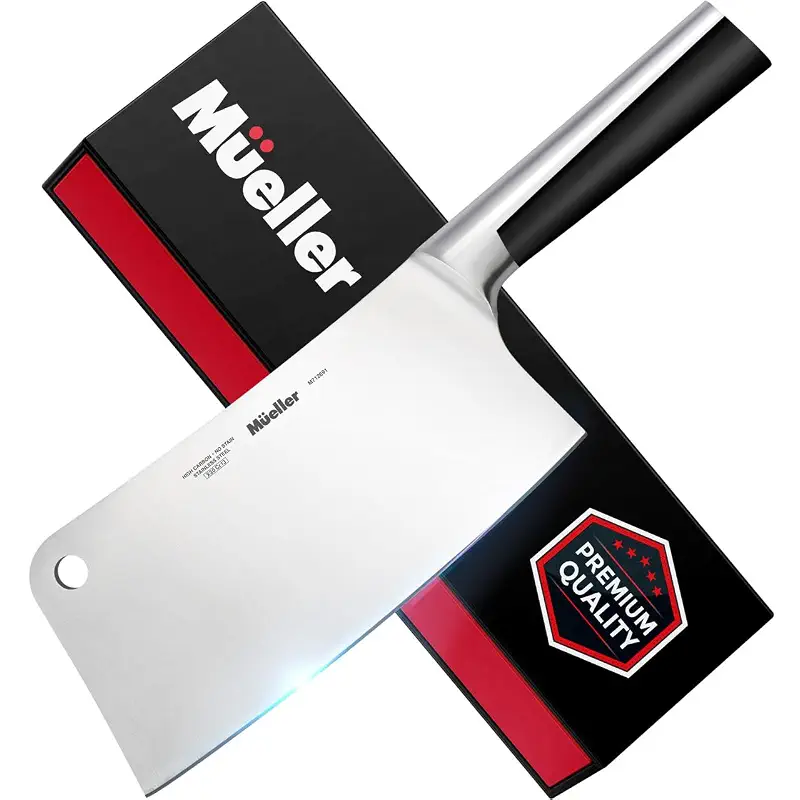
Ideal for: Home cooks and small kitchens doing daily poultry and meat prep.
The Mueller 7-inch cleaver appears across thousands of reviews as a workhorse that holds its edge through repeated bone work. Owners report cutting through chicken bones, beef roasts, and dense root vegetables for months without noticeable dulling. The 18-degree double-bevel edge is engineered to resist chipping during impact, and the seamless stainless steel handle eliminates weak points where handles typically fail.
What strikes me most about the feedback is consistency. Across multiple languages and use cases, buyers describe the same outcome: sharp out of the box, stays sharp through regular prep, and handles poultry and softer bones with ease. A few owners note the handle feels round and could feel more secure in a tighter grip, though testing shows the knife didn't slip during actual cutting. One reviewer cautioned against expecting it to chop through heavy beef bones repeatedly, suggesting it excels at chicken and pork rather than sustained butchery work.
Compared to the Rococo, which is designed for heavier impacts on large bones, the Mueller leans toward versatility across everyday cuts. If your primary work is chicken breakdown, ribs, and vegetables, this delivers professional results without the specialty-tool weight commitment.
Pros
Holds a sharp edge for months of regular use
Laser-tested German steel resists chips and rust
Seamless handle design eliminates failure points
Full tang construction balances weight and control
Cons
Round handle may feel loose for smaller hands
Better suited to poultry and pork than heavy beef bones
Key features
7-inch blade forged from premium high-carbon German stainless steel
18-degree double-bevel edge engineered for bone work durability
Wide blade doubles as bench scraper for ingredient transfer
Consistent sharpness through months of daily kitchen use
#2 Pick
Best for Heavy Bone Work
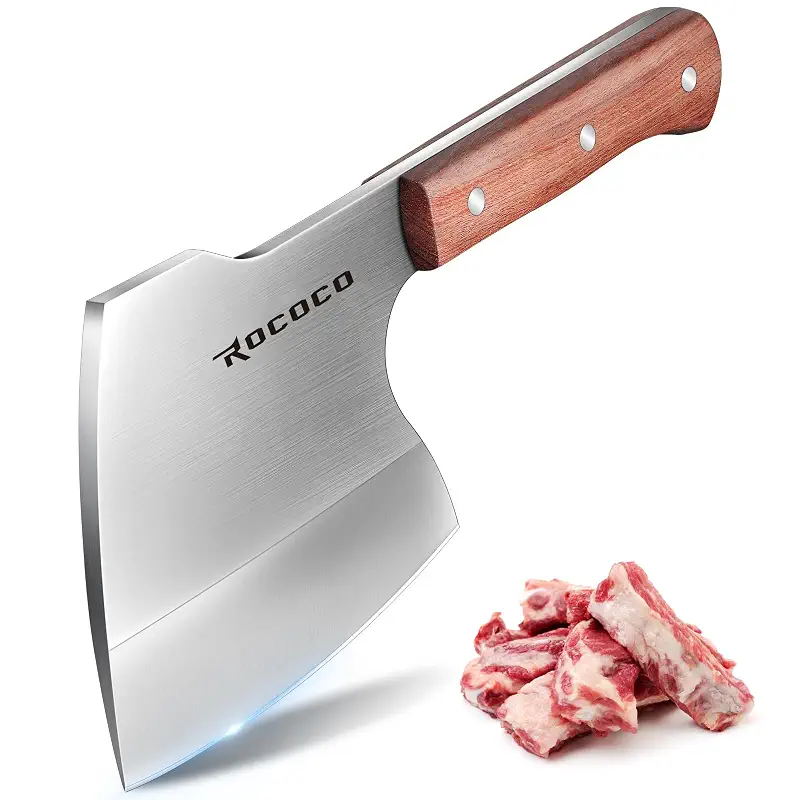
Rococo
ROCOCO Meat Bone Cleaver Knife - Silver Heavy Duty Butcher Kitchen Axes | Hand Forged Full Tang Meat Cutting Chopper for Kitchen Outdoor BBQ Mother Father Gifts Idea Men
4.6(126)
Hand-forged construction and 5mm blade thickness deliver one-blow bone splitting; ideal for serious butchery.
Ideal for: Butchers, restaurant prep staff, and home cooks breaking down whole animals or large bone-in cuts.
The Rococo stands apart for raw chopping power. Hand-forged by experienced blacksmiths, the blade is thicker and heavier than standard kitchen cleavers, designed specifically for the impact work of cutting through large beef bones, pork ribs, and frozen ingredients. The 25-degree V-shaped edge minimizes cutting resistance, and owners report cleaving through bone with a single confident stroke rather than repeated hacks.
What I notice in the reviews is the tone of surprised satisfaction. Buyers expecting a standard kitchen knife discover something closer to a butcher's professional tool. One owner uses it to portion turkey necks for dog food; another chops beef bones for broth production without chipping or bending. The integrated full-tang construction (no soldering) provides durability during sustained impact. The trade-off is weight and presence: this is not a knife for refined vegetable work or precision scoring.
Where the Mueller handles everyday variety, the Rococo specializes. If you regularly break down large cuts with bone, or want a cleaver that feels like a dedicated tool rather than a multi-purpose knife, the hand-forged construction and blade thickness justify the investment.
Pros
Hand-forged by blacksmiths for superior bone-cutting power
5mm thick blade resists chipping and bending under impact
One-stroke bone cutting eliminates multiple hacks
Integrated full-tang eliminates weak points
Cons
Heavy weight requires confidence and proper technique
Requires hand washing and drying to prevent rust
Key features
5mm thick blade hand-forged from high-carbon stainless steel
25-degree V-shaped edge minimizes cutting resistance on bone
Integrated full-tang handle without soldering or rivets
Non-slip grip design for prolonged chopping sessions
Comes with protective Oxford cloth cover for storage and transport
#3 Pick
Best Premium Option
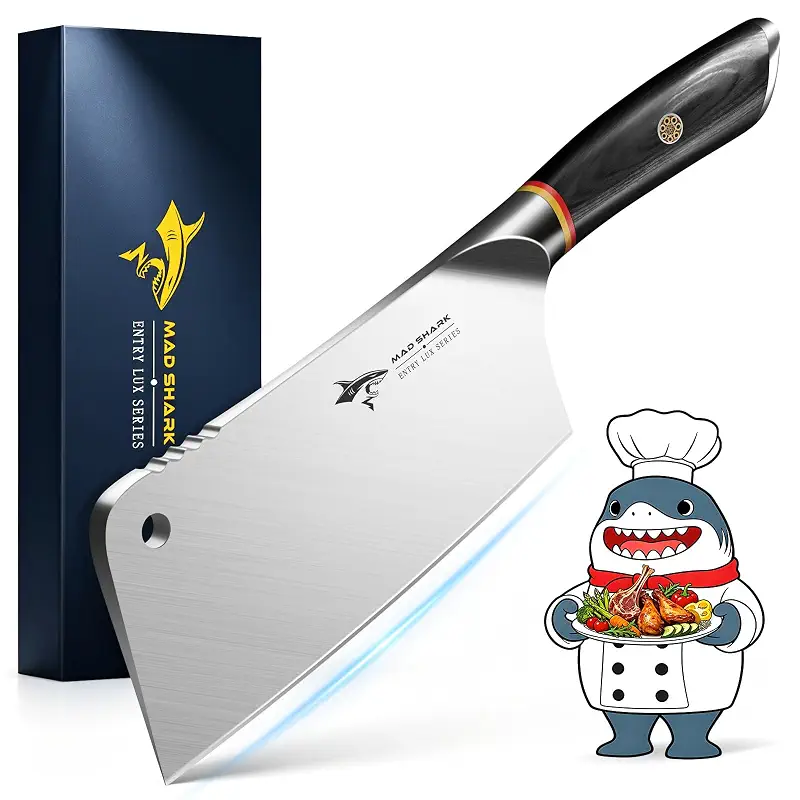
Mad Shark
MAD SHARK 7.5 Inch Meat Cleaver with German Military Grade Composite Steel | Professional Bone Chopping Butcher Knife with Heavy Duty Blade, Chinese Chef's Cutting Knife for Home Kitchen & Restaurant
4.6(532)
Military-grade composite steel with rare elements, excellent balance, and substantial weight for effortless bone chopping.
Ideal for: Home cooks seeking a premium all-around meat cleaver with impressive build quality.
The Mad Shark combines military-grade German composite steel (adding cobalt, molybdenum, and vanadium to standard carbon and chromium) with a 7.5-inch blade length and full-tang ebony handle. Owners consistently praise the sharpness out of the box and the feeling of confidence the weight provides. One reviewer notes the cleaver is about two pounds and handles chicken bone with ease; another emphasizes that the superior steel composition means less worry about rust or corrosion after use.
The ergonomic design includes carved rivets and a high-end ebony handle meant to prevent slipping during extended use. Most feedback centers on the quality-to-value perception: buyers are impressed by the finish, the gift packaging, and the performance at the price point. One 4-star review mentioned rust building under a warning label, suggesting care is needed during storage, though this was an outlier among positive assessments.
Where the Henckels (our smallest offering at 6 inches) prioritizes lightness and traditional design, the Mad Shark leans into heft and material science. If you want a cleaver that feels premium and modern, with steel science backing its performance, this sits between everyday and specialty.
Pros
Military-grade composite steel with rare alloy elements
Approximately 2-pound weight aids effortless chopping
Full-tang ebony handle with carved rivets for grip security
Stays sharp longer due to advanced steel composition
Cons
Requires proper drying after use to prevent rust buildup
Heavier than traditional alternatives like the Henckels
Key features
7.5-inch blade of military-grade German composite steel
Full-tang construction with ergonomic ebony handle
Approximately 2-pound weight for controlled impact
Arrives in white utility gift box, ready to present
#4 Pick
Most Versatile Design
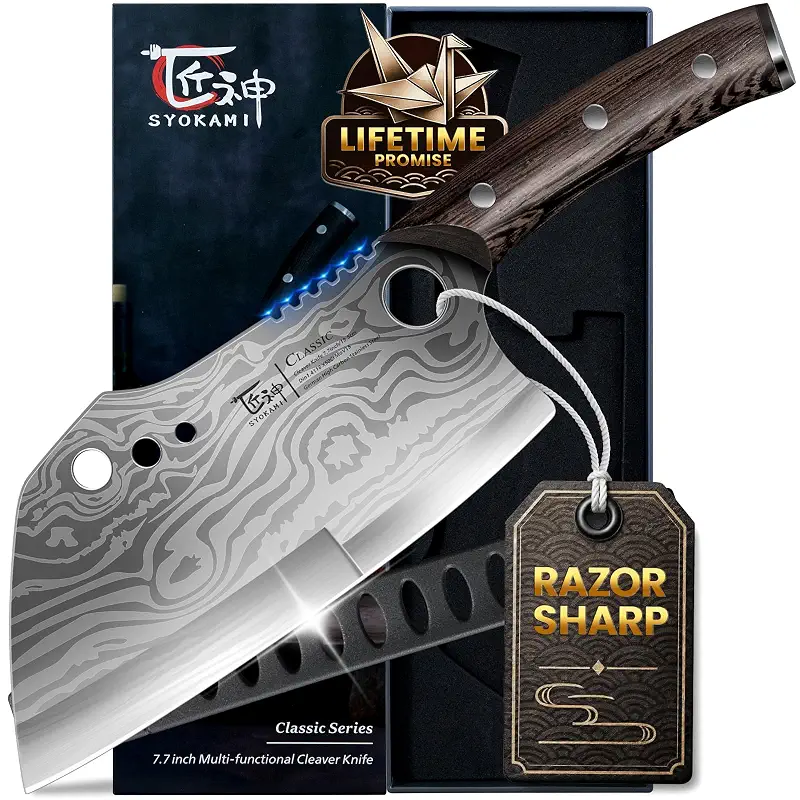
Syokami
SYOKAMI Meat Cleaver Chef Knife with Sheath, 7.7 Inch Butcher Knife | Chopping Knife with Herb Stripper, Heavy Duty Bone Cutting, Damascus Pattern Full Tang Wood Handle, Birthday Gift for Men
4.7(1,116)
Dual-angle blade zoning for both slicing and bone chopping; shock-absorbing holes reduce hand fatigue.
Ideal for: Home cooks juggling varied prep tasks, sausage makers, and those who value shock absorption during extended use.
The Syokami takes a thoughtful design approach: the front portion of the blade is sharpened to 15 degrees per side for slicing vegetables and boneless meat, while the rear is set to 30 degrees per side for small-bone chopping. This two-in-one geometry means fewer knives on your counter and one tool that adapts between tasks. The shock-absorbing holes (voids in the blade near the spine) disperse impact energy, reducing rebound and the hand strain that comes with repeated heavy chopping.
Owners rave about the weight distribution and how it powers through frozen or dense ingredients without the jarring finish of a solid blade. The FSC-certified wood handle has a gear-textured grip designed for wet hands, and the knife includes a 3-hole herb stripper for stripping thyme, rosemary, or kale. One reviewer who cuts ground meats at 70-80 percent frozen finds it more stable and intuitive than traditional cleavers. The trade-off: the wood handle requires care and won't survive a dishwasher; one owner cautioned that raw wood can deteriorate if left in standing water.
Compared to the Henckels, which is simpler and smaller, the Syokami offers more engineering complexity and a wider use range. If your kitchen knife work spans both delicate prep and bone chopping, this hybrid approach reduces the need for multiple specialized tools.
Pros
Dual-angle blade handles both slicing and bone chopping
Shock-absorbing holes reduce rebound and hand fatigue
Balanced profile delivers confidence for both tasks
Includes herb stripper for quick leaf removal
Cons
Wood handle requires hand washing and careful drying
More complex geometry means specialized sharpening needs
Key features
7.7-inch blade with dual sharpening zones: 15° for slicing, 30° for bone
Shock-absorbing holes near spine for reduced impact rebound
FSC-certified wood handle with gear-textured anti-slip design
Includes 3-hole herb stripper for leaf stripping
Heavy-duty construction for breaking down poultry and portioning ribs
#5 Pick
Best Lightweight Option
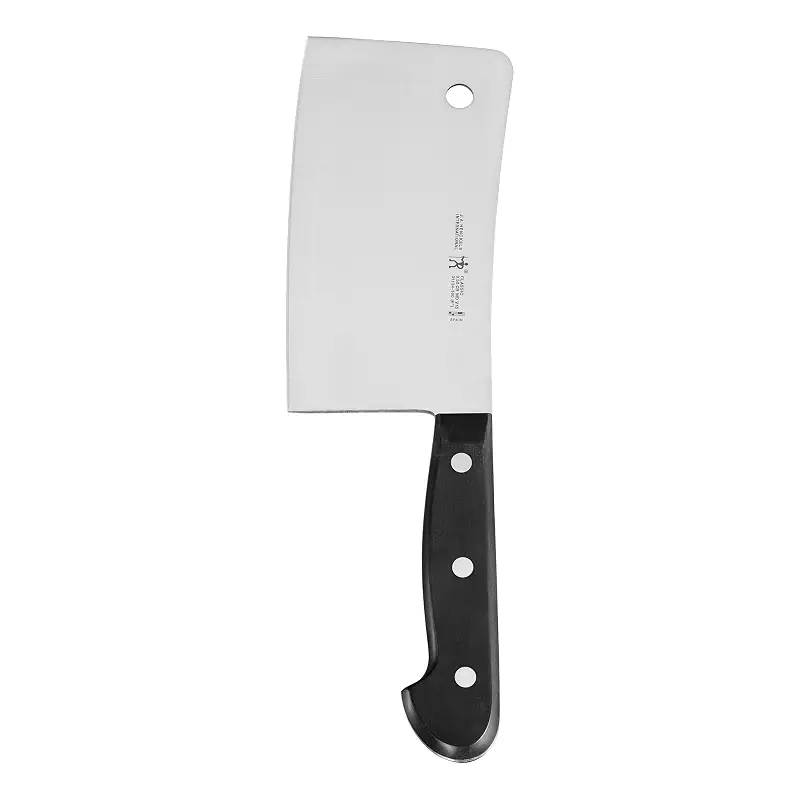
Henckels
HENCKELS Classic Razor-Sharp 6-inch Meat Cleaver Knife, German Engineered Informed by 100+ Years of Mastery
4.7(821)
6-inch compact cleaver with Henckels' century-old reputation; ideal for smaller hands and precise control.
Ideal for: Home cooks with smaller hands, those prioritizing control over force, and daily users in compact kitchens.
The Henckels Classic represents a more traditional approach: a smaller blade at 6 inches (versus 7 to 7.7 inches on competitors), lighter weight, and a narrower handle designed for those with smaller hands or anyone prioritizing maneuverability over brute force. Henckels has been making knives since 1895, and this line carries that heritage in its fully forged construction and triple-rivet handle design.
Owners describe using it for everyday kitchen work: crushing garlic, dicing daikon radish, trimming skin and fat, and portioning pork ribs and cooked chicken. One enthusiast notes that despite initial concerns about weight, it feels perfect for flourishing on the cutting board like a longer chef's knife while still delivering the crushing power of a cleaver. The satin-finished blade stays sharp longer with minimal maintenance, and multiple reviewers confirm they touch up the edge with a steel and use it nearly daily. A single 4-star review flagged a fit-and-finish issue with the tang edge; another noted the blade sharpens well when the time comes.
Where the Rococo and Mad Shark are specialists in heavy bone work, the Henckels is the generalist. If you want a compact cleaver that handles poultry, smaller bones, and daily prep without fatigue or the investment of specialty tools, this is the entry point with a name that's stood for over a century.
Pros
6-inch blade offers maneuverability for both bones and vegetables
Lighter weight suitable for extended use without fatigue
Fully forged construction with triple-rivet handle durability
Holds an edge well with minimal maintenance
Cons
Smaller size less suitable for large-scale butchery work
Requires harder strikes for large beef bones
Key features
6-inch fully forged blade with satin finish for durability
Triple-rivet handle design for seamless balance
Precision-honed edge engineered for long-lasting sharpness
Lightweight construction suitable for smaller hands and control
Dishwasher safe; hand washing recommended for edge retention
How to Choose a Meat Cleaver for Bone Cutting
Four trade-offs that actually matter when matching a meat cleaver for cutting bone to your kitchen.
Blade Size and Weight Matter
A cleaver's size and weight determine how much effort bone cutting requires. Smaller blades (6 inches) suit compact kitchens and those prioritizing control; larger ones (7.5 inches) deliver more momentum. Weight should feel substantial enough that the blade's mass does work for you, not so heavy that fatigue sets in during extended prep. Owners consistently report that a well-balanced cleaver that feels weighty but controllable transforms repetitive cutting from exhausting to satisfying. Test the weight in your grip: if your hand tires quickly, lighter options like the Henckels suit you better.
Steel Composition and Edge Geometry
High-carbon stainless steel resists rust and holds an edge, while blade angle determines how it interacts with bone. An 18-degree edge is sharp and durable; 25 degrees offers more impact resistance for hard bone work. Military-grade composite steels with rare elements (cobalt, molybdenum, vanadium) perform longer between sharpenings. German steel, from companies like Mueller and Henckels, typically balances sharpness with durability. Consider bone cutting with meat cleaver techniques: thicker blades (5mm) excel at impact work, while thinner ones handle varied kitchen tasks. Your choice depends on whether you primarily chop bones or balance bone work with vegetable and meat slicing.
Handle Design and Safety
A secure grip matters during heavy work. Seamless stainless handles (Mueller, Rococo) offer durability and dishwasher safety; wood handles (Syokami, Henckels) provide warmth and grip texture but require hand washing. Full-tang construction, where the metal extends through the handle without soldering, prevents weak points. Look for anti-slip design, whether carved details or textured surfaces. The handle should sit naturally in your palm with your fingers curling safely away from the blade. Narrow handles suit smaller hands; wider ones give larger hands more control. Henckels' narrower design appeals to those with smaller hands, while Rococo and Mad Shark suit users wanting pronounced grip security.
Maintenance and Care
Stainless steel cleavers tolerate dishwasher cycles but perform better hand-washed and dried immediately after use. High-carbon blades require drying to prevent rust; owners of the Rococo and Mad Shark stress this point. Sharpening frequency depends on use: daily users report touching up blades every few weeks with a steel, then using a whetstone or professional sharpener seasonally. Wood handles need protection from prolonged water exposure and standing water. Henckels and Mueller owners report knives staying sharp for months with light maintenance, while heavier-use contexts demand more frequent care. Consider your willingness to hand-wash and maintain before choosing between fully stainless and high-carbon options.
Best Meat Claws as a Companion Tool
A meat cleaver handles chopping, but best meat claws stabilize meat while you work, keeping hands safely away from the blade. Using claws to hold large cuts in place transforms cleaver work from awkward to controlled, especially during bone work where stability matters. Many experienced butchers pair a cleaver with claws to handle different aspects of breakdown: claws hold, cleaver chops. If you're investing in a quality cleaver, a set of quality claws complements the work and improves safety during extended prep sessions.
Frequently asked
Quick answers to the questions readers ask most.
Can a meat cleaver cut through large beef bones?
Most home kitchen cleavers handle chicken, pork, and lamb bones well. Large beef bones require heavier, specialty designs like the Rococo or Mad Shark, which are hand-forged or use military-grade steel. The Mueller and Henckels excel at poultry and smaller bones; users report these don't chip or bend on chicken or pork ribs but may require multiple strokes on large beef bones. If whole-animal butchery is your goal, choose a heavier, thicker blade.
How often do I need to sharpen a meat cleaver?
Most owners report using a steel to touch up the edge every few weeks with regular use, then professional sharpening or whetstone work one to three times yearly depending on how heavily you chop bones. German steel cleavers like Mueller and Henckels hold an edge longer than softer steels. High-carbon blades (Rococo, Mad Shark) stay sharp through extended bone work but require drying after each use. Store your cleaver on a magnetic strip or with a protective cover to avoid dulling the edge.
What's the difference between a meat cleaver and a butcher's knife?
A meat cleaver versus butcher knife differs in blade shape, weight, and purpose. Cleavers have wide, rectangular blades designed for chopping through bone and joints via downward force; they're heavy and require two-handed control. Butcher knives are narrower, lighter, and sharpened for slicing and detail work. Some cleavers like the Syokami blur this line with dual-angle blades. For sustained bone work, a dedicated cleaver's weight and geometry outperform a general butcher's knife.
Is a stainless steel cleaver better than high-carbon steel?
Stainless steel (Mueller, Henckels) resists rust, tolerates dishwasher cycles, and requires less maintenance. High-carbon steel (Rococo, Mad Shark) holds a sharper edge longer and often involves advanced alloys that boost performance. The trade-off: stainless is more forgiving; high-carbon demands proper drying and care. For home cooks willing to hand-wash, high-carbon's superior edge retention pays off. For busy kitchens or those new to knife care, stainless simplifies life.
What size cleaver is best for a home kitchen?
A 6 to 7-inch blade suits most home cooks. The 6-inch Henckels offers control and maneuverability; the 7-inch Mueller balances power and versatility; the 7.5-inch Mad Shark and Syokami deliver more momentum for heavier work. Consider your counter space, hand size, and primary tasks. Chicken breakdown and vegetable work thrive with 6 to 7 inches; sustained bone work benefits from 7.5 inches. Avoid oversized cleavers (8+ inches) unless you regularly butcher whole animals.