Kitchen & Dining · Cookware
Best Serbian Cleaver: Top Hand-Forged Knives for Meat & Vegetables
Find the best Serbian cleaver for your kitchen. Compare top hand-forged meat cleavers with high-carbon steel, full-tang handles, and leather sheaths.
Affiliate disclosure: As an Amazon Associate I earn from qualifying purchases.
At a glance
2
Best for Bone WorkHoshanho
3
Best for Everyday SlicingRococo
5
Best for All-Purpose CuttingHuusk
Detailed reviews
The Mueller Outstanding Ancient Forged Serbian Meat Cleaver arrives genuinely sharp and balances heft with control in ways that justify its loyal following. At just over a pound, the full-tang high-carbon steel blade handles tough cuts (cartilage, frozen poultry joints, root vegetables) without the user feeling like they're wrestling the tool. The pakkawood handle resists heat and moisture, a practical detail that means less maintenance than wood-only options, and the included leather sheath is substantial enough to actually protect your fingers and the blade.
Owners consistently praise how the knife performs immediately; there's no long break-in period or urgent sharpening session required. The black oxide coating prevents rust when you follow basic care (hand-wash, dry promptly, occasional light oil), though some buyers note the Chinese manufacturing surprised them given the Austrian branding. For a kitchen cleaver that won't demand a steep learning curve and arrives ready to work, this one earns its position.
If you compare this to the Rococo model, you're looking at a more affordable entry point with nearly identical sharpness and durability; the Rococo leans slightly heavier and includes a gift box, but this Mueller delivers equivalent performance at a gentler price point. The main trade-off is that high-carbon steel, while excellent at edge retention, requires more deliberate care than stainless to avoid occasional surface rust, not a deal-breaker, but worth factoring into your maintenance habit.
Pros
- Razor-sharp edge straight from packaging
- Well-balanced 1-pound weight reduces hand fatigue
- Pakkawood handle resists moisture and heat damage
Cons
- High-carbon steel requires prompt drying to prevent rust
- Chinese manufacture, though licensed from Mueller Austria
Key features (5)
- Full-tang high-carbon steel blade hand-forged as single piece
- Black oxide coating prevents rust and corrosion
- Pakkawood handle with brass rivets for durability
- Included leather sheath with belt loop for safe storage
- Optimum 1-pound weight for precision and control
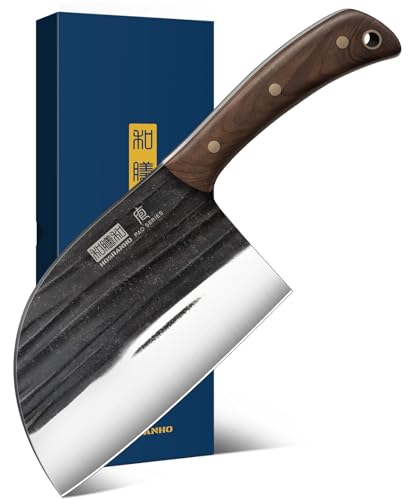
The Hoshanho 6.5" Serbian Chef Knife distinguishes itself with a notably thickened blade spine: 4mm is measurably robust compared to standard cleaver designs. This engineering choice matters when you're regularly cutting through chicken carcasses, pork ribs, or beef joint cartilage; the extra material acts as a solid backing that absorbs and distributes impact without deforming the edge or blade. The high-carbon steel sits in a 58-60 HRC hardness window (on par with the Mueller and XYJ), but the thicker profile makes it feel more tank-like, which some users prefer when tackling the toughest proteins.
What resonates in owner feedback is the knife's performance on watermelon and hard squash, suggesting the geometry and weight distribution handle both soft-tissue cutting and dense vegetable work. The walnut handle and three steel rivets provide a solid grip, and the design feels intentional rather than oversized for the sake of it. Against a knife like the XYJ, which offers a slightly larger blade at 7.5 inches, the Hoshanho trades reach for concentrated heft: a choice that rewards cooks who favor leverage over length in their cutting motion.
One caveat: the 15-20 degree angle is advertised as suitable for "delicate operations," but the thick blade profile means this is less of a precision slicer and more of a workhorse. If your primary need is fine mincing of herbs or tomato slicing, a thinner chef's knife might be a better fit. But for anyone breaking down whole animals or cutting through hard root crops regularly, this profile is a genuine advantage.
Pros
- 4mm thick blade back absorbs impact without deformation
- 58-60 HRC hardness holds edge through tough cutting tasks
- Walnut handle with three rivets provides secure, comfortable grip
Cons
- Thicker profile less suitable for fine slicing or detailed knife work
- Requires hand-washing and immediate drying like all high-carbon steel
Key features (5)
- 4mm thickened blade back for bone-cutting stability and durability
- High-carbon steel, 58-60 HRC hardness for toughness and edge retention
- 15-20 degree V-shaped edge optimized for chopping and slicing
- Full tang walnut handle with three high-quality steel rivets
- Suitable for outdoor camping, BBQ, and heavy-duty kitchen use
The Rococo Serbian Chef Knife presents a distinctly different ergonomic approach: the handle sits higher relative to the blade, which changes the angle of your hand and wrist during cutting. This geometry appeals strongly to cooks doing high-volume vegetable prep, herb mincing, or tomato slicing, where the curved blade lets you rock the knife rather than chop straight down. Several owners note the learning curve is brief but real: the initial balance feels unusual because the weight is underneath your hand instead of out in front, but once adapted, the motion becomes second nature and noticeably less tiring over extended prep sessions.
The hand-hammered texture on the blade is more than cosmetic; it has anti-sticking properties that prevent chopped vegetables from clinging to the steel. At 58 HRC temper, edge retention is solid. The Rosewood handle adds a finished aesthetic, and the safety hole in the center of the blade (a design borrowed from traditional cleavers) gives you extra grip control when you need it, plus a way to extricate the blade if it lodges in dense bone or cartilage.
Compared to the Mueller, this knife carries a slightly heavier feel and arrives needing a sharpening to reach peak performance: some owners note it came dull out of the box, which is atypical in this lineup. The stainless steel blend resists rust better than pure high-carbon options, but users report the edge dulls faster and needs more frequent maintenance. It excels at repetitive slicing and chopping, less so at heavy bone work; if your cooking leans vegetable-forward or you're deboning poultry at joints rather than hacking through thick bone, this design geometry is a genuine advantage over straight-handled cleavers.
Pros
- Curved blade and elevated handle reduce repetitive strain during long prep
- Hand-hammered texture prevents food from sticking to blade
- Safety hole in blade improves grip and extraction control
Cons
- Curved blade geometry has a learning curve for traditional knife users
- Arrives duller than competitors; requires immediate sharpening
Key features (5)
- Curved blade with 15-degree V-shaped edge for rocking chop motion
- Handle positioned above blade for reduced wrist strain during prep
- 58 HRC hardened high-carbon steel with hand-hammered texture
- Rosewood full-tang handle with three steel rivets and safety hole
- Includes leather sheath and gift box for storage and presentation
The XYJ Authentic Since 1986 enters with brand pedigree few others can claim in this category: the company has been forging knives for nearly four decades. The 7.5-inch blade is the longest in this lineup, giving you extra reach and a larger surface area for scooping chopped ingredients off the cutting board. The stonewashed and hammer finish treatment creates texture that resists sticking, and the manually sharpened edge (reported to be done by craftspeople with 30+ years experience) arrives genuinely keen, even if it requires the same careful maintenance as any high-carbon steel.
Owners emphasize how the knife's weight and bulk, combined with its sharpness, lets you cut with confidence rather than force: one reviewer who meal-preps 12 meals every few days credits this knife with cutting their prep time significantly. The high carbon steel at 58 HRC hardness is industry-standard for this price tier, but the brand's execution and consistency earn the premium positioning. The full-tang ergonomic design with reinforce rivets creates a stable platform, and the included leather sheath with belt loop is well-made.
The main trade-off compared to the Mueller is price; you're paying more for brand trust and a larger blade rather than revolutionary improvements in edge quality. The XYJ also, like most high-carbon steel cleavers, demands prompt drying and occasional oiling to stay rust-free: one detailed owner review walks through the two-minute care routine (wash, dry, oil, store) that keeps the knife pristine. If you're a high-volume cook or want the peace of mind of an established brand with decades behind it, the investment is justified. But a home cook doing occasional prep can achieve nearly identical results with the more affordable Mueller.
Pros
- 7.5-inch blade longest in lineup for reach and scooping capacity
- Manually hand-sharpened by experienced craftspeople
- Established brand with nearly 40 years of knife-forging heritage
Cons
- Higher price point than entry-level options like Mueller
- High-carbon steel requires disciplined maintenance routine to prevent rust
Key features (5)
- 7.5-inch full-tang high-carbon steel blade hand-forged and sharpened
- Stonewashed and hammer finish texture for anti-sticking performance
- Ergonomic handle with reinforce rivets for improved stability and comfort
- Includes leather sheath with belt loop and exquisite gift box packaging
- XYJ brand established 1986, known for exceptional sharpness and durability
The Huusk Meat Cleaver Knife occupies the middle ground between raw performance and user experience design. The ATS-34 high-carbon steel, hardened to 59-61 HRC, sits at the upper end of hardness for this category and is known for holding an edge tenaciously. Each blade receives hand-sharpening to a 13-15 degree angle (sharper than some competitors) and the thick back design (similar to the Hoshanho) provides leverage for bone and cartilage work without sacrificing slicing capability. Owners consistently report the knife arrives exceptionally sharp and maintains that edge through extended use, which speaks to both the steel choice and the sharpening process.
The oak handle with three rivets and full-tang construction is solid, but the standout detail is the finger hole in the blade itself: this design element gives you a secondary grip point that some users find invaluable when carving rotisserie chicken or performing fine detail work that requires added control. The hammered blade design prevents food sticking, a practical touch that makes cleanup faster. Huusk's lifetime guarantee and rigorous pre-shipment testing add confidence to the purchase. Edge retention can be less consistent than premium brands; one owner notes they sharpen it more frequently than some other knives in their collection, though they still rate it highly for performance-to-price ratio.
Where this differs from the best chef knives under 50 category is the blade geometry and weight: it's optimized for outdoor and rugged use as much as kitchen prep, with a leather sheath, lanyard hole, and gift-box packaging that signal durability and portability. If you want a single knife that performs equally well in the kitchen and on a camping trip, or if you plan to hang it on a wall or carry it regularly, the design choices here make sense. For purely indoor kitchen work, the Mueller offers similar performance at potentially lower cost.
Pros
- ATS-34 steel 59-61 HRC hardness holds edge exceptionally well
- Finger hole in blade provides secondary grip for precision control
- Hand-sharpened to 13-15 degree angle arrives razor-keen
Cons
- Edge retention can be less consistent than premium competition over time
- Oak handle and carbon steel require ongoing maintenance and care
Key features (5)
- Hand-forged ATS-34 high-carbon steel, 59-61 HRC hardness
- Razor-sharp 13-15 degree hand-sharpened edge
- Thick back design enables bone cutting and hard-impact work
- Ergonomic oak handle with finger hole and three rivets for control
- Leather sheath, lanyard hole, and gift box for outdoor portability
How to Choose a Serbian Cleaver
Blade Length and Reach
Serbian cleavers in this lineup range from 6.5 to 7.5 inches. The extra half-inch or full inch on the XYJ's blade translates to more surface area for scooping and wider coverage when breaking down whole proteins, but it also adds weight and requires a bit more counter space. If you prep in confined quarters or prefer lighter tools, the 6.5-inch models offer nearly identical cutting power with easier maneuverability. Reach matters most if you regularly quarter chickens or butcher whole cuts; for everyday vegetable prep and smaller protein work, the shorter blades are perfectly adequate.
Steel Type and Edge Retention
All five knives here use high-carbon steel variants with hardness ratings between 58 and 61 HRC. Higher hardness means longer edge retention but also requires prompt drying after use to prevent rust. The trade-off is unavoidable: high-carbon steel edges last longer and sharpen more easily than stainless, but they demand deliberate care. If you dislike hand-washing and immediate drying, or you live in a humid climate, budget time for a quick oil coat after each use. The Huusk's ATS-34 steel sits at the premium end for consistency, while the others perform virtually identically in real kitchen conditions.
Handle Design and Comfort
Ergonomic handle design separates these knives into two camps: traditional full-tang handles (Mueller, Hoshanho, XYJ, Huusk) and the Rococo's elevated, curved-blade geometry. If you've used chef's knives for years, the traditional straight handles will feel immediately familiar. The Rococo's design reduces wrist strain during high-volume slicing and herb work but requires a brief adjustment period. Consider your primary cutting task: if it's repetitive vegetable prep, the Rococo's ergonomics shine. If it's occasional all-purpose work, a traditional handle is simpler to master. The finger hole in the Huusk blade adds a secondary grip point that some cooks find invaluable for detail work.
Maintenance and Care Requirements
High-carbon steel cleavers perform best when hand-washed immediately after use, dried promptly, and occasionally lightly oiled for storage. The serbian cleaver care guide covers this in detail, but the short version: avoid the dishwasher, don't leave the knife wet in the sink, and store it in a dry location. Most owners find this routine takes under two minutes. If this sounds burdensome, a stainless-steel chef's knife is a better fit, though it will dull faster and require more frequent sharpening. All five knives here arrive with a leather sheath: use it to protect both the blade and your fingers during storage.
Use Case: Kitchen vs. Outdoor
The Huusk is explicitly designed for outdoor use (camping, BBQ, hiking) with a lanyard hole and outdoor-grade leather sheath. The Mueller, Hoshanho, and XYJ prioritize kitchen performance but travel adequately with their sheaths. The Rococo sits in the middle, suitable for both but optimized for kitchen slicing. If you plan to carry the cleaver regularly or use it primarily for outdoor food prep, the Huusk's portability features and outdoor heritage add real value. For purely kitchen use, any of these deliver identical performance; the choice then comes down to blade length, handle feel, and maintenance tolerance.
Our picks at a glance
2
Best for Bone WorkHoshanho
3
Best for Everyday SlicingRococo
5
Best for All-Purpose CuttingHuusk
Frequently asked
Do Serbian cleavers rust easily?
High-carbon steel will rust if left wet or stored in humid conditions, but the risk is managed through immediate drying and occasional light oiling after use. The black oxide coating on some blades (like the Mueller) provides added protection. Stainless steel resists rust better but holds an edge less tenaciously. If rust concerns you, hand-wash and dry your cleaver immediately after every use, then store it in the included leather sheath or on a knife magnet in a dry location. Most owners report no rust issues when they follow this simple routine.
Can these cleavers cut through bone?
Yes, but with caveats. All five cleavers handle poultry bones, cartilage, and soft bone well. The thick-backed designs (Hoshanho and Huusk) are specifically engineered for bone work and make it easier and safer. Large beef bones or extremely dense cuts may exceed these knives' comfort zone and could cause damage if you apply excessive force. Treat these as heavy-duty cleavers for home cooking and outdoor food prep, not professional butcher tools designed for thick, hard bone. The finger hole or safety hole in some designs gives you escape routes if the blade lodges during tough cuts.
What's the difference between a Serbian cleaver and a traditional chef's knife?
A Serbian cleaver has a heavier, wider blade and handle positioned for more downward chopping force, while a chef's knife is lighter and designed for rocking and slicing motions. Cleavers excel at breaking down whole proteins and cutting through cartilage; chef's knives are faster for fine mincing and precise slicing. A serbian cleaver versus german knife comparison shows similar distinctions. Many home cooks find a cleaver reduces fatigue during high-volume prep because the weight does more of the work for you. If you do substantial meat butchering, a cleaver is a worthwhile addition to your knife drawer.
How often do these cleavers need sharpening?
High-carbon steel cleavers arrive sharp and, with proper use and care, can go several months between sharpenings depending on cutting volume. The exact interval depends on what you cut (vegetables dull edges faster than soft proteins) and your technique. Most owners report one professional sharpening per year or less for typical home cooking. You can maintain the edge with a honing steel between sharpenings. The Huusk's ATS-34 steel is reported to hold an edge particularly well and may require less frequent maintenance than other options in this lineup.
Are these knives suitable for beginners?
Yes, with one caution: these cleavers arrive dangerously sharp and require careful handling and respect. The weight does the cutting work for you, which means you don't need much pressure, reducing injury risk compared to dull knives that require force. The main learning curve is the maintenance routine (hand-washing and drying). If you're new to high-carbon steel knives, budget time to develop the habit of immediate cleaning and drying after each use. The finger holes and safety features on designs like the Huusk and Rococo add confidence for new users. Start with controlled chopping motions on soft proteins and vegetables before attempting dense or hard bone.