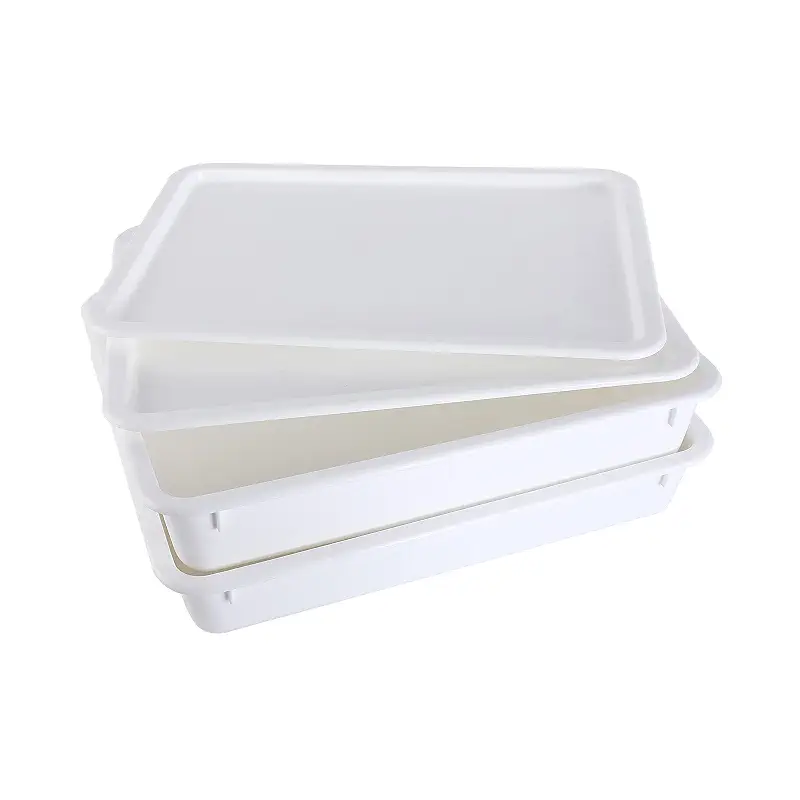
Best Dough Proofing Box for Home & Commercial Bakers
Find the best dough proofing box for sourdough, pizza, and bread. Compare heated proofers, stackable containers, and budget options. Expert reviews & buyer guide.
Ideal for: Home pizza makers, weekend bread bakers, fridges with limited shelf space.
I'd start here if you want a no-fuss proofing setup that doesn't require electricity or counter space. The GSM Brands boxes are designed specifically for dough (not repurposed storage containers) which means the plastic thickness and lid design prioritize proof conditions over airtight sealing. Buyers consistently report that five to eight 250-gram dough balls fit per box, and the flat, non-flexing construction keeps tall stacks stable even when filled. The lids sit without snapping shut, which is actually ideal; proofing dough benefits from slight air exchange rather than a vacuum seal. These boxes become a kitchen staple partly because they're priced reasonably, but also because they handle repeated abuse. The plastic doesn't crack, warp, or absorb odors, and cleanup is straightforward.
The main trade-off is capacity. If you're routinely proofing a dozen loaves or need the visibility and climate control that a heated versus passive proofing comparison reveals, the Kombella or InnovifyHub models offer more. That said, for most home pizza nights and weekly sourdough bakes, this paired set covers the workload without requiring shelf real estate.
Pros
Heavy-duty plastic resists warping and sticking
Stackable design saves refrigerator space
Holds 5–8 dough balls per box
Includes two boxes and lids for the price
Cons
Lids don't snap shut; not airtight
No temperature control or heating element
Key features
17.25" × 13" × 3.54" capacity per box, food-grade plastic construction
Non-locking lids allow gentle air circulation during bulk ferment
Two containers and covers included; stack flat for storage
BPA-free, dishwasher safe, resistant to stains and odors
#2 Pick
Best for Controlled Fermentation
InnovifyHub
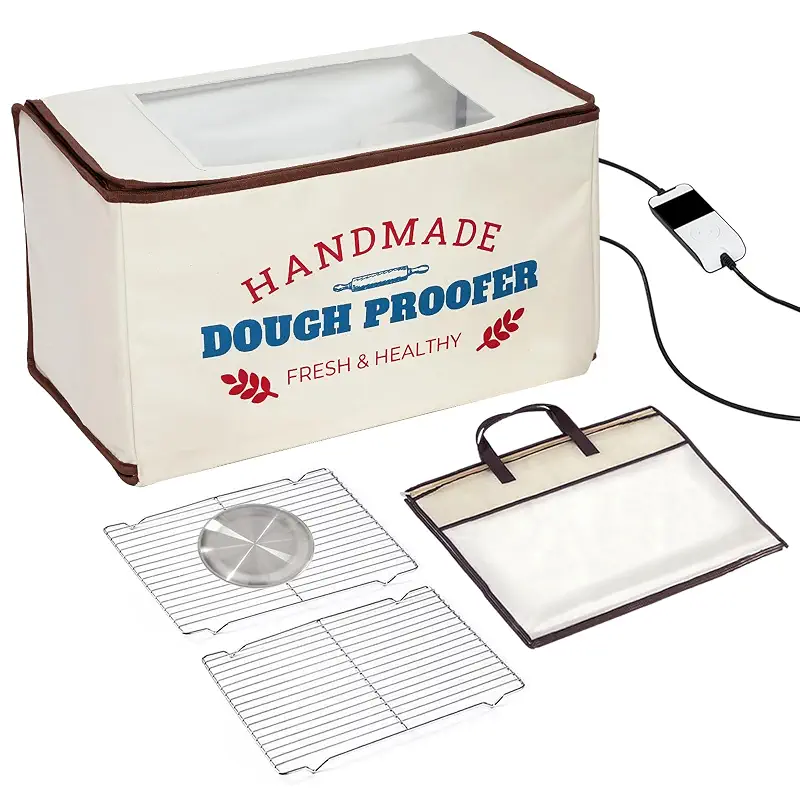
Extra Large Dough Proofing Box50-130°F, 3-Sided Heat 24HTimer | Extra-large foldable proofing box includes 3-sided heat, 50-130°F control, beep alert and storage bag for dough and seedlings
4.6(236)
Foldable heated proofer with 24-hour timer, 3-sided heating, and 50–130°F precision control for sourdough and starter work.
The InnovifyHub steps up to active temperature management, which shifts your entire baking equation. Where passive boxes depend on your kitchen's ambient warmth, this heated model lets you set exact conditions: crucial if you're nurturing a sourdough starter year-round or trying to proof dough in a cool house. The 3-sided heating (front, back, bottom) eliminates cold spots that plague single-element designs, and the NTC sensor continuously adjusts to keep temperature stable within a degree or two. Buyers consistently praise the transparency and the 24-hour timer with audible alert; you can walk away knowing your bulk ferment won't stall or over-proof unattended.
Compared to the GSM boxes, you're trading stackability and counter footprint for precision. The InnovifyHub folds flat when not in use, so storage is handled, but setup takes a minute. Some users note the remote control cable routing is awkward, and the internal temperature runs a few degrees cooler than the dial setting: minor quirks that don't affect results once you dial in the offset. For sourdough devotees and anyone baking through winter, this investment pays back quickly in consistency alone.
Pros
3-sided heating eliminates cold spots during fermentation
24-hour timer with buzzer prevents over-proofing
50–130°F range suits diverse recipes and climates
Folds flat; comes with stainless rack and humidity bowl
Cons
Remote control cable routing is stiff and awkward
Internal temp runs 3–5°F cooler than displayed setting
Key features
Extra-large foldable chamber with transparent viewing window
Digital timer (0–24 hours) with audible alarm and °C/°F toggle
NTC sensor maintains 50–130°F with ±1°F stability
5-layer insulation with 3-side heating; includes accessory kit
#3 Pick
Best Value Passive Container
Brod & Taylor
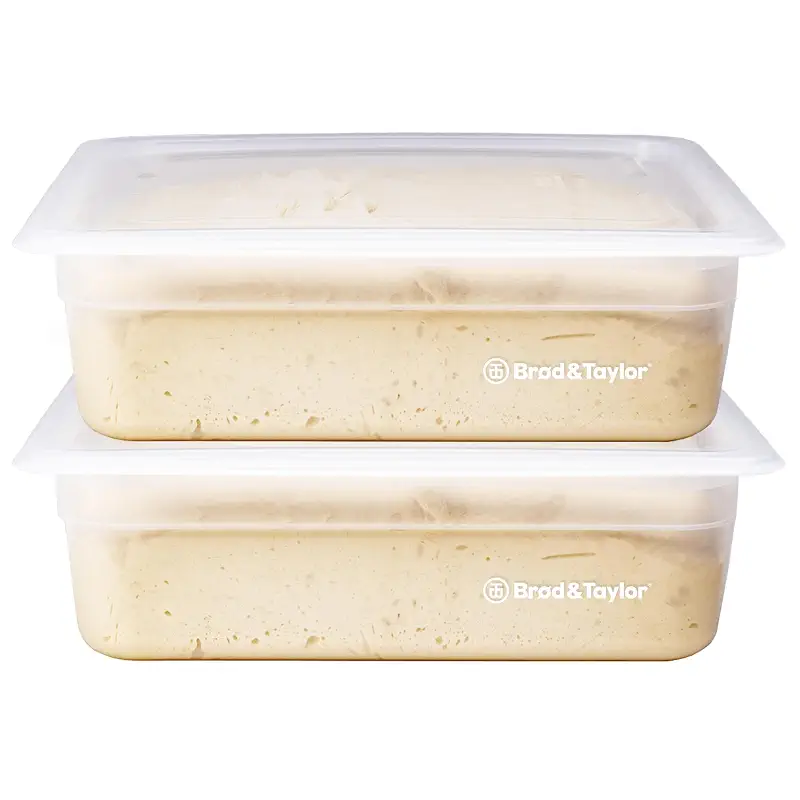
Brod & Taylor Proofing Container (2 Pack) With 6L Capacity, Fits Up to 3000 Grams of Dough – Dough Rising Box for Bread, Sourdough & Pizza (Dishwasher Safe, BPA-Free)
4.7(359)
Two translucent proofing containers with volume markings, snug-fitting lids, and 3000g capacity for hands-on mixing and proofing.
Ideal for: Minimalist bakers who mix in their proofing vessel, sourdough enthusiasts with steady room temps.
Brod & Taylor takes a middle path: no heating, but thoughtful passive design that rivals the GSM boxes in durability while adding visibility and mixing flexibility. The translucent walls with volume markings let you monitor rise progress without opening the lid, which is a small but meaningful edge when timing matters. The lid seals securely enough to trap moisture without creating a vacuum: the trade-off between passive cooling and active heating that most home bakers prefer. What sets these apart is that you can mix, bulk ferment, and stretch-and-fold inside the same container, reducing cleanup and dish pile-up.
The two-pack price sits between the GSM's entry-level cost and a heated proofer's premium, making it attractive if you already have a folding proofer and just need reliable vessels. Buyers note the containers fit perfectly inside the Brød & Taylor Folding Proofer if you want to upgrade later, which signals forward compatibility. The main limitation is the same as passive boxes: no temperature boost in winter. If your kitchen runs cool and you're not ready to commit to a heated model, pair these with a warm spot (oven with light on, off, or near a sunny window) for consistent results.
Pros
Translucent sides with volume markings track dough rise visually
Snug-fitting lids maintain humidity without full seal
Ideal for: Budget-conscious home bakers, those wanting dual-use storage, small families making 4–6 pizzas regularly.
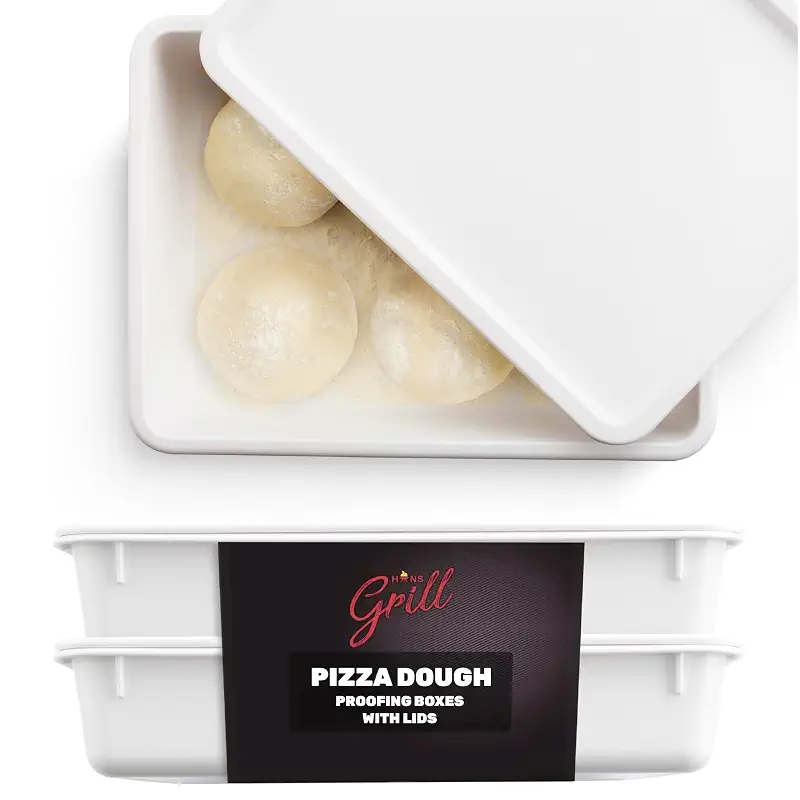
Hans Grill delivers a close alternative to the GSM boxes at a competitive price point, with one notable difference: these trays fit more snugly on a standard refrigerator shelf without crowding side edges. Buyers emphasize that the smooth interior surface releases dough easily after multi-day ferments, which matters if you're working with high-hydration or sticky recipes. The lid design (substantial enough to stay semi-airtight but not snap-locked) mirrors the GSM philosophy, though some reviewers mention the lid slides around slightly during stacking, a minor nuisance if you're shuffling containers frequently.
Where Hans Grill shines is versatility beyond dough; owners use these for vegetable storage, fermented vegetables, and general fridge organization when baking season ends. Compared to the Brod & Taylor containers, you lose translucency and volume markings but gain an extra box in the pack and a lower price. If you're torn between the GSM and Hans Grill, either works, though I'd lean GSM if fridge real estate is tight and you want slightly more robust lids. Hans Grill if you value the extra capacity and multi-purpose flexibility.
Pros
Smooth interior surface prevents dough from sticking
Compact dimensions fit standard fridge shelves cleanly
Two containers per pack; holds 6 dough balls each
Heavy-duty plastic withstands busy kitchen use
Cons
Lids slide slightly when stacked; not fully locked in place
No volume markings or transparency for monitoring rise
Key features
Large stackable trays with semi-sealing covers; two-pack includes both
BPA-free food-grade plastic; resists stains and odors
Holds up to 6 dough balls per tray or 3000g total dough
Easy to clean; can be used for produce or pantry storage
Ideal for: Frequent bread bakers, sourdough enthusiasts, batch-baking households, small home bakeries.
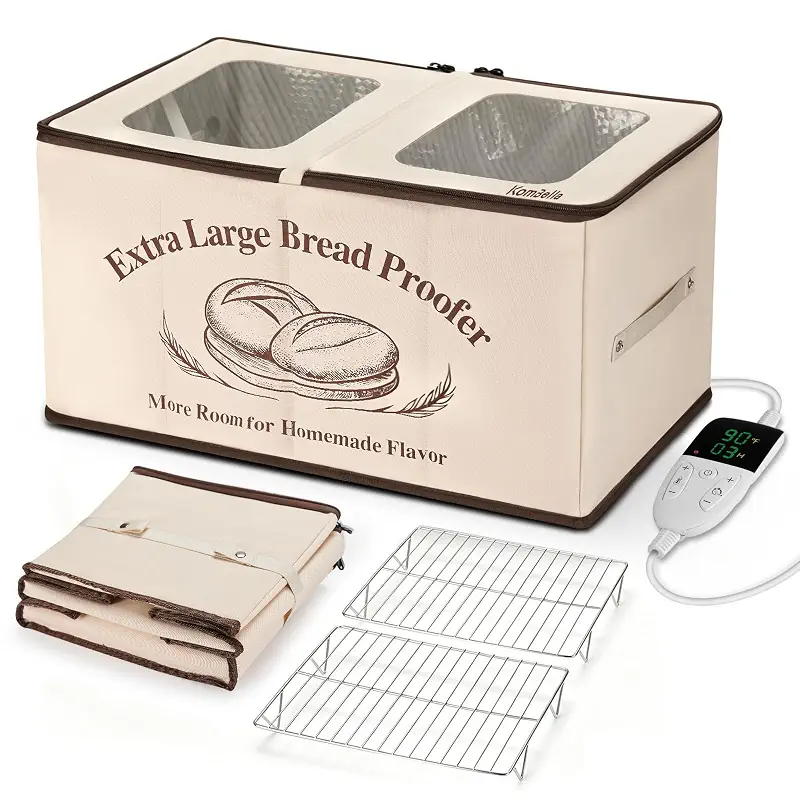
The Kombella represents the top tier of home-baker equipment, and the review count being small reflects that this is a specialist purchase, not a casual one. The internal space is genuinely enormous: 23.6 inches long: which means you can proof two large bannetons, multiple starter jars, and a full sheet pan all at once. The NTC temperature control (68–122°F) paired with the 3-sided heating and 6-layer honeycomb insulation creates the most stable fermentation environment of the entire lineup. Buyers with bread-baking experience report that results are markedly more consistent than with room-temperature proofing, and the 0–48-hour timer covers everything from quick rises to long cold retards.
The trade-off is price and setup complexity. This isn't a grab-and-go box; you fold it flat for storage, which takes a minute each time. The temperature sensor needs to be bent inward during setup (a one-time learning curve). If you're making a dozen loaves weekly or running small bread business from home, the precision and capacity justify the investment. If you're a casual weekend baker, the InnovifyHub or passive boxes serve you just as well. The clear top windows let you monitor progress without opening the chamber, and the included wire racks optimize airflow: details that signal this was engineered for serious sourdough work.
Pros
Extra-large 23.6-inch interior fits multiple loaves or bowls simultaneously
3-sided heating with 6-layer insulation maintains precise, stable temperature
0–48-hour timer accommodates long ferments and overnight cold proofs
Folds flat in seconds; includes two metal racks and clear viewing windows
Cons
Large size requires counter or floor space during use
Timer increments only in 1-hour steps, not fine-grained adjustment
Key features
Expandable to 23.62" × 15" × 12.2"; accommodates half-sheet pans or two bannetons
NTC temperature sensor maintains 68–122°F range with ±1°F accuracy
Honeycomb 6-layer insulation with 3-side heating minimizes heat loss
Collapsible frame stores compactly; includes dual metal racks and digital controller
How to Choose a Dough Proofing Box
Four trade-offs that actually matter when matching a dough proofing box to your kitchen.
Passive vs. Heated: Which Suits Your Kitchen?
Passive boxes (GSM, Hans Grill, Brod & Taylor) work beautifully if your kitchen stays between 70–75°F consistently, and pair well with the right dough hook for KitchenAid mixers already on your counter. They excel at humidity retention and cost nothing to run. Heated models (InnovifyHub, Kombella) let you proof year-round and in cool climates by generating warmth, but consume electricity and need counter setup time. If winter drops your home below 65°F or you proof sourdough starters, a heated versus passive proofing comparison shows heated models cut fermentation time unpredictably and yield more consistent rise. For spring-through-fall bakers in warm regions, passive is often enough.
Capacity and Space Trade-Offs
How many doughs do you typically proof at once? Passive stackable boxes hold 5–8 doughs per tray and slip into a fridge shelf edge-on. Heated models expand to accommodate multiple bowls, sheet pans, or jars but need permanent or semi-permanent counter placement. If your fridge is already tight, stackable boxes save real estate. If you batch-bake or keep multiple sourdough starters active, XL heated proofers justify the footprint because you can proof everything simultaneously instead of in rotation.
Visibility and Monitoring
Clear containers (Brod & Taylor) or clear-topped heated proofers let you track rise without lifting the lid, which preserves heat and humidity. Opaque boxes (GSM, Hans Grill) require opening to check progress. If you're learning to read dough, visibility cuts guesswork; if you're comfortable timing by feel and schedule, opacity doesn't matter. Many bakers work toward a timer-based workflow anyway, so the difference narrows with experience.
Budget and Long-Term Value
Passive boxes ($40–80 for two) are a low-risk entry point; they last years and handle multiple daily bakes. Mid-tier heated proofers ($150–200) recoup cost through consistency and year-round usability. Premium XL units ($250+) matter only if you bake frequently enough that speed and precision directly affect your output or business. A single sourdough loaf per week? Passive is plenty. Four loaves weekly plus pizza doughs? Heated becomes practical, not luxury.
Frequently asked
Quick answers to the questions readers ask most.
Do dough proofing boxes need to be airtight?
No. Proofing doughs actually benefit from slight air exchange: complete airtight sealing can trap excess CO₂ and stale air. The best lids seal enough to maintain humidity without creating a vacuum. This is why commercial proofing boxes have loose-fitting lids, not snap-locks. Sealed containers (like Tupperware) work for short-term storage, but over multi-hour ferments they can slow rise or create off-flavors.
What's the ideal proofing temperature and humidity explained?
Most yeast doughs proof best between 75–82°F (24–28°C). Sourdough and enriched doughs may slow at 68–70°F for controlled fermentation. Humidity should stay above 70% to prevent skin formation. Passive containers maintain humidity naturally through lid contact with rising dough. Heated proofers let you dial exact temperature; some include humidity trays. Room temperature and season dictate whether you need active heating or whether a fridge with a passive box suffices.
Can I use any plastic container for proofing dough?
Technically, yes, but quality matters. Thin plastic flexes, warps, and absorbs odors; thick, food-grade plastic like that in these boxes resists staining and maintains shape under repeated use. Generic storage totes often have overly tight lids or poor interior finishes that cause sticking. Proofing-specific boxes cost more upfront because the plastic thickness, lid fit, and interior surface finish are engineered for the job.
How many dough balls fit in one proofing box?
A standard passive box (roughly 17" × 13") holds 5–8 dough balls of 250–280 grams each, depending on how much rise you allow before stacking. The rule of thumb: balls should touch lightly after proofing, not be packed tight. Heated proofers with XL capacity can hold multiple large bannetons or mixing bowls side by side. Check the manufacturer's specs and buyer photos to match your typical batch size.
Are proofing boxes worth the money compared to mixing bowls?
Yes, if you proof dough regularly. Boxes save fridge space, eliminate the need for plastic wrap or towels, reduce cleanup, and give you a dedicated system that you can reuse weekly for years. A set of two passive boxes costs $40–80 and outlasts a dozen mixing-bowl setups. Heated proofers ($150+) become worthwhile only if you bake frequently or need year-round temperature control. For occasional bakers, a bowl with a cover works fine, but once you scale to regular batches, the box investment pays back.