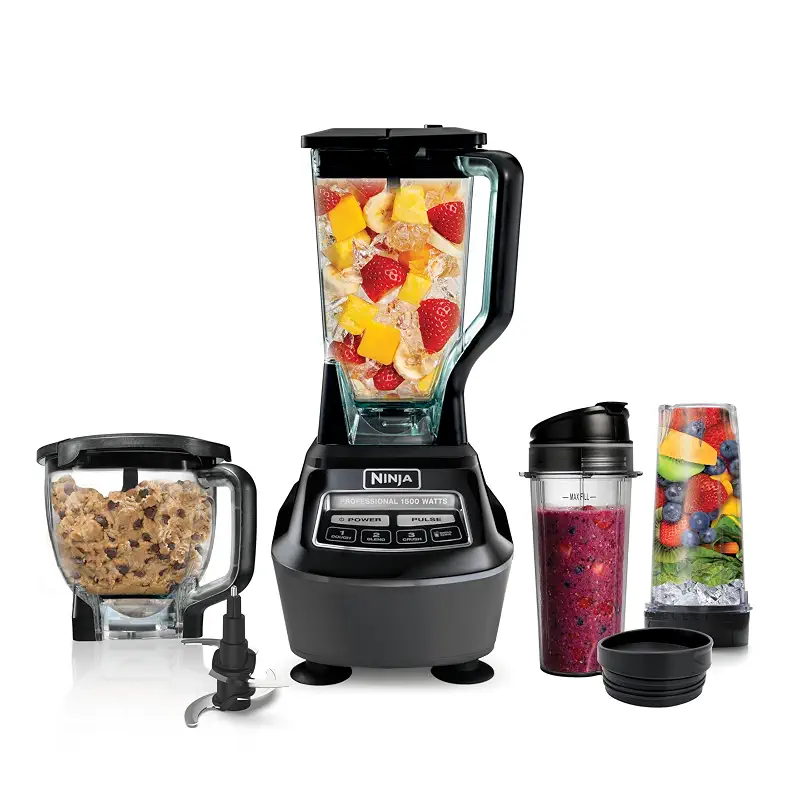
Ideal for: Large households preparing daily Indian meals with mixed blending, grinding, and food-processing needs.
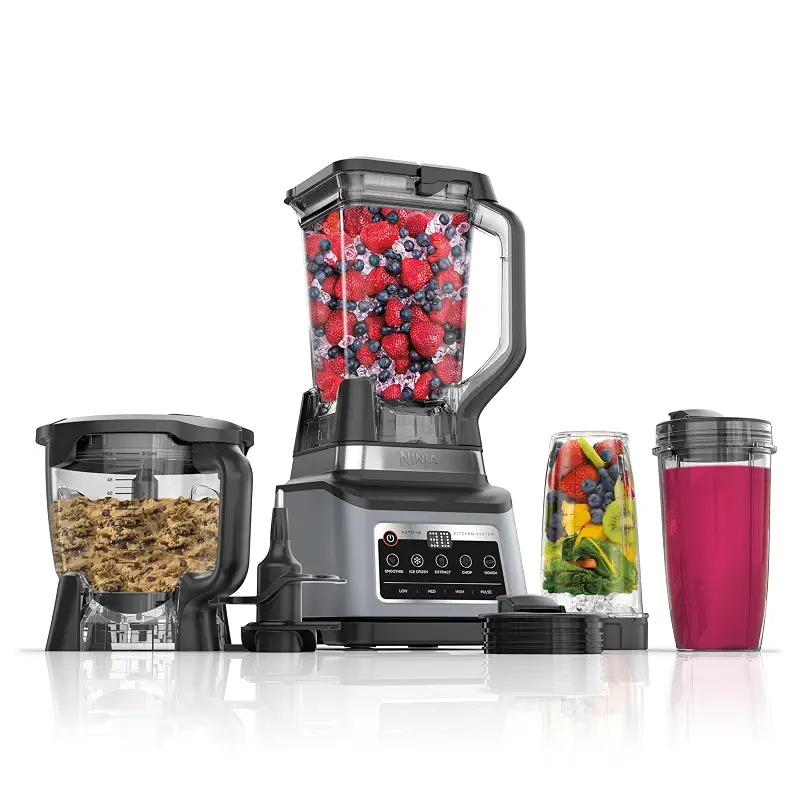
The Ninja Mega Kitchen System delivers the kind of raw muscle Indian cooking demands. With 1500 watts and four separate blade assemblies, it tackles everything from crushing whole spices to whipping thick dosa batter without hesitation. The 72-ounce pitcher handles large batches for families, and the food processor bowl with chopping and dough blades adds genuine versatility beyond what a single-jar blender offers. Owners report smooth results on curries, smoothies, and even grinding dry spices into fine powder.
What sets this system apart is the combination of size and control. Unlike the Preethi Eco Plus, which relies on a smaller 550-watt motor and requires patience with frozen ingredients, the Ninja's 1500-watt base powers through tough work in seconds. The dual 16-ounce Nutri Ninja cups mean you can prep small portions of spice paste or fresh juice without running the full pitcher. The trade-off is noise: several owners noted it announces itself across the kitchen, a drawback if you blend early mornings or in noise-sensitive homes.
Durability has proven solid in reviews: owners report years of daily use without blade dulling or motor failure, though one early buyer experienced a power issue that Ninja's warranty support resolved. The stainless steel blades are famously sharp; handle cleaning with caution.
Pros
1500W motor crushes ice, spices, and batters effortlessly
Multiple jars and blades for versatile cooking tasks
Stable, heavy base with suction feet prevents countertop sliding
Cons
Noticeably loud operation during blending cycles
Larger footprint requires dedicated counter space
Key features
1500-watt motor with four interchangeable blade assemblies
blender pitcher plus 8-cup food processor bowl with dough blade
Two Nutri Ninja cups with to-go lids for small batches
Dishwasher-safe components for quick cleanup
#2 Pick
Best for Traditional Indian Grinding
Vidiem
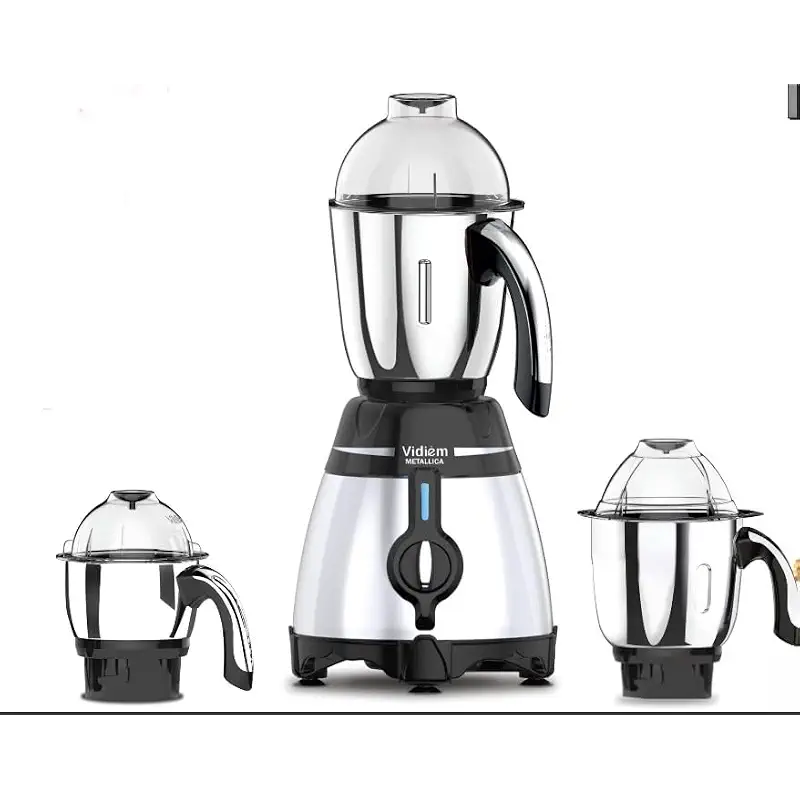
VIDIEM METALLICA STEEL 750W / 110V Free Service Kit included - INDIAN MIXER GRINDER USA
4.4(80)
Purpose-built mixer grinder with stainless steel jars and self-locking design, ideal for masalas, chutneys, and batters.
Ideal for: Indian households focused on traditional grinding tasks, spice preparation, and fermented batters.
The Vidiem Metallica Steel speaks directly to Indian cooking traditions. This isn't a blender that happens to work for Indian food; it's engineered specifically for grinding spices, making chutneys, and fermenting dosa batter. The three stainless steel jars come sized for dry grinding, wet grinding, and larger batches, which mirrors how Indian cooks actually work. The self-locking jar system is a genuine convenience: you can remove and replace jars with wet hands without fear of the coupler wearing out, a real advantage when you're juggling multiple steps in meal prep.
The 750-watt motor delivers adequate power for most grinding tasks, though it's notably less muscular than the Ninja Mega at 1500 watts. Owners report excellent results for idli batter, spice powders, and fresh chutneys; the pulse function gives you control over consistency, a feature the Ninja Professional Blender lacks. Where the Vidiem excels is durability and repair support: the motor runs cooler thanks to the Aria Cool Tec system, and replacement jars and couplers are readily available and affordable through Indian appliance dealers.
The downside: it requires hand-washing, and the jars can vibrate slightly during grinding if not seated perfectly. Compared to the Ninja Mega, it's quieter and takes up less space, but demands more attention to technique and timing to avoid inconsistent results.
Pros
Three stainless steel jars sized for varied grinding tasks
Self-locking system prevents coupler wear and enables quick jar swaps
Pulse function provides precise consistency control for masalas
Cons
Hand-wash only; jars cannot go in dishwasher
750W motor handles routine tasks but slower than high-power alternatives
Key features
750-watt Aria Cool Tec motor with air pump system for longer motor life
Three stainless steel jars with flow breakers for fine grinding
Penta Drive couplers and self-locking design for secure, durable operation
Dynamically balanced SS 304 blades reduce vibration
#3 Pick
Best Budget-Friendly Option
Ninja
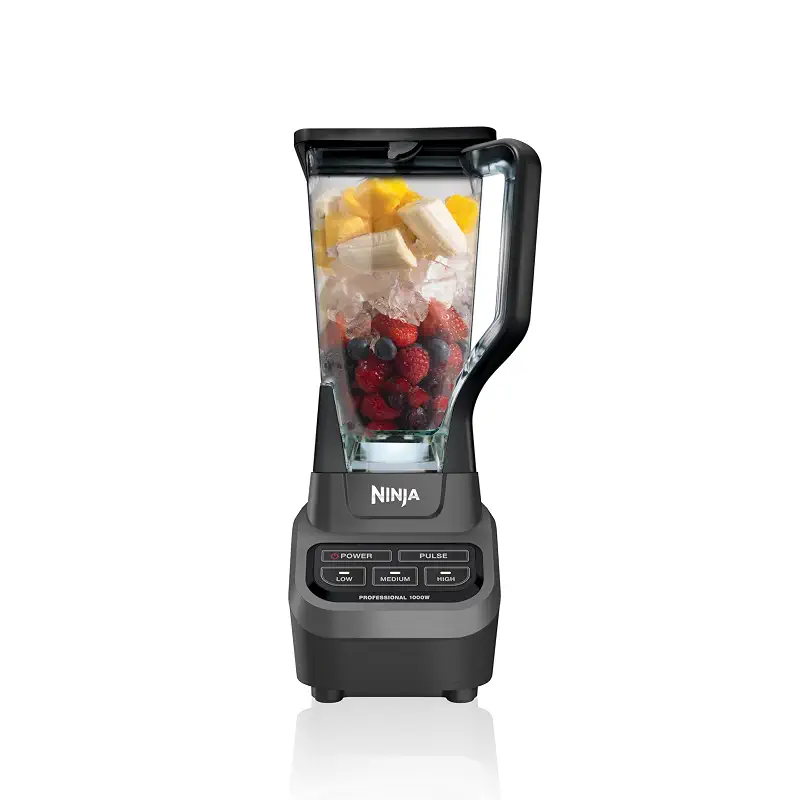
Ninja Professional Blender, 1000W, Total Crushing Tech, 72oz Pitcher, BL610 | 1000W Total Crushing blades crush ice & blend smoothies, sauces. XL 72-oz pitcher for family batches. Dishwasher-safe parts.
4.6(57,120)
1000-watt blender focused on smoothies and ice crushing; economical but blade sharpness diminishes over heavy grinding use.
Ideal for: Occasional Indian cooking combined with smoothie and frozen-drink preparation on a tight budget.
The Ninja Professional Blender offers entry-level access to Ninja's crushing technology at a lower price point than the Mega Kitchen System. With 1000 watts and the Total Crushing blade design, it handles frozen fruit, ice, and standard blending tasks reliably. The 72-ounce pitcher makes generous batches, and dishwasher-safe parts mean minimal fuss cleaning.
For light Indian cooking (occasional smoothies, frozen lassi, or simple purees) this works fine. However, owners report that over heavy-duty grinding of whole spices or thick batters, blade sharpness noticeably deteriorates within a few months of frequent use. The design relies on blade sharpness rather than torque, a trade-off reflected in reviews noting that results gradually become less smooth. If Indian cooking is occasional or supplementary to smoothie-making, this blender delivers value. But if you're grinding daily masalas or fermenting large batches of idli batter, the Vidiem Metallica or Ninja Mega will outlast and outperform it. One critical note: several international buyers reported receiving 110V models unsuitable for their home voltage; always verify electrical specifications before purchase.
Pros
1000W motor crushes ice and frozen fruit smoothly
Simple three-speed design easy to learn and operate
Large pitcher suits family-sized smoothie batches
Cons
Blade sharpness dulls with frequent grinding of spices
No food processor bowl; grinding capability limited to blender pitcher
Key features
1000-watt motor with Total Crushing Technology for ice and frozen ingredients
pitcher with max liquid capacity
Simple three-speed dial and pulse function
BPA-free pitcher and dishwasher-safe components
#4 Pick
Best Intelligent Multi-Function System
Ninja
Ninja Professional Plus Kitchen System, 1400WP, Auto-iQ, Grey, BN801 | 5 functions for smoothies, chopping & dough with Auto-iQ. 72-oz blender pitcher, 64-oz processor, (2) 24-oz cups.
4.8(14,679)
1400-watt system with Auto-iQ preset programs for five functions; powerful but steep learning curve for optimizing results.
Ideal for: Tech-savvy cooks who value preset automation and want both blender and processor in one compact unit.
The Ninja Professional Plus Kitchen System steps up from the standard Ninja Professional with Auto-iQ technology and higher peak wattage (1400W). The five preset programs (smoothies, frozen drinks, nutrient extraction, chopping, and dough) promise hands-off simplicity, a real benefit if you prefer not to guess blend times and speeds. The 72-ounce pitcher and 8-cup processor bowl mirror the Mega Kitchen System's layout, and the two 24-ounce single-serve cups offer mid-size portions between the full pitcher and tiny Nutri Ninja cups.
Where it distinguishes itself from the Mega: the Auto-iQ programs are genuinely useful for Indian cooking. The pulse and blend cycles embedded in preset "extract" and "chop" modes align well with grinding spices and making chutneys, where precise timing matters. Owners praise the food processor's dough function, which works equally well for roti or pizza dough as it does for grinding coconut or cashew paste.
The downside is that automation can work against you if you need to deviate from the program. Unlike the Vidiem's manual pulse function, Auto-iQ runs on a fixed sequence; if you're grinding a small amount of spice and the program runs too long, heat builds. Noise is also notable; the 1400-watt motor and denser blending cycles produce more sustained sound than the Mega. Compared to the Preethi Eco Plus, the Ninja's performance on dry spice grinding is vastly superior, but the learning curve is steeper.
Pros
Auto-iQ presets eliminate guesswork for consistent results
1400 peak watts crushes ice and grinds spices with authority
Dual cups bridge gap between pitcher and full-sized portions
Cons
Fixed preset cycles limit flexibility for custom grinding times
Motor heats up quickly if presets overrun for small batches
Key features
1400 peak watts with Auto-iQ technology and five preset functions
blender pitcher and 8-cup processor bowl for varied tasks
Two single-serve cups with stacking blade assembly
Dough blade for mixing up to 2 lbs in 30 seconds
#5 Pick
Best Traditional Mixer Grinder for Purists
Preethi
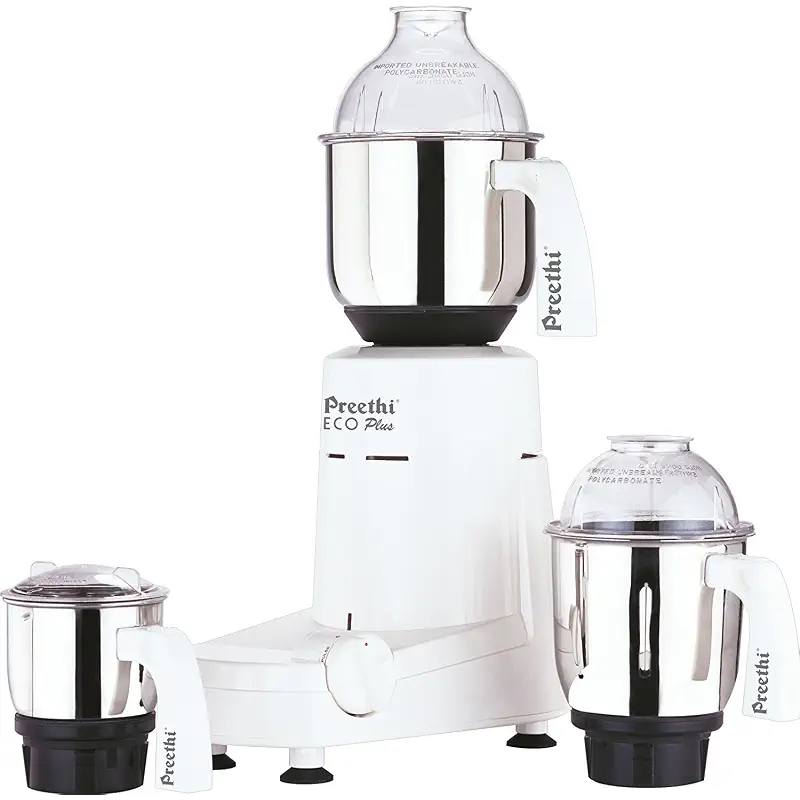
Preethi Eco Plus Mixer Grinder 110-Volt for use in USA/Canada
3.8(1,363)
550-watt stainless steel mixer grinder with three jars; economical and durable for Indian cooking basics but demands patience with frozen ingredients.
Ideal for: Purist Indian cooks familiar with traditional mixer grinders; those prioritizing durability and repair availability over speed.
The Preethi Eco Plus Mixer Grinder is the closest thing a US buyer can get to the mixer grinder found in Indian kitchens for decades. This is not a modern high-power blender; it's a specialized tool for grinding spices, making chutneys, and fermenting batters. The three stainless steel jars: 1.5 liter, 1.0 liter, and 0.4 liter: are stacked intentionally: use the large jar for dosa batter, the medium for chutney, and the small for spice grinding. Owners with years of experience using Preethi in India report seamless transition to this 110V model, and several note their previous Preethi units lasted 15 years without major repair.
The trade-off is speed. At 550 watts, this motor is less than half the power of the Ninja Mega and requires longer blending cycles. Frozen fruit or ice-heavy tasks demand thawing first; dry spice grinding works well but takes time. One owner noted running the timer for 2-3 minutes to achieve a fine powder. This is not a drawback if you accept the appliance for what it is: a purpose-built grinding tool that prioritizes longevity over speed. The motor runs relatively cool, and replacement jars and parts are inexpensive and widely available.
Where it falls short: lids don't latch securely (a design choice, not a flaw), so you must stand and monitor. If you're accustomed to modern American kitchen convenience, this demands a shift in mindset. The Ninja Mega offers 2.7 times the wattage and vastly faster results. But if you value reliability, ease of repair, and authentic Indian grinding, the Preethi is unmatched in the US market.
Pros
Three stainless steel jars sized for specific grinding tasks
Proven durability; many units last 15+ years with proper care
Replacement jars and parts widely available and affordable
Cons
550W motor requires longer blend times; frozen ingredients need thawing
Lids do not latch; requires hands-on monitoring during grinding
Key features
550-watt ISI-certified motor for quiet, efficient grinding
Three stainless steel jars with electropolished blades
Nylon couplers and vacuum rubber feet reduce vibration
Multiple blade options for wet, dry, mincing, and chopping tasks
How to Choose a Blender for Indian Cooking
Four trade-offs that actually matter when matching a blender for indian cooking in usa to your kitchen.
Power and Motor Type Matter for Grinding
Indian cooking often requires grinding whole spices, coconut, nuts, and legumes into fine paste or powder. Wattage alone doesn't tell the full story: a 1500-watt blender and a 550-watt mixer grinder serve different goals. High-power blenders (1000W and up) excel at ice and frozen ingredients; traditional mixer grinders prioritize torque and steady grinding speed for spices. If grinding is 50% of your cooking, consider wattage between 750W and 1500W. If you're mostly making lassi and occasional smoothies, even 550W works, but expect longer blend times for dense batters.
Jar Design and Materials Shape Results
American blenders typically come with a single large pitcher, while traditional mixer grinders offer three stainless steel jars in graduated sizes. Stainless steel jars handle abrasive spices and acidic ingredients better over time, resisting corrosion and staining that plastic occasionally experiences. For serious Indian cooking, multiple jars allow you to prep a small batch of masala in the tiny jar while fermenting batter in the large one. Plastic pitchers are lighter and dishwasher-safe; stainless steel jars require hand-washing but outlast plastic and support generations of use. The Ninja Mega bridges both worlds with a large plastic pitcher and optional food processor bowl.
Wet Versus Dry Grinding Cycles
Grinding dry spices requires different blade action than making wet chutney or idli batter. Traditional mixer grinders include separate dry and wet blades optimized for each task. Modern blenders use a single blade assembly for all jobs, which works but doesn't match the precision of purpose-built grinders. If your cooking involves frequent spice grinding, the Vidiem Metallica or Preethi Eco Plus offer both blade types. The Ninja systems rely on a single blade design, though the pulse function gives you manual control over grinding speed and duration. Learn to differentiate between these approaches; it affects texture and consistency of your finished dishes.
Noise, Heat, and Motor Longevity
High-wattage blenders run loud: the Ninja Mega, despite its power, announces itself loudly during operation. Traditional mixer grinders run quieter because their motors work at steady, moderate speed rather than peak bursts. If you blend early mornings in a shared home, consider a lower-wattage option or accept earplugs as part of the routine. Motor heat is a practical concern: the Vidiem's Aria Cool Tec system uses an air pump to cool the motor, extending life during frequent use. If you're grinding masalas multiple times daily, this cooling feature reduces the risk of motor fatigue. Check the grinding spices and masalas guide for techniques to minimize motor strain and extend appliance life.
Budget and Long-Term Value
Price ranges from under $100 (Preethi Eco Plus at budget levels) to over $300 (Ninja Mega), but total cost of ownership matters more than sticker price. A $200 blender that lasts eight years outperforms a $400 system that fails in three. The Preethi has a documented track record of 15-year lifespans in Indian households; repair parts cost $20–50 and are easy to source. Ninja systems offer warranty support and quicker performance but may require replacement rather than repair if motor issues arise. If you plan to use the appliance daily for Indian cooking, invest in mid-range to premium options (Vidiem, Ninja Mega) that balance speed and longevity over ultra-budget choices.
Frequently asked
Quick answers to the questions readers ask most.
Can I grind whole spices like cumin, coriander, and cloves in an American blender?
Yes, but results depend on wattage and blade design. High-power blenders (1000W+) like the Ninja Professional or Mega crush dried spices into powder in 30–60 seconds. Traditional mixer grinders (550–750W) take longer but produce finer, more uniform powder without overheating the motor. Start with small batches and use pulse function to avoid blade dulling. Avoid grinding very hard spices like star anise whole; crush them gently first or use a spice grinder dedicated to dry work.
What's the difference between a blender and a mixer grinder for Indian cooking?
A blender is designed for liquids and soft ingredients; high speed and large pitchers create smoothies and soups. A mixer grinder has lower speeds, smaller jars, and specialized blades optimized for grinding spices, nuts, and making thick pastes without splashing. Many modern mixer grinders are also blenders, but the best for Indian cooking prioritize grinding torque over speed. If you're making dosa batter, chutneys, and spice powders weekly, a dedicated mixer grinder (Vidiem, Preethi) often outperforms a high-speed blender.
Do I need multiple jars, or is one large pitcher enough?
One large pitcher (like Ninja's ) handles most tasks, but three graduated jars streamline workflow. If you're grinding a small amount of cilantro chutney while fermenting a full batch of idli batter, three jars let you work simultaneously without rinsing between batches. Single-jar systems force you to finish one task, wash, refill, and start another. For households cooking Indian food 5+ days a week, the time saved with multiple jars justifies the system cost.
Are plastic jars safe for grinding spices, or should I use stainless steel?
Both are safe, but stainless steel is superior for longevity. Plastic jars can absorb turmeric stains and odors from strong spices; they also develop microscopic scratches from abrasive grinding, where bacteria can lodge. Stainless steel resists corrosion, staining, and microbial growth, and lasts decades. If cost and dishwasher convenience matter most, plastic works fine for occasional use. For daily Indian cooking, stainless steel jars (Vidiem, Preethi) are the smarter investment.
How loud is too loud for a kitchen blender?
High-power blenders (1200W+) typically reach 85–90 decibels during operation, equivalent to a lawnmower or loud traffic. This is safe for short bursts but can startle family or wake neighbors in shared homes. If you blend before 7 AM or after 9 PM, expect complaints. Lower-wattage mixer grinders run at 75–80 decibels, noticeably quieter. If noise is a concern, prioritize the Vidiem or Preethi; accept earplugs for Ninja systems, or schedule blending during daytime hours when ambient noise is higher.