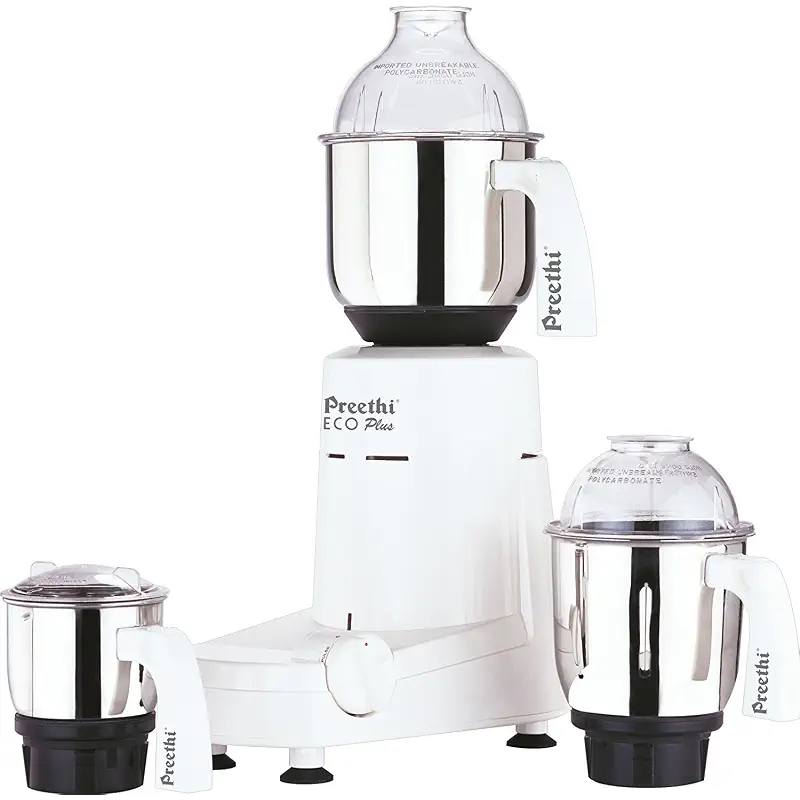
Ideal for: Daily Indian cooks; families making batter and chutneys multiple times weekly.
The Preethi Eco Plus holds real appeal for Indian kitchens in the US because it comes standard with three jars in stainless steel, each sized for a different task: the 1.5-liter for batter and smoothies, the 1-liter for chutneys and sauces, and the 0.4-liter for dry spices or small batches. The 550-watt motor is modest by North American standards, but owners who've used it for months report it handles dosa and idli batter reliably, though frozen fruit may need thawing first. Build quality leans on Preethi's decades of reputation; the company includes replacement parts and a tool to service the jars, which matters when you're far from a dealer.
The trade-off is power and speed. At 550 watts, grinding takes longer than heavier machines, and some owners mention needing to run batches for several minutes or even set a timer. The motor also tends to run hot on back-to-back loads, and the lids don't latch fully, so you'll want to keep a hand on them while blending wet ingredients. Where the Preethi Eco Plus outpaces budget alternatives like the Ckitze Tabakh is in part availability and long-term support; owners report having used earlier Preethi models for 12 to 15 years with only routine maintenance.
If counter space is tight or you want a no-fuss entry point that prioritizes Indian cooking over pure blending power, this hits the mark. Owners consistently praise the stainless-steel construction and the practical three-jar system, especially for households that make batter several times a week.
Pros
Three stainless-steel jars for task-specific grinding
Comes with replacement parts and maintenance tool
Proven long-term durability across Indian households
Cons
550-watt motor runs hot and grinds slower than premium models
Lids don't latch fully; require hand-holding during wet grinding
Key features
550-watt motor rated for 110-volt US/Canada operation
Three stainless-steel jars: 1.5L, 1.0L, and 0.4L capacity
Machine-ground, polished steel blades for consistent fine grinding
Nylon couplers and transparent domes for easy monitoring
#2 Pick
Best for Power and Performance
Vidiem
VIDIEM METALLICA STEEL 750W / 110V Free Service Kit included - INDIAN MIXER GRINDER USA
4.4(80)
Vidiem's 750-watt heavy-duty motor with advanced cooling; fastest grinding for high-volume Indian cooking.
Ideal for: High-volume daily cooking; households making multiple batches of batter or spice pastes.
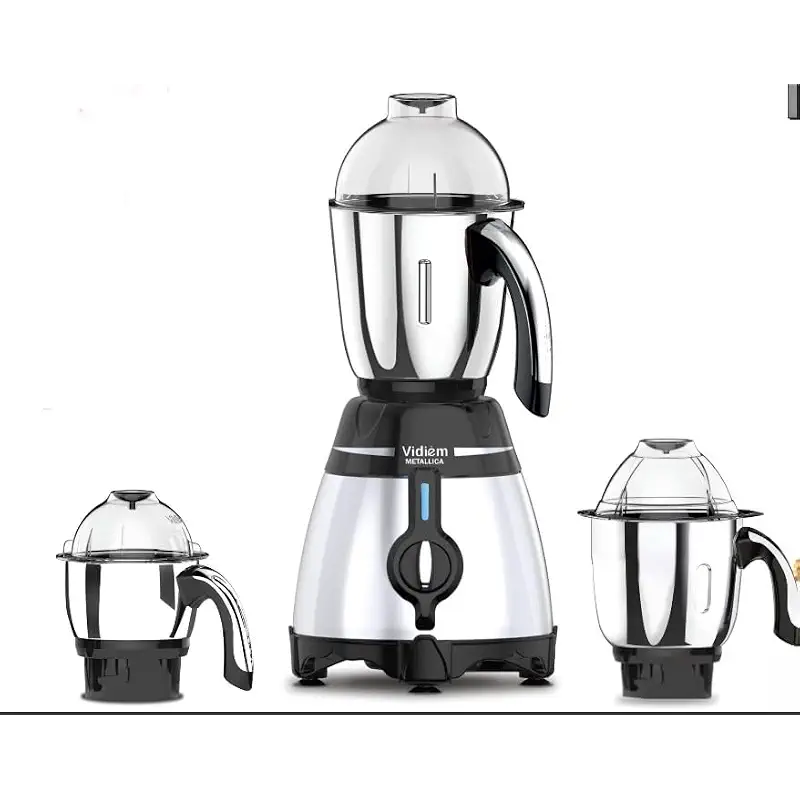
The Vidiem Metallica steps up to 750 watts, which translates to noticeably faster grinding and a machine that handles thick pastes without laboring. Owners report it excels at reducing soaked rice and lentils into smooth batter in a fraction of the time earlier Preethi models require, and the self-locking jars mean you can swap containers even with wet hands without the fidgety coupler fumbling that plagues some competitors. The Aria Cool Tec motor includes an air-pump system that manufacturers claim delivers 40 percent more cooling efficiency than standard designs, and real users back this up, saying the motor stays cooler even on consecutive grinding sessions.
Compared to the Preethi Eco Twin with its two-jar flexibility, the Vidiem commits to three jars and heavier construction, which buys you grinding power but costs counter real estate. The stainless-steel SS 304 blades are dynamically balanced to reduce vibration, and the bronze bushes self-lubricate, both engineering details that matter if you're grinding daily. Owners note it runs loud (most mixer grinders do), and there is an automatic overload cutoff that can trip if you overload or run it too long, though simply pushing the reset button restarts it. One downside is that jars aren't dishwasher safe and need to be hand-washed and dried immediately to prevent any interior rust.
This is the pick for households that rely on a mixer grinder multiple times daily or want the fastest results. Compared to the Preethi Steele, the Vidiem's cooling system and torque design make it better suited for extended use without thermal shutdown risks.
Pros
750-watt motor with advanced air-cooling for faster, sustained grinding
Self-locking jars allow easy swapping even with wet hands
Dynamically balanced blades reduce vibration during operation
Cons
Jars must be hand-washed immediately; not dishwasher safe
Automatic overload protection can trip on very thick loads
Key features
750-watt Aria Cool Tec motor with air-pump ventilation system
Three stainless-steel jars with self-locking mechanism
Penta Drive couplers handle high torque from tough Indian grinding
SS 304 dynamically balanced blades with self-lubricating bronze bushes
#3 Pick
Best Compact Option
Preethi
Preethi Eco Twin Jar Mixer Grinder, 550-Watt
4.1(3,574)
Two-jar design saves space without sacrificing performance; ideal for smaller kitchens.
Ideal for: Apartments and smaller kitchens; dual-purpose grinding for both wet and dry recipes.
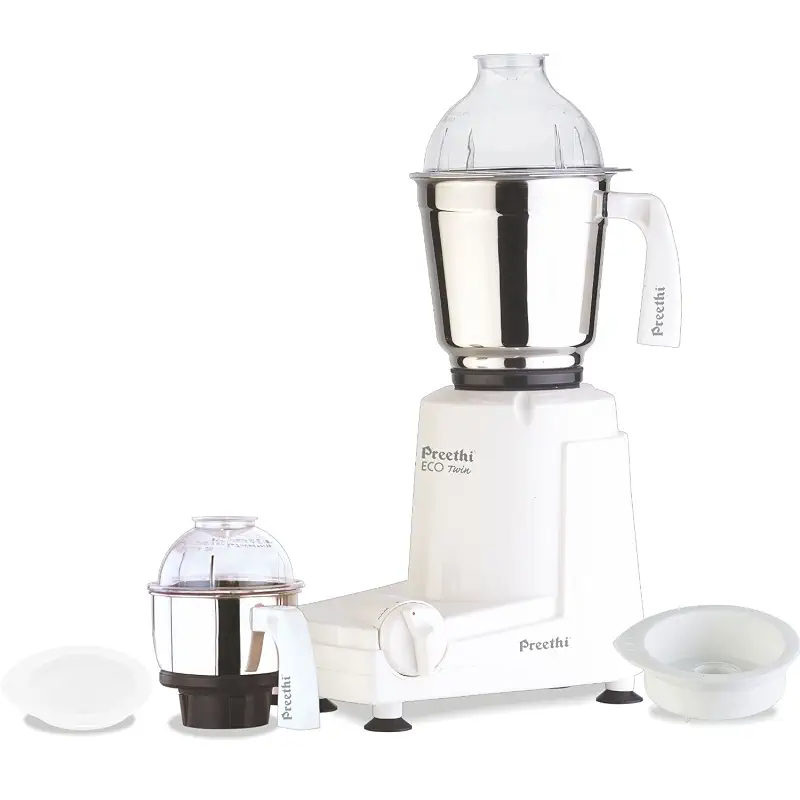
The Preethi Eco Twin Jar strips the lineup down to what matters most: a powerful 550-watt motor paired with a large 1.5-liter jar and a smaller 0.5-liter chutney jar, each convertible to smaller sizes using flexi lids. This two-jar approach appeals to kitchens with limited counter or storage space, and owners who've tested it daily report it handles dosa batter as well as the three-jar Preethi Eco Plus despite identical wattage. The key is that you're not paying for redundancy; the flexi lids let you reconfigure each jar on the fly, so you get the versatility without the third-jar footprint.
The trade-off is that the smaller jar is fixed at 0.5 liters minimum and can't be removed below that capacity, so if you're grinding a teaspoon of cumin, you'll still need enough mass to reach the blades. Owners report the machine is loud (a persistent theme across mixer grinders), and the flexi lids can allow splashing if the machine is overloaded or the lid isn't sealed perfectly, so the domed lids are preferable for wet grinding. Long-term reliability mirrors other Preethi models, with one owner reporting over a decade of heavy use with minimal issues. The UL certification adds a layer of electrical safety confidence compared to converted or imported models.
If you're comparing this to the Ckitze Tabakh Prime, the Preethi's stainless-steel construction and proven track record outweigh the Ckitze's lower price and slightly higher wattage (650W vs. 550W); the Preethi's quieter operation and tighter tolerances make it the steadier long-term choice.
Pros
Two-jar system with flexi lids saves cabinet and counter space
Interchangeable blades for dry, wet, mincing, and whisking tasks
UL-certified for electrical safety in US homes
Cons
550-watt motor can overheat on extended or heavy-load runs
Flexi lids risk splashing if seal isn't perfect or jar is overloaded
Key features
550-watt motor optimized for 110-volt US operation
1.5L and 0.5L stainless-steel jars with convertible flexi lids
Four interchangeable blades for grinding, mincing, and whisking
Overload protection reset switch at machine base
#4 Pick
Best Budget-Friendly Pick
Ckitze
Tabakh Prime Indian Mixer Grinder (Indian Mixie) | 650 Watts | 110-Volts
4.1(98)
650-watt motor and three jars at entry-level price; good for occasional grinding and spice work.
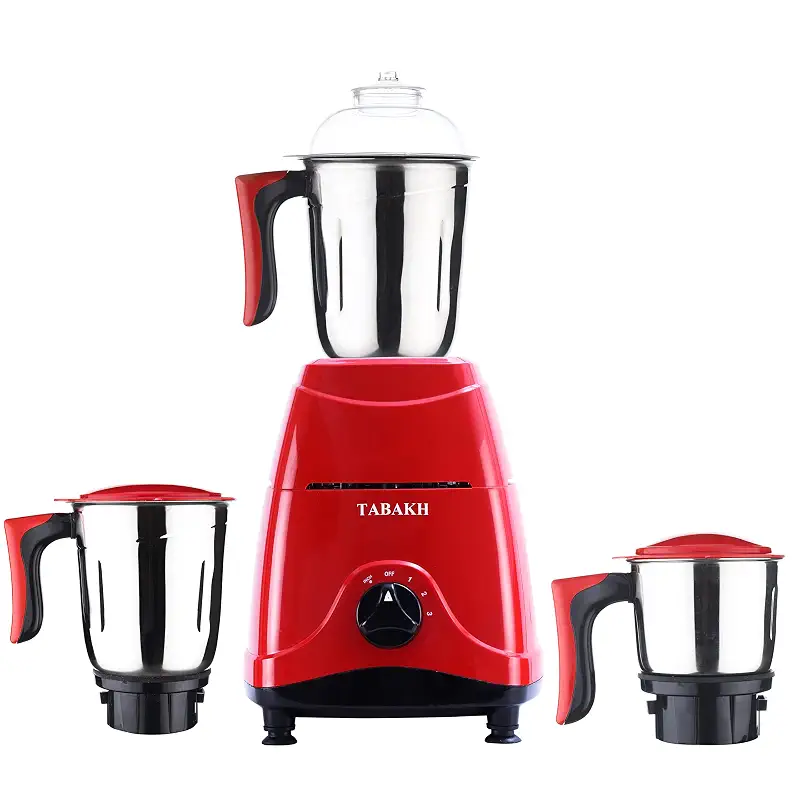
The Ckitze Tabakh Prime targets buyers who want three jars and adequate power without a premium price tag. It delivers 650 watts (50 watts more than the Preethi Eco Plus) in a lightweight plastic body with vacuum rubber feet for grip. On paper, the specs look competitive: the three-jar footprint matches the Preethi Eco Plus, and the extra wattage suggests faster grinding. Real owners are split; some report it handles masalas and coconut chutney well and appreciate the compact, cute design. Others flag loose jar lids, cheap plastic construction, and difficulty sourcing replacement parts if something breaks.
The plastic body and impact-resistant ABS chassis differ sharply from the stainless-steel durability of Preethi models. Owners who've had this long-term report the price reflects the build: it feels lighter, the lids grip poorly, and content can spill during grinding if lids aren't sealed perfectly. Where the Preethi Eco Twin or Eco Plus commit to stainless steel, the Tabakh cuts costs with plastic, which translates to a machine better suited for occasional grinding or trial cooking than daily household use. There's also a US-based service center in Illinois, which is a plus for warranty claims, but spare parts don't appear to be as readily available as Preethi components.
This is a gamble on budget: if you grind spices or make chutney once or twice a week and can live with occasional maintenance, the Tabakh works. But if you're planning daily batter grinding, the Preethi Eco Twin or Vidiem Metallica offer far better longevity and peace of mind.
Pros
650-watt motor provides more power than basic Preethi models
Three jars included. US-based warranty and service center
Lightweight and compact footprint
Cons
Plastic construction feels cheap; loose-fitting jar lids prone to spillage
Limited availability of replacement parts compared to Preethi
Key features
650-watt motor rated for 110-volt US and Canadian kitchens
Three jars: 0.5L chutney, 1L, and 1.5L for multi-purpose grinding
Impact-resistant ABS plastic body with vacuum rubber feet
12-month warranty and service center located in Illinois, USA
#5 Pick
Best Premium Build Quality
Preethi
Preethi Steele 3-Jar Mixer Grinder, 550-Watt
3.7(670)
Stainless-steel base and jars. TurboVent cooling; engineered for quiet, consistent performance.
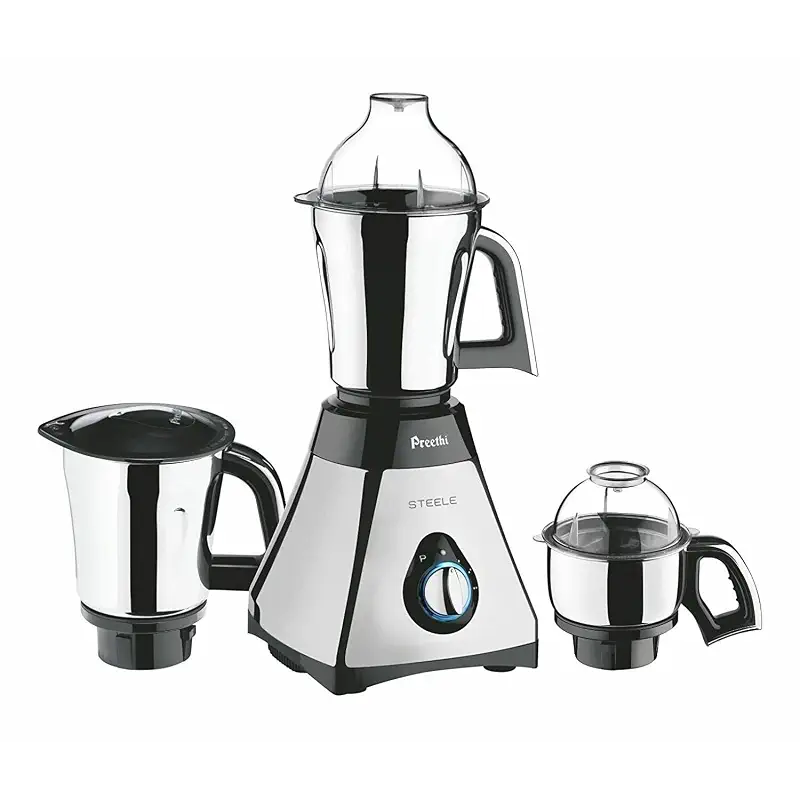
The Preethi Steele takes the same 550-watt motor as the Eco Twin and packages it inside a stainless-steel body with matching jars, aiming for durability and a cohesive look in kitchens with metal appliances. The TurboVent system is designed to allow cooler, quieter operation than standard designs, and owners do report this model runs noticeably quieter than the Eco Twin. The unique jar-machine locking system adds an extra layer of security that prevents jars from slipping mid-grind, and the newly designed couplers are engineered to handle the torque without wear.
At 550 watts, the Steele mirrors the Eco Twin and Eco Plus in raw power, so grinding speed doesn't differentiate it from cheaper Preethi siblings. Where it stands apart is the all-stainless-steel construction, which appeals to buyers who value aesthetic consistency and believe metal components justify the premium. Owners report excellent reliability over months and even years of daily use, though some mention the power-cable seal where it enters the unit could be tighter. Spare parts, like replacement couplers, are available through DIY repair channels, and owners actively trade repair videos, which signals strong community support and long-term viability.
Compared to the Vidiem Metallica's raw 750-watt punch, the Preethi Steele trades speed for quietness and aesthetic fit; the Steele is the pick if your kitchen prioritizes elegance and you don't need the fastest grinding. Compared to the Eco Twin, you're paying for metal construction and TurboVent refinements; that's a meaningful premium for a 550-watt motor.
Pros
Stainless-steel base and jars coordinate with modern kitchen aesthetics
TurboVent system enables quieter operation than other 550W models
Unique jar locking system prevents slippage during grinding
Cons
550-watt motor doesn't grind faster than cheaper Preethi alternatives
Premium price reflects materials rather than performance boost
Key features
550-watt motor with TurboVent cooling for quiet, efficient operation
Stainless-steel body and three jars: 1.5L, 1.0L, and 0.5L
Unique jar-machine locking system for added security
Newly designed couplers rated for heavy-duty Indian grinding torque
How to Choose a Mixer Grinder for Indian Cooking
Four trade-offs that actually matter when matching a mixer for indian cooking in usa to your kitchen.
Motor Power and Speed Matter More Than You Think
Indian grinding isn't the same as blending; you're creating fine pastes and powders, not smoothies. A 550-watt motor handles daily dosa batter and chutneys competently but will run hot on consecutive loads and take 10 to 15 minutes per batch. A 750-watt model like the Vidiem cuts that time roughly in half and stays cooler. If you're grinding more than once daily or dealing with thick lentil pastes, the extra wattage pays for itself in longevity and reduced waiting time. All models listed here are 110-volt, so no conversion risk.
Jar Count and Size: Flexibility vs. Space
Three-jar designs (the Preethi Eco Plus, Vidiem, Tabakh, and Steele) give you dedicated containers for dry spices, wet chutneys, and large batter batches. Two-jar designs (Preethi Eco Twin) use convertible lids to reconfigure capacity, saving cabinet space without loss of function. If your kitchen is tight, the Twin works; if you have room and grind multiple recipes daily, the three-jar setup avoids repeated cleaning between tasks.
Materials: Stainless Steel vs. Plastic
Stainless-steel jars and bodies (Preethi Eco Plus, Vidiem, Preethi Steele) resist rust, survive decades of daily use, and feel built to last. Plastic or ABS bodies (Ckitze Tabakh) are lighter and cheaper but show wear faster and offer fewer replacement-part options. For long-term reliability and mixer grinder cleaning and care, stainless steel is worth the investment if your budget allows.
Repair Access and Warranty Support
Preethi models include replacement parts in the box and benefit from years of aftermarket support and DIY repair videos. The Vidiem offers a 2-year motor warranty and 1-year full coverage. The Ckitze Tabakh has a US-based service center in Illinois but fewer spare parts readily available. Check Amazon reviews for the specific model to see how quickly owners can fix common coupler or blade wear; a model with easy, cheap repairs saves frustration down the line.
Frequently asked
Quick answers to the questions readers ask most.
Can I use a US mixer grinder to grind frozen fruit and ice, or just dry spices and wet batter?
Most mixer grinders designed for Indian cooking can handle frozen fruit if thawed first, but raw ice will wear blades quickly and overheat the motor. Owners of the Preethi models report success with frozen berries after thawing partially. If you plan to make a lot of frozen smoothies, a traditional blender or higher-wattage appliance like a Vitamix is more durable long-term.
How often do I need to replace parts like blades or couplers?
With daily use and proper drying after each wash, stainless-steel blades last years. Nylon or bronze couplers wear faster if you regularly overload the machine or grind very thick pastes; owners report replacing couplers every 2 to 5 years depending on use. Preethi models have readily available coupler kits online; other brands may require dealer orders.
Are these 110-volt models safe to use in the US without any converter or adapter?
Yes, all models listed here are manufactured as 110-volt machines for US and Canadian use. No converter needed. This differs from older models converted from 230-volt Indian machines, which can overheat and fail. Always confirm the product listing specifies 110-volt before purchasing.
What's the loudest part of grinding, and can I reduce the noise?
The gear-and-blade mechanism inherently generates noise; all mixer grinders are loud. The Preethi Steele's TurboVent system runs quieter than standard models. Using a rubber mat under the machine base helps dampen vibration. Expect 85 to 95 decibels; if noise is a dealbreaker, a traditional blender or food processor will run quieter but won't grind as finely for Indian cooking.
Can I put the jars and lids in the dishwasher?
Manufacturers recommend hand-washing and drying immediately to prevent rust inside stainless-steel jars. The Vidiem explicitly states jars aren't dishwasher safe. Rubber gaskets and metal components tolerate dishwashers less reliably than the motor base itself. Hand-wash takes 5 minutes and extends jar life significantly.