Verdict, analysis, and key features for each pick.
#1 Pick
Best Overall for Vitamix Owners
Vitamix
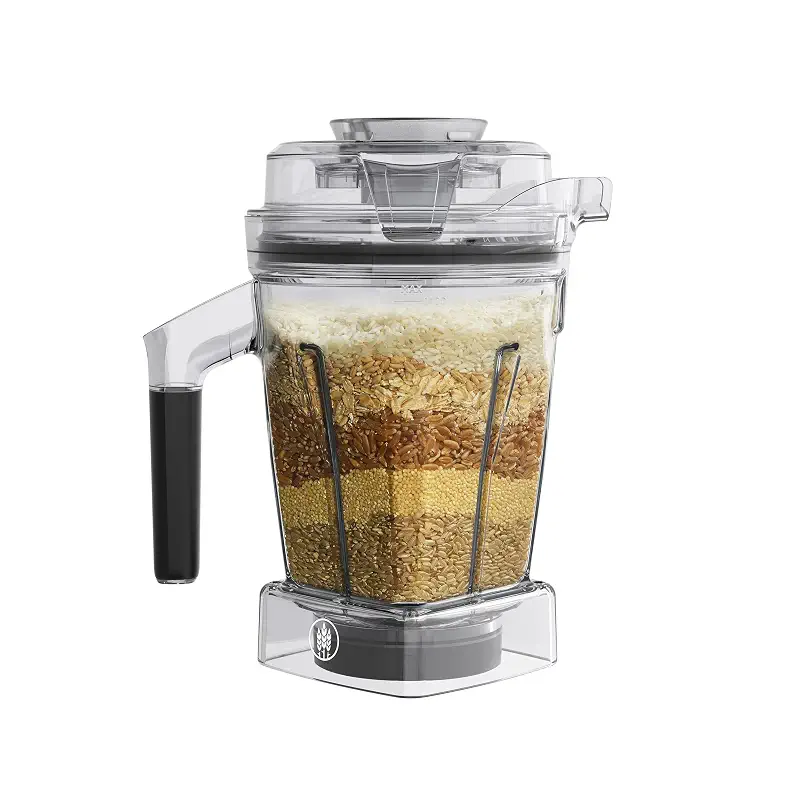
Vitamix 48 oz. Dry Grains Blender Container with SELF-DETECT, BPA-Free | Works with All Full-Size Vitamix Blenders, Grinds Grain, Seeds, and More, Dishwasher Safe, Laser-Cut Stainless-Steel Blades
4.6(438)
Purpose-built dry grains container with reverse-vortex blade design stops packing and delivers consistent flour.
Ideal for: Vitamix owners who grind grains, coffee, or nuts weekly and want optimized blade performance.
If you already own a full-size Vitamix blender, this 48-ounce dry grains container is the cleanest upgrade path. The key difference from Vitamix's wet containers lies in the blade geometry: these blades push ingredients away from the center to prevent binding, while wet-mode blades pull downward. That design choice matters most if you mill regularly. Buyers who grind flour, nuts, or coffee several times a week report noticeably better texture and less cleanup than trying the same work in their standard wet bowl.
The container pairs best with Ascent and Venturist series machines, which recognize it via SELF-DETECT and load preset grain programs automatically. Older Vitamix models work fine but require manual speed adjustment. The 48-ounce size is a trade-off: smaller than the 64-ounce standard container (less counter clutter, fits under low cabinets), but means two batches for large grinding sessions. Cleanup is straightforward since both the container and lid go straight to the dishwasher.
The main caveat is cost. This is an add-on purchase for people who already own a Vitamix base unit, so it's not a standalone solution. If you don't have a compatible Vitamix blender, you're better served by a dedicated grain mill like the Gottinfurt or Lejieyin models that operate independently.
Pros
Reverse-vortex blade prevents ingredient packing
Dishwasher-safe container and lid
SELF-DETECT presets on Ascent/Venturist series
Soft-grip handle reduces spillage during pouring
Cons
Only works with full-size Vitamix blenders
48-ounce capacity requires two batches for bulk grinding
Key features
Reverse vortex blade design pushes dry ingredients away from blades
SELF-DETECT technology auto-adjusts settings on Ascent/Venturist models
48-ounce BPA-free container with leak-proof, see-through lid
Laser-cut stainless-steel blades engineered for whole grains
Included S2 low-profile tamper for thick mixtures
#2 Pick
Best High-Volume Grinder for Budget
Lejieyin
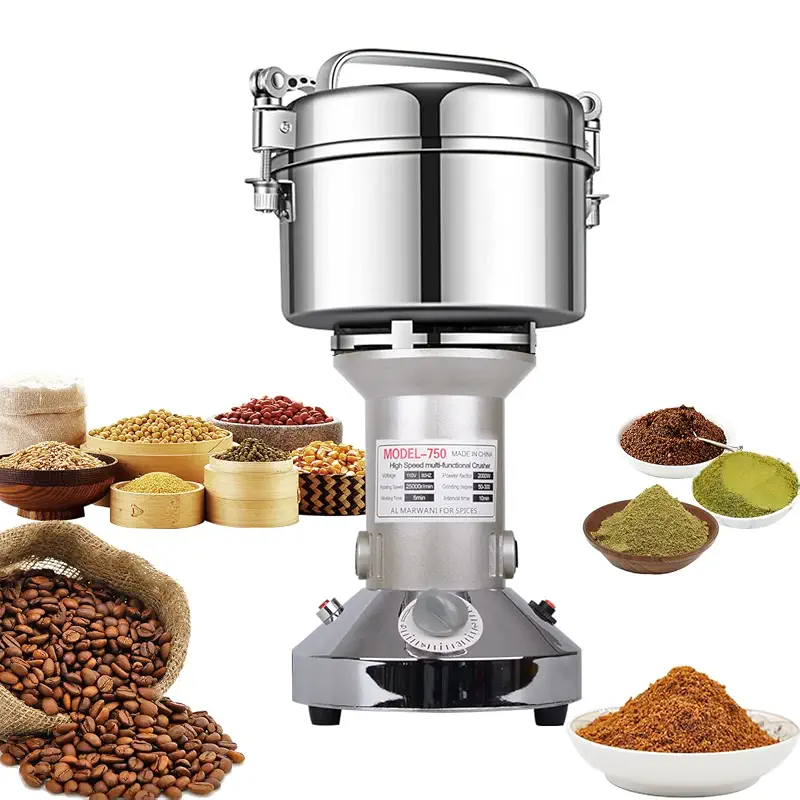
Grain Mill Grinder 750g High Speed Electric Stainless Steel Grinder Cereals Corn Flour Pulverizer Powder Machine for Dry Spice Herbs Grains Coffee Rice Pepper
4.3(3,592)
Powerful 2000W mill grinds a pound of grain into flour in under a minute, but runs hot and demands careful cleaning.
Ideal for: Budget-conscious bakers and bulk grain processors who grind large batches and prioritize speed over convenience.
The Lejieyin reaches peak power where others wind down. At 25,000 RPM, it obliterates whole grains, spices, and nuts faster than any other option in this lineup. Multiple buyers reported turning a pound of spelt berries into flour in roughly 60 seconds, and one owner confirmed eggshells grind into powder fine enough to blend invisibly into food. That speed comes from three blade types (grinding, rotary, and powder-removal) that work in sequence, not just a single cutting edge.
The trade-offs are substantial. Heat buildup happens quickly, especially on continuous runs over three minutes. Buyers strongly recommend pulsing for 30-60 seconds, then giving the motor 5-10 minutes to cool. The lid has no interlock, so the machine will spin with or without the cover seated; always unplug when reaching inside. Cleaning is tedious because the hopper doesn't detach, and residual powder settles in crevices and around the blade housing rivets. One owner noted bacteria risk in unflushable corners and recommended using a damp cloth instead of water immersion.
Compared to the Gottinfurt, the Lejieyin trades ease of maintenance for sheer grinding speed and capacity. It's the workhorse for anyone grinding pounds of grain at a time and willing to manage the cooling cycles and meticulous cleanup.
Pros
Grinds pound batches of grains into flour in under 60 seconds
Triple-blade system handles very hard spices and nuts
Overload protection auto-shuts down motor for safety
Affordable entry point for serious grain work
Cons
Motor heats rapidly; requires 5-10 minute cool-down between uses
No safety interlock; lid does not prevent blade activation
Key features
2000W motor with 25,000 RPM triple-blade grinding system
capacity processes pounds of grain or spices per batch
Fineness range from 50 to 300 mesh in under 60 seconds
Food-grade stainless steel construction with rust-resistant blades
Automatic overload shutoff protects motor from jamming
#3 Pick
Most User-Friendly Multi-Speed Mill
Gottinfurt
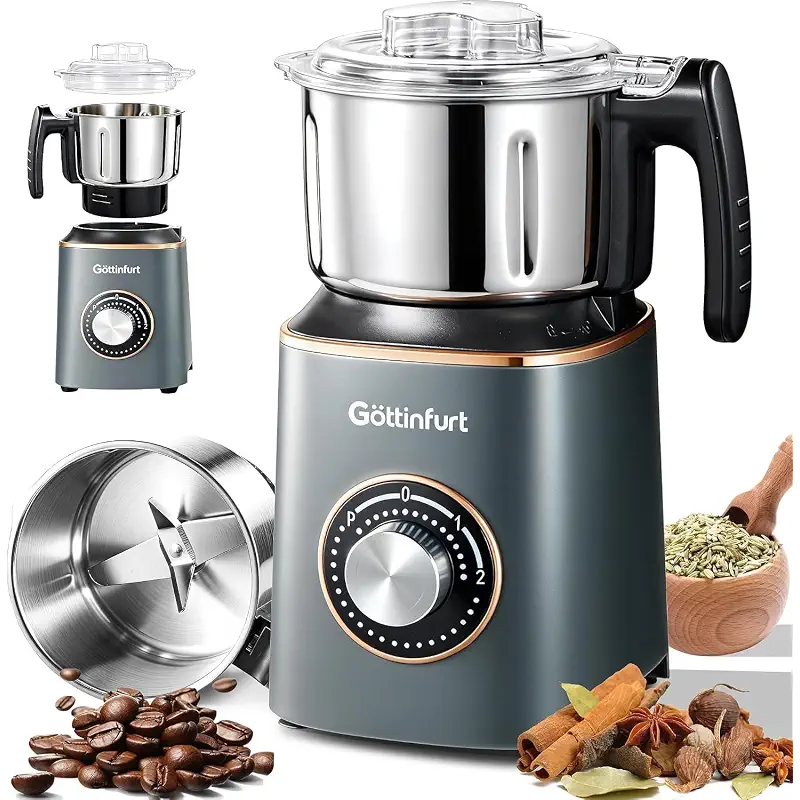
800g Grain Mill Grinder Powerful Electric Stainless Steel Spice Herb Grinder Machine with Detachable Bowl for Wheat, Nuts, Pepper and Coffee Beans
4.8(8)
Detachable bowl and three-speed control make it the easiest grain grinder to clean and customize grind texture.
Ideal for: Home bakers and spice enthusiasts who mill weekly and prioritize easy cleaning and texture control.
The Gottinfurt stands out for one practical choice that the Lejieyin lacks: a removable grinding chamber. That single design decision makes cleaning straightforward instead of frustrating. After grinding, you lift out the 800ml stainless steel bowl, empty the fine powder directly into a container or sifter, rinse if needed, and move on. No residual dust trapped under rivets or in blind corners. Buyers consistently praised this over fixed-bowl designs.
The three-speed system (19,000 RPM at top speed) lets you dial in texture. Hard ingredients like cinnamon or nutmeg yield fine powder on higher speed, while softer grains can finish on a gentler setting. The 800ml capacity is larger than the Vitamix container but smaller than the Lejieyin's batch size, making it practical for household flour milling without overshooting your needs. Anti-slip suction base keeps the unit stable during grinding, and overheating protection cuts the motor if temperature climbs.
Where it differs from the Lejieyin: quieter operation (one owner measured the Lejieyin at 86dB; the Gottinfurt draws no such complaints), more intuitive speed selection, and easier maintenance. The trade-off is grinding speed: it won't obliterate a pound of grain in 30 seconds. For regular home cooks who value cleanup speed and consistent results over raw power, the Gottinfurt closes the gap on dedicated grain mills.
Pros
Detachable 800ml stainless steel bowl simplifies emptying and cleaning
Three-speed system customizes grind fineness for different ingredients
Quieter operation than high-speed competitors like the Lejieyin
Anti-slip base and overheating protection ensure stable, safe use
Cons
Slower grind speed than the Lejieyin; batches take longer
Smaller capacity than dedicated mills designed for bulk processing
Key features
Adjustable three-speed motor up to 19,000 RPM for custom texture
800ml detachable stainless steel grinding chamber for easy cleaning
Dual stainless steel blades engineered for consistent particle size
Versatile for grains, spices, nuts, coffee beans, and herb blends
Anti-slip suction base and overheating protection for safety
#4 Pick
Best Multi-Purpose Kitchen System
Ypcoo
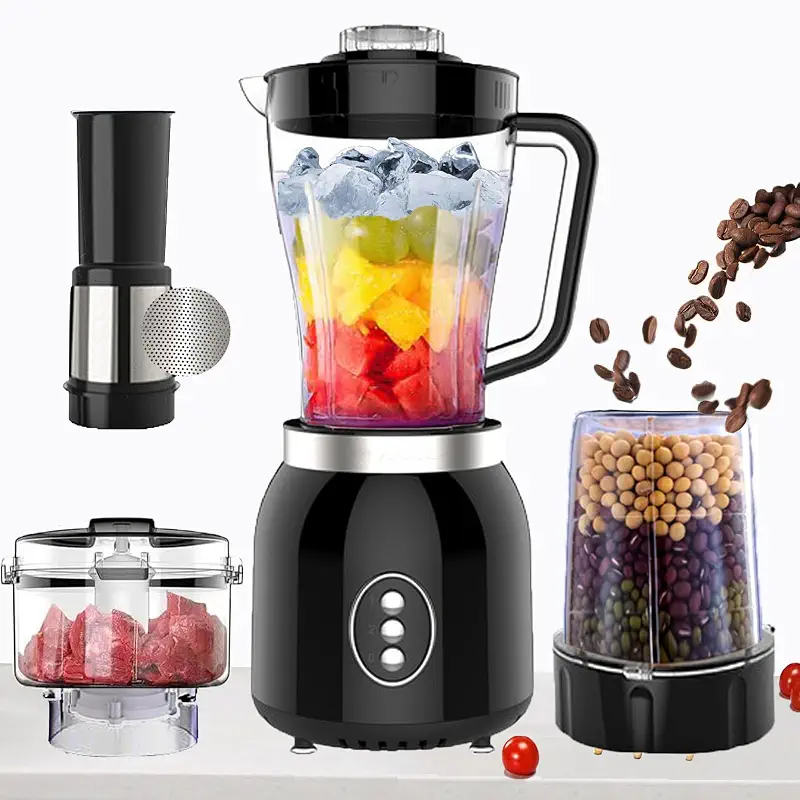
4-in-1 Kitchen Mixer, 800W Blender Food Processor & Grinder with 2 Speeds | Electric Mixer Machine for Shakes, Smoothies, Meat Chopping, Dry Grinding, Kitchen Appliance, Easy Clean, Compact, Versatile
4.2(38)
Four-in-one system with blender, grinder, and food processor jars saves space but trades grinding specialization for versatility.
Ideal for: Space-conscious cooks who blend smoothies and grind occasional spices or small grain batches.
The Ypcoo condenses three appliances (blender, grinder, food processor) into one compact footprint by swapping interchangeable jars. The grinding jar holds 0.6L with a 4-blade design meant for dry ingredients like coffee, grains, and spices. For cooks with tiny kitchens or rental restrictions, this modularity is appealing. You make smoothies one moment, grind spices the next, without storing three separate machines.
Reality check: buyers report mixed durability. One owner praised its health-food versatility and fast delivery. Another unit failed after 11 months of light monthly use (once per month). A third user noted burning smells during operation. The 800W motor is adequate for occasional grinding but not built for the high-volume work that drives someone toward a dedicated mill. If you grind grains once a month alongside regular smoothie-making, this covers both jobs. If grain milling is your primary goal, the Gottinfurt or Lejieyin will outperform it.
Compared to understanding grain grinder blade types, this system's strength lies in consolidated storage, not specialized grinding performance. The blender versus grain mill comparison leans harder toward a dedicated unit if flour-milling is a regular task.
Pros
Four-in-one design replaces three separate appliances
Three interchangeable jars for blending, grinding, and chopping
Compact footprint ideal for small kitchens or limited counter space
Detachable parts simplify cleaning and storage
Cons
Mixed durability reports; some units fail within a year of light use
Burning smell complaints suggest motor stress under load
Key features
800W motor powers blender (1.8L jar), grinder (0.6L jar), and chopper (1L jar)
Two-speed operation controls grinding fineness and texture
One-touch operation design for intuitive, beginner-friendly use
All detachable jars and accessories rinse clean easily
Compact form factor stores in tight kitchens without taking over counter
#5 Pick
Best Compact Grinder for Coffee and Spices
Black+Decker
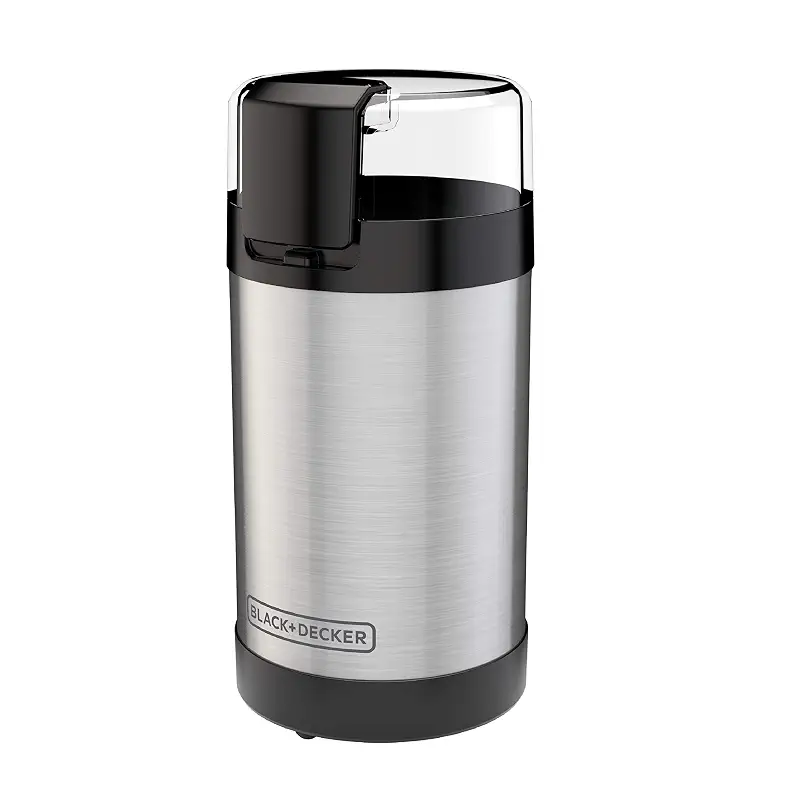
BLACK+DECKER One-Touch Coffee & Spice Grinder with Stainless Steel Blades
4.6(19,313)
Budget-friendly blade grinder with safety lockout and simple one-touch control excels at coffee and small spice batches.
Ideal for: Occasional coffee grinders and spice enthusiasts who grind small batches and prioritize affordability and simplicity.
The Black+Decker occupies the entry-level niche where most people start if they've never ground spices or coffee at home. It's uncomplicated: fill the bowl, press the button until you reach your desired texture, release, and empty into a container. The lid locks out blade activation if it's removed, eliminating accidental finger contact. For occasional grinding of coffee beans or a few tablespoons of cumin or peppercorns, this does the job at a fraction of the cost of larger mills.
Capacity limits the scope. The bowl holds roughly 8 tablespoons of beans or spices, enough for one strong pot of coffee or a single recipe dose of ground spices. If you grind a pound of wheat berries or process a full batch of dried herbs for preservation, you're making multiple runs. The stainless steel bowl is permanently attached, so cleaning means reaching in with a small brush or toothbrush to sweep out residual powder. Buyers who grade coffee seriously prefer burr grinders for uniformity, but this blade grinder does work for occasional use. Noise level is moderate and acceptable compared to high-speed mills.
Where the Black+Decker fits: it's not a grain mill replacement. It's the stopgap for someone who wants to freshen a spice jar or grind a week's worth of morning coffee without committing to a dedicated unit. The Gottinfurt or Lejieyin handle grain work orders of magnitude better, but they're also overkill if you're grinding a tablespoon of cardamom once a month.
Pros
Simple one-touch button operation requires no learning curve
Quiet, efficient operation compared to high-speed mills
Compact size and affordable entry price for first-time buyers
Cons
Small bowl capacity; requires multiple batches for bulk grinding
Permanently attached bowl makes thorough cleaning difficult
Key features
150-watt motor with stainless steel blades for uniform grinding
Bowl capacity holds approximately 8 tablespoons of beans or spices
One-touch push-button control with variable grind consistency
Safety lid-locking mechanism prevents blade activation when open
Easy cleanup with simple wipe and brush maintenance
How to Choose a Grain Grinder
Four trade-offs that actually matter when matching a blender for grinding grains to your kitchen.
Blade Type and Grinding Speed
Not all grinding blades work the same way. Understanding grain grinder blade types helps you match machine to task. Wet-mode blades (found in standard blenders) pull ingredients toward the center; dry-mode blades push them outward to prevent binding. High-speed mills (25,000 RPM) pulverize whole grains into flour in seconds but generate heat quickly. Slower, three-speed mills (up to 19,000 RPM) give you control over final texture and run cooler. For weekly flour milling, moderate speed with texture options beats raw RPM. For bulk processing, high speed saves time if you manage heat cycles carefully.
Capacity and Batch Size
Capacity determines how much you grind per session. A 48-ounce Vitamix container suits weekly coffee or spice grinding for one person. An 800ml detachable bowl handles a loaf's worth of grain flour comfortably. A fixed-chamber mill tackles pound batches for batch bakers. Ask yourself: do I grind one cup at a time or five pounds? Will I grind daily, weekly, or monthly? Oversized capacity wastes counter space for occasional users; undersized capacity frustrates bulk millers who face constant reruns.
Cleaning and Maintenance
Fine grain powder settles everywhere. Detachable bowls (like the Gottinfurt) empty directly into storage and rinse fast. Fixed chambers (like the Lejieyin) require hand-brushing crevices and dried residue buildup. Hand-wash-only designs avoid moisture in motor seals. If cleanup feels tedious, you'll skip grinding altogether. Review how many minutes you'll spend scrubbing after each use, especially if you rotate between grains and spices with lingering flavors.
Motor Heat and Cooling Cycles
High-power motors (2000W) heat up rapidly during continuous grinding. Heat can fuse grain starch or dull blade edges over time. Most dedicated mills recommend pulsing for 30-60 seconds, then resting 5-10 minutes before the next batch. If you need ground flour continuously for a project, a blender versus grain mill comparison shows that high-speed specialty mills require patience, while lower-RPM systems tolerate longer sessions. For sourdough starters and delicate grain work, heat management matters.
Versatility Beyond Grains
Do you want a one-job machine or a multi-purpose tool? A Vitamix dry container handles grains, spices, and nuts in the same ecosystem as smoothies. Standalone mills focus purely on grinding. The Ypcoo four-in-one swaps jars to replace three appliances but compromises depth in any single function. Clarify whether you're building a grain-milling station or consolidating kitchen storage before choosing.
Frequently asked
Quick answers to the questions readers ask most.
Can I use a regular blender to grind grains instead of buying a dedicated mill?
Yes, but results differ. Standard blender blades pull ingredients downward, risking packing near the blades. Specialty dry-grind containers (like the Vitamix 48oz) use reverse-vortex blades that push ingredients away, producing finer, more consistent flour. A regular blender works for occasional spice grinding but struggles with whole grains. If grain milling is routine, a dedicated mill delivers better texture and fewer stuck batches.
How do I prevent grain flour from clogging under the blades?
The risk depends on blade design. Reverse-vortex mills (Vitamix dry container) push ingredients outward to avoid binding. High-speed mills (Lejieyin, Gottinfurt) may require pulsing and pausing to let static discharge before overloading. Fill the bowl no more than two-thirds full, pulse rather than run continuously, and tap the base to shake loose any settled powder. If clogging happens, unplug the machine, wait for blades to stop, and use a small spatula to loosen the jam.
What's the difference between blade and burr grinders for grain work?
Blade grinders (Black+Decker, Ypcoo) use spinning blades to chop and pulverize. They're fast, compact, and affordable but less consistent in particle size. Burr grinders crush between two grinding surfaces, delivering uniform texture ideal for coffee espresso. For grain flour, both work, but burr grinders are uncommon in consumer grain mills. Most dedicated grain mills use blade systems tuned for dry ingredients rather than coffee-specific burrs.
Is it safe to grind hot spices like dried peppers in an enclosed mill?
Yes, but handle vapors carefully. Fine powder from hot peppers (chili, cayenne) can irritate airways when you open the lid immediately after grinding. Let the machine cool and powder settle for 30-60 seconds before lifting the lid. Work in ventilated areas, avoid leaning directly over the opening, and wash your hands before touching your face. Dedicated mills contain the grinding action better than open blenders.
How often should I clean my grain grinder to prevent contamination and flavor carryover?
After every use if you switch between ingredients (grains to spices, for example). Detachable bowls rinse quickly. Fixed chambers need brushing to remove residual powder from crevices. If flavor carryover bothers you, designate grinders for single-purpose tasks (coffee only, or spices only) to avoid cross-contamination. Monthly deep cleaning with a small brush and dry cloth keeps seals and blade housings free of buildup.