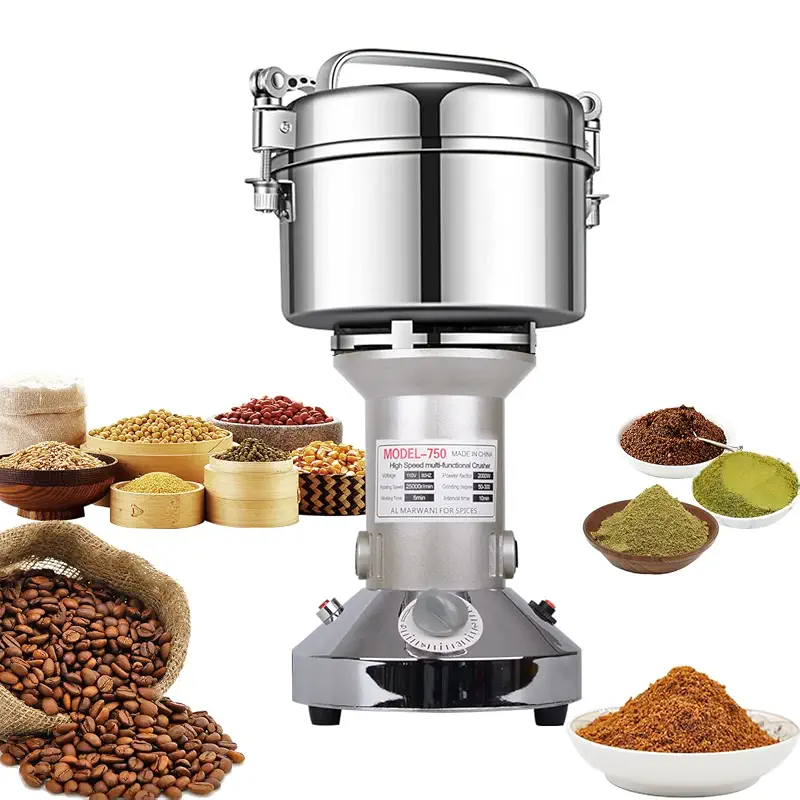
Ideal for: Home bakers grinding rice flour, whole-grain enthusiasts, spice blenders, and gluten-free cooks.
This electric mill was engineered specifically for pulverizing grains, spices, and herbs into powder, not as a secondary function. The 2000-watt motor and three-stage blade system (grinding, rotary, and powder removal) work in concert to deliver fineness ranging from 50 to 300 mesh. Users consistently report turning whole grains into flour in 30 to 60 seconds, and hardened spices like cinnamon or star anise become talc-fine powder without effort. The motor runs hot and fast by design; short bursts separated by cooling periods (5 to 10 minutes) protect longevity and prevent the material from heat-fusing inside the chamber.
The trade-off is specialization. This machine excels at dry work only: wet, oily, or moist materials will jam or clog it. If your kitchen also demands smoothies, nut butters, or wet sauces, you'll need a separate appliance. Cleaning requires care; water can damage the sealed motor, so the manufacturer recommends a damp cloth and the included brush only. Some users find the lid lacks an interlock, meaning the motor could theoretically activate without the cover locked in place, though the instruction manual warns against this.
Where this differs from a best blender for hummus setup is the trade: you gain raw grinding speed and particle fineness at the cost of range. If rice flour and spice blending are your primary goals, this mill's narrow focus is actually an asset.
Pros
Pulverizes whole grains into flour in 30–60 seconds
Three-blade system achieves 50–300 mesh fineness consistently
2000W motor handles hard spices, nuts, and dried herbs easily
Cons
Dry materials only; wet or oily foods will clog the grinder
Lid lacks safety interlock, requiring user caution
Key features
2000-watt motor with 25,000 RPM triple-blade system
Ideal for: Families needing smoothies, soups, sauces, and occasional grain grinding in one tool.
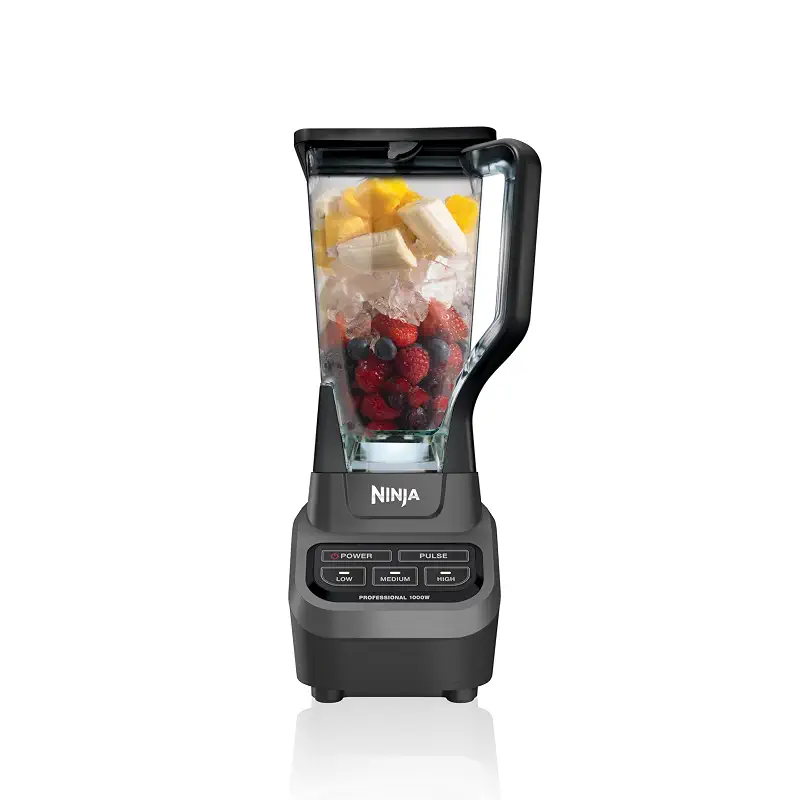
The Ninja Professional delivers solid, mid-range power for everyday kitchen tasks. Its 1000-watt motor and Total Crushing blades handle frozen fruit, whole vegetables, and ice with ease, and owners confirm it can grind rice into flour in roughly 20 seconds with brief pulses. The 72-ounce pitcher is spacious for family-sized batches, and the dishwasher-safe design simplifies cleanup. For someone making smoothies, sauces, and occasional rice flour in one appliance, this blender covers the ground without asking you to buy two machines.
However, grinding rice is not where this blender shines. It runs louder than dedicated mills and generates more friction heat, which can affect the texture and temperature of finely ground grains if you push it beyond short pulses. Users note that after weeks of regular use, the sharp blades dull slightly, which affects consistency: a known trade-off with sharp-blade technology compared to slower, more robust mills. For daily smoothie work it's a non-issue, but if you're grinding rice flour twice a week, you may notice degradation over months.
Compared to the Lejieyin grain mill, the Ninja sacrifices grinding focus for blending range. If your kitchen rhythm alternates between green smoothies and rice-flour baking, this is the practical choice. If rice grinding is primary, the grain mill will deliver faster, finer results.
Pros
1000W motor crushes ice and blends frozen fruit seamlessly
Large pitcher suited to family-sized batches
Simple controls and dishwasher-safe pitcher make cleanup quick
Cons
Blade dulling over time affects fineness of long-term grain grinding
Runs loudly, which some users find disruptive in early mornings
Key features
1000-watt motor with Total Crushing blade technology
72-ounce pitcher with 64-oz max liquid capacity
BPA-free, top-rack dishwasher-safe pitcher and base
Efficient for smoothies, sauces, ice crushing, and occasional dry grinding
Ideal for: Space-conscious households needing blending, chopping, and grinding without multiple appliances.
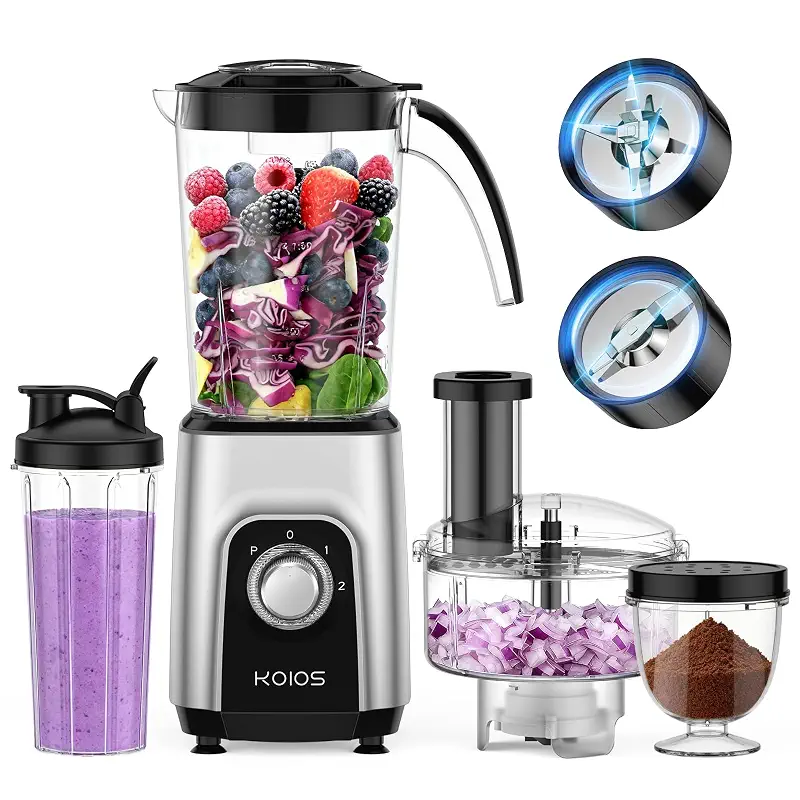
The Koios combo system bundles blending, food processing, and dry grinding into a single 1000-watt motor base with four interchangeable bowls and blade sets. It's an efficient space-saver for kitchens where countertop real estate is tight. The 34-ounce blending pitcher, 22-ounce to-go cups, a chopper bowl, and an 11-ounce grinding cup arrive as a complete ecosystem. Users report it handles rice grinding, vegetable chopping, and smoothie-making without requiring a separate purchase, and the multiple cup sizes suit both solo servings and small batches.
The reality is that this versatility comes with compromise. The grinder cup is smaller than a dedicated mill, limiting batch size and requiring longer, more frequent pulses for the same volume of rice flour. The food processor slicer and shredder functions can jam or require excessive downward force to feed materials smoothly, and some users mention these attachments need improvement. The blades are smaller than standalone units, and while the motor is respectable, it's stretched across four distinct tasks. Cleanup involves multiple detachable parts, which is convenient for dishwasher placement but time-consuming to reassemble.
Where this differs from the Lejieyin grain mill or even the Ninja blender is strategic: the Koios accepts that you'll do a little of everything, rather than mastering one thing. It suits busy families or apartment dwellers more than someone optimizing for rice-grinding speed or smoothie perfection. Expect decent results across the board, not excellence in one.
Pros
Four separate cups and blade sets reduce cross-contamination
Compact footprint with multiple functions in one base
Includes portable 22-oz cups with to-go lids for convenience
Cons
Smaller grinder cup limits batch size compared to dedicated mills
Slicer and shredder attachments require firm downward pressure
Key features
1000-watt motor with four interchangeable cup and blade combinations
34-oz pitcher, two 22-oz to-go cups, and 11-oz grinding cup included
Manual speed dial and safety lock lid for controlled texture
All cups, lids, and blades detachable and dishwasher-safe
Ideal for: Large households and frequent entertainers needing blending, food processing, and occasional grain grinding.
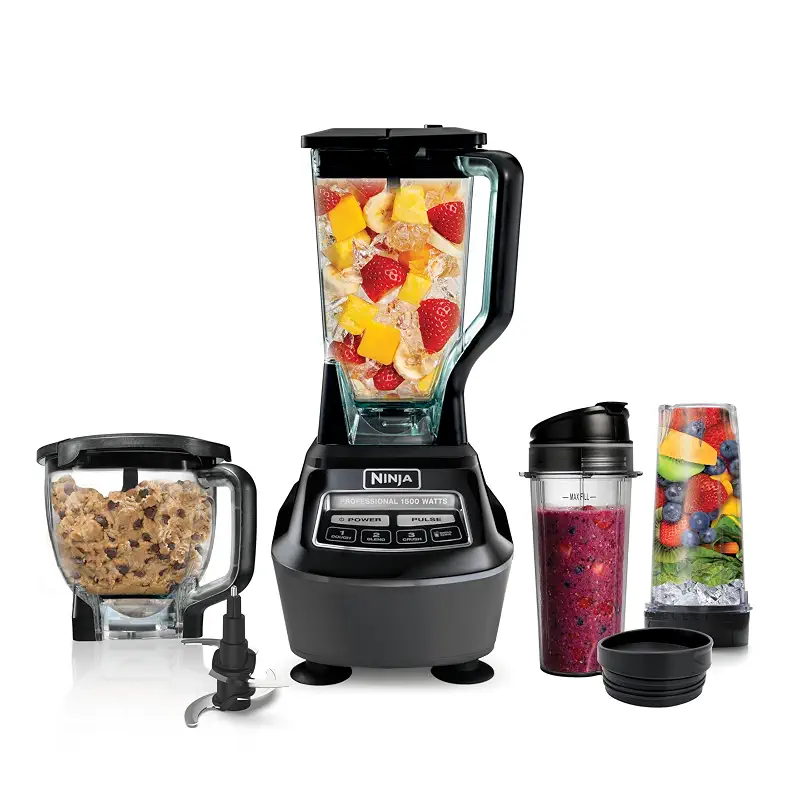
The Ninja Mega Kitchen System unleashes 1500 watts across a unified motor base, making it the most powerful entry on this list. The oversized 72-ounce blending pitcher with Total Crushing blades and an 8-cup food processing bowl with separate chopping and dough blades create a genuinely capable cooking station. Users report blending dozens of ingredients for green juices without strain, and the dough blade can knead two pounds in 30 seconds. For grinding rice, the extra horsepower delivers faster pulverizing than its smaller sibling, the Ninja Professional, and the larger pitcher means fewer batches.
The cost of that power is noise and complexity. Multiple reviewers highlight that this blender announces itself loudly enough to wake household members sleeping in other rooms. The four unique blade assemblies demand careful storage and cleaning: the instructions emphasize extreme caution when handling blades, and users report catching themselves on surprisingly sharp edges during dishwashing. The footprint is also substantial; it's not a slim countertop appliance. Durability appears strong (many owners report years of daily use), but the system is more involved to maintain than a single-purpose mill.
Unlike the Lejieyin grain mill, which prioritizes grinding fineness, or the Ganiza food processor, which excels at chopping vegetables and meat, the Mega balances everything. For households making smoothies, grinding grains, kneading dough, and processing vegetables all in regular rotation, this system eliminates the need to store and switch between three appliances. If grinding rice is one of many weekly tasks, the extra investment pays dividends.
Pros
1500-watt motor handles ice, frozen fruit, whole vegetables effortlessly
8-cup food processor bowl suits dough mixing and vegetable prep
Includes two Nutri Ninja cups with spout lids for portability
Cons
Very loud operation, unsuitable for early mornings or quiet households
Large footprint and multiple blade assemblies complicate storage
Key features
1500-watt dual-function motor with four optimized blade systems
blender pitcher and 8-cup food processor bowl included
Total Crushing blades for ice and frozen fruit; dough blade for up to 2 lbs
Four functions: Blend, Mix, Crush, and Single-Serve modes
#5 Pick
Best Budget Food Processor Alternative
Ganiza
Ganiza Food Processors with 2 Bowls, 450W Meat Grinder Vegetable Chopper | 2-Speed Electric Food Chopper with 8 Cup Glass & 8 Cup Stainless Steel Bowls -Includes 2 Sets of Blades for Fruits/Meat/Nuts
4.4(7,494)
450-watt dual-bowl chopper grinds meat and chops vegetables quickly; less suited to fine flour grinding but excellent value.
Ideal for: Home cooks who grind meat, chop vegetables frequently, and occasionally process dry ingredients.
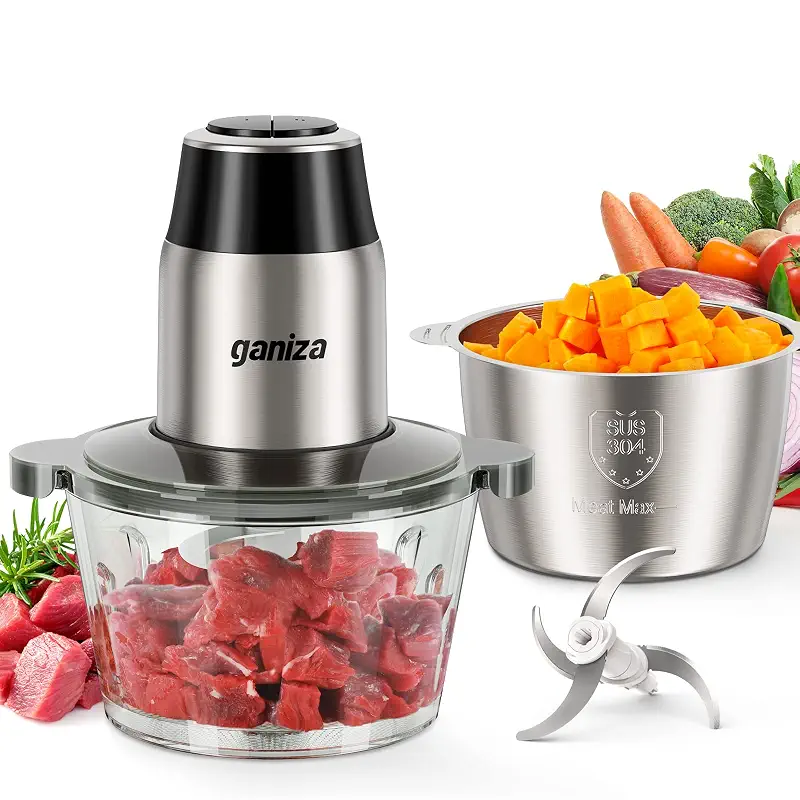
The Ganiza food processor brings a fresh perspective to this lineup by focusing on meat grinding and vegetable chopping rather than blending or flour production. Its 450-watt motor is modest by comparison, but the dual-bowl design (glass and stainless steel) and two blade sets eliminate cross-contamination and reduce cleaning time between tasks. Users consistently report grinding a pound of pork in under two minutes and chopping onions and peppers in seconds: tasks where fineness and speed matter, but powder-fine texture is not required.
For rice-flour grinding specifically, this processor is less optimal than the Lejieyin mill or even the Ninja blenders. It can grind rice, but the results are coarser and less consistent than machines built for that task. The two-speed system helps, but the motor is half the wattage of the Koios or Ninja units, and owners note it can overheat if run continuously: the built-in thermal cutoff shuts it down to cool before restarting. This is a safety feature, but it slows batch grinding of grains. Where it excels is in the meal-prep middle ground: grinding raw meat for tacos, mincing herbs, or chopping vegetables for salsa in seconds, with minimal cleanup thanks to the dual bowls.
Compared to blender versus grain mill comparison thinking, this processor occupies a different niche. It's the best choice if your grinding priority is meat and vegetable prep, with rice flour as an occasional secondary task. If rice flour is primary, invest in the Lejieyin mill or one of the larger Ninja units.
Pros
Grinds meat in seconds; 1 lb pork in under 2 minutes
Two bowls and blade sets reduce preparation and cleaning time
Compact, affordable entry point with strong motor for the price
Cons
450-watt motor overheats on prolonged grain grinding; requires cool-down periods
Lacks fineness achieved by dedicated grain mills for rice flour
Key features
450-watt full-copper motor with 3x longer service life rating
8-cup glass and 8-cup stainless steel bowls with dual blade sets
Two-speed operation (slow for vegetables, fast for meat)
Spring-loaded blades stop immediately when motor disengages
How to Choose the Right Tool for Grinding Rice
Four trade-offs that actually matter when matching a blender for grinding rice to your kitchen.
Dedicated Mill vs. Multi-Purpose Blender
A dedicated grain mill like the Lejieyin excels at a single task: pulverizing dry materials into fine powder as quickly as possible. If rice flour, whole-grain milling, or spice grinding represents the bulk of your use, a dedicated mill saves time and produces superior fineness. However, if your weekly tasks span smoothies, sauces, ice crushing, and occasional grain work, a versatile blender like the Ninja Professional or Mega Kitchen System covers all bases in one appliance. Consider the blender versus grain mill comparison to assess whether your kitchen benefits more from specialization or range.
Motor Power and Heat Management
Motor wattage alone does not determine grinding fineness; blade design and speed matter equally. The Lejieyin's 2000 watts at 25,000 RPM prioritizes speed over sustained heat, relying on short pulses and cooling intervals. The Ninja units (1000–1500 watts) distribute power across multiple tasks and run cooler but slower for grain work. The Ganiza's 450 watts is adequate for meat and vegetables but less ideal for sustained grain grinding. If you plan to grind rice weekly, choose a mill rated for short bursts rather than continuous operation, and always observe recommended rest periods to prevent thermal damage.
Fineness and Consistency
Rice flour destined for baking demands consistent particle size; clumpy or coarse results affect texture and water absorption in dough. Dedicated mills achieve 50–300 mesh fineness because their blade systems are optimized for repeated impact. Blenders rely on sharp blades that dull over time, so results may coarsen after weeks of regular grinding. Food processors prioritize speed over fineness and work best for coarser chops. Start with the finest-grinding tool if uniform rice flour is critical; accept coarser results from multi-purpose appliances if grinding rice is occasional.
Capacity and Batch Size
The Lejieyin mill maxes out at 750 grams per session; the Ninja blenders at 72 ounces (roughly 2 kg of rice); the Ganiza at 8 cups per bowl. If you regularly grind more than two pounds of grain at once, larger-capacity blenders are more efficient. Conversely, small, frequent batches may suit a compact mill better. Remember that grinding rice in blender safely requires short pulses and pauses for cooling, so even a large pitcher may not accommodate one uninterrupted batch.
Maintenance and Longevity
Dedicated mills require water-free cleaning and careful lid adjustment to prevent seal leaks and powder escape. Blenders offer dishwasher-safe parts but sharp blades that dull. Food processors handle both water and dishwasher cleaning readily and tolerate longer blade life because they don't rely on extreme sharpness. Budget for eventual blade replacement in high-use scenarios, and choose a brand with readily available spare parts if grinding rice becomes a weekly ritual.
Frequently asked
Quick answers to the questions readers ask most.
Can I grind rice flour in a regular kitchen blender?
Yes, but with caveats. Blenders like the Ninja Professional and Mega Kitchen System will grind rice into flour using short 10–20 second pulses, though the result is coarser and less consistent than a dedicated grain mill. Expect a flour with some visible flecks rather than powdered talc. Avoid running the blender continuously; short bursts with rest periods prevent overheating and blade dulling.
Why does rice grinding sometimes produce heat or discoloration?
Grinding creates friction and pressure. Dedicated mills and blenders generate internal heat, especially during sustained operation. If the container becomes too hot, the rice can heat-fuse into brittle clumps or darken slightly, affecting flavor. Always use short pulses (3–10 seconds for mills, 10–20 seconds for blenders), allow 5–10 minutes of cooling between batches, and avoid running the motor continuously. This is normal and part of why pulse-based grinding outperforms continuous operation.
Which appliance grinds spices and rice equally well?
The Lejieyin grain mill is optimized for both; its 25,000 RPM motor and triple-blade system excel at hard spices (cinnamon, star anise) and whole grains alike. The Ninja blenders handle both but with less fineness for spices. The Ganiza food processor is less suited to ultra-fine spice powder. For a kitchen where spice and grain grinding share equal priority, the dedicated mill is the strongest choice.
Can I grind wet or oily materials like nuts or coconut in these appliances?
Dedicated mills like the Lejieyin are dry-materials only; wet or oily substances will clog the system and damage the motor seal. Blenders and food processors (Ninja, Koios, Ganiza) handle nuts, nut butters, and moist coconut better because their designs tolerate moisture. If nut grinding is also on your kitchen agenda, choose a blender or food processor over a dedicated grain mill.
How do I know when to replace blades or service the motor?
Signs include coarser or chunkier results despite short pulses, unusual noise or vibration, and slower grinding speed. Dedicated mills may require blade inspection and occasional tightening of the lid's locking screws. Blender blades dull gradually over months of heavy use. Most manufacturers offer replacement blade sets and parts; check the warranty and available accessories before purchase. Regular cleaning and proper cooling intervals extend longevity significantly.