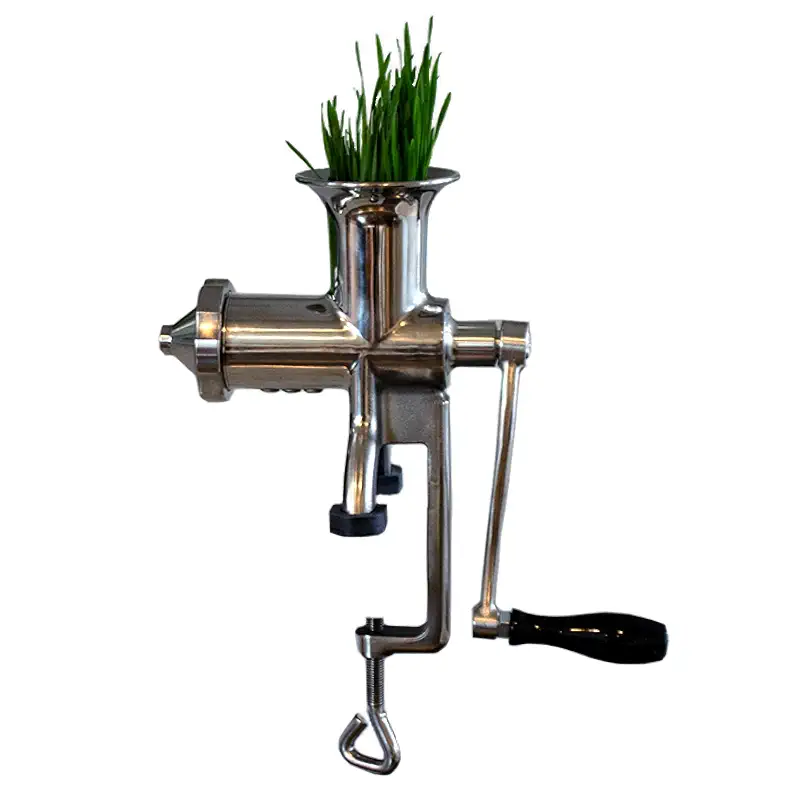
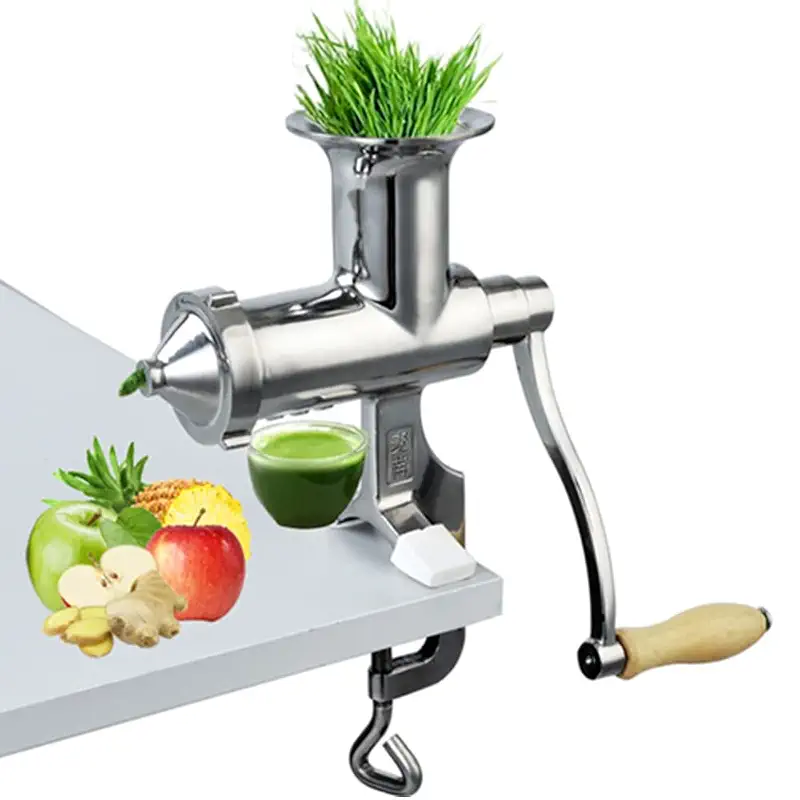
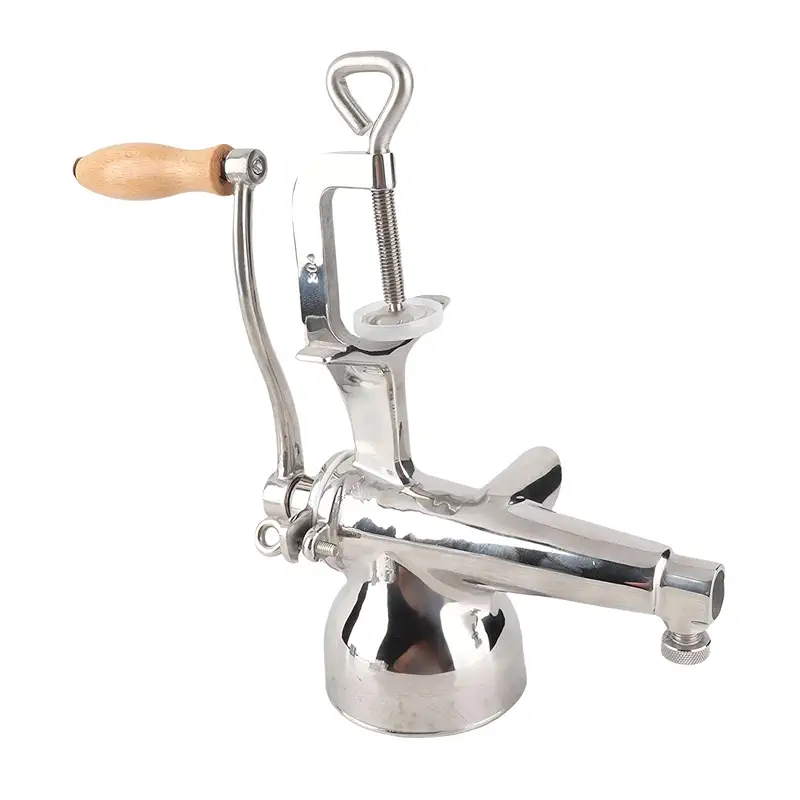
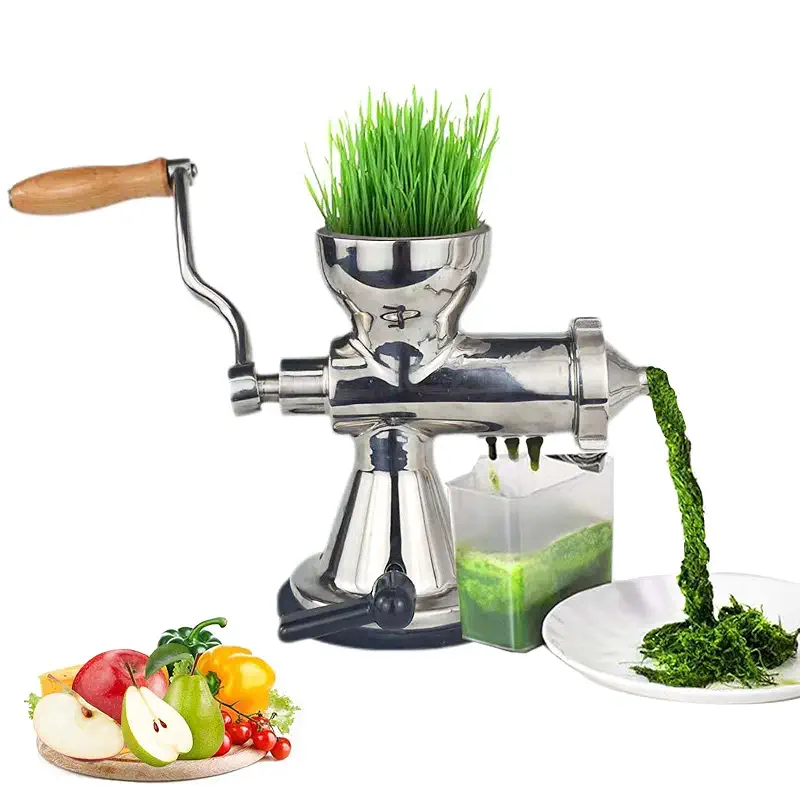
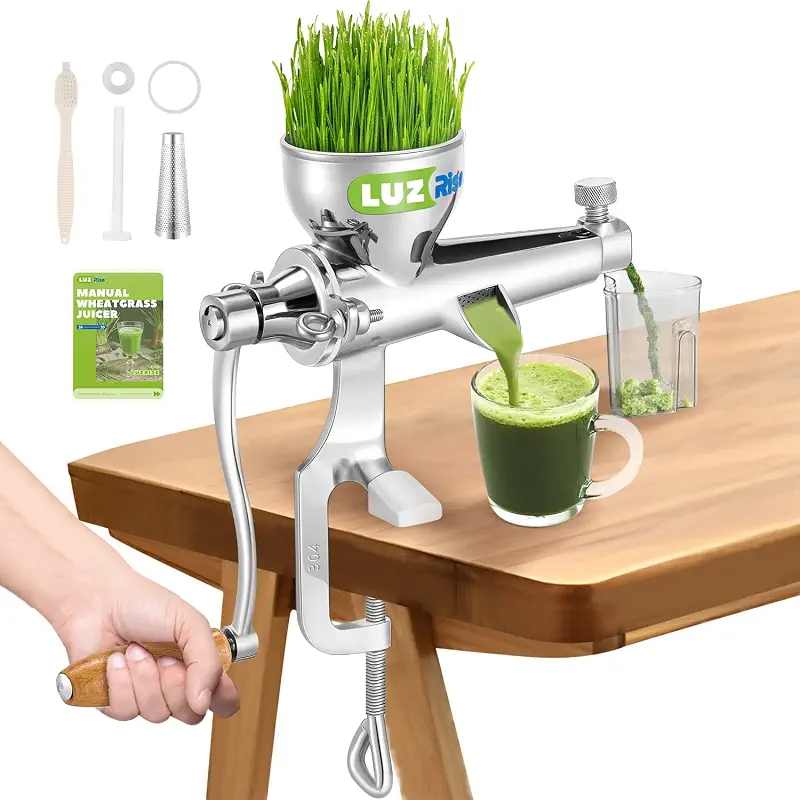
Ideal for: Home growers juicing 1-3 oz of wheatgrass daily, no electric option wanted.
The Luzrise appeals to anyone serious about consistent home juicing. The 304 stainless steel body is polished to resist wear, and buyers specifically note that the filter screen holds tight during cranking: a detail that separates this model from others that let the strainer move or slip. That stability matters because a moving screen means juice escapes around the seal instead of flowing through the outlet, and you end up with pulp-heavy liquid or wasted yield. The clamp design adjusts for countertops up to 2.1 inches thick, which covers most home kitchens, though you'll need to cut produce into small pieces and feed it gradually to avoid clogging the outlet.
Where the Luzrise falters is in the accessories: it ships without a catch cup for juice collection, so you'll need to improvise a vessel or buy one separately. Some early adopters also reported issues with juice leaking from the back seal, though later units seem to have corrected this. Compared to the Handy Pantry Hurricane, which has a longer track record and more user feedback, the Luzrise is newer and has fewer reviews to draw from, but what owners report suggests solid construction.
For growers who start with small batches and value a machine that won't rust or deteriorate, this is a sensible entry point. The two-year warranty and lifetime online support are real advantages if something goes wrong.
Pros
Filter screen stays secure during cranking
304 stainless steel resists rust and wear
Secure clamp holds firm on countertops
Two-year warranty and lifetime online support
Cons
No juice collection cup included
Fewer long-term reviews than competing models
Key features
304 stainless steel body with mirror-polished surface
Countertop clamp fits tables up to 2.1 inches thick
Manual hand-crank auger extracts wheatgrass, greens, and soft fruits
Ideal for: Long-term juicers willing to learn technique for a lifetime-durable manual press.
The Handy Pantry Hurricane has earned its reputation through volume: nearly 300 reviews and a 4.3-star average is rare in this category, and the feedback is granular enough to trust. Owners consistently praise the all-stainless-steel construction and the machine's ability to last decades with care. The Hurricane juices wheatgrass at about 1 ounce per minute and works equally well on barley grass and soft vegetables, though it requires learning proper technique: a reality that the detailed reviews honestly address.
What makes the Hurricane stand out is owner honesty about its quirks. The handle can loosen with repeated use, the auger needs some initial "loading" with extra grass before it builds crushing pressure, and it demands a well-clamped mounting surface to stay stable during cranking. Many long-term users recommend adding a plastic washer (a simple hardware-store modification) to improve auger-to-end-cap clearance, which some say boosts efficiency. These aren't defects; they're the trade-off for an all-metal machine that won't degrade. Compared to the cjc model, which bundles more accessories, the Hurricane is simpler and heavier, but its proven longevity and the wealth of user knowledge available online make troubleshooting and optimization easier.
This is the juicer to buy if you plan to own the same machine for life and don't mind a learning curve in exchange for reliability.
Pros
All-stainless-steel construction resists corrosion
Juices approximately 1 oz per minute
Dishwasher-safe parts, easy to disassemble
Proven longevity backed by 270+ owner reviews
Cons
Handle can loosen with extended use over time
Requires proper clamping and technique to avoid slipping
Key features
All-stainless-steel design, non-toxic and rust-resistant
Mounts securely to countertops up to 2.25 inches thick
Lightweight and portable for travel or RV use
Juices wheatgrass, barley grass, and soft produce
Dishwasher-safe components for easy maintenance
#3 Pick
Best Accessory Bundle
cjc
Manual Wheatgrass Juicer Desktop Clamp Wheat Grass Grinder Long Screw Shaft Wheatgrass Juicer Stainless Steel for Juicing Wheatgrass Gingers Apples Grapes
(0)
Eight included tools, extra-long screw shaft, and spare filter make this the most complete package out of the box.
Ideal for: First-time juicers who want all tools included and prefer not to buy extras separately.
The cjc model stands apart for sheer completeness: it arrives with a collection cup, pestle, wrench, filter hook, cleaning brush, spare filter, sealing ring, and PA shaft sleeve: items that other juicers omit but that real users need to get started. The extra-long screw shaft with five-stage progressive extrusion technology is designed to milk every drop from greens without additional grinding passes, which appeals to anyone juicing volume. The 304 stainless steel body is all-metal and rust-resistant, and the detachable wooden handle saves counter space after use.
Without owner reviews to consult, assessing real-world performance is harder. The product description emphasizes dry slag (pulp) after extraction, which suggests strong juice separation, but we haven't seen buyer feedback confirming whether the auger stays tight, whether the clamp holds firm on thinner countertops, or how the machine handles the stringy produce (celery, leafy greens) that can wrap the auger. The design includes a five-stage progressive-extrusion screw, which sounds efficient, but that doesn't tell us if the machine juices faster or yields more than the Hurricane's simpler auger. If you value arriving with everything assembled and ready, this model is attractive; if you want proven reliability, the Handy Pantry's 270 reviews offer more confidence.
Compare this bundle approach to the Hamwesh and Kilixin models, which also lack review data but offer fewer accessories and simpler designs.
Pros
Eight accessories included, including spare filter and collection cup
Extra-long screw shaft for thorough juice extraction
Detachable wooden handle for compact storage
304 stainless steel construction throughout
Cons
No customer reviews available to verify performance claims
Unclear how progressively staged extrusion compares to simpler designs
Key features
304 stainless steel with metal-polished, rust-resistant surface
Extra-long screw shaft with five-stage progressive extrusion
Desktop clamp fits tables under 2.2 inches thick
Includes collection cup, pestle, wrench, filter hook, and brush
Spare 304 stainless steel screen filter included
#4 Pick
Best Heavy-Duty Compression
Hamwesh
Manual Wheat Grass Juicer, Stainless Steel Juice Extractor with Crank for Fruits
(0)
Designed for hard ingredients like ginger and celery; efficient pulp discharge appeals to those who juice mixed produce.
Ideal for: Buyers planning to juice ginger, hard celery, and root vegetables alongside greens.
The Hamwesh emphasizes its "unique compression design" and the ability to handle hard vegetables like ginger and celery without losing nutritional value. The food-grade 304 stainless steel construction is standard across this category, but Hamwesh's marketing around enzyme preservation and smooth grinding suggests a focus on gentler extraction. Complete discharge of dried pulp is mentioned as a cleaning advantage.
Without user reviews, we can't assess how well the compression design actually performs against the simpler augers in other models, or whether the ginger and celery handling lives up to marketing claims. Hard roots like ginger do clog manual juicers more easily than wheatgrass, and claims about preserving enzymes in a manual press (which generates no heat anyway) feel like standard wellness language rather than a real differentiator. The clamp accommodates countertops over 1.6 inches thick, which is on the narrower end of the range. Where the cjc and Kilixin models arrive with accessories or longer shafts, the Hamwesh's description focuses on design innovation without proof. For buyers committed to mixed-vegetable juicing (not just wheatgrass), the emphasis on harder produce is relevant, but the lack of real feedback makes it a harder recommendation than the proven models.
If you're drawn to its compression promise, research the specific vegetable profiles you'll juice most, as hard produce clogs manual machines faster than the soft greens most owners prioritize.
Pros
Designed for hard vegetables and ginger without nutrient loss
Complete pulp discharge simplifies cleaning
Food-grade 304 stainless steel construction
Clamp accommodates countertops over 1.6 inches thick
Cons
No customer reviews to confirm performance claims
Hard produce more prone to clogging in manual machines
Key features
Unique compression design for maximum juice extraction
Food-grade 304 stainless steel throughout
Heavy-duty clamp for hard ingredients and vegetables
Hand crank mechanism with efficient pulp discharge
Designed to preserve enzymes and vitamins in produce
#5 Pick
Best Compact and Portable
Kilixin
Manual Wheatgrass Juicer, Stainless Steel Hand Crank for Wheatgrass & Leafy Green, Hand Fruit& Vegetables Squeezer, Cold Press Juicer for Spinach, Baby Kale, Apples, Pomegranates, Celery, Ginger, etc.
3.7(17)
Lightweight, space-saving design with honest instructions on prep work; strong for wheatgrass shots, mixed results on harder produce.
Ideal for: Portable juicers focused on wheatgrass and leafy greens, with minimal counter space.
The Kilixin is the lightest and most portable option in this lineup at 5.8 pounds, making it genuinely feasible to bring to an office or keep in a small kitchen. Owner feedback is real and balanced: buyers love it for wheatgrass and leafy greens, and several note that it outperforms their electric juicers on these soft materials: a meaningful claim because centrifugal machines struggle with spinach and kale. The 3.5-by-3.5-inch feed port is roomy enough for most prep, and the clamp adjusts for countertops up to 2.1 inches thick.
Where the Kilixin stumbles is on harder produce. Multiple owners report that apples block the outlet and limit juice yield unless carefully prepped (peeled, seeded, cut into small pieces and added in tiny quantities), and some say it feels like a lot of cranking for little return on denser items. One buyer described it as requiring "heavy technique" and wishing they'd bought an electric model instead. The filter can slip if the seal isn't tight, though the product includes a scissors-head trick to remove a stuck strainer. For a machine positioned as multi-purpose, it's really best-in-class for greens and weaker on the fruit side; the manual is honest about this in its apple warnings, which is refreshing.
Compared to the Hurricane, which users trust for long-term heavy use, the Kilixin trades durability and feature-richness for portability and ease of storage. Buy this if daily wheatgrass shots and leafy greens are your primary goal and you value traveling with your juicer.
Pros
Compact, lightweight design easily stores or travels
Excellent performance on wheatgrass and leafy greens
Outperforms electric juicers on soft produce by user reports
Feed port and clamp fit most home countertops
Cons
Apples and hard produce often clog outlet; require careful prep
Some users report filter slipping and weak juice yield on denser items
Key features
Lightweight stainless steel, weighs approximately 5.8 pounds
3.5-by-3.5-inch feed port for most produce sizes
Mounts to countertops up to 2.1 inches thick
Simple hand-crank operation with enclosed waste outlet
Parts disassemble easily for cleaning and storage
How to Choose a Wheatgrass Juicer
Four trade-offs that actually matter when matching a wheat grass juicer to your kitchen.
Manual vs. Electric: Why Cold Press Matters
Electric centrifugal juicers heat produce through friction and expose juice to air, both of which can degrade heat-sensitive enzymes and nutrients. Manual presses generate no heat and work slowly, preserving the nutritional profile that makes wheatgrass shots valuable. The trade-off is effort: you'll crank by hand instead of pressing a button. Most owners find the 1-3 minutes per shot acceptable if they're juicing 2-4 times a week. For daily, high-volume juicing, the manual vs. electric wheatgrass juicers comparison is worth revisiting, as electric cold-press models (not centrifugal) exist but cost more and occupy more counter space.
Clamp Design and Countertop Fit
Every model here uses a screw clamp to secure to your countertop edge. Most fit tables up to 2.1 to 2.25 inches thick, but check your counter: kitchen islands, folding boards, and cutting-board surfaces are often thinner. The clamp must be tight before you start cranking, or the juicer will shift under hand pressure and either fail to extract or damage your countertop. Rubber feet protect your surface; pad the clamp underside with a towel if you're using soft wood. A secure mount is the single most important setup step.
Produce Prep and Learning Curve
Wheatgrass needs minimal prep: feed it bundled into the auger and crank. Softer vegetables like spinach, kale, and celery work similarly. Harder produce like apples, pears, and ginger require cutting into small pieces, removing seeds and tough skins, and feeding in small quantities to avoid clogging the outlet. Many new owners underestimate how much prep time matters; rushing and stuffing the port leads to auger jamming. Your wheatgrass juicer cleaning guide covers outlet unclogging, but prevention through proper feeding saves frustration and cleaning time.
Build Quality and Long-Term Value
All five models use 304 stainless steel, which resists rust indefinitely. The real difference is in fit and finish: how tight the auger sits in its housing, whether the filter screen moves during operation, and whether the handle stays secure after months of cranking. Models with 100+ reviews allow you to see these wear patterns reported by real users. New models without reviews may be well-built, but you're betting on manufacturer claims. Expect to spend 10-15 minutes per session on cranking; buy the machine you'd be comfortable using daily for years, not the cheapest option.
Accessories and Storage
Some juicers arrive with collection cups, cleaning brushes, spare filters, and wrenches; others ship bare. If you live in a small space, a detachable handle saves room. If you often travel or juice at work, portability matters more than accessory count. Consider whether you'll need to buy extras separately (a juice cup, for instance) and factor that into your decision. Most models disassemble entirely for storage, fitting into a cabinet shelf or under a sink.
Frequently asked
Quick answers to the questions readers ask most.
Can a manual wheatgrass juicer handle fruits like apples and pears?
Yes, but with caveats. Softer fruits like grapes work well; apples and pears need careful prep: peel them, remove seeds, cut into pieces no larger than 1 inch, and feed slowly in small batches. Hard produce can clog the outlet and jam the auger, requiring you to stop and clear it. For frequent fruit juicing, a dedicated electric juicer may be faster, though manual presses excel at soft greens that electric models struggle with.
How much juice can I expect from a typical serving of wheatgrass?
One fluid ounce (roughly 30 ml) per 1 ounce of fresh wheatgrass is common, though yield varies by grass age, moisture, and how tightly you crank. A standard wheatgrass shot is 1-2 ounces, so you'll need 1-2 ounces of grass per shot. Growing your own at home (which germinates in 7-10 days) is far cheaper than buying pre-cut grass, which can cost $1-2 per shot at juice bars.
What's the best way to prevent the auger from clogging?
Feed produce in small quantities and crank steadily; don't try to push food through manually. If the outlet jams, stop cranking and gently turn the handle in reverse to dislodge the blockage. For stringy produce like celery, peel the outer layer to remove fibrous strands that wrap the auger. Many owners keep the collection vessel close to the outlet to catch pulp before it builds up.
How long does cleaning and assembly take after each use?
Most manual juicers disassemble into 4-6 parts and take 5-10 minutes to rinse and dry. The auger, screen, and housing can be hand-washed or go in the dishwasher if the manufacturer allows it. If pulp dries on parts, soak them in warm water for a few minutes to soften it. Proper drying before reassembly prevents rust in the joints, even with stainless steel.
Are manual wheatgrass juicers suitable for daily use?
Absolutely, if you commit to learning the technique. Many owners juice 5-6 days a week without issues. The real factor is whether you'll stick with hand-cranking instead of reaching for an electric option. Models with tight, non-moving screens and secure clamps hold up better to daily use than those with loose seals or shifting parts.