Best Twin Gear Juicer: Cold Press Masticating Models Compared
Find the best twin gear juicer for nutrient-rich, enzyme-preserving juice. We compare top masticating models for juice yield, ease of use, and durability.
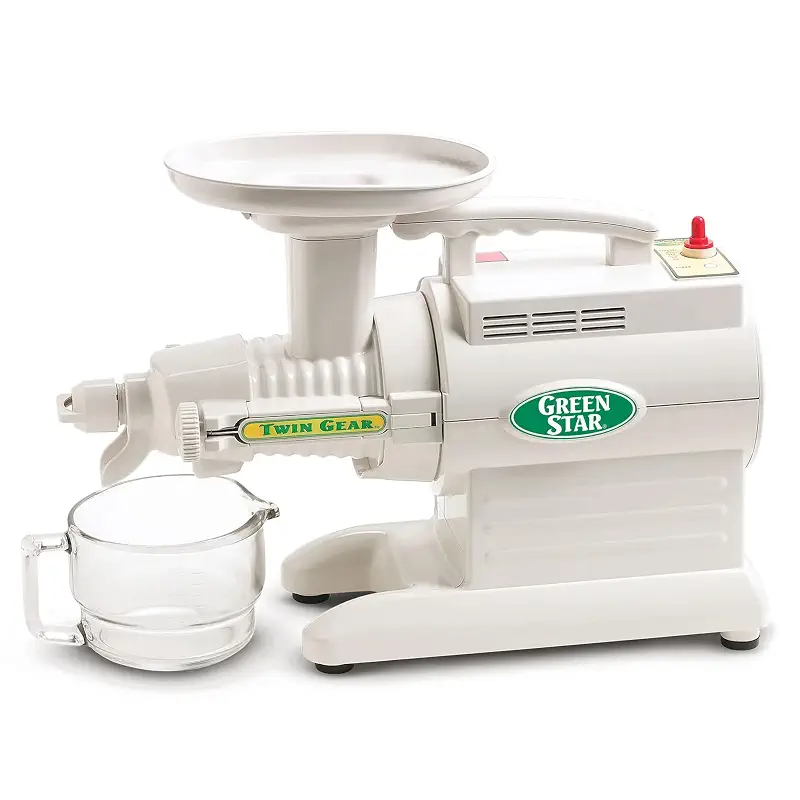
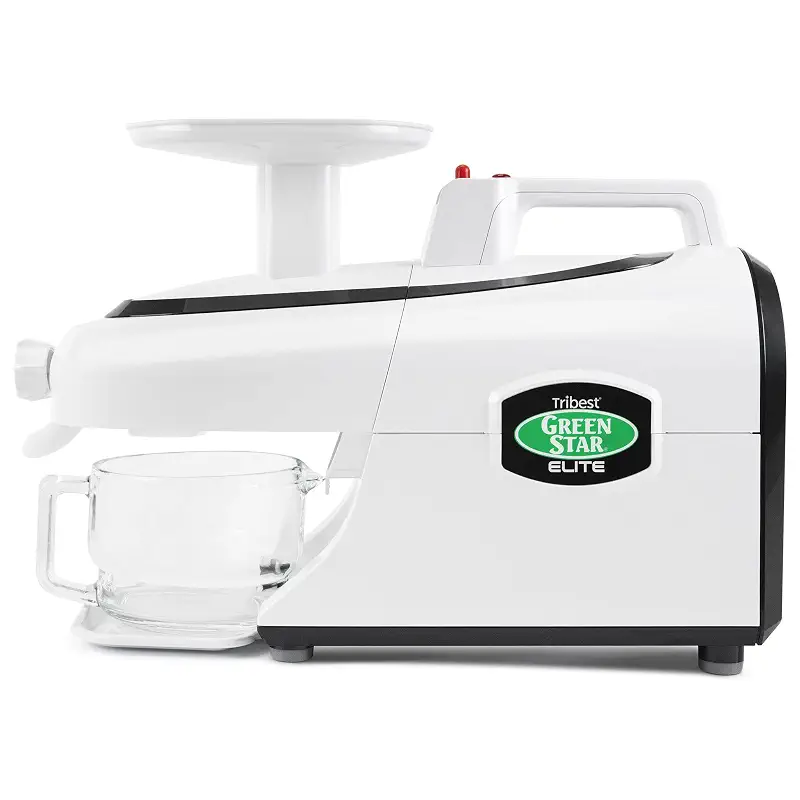
The Greenstar Elite sits at the heart of Tribest's lineup for a reason. It pairs magnetic and bioceramic twin gears with a three-stage juicing process that extracts more from each piece of produce than a two-stage system can manage. The easy-grip outlet knob lets you dial pressure for different produce textures (carrots one way, leafy greens another) which feels like real control when you're juggling variety. Owners report juice so dry it feels wasteful to discard, and a 1,104-review pool suggests the machine has earned trust through actual use over time.
Cleaning is the honest cost here. The fine screen collects pulp stubborn enough that you'll want the included multi-tip brush, and rushing it means residue settling into crevices. But the machine comes with a cleaning tool specifically designed for this, and owners who treat it like a ritual report no surprises. If you're drinking juice daily or feeding family, the time investment pays off in lower produce waste and fresher juice that doesn't separate as quickly.
Compared to the Tribest Greenstar Pro Jumbo, this model trades jumbo twin gears for wider versatility in the box: it ships with more screening options and extras like pasta nozzles, making it a stronger pick for anyone who wants one machine to handle sorbet, nut butter, and pasta alongside juice. The 5-year warranty is solid, though not as long as the Pro's 15-year commitment.
Pros
Three-stage juicing process extracts more from produce
Magnetic and bioceramic twin gears reduce oxidation
Adjustable outlet pressure for varied produce types
Comes with sorbet, pasta, and nut butter accessories
Cons
Fine screen requires patience and dedicated brushing to clean thoroughly
Small feeding tube means prep work and slower processing than centrifugal models
Key features
Magnetic bioceramic twin gears with three-stage juice extraction
Adjustable outlet knob for pressure control on different produce
Stainless steel jumbo gears built for daily use
Multi-tip cleaning tool included; pasta and sorbet accessories
#2 Pick
Best Premium Choice
Tribest
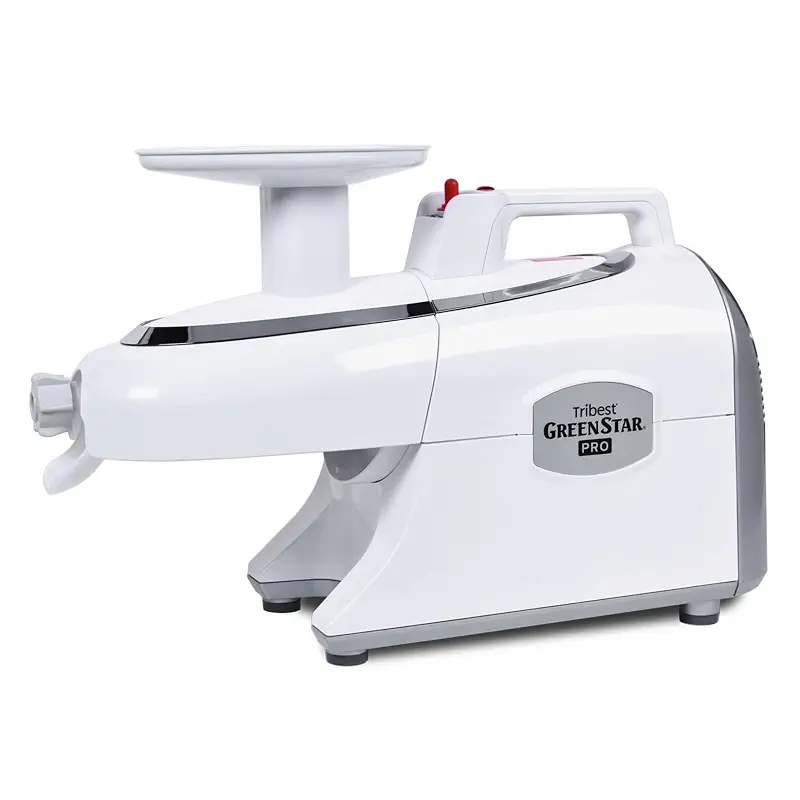
Tribest Greenstar GS-P501-B Pro Jumbo Slow Masticating Juicer, Twin Gear Cold Press Juicer & Juice Extractor, White
4.1(260)
Commercial-grade twin gears and a 15-year warranty make this the investment pick for serious, long-term daily juicing.
Ideal for: Committed daily juicers and operators who prioritize durability and long-term reliability
The Greenstar Pro Jumbo steps up with full stainless-steel twin gears, not the plastic-and-steel hybrids found on other models. That sounds like a minor detail until you realize the nylon components in cheaper twin gears can split under stress, and replacements cost a hundred dollars or more. Owners who specifically sought out this model for celery juice (a tough, fibrous daily habit) report consistently clean extractions and very dry pulp, which is exactly what masticating is supposed to deliver.
The 15-year warranty is a statement: Tribest expects this machine to last through a decade-plus of regular use. That confidence shows in the commercial-grade construction. At 110 rpm, it moves slower than the Elite, but the jumbo gears process more per rotation, so the speed trade-off doesn't cripple throughput as much as specs suggest. The included scraper tool for the screen (once you learn to use it properly) cuts cleaning time from half an hour to a minute, which owners describe as a game-changer.
Where it differs from the Tribest Greenstar Original is build depth: the Pro is heavier, built around best commercial juicer standards for operators who plan to juice multiple times daily, while the Original serves lighter use better. The Pro is also noisier during operation and requires more careful handling of the gear assembly. If you're committing to fresh juice as a daily health ritual, the durability justifies the premium; if you're testing the waters, the Elite or Original might suit you better.
Pros
Solid stainless-steel twin gears reduce risk of nylon failure
Commercial-grade construction engineered for heavy daily use
Included scraper tool cuts screen cleaning from 30 minutes to one
15-year warranty reflects confidence in machine longevity
Cons
Operates best with hard produce; soft fruits require mixing with firmer vegetables
Higher cost and heavier weight than entry-level twin gear models
Key features
100% stainless-steel twin gears with commercial-grade durability
Magnetic and bioceramic technology embedded for nutrient retention
110 rpm cold-press extraction with minimal heat and oxidation
Included scraper tool designed specifically for screen cleaning
#3 Pick
Best for Quieter Operation
Tribest
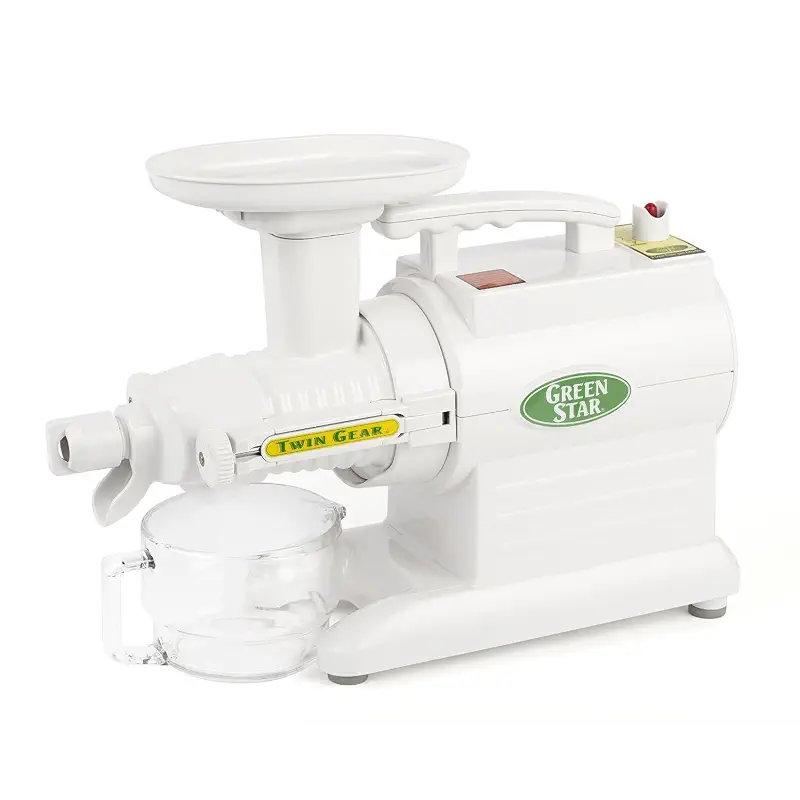
Tribest Greenstar GS-1000 Original Slow Masticating Juicer, Twin Gear Cold Press Juicer & Juice Extractor, White
4.3(93)
Reliable entry-level twin gear juicer with proven quiet performance and manageable learning curve for new users.
Ideal for: Occasional to moderate juicers who value quiet operation and simple maintenance
The Greenstar Original lives up to its name: it's been refined through years of feedback, and the 93 reviews here come from people who stuck with it long enough to really evaluate it. The impeller press system runs noticeably quiet compared to centrifugal machines, and owners consistently praise how peacefully it sits on the counter, even during full-speed grinding. If noise sensitivity is a real factor (early morning juicing in a small kitchen, for instance) this model punches above its weight-class.
The HD twin gears include 24 stainless-steel masticators (cutting points) that help process both hard roots and sinewy vegetables without jamming as often as single-gear designs. The pressure-adjusting knob prevents overload, which means fewer stops to clear clogs. That said, buyer reviews reveal a real weakness in the twin gear itself: nylon sections can split with regular use, leading to costly replacements and friction with customer service. One detailed review chronicles repeated durability issues across multiple Tribest models, which is worth taking seriously if warranty claims matter to your purchase decision.
Compared to the Greenstar Pro Jumbo, the Original is lighter, quieter, and less expensive, but built for lighter daily use rather than multiple daily sessions. The 5-year warranty is shorter than the Pro's 15 years. If you plan to juice three times weekly or less, the Original's simplicity and near-silent operation make sense; if you're juicing every single day, the Pro's stainless-steel durability is worth the jump.
Pros
Exceptionally quiet impeller press system for peaceful kitchen use
24-point stainless-steel masticators handle both hard and fibrous vegetables
Pressure-adjusting knob reduces jamming and clogging during processing
Versatile capacity for pasta, nut butter, and baby food beyond juicing
Cons
Nylon components in twin gears prone to splitting under regular heavy use
Customer service responsiveness has been a pain point for warranty claims
Key features
HD twin gears with 24 stainless-steel masticators for efficient grinding
Low-speed 110 rpm operation preserves enzymes and nutrients
Pressure-adjusting knob prevents jamming with varied produce
Multi-function capability for pasta, nut butter, and specialty foods
#4 Pick
Best Entry-Level Twin Gear
Tribest
Tribest Greenstar GS-2000 Slow Masticating Juicer, Twin Gear Cold Press Juicer & Juice Extractor, White
4.2(11)
Accessible twin gear juicer with automatic pulp ejection and versatile accessories, though speed demands patience.
Ideal for: Patient, juice-focused home cooks willing to trade speed for nutrient quality
The Greenstar 2000 positions itself as the working person's twin gear juicer: you get the nutrient-preservation benefits of masticating at 110 rpm without the premium price of the Pro Jumbo. The automatic pulp ejection is genuinely useful: it means you don't have to stop and reverse the motor to clear blockages, which adds up over weeks of use. The included breadstick and pasta attachments give flexibility if you want the machine to earn its countertop space beyond juice alone.
What buyers need to accept is the time commitment. One reviewer, experienced enough to be honest about trade-offs, spent two hours juicing a farmers-market haul and found the small feeding tube required careful placement to avoid clogs. Another reviewer found it so slow they moved it to the pantry and went back to a faster juicer. That's not a machine defect: it's the reality of twin-gear masticating. You're slowing down the process to protect nutrients. If that trade-off aligns with your lifestyle, the 2000 delivers. If you're in a hurry most mornings, reconsider.
The 5-year warranty matches the Original, and the price sits between entry-level and mid-range. Compared to the Greenstar Elite, the 2000 omits some of the pressure-control sophistication and ships with fewer screening options, making it slightly less versatile for different produce types. If you're juice-focused rather than multifunction-focused, the 2000 is a reasonable stepping stone into twin-gear machines without overcommitting.
Pros
Automatic pulp ejection reduces need to reverse and clear blockages
Stainless-steel bioceramic magnetic twin gears for superior juice quality
Optional breadstick and pasta maker attachments included
5-year warranty with dedicated customer service team backing
Cons
Small feeding tube requires careful prep and loading to avoid clogging
Processing time is lengthy; two hours for large volume is realistic
Key features
Stainless-steel bioceramic magnetic twin gears at 110 rpm
Automatic pulp ejection for continuous juicing without stops
Simple assembly and cleaning with included brush tools
Breadstick and pasta maker accessories for multi-function use
#5 Pick
Most Versatile & Time-Efficient
EanOruus
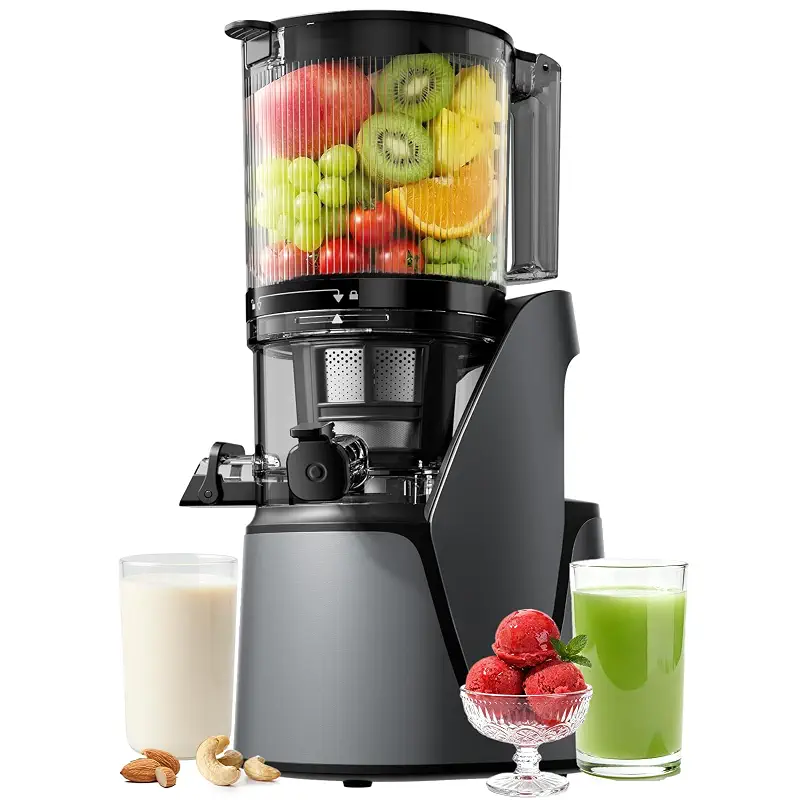
EanOruus Juicer Machines, 3-in-1 Cold Press Juicer, Premium Gray | Makes Juice, Nut Milk & Sorbet, 6.5" Extra Large Chute, 100oz Large Capacity, AC Motor
4.4(2,580)
A design with large chute and high-capacity hopper prioritizes speed and family-scale volume over deep nutrient extraction.
Ideal for: Busy families and meal-preppers seeking versatility, speed, and capacity over maximum nutrient retention
The EanOruus breaks from the twin-gear Tribest lineup with a different philosophy: it's built for households that want juice fast, don't want to spend hours prepping, and value the flexibility to make nut milk and sorbet from the same machine. The 6.5-inch chute (or close to it: one reviewer measured 6 inches and flagged the discrepancy) accepts whole apples and large carrot pieces, cutting prep time dramatically. The 100-ounce hopper means you can load a full family's worth of ingredients in one go, a genuine convenience for meal-preppers.
Here's the honest trade-off: this is still a cold-press juicer, but it prioritizes throughput and versatility over the absolute maximum nutrient preservation of a true twin-gear design. Owners report excellent juice quality with minimal foam and very dry pulp, so it's not sacrificing results, but reviews skew toward 4 and 5 stars from families and busy households, not from nutrient-obsessed daily juicers. One reviewer coming from a premium Omega was impressed; another had a concerning grinding noise that resolved after break-in. The AC brushless motor handles heavy use, but early durability data is thinner than Tribest's decade-plus track record.
The detachable pulp outlet and straightforward cleaning earn consistent praise and represent a real quality-of-life win over traditional twin gears. Compared to the Tribest Greenstar models, the EanOruus suits people who juice 2-3 times weekly as a family activity, not daily green-juice devotees. If you're torn between a twin-gear juicer and a faster centrifugal, this sits usefully in the middle: cold-press benefits without the hour-long cleanup ritual.
Pros
Large 6.5-inch chute accepts whole fruits, cutting prep time significantly
versatility makes nut milk and sorbet without extra machines
Detachable pulp outlet and easy disassembly streamline cleanup
Cons
Early units reported grinding noise; break-in period may be needed
Hopper dimensions slightly smaller than advertised on product listing
Key features
6.5-inch extra-large feed chute reduces prep time for whole fruits
100-ounce capacity hopper for family-scale juicing and meal prep
interchangeable strainers for juice, nut milk, and sorbet
High-torque AC brushless motor engineered for daily heavy-duty use
How to Choose a Twin Gear Juicer
Four trade-offs that actually matter when matching a twin gear juicer to your kitchen.
Cold Press vs. Centrifugal: Why Twin Gear Matters
Twin-gear masticating juicers operate at 110 rpm, slowing the grinding process to minimize heat and oxidation. This preserves delicate enzymes and nutrients that centrifugal machines (spinning at 800+ rpm) destroy through friction. If you're juicing leafy greens daily or storing juice for 48+ hours, the taste and nutritional difference is real. The cost is prep time and a smaller feeding tube; centrifugal machines handle whole produce faster but produce warmer, more oxidized juice. The twin gear vs single gear debate hinges on similar principles: twin gears extract slightly more juice and handle a wider range of produce textures without jamming as often, but single-gear models are lighter and quieter.
Frequency of Use: Daily vs. Occasional
How often you'll actually use the machine should drive your choice. Daily juicers benefit from commercial-grade durability and a 15-year warranty (like the Tribest Greenstar Pro); occasional users (2-3 times weekly) find the Greenstar Elite or Original reliable without overpaying for durability they won't exercise. Budget models make sense only if you're genuinely committed to the habit: an unused juicer becomes an expensive counter ornament. Families who want juice without the daily ritual should consider the EanOruus, which trades some nutrient preservation for speed and convenience. The cleaning time matters here too: if you know you won't spend 15 minutes scrubbing a screen, pick a model with easier disassembly.
Produce Variety and Your Juicing Goals
Ask yourself what you'll actually be juicing. Daily celery juice requires a machine built for tough, fibrous vegetables, something the Tribest Pro excels at. Mixed green and fruit juices benefit from adjustable pressure controls that let you dial down heat. If you want the machine to make nut butter, pasta, or sorbet too, pick one with multiple screening and blade options. The twin gear juicer cleaning guide covers maintenance in detail, but durability depends on what you feed it: hard vegetables stress the gears more than soft fruit, and attempting avocado or very soft produce in any twin-gear model can clog the system and shorten the machine's life.
Warranty and Long-Term Support
Tribest stands behind its machines with warranties ranging from 5 to 15 years, and customer service responsiveness varies by reviewer experience. The longer warranty (Pro Jumbo's 15 years) signals confidence in durability and gives you peace of mind if a gear fails. Budget models from newer brands like EanOruus offer shorter warranty terms and thinner service track records. If repair coverage matters to you (and it should for a machine with expensive replacement parts) factor warranty length and brand reputation into the decision. Twin-gear juicers are more durable than cheap centrifugal models but less forgiving of misuse, so a strong warranty is real protection.
Frequently asked
Quick answers to the questions readers ask most.
How much juice do twin-gear juicers actually extract compared to centrifugal?
Twin-gear machines extract noticeably more juice from the same volume of produce (often 20-30% more by weight) because they grind and press rather than spin. The pulp comes out drier, meaning less waste and lower produce costs over time. This advantage is most dramatic with leafy greens and fibrous vegetables like celery and ginger; the difference is less pronounced with soft fruits. Owners report being surprised at how much juice they recover from vegetables they'd already considered juiced.
Do twin-gear juicers really preserve more nutrients than other types?
Twin gears operate at low speed (110 rpm) to minimize heat and oxidation, which are nutrients' worst enemies. Research suggests that slow masticating preserves more heat-sensitive enzymes and vitamins than high-speed centrifugal machines. The juice also lasts longer in the fridge (48+ hours vs. 24) because slower extraction means less oxidation. That said, the difference between a good twin-gear and a poor centrifugal is more dramatic than the difference between a premium and entry-level twin-gear machine.
Why does cleaning take so long with twin-gear models?
Twin-gear juicers have a fine mesh screen that catches pulp fibers. Unlike wide-opening centrifugal models, this screen requires dedicated brushing to remove every speck before residue dries and hardens. Most owners report 10-15 minutes of cleaning per use. Newer models like the EanOruus with detachable pulp outlets streamline this. Tribest models include scraper tools that, once you learn to use them correctly, cut cleaning time significantly. Consider this before buying: if you won't commit to the ritual, a faster centrifugal or a model with easier disassembly makes more sense.
What's the difference between stainless-steel and plastic-and-steel twin gears?
Full stainless-steel gears (found on premium models like the Greenstar Pro) are heavier-duty and less prone to the nylon cracking issues that plague plastic-and-steel hybrids. Replacement gears cost $100-200, so durability matters. Budget models use plastic sections to reduce weight and cost, which works fine for light to moderate use but can fail under heavy daily pressure. If you're juicing daily for years, solid stainless gears justify the premium; occasional users rarely run into problems with either type.
Can twin-gear juicers make nut milk and other foods, or are they juice-only machines?
Most twin-gear models come with interchangeable screens and blanks that let you make nut milk, nut butter, pasta, breadsticks, baby food, and frozen sorbet. The machine's design (grinding and pressing rather than spinning) makes it naturally suited to these functions. However, versatility is a feature bonus, not the primary strength; if making pasta is your main goal, a dedicated food processor might be more practical. Use the extra functions as a welcome flexibility, but don't buy the machine primarily for them.