Kitchen & Dining · Gadgets
Best Tomato Knife: Top Picks for Clean, Effortless Slicing
Find the best tomato knife for clean slicing without crushing. Compare serrated blades, ergonomic handles, and durability from RADA, Omesata, Paudin, Wüsthof, and Victorinox.
Affiliate disclosure: As an Amazon Associate I earn from qualifying purchases.
At a glance
3
Best for Gift-GivingPaudin
5
Best Compact OptionVictorinox
Detailed reviews
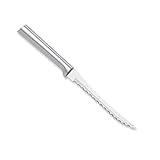
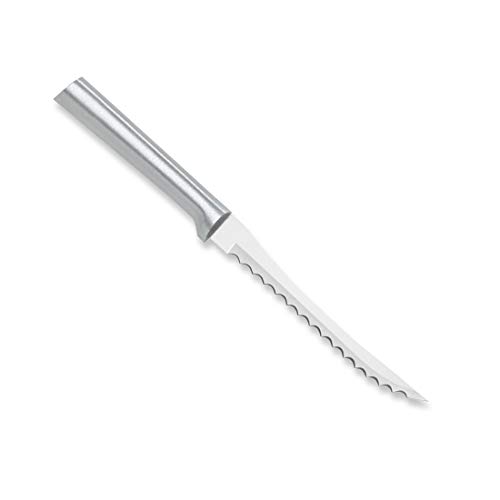
RADA Cutlery's tomato slicer has earned its reputation through decades of reliable performance. The dual-serrated blade cuts through ripe tomatoes with almost no pressure needed, and owners consistently report that the knife stays sharp for years without requiring maintenance. The cast aluminum handle feels substantial in hand, though it does require handwashing and may develop a patina over time. What sets this knife apart is the breadth of its appeal: owners use it not only for tomatoes but also for bread, delicate vegetables, and even proteins, making it genuinely versatile despite its narrow design.
The main trade-off is the handwash-only requirement. Some users find the aluminum handle eventually darkens with dishwasher exposure, though this is purely cosmetic and doesn't affect performance. At 5 inches, the blade length suits most home cooks, though those researching knives for small hands will find it sits at the longer end of the comfortable range.
Compared to newer brands like Omesata, RADA brings proven longevity to the comparison. If you want a knife that will outlast trends and stay sharp through years of regular use, this is the one to choose.
Pros
- Holds edge for years without sharpening
- Lightweight with satisfying balance and feel
- Cuts ripe tomatoes without crushing or pressure
Cons
- Handwash only; handle may develop gray patina
- Not ideal for very small hands or delicate control needs
Key features (4)
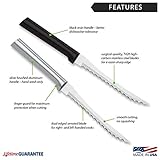
- Dual-serrated T420 high-carbon stainless steel blade
- Permanently cast brushed aluminum handle with satin finish
- 5-inch length for standard tomato and vegetable prep
- Made in the USA from raw materials to finished product
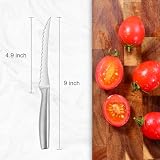
Omesata's tomato knife delivers outstanding sharpness and precision at a fraction of premium pricing. The high-carbon stainless steel blade slices cleanly through ripe tomatoes, peaches, and delicate fruits without requiring heavy pressure. Owners love its slim profile, which also makes it useful for fine work like slicing shallots or removing seeds. The textured handle provides a non-slip grip even when wet, and unlike RADA's aluminum construction, this knife tolerates dishwasher runs without tarnishing, which many home cooks find more convenient.
The trade-off is weight: reviewers note the knife feels slightly lighter and less substantial than heavier premium options, though this actually benefits control and reduces hand fatigue during longer prep sessions. Some users mention it looks simpler or less ornate than specialty knives costing three times as much, but the performance matches the price point remarkably well.
Where Omesata differs from the Wüsthof Gourmet is in build philosophy. Wüsthof prioritizes heritage German engineering and heavier construction. Omesata focuses on modern metallurgy and accessibility. For daily home cooking, Omesata's approach delivers equal cutting results at significantly lower cost.
Pros
- Dishwasher-safe handle resists tarnishing
- Slim blade excels at fine, precision cuts
- Exceptional sharpness right out of the box
Cons
- Lighter weight may feel less substantial than premium options
- Handle material feels less tactile than wood or premium composites
Key features (4)
- High-carbon stainless steel precision serrated blade
- Contemporary textured handle with non-slip grip
- Slim, lightweight design reduces hand fatigue
- Dishwasher-safe construction and rust-resistant finish
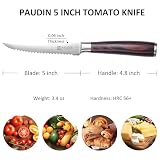
Paudin's tomato knife arrives in an elegant presentation box, making it the standout choice if you're shopping for someone special. The forged 5Cr15Mov high-carbon steel blade is hand-polished to a 14-16 degree edge and feels exceptionally sharp. The wood handle provides a warm, natural feel in hand and signals quality without pretension. At 5 inches, the thin, lightweight profile makes it easy to control, and the laser-engraved blade pattern adds a touch of elegance that distinguishes it from purely utilitarian designs.
One consideration: the knife is not full-tang (the blade doesn't extend fully into the handle), which some traditionalists see as compromising durability compared to fully forged designs. However, owners report excellent performance for typical home-use scenarios. The stainless steel construction resists rust, though like all stainless blades, it may require more frequent honing than carbon steel alternatives to maintain peak sharpness.
Paudin's lifetime warranty backs the craftsmanship, and reviewers consistently praise the balance and ergonomic feel. If you're choosing between Paudin and the Victorinox Swiss Classic, Paudin wins on presentation and handle feel, while Victorinox offers proven Swiss heritage and lower cost.
Pros
- Includes attractive gift box and blade cover
- Natural wood handle with exceptional comfort
- Lifetime warranty against defects in workmanship
Cons
- Non-full-tang construction may limit long-term durability
- Stainless steel blade requires more frequent honing than some alternatives
Key features (4)
- 5Cr15Mov high-carbon steel forged blade at HRC56+ hardness
- Hand-polished 14-16 degree edge for superior sharpness
- Soft wood handle with ergonomic lightweight 5-inch design
- Laser-engraved blade pattern and includes protective sheath
Wüsthof's Gourmet tomato knife represents German cutlery tradition backed by generations of kitchen use. The blade is sturdy and performs beautifully on tomatoes, grapes, plums, and other delicate fruits with remarkable precision. Owners frequently mention using it far beyond its specialty purpose (for bread, cheese, cold meats, and vegetable slicing) which speaks to the thoughtful engineering behind what appears to be a narrow tool. The knife feels robust and substantial in hand, which some cooks prefer over lighter alternatives.
The main consideration is cost: Wüsthof commands premium pricing relative to competitors like Omesata or Victorinox, and this knife sits at the higher end even within the Wüsthof lineup. Some reviewers note the Classic series may offer slightly higher quality than the Gourmet line, though both perform admirably. Hand washing is recommended to preserve the blade, which is standard practice for quality knives but worth noting for dishwasher-reliant kitchens.
Where Wüsthof diverges from RADA's Made-in-USA durability story is geography: you're paying partly for heritage and brand prestige alongside the blade itself. If cutting performance and German engineering justify the investment for you, Wüsthof delivers. If you want proven longevity at lower cost, RADA offers comparable sharpness and edge retention.
Pros
- Sturdy, substantial feel with excellent balance
- Versatile beyond tomatoes for fruit, bread, and cheese
- Consistent Wüsthof reputation for quality and performance
Cons
- Premium pricing compared to other serrated options
- Handwash recommended; not ideal for dishwasher routine
Key features (4)
- German-engineered serrated blade designed for precision
- Lightweight and well-balanced for extended use
- Suitable for tomatoes, bread, fruit, and vegetable slicing
- 5-inch length with classic Wüsthof construction standards
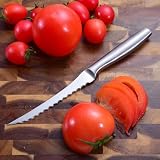
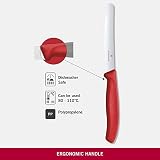
Victorinox's Swiss Classic tomato knife offers exceptional sharpness and legendary reliability. The 4.3-inch length (slightly shorter than competitors) makes it ideal for cooks with smaller hands or those who prioritize precise control over reach. The serrated blade bites through tough tomato skin with minimal effort, and the stainless steel construction handles frequent washing without fussing. Owners rave about the value proposition: a Swiss-made knife with lifetime warranty for what amounts to entry-level pricing.
One honest trade-off: in direct comparison testing, a heavier premium blade like Wüsthof's cuts slightly more effortlessly on very ripe tomatoes, though Victorinox still performs admirably. The knife is extremely sharp out of the box, and some owners suggest it holds that edge well, though it may eventually require more frequent honing than full-tang alternatives. The ergonomic handle with textured grip is comfortable even when wet, but the thinner overall construction lacks the substantial feel some cooks prefer.
If you're weighing Victorinox against Omesata, both deliver great value. Victorinox brings Swiss heritage and proven longevity. Omesata offers a slightly heavier blade at comparable pricing. Choose Victorinox if you want the smallest footprint and low entry cost, or Omesata if you prefer a full-sized 5-inch blade.
Pros
- Affordable entry into tomato knife ownership
- Swiss-made with lifetime warranty against defects
- Compact 4.3-inch length suits smaller hands and precise cuts
Cons
- Shorter blade may feel limiting for larger tomatoes
- Thinner construction feels less substantial than heavier options
Key features (4)
- Swiss stainless steel serrated blade, conical ground and ice tempered
- 4.3-inch compact length for controlled, precise slicing
- Ergonomic textured handle with non-slip grip
- Lifetime guarantee against defects in material and workmanship
How to Choose a Tomato Knife
Blade Length and Control
Tomato knives typically range from 4.3 to 5 inches. Longer blades (5 inches) suit larger tomatoes and give you more reach, while shorter blades (4.3 inches) offer tighter control and work well for delicate fruits or smaller hands. If you're new to tomato prep or prefer precision over speed, start with the compact length. Most home cooks find 5 inches strikes the right balance between reach and maneuverability.
Serration Pattern and Edge Angle
Look for double-serrated or precision-serrated blades designed specifically to grip tough skin without crushing soft flesh. Hand-polished edges (typically 14-16 degrees on each side) retain sharpness longer and cut more cleanly than mass-produced alternatives. The serration should be consistent along the entire blade length. A proper tomato knife edge will glide through skin and pulp with minimal downward pressure: if you're sawing back and forth, the blade isn't sharp enough. If you're considering whether to invest in a tomato knife versus simply using a best tomato dicer for smaller tomatoes, remember that slicing and dicing serve different purposes: a tomato knife creates clean, thin slices for sandwiches and salads, while a dicer produces uniform chunks for cooking.
Handle Material and Maintenance
Handle choices matter for daily convenience. Cast aluminum handles feel substantial but may require handwashing and can develop patina. Wood handles offer warmth and comfort but need careful drying. Modern textured or composite grips are typically dishwasher-safe and resist discoloration. Choose based on your kitchen habits: if you hand-wash your knives, any material works fine. If you rely on the dishwasher, seek stainless handles or those explicitly marked dishwasher-safe. Consider how a tomato knife versus chef knife fits into your broader knife-care routine, as maintenance needs vary.
Durability and Long-Term Sharpness
High-carbon stainless steel blades (like T420 or 5Cr15Mov) hold their edge longer than softer stainless alternatives. Full-tang construction (blade extending through the entire handle) signals premium durability, though many well-reviewed tomato knives use partial-tang designs without performance loss. Check warranty terms: lifetime warranties against defects indicate manufacturer confidence. Before purchase, read owner reviews mentioning how long the knife stays sharp with regular use. Tomato knife sharpening and care becomes easier with blades engineered for edge retention, so investing in better steel often pays dividends over years of use.
Price vs. Performance Trade-Offs
You don't need to spend premium prices to get a sharp, reliable tomato knife. Entry-level options (Swiss Classic, Omesata) deliver outstanding performance at accessible cost. Mid-range choices (Paudin) add aesthetic appeal and warranty assurance. Premium brands (Wüsthof, RADA) justify their pricing through heritage, materials, and longevity rather than dramatically superior everyday cutting. Match your budget to usage: occasional prep cooks can save money with budget picks, while daily cooks benefit from investing in edge retention and comfort.
Our picks at a glance
3
Best for Gift-GivingPaudin
5
Best Compact OptionVictorinox
Frequently asked
Can I use a tomato knife for other tasks, or is it only for tomatoes?
Tomato knives excel at any task requiring a thin serrated blade to grip tough skin without crushing soft interiors. Owners regularly use them for bread, cheese, cold meats, delicate fruits like peaches and kiwis, and even seed removal. The compact size makes them ideal for detail work. However, they're not designed for heavy chopping or thick-skinned squashes: that's where a chef knife excels. Think of it as a specialist tool with pleasantly broad applications.
Do tomato knives require special sharpening?
Serrated blades are more forgiving than straight edges and generally require less frequent sharpening. When they do need attention, professional sharpening is recommended because the serration pattern requires specialized equipment and expertise. Many owners report their tomato knives stay razor-sharp for years with normal use. Honing (using a steel to realign the edge) helps maintain sharpness between sharpenings, though not all serrated blades benefit equally. Check your knife's manual or manufacturer guidance.
What's the difference between a tomato knife and a paring knife?
Paring knives are small, straight-edged blades designed for peeling and detail work. Tomato knives are serrated, thin-bladed, and specifically engineered to grip tough skin without pressure. A tomato knife cuts through ripe tomatoes cleanly; a paring knife would likely crush them or require significant sawing. If you're choosing between the two, a tomato knife is far more specialized for its purpose, while a paring knife handles broader prep tasks but won't excel at delicate tomato work.
Is a dishwasher-safe tomato knife worth the convenience trade-off?
If you regularly run your knives through the dishwasher, a dishwasher-safe handle (like Omesata's textured composite) eliminates tarnishing and patina concerns. Hand-washing takes minimal time and extends blade life by avoiding heat and detergent harshness, so many serious cooks hand-wash regardless of label claims. Decide based on your actual kitchen habits: if you hand-wash knives, any material works fine; if dishwashing is non-negotiable, choose accordingly.
Why do some tomato knives cost three times more than others?
Premium pricing reflects blade metallurgy (edge retention), handle materials (wood vs. composite), manufacturing location (heritage brands), warranty terms, and brand reputation. A Wüsthof costs more than Omesata partly because it's German-engineered and built to last decades, but Omesata delivers similar cutting performance at lower cost. The best knife for you depends on whether you're paying for longevity and heritage or prioritizing sharp performance at accessible price.