Best Knives for Small Hands: Precision Paring Knives That Fit
Find the best knives for small hands with our guide to precision paring knives. Sharp, ergonomic options for control and comfort in every kitchen task.
Ideal for: Home cooks, secondary kitchen users, anyone who wants an affordable daily workhorse.
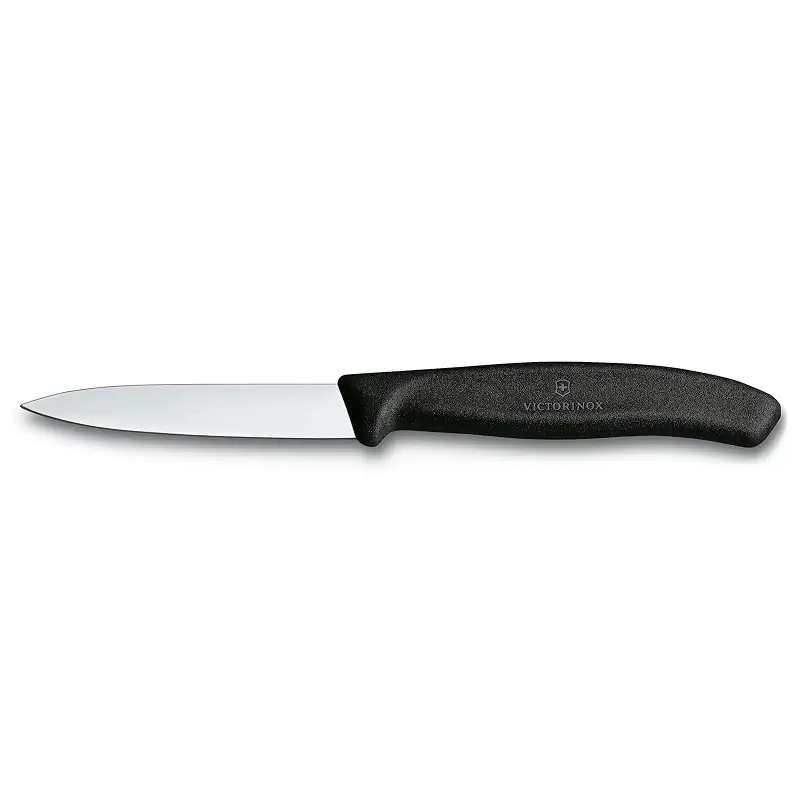
The Victorinox Swiss Classic 3.25-inch paring knife has earned its reputation through years of consistent performance. Home cooks and secondary kitchen users alike report using this knife far more than larger chef's knives, which speaks to how natural it feels in smaller hands. The blade is genuinely sharp out of the box and holds that edge well with minimal maintenance, and the ergonomic handle resists fatigue during repetitive tasks like peeling or mincing.
What makes this model stand out is the balance between size and functionality. At 3.25 inches, it's small enough to feel weightless but substantial enough to handle onions, peppers, and other everyday vegetables without that tippy, flimsy feeling. The non-slip textured handle stays secure even when your hands are wet, a detail that matters more in real kitchens than spec sheets suggest.
The main trade-off is the thin handle, which some users find narrow compared to larger kitchen knives. If you prefer a thicker grip, the 4-inch version offers slightly more surface area to hold, though it does sacrifice some of the compact advantage that makes this model so appealing for small-handed cooks.
Pros
Genuinely sharp blade that glides through soft and firm produce
Textured handle with excellent non-slip grip when wet
Lightweight and balanced, natural fit in smaller hands
Dishwasher safe and durable over years of regular use
Cons
Thin handle may feel narrow for those preferring more surface area
Blade doesn't perform as well on very hard vegetables or frozen items
Key features
3.25-inch straight edge blade with spear-point tip for precision
Ergonomic polypropylene handle minimizes wrist tension during use
NSF approved, fully dishwasher safe, and slip-resistant design
Swiss-made construction with proven durability and edge retention
#2 Pick
Best Budget Value Set
Vituer
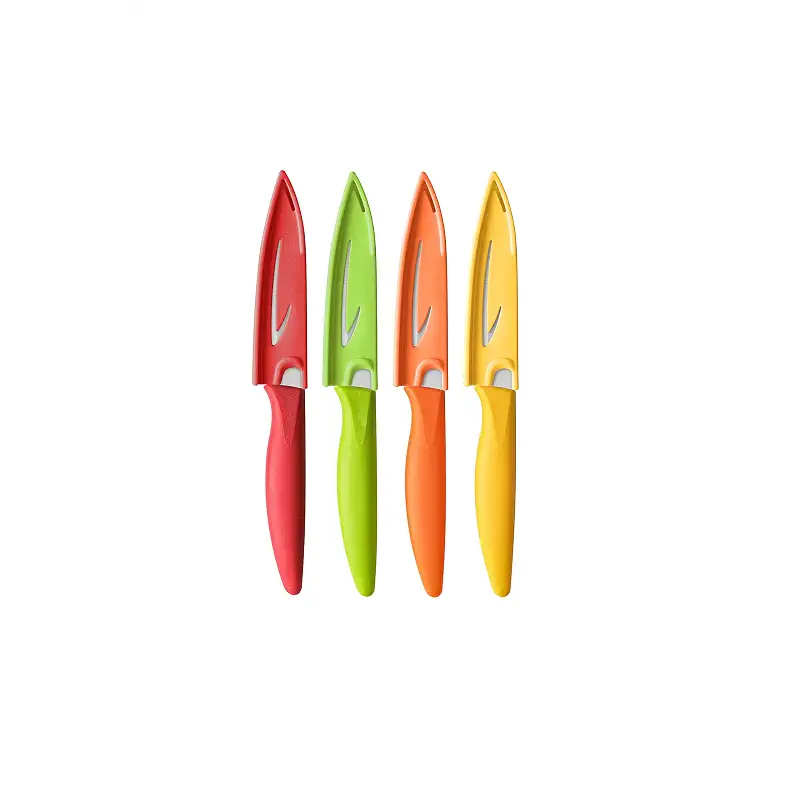
VITUER Paring knife, 4PCS Paring knives (4 Knives and 4 Knife cover), 4 Inch Peeling Fruit and Vegetable Knife, Ultra Sharp Kitchen Knives, German Steel, PP Plastic Handle
4.6(4,486)
Four sharp knives with protective sheaths at a fraction of single-knife cost.
Ideal for: Budget-conscious cooks, those wanting multiple knives in different spots, occasional users.
The Vituer set solves a practical problem: having multiple paring knives in different drawers or locations saves time when you're prepping. Four knives with individual sheaths mean you're not hunting for the one you just used, and at this price point, you can afford to do that without guilt. The German stainless steel blade is genuinely sharp and handles everyday fruits and vegetables with minimal effort, slicing through apples and tomatoes cleanly.
The trade-off is build quality. Buyers consistently note that the blades are thin and can flex or bend if you apply pressure to harder items like winter squash or uncooked carrots. This matters less if you're primarily peeling and slicing softer produce, but it's a real limitation if you expect the same rigidity you'd get from the Victorinox models. The sheaths are useful for storage and travel, though some users report minor rust spotting if knives go in the dishwasher instead of being hand-washed.
Compared to the OYY hand-forged option, the Vituer knives sacrifice craftsmanship and edge retention for accessibility and quantity. If you want multiple affordable backup knives or kitchen station blades, this set delivers. If you want one knife that will last decades, invest elsewhere.
Pros
Four knives with protective sheaths included in one purchase
Sharp blade suitable for most everyday fruits and vegetables
Colorful handle options add visual interest to kitchen drawers
Affordable price point makes replacing or gifting easy
Cons
Thin, flexible blade bends under pressure on harder produce
May develop rust spots if washed in dishwasher instead of by hand
Key features
Set of four 4-inch paring knives with individual protective sheaths
German stainless steel blade with 56±2 HRC hardness rating
Ergonomic integrated handle designed for comfortable grip and balance
BPA-free and lead-free construction; hand washing recommended
#3 Pick
Best for Slightly Larger Tasks
Victorinox
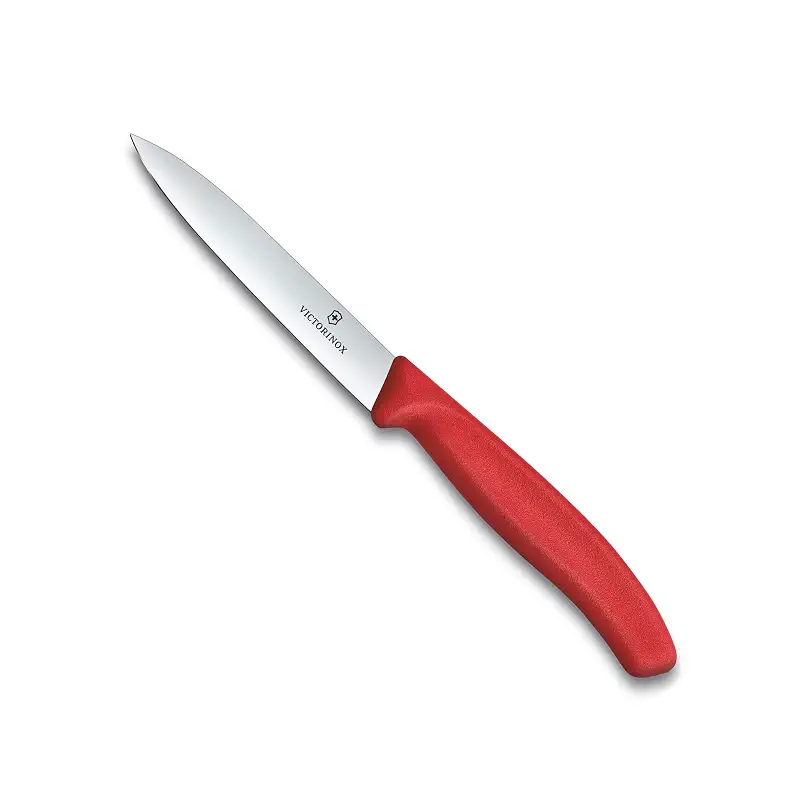
Victorinox Swiss Classic 4 Inch Straight Edge Paring Knife - Red
4.7(159)
The 4-inch upgrade when small paring knives feel too cramped.
Ideal for: Cooks who want a step up from tiny paring knives for slightly larger vegetables.
The Victorinox Swiss Classic 4-inch model splits the difference between a paring knife and a larger blade, giving you room to work on onions and peppers without pulling out your full chef's knife. Users who own both the 3.25-inch and 4-inch versions often alternate depending on the task, and several report the 4-inch becoming their go-to for daily prep despite owning more expensive specialty knives. The blade remains thin and maneuverable, so you don't sacrifice control for the extra length.
One owner mentioned a useful insight: the 3-inch version (the B0061SWLKW model) actually feels more balanced because its shorter blade-to-length ratio provides better control compared to the extra inch of this version. If your hands are very small or you prioritize precision over cutting surface, you might prefer the slightly shorter blade. That said, the 4-inch holds its sharpness remarkably well over years of use, as confirmed by owners who still use their original sets after four years without significant decline in performance.
The plastic handle, while thin, is functional and lightweight. Some reviewers wished it were thicker, but that thinness is actually part of what makes this knife comfortable in smaller hands. The main caveat is that you do need to be mindful when the blade or handle is wet, as the edge is dangerously sharp.
Pros
Four-inch blade offers slightly more cutting surface than smaller paring knives
Excellent edge retention; owners report years of reliable sharpness
Thin handle and lightweight design keep it comfortable for extended use
Swiss-made quality at a reasonable price point
Cons
Longer blade reduces precision control compared to shorter paring knives
Thin handle may feel insufficient for some users preferring thicker grips
Key features
4-inch straight edge blade with pointed tip for detailed prep work
Contemporary textured polypropylene handle with non-slip grip
Dishwasher safe and NSF approved for professional and home use
Weighted and balanced construction for effortless cutting performance
#4 Pick
Best Compact Entry-Level Option
Victorinox
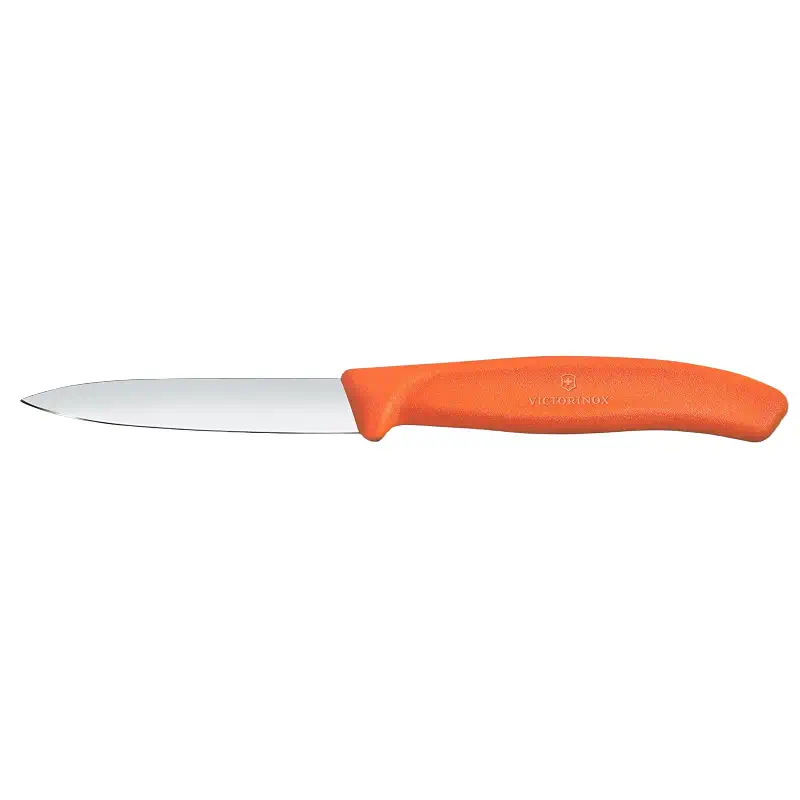
Victorinox Swiss Classic 3.25 Inch Straight Edge Spear Point Paring Knife - Orange
4.8(47)
The tiniest reliable paring knife for cooks with truly small hands.
Ideal for: Home cooks who value simplicity, affordability, and proven reliability.
The 3.25-inch Victorinox in orange (or other color variants) is essentially the same proven design as the first product in this list, but it's worth calling out separately because it's the knife reviewers keep buying again and again: some people bring multiple sets home across years because they trust it so completely. Users report it cuts like butter when freshly sharpened and maintains that quality across months of regular use. For cooks in households where sharpening isn't a priority, the blade does eventually dull, but replacement cost is low enough that some treat it as expendable.
One reviewer mentioned using this exact knife for decades across multiple continents, including when living abroad where quality kitchen tools were impossible to find. That's the kind of loyalty this knife inspires. The primary complaint is that the grip is thin, and a few users wish it were easier to hold, but most accept this as the expected trade-off for such a compact, lightweight design. The blade itself has no real weakness: it's sharp, durable, and balances precision with everyday durability in a way that more expensive knives sometimes overcomplicate.
If you're torn between this and the 4-inch version, consider what you prep most often. Smaller fruits and vegetables? This stays sharper and feels more natural. Larger prep work? The 4-inch gives you breathing room.
Pros
Consistently sharp blade with excellent edge retention over months
Lightweight and compact design perfect for small hands and storage
Proven track record of reliability across decades of household use
Affordable enough to buy multiple or replace without hesitation
Cons
Thin grip may feel narrow and less comfortable during extended use
Blade eventually dulls with regular use and requires sharpening
Key features
3.25-inch straight edge spear-point blade for precision peeling and mincing
Lightweight polypropylene handle with textured non-slip surface
NSF approved, dishwasher safe, and designed for household kitchen use
Swiss-made quality at entry-level price for everyday reliability
#5 Pick
Best Premium Hand-Forged Option
OYY
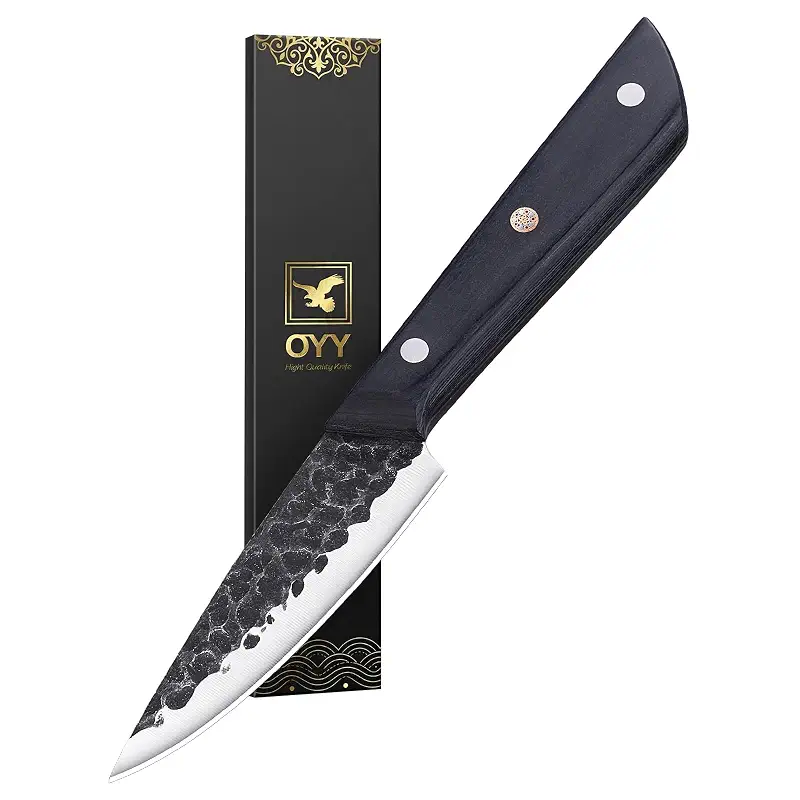
3.7 Inch Hand Forged Paring Knife with Gift Box for Men & Women | VG10 High Carbon 3-Layer Clad Steel Small Kitchen Knife, Ultra Sharp Full Tang for Peeling, Slicing & Delicate Prep
4.2(13)
Artisan-crafted paring knife for cooks who value superior edge retention and feel.
Ideal for: Serious home cooks, gift-givers, anyone who sharpens knives and values craftsmanship.
The OYY hand-forged paring knife operates in a different market segment than the Victorinox options. This is a knife that's meant to be treasured and maintained, not replaced when the edge dulls. The VG-10 high-carbon steel core hardened to 60±2 HRC holds a sharper edge longer and requires less frequent sharpening than the stamped stainless options. Owners describe it as surprisingly sharp out of the box and note that it stays that way through months of regular prep work. The full tang construction (blade forged from a single piece of steel, not attached with rivets) creates a sense of solidity that lighter paring knives can't match.
The wooden handle, triple-riveted and finished traditionally, offers real ergonomic comfort for extended use, though one reviewer noted that the handle is slightly bulkier than some might prefer if your hands are quite small. The blade itself is thinner and more refined than the sturdy Victorinox, making it better suited to delicate work like fruit carving or deveining shrimp: tasks where precision edge geometry matters more than brute force. It comes in a gift box, which signals that OYY sees this as a heirloom-quality tool rather than a disposable kitchen item.
The main trade-off is price and maintenance. This knife expects you to hand-wash and care for it, and you'll want to sharpen it properly rather than let it dull. If you're looking for the best paring knife vs chef knife comparison in terms of specialized capability, this hand-forged design excels at the delicate work that a chef's knife simply can't do as well.
Full tang construction creates superior balance and stability during use
Wooden handle with triple rivets offers premium feel and ergonomic comfort
Hand-forged artisan quality with excellent presentation and gift appeal
Cons
Bulkier handle may feel less ideal for very small hands compared to thinner paring knives
Requires hand-washing and regular maintenance to prevent rust and preserve edge
Key features
3.7-inch blade forged from VG-10 high-carbon 3-layer clad steel construction
Hand-forged and vacuum heat-treated to 60±2 HRC for superior edge retention
Full tang design with triple-riveted wooden handle for stability and grip
Includes elegant gold-embossed gift box and professional 24/7 customer support
How to Choose a Paring Knife for Small Hands
Four trade-offs that actually matter when matching a knives for small hands to your kitchen.
Blade Length and Handle Size
Blade length for small hands typically ranges from 3 to 4 inches. A 3.25-inch blade offers maximum maneuverability and comfort, while a 4-inch version gives you slightly more cutting surface without becoming unwieldy. More important than blade length is handle diameter and length: thinner handles fit smaller hands better, though some users prefer a compromise that's neither too thin nor too thick. The weight should feel balanced in your palm without tipping toward the blade or handle end. If you're trying between sizes, a 3.25-inch knife is almost always the safer choice for true small-hand compatibility.
Ergonomic Knife Features That Matter
Ergonomic knife features that matter include a non-slip textured handle (especially important if your hands get wet while cooking), a slight curve or contour that matches your palm shape, and a balance point that sits near the blade-handle junction rather than front-heavy. Wrist strain happens when you're using a knife that forces your hand into an unnatural angle, so spend time holding a knife if possible before buying. The handle should feel like an extension of your hand, not something you're gripping to control. Full tang construction (where the steel extends through the entire handle) provides better balance than partial tangs, though it does add weight.
Sharpness and Edge Retention
A paring knife only works well if it's sharp, and it stays useful only if the edge lasts. Stainless steel knives like Victorinox stay sharp for weeks or months of regular use, while high-carbon steel options (like VG-10) hold an edge longer but require more careful maintenance and hand-washing. For home cooks who don't sharpen knives regularly, a stainless blade that's easy to maintain and replace is often more practical than a premium option that demands proper care. That said, if you do sharpen at home or use a honing steel regularly, the superior edge retention of hand-forged carbon steel justifies the investment.
Materials and Durability
German stainless steel and Swiss stainless construction both offer reliable durability at entry-level prices, though they don't hold an edge quite as long as high-carbon options. Dishwasher-safe knives are convenient but can accelerate blade dulling and handle wear over time; hand-washing extends the life of any knife. Full tang construction (blade extends through handle as one piece) is more durable than partial or attached tangs, especially in knives you'll use daily for years. Consider whether you want a knife to last decades with proper care or replace affordably every couple of years.
Budget vs. Quality Trade-Offs
Budget paring knives (under one category price point) are sharp initially but may have thinner, more flexible blades that feel flimsy under pressure. Mid-range options from established brands offer consistent quality and edge retention at reasonable cost. Premium hand-forged knives excel at precision and edge longevity but expect you to maintain them properly and sharpen them correctly. For small hands specifically, a reliable mid-range knife often provides better value than either extreme: you get a comfortable, functional blade without overpaying for artisan craftsmanship you may not need.
Frequently asked
Quick answers to the questions readers ask most.
What size paring knife is best for small hands?
A 3.25-inch blade is ideal for most small-handed cooks, offering maximum control and comfort without sacrificing cutting capability. A 4-inch blade works if you prep larger vegetables regularly but sacrifices some maneuverability. Handle diameter matters more than blade length: a thin, textured grip is usually more important than overall size. Try holding different knives if possible; the right one should feel like an extension of your hand, not require significant gripping effort.
Are paring knives suitable for everyday kitchen work?
Yes, many home cooks use a paring knife for 80-90% of their daily prep work. Paring knives excel at peeling, mincing small vegetables, trimming, and slicing fruits. They're sharper and more nimble than chef's knives for detail work, though they're not ideal for large-scale chopping or heavy-duty tasks. If you primarily work with smaller ingredients or prefer frequent small cuts over large batches, a quality paring knife often becomes your most-used blade.
How do I maintain a paring knife to keep it sharp?
Hand-washing is gentler than dishwashing and prevents edge dulling. Use a honing steel regularly (before or after each use) to realign the blade edge, which maintains sharpness without removing steel. Sharpen with a whetstone or honing service once or twice yearly for regular use. Store your knife safely in a block or sheath to prevent blade damage. Stainless steel knives require less maintenance than carbon steel but still benefit from proper care and storage.
Can a paring knife replace a chef's knife for small-handed cooks?
For many home cooks with small hands, a paring knife actually works better than a chef's knife, which can feel too heavy and unwieldy. The paring knife's precise tip and lighter weight allow better control for detailed work. However, if you need to process large quantities of ingredients or cut through tough items, you'll eventually want both knives. A high-quality paring knife can handle 70-80% of kitchen prep work, making it the more essential tool for some cooks.
Should I buy a single premium knife or a set of affordable knives?
For paring knives specifically, buying one or two quality mid-range blades (like Victorinox) is usually better than a low-quality multi-knife set. Having knives in different kitchen locations saves time, but thin, flimsy blades frustrate more than multiple dull edges help. If you want multiple knives, start with a single excellent paring knife, then add a second once you confirm you use it regularly. Premium hand-forged options are worthwhile only if you sharpen regularly and commit to long-term maintenance.