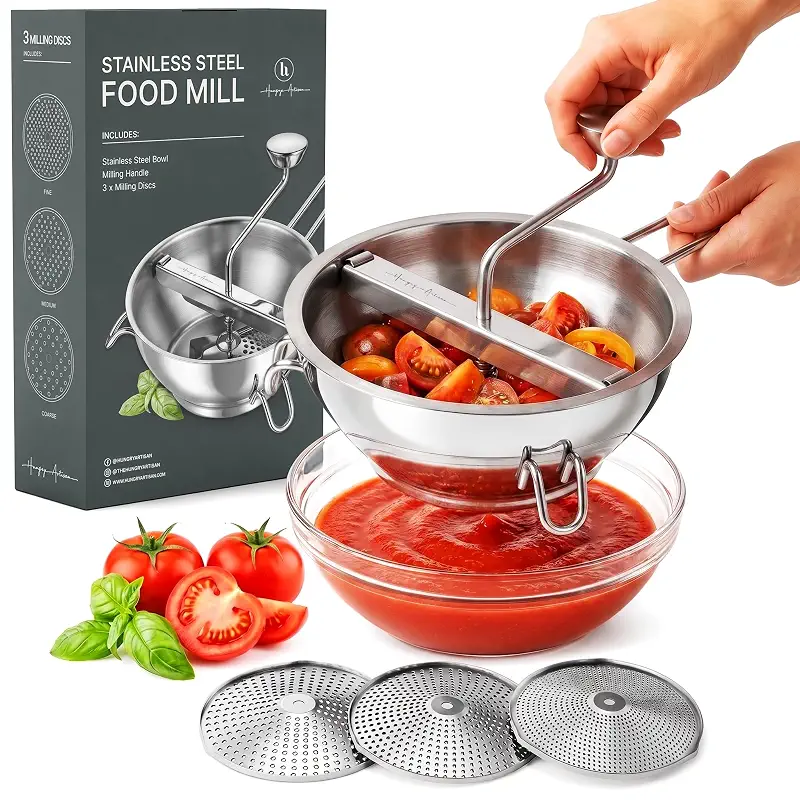
Ideal for: Home cooks preserving modest tomato quantities who value durability and prefer manual control over electric speed.
The Hungry Artisan food mill stands out for its combination of build quality, ease of use, and real versatility. Owners consistently report that it handles tomatoes beautifully (removing skins and seeds while leaving behind smooth puree) and the three disc options let you control texture from fine to chunky depending on what you're making. The ergonomic hand crank takes genuine effort out of the manual process, and the stainless steel construction cleans up quickly without stubborn residue.
Where this shines is consistency and reliability. Home canners appreciate that it works the same way every time you use it, no electricity required, and no moving parts that can fail. One buyer noted the ability to process roasted tomatoes that had been frozen and thawed, expanding your seasonal flexibility. The main trade-off is speed: you're working by hand, so processing large harvests takes longer than you'd get with an electric machine.
Compared to the Weston electric strainer, this manual tool costs less, takes up less counter space, and never needs electricity or complicated assembly. You give up batch throughput, but you gain simplicity and a smaller footprint in your kitchen.
Pros
Three interchangeable discs for texture control
Ergonomic hand crank reduces wrist strain
Stainless steel construction, dishwasher-safe
Cons
Manual operation slower for large harvests
Berry seeds (like raspberry) can pass through smallest disc
Key features
Stainless steel body with three interchangeable milling discs
Ergonomic rotary hand crank for consistent manual operation
Removes seeds and skins from soft fruits and vegetables
Dishwasher-safe design for quick cleanup
#2 Pick
Best for Whole-Fruit Convenience
Godspeeds
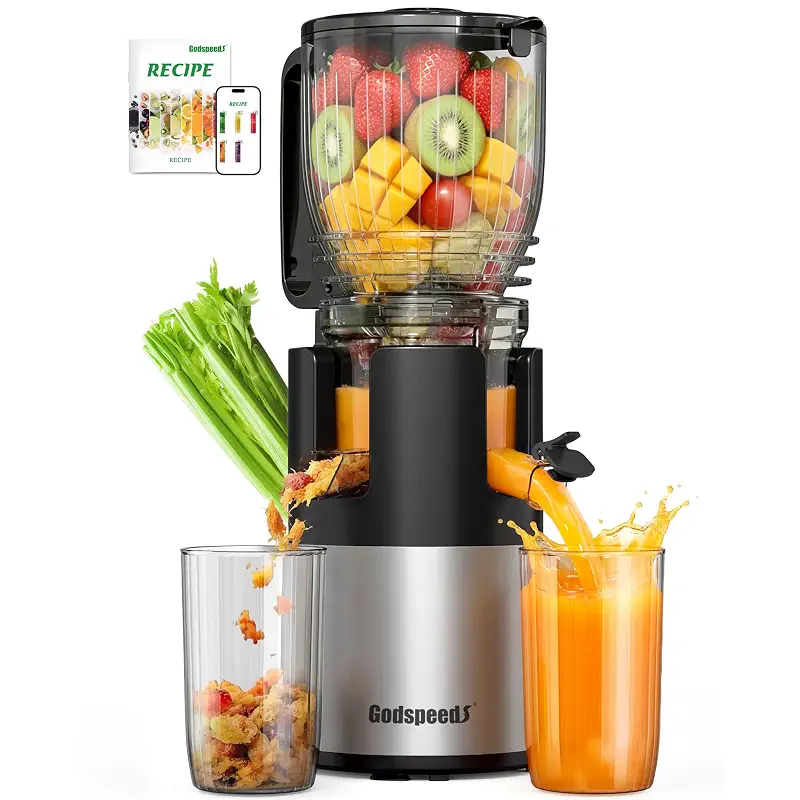
Godspeeds Juicer Machines, 6" Large Feed Chute Cold Press Juicer | For Whole Fruits & Vegetables, Easy to Clean Design, High Juice Yield Slow Masticating Juicer for Home Daily Wellness
4.3(817)
Cold-press juicer with large feed chute that accepts whole fruits, ideal for fresh juice rather than cooking-based canning.
Ideal for: Daily juicing enthusiasts making fresh fruit and vegetable drinks; less suited to traditional tomato canning projects.
The Godspeeds masticating juicer excels at one specific job: extracting juice from whole fruits with minimal prep. The 6-inch feed chute is genuinely time-saving if you're juicing apples, oranges, or cucumbers regularly, and the slow-squeeze technology preserves flavors that faster centrifugal machines can degrade. Buyers report high juice yields and dry pulp, meaning less waste and more liquid in your jar.
However, this is a juice extractor, not a tomato-canning tool in the traditional sense. If your goal is fresh tomato juice for drinking or light preservation (rather than cooked sauce for pressure canning), it can work. The issue is that it's optimized for hard fruits and fibrous vegetables. For tomato canning specifically, where you want to separate skins and seeds from cooked pulp and make a shelf-stable sauce, a dedicated food mill or electric strainer will give better results.
Where this differs from the Weston or Norpro is purpose: those are sauce makers, and this is a juicer. If you're also looking to prep tomatoes for serving fresh, a top tomato dicer pairs well with this juicer for quick prep of raw tomatoes before processing. Choose this if your priority is fresh juice yield and you don't mind the prep and cleanup a masticating machine demands.
Pros
6-inch feed chute fits whole fruits with minimal prep
High juice yield with slow masticating extraction
Quiet operation and simple disassembly for cleaning
Cons
Designed for fresh juice, not cooked tomato sauce canning
Larger footprint than hand-crank food mills
Key features
6-inch wide feed chute accommodates whole fruits and vegetables
300W slow-masticating motor preserves juice quality and yield
Dual-channel extraction separates pulp and juice efficiently
Ideal for: Home canning gardeners with large harvests (30+ lbs) who want electric speed and three texture options.
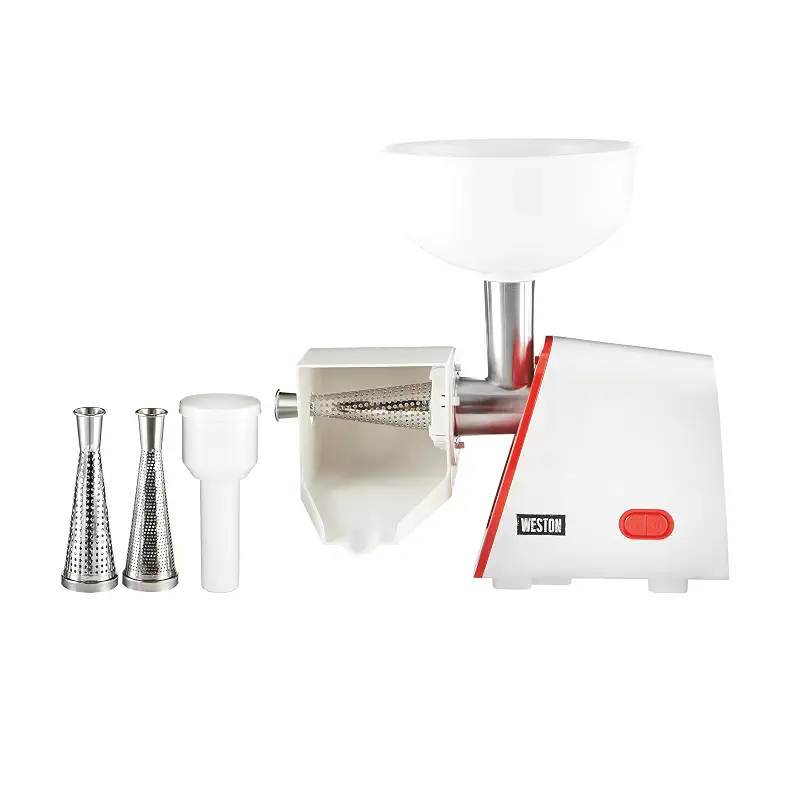
The Weston electric tomato strainer is purpose-built for exactly what the name says: straining tomatoes in volume. The 1-gallon hopper means fewer refills, the 250-watt motor with forward and reverse speeds handles the work without you turning a crank, and the three stainless steel screens (1.5mm, 3mm, 6mm) let you choose your final texture. Owners who process 30, 50, even 80 pounds of tomatoes in a day consistently report this machine cut their workload dramatically compared to hand-crank mills.
The real advantage surfaces when you're scaling up. Buyers describe finishing large batches in under an hour where manual processing would take a full day. The aluminum head and stainless screens are durable, though one owner flagged that the aluminum head can leave faint gray residue if you run it through a dishwasher (the manual recommends light oiling and hand washing the head).
The main drawback is that the machine requires attention: the manual explicitly says don't run it continuously for more than 5 minutes at a time, and you may need to pause and clear the shoot every 15 pounds or so if you're processing thick-skinned heirlooms. Compared to the Hungry Artisan's simplicity, this demands more setup, more cleanup (more parts), and more caution, but the speed payoff is significant if you're serious about canning.
Pros
250W motor processes large batches rapidly
1-gallon hopper reduces refilling frequency
Three screens deliver fine puree to chunky salsa texture
Cons
Aluminum head requires careful hand-washing to avoid discoloration
Requires periodic breaks and screen-clearing during heavy use
Key features
250-watt motor with forward and reverse speeds
1-gallon hopper capacity for batch processing efficiency
Three interchangeable stainless steel screens (1.5mm, 3mm, 6mm)
Powerful extraction removes skins and seeds in one pass
#4 Pick
Best Value Hand-Crank Strainer
Norpro
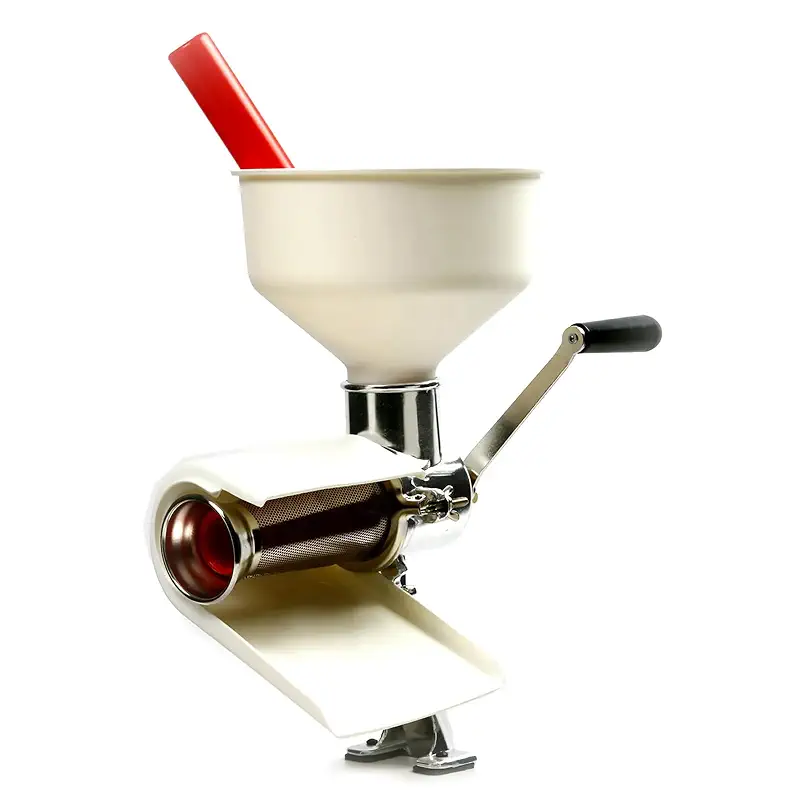
Norpro 1951 "The Original" Sauce Master
4.3(1,291)
Classic Norpro manual strainer with metal construction and optional screens; budget-friendly workhorse for tomatoes and soft fruits.
Ideal for: Budget-conscious home canners processing modest quantities; those who prefer proven metal-based design.
The Norpro Sauce Master has been around for decades because it works. It's a hand-crank strainer with a metal spiral auger that pushes food through a chrome-plated screen, automatically separating juice and pulp in one operation. The core design is proven, and owners who've used vintage models decades ago often come back to buy the current version out of familiarity and trust.
What makes it appealing is the combination of low cost and solid metal construction. Unlike the Hungry Artisan, this tool is built with a sturdy metal spiral auger (not plastic internal parts), and the strainer mounts bolts directly to wings on the main unit, so it sits more solidly than some competitors. Buyers report excellent results with tomatoes, raspberries (with the optional berry screen), and blackberries.
The downside that surfaces in reviews is cleanup. The strainer screen has seams and overlaps where seeds and skins can get trapped; a few owners have reported that thorough cleaning takes time or even soaking. One reviewer suggested filling problem areas with silicone to prevent trapping. Compared to the Weston's electric speed or the Hungry Artisan's simpler design, the Norpro demands patience during both the turning and the washing. If you're only processing a few pounds, it's fine; if you're doing 50 pounds of berries in one session, you may find yourself pausing often to clear clogs.
Pros
Durable metal spiral auger and chrome-plated screen
Low cost relative to electric alternatives
Optional berry, pumpkin, and salsa screens available separately
Cons
Screen seams trap seeds and skins, complicating cleanup
Hand-crank operation slower than electric machines
Key features
Metal spiral auger with chrome-plated steel screen
Includes fine-mesh screen and spiral for general use
3-quart capacity hopper for batch processing
Optional specialty screens (berry, pumpkin, salsa) sold separately
#5 Pick
Best for Commercial-Grade Output
Arinoo
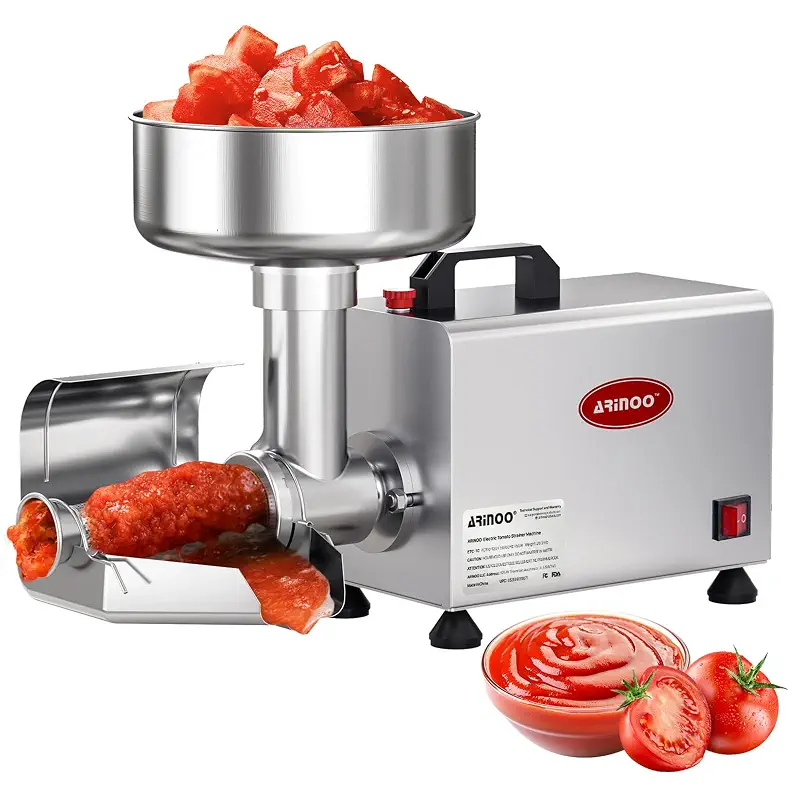
Electric Tomato Strainer, 450W Tomato Juicer Maker Machine | Commercial Stainless Steel Tomato Press & Sauce Maker with Pure Copper Motor for Blueberry Strawberry Jam, 200-350 lbs/h 110V
4.1(15)
Heavy-duty electric strainer with copper motor and stainless steel body; highest processing speed for dedicated canning operations.
Ideal for: High-volume home canning operations or small farms needing rapid tomato processing; buyers comfortable with newer brands.
The Arinoo electric strainer is positioned as a semi-commercial tool, and the specifications reflect that. The 0.6HP pure copper motor, dual-channel automatic separation design, and 304 stainless steel construction all signal a machine built for volume. Claims of up to 330 pounds per hour throughput make it the fastest option in this lineup, and the food-grade stainless steel won't corrode or degrade over years of heavy use.
Owners who have used it report smooth operation and ease of cleaning; the detachable parts disassemble quickly, and stainless surfaces wipe clean. The safety features (enclosed motor, dedicated food pusher) suggest this was engineered with user protection in mind.
The critical caveat is that this is a new brand with limited review volume (15 reviews vs. 900+ for the Weston), and some early buyers encountered assembly or fitment issues (one reported the strainer head wouldn't click into place; another received loose shipping plugs leading to oil leakage). The warranty (5 years, with lifetime support) is generous, but you're taking a risk on a less-established manufacturer compared to the proven track record of the Weston. If you're running a serious home canning operation or small commercial kitchen and the price aligns, this could be worth considering, but the lack of long-term owner feedback means you're betting on durability that the market hasn't yet confirmed.
Pros
0.6HP copper motor delivers up to 330 lbs/hour throughput
304 stainless steel construction resists rust and corrosion
Automatic dual-channel separation requires no filter swapping
Cons
Limited ownership history compared to established competitors
Assembly and shipping issues reported in early reviews
Key features
0.6HP pure copper motor for high-speed processing
Food-grade 304 stainless steel body and components
Automatic dual-channel design separates seeds and skins without filters
Processes up to 330 lbs per hour for commercial-scale output
How to Choose a Tomato Juicer for Canning
Four trade-offs that actually matter when matching a tomato juicer for canning to your kitchen.
Manual vs. Electric: Speed and Effort Trade-offs
Hand-crank food mills like the Hungry Artisan and Norpro require physical effort but offer simplicity, low cost, and zero electricity. They're ideal if you're processing a few pounds for a family recipe or small-batch preserving. Electric strainers (Weston, Arinoo) cut processing time by 80% or more, making them worth the investment if you're dealing with large garden harvests or planning to can every season. Consider your typical batch size: under 10 pounds favors hand-crank; 30+ pounds almost always justifies electric.
Screen Size and Texture Control
Different discs and screens produce different results. Fine screens (1.5mm to 2mm) create smooth puree ideal for sauce; medium screens (3mm) work for chunky salsa or pumpkin puree; coarse screens (6mm) are useful for berry seeds or light straining. The Hungry Artisan and Weston both offer multiple screens, giving you flexibility across recipes. If you always want the same texture, a single-screen tool like the original Norpro saves money, but you lose the option to adapt when your project changes.
Capacity and Batch Workflow
A 1-gallon hopper (Weston) means fewer pauses to refill during heavy processing. Manual mills don't have a hopper; you work with what fits in the bowl underneath. Larger capacity machines suit people who cook tomatoes down first and want to strain in one focused session. Smaller setups work fine if you're processing tomatoes in smaller groups or prefer a less intimidating footprint on your counter.
Ease of Cleanup and Setup
This matters more than spec sheets suggest. A tomato juicer vs. food mill comparison reveals that electric machines with more parts take longer to disassemble and reassemble for cleaning. Hand-crank mills are simpler but can trap seeds in screen seams. Stainless steel parts resist staining better than aluminum. If cleanup feels like a chore, you'll be less likely to can next season. Read reviews specifically about cleaning before committing, and factor in your tolerance for disassembly.
Building Your Setup for Success
Position your strainer slightly elevated (on a cutting board or small blocks) and work near a sink or with large bowls underneath. Most owners recommend having your cooked tomatoes in a pot nearby so you can work in batches without lengthy pauses. A tomato preparation for canning guide will walk you through blanching, cooling, and cutting strategies that pair with your equipment choice. Having a strategy before you start makes the whole day more efficient.
Frequently asked
Quick answers to the questions readers ask most.
Can I use a tomato juicer for canning if I haven't cooked the tomatoes first?
Yes, but results vary by tool. Hand-crank mills and electric strainers both handle raw or roasted tomatoes; the difference is texture. Raw tomatoes yield thinner juice, while roasted or cooked tomatoes produce thicker sauce because cooking breaks down cell walls and releases more pectin. Many canners cook tomatoes first (even just simmering for 30 minutes) to get the sauce consistency they want. Electric strainers handle raw or thawed tomatoes equally well; just expect a longer processing time for very wet tomatoes.
Do I need a special tomato juicer, or can a regular food mill work?
A regular food mill (like the Hungry Artisan) works perfectly for tomatoes. The term 'tomato juicer' on some products is marketing; what matters is the ability to separate skins and seeds. Hand-crank mills and electric strainers designed for general food processing do the job just as well as machines labeled specifically for tomatoes. The Hungry Artisan and Norpro are both general-purpose mills that excel with tomatoes.
How much time does an electric strainer really save compared to a hand-crank mill?
On a 30-pound batch, a hand-crank mill takes roughly 2-3 hours of turning; an electric strainer like the Weston processes the same batch in 30-60 minutes. The difference grows with larger harvests. Electric machines also spare your shoulders and wrists from repetitive strain. If you're only canning once a year with a small harvest, the time savings may not justify the cost and storage space. If it's a regular summer project with 50+ pounds, electric pays for itself quickly in reduced labor.
What's the difference between a food mill and a juicer for canning tomatoes?
A food mill forces whole food through a screen disc, separating solids from liquid in one step and removing skins and seeds automatically. A juicer (like a cold-press masticating machine) extracts juice by crushing and pressing, leaving behind dry pulp. For tomato sauce canning, a food mill or electric strainer is the right tool: it gives you the thick puree you need. A juice extractor works better for fresh tomato juice if that's your goal, but it won't produce the sauce texture most canning recipes call for.
Are there safety concerns with electric tomato strainers?
Electric strainers like the Weston have moving parts, so follow the manual's guidance: don't run continuously for more than 5 minutes, keep hands away from the hopper during operation, and use the provided pusher tool rather than your fingers. One early Arinoo reviewer noted a shock hazard from a loose cord placement near water vents: inspect your machine carefully before use. Hand-crank mills have no electricity risk but require caution with the turning crank if long hair or loose sleeves are nearby. Always read the manual's safety section before your first use.