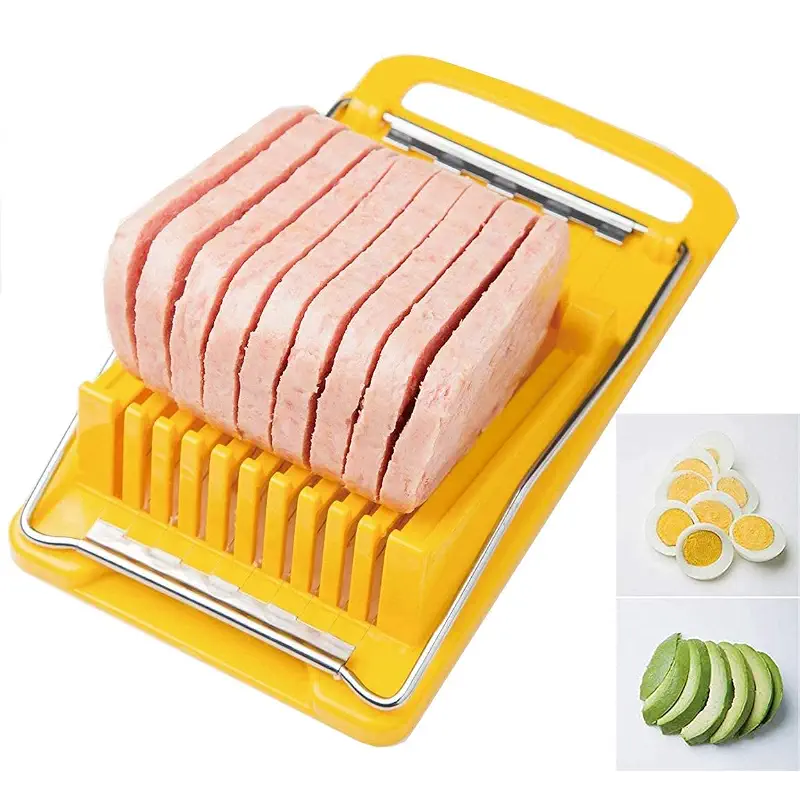
Ideal for: Home cooks who slice spam, eggs, and soft fruits regularly and value safety and space efficiency.
The Koowai slicer sits at the top of this category for good reason: it combines strong buyer satisfaction, versatility, and thoughtful design. The 10 stainless-steel wires produce perfectly uniform slices in seconds, and owners consistently praise how evenly they cut everything from canned meat to boiled eggs and bananas. The ergonomic non-slip handle and finger guard make this a genuinely safer alternative to knife work, which matters if kids or inexperienced cooks are in your kitchen.
One realistic caveat is the cleanup. Buyers report small meat crumbs stick to the wires after cutting, requiring a thorough rinse or a soft brush (an old toothbrush works) to avoid sharp edges in storage. It's not arduous, but it's not quite as wipe-and-done as some marketers suggest. The slicer does require a light touch on thicker or denser foods; forcing it can bend or stress the wires over time.
For most households that slice spam or soft cheese regularly, this model offers the best balance of ease, durability, and price without stepping into premium territory. The compact footprint means it actually stays accessible in a utensil drawer rather than hidden away.
Pros
10 uniform wires produce perfectly even slices every time
Ergonomic handle with finger guard for safer food prep
Dishwasher-safe stainless steel resists rust and corrosion
Compact design fits standard utensil drawers
Cons
Food debris clings to wires; requires rinsing or brushing
Wire tension can weaken after sustained heavy use
Key features
10 stainless-steel wires for 11 uniform slices per cut
Ergonomic rubberized handle with integrated finger guard
Ideal for: Buyers who prioritize durability over speed and want to avoid wire breakage over years of use.
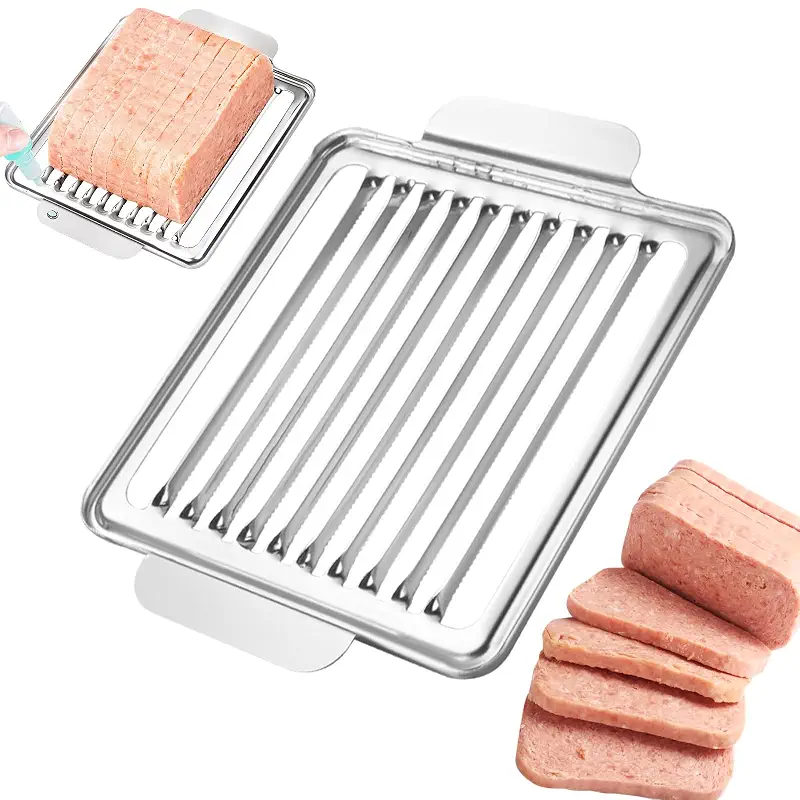
The Yongjung represents a deliberate design choice: swap 10 thin wires for solid 304 stainless-steel blades. Buyers who've burned out wire slicers before often gravitate here specifically to avoid the frustration of snapping wires mid-slice. The serrated blade design is genuinely tougher and tolerates occasional rough handling that would bend or break wire-based tools. One owner noted she'd "never go that route again" after dealing with deformed wires, then found this blade model reliable after half a dozen uses.
The trade-off is effort. This slicer demands slow, deliberate, even pressure to cut spam cleanly. Rush it or press unevenly and you risk the meat mushing rather than slicing. It's not a one-handed, effortless press like wire models; think "thoughtful pressure" instead of "quick downstroke." Cleanup is more involved too: the tight blade stack makes hand washing trickier, though the dishwasher solves this entirely.
Compared to the Koowai wire design, this won't appeal to buyers who want speed or minimal effort. But if durability and "set it and forget it" longevity matter more than pure ease, the solid-blade approach justifies the slightly slower operation. One independent parent noted it let her autistic son use the slicer safely and independently, which speaks to the reliable, predictable cutting action.
Pros
Solid metal blades last longer than wire designs
Serrated edges cut cleanly without tearing or mushing
Withstands dishwasher temperatures up to 180°C without damage
Less prone to snapping under normal household use
Cons
Requires slow, deliberate pressure to slice cleanly
Tight blade stack makes hand washing tedious
Key features
10 serrated stainless-steel blades instead of wires for durability
304 food-grade stainless steel, dishwasher safe to 356°F
Cuts spam into 11 even slices with proper, steady pressure
Small compact footprint, easy drawer storage
Works on eggs, tomatoes, and soft luncheon meats
#3 Pick
Best for Thick Slices
Fengchen
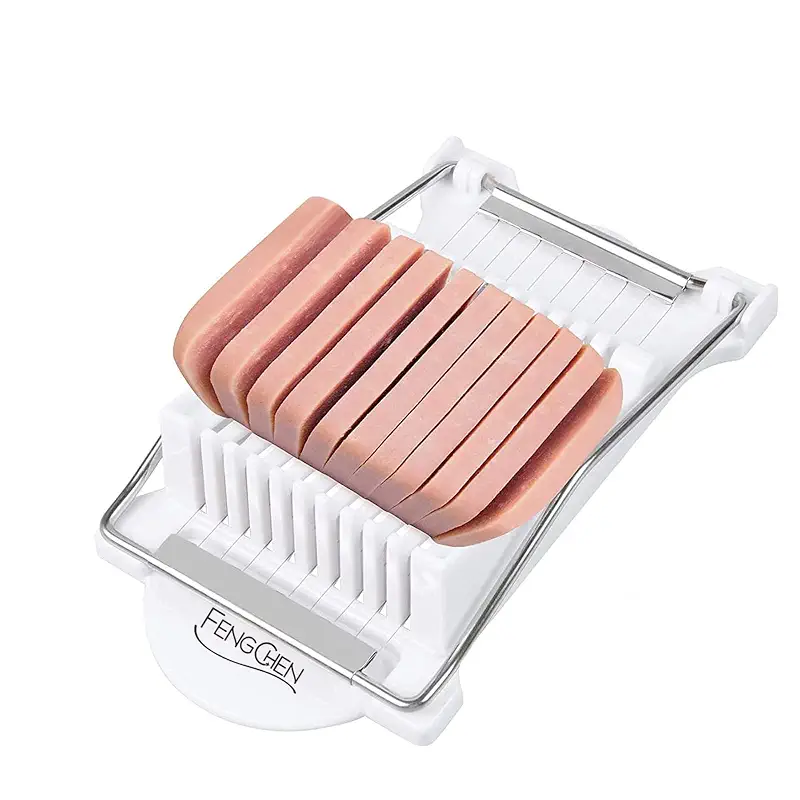
FENGCHEN Spam Slicer, Easy Luncheon Meat Cutter with Stainless Wires, Multi-purpose Soft Food Cutter for Luncheon Meat, Fruit of Kitchen Home Use, Durable and Rust Resistant Food Prep Accessory,White
4.5(1,080)
Wire slicer with larger cutting area produces wider slices and handles musubi-style prep with ease.
Ideal for: Home cooks making spam musubi who prefer thicker slices and don't mind two-handed operation.
The Fengchen stands out for producing notably thicker slices than competitors, which actually appeals to a specific audience: home cooks making spam musubi who prefer a denser, meatier bite, or anyone who wants fewer pieces per can. Buyers consistently note the slices come out thicker than store-bought individually wrapped spam, but that's a feature, not a flaw, if you're building layers of rice and seaweed. The larger base area also makes it less finicky when lining up a spam loaf before cutting.
However, there are genuine usability quirks. The metal wire frame doesn't lock into the plastic base (it just snaps in) so owners report the frame can pop out mid-slice if you apply pressure unevenly or don't stabilize it with your other hand. You'll need a two-handed technique: one hand presses down while the other steadies the frame hinge. Spam, being solid and dense, requires slow, measured pressure; rushing it risks bending or even breaking the slicer. Compared to the Yongjung blade model, this won't feel as stable during heavy cuts.
Cleanup is straightforward because the frame snaps off completely, exposing both sides of the wires for easy rinsing. The hangable hole is a nice touch if wall storage appeals to you.
Pros
Produces noticeably thicker slices for musubi and hearty portions
Larger cutting area accommodates spam loaves easily
Removable frame snaps off for thorough, quick cleaning
Hole for wall or hook storage keeps it visible and accessible
Cons
Frame doesn't lock; pops out under uneven or heavy pressure
Requires deliberate two-handed technique and slow pressing
Key features
Wire frame design with removable base for complete access
Larger cutting area for easier spam positioning and alignment
Produces thicker slices ideal for musubi-style assembly
ABS plastic base with stainless-steel wires, dishwasher safe
Works on spam, soft cheese, bananas, kiwi, and avocado
Ideal for: Budget-conscious home cooks, shared kitchens, and spam enthusiasts who accept eventual wire wear.
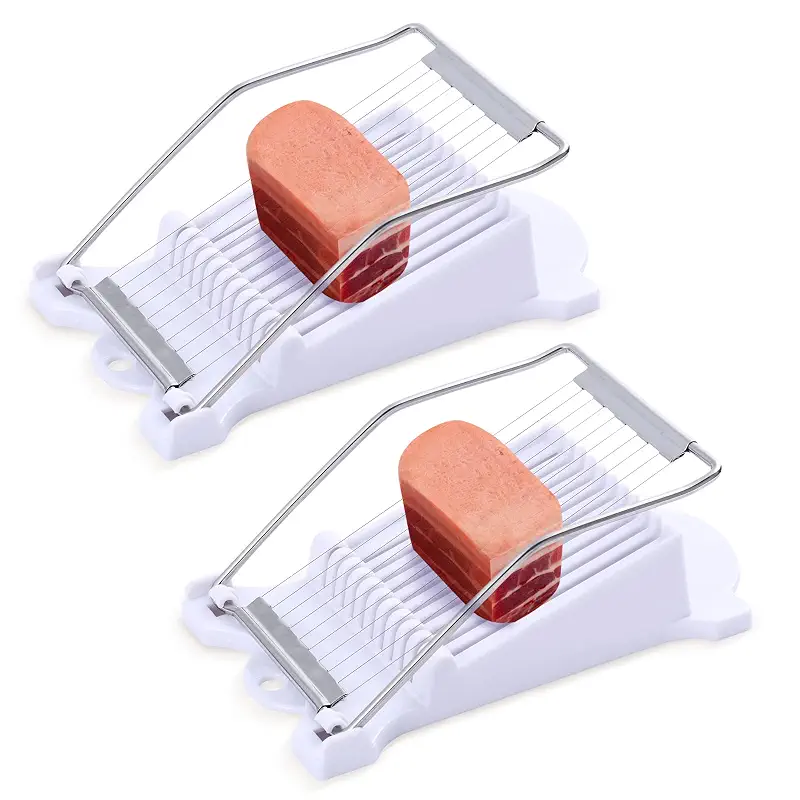
The Zxmissu 2-pack appeals directly to buyers who either share a kitchen with others or who've learned from experience that spam slicers don't last forever. Getting two units for a modest investment means you're not stuck waiting for a replacement if wires snap. Owners appreciate the redundancy, especially in multi-generational or shared households. The bundle also makes sense as a gift if you're introducing someone to the spam-musubi world.
The slicer itself uses 8 stainless-steel wires (fewer than some competitors) to produce slices roughly 0.3 inches thick. For musubi-style cutting, this thickness works well; buyers who prefer traditional sandwich-thin slices sometimes find these oddly sized. The non-slip ABS base and lightweight design make them comfortable to handle, and the precision is solid if you take time to line up the spam loaf carefully.
Where the two-pack stumbles: durability. A notable number of buyers report wires breaking or the frame popping out of the hinge after 3-4 uses on canned spam. Several owners describe the plastic hinge as a "fatal flaw in the future." Compared to the Yongjung blade design or even the Koowai wires, this feels more like a consumable tool: useful, but with a shorter expected lifespan. The fact that Zxmissu includes two units suggests the manufacturer knows wire fatigue is a real issue.
If budget is tight and you're comfortable replacing slicers every year or so, the two-pack value is genuinely strong. If longevity is your priority, invest in the blade-based Yongjung instead.
Pros
Two units included for backup and shared-kitchen convenience
Lightweight ABS base with non-slip grip
Stainless-steel wires produce clean, even cuts with care
Compact and easy to store or take camping
Cons
Wires tend to break or hinge to slip after 3-4 heavy uses
Slices are thicker than some prefer for sandwich prep
Ideal for: Home cooks who slice eggs and soft fruits regularly and use spam slicers occasionally or as a secondary tool.
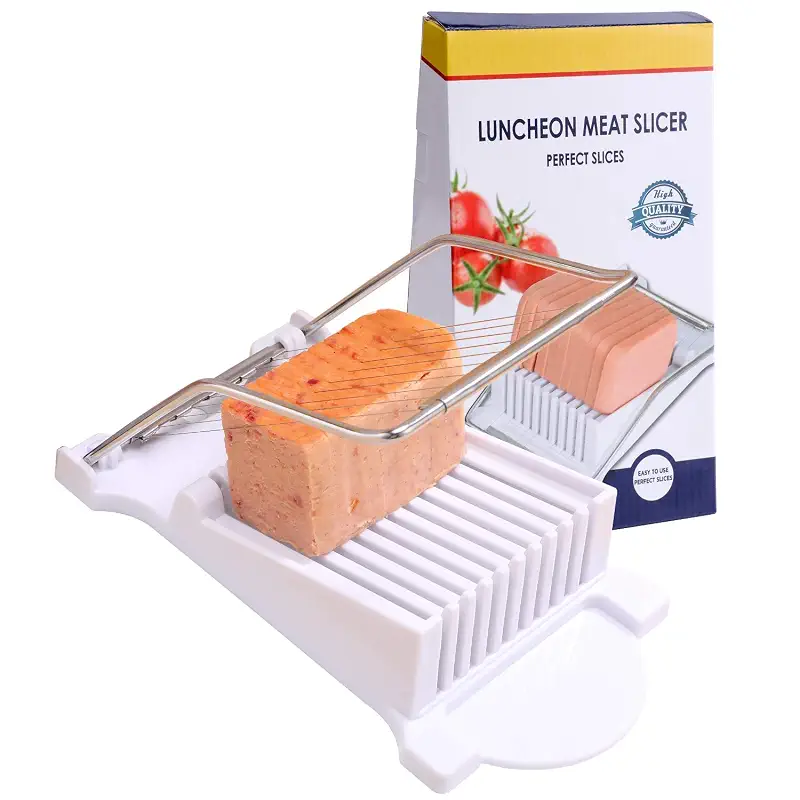
The Nvted slicer is the category's most-reviewed product for a reason: it works acceptably well across the widest range of soft foods. With 10 thin stainless-steel wires producing 11 slices per cut, it handles eggs, bananas, soft cheese, and yes, canned spam: just not with the durability of pricier or blade-based alternatives. Owners love it for slicing boiled eggs and bananas where precision matters more than speed. The ABS plastic resists heat up to 230°F (110°C), so you can safely use it on warm items.
The reality check: several buyers explicitly say this tool isn't sturdy enough for dense foods like hard cheese or luncheon meat beyond a few uses. One owner noted that spam and hard cheese will stress the wires; she recommended patience and gentle pressure, using a towel to stabilize the frame while pushing down slowly. Another found the metal frame popped out of the plastic base during use: a recurring weakness in wire-based designs with loose-fit hinges.
Where the Nvted shines is sheer accessibility: no assembly, one-handed operation once you've positioned the food, and genuine dishwasher convenience. Compared to the Yongjung blade model, this prioritizes ease and versatility over durability. If you're slicing primarily soft items (eggs, fruit, soft cheese) and only occasionally touching canned meat, this gets the job done without frustration. But if spam is your main use case, the Koowai or Yongjung are safer bets for longevity.
Pros
10 thin wires deliver precise cuts on bananas, eggs, and soft cheese
Heat-resistant ABS base tolerates warm foods up to 230°F
No-assembly design with intuitive one-handed operation
Dishwasher safe and widely available with strong review volume
Cons
Wire frame can pop out of hinge under modest pressure
Not recommended for dense foods like spam beyond 3–4 uses
Key features
10 stainless-steel wires produce 11 slices per press
BPA-free ABS base, heat-resistant to 230°F, dishwasher safe
Cuts soft cheese, boiled eggs, bananas, and canned ham evenly
Compact, lightweight design with no assembly required
Affordable entry point to slicer category with strong buyer reviews
How to Choose a Spam Slicer
Four trade-offs that actually matter when matching a spam slicer to your kitchen.
Wire Blades vs. Solid Metal Blades
Wire-based slicers (like the Koowai and Fengchen) are faster and easier to operate but can eventually weaken or break under sustained use on dense foods. Solid metal blades (like the Yongjung) sacrifice speed for durability and outlast wires by years. If you slice spam multiple times a week, solid blades repay their effort with longevity. If you're an occasional user, wires offer convenience. Consider your usage pattern: a spam slicer vs. egg slicer buyer might prioritize the wire design for its versatility, while someone committed to weekly musubi prep benefits from blade durability.
Material and Rust Resistance
All five options use stainless steel (304 grade in most cases), which resists corrosion and dishwasher cycles. The key difference is the base: ABS plastic is lightweight and non-slip but less durable under impact, while solid metal bases add weight and cost. If you travel, RV, or camp frequently, a lighter plastic base saves luggage space. If the slicer lives permanently in a drawer, durability of the base matters less. Either way, 304 stainless-steel wires or blades will not rust if dried after washing.
Slice Thickness and Portion Size
Wire slicers typically produce 8 to 10 evenly spaced cuts, but the thickness varies. Thinner slices come from tighter wire spacing; thicker slices from wider gaps. For spam musubi, thicker slices reduce the number of pieces you need and create a denser, meatier result. For sandwiches or meal prep where you want many thin slices from one can, narrower wire spacing works better. Check buyer reviews for the specific thickness: it's less obvious from specs but makes a real difference in the final dish.
Stability and Learning Curve
Wire-frame designs that snap into a plastic base (rather than lock) can pop out if you apply pressure unevenly; solid-blade models eliminate this frustration. First-time users should expect a learning curve: holding the base steady with one hand while pressing the frame down with the other is not intuitive for everyone. Solid-blade slicers require slower, more deliberate pressure than wire models. Neither approach is wrong, but understanding this upfront prevents frustration. Younger kids and older adults often find the slower, more controlled blade approach less stressful, even if it takes a few extra seconds.
Maintenance and Cleanup
Food debris sticks to both wire and blade designs, but differently. Wire slicers trap small meat particles in the spacing; you'll need warm water and a soft brush or old toothbrush to dislodge them fully. Blade slicers with removable frames let you access both sides easily, but the tight blade stack makes hand washing messier. All models are dishwasher safe, which is the easiest path. Store the slicer closed (frame down onto base) to keep sharp edges away from fingers in a crowded drawer. Check the cleaning spam slicer guide before purchase if maintenance concerns you.
Frequently asked
Quick answers to the questions readers ask most.
Can I use a spam slicer on hard cheese or dense foods?
Wire slicers can handle soft cheese at room temperature, but repeated use on hard cheese or dense luncheon meat stresses the wires and shortens lifespan. Solid blade models (like the Yongjung) are more forgiving for cheese and occasional denser cuts. If cheese is your main use, warm it to room temperature first to reduce wire strain. Avoid very hard or frozen items altogether: they'll either bend wires or take such extreme pressure that the tool feels fragile.
Why do the wires keep breaking?
Wire breakage usually stems from three causes: applying uneven or excessive downward pressure, using the slicer on foods denser than intended (frozen spam or hard cheese), or the metal fatiguing after years of repeated cuts. Some two-packs include backup units because the manufacturer expects eventual wire wear. To extend wire life, press slowly and evenly, stabilize the frame with your non-dominant hand, and stick to soft foods. If breakage is an early concern, switch to a blade-based model.
Is a spam slicer worth buying if I only make musubi once a month?
Yes. Even occasional musubi makers appreciate the uniform slices and time savings over knife work. A single can sliced unevenly means some slices cook faster than others, affecting the final texture. A slicer guarantees consistency. For one-time-a-month use, an affordable wire model is sufficient; durability matters less if you're using it so rarely. Buying a two-pack also gives you a replacement if the first one ever wears out.
What's the difference between 8-wire and 10-wire slicers?
A 10-wire slicer produces 11 pieces per cut; an 8-wire slicer produces 9. More wires mean thinner slices and more pieces per can, which appeals to sandwich makers. Fewer wires mean thicker slices and fewer pieces, which suits musubi and hearty portions. Neither is objectively better; it depends on your intended dish. Check buyer photos and reviews for the actual thickness you prefer.
Are these slicers safe for kids or elderly cooks?
Wire slicers with finger guards (like the Koowai) are safer than sharp knives for supervised kids or elderly cooks with hand dexterity concerns. The non-slip grip and guard prevent accidental contact with cutting wires. Solid-blade models with a stable base and lock mechanism are also safe. Avoid unsupervised young children until they understand the tool's mechanics. Either design beats the hazard of a sharp knife for someone who struggles with gripping or control.