Kitchen & Dining · Gadgets
Best Sharpener for Fillet Knives: Top Picks for Every Need
Find the best sharpener for fillet knives with our expert comparison. Manual, pull-through, and adjustable angle options reviewed for fishing and kitchen use.
Affiliate disclosure: As an Amazon Associate I earn from qualifying purchases.
At a glance
1
Best Overall for PrecisionSharp Pebble
2
Best for PortabilitySmith's
3
Best for Fishing-Specific DesignGambler
4
Best Mid-Range Adjustable OptionSmith's
5
Best Kitchen-Focused with Scissor SharpeningRazorsharp
Detailed reviews
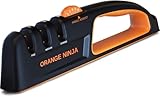
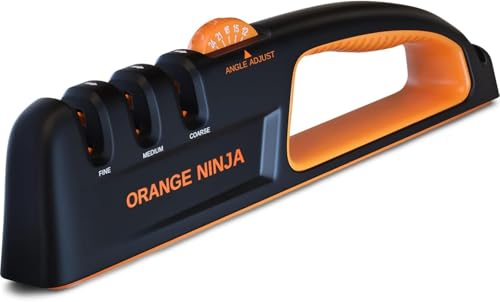
The Sharp Pebble stands out because it gives you five angle settings (12 through 24 degrees), which matters when you have fillet knives alongside chef's knives or hunting blades, each originally ground at different angles. Owners report that the finer control helps them dial in the exact angle their particular knives need, then maintain that edge without guessing. The three-stage progression from coarse to fine lets you restore a truly dull blade or just touch up a cared-for edge, which extends blade life because you're not over-sharpening.
The trade-off is size and counter real estate. Several buyers note this sharpener is bulkier than portable alternatives, and the thick plastic housing means smaller pocket knives might not fit the full blade length through the slots. If your primary need is fillet knives and kitchen cutlery at home, the weight and footprint are hardly drawbacks; the non-slip base keeps the sharpener steady during use, which buyers find reassuring.
Compared to fixed-angle pull-throughs, this delivers more learning curve initially, but once you understand how to match your knife's original grind, the precision pays off in edge quality that lasts longer between sharpenings.
Pros
- Five adjustable angle settings for precise blade-matching
- Three-stage progression handles dull blades and touch-ups
- Non-slip base provides stable control during sharpening
Cons
- Larger footprint takes more counter or drawer space
- Thick housing may not accommodate shorter pocket knife blades
Key features (4)
- Five adjustable angles (12°, 15°, 18°, 21°, 24°) for blade-specific sharpening
- Three-stage coarse-to-fine abrasive progression
- Ergonomic design with non-slip rubber base for stability
- Suitable for straight-edge kitchen, hunting, and pocket knives
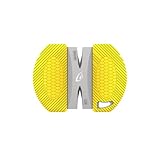
Smith's 51176 solves the problem of needing a sharp fillet knife when you're away from home. At 2.56 inches with a lanyard hole, this fits in a tackle box, hunting pack, or pocket without thought. The crossed tungsten carbide and ceramic design is preset to 20 degrees, which aligns well with most fillet knives and general-purpose outdoor blades. Owners report it restores a dull edge in just a few strokes and delivers results comparable to larger home sharpeners for field use.
The preset angle is both strength and constraint. You cannot adjust the angle, so if your fillet knife was originally ground at 15 degrees (some specialty knives are), this sharpener will impose its 20-degree bias. For the majority of standard fillet knives and hunting knives, that preset angle works; for specialized blades, it may not be ideal. The lightweight design and ease of use mean beginners gravitate toward this option, and the stainless-steel frame stands up to outdoor conditions without corrosion concern.
Where the Sharp Pebble prioritizes adjustability for a full knife collection, this Smith's model trades that flexibility for genuinely portable sharpening: you can actually carry it without burden. Whether you're prepping with the best knife to cut raw chicken at home, keeping florist scissors sharp enough to make clean stem cuts that extend vase life, or maintaining your fillet blade on the boat, having a sharp edge available matters more than perfect angle matching in the field.
Pros
- Truly portable at 2.56 inches with lanyard attachment
- Two-stage carbide and ceramic for coarse-to-fine edge work
- Stainless-steel construction resists corrosion and rust
Cons
- Preset 20-degree angle cannot be adjusted for specialty blades
- Limited to quick touch-ups rather than full blade restoration
Key features (4)
- Compact 2.56-inch stainless-steel frame with lanyard hole
- Crossed tungsten carbide and ceramic preset to 20-degree angle
- Two-stage sharpening: coarse carbide and fine ceramic rods
- Non-slip rubber feet for safe tabletop or handheld use
Gambler danco targets anglers explicitly, and the design choices reflect that focus. The textured dual-grip handle is shaped for comfort during repetitive sharpening strokes at the boat or dock, and the two-stage coarse-and-fine surface addresses both dull blades and edge refinement. A 9-inch lanyard with lanyard hole makes it genuinely attach-able to your gear, and the 5-year limited warranty signals confidence in durability for outdoor use. Owners who fish note it sharpens fillet knives effectively and holds up to salt-air and moisture exposure.
The catch is that with only seven reviews on record, this sharpener has less proof-of-field evidence than the Smith's model or the Sharp Pebble. The two-stage approach is straightforward (no angle adjustment) so it suits anglers who own a standard fillet knife and want uncomplicated maintenance. One buyer mentioned that while this isn't a match for specialized sharpening stones or strops for true razor work, it excels at fast, practical edge restoration, which is the honest promise of a tackle-box sharpener. The warranty and presentation (branded packaging noted by reviewers) suggest Gambler stands behind the product.
Compared to the Smith's 51176, this is slightly larger but with an explicit ergonomic grip advantage for extended use, making it better if you sharpen several blades in succession.
Pros
- Textured dual-grip ergonomic design for comfortable control
- Two-stage coarse-and-fine sharpening in one compact tool
- Includes 9-inch lanyard and 5-year limited warranty
Cons
- Limited review history provides less field-use feedback
- Fixed angle preset means no adjustment for specialty blades
Key features (4)
- Ergonomic textured TPR dual-grip for extended hand comfort
- Two-stage coarse and fine sharpening surfaces
- Tabletop or handheld use with stable balance
- 9-inch lanyard with lanyard hole for gear attachment
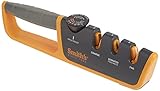
Smith's Adjustable Angle model splits the difference between fixed-angle portability and the Sharp Pebble's full adjustability. Six angle settings (14 through 24 degrees) cover most fillet knives and standard kitchen blades, and the ability to replace just the carbide and ceramic components rather than the whole sharpener reduces long-term cost. Owners report using this for everything from fillet knives to hunting blades to hooks, and the soft grip handle plus non-slip base make it comfortable for home sharpening sessions.
The learning curve is moderate. Unlike preset pull-throughs where you just pull and go, you need to dial in the angle, but once you understand your blade's original grind, it takes seconds to set. The fixed-angle slot for serrated edges is a bonus if you own bread knives or serrated pocket knives alongside your fillet blade. One experienced sharpener noted that the trick is using light pressure and letting the blade glide rather than forcing it, which applies to most pull-through sharpeners but matters more when angle adjustment is involved.
Where Sharp Pebble offers five angles with three stages and Gambler targets anglers only, this Smith's model balances adjustability and practical portability: it's suitable for home use and outdoor trips without the bulk of the larger Sharp Pebble.
Pros
- Six adjustable angle settings (14-24 degrees) for blade variety
- Replaceable carbide and ceramic components extend tool life
- Soft grip handle and non-slip base improve comfort and safety
Cons
- Requires understanding of blade angles for best results
- Fixed-angle serrated slot limits serrated blade options
Key features (4)
- Six adjustable angle settings (14-24 degrees) via knob control
- Two-stage coarse and fine abrasive components (replaceable)
- Fixed-angle slot for serrated edge blades
- Soft grip handle with non-slip rubber base for stability
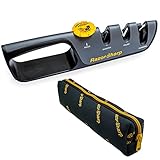
RazorSharp focuses on the kitchen knife collection rather than outdoor portability. The adjustable 14-to-24-degree range and diamond-coated ceramic whetstones appeal to cooks who own fillet knives alongside chef's knives and want a single tool that handles the full drawer. The scissor sharpening slot is genuinely useful if you sharpen household shears, and the ABS plastic frame with non-slip rubber keeps the sharpener stable on a counter during frequent use. Owners with quality knife collections report excellent results, particularly on hard steel blades.
The trade-off is that pull-through sharpeners (even this one) can feel sluggish if your technique is off. One buyer who owned a motor-driven sharpener previously found the manual action slower but still effective once the rhythm became automatic. Another noted the instruction on the QR code routed to a sales page rather than registration, a minor annoyance but not a product fault. The plastic construction means it's lighter than all-metal alternatives, which some view as premium and others see as cost-cutting. For a home cook, the lightness is an advantage; for someone looking rugged outdoor durability, metal might feel more reassuring.
Compared to the Smith's Adjustable Angle, this RazorSharp prioritizes kitchen aesthetics (lighter, comes in a case) and scissor functionality, while Smith's tilts toward field use and component replaceability.
Pros
- Adjustable 14-24 degree angle for various kitchen blade types
- Diamond-coated ceramic whetstones for long tool lifespan
- Dedicated scissor sharpening slot for household shears
Cons
- Requires smooth, controlled pull technique to avoid binding
- Plastic construction may feel less durable than metal alternatives
Key features (4)
- Adjustable 14-24 degree angle guide for blade-specific sharpening
- Diamond-coated ceramic whetstones for extended durability
- Dedicated scissor sharpening slot for household use
- High-density ABS plastic frame with non-slip rubber for safety
How to Choose a Fillet Knife Sharpener
Fixed Angle vs. Adjustable Control
Fixed-angle pull-throughs (like the Smith's 51176) sharpen in seconds with almost no learning curve: you pull the blade through a preset slot and you're done. Adjustable models let you dial in the angle to match your specific knife's original grind, which produces a sharper edge but requires understanding your blade. If you own one standard fillet knife and prioritize speed, fixed-angle makes sense. If your knife collection varies or you want to match the exact factory angle, adjustable pays off over time. The fillet knife sharpening technique you use matters as well; even the best sharpener requires a smooth, controlled pull rather than pressure or force for optimal results.
Portability and Size
Compact sharpeners with lanyard holes (under 3 inches) fit tackle boxes and packs, making them ideal for anglers and hunters who fish or field-dress regularly. Larger tabletop models (the Sharp Pebble) stay in a drawer and won't come on trips but provide more control and stability during use. Consider where you'll actually sharpen: if it's always at home, size isn't a constraint. If you're sharpening fillet knives at the boat or camp, pocket-sized wins.
Stage Count and Blade Restoration
Two-stage sharpeners (coarse and fine) handle both dull blades and touch-ups, though restoring a truly neglected blade takes more passes. Three-stage systems add a polishing step for a finer final edge. If your fillet knives stay reasonably sharp between use, two stages suffice. If you inherit old kitchen blades or take a year off fishing, three stages speeds the restoration. All options here work; the difference is time and effort. When considering pull-through versus manual sharpeners, know that pull-throughs remove material faster and with less technique required, while manual stones demand skill but offer the finest control.
Material and Durability
Stainless-steel frames resist salt air and moisture, crucial for fishing environments. Plastic handles with rubber grip aren't inferior; they reduce weight and provide comfort. Diamond-coated ceramic lasts longer than basic tungsten carbide, though both eventually wear. Check if components are replaceable: the Smith's Adjustable Angle lets you swap carbides without buying a new sharpener, extending the tool's useful life and reducing cost over years of use.
Angle Matching and Your Knife
Most fillet knives ship with a 15-to-20-degree edge. Standard kitchen blades run 20-24 degrees. The best sharpener for your knives aligns with those angles. Preset 20-degree sharpeners work for most fillet knives out of the box. If you own specialty or vintage blades ground at different angles, adjustable models (Sharp Pebble, Smith's Adjustable, RazorSharp) let you match that original grind. Mismatching angle reduces edge sharpness and can accelerate wear.
Our picks at a glance
1
Best Overall for PrecisionSharp Pebble
2
Best for PortabilitySmith's
3
Best for Fishing-Specific DesignGambler
4
Best Mid-Range Adjustable OptionSmith's
5
Best Kitchen-Focused with Scissor SharpeningRazorsharp
Frequently asked
Can I use a kitchen knife sharpener on my fillet knife?
Yes, as long as the sharpener covers the angle range your fillet knife needs (typically 15-20 degrees). Most fillet knives are ground at 15-20 degrees, while kitchen chef's knives run 20-24 degrees. Adjustable sharpeners (Sharp Pebble, Smith's Adjustable, RazorSharp) handle both with angle flexibility. Fixed-angle models at 20 degrees work for standard fillet knives but may not suit specialty blades.
How often should I sharpen my fillet knife?
Depends on use frequency. A fillet knife used daily at a fish market might need sharpening weekly. Home cooks using it once or twice a week can go two to four weeks between sharpenings if they use proper technique (no hard cutting boards, store blades with blade guards). Regular light touch-ups with a sharpener's fine stage extend intervals; waiting until the blade is very dull requires more coarse-stage passes and removes more steel.
What's the difference between a pull-through sharpener and a manual stone?
Pull-through sharpeners guide the blade at a fixed or adjustable angle and remove material quickly: three to five passes restores an edge. Manual stones give you full control of angle and pressure but require technique and take longer. For field use and quick home maintenance, pull-throughs excel. For experienced cooks seeking ultimate control or to preserve blade material, stones are preferred. Both produce sharp edges; pull-throughs are more forgiving.
Will a sharpener damage my fillet knife?
Quality sharpeners remove steel but only what's necessary to restore the edge. Over-aggressive use or using a sharpener at the wrong angle can remove excess material. The key is light pressure: let the blade glide through the slot rather than forcing it, and check sharpness every few passes. Replaceable-component sharpeners cost less per use over time if wear concerns you.
Can these sharpeners work on serrated fillet knives?
Most pull-through sharpeners in this guide are for straight-edge blades only. The Smith's Adjustable Angle includes a fixed-angle serrated slot, making it the only multi-purpose option here for serrated blades. If your fillet knife is serrated, check the product details carefully or stick with the Smith's model. Specialty serrated sharpeners exist but aren't covered in this lineup.