Verdict, analysis, and key features for each pick.
#1 Pick
Best Overall
InnovifyHub
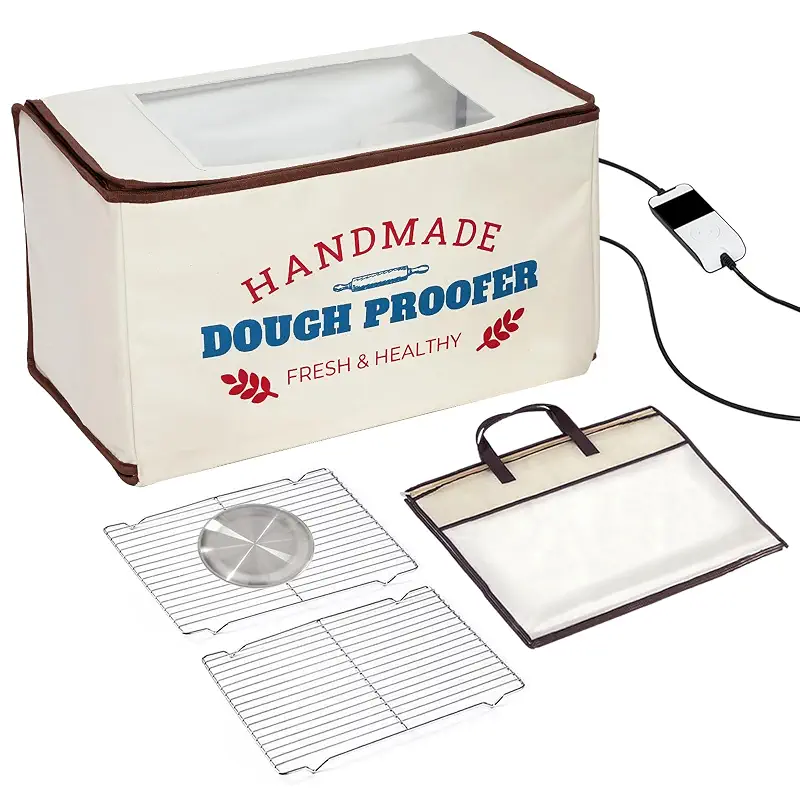
Extra Large Dough Proofing Box50-130°F, 3-Sided Heat 24HTimer | Extra-large foldable proofing box includes 3-sided heat, 50-130°F control, beep alert and storage bag for dough and seedlings
4.6(236)
Extra-large capacity with 3-sided heating, precise temperature control to 130°F, and intuitive controls that deliver consistent results.
Ideal for: Home bakers proofing multiple loaves or starters in a single session; those in cold climates seeking reliable year-round fermentation.
The InnovifyHub Extra Large stands out for its thoughtful engineering. The 3-sided heating (front, back, and bottom) eliminates cold spots that plague single-element designs, and the extended range up to 130°F opens doors to recipes beyond typical dough proofing. I appreciate that the digital controller gives you one-degree precision and a countdown timer with audible alert, so you don't overthink fermentation windows. The transparent viewing window lets you monitor rise without cracking the lid and losing heat. Owners consistently report that while the internal temperature runs a few degrees cooler than the display setting, it remains stable and predictable once you account for that offset. The 5-layer insulation and NTC sensor do solid work holding temperature in drafty rooms and cold seasons.
Where this box excels is sheer capacity: it swallows two large mixing bowls, multiple bannetons, or quart jars in one shot, making it ideal for batch work. Compared to the Giyudot, which maxes out at 113°F and is slightly more compact, the InnovifyHub's wider heat range and larger interior give you more flexibility if you ever experiment with higher-temperature fermentation. The included rack and accessory kit add practical value. One minor friction point owners mention is the remote cable design, which enters the top and exits the bottom in a way that makes tabletop placement slightly awkward, but it's a small ergonomic quirk that doesn't affect performance.
This box rewards home bakers who want to proof multiple loaves or experiment with different recipes without stacking sessions. The price sits in the mid-premium range, justified by the capacity and heating breadth.
Pros
3-sided heating eliminates cold spots and distributes warmth evenly
Temperature range to 130°F opens advanced fermentation options
Roomy interior holds two large bowls or multiple bannetons at once
Cons
Internal temperature runs 3-4°F cooler than display setting; requires calibration
Remote cable design makes flat countertop placement slightly awkward
Key features
50-130°F precision control with one-degree increments
24-hour countdown timer with audible alert at cycle end
Transparent viewing window for progress monitoring without heat loss
3-sided heating (front, back, bottom) plus 5-layer insulation
Folds flat for storage; includes metal rack and humidity dish
#2 Pick
Best for Beginners
Giyudot
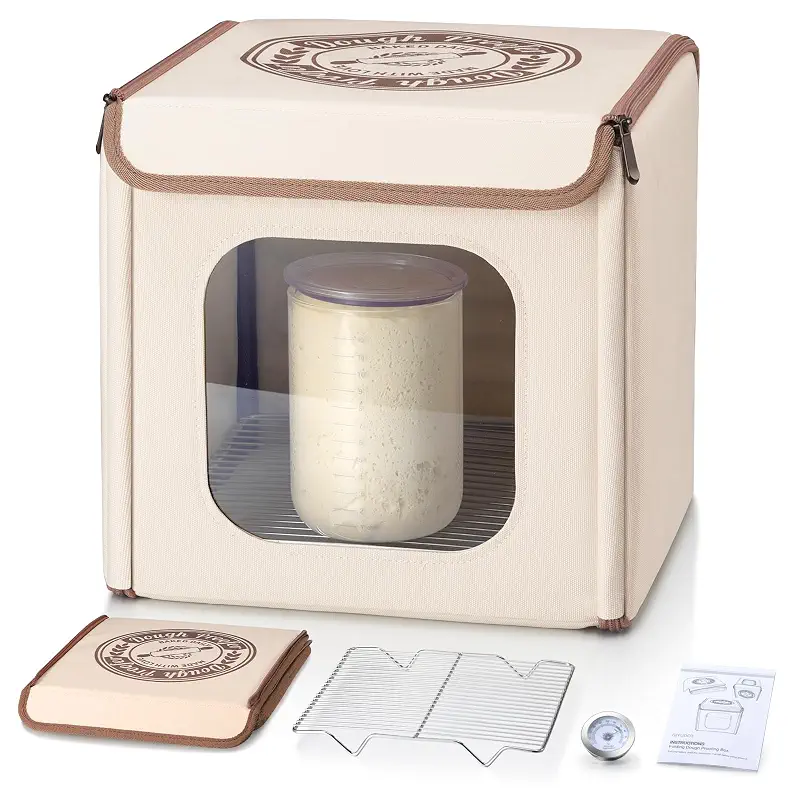
Folding Bread Proofing Box with 50-113℉ Temp Control & 48H Timer, Dough Proofer with Metal Rack, Humidor, Ideal for Sourdough, Bread Baking, Pizza, Yogurt, Kombucha, Perfect for Compact Kitchens
4.7(487)
Thoughtful controls and included recipes guide new bakers to success; dual-view window and proven reliability earn consistent 5-star praise.
Ideal for: First-time proofer buyers; home bakers proofing single loaves or starters who want educational guidance and ease of use.
Giyudot positions itself as the original foldable proofer, and the design philosophy shows throughout. The 48-hour timer (longer than most competitors) paired with a straightforward temperature dial from 50–113°F covers everyday bread, pizza, and yogurt work without overwhelming choices. Owners consistently report the box maintains within 1°C of the set temperature after a brief warm-up: better stability than several rivals. The dual-view design is clever: you can position the window on the front to monitor a fermentation jar or on top to check a proofing bowl, adapting to your setup rather than fighting a fixed design.
What stands out for newcomers is the educational support. The included guidebook and recipes weren't generic marketing material; owners note the instructions actually explained *why* steps matter, which builds confidence. The 5-layer insulation and NTC sensor do the heavy lifting to keep fermentation predictable, and the included stainless steel shelf prevents direct contact with heating elements. Where Giyudot falls short compared to the InnovifyHub is the 113°F ceiling, which locks you out of some advanced fermentation techniques. The 12×12×12-inch footprint is also more snug for large batches: you can bulk-ferment one loaf comfortably, but proofing two simultaneously is tight.
This is the box I'd recommend to someone just discovering that their kitchen is too cold for reliable proofing. It proves the concept without the premium price tag, and the learning curve is genuinely gentle.
Pros
Dual-view window positions on front or top to match your workflow
Includes thoughtful recipe guide written by experienced bakers
48-hour timer covers long fermentation windows without resetting
Cons
Temperature maxes at 113°F, limiting advanced fermentation experiments
Compact interior fits one large bowl; two simultaneous loaves are snug
Key features
50-113°F temperature control with NTC sensor and ±1°C accuracy
48-hour countdown timer with customizable intervals
Dual-view window repositionable for jar or bowl fermentation
5-layer insulation; stainless steel shelf prevents element contact
Folds flat to less than 4 inches for drawer or cabinet storage
#3 Pick
Premium Pick for Serious Bakers
Brod & Taylor
Brod & Taylor Folding Proofer & Slow Cooker (Proofer)
4.8(1,457)
Heirloom-quality engineering, dual-mode operation (proofer and slow cooker), and legendary customer service justify the premium investment.
Ideal for: Serious bread bakers seeking heirloom reliability; cooks valuing dual functionality (fermentation and slow cooking) and stellar warranty support.
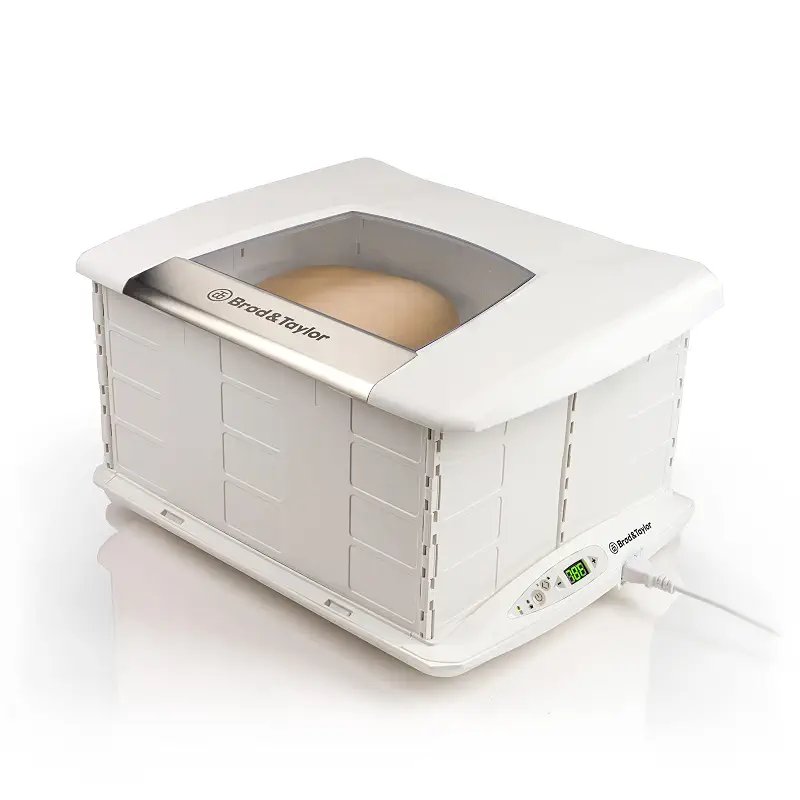
The Brød & Taylor Folding Proofer carries a reputation earned over years of refined design. This is the box that convinced skeptics that spending serious money on fermentation control was worth it. The temperature range of 70–120°F might seem narrower than rivals, but it's precisely calibrated for bread fermentation science; the margins on either end serve marginal use cases. What I value is the engineering philosophy: every detail serves reliability. The heating plate is engineered to feel barely warm to the touch even at peak temperature: a sign of thoughtful thermal design. The included water tray allows humidity control, and the optional accessory shelf (sold separately or bundled) lets you proof two batches side-by-side without stacking.
Brød & Taylor's dual-mode operation (proofer and slow cooker, 85–195°F for slow-cook mode) adds utility many overlook. Owners have used it for braises, chocolate melting, yogurt, and kombucha, turning a specialist tool into a workhorse. The folding design collapses to 2.75 inches (genuinely slim enough for drawers) and the pop-up assembly is foolproof. Where this box differs from the InnovifyHub or Giyudot is longevity philosophy: the 3-year warranty (with registration) and responsive customer service signal a maker that stands behind the product for the long haul. One owner mentioned Brød & Taylor immediately shipped a replacement cover after a minor chip was noted, reflecting the commitment.
The premium price is real, and I won't claim it's for everyone. But for bakers who view a proofer as a decades-long companion (not a disposable gadget) and want the flexibility to proof or slow-cook, this is the heirloom choice. The build quality and company ethos separate it from more commodity-focused competitors.
Pros
Dual-mode operation: proofer and slow cooker in one appliance
Collapses to 2.75 inches flat; genuinely easy storage and retrieval
3-year warranty with registration; responsive customer service
Cons
Premium price exceeds budget-conscious options by significant margin
Temperature range (70–120°F) narrower than some competitors; less room for experimentation
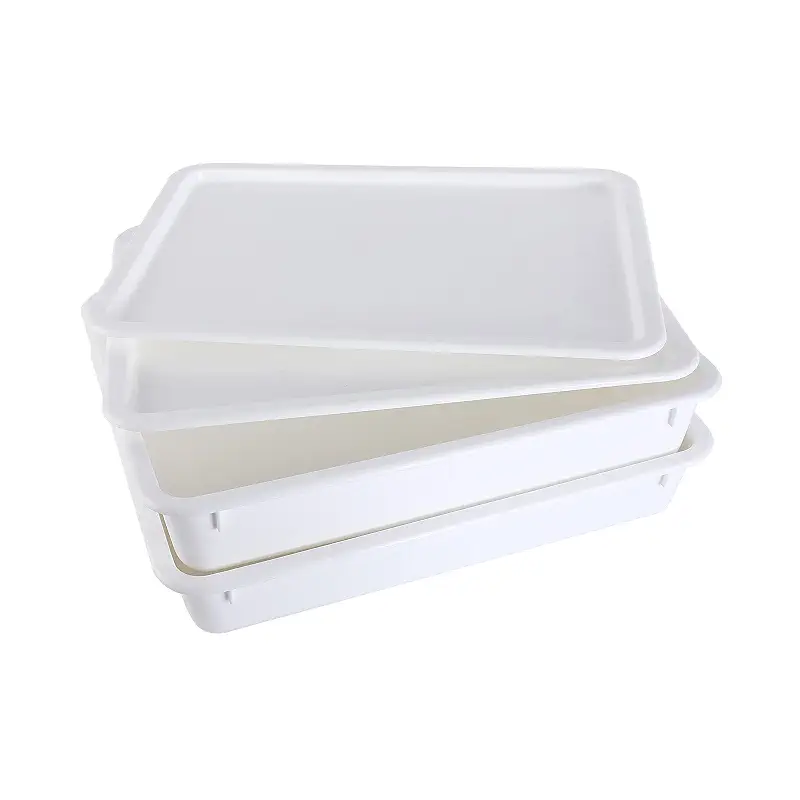
The GSM Brands Pizza Dough Proofing Box takes a completely different approach from the heated proofers above: these are static storage containers built for cold fermentation in the fridge, not warm-environment proofing. The distinction matters. A pizza maker can batch 5–8 dough balls (250–300 grams each) per box, stack them in a commercial-style workflow, and use refrigeration (not electricity) to slow fermentation and develop flavor over 24–72 hours. This aligns with Neapolitan and Detroit-style pizza methodology, where cold bulk fermentation is the norm.
Where these boxes excel is durability and design clarity. The plastic is genuinely thick and food-grade; the rims don't flex or twist under the weight of dough, and the lids sit snugly (not snap-sealed like Tupperware, which is actually correct for proofing work). Each box includes a pair, so you don't need to stack during use: a small but valuable detail. Owners report they fit standard refrigerator shelves and are trivially easy to clean. If you compare this to the heated boxes, the GSM boxes serve an entirely different need: they're not competing with InnovifyHub or Brød & Taylor. They're the answer for bakers who cold-proof or want batching infrastructure for multiple doughs.
The trade-off is lack of active temperature control. You're reliant on your fridge temperature (typically 38–40°F), which works beautifully for overnight pizza cold fermentation but won't help if your kitchen is 55°F and you need to warm bulk dough. The price per box is also high relative to basic plastic storage, so you're paying for the commercial durability and engineering: a fair trade if you bake pizza regularly, less so if you're proofing bread once a month.
Pros
Thick, food-grade plastic resists warping under dough weight
Ideal for: Home bakers proofing multiple loaves simultaneously; seasonal or holiday batch projects; sourdough enthusiasts managing starters and production doughs.
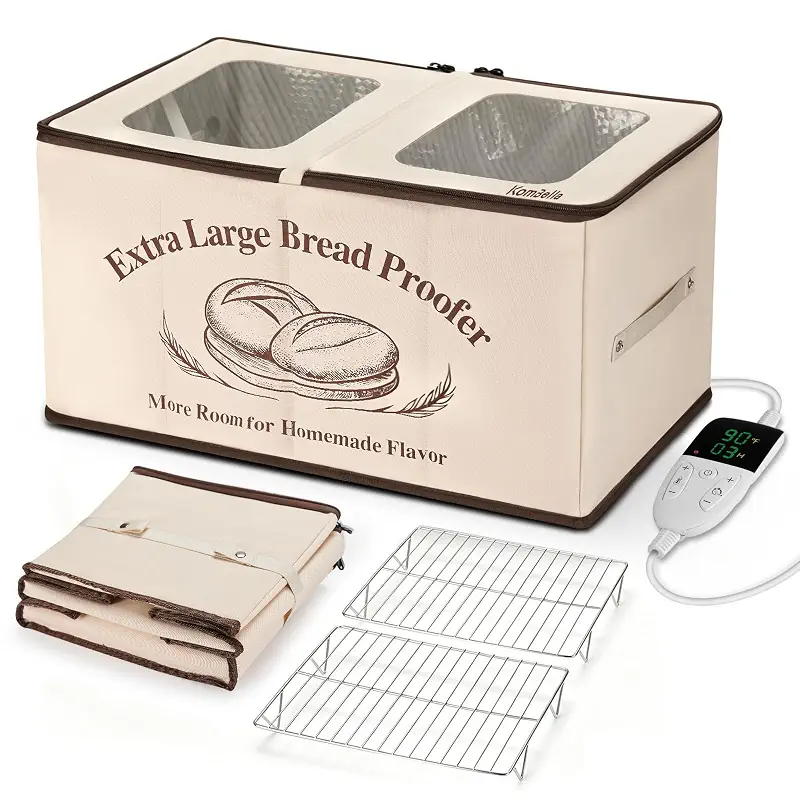
The Kombella XL redefines capacity for home bakers. At 23.62×15×12.2 inches, it dwarfs most competitors and opens workflows that smaller boxes simply can't support. You can easily proof a half-sheet pan of rolls, two large bannetons, and multiple starter jars in a single session: a game-changer if you're making 10 pans of holiday rolls or batch-baking sourdough. The 3-sided heating (left, right, bottom) mirrors the InnovifyHub's approach, and the 6-layer honeycomb insulation is a step beyond typical 5-layer designs, translating to superior temperature stability even in drafty or seasonal environments.
The 68–122°F range and 0–48H timer give you flexibility for both rapid proofing and slow, cool fermentation. The NTC sensor maintains accuracy within a degree, and the clear viewing windows (top and side) let you monitor progress without opening and losing heat. Owners report setup takes under five minutes and breakdown similarly; the box collapses and fits back into its shipping box for storage. One owner noted the temperature sensor needs a 90-degree bend during setup to point inward (not downward): a minor assembly step the instructions make clear but worth knowing. The included metal racks optimize vertical space.
The trade-off is sheer size. While it folds flat, it's genuinely bulky in use: you need real counter or table space to set it up. This is not a box you leave deployed in a tiny kitchen. But if you have the room and regularly proof multiple batches or large volumes, the Kombella XL is a best-in-class choice that costs less than the Brød & Taylor while offering more capacity. Compared to the InnovifyHub, you're paying slightly more for the extra insulation layer and larger footprint, but the honeycomb structure and proven stability in owner testing justify the step up for batch-oriented workflows.
Pros
23.6-inch extra-large interior fits half-sheet pans, multiple baskets, and starters together
3-sided heating plus 6-layer honeycomb insulation ensures uniform warmth and stability
0–48H timer and 68–122°F range accommodate rapid or slow fermentation schedules
Cons
Generous size requires real counter space during use; not practical for compact kitchens
Temperature sensor requires intentional 90-degree bend during setup; minor assembly friction
Key features
Extra-large 23.62×15×12.2-inch capacity; folds flat in seconds for storage
68–122°F NTC-controlled temperature with 0–48H customizable timer
3-sided heating (left, right, bottom) with 6-layer honeycomb insulation
Clear viewing windows on top and side for progress monitoring
Includes two metal racks for optimized interior space and air circulation
How to Choose a Proofing Box
Four trade-offs that actually matter when matching a proofing box to your kitchen.
Active Heating vs. Static Storage
Heated proofing boxes (InnovifyHub, Giyudot, Brød & Taylor, Kombella) maintain a warm environment year-round and work in any kitchen temperature. Static boxes (GSM) rely on refrigeration for cold fermentation and are ideal for pizza makers doing overnight bulk fermentation. If your kitchen stays cold in winter or you want predictable fermentation windows, active heating is essential. If you cold-proof pizza dough or have room-temperature bulk fermentation workflows, static boxes may suffice. Most home bread bakers benefit from active heating because it removes seasonal temperature swings that throw off rise timing.
Temperature Range and Your Recipes
Most heated boxes range from 50–113°F or 50–130°F. The wider ceiling (130°F) matters if you experiment with advanced techniques like high-temperature bulk fermentation or autolyse at elevated warmth. For standard sourdough, sandwich bread, and pizza dough, 113°F is sufficient. Think about whether you want the box to future-proof your experimentation or just solve the cold-kitchen problem. The proofing box temperature humidity guide covers optimal fermentation windows: most doughs thrive at 75–82°F, so any box holding this range reliably will work. The premium features kick in when you want flexibility beyond standard proofing.
Capacity: How Much Dough at Once?
Single-loaf boxes hold one large bowl or banneton comfortably. Two-loaf boxes fit two bowls or bannetons side-by-side. Extra-large boxes (Kombella XL, InnovifyHub) can hold multiple loaves plus starter jars simultaneously. If you proof one loaf per session and store it in the fridge afterward, a compact box saves counter space. If you batch-proof multiple loaves or maintain several starters, larger capacity cuts fermentation sessions. Match capacity to your baking rhythm: weekend hobby bakers often do fine with compact designs; those proofing 3+ loaves per session or managing multiple starters benefit from larger boxes.
Storage and Durability
All heated boxes fold flat for storage, but footprints vary dramatically. A box that collapses to 2.75 inches (Brød & Taylor) slides into drawers; larger boxes flatten to 4 inches and need cabinet depth. Factor in whether you'll leave it deployed between baking sessions or stow it away. Build quality affects longevity: commercial-grade plastic (GSM Brands) outlasts flimsy alternatives; quality insulation (honeycomb layers, robust zippers) holds temperature better and lasts longer. Consider warranty coverage: Brød & Taylor's 3-year protection and responsive service reflect maker confidence, while newer brands offer shorter terms. Durability matters when a proofing box becomes part of your regular workflow: poor build quality frustrates over time.
Home versus Commercial Proofing
The home versus commercial proofing comparison clarifies a key distinction: home boxes (heated, foldable, 50–130°F range) are engineered for hobby and semi-pro bakers managing variable kitchen conditions. Commercial proofers are hardwalled, floor-standing units for production bakeries. Home boxes make sense for anyone baking bread at home even weekly; the price and storage footprint fit a kitchen. Commercial units don't belong in residential kitchens: they're overkill, pricier, and immobile. If you're proofing 10+ loaves weekly or running a micro-bakery from home, a home proofer is still the right tool; commercial units enter the calculus only at full-production scales.
Frequently asked
Quick answers to the questions readers ask most.
How much cooler is the actual dough temperature compared to what the box displays?
Most boxes display the air temperature near the heating element, not the center of your dough. Owners consistently report 2–5°F variance; set the box 3–4°F higher than your target dough temperature, then verify with a small thermometer inside your bowl on the first session. Once you calibrate, you'll know the offset and can adjust without constantly rechecking. This is normal and doesn't indicate a defect: it reflects the reality of how heating elements and temperature sensors interact.
Can I use a proofing box for other fermentation tasks like yogurt or kombucha?
Yes. Most heated boxes work for yogurt (110°F), kombucha (68–85°F), and cheese. Brød & Taylor explicitly markets dual-mode operation for these tasks. Check the temperature range: if your recipe needs 90°F and the box tops out at 113°F, you're fine. Lower-range tasks (like cool kombucha fermentation) work in any heated box. The main limitation is the box size: if you're fermenting a large batch or multiple vessels, you need interior capacity. Always verify the recipe's exact temperature window against your box's capabilities before committing to a batch.
Should I use the humidity tray that comes with the box?
Yes, especially for long ferments (8+ hours) or dough with high hydration. The humidity tray sits under the included rack and holds a small amount of water, raising interior moisture to prevent surface crusting on shaped doughs. For short 2–4 hour bulk ferments, the tray is optional. Using it costs nothing and eliminates the risk of skin forming on your dough, so I'd include it routinely unless you're working with very dry dough. Always let the tray air-dry completely after use to prevent mold inside the box.
Do folding boxes leak or lose heat through the zipper seals?
Zippers aren't perfectly airtight, and thermal imaging from owner tests shows modest heat loss along zipper lines. The loss is small enough that temperature stays within 1–2°F of the set point, which is acceptable for bread proofing. If your kitchen is extremely cold (below 50°F ambient), the loss becomes more noticeable, but the boxes are still functional. Better-insulated designs (honeycomb layers, thicker walls) reduce zipper-line loss, so premium models have an edge in drafty environments. For typical home kitchens, zipper leakage is a non-issue.
What's the difference between 50–113°F and 50–130°F temperature ranges?
The 113°F ceiling covers nearly all standard bread and pizza proofing. The 130°F extension enters niche territory: warm milk preparation, some yogurt tasks, or experimental bulk fermentation techniques. If you're a beginner or casual baker, 113°F is sufficient. If you're curious about high-temperature bulk fermentation or plan to experiment over time, the extra range is nice insurance. The functional difference for most home bakers is minimal, so cost difference between the two ranges should drive your choice unless advanced techniques appeal to you.