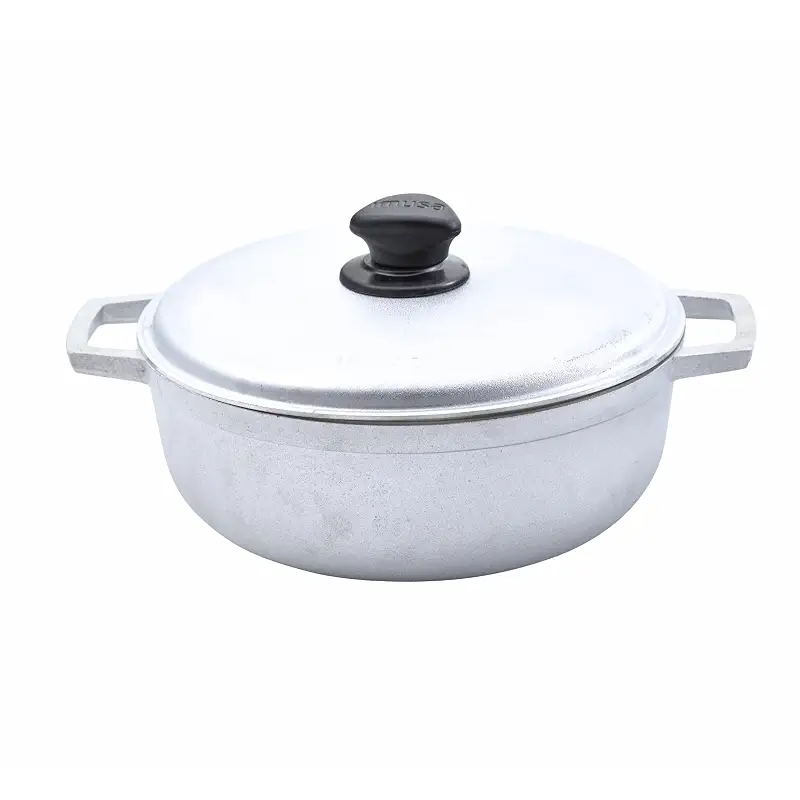
Ideal for: Home cooks seeking heritage caldero tradition without premium pricing.
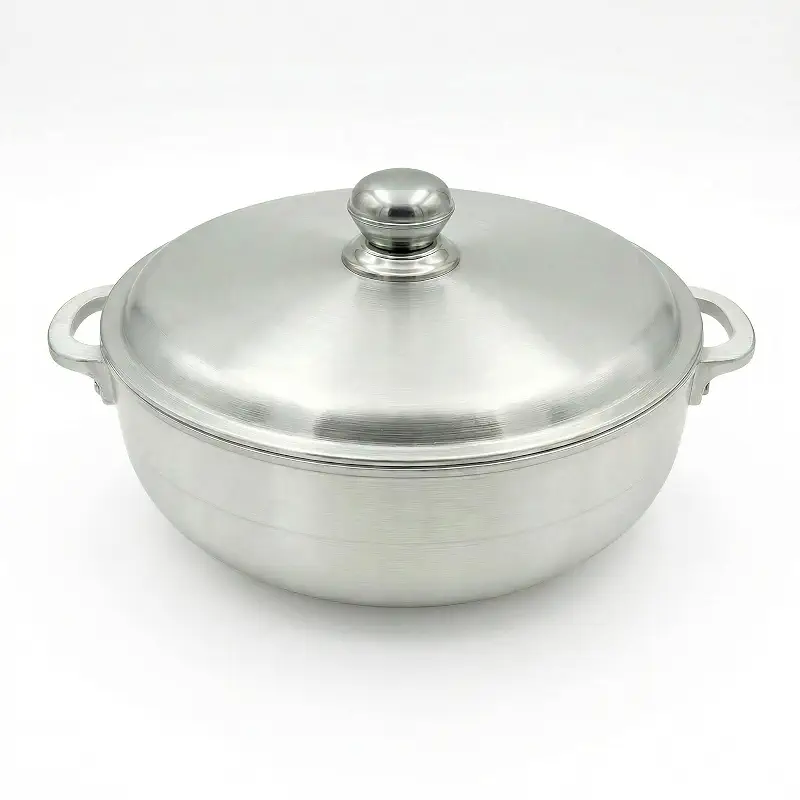
The Imusa Traditional Caldero remains the most-reviewed option for a reason: it delivers authentic rice-cooking performance at an accessible price point. Cast aluminum walls develop seasoning over time, which enhances the natural nonstick character of the cooking surface. Owners consistently report even heat distribution and fluffy rice results, with enough capacity to handle family-sized portions and stews in one pot.
One caveat worth mentioning is lid fit. A meaningful portion of reviewers flagged gaps between the pot rim and lid, though many others received units with snug fits. This appears to be a quality-control inconsistency rather than a design flaw. Some owners work around loose lids with foil or simply accept slightly faster steam escape. If lid seal is critical to your cooking method, the Frynest options below offer more predictable fitment.
The pot's heft and deep walls make it ideal for batch cooking, braising, and slow-simmered stews alongside rice. Handles stay cool enough to grip briefly, though prolonged contact warrants pot holders. At this price, the risk-reward on ordering is low, and most users report they'd buy again.
Pros
Thick aluminum heats evenly across base and sides
Builds seasoning character with repeated use
4.8-quart capacity handles family portions easily
Cons
Lid fit inconsistency reported in some units
Handles conduct heat during cooking
Key features
4.8-quart cast aluminum body with natural finish cooking surface
Tight-fitting glass lid with steam vent for moisture control
Oven safe without lid; suitable for stovetop, oven, and grilling
Traditional design with dual side handles and grip knob
#2 Pick
Best Budget Pick
Frynest
5.5-Quart 11-Inch Traditional Caldero Pot with Silver Aluminum Lid, Aluminum Rice Pot for Arroz, Beans, Soups and Stews, Induction Compatible
4.7(39)
Induction-compatible caldero with silver metal lid at the lowest entry price.
Ideal for: Budget-conscious cooks with induction or gas stoves seeking basic caldero functionality.
The Frynest 5.5-quart caldero with aluminum lid targets budget-conscious cooks who also need modern compatibility. The flat base works reliably on induction, gas, and electric stovetops, removing a major purchasing constraint for households with newer kitchen setups. Aluminum construction and uncoated interior follow traditional caldero design, so the learning curve is minimal if you've seasoned aluminum cookware before.
Owners highlight rapid heat-up and even warming across the entire surface, which translates to consistent rice cooking and no hot spots during simmering. The tight-fitting metal lid does its job efficiently, though as with most aluminum calderos, expect the handles to become quite hot during use. One review noted a size discrepancy between the listed size and what was received, so verify your order details upon arrival.
Compared to the Imusa Traditional Caldero, this model costs less and offers verified induction compatibility. If you're weighing options for your kitchen, the best pan to cook rice ultimately depends on whether induction support matters to your setup. For straightforward rice, beans, and soups on any stovetop, this is a capable, wallet-friendly choice that trades the glass lid of premium models for lower cost.
Pros
Flat induction-compatible base works on all stovetop types
Heats rapidly with no cold spots during simmering
Entry-level price point for aluminum caldero construction
Cons
Metal lid prevents monitoring rice without lifting cover
Handles become very hot during cooking
Key features
5.5-quart uncoated aluminum body for traditional seasoning
Metal lid with tight fit for heat and moisture retention
Flat base certified for induction and all standard stovetops
Wide 11-inch mouth for easy stirring and serving
#3 Pick
Best for Visibility
Frynest
5.5-Quart 11-Inch Traditional Caldero Pot with Tempered Glass Lid, Aluminum Rice Pot for Arroz, Beans, Soups and Stews, Induction Compatible
4.9(26)
Caldero with tempered glass lid lets you monitor rice without lifting the cover.
Ideal for: Home cooks who want traditional caldero design with real-time visibility of rice and stews.
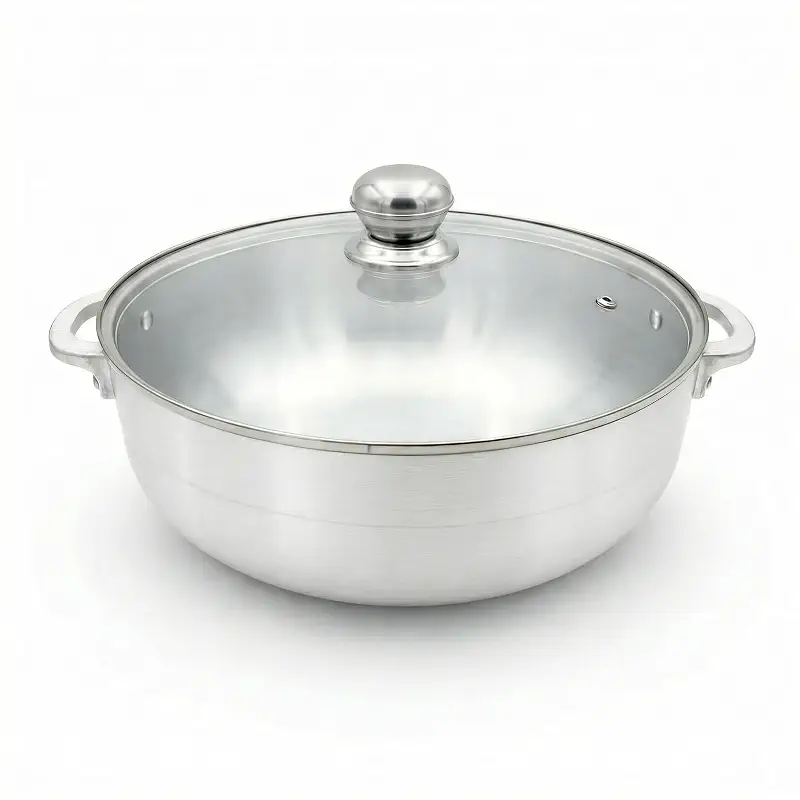
The Frynest caldero with tempered glass lid elevates the basic caldero experience by solving one persistent frustration: you cannot see your rice cooking. The durable glass lid sits tight enough to retain steam but allows real-time monitoring of water level and grain texture. For cooks who like to adjust heat or know exactly when rice transitions from cooking to resting, this visibility is invaluable. Reviewers consistently praise the glass lid's quality and durability, noting it feels substantial rather than fragile.
Aluminum construction and uncoated interior mirror traditional caldero performance, with even heat distribution and responsive temperature control. The induction-compatible flat base means this pot works seamlessly whether you have a modern cooktop or heritage gas burners. Owners report exceptional rice results, particularly those coming from rice cookers: many note the flavor and texture improvement. One user mentioned their adult son abandoned his rice cooker entirely after trying this pot.
Where this diverges from the aluminum-lid Frynest model is the glass lid's transparency and perceived build quality, which justifies a modest price premium. Handle heat remains a consideration, as with all calderos in this comparison. For cooks who value understanding their cooking progress and appreciate a heritage vessel with one modern convenience, this strikes the right balance.
Pros
Tempered glass lid allows monitoring without lifting cover
Induction and all-stovetop compatible flat base
Even heat distribution produces consistently fluffy rice
Cons
Handles conduct significant heat during cooking
Glass lid knob oven safe only up to 350°F
Key features
5.5-quart uncoated satin aluminum for natural seasoning over time
Tempered glass lid with steam vent for moisture management
Induction-ready flat base works on gas, electric, and induction
Wide 11-inch mouth opening for easy stirring and serving
#4 Pick
Best for Small Households
Bobikuke
Korean Dutch Oven, Rice Pot, 63 oz Enameled Cast Aluminum Pot with Lid, Korean Stone Bowl for Induction, White
4.5(130)
Korean stone pot with nonstick ceramic coating for compact spaces and quick cleanup.
Ideal for: Couples, individuals, and small-household cooks wanting compact size and easy cleanup.
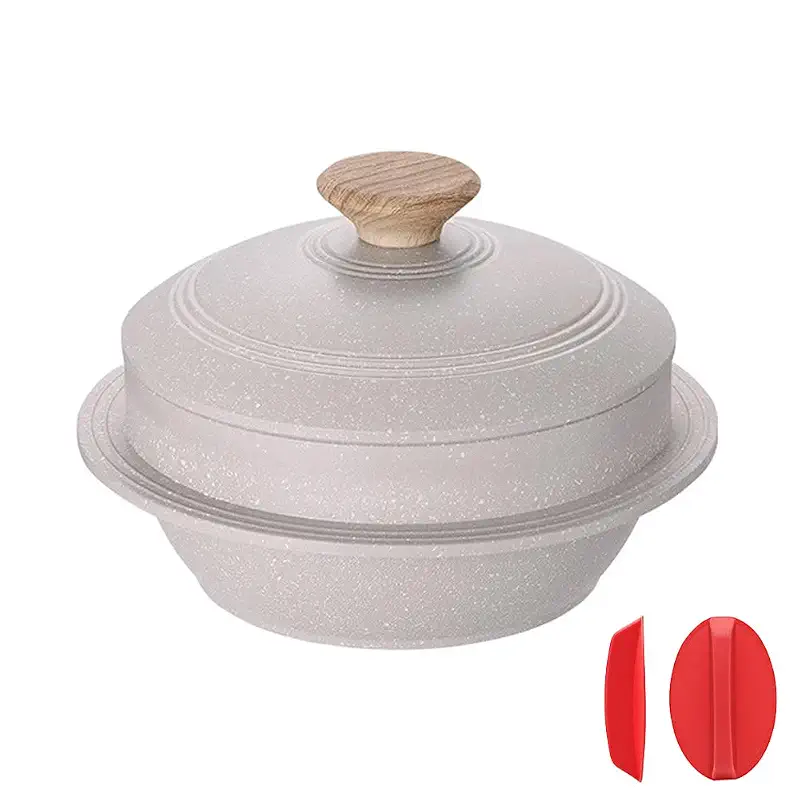
The Bobikuke Korean Dutch oven takes a departure from traditional aluminum calderos by employing enameled cast aluminum with a multilayer nonstick coating. At 63 ounces (roughly 2 quarts), it's significantly smaller than caldero alternatives, making it ideal for couples or individuals who find a 5-quart pot wasteful. The ceramic nonstick surface requires minimal oil and releases food effortlessly, which simplifies both cooking and cleanup: a practical advantage over uncoated aluminum that demands seasoning and careful maintenance.
Heat retention and distribution remain excellent due to aluminum's thermal properties, so rice cooks evenly without hot spots. The included silicone pot holders are a nice touch, acknowledging that handles do get hot. Induction compatibility broadens stovetop flexibility. One notable caveat: some reviewers mentioned the pot is lightweight, which is either a benefit (easy to move when full) or a drawback (feels less substantial than heavier caldero alternatives). The wooden knob on the lid is not heat-resistant, so you'll use it to remove the lid post-cooking, not during a transfer.
Compare this to the traditional calderos if you prioritize nonstick convenience and smaller batch sizes. For cooks evaluating a best korean rice cooker versus a stovetop vessel, the Korean pot bridges the gap by combining induction compatibility with dedicated Asian-cuisine design. If you cook large family meals regularly or want the heritage character of developing seasoning, the aluminum calderos above serve you better. For apartment kitchens, meal prep for two, and cooks who dislike scrubbing seasoned cookware, the Korean pot's tradeoff is favorable.
Pros
63-ounce capacity perfect for meals for two without excess
Ideal for: Large families seeking nonstick ceramic convenience in traditional caldero capacity.
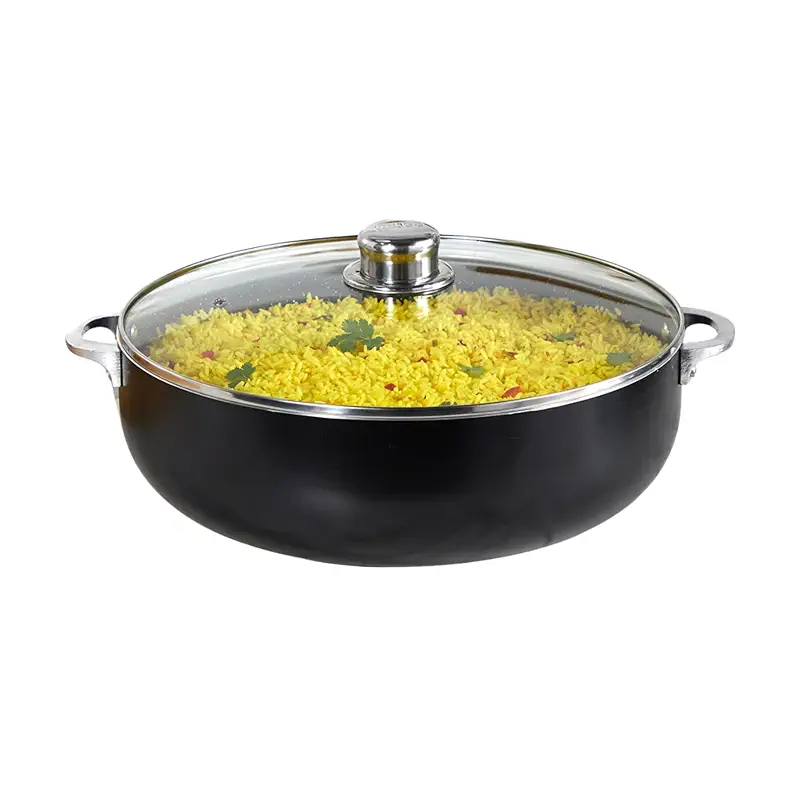
The Imusa Bistro Cera offers a middle ground between traditional uncoated aluminum calderos and the Korean pot: it preserves the 6.9-quart capacity needed for family meals and stews, but wraps it in a black speckled ceramic nonstick coating. This coating eliminates the need to season the pot over weeks of cooking and reduces oil requirements during use. Reviewers praise the nonstick performance consistently, noting food slides out cleanly and cleanup is straightforward with a soft sponge.
Aluminum construction underneath the ceramic still delivers even heat and responsive temperature control, so rice cooks with the same reliability as uncoated calderos. The glass lid with steam vent provides visibility and moisture management. One trade-off versus uncoated aluminum: the ceramic coating requires care to preserve. Metal utensils will scratch and eventually degrade the nonstick surface, so wooden or silicone tools are necessary. Handles grow very hot during cooking: this is consistent across all caldero designs.
Where this sits relative to the traditional Imusa caldero is appealing for cooks averse to seasoning maintenance but willing to pay a modest premium and accept slightly more fragile cookware. It strikes a practical balance for large families wanting heritage caldero capacity without the learning curve of uncoated aluminum, though the caldero vs. dutch oven decision ultimately depends on whether you prioritize tradition or modern convenience features.
Pros
6.9-quart capacity serves large families and batch cooking
Black speckled ceramic nonstick coating eliminates seasoning
Glass lid with steam vent for monitoring and moisture control
Cons
Ceramic coating scratches with metal utensils over time
Handles become very hot and require pot holders always
Key features
6.9-quart aluminum body with black speckled ceramic nonstick interior
Matte black exterior with riveted dual side handles
Glass lid with steam vent and stainless-steel knob
Oven safe without lid for braising and baking
How to Choose a Pot for Rice
Four trade-offs that actually matter when matching a pot to make rice to your kitchen.
Uncoated Aluminum vs. Nonstick Ceramic
Traditional calderos use uncoated aluminum that seasons over time, developing a natural nonstick patina through repeated cooking and oil buildup. This approach rewards patience and proper care but asks cooks to learn seasoning discipline. Ceramic nonstick coatings skip the seasoning phase and work immediately, though they require gentler utensils and eventually wear under heavy use. Neither is objectively superior; your choice depends on whether you value low-maintenance convenience or the heritage character of seasoned cookware. Most rice cooks succeed with either surface if heat distribution and lid fit are solid.
Capacity and Household Size
Calderos range from 2-quart Korean pots suited to couples through 6.9-quart models that feed large families. A 4.8 to 5.5-quart pot is the sweet spot for most households: large enough to cook rice for four to six people plus side dishes, compact enough to fit typical stovetops without dominating a burner. If you're cooking for two regularly, a smaller 2-quart Korean pot or 5.5-quart caldero avoids waste. For frequent gatherings or batch cooking, jump to 6.9 quarts. Oversizing wastes counter space; undersizing forces multiple batches.
Stovetop Compatibility and Induction
All calderos work on gas and electric coil burners. If you have an induction cooktop, verify the pot has a flat base certified for induction use. Curved or rounded bottoms common in some caldero designs won't make contact with induction surfaces. Modern Frynest and Bobikuke models explicitly state induction compatibility; traditional Imusa models vary by version. Checking the product description before ordering prevents the frustration of an incompatible pot arriving in your kitchen.
Lid Fit, Visibility, and Heat Retention
Glass lids let you monitor rice and stews without lifting the cover, preserving steam and speeding cook time. Metal lids work equally well functionally but require you to lift and check progress, releasing heat each time. The caldero vs. dutch oven comparison shows both vessel types excel at rice; your choice often hinges on whether you prefer caldero tradition or the heavier, enameled character of Dutch oven design. Glass lids also look more elegant on the dining table if you're serving family-style. The trade-off: glass is slightly more fragile than metal, though most reviewers report good durability. Lid fit varies between units even within the same model, so read recent reviews and be prepared to use foil if a lid sits loose.
Handle Heat and Safety
Every caldero and pot in this guide has handles that conduct significant heat during cooking. This is inherent to aluminum construction and metal lids. Always use pot holders or kitchen towels when moving or adjusting a hot caldero, and assume the handles are unsafe to touch bare-handed. Some models include silicone pot holders or rubber sleeves to mitigate risk. Teach household members, especially children, that caldero handles are hot throughout the cooking window.
Frequently asked
Quick answers to the questions readers ask most.
Do I need to season an uncoated aluminum caldero before using it?
Yes. Wash it thoroughly, dry it completely, then coat the interior with a thin layer of neutral oil (vegetable, canola, or avocado oil work well). Heat the pot gently on the stovetop until the oil begins to smoke slightly, then let it cool. Wipe away excess oil. This initial seasoning creates a foundation; the pot develops more character with each use. Some manufacturers include seasoning instructions; follow those if provided. Within a few weeks of regular cooking, the surface becomes noticeably more nonstick.
Why does my rice stick to the bottom of my caldero even after seasoning?
Sticking usually means the pot wasn't properly seasoned, the heat is too high, or you're not using enough oil or butter. Start with a well-seasoned surface (repeat the oil-heating process if needed), use medium heat for simmering rice, and add a tablespoon of oil or butter to the pot before adding rice and broth. If you're cooking from the pot directly without oil, increase heat slightly to help establish a nonstick surface. Many owners report that rice sticks less as the pot seasons further: give it three to five uses before judging performance.
Can I use metal utensils in a ceramic nonstick caldero?
Not recommended. Metal spoons, spatulas, and serving utensils will scratch and chip the ceramic coating, reducing nonstick performance over time. Use wooden, silicone, or plastic utensils instead. If you prefer the durability of metal tools, stick with traditional uncoated aluminum calderos, which tolerate metal utensils and actually benefit from the scrubbing they encourage during seasoning maintenance.
What's the difference between a caldero and a Dutch oven for rice cooking?
Calderos are lightweight, open-topped aluminum vessels with sloped sides designed for traditional rice and stew cooking. Dutch ovens are heavy enameled cast iron or ceramic-coated pots with straight sides and lids, originally used for braising and slow cooking. Both cook rice well, but calderos heat faster, weigh less, and feel more traditional for Hispanic and Caribbean cuisines. Dutch ovens retain heat longer, work beautifully on the table, and often feel more durable. Choose based on whether you value lightweight tradition (caldero) or heavy-duty versatility (Dutch oven).
Are induction-compatible calderos as good as those designed only for gas?
Yes, if the induction base is well-engineered. A flat, thick bottom required for induction contact actually improves heat distribution on all stovetop types. Many induction-compatible calderos perform identically to gas-only models on conventional burners. The induction feature simply adds flexibility without sacrificing performance. Check reviews from users on your specific stovetop type to confirm compatibility before ordering.