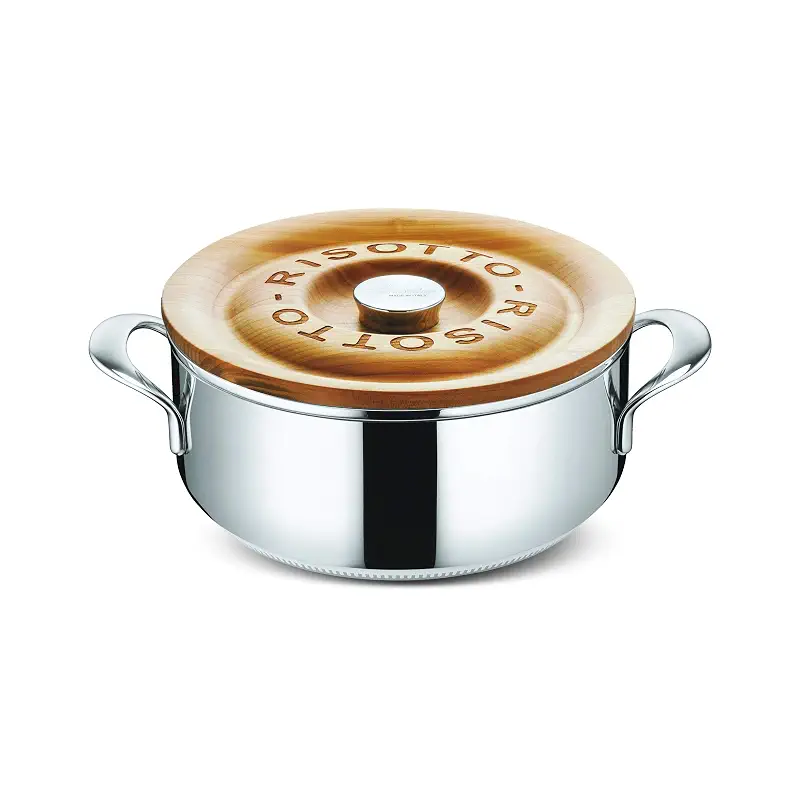
Ideal for: Cooks who make risotto frequently and value ergonomic comfort and authentic technique.
The Lagostina Patrimonio is the most specialized option here: it's engineered specifically for risotto. The wide, shallow 24 cm diameter gives you plenty of surface area for evaporation and allows your spoon to reach every grain without jamming into high sides. The rounded bottom is a genuine convenience; it lets you stir in smooth, continuous motions rather than fighting corners. The five-layer base distributes heat evenly, which matters enormously when you're building risotto over 18 to 20 minutes. You need heat that stays consistent, not hot spots that catch the bottom.
Owners consistently praise the weight and balance of this pot. If you make risotto regularly or have any hand or wrist discomfort, the heft and ergonomics of the Patrimonio reduce fatigue during that constant stirring. The handles stay reasonably cool, and the pot is oven-safe, giving you flexibility if you want to finish a risotto in the oven instead of on the stovetop. The non-stick hammered finish on the interior helps rice release cleanly, though you're not relying on it: proper technique and constant stirring do most of the work.
The main trade-off is cost. This is a premium pick, and you're paying for the engineering and the Lagostina brand heritage. If you make risotto only once or twice a year, you might find a general-purpose stockpot does the job adequately for less money. But if risotto is in your regular rotation, the specialized design and build quality justify the investment.
Pros
Wide, shallow shape designed specifically for risotto stirring
Five-layer base ensures even, reliable heat distribution
Balanced weight reduces arm fatigue during extended stirring
Hammered interior aids food release and easy cleanup
Cons
Premium pricing compared to general-purpose stockpots
Decorative lid requires occasional light maintenance with oil
Key features
24 cm diameter, shallow risotto-specific shape with rounded bottom
18/10 stainless steel with LagoFusion five-layer base
Oven-safe to 250°C with stay-cool handles
Non-stick hammered interior for rice release and easy cleanup
#2 Pick
Best for Large-Batch Risotto
Carote
CAROTE 8QT Full Clad Tri Ply Stainless Steel Stock Pot with Lid | All Stoves Compatible, Oven & Dishwasher Safe, Stay Cool Handle, White, Cookware for Simmer
4.6(650)
Spacious 8-quart capacity with tri-ply base; ideal for family gatherings or cooking ahead.
Ideal for: Home cooks preparing risotto for larger households or multiple servings at once.
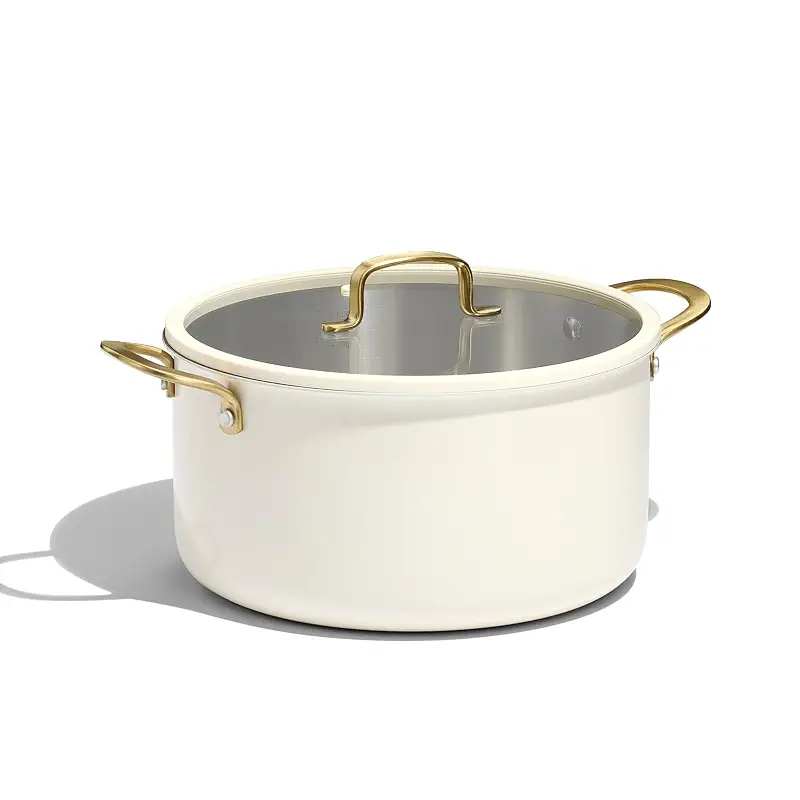
The Carote 8QT offers considerably more capacity than the Lagostina, making it the practical choice if you're cooking risotto for six or more people or want to double a batch. The full tri-ply clad construction (stainless steel throughout with an aluminum core) heats evenly and prevents warping, which matters when you're repeatedly heating and cooling a large pot. Owners note that this pot heats water quickly and doesn't develop hot spots, both crucial for risotto.
Compared to the Lagostina Patrimonio, the Carote is taller and narrower, which changes the stirring experience slightly. You'll need to use a longer spoon, and the geometry doesn't hug the shape quite as naturally as a dedicated risotto pot. But for home cooking at scale, many risotto cooks adapt easily. The stainless steel is dishwasher-safe, the lid seals well to prevent overflow, and the pot works on all stovetop types including induction. The interior measurement markings are a small but useful detail for tracking stock additions.
One genuine caveat: several owners report that handles get warm during cooking. If you're stirring for 15 to 20 minutes straight, you'll want a kitchen towel or heat-resistant glove. The pot's weight is substantial when filled, so lifting and pouring requires care.
Pros
Large 8-quart capacity perfect for family-sized portions
Full tri-ply construction prevents warping and ensures even heating
Ideal for: Cooks who make risotto alongside other everyday dishes like pasta, soup, and braises.
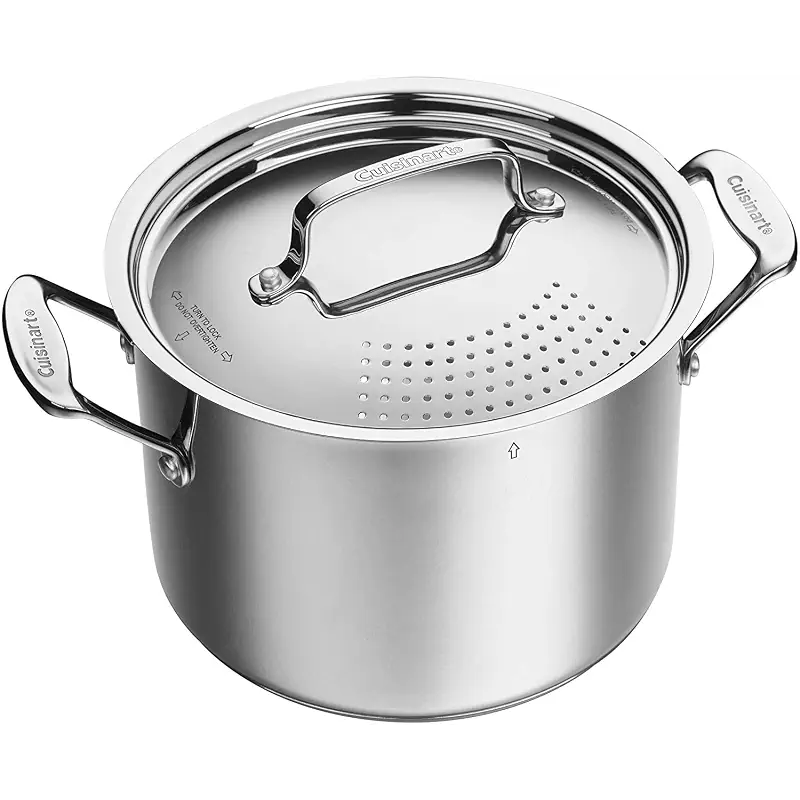
The Cuisinart pasta pot is less specialized than the Lagostina but considerably more versatile. At 6 quarts, it sits between the Lagostina and the Carote in capacity, and the straight sides and depth make it comfortable for stirring risotto as well as boiling pasta or building stock. The key feature here is the locking straining lid, which drains liquid efficiently if you're making risotto but also eliminates the need for a colander on pasta nights.
Owners repeatedly praise the quality and durability of this pot. The stainless steel is robust, handles are sturdy and riveted, and the construction feels premium. Compared to the Lagostina's specialized shape, you're trading some ergonomic advantage in exchange for broad utility. The Cuisinart won't be as ideal for the stirring rhythm of risotto, but it's absolutely capable, and if you cook risotto only occasionally amid a mix of soups, braises, and pasta, this one pot handles it all.
The measurement markings inside help you gauge liquid levels as you add stock. The locking lid prevents spills and stays secure even as you tilt the pot to drain. One small note from owners: the lid design means you can't rest a wooden spoon across the rim in the traditional way; you'll need to set it on a spoon rest or the stovetop instead.
Pros
Locking straining lid eliminates need for separate colander
Robust stainless steel construction feels durable and premium
6-quart size balances capacity with manageable weight
Works reliably on all stovetops including induction
Cons
Straight sides don't offer the ergonomic stirring comfort of a shallow risotto pan
Lid design prevents resting spoon across rim during cooking
Key features
6-quart capacity with secure locking straining lid
Durable stainless steel with measurement markings inside
Riveted handles and design optimized for draining pasta
Induction-compatible; dishwasher-safe and oven-safe
#4 Pick
Best Budget Option
Imusa
IMUSA 7.5 Quart Traditional Natural Made in Colombia Caldero with Lid for Cooking and Serving,Silver
4.4(14,788)
Large 7.5-quart aluminum caldero with solid performance; excellent value for basic risotto and rice cooking.
Ideal for: Budget-conscious home cooks willing to work around a loose lid for everyday rice, risotto, and stew cooking.
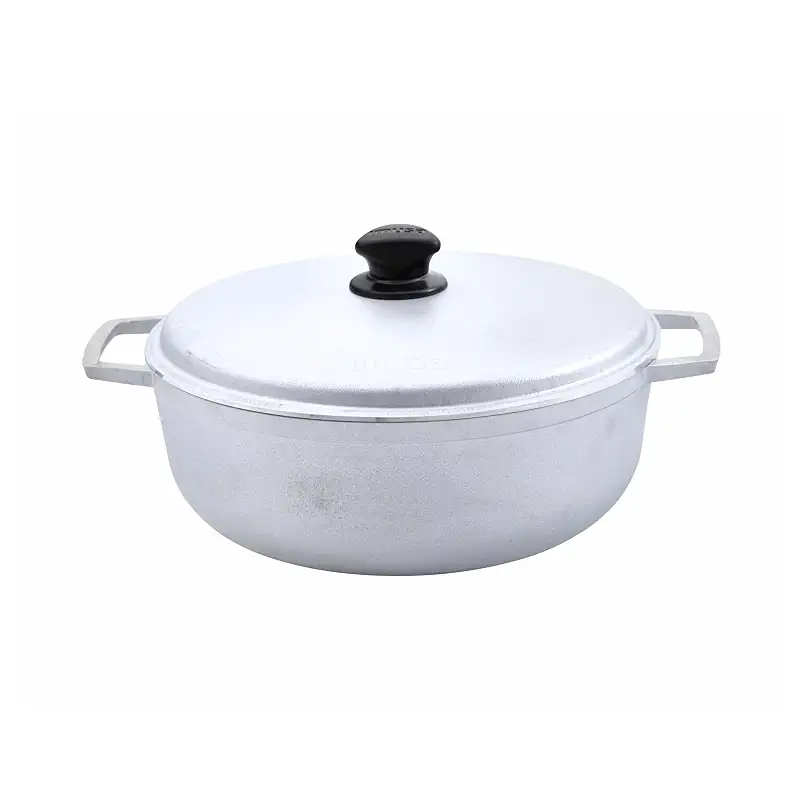
The Imusa caldero is the budget-friendly entry point in this lineup, and it delivers solid fundamentals for the price. The 7.5-quart cast aluminum body offers plenty of room, and the rounded sides do resemble the shape you want for risotto, even if they're not quite as wide and shallow as a dedicated pan. Heat distribution is decent, and the aluminum seasons over time (similar to cast iron), gradually building flavor into your cooking.
Where the Imusa shines is sheer value. If you're building your cookware collection on a lean budget and want a pot that handles risotto, rice, stews, and soups equally well, this caldero is a legitimate choice. Many owners report excellent results cooking rice and beans, which tells you the heat control is adequate. The large capacity means you can serve a crowd without needing multiple batches.
The major caveat (and it's significant) is the lid fit. A notable number of buyers report that the glass lid doesn't seal snugly on the rim. This is a real problem for risotto because a loose lid can interfere with your stirring rhythm and your ability to monitor evaporation. Owners also note that the pot is relatively thin aluminum compared to premium brands, and discoloration can occur even with seasoning. If you receive a unit with a poorly fitting lid, returns can be slow. This pot works, but quality control is inconsistent. The risk-reward calculus depends on your tolerance for assembly troubleshooting and whether a tight-fitting lid is critical to your cooking comfort.
Pros
Large 7.5-quart capacity ideal for family meals and batch cooking
Cast aluminum seasons over time for improved nonstick properties
Rounded sides support proper stirring motion for risotto
Excellent value for foundational cookware investment
Cons
Glass lid commonly reports loose fit, affecting stirring and evaporation control
Thinner aluminum construction and visible discoloration over time
Key features
7.5-quart cast aluminum caldero with rounded sides
Glass lid with steam vent; oven-safe without lid
Seasons over time for improved food release and flavor
Versatile for rice, beans, stews, soups, and traditional Hispanic cooking
#5 Pick
Best for Nonstick Ease
Gotham Steel
Gotham Steel 5 Quart Stock Pot Multipurpose Pasta Pot with Strainer Lid & Twist and Lock Handles, Nonstick Ceramic Surface Makes for Effortless Cleanup with Tempered Glass Lid, Dishwasher Safe | Twist and Lock Handles, Non Toxic Ceramic Non Stick Coating, for Cooking Soup, Spaghetti, Rice, Dishwasher Safe - Copper
4.5(14,205)
5-quart ceramic nonstick pot with straining lid and lightweight design; great for low-oil risotto and quick cleanup.
Ideal for: Home cooks seeking lightweight, easy-cleanup risotto cookware for smaller portions and health-conscious cooking.
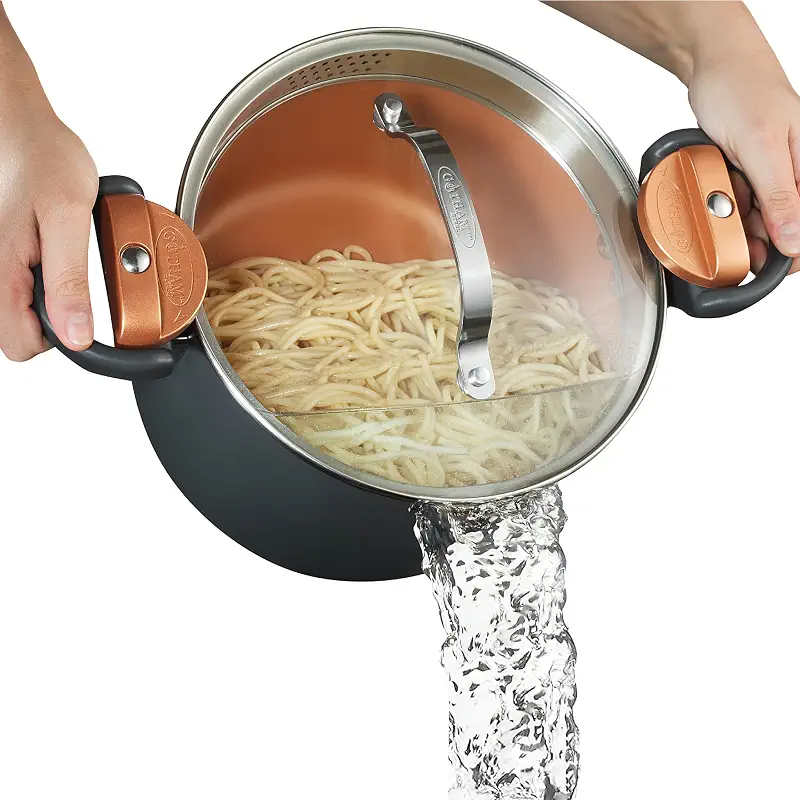
The Gotham Steel brings a different philosophy to risotto cooking: a ceramic titanium nonstick surface that minimizes oil requirements and makes cleanup nearly effortless. At 5 quarts, it's on the smaller side (better for two to three people rather than a family gathering) but the lightweight aluminum body (under 3 pounds empty) is a genuine advantage if heavy pots strain your wrists or shoulders. Owners consistently praise how easy it is to handle and wash.
The nonstick ceramic coating performs well for risotto, as long as you use soft utensils and avoid metal spoons that can scratch. Because food doesn't stick aggressively to the ceramic surface, you can make risotto with minimal butter or oil if you're watching fat intake. The straining lid works similarly to the Cuisinart: a quick twist locks it in place, and you can tilt to pour off liquid. The tempered glass lid lets you monitor the rice as it cooks.
Where the Gotham Steel makes trade-offs: the nonstick surface, while durable, does eventually wear with regular use. Owners note that after months of cooking, some coating degradation is normal. The pot is not induction-compatible, which rules it out for some kitchens. And compared to the Lagostina or Cuisinart, the 5-quart size limits batch cooking. If you make risotto for a crowd, you'll need two pots. The ceramic does heat evenly, but the lighter-gauge construction doesn't match the thermal mass of tri-ply stainless, which some argue gives you less margin for error during the stirring phase.
Straining lid and tempered glass lid simplify cooking and cleanup
PFOA, PFOS, and lead-free ceramic surface
Cons
Not induction-compatible; 5-quart capacity limits batch cooking for large groups
Ceramic nonstick coating degrades over time with regular use
Key features
5-quart capacity with triple-coated ceramic titanium nonstick interior
Lightweight aluminum body; oven-safe to 300°F
Twist-and-lock handles and integrated straining lid for safe draining
Tempered glass lid; dishwasher-safe; works on gas, electric, and ceramic cooktops
How to Choose the Best Pot for Risotto
Four trade-offs that actually matter when matching a pot for risotto to your kitchen.
Shape and Geometry Matter Most
The ideal risotto pot has a wide, shallow bottom and rounded sides. This design gives your spoon room to move in continuous circles without jamming, lets liquid evaporate steadily, and keeps rice from stacking up in tall walls. A general-purpose stockpot works if you adapt your technique, but a pot specifically engineered for risotto takes the physical effort out of constant stirring. If you have arthritis, repetitive strain concerns, or simply cook risotto regularly, investing in the right shape pays dividends. Understanding risotto pot characteristics guide helps clarify why these design choices matter.
Heat Distribution and Base Construction
Risotto requires steady, even heat for 15 to 20 minutes. A thin, single-layer bottom can create hot spots that scorch the rice. Look for tri-ply or five-layer construction: stainless steel with aluminum or copper cores that spread heat uniformly. This prevents you from having to hover over the pot and stir faster in certain spots. Heavy-duty aluminum cast in calderos can work adequately, but won't match the thermal consistency of bonded metal layers. Induction cooktops require magnetic stainless or full-clad construction, so verify compatibility if that's your stovetop type.
Capacity and Batch Considerations
A 5-quart pot serves two to three people; a 6-quart handles four to five; anything over 7 quarts suits family gatherings or batch cooking for the week ahead. If you cook risotto solo or for a small household and use the same pot for pasta and soup, medium capacity (5 to 6 quarts) keeps the pot manageable and heats water quickly. Larger pots take longer to come to temperature and are heavier to maneuver when filled. Measure your stovetop and cabinet space before buying: an 8-quart stockpot can be unwieldy in compact kitchens. When comparing risotto pot versus stock pot options, consider whether you'll sacrifice other cooking tasks to accommodate a specialty piece.
Handle Design and Comfort
Because risotto demands constant stirring, the handles matter. Look for sturdy, well-riveted construction that stays reasonably cool during cooking. Some handles conduct heat aggressively, requiring gloves even after a few minutes. If you stir with one hand and steady the pot with the other, a balanced handle design prevents strain. Offset or longer handles that sit further from the pot body stay cooler. Oven-safe capability is a bonus if you want to move a risotto into the oven to finish, though stovetop stirring is the traditional method.
Material and Nonstick Trade-Offs
Stainless steel is the classic choice: durable, dishwasher-safe, and ages beautifully. Ceramic nonstick coatings (like titanium-reinforced versions) reduce oil requirements and cleanup time but degrade with regular use. Cast aluminum develops seasoning over time, similar to cast iron, but stains and discolors more readily than stainless. If you're health-conscious and want to minimize oil, nonstick works. If you cook risotto infrequently and value longevity and a timeless look, stainless steel is the safer bet. Verify that any coating is PFOA and PFOS-free if chemical safety is a concern.
Frequently asked
Quick answers to the questions readers ask most.
Can I make risotto in a regular stockpot?
Yes, but it's not ideal. A regular stockpot has taller, straighter sides, which makes continuous stirring more tiring and less ergonomic. The shallow geometry of a risotto pan lets you stir in smooth, continuous motions without jamming your spoon. A stockpot works for occasional risotto cooks, but if you make it regularly, the specialized design noticeably reduces physical strain and improves heat distribution control.
What size pot do I need for serving four to six people?
A 5 to 6-quart pot is ideal for four to six servings. Risotto expands as it cooks and absorbs stock, so a 5-quart pot gives you room to stir without splashing. If you frequently cook for larger groups or want to batch cook, a 7 to 8-quart capacity provides flexibility. Keep in mind that larger pots are heavier when filled with stock and take longer to reach temperature.
Does the pot need to be induction-compatible?
Only if your cooktop is induction. Induction requires magnetic stainless steel or full-clad tri-ply construction. Ceramic nonstick pots and traditional aluminum calderos don't work on induction. Verify your stovetop type before purchasing. If you're unsure, ask the seller or check the product specifications for an 'induction-compatible' label.
Is a nonstick pot easier to use for risotto?
Nonstick surfaces reduce the risk of sticking and make cleanup faster, but they don't fundamentally change risotto technique. You still need to stir constantly and add stock gradually. Nonstick is convenient for home cooks and works well for lighter, oil-conscious cooking. However, the coating degrades over time and is more fragile than stainless steel. If durability and longevity matter, stainless is the safer choice.
Should I buy a pot with a lid designed for straining?
A locking straining lid is useful if you also cook pasta or strain grains, but it's not essential for risotto. Traditional risotto pans often come with simple lids or no lid at all. If you want a pot that serves multiple purposes, a straining lid adds versatility. For a risotto-only pot, a regular glass lid or no lid works just as well.