Verdict, analysis, and key features for each pick.
#1 Pick
Best Overall for Milk Heating
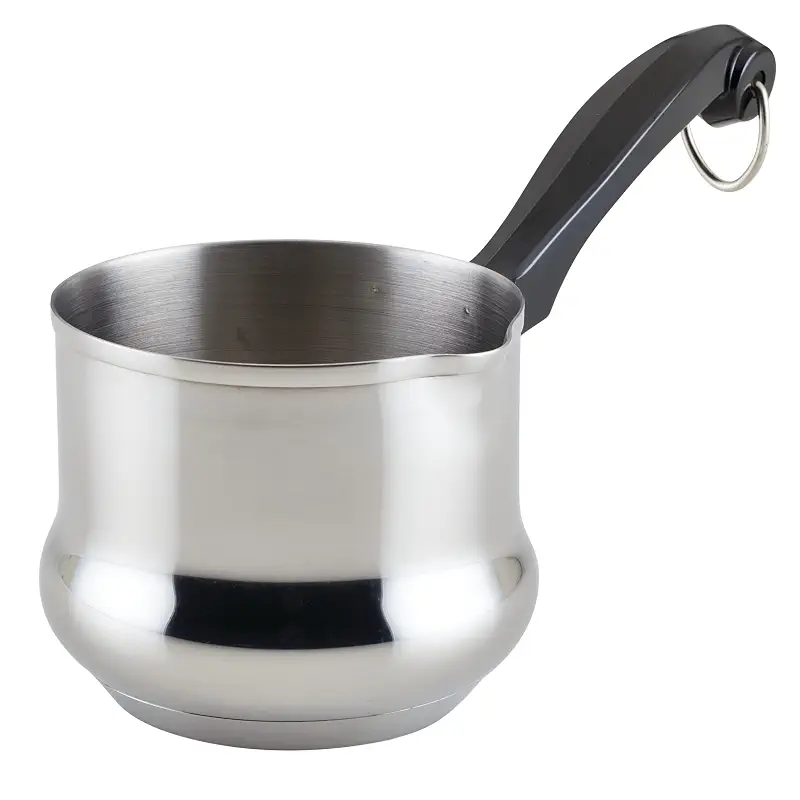
Farberware
Farberware Classic Series Stainless Steel Butter Warmer Melting Pot | Easy pouring, stainless steel pot for melting butter and heating milk, small pot, spout, dishwasher safe, oven safe
4.6(38,812)
Compact, durable stainless steel with a practical spout and proven longevity for small heating jobs.
Ideal for: Home cooks who heat small portions regularly and value compact storage and longevity.
The Farberware Classic Series is the kind of pot that earns its counter space by showing up and doing the job reliably, day after day. Its 18/10 stainless steel construction with a full-cap aluminum core means heat spreads evenly across the bottom, so milk warms without hot spots that encourage sticking. The spout is narrow and well-placed for pouring melted butter, sauce, or hot liquid without mess. At roughly 1.25 quarts, it's small enough to fit on a back burner and light enough for anyone with limited grip strength. Owners report the build quality holds up over decades, even through multiple dishwasher cycles, though some note the phenolic handles can lose their polish over time if run through the dishwasher repeatedly.
The main trade-off is capacity. If you're heating milk for a small family or cooking for more than two people, you'll outgrow this pot quickly. It's also not ideal for boiling pasta or cooking anything that needs room to roll. But for its intended purpose (warming a single serving, melting butter, heating sauces) it's hard to beat the simplicity and proven durability.
Compared to the larger Dcigna saucepan or the Quienkitch option, the Farberware wins on pure durability and ease of storage. Where those pots come with glass lids and strainer features, the Farberware strips away extras and nails the fundamentals.
Pros
Full-cap base ensures even, fast heating throughout
Polished mirror finish resists fingerprints and discoloration
Lightweight and easy to handle despite solid construction
Proven durability across multiple decades of ownership
Cons
Small 1.25-quart capacity limits batch cooking
Handles may dull or roughen with frequent dishwashing
Key features
18/10 stainless steel with full-cap aluminum core for rapid, even heating
Convenient pouring spout for butter, gravy, and warmed sauces
Oven-safe to 350°F with heat-resistant phenolic handle
Dishwasher-safe and backed by limited lifetime warranty
#2 Pick
Best for Draining and Multitasking
Dcigna
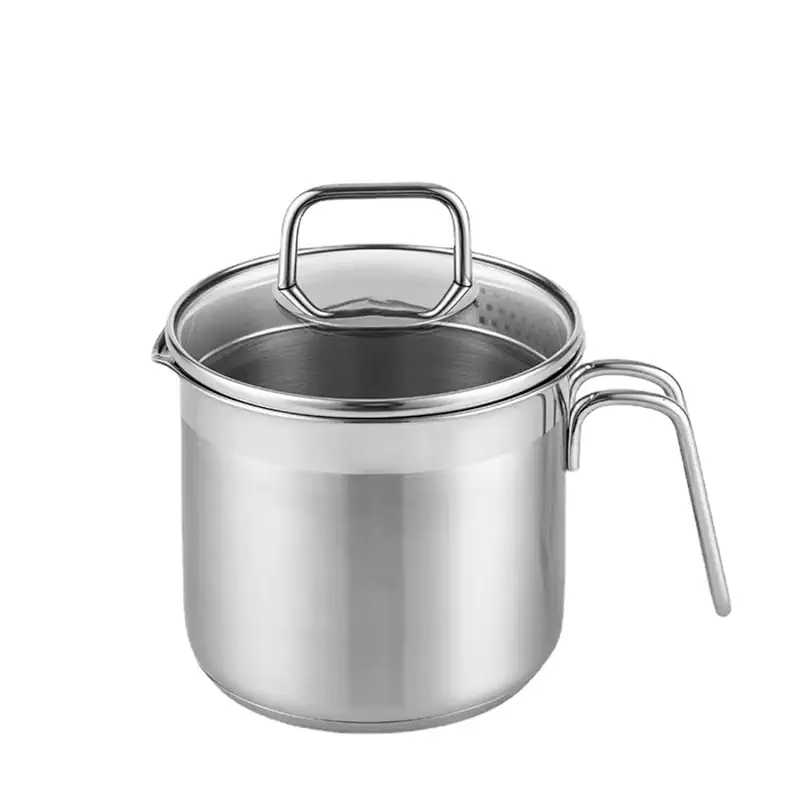
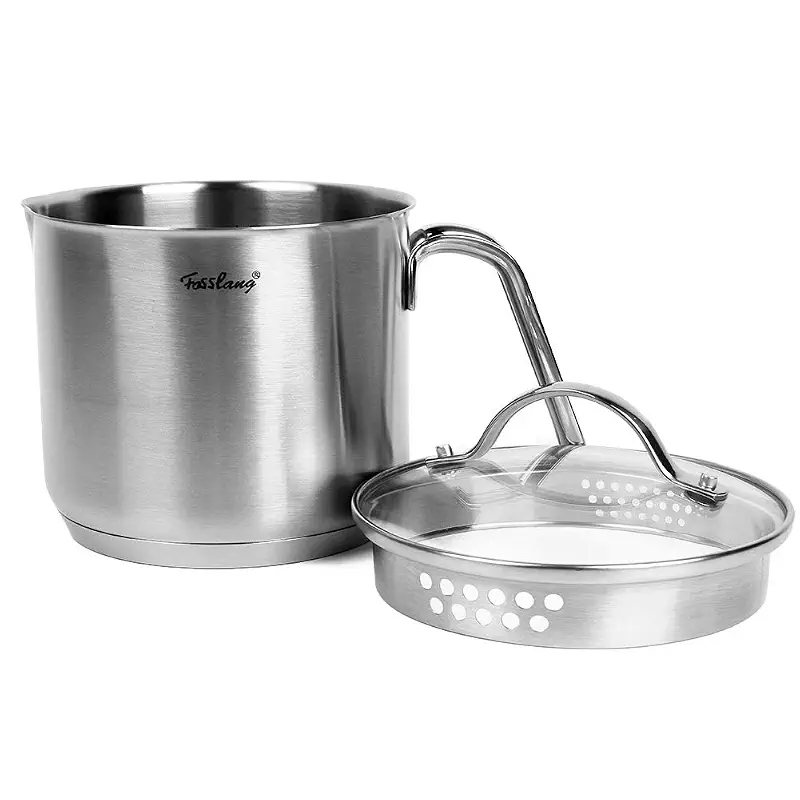
Stainless Steel Saucepan With Glass Lid, Sauce Pan, 2.5 Quart Cooking Pot, Perfect For Boiling Milk, Sauce, Gravies, Pasta, Noodles
4.6(1,149)
Larger 2.5-quart saucepan with a clever dual-hole strainer lid that eliminates the need for a colander.
Ideal for: Home cooks who regularly cook pasta, soups, or sauces for multiple people and value a colander-free workflow.
The Dcigna saucepan steps up the game if you're cooking pasta, draining vegetables, or handling bigger batches. Its 2.5-quart capacity gives you room to boil water for dried pasta or heat enough milk for a recipe without worrying about overflow. The 5-ply bonded construction (alternating stainless steel and aluminum layers) creates a thick, heat-responsive base that distributes warmth evenly and resists warping even on high heat. The glass lid itself is the real standout: it has straining holes on both sides, so you can rotate it to align with the pour spout and drain pasta or vegetables directly through the lid without dirtying a colander.
Owners consistently praise the solid build and the practicality of that straining feature. The measurement marks inside the pot (0.5L, 1.0L, 1.5L) help with precision when heating or cooking. The handle stays relatively cool, and the mirror finish exterior looks attractive enough that you won't mind leaving it on the counter. One caveat: the lid doesn't sit completely airtight, so steam will vent even when you're trying to maintain heat or prevent boiling over. If you're cooking noodles in acidic broth or using salt, some owners note the interior can pit over time, though this appears rare.
If you compare this to the smaller Quienkitch or the Farberware, the Dcigna gives you the flexibility to cook for more people and the bonus of that integrated strainer lid. The Kllkr offers a similar straining feature in a smaller frame, but the Dcigna's heft and 5-ply construction make it the sturdier long-term choice.
Pros
5-ply bonded base ensures warp-resistant, even heating
Dual-hole strainer lid eliminates need for separate colander
2.5-quart capacity handles family-sized batches
Clear glass lid and internal measurement marks for precision cooking
Cons
Lid does not seal tightly, limiting ability to retain steam
Interior may eventually pit with heavy acidic use
Key features
304 food-grade stainless steel with 5-ply bonded aluminum core
2.5-quart capacity with internal measurement marks (0.5L, 1.0L, 1.5L)
Tempered glass lid with dual straining holes and pour spout alignment
Suitable for induction, gas, electric, halogen, and ceramic stovetops
#3 Pick
Best Compact for Couples and Small Servings
Quienkitch
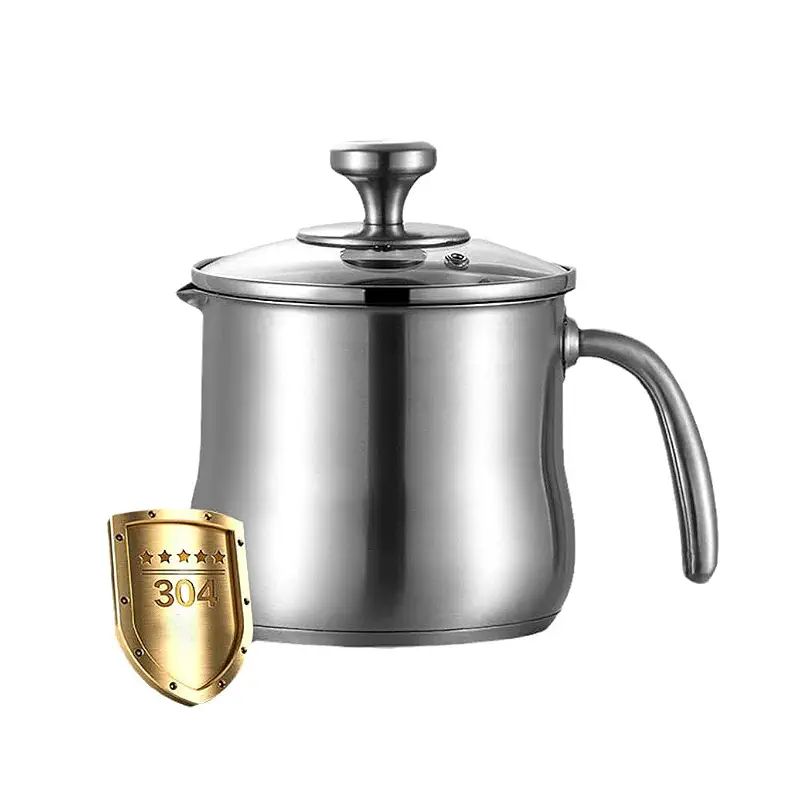
1.5 Quart Stainless Steel Saucepan with Pour Spout & Glass Lid | Multipurpose Small Pot for Boiling Milk, Sauces, Gravies, Pasta and Noodles
4.6(831)
Perfect 1.5-quart size with efficient tri-ply heating, integrated strainer lid, and a handle that won't scald your hand.
Ideal for: Couples, small households, and home cooks who need a lightweight, versatile pot that handles pasta, milk, and sauces.
The Quienkitch fills the sweet spot between the tiny Farberware and the larger Dcigna. At 1.5 quarts, it's roomy enough for a full batch of pasta for two people or heating a substantial amount of milk without taking up excessive counter space. The tri-ply construction (stainless steel, aluminum core, stainless steel) heats evenly and quickly, reducing the risk of scorching milk on the bottom. The glass lid includes straining holes on both sides, so you get that colander-free convenience without the bulk of a larger pot.
Owners love the ergonomic handle design: it stays relatively cool even during longer cooking sessions, and the spout works well for pouring without dripping. The 18/10 stainless steel is durable and resists rust and staining. The pot is dishwasher and freezer safe, and hand-washing keeps the matte interior looking pristine longer. One trade-off: some users report the interior develops spots or discoloration over time (called pitting), though this appears cosmetic and doesn't affect performance. The strainer lid, while convenient, isn't vented for steam, so holding it lightly with your other hand while draining is wise to prevent overflow.
Compared to the Farberware, the Quienkitch gives you more capacity and a glass lid without sacrificing the sturdy build. Versus the Kllkr, it's a more refined product with better overall finish and more consistent reviews. The Dcigna is larger and more industrial, but if you cook for two and value a lighter footprint, the Quienkitch wins.
Pros
1.5-quart capacity balances versatility with compact storage
Tri-ply bonded base provides fast, even heating
Strainer lid and pour spout reduce cleanup and spare you a colander
Cool-touch handle and ergonomic design minimize burn risk
Cons
Interior may develop cosmetic pitting with heavy or acidic use
Strainer lid is not vented, requiring care when draining to prevent overflow
Key features
18/10 food-grade stainless steel with tri-ply bonded aluminum core
1.5-quart capacity with internal measurement marks and ergonomic handle
Shatterproof glass lid with dual straining holes on both sides
Compatible with gas, electric, ceramic, and induction cooktops
#4 Pick
Best for No-Coating Preference
Kllkr
1.8 Quart Stainless Steel Milk Pot with Pour Spout, Saucepan with Lid, No Coating, Reinforced Stainless-Steel Handle for Boiling Milk, Sauce, Gravies
4.4(70)
Uncoated stainless steel milk pot emphasizing bare metal durability and a reinforced handle for pouring control.
Ideal for: Home cooks who prefer uncoated stainless steel, value chemical-free cooking, and are willing to hand-wash for longevity.
The Kllkr takes a straightforward approach: stainless steel interior and exterior with no nonstick or ceramic layer to chip or degrade. This philosophy appeals to cooks who distrust coatings or want a pot that genuinely improves with age and use. The 1.8-quart capacity sits between the Quienkitch and the Dcigna, giving you more room than the smallest pots while staying manageable. The double-layer composite bottom promotes even heat distribution and energy efficiency, important when you're boiling or simmering milk.
The design includes a pour spout and a strainer lid similar to other contenders in this roundup. Owners report the pot heats milk quickly and stays stable on the stovetop. The handle feels reinforced and stays relatively cool. However, the reviews are more polarized than the leading options. Several owners flagged quality control issues: some received pots with non-stick interiors despite the "no coating" claim in the title, and others reported the pot doesn't work reliably on induction despite product specs suggesting it should. A few found the build thin relative to the price. If you receive one that matches the description, it's a solid choice; the gamble is whether what arrives matches what's advertised.
Compared to the Quienkitch, which has stronger overall consistency in reviews, the Kllkr offers a bare-metal philosophy but with less certainty on execution. The Dcigna, by contrast, embraces the stainless-steel foundation with more transparent marketing and fewer reports of discrepancies. If you prioritize coating-free cooking and are willing to inspect on arrival, the Kllkr can deliver. Otherwise, the Quienkitch or Dcigna are safer bets.
Pros
Pure stainless steel interior with no nonstick or ceramic coating
1.8-quart capacity provides flexibility for small to medium batches
Double-layer composite bottom ensures even heating and energy savings
Pour spout and strainer lid simplify draining and pouring
Cons
Mixed reviews on build quality and actual material composition upon delivery
Induction compatibility claims inconsistent across verified buyer reports
Key features
Uncoated stainless steel construction with PFOA and PTFE-free interior
1.8-quart capacity with matte interior finish and mirror exterior polish
Double-layer composite bottom for efficient heat distribution
Strainer lid and pour spout; suitable for gas, electric, and radiant stovetops
#5 Pick
Most Lightweight for Easy Handling
Imusa
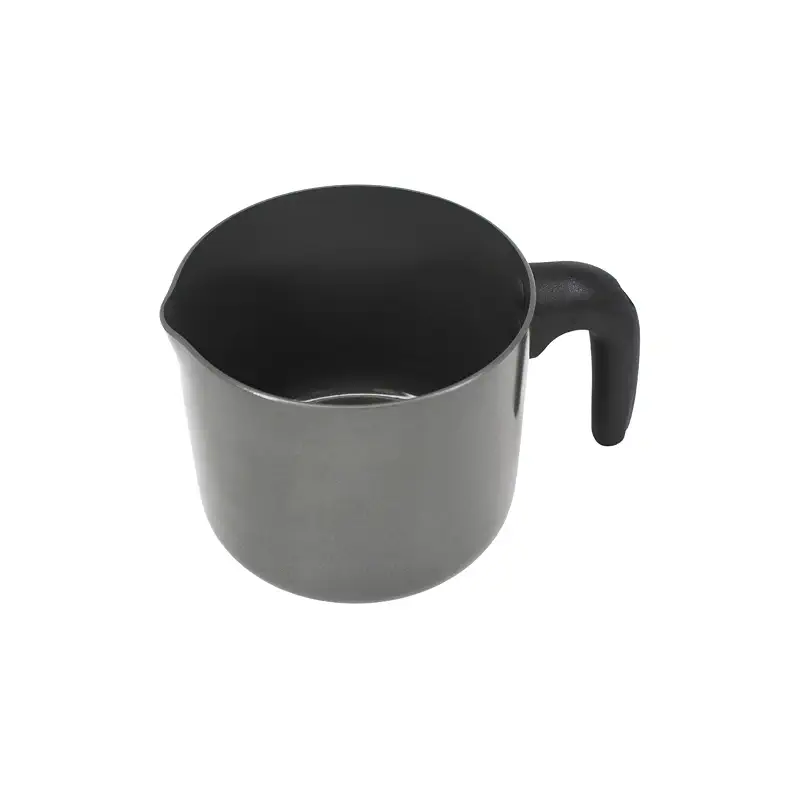
IMUSA 1.3 Qt Chef Cera Aluminum Ceramic Mug, Gray | Safe for Coffee, Sauces, Soups, Stews, Hot Beverages
4.6(135)
Aluminum pot with ceramic nonstick coating, ultra-light for seniors and those with hand fatigue, ideal for small portions.
Ideal for: Seniors, home cooks with hand fatigue or arthritis, and those who heat small portions and prefer lightweight, nonstick convenience.
The Imusa Chef Cera takes a different material approach: lightweight aluminum with a smooth gray ceramic nonstick interior. At just 1.3 quarts and weighing significantly less than stainless steel alternatives, it's a game-changer for older cooks or anyone with arthritis or weak grip. The ceramic coating allows food to release easily without the chemicals present in traditional nonstick surfaces, and cleanup is genuinely simple. Owners report the pot heats milk and small quantities of water quickly and reliably, making it perfect for single-serve or couple portions.
The spout and cool-touch handle give you control when pouring. The gray exterior finish is modern and looks nice on open shelving. One notable limitation: aluminum isn't as durable as stainless steel over decades. The ceramic coating, while healthier than PTFE, can scratch or wear if you use metal utensils aggressively or abuse it in a dishwasher. Owners also report the handle and spout can get unexpectedly hot if the pot sits on a larger burner or over higher flame for extended time, so you'll want a potholder nearby. The 1.3-quart capacity is the smallest on this list, suitable for heating a single large cup of milk or making café de olla, but not for cooking pasta or feeding more than two people.
If you compare this to the stainless options like the Quienkitch or Dcigna, you're trading durability and long-term investment for immediate ease of use and lower weight. The Farberware is lighter than the larger stainless pots but still heavier than the Imusa. If hand strength or mobility is your primary concern and you cook small portions, the Imusa wins. If you want a workhorse pot that lasts twenty years, stick with stainless steel like the best pot for chili also requires.
Pros
Ultra-lightweight aluminum body reduces hand and wrist strain
Ceramic nonstick interior allows easy food release without PFOA or PTFE
Quick heating for small portions of milk, water, or sauces
Modern gray finish and simple spout design for controlled pouring
Cons
Aluminum durability and ceramic coating less robust than stainless steel long-term
Handle and spout can become very hot with extended or high-heat cooking
Key features
Lightweight aluminum construction with gray ceramic nonstick interior coating
1.3-quart compact capacity ideal for singles and couples
PFOA and PTFE-free nonstick surface for chemical-free cooking
Convenient pour spout and ergonomic handle; dishwasher-safe exterior
How to Choose a Pot for Boiling Milk
Four trade-offs that actually matter when matching a pot to boil milk to your kitchen.
Size and Capacity
Start by counting how many people you're cooking for and how often you boil milk. A single cup or two? The Farberware or Imusa fit perfectly. Pasta for two or multiple servings of oatmeal? Jump to the 1.5- or 2.5-quart options. Larger batches for a family demand the Dcigna's 2.5 quarts. Keep in mind that you should never fill a pot more than two-thirds full when boiling milk: it needs headroom to prevent boil-over. A pot that feels spacious leaves safety margin and reduces vigilance.
Material and Heat Distribution
Stainless steel with a bonded aluminum core is the professional standard because the aluminum spreads heat evenly and prevents hot spots where milk scorches. Look for full-cap or multi-ply construction (tri-ply, 5-ply). Single-wall aluminum is light but conducts heat unevenly. If you prioritize lightweight handling due to age or mobility, ceramic-coated aluminum like the Imusa works well for small portions, but accept that it won't last as long as stainless steel. Bare stainless steel (no nonstick coating) appeals to cooks concerned about chemicals, though it requires more careful hand-washing to avoid pitting.
Lid and Draining Features
A glass lid lets you monitor the milk without lifting and losing heat or steam. If you also cook pasta or drain vegetables, a strainer lid saves you a dish. However, note that strainer lids often aren't fully vented, so you'll need to hold or tilt them slightly when draining to release steam. A simple vented lid prevents boil-over but doesn't drain. Consider which tasks matter most to your cooking style. Preventing milk boil-over and choosing between lid styles often go hand in hand: a slightly raised or vented lid is your best ally here. Read about preventing milk boil-over before committing if this is your top concern.
Handle Temperature and Ergonomics
A handle that stays cool is critical when you're pouring hot liquid or stirring frequently. Phenolic (plastic-coated) handles are heat-resistant but can dull or discolor in the dishwasher. Stainless steel handles with air gaps stay cooler but require a potholder on longer cooks. Ceramic-coated pots tend to transfer heat up the handle faster than stainless, so always have a cloth nearby. If you have arthritis or reduced grip strength, test the handle weight and angle in person if you can, or favor lighter aluminum. An understanding of milk pot versus saucepan differences matters here too: a dedicated milk pot often has features like a narrower spout and slightly lower, wider profile that make pouring easier and safer than a general saucepan.
Stovetop Compatibility and Care
All pots on this list work on gas and electric. Induction requires a ferromagnetic base, which most stainless steel and some aluminum pots support: check the description or product reviews if induction matters to you. Dishwasher safety is convenient, but hand-washing extends the life of both stainless and ceramic interiors by reducing scratching and pitting. Budget thirty seconds per use to rinse and towel dry, especially if your water is hard or acidic. Oven-safe ratings matter if you plan to finish a sauce or butter-based dish in the oven; most pots here max out at 350°F, which is warm enough for most tasks.
Frequently asked
Quick answers to the questions readers ask most.
Why does milk stick to the bottom of a pot even on low heat?
Milk proteins coagulate and bond to bare metal or worn nonstick surfaces, especially when heat is uneven. A pot with poor heat distribution (thin bottom, hot spots) will scorch milk faster. Stainless steel with a bonded aluminum or copper core spreads heat evenly and reduces sticking. Ceramic nonstick coatings also help prevent adhesion. Avoid using high heat; medium or medium-low is safest. Some cooks add a pinch of salt or a small knob of butter to the pot before pouring milk: it lowers the milk's adhesion slightly.
Can I use a milk pot on an induction stovetop?
Only if the pot has a ferromagnetic base. Most stainless steel pots work on induction because stainless 18/10 is weakly magnetic. Check the product description or look for an induction symbol on the bottom of the pot. Aluminum and ceramic nonstick pots do not work on induction unless they have a special ferromagnetic disc fused to the bottom. If induction is your only cooktop, verify compatibility before buying.
What size milk pot should I buy if I live alone?
A 1-1.5 quart pot is ideal for a single person. It heats milk or water for tea quickly, uses less energy, and stores compactly. The Farberware (1.25 quarts) or Quienkitch (1.5 quarts) fit this need well. If you ever cook small pasta batches or heat soup, go with the 1.5-quart to avoid frequent refills. Anything larger will sit mostly empty and waste heat.
Do stainless steel milk pots stain or discolor over time?
Stainless steel resists rust, but mineral deposits from hard water, calcium buildup, and discoloration from high heat are possible. These are cosmetic and don't affect performance. To minimize staining, wipe the pot dry after washing and avoid leaving acidic liquids (lemon juice, tomato, vinegar) sitting inside overnight. White vinegar or baking soda paste can restore shine if spots appear. Interior pitting (small divots) can occur with acidic or salty food stored long-term, but this is rare in everyday milk heating.
Is a ceramic nonstick coating safer than traditional nonstick?
Ceramic coatings are free of PFOA and PTFE, chemicals found in older nonstick surfaces. They're considered safer for everyday cooking and pose less risk if the coating chips. However, ceramic is less durable: it scratches more easily and may wear off within a few years of regular use, especially if washed in a dishwasher or scrubbed with metal tools. Hand-washing and using wood or silicone utensils extend its life. Bare stainless steel eliminates any coating concern entirely but requires more careful hand-washing and occasional oil seasoning to prevent spotting.