Verdict, analysis, and key features for each pick.
#1 Pick
Best Overall Value
Farberware
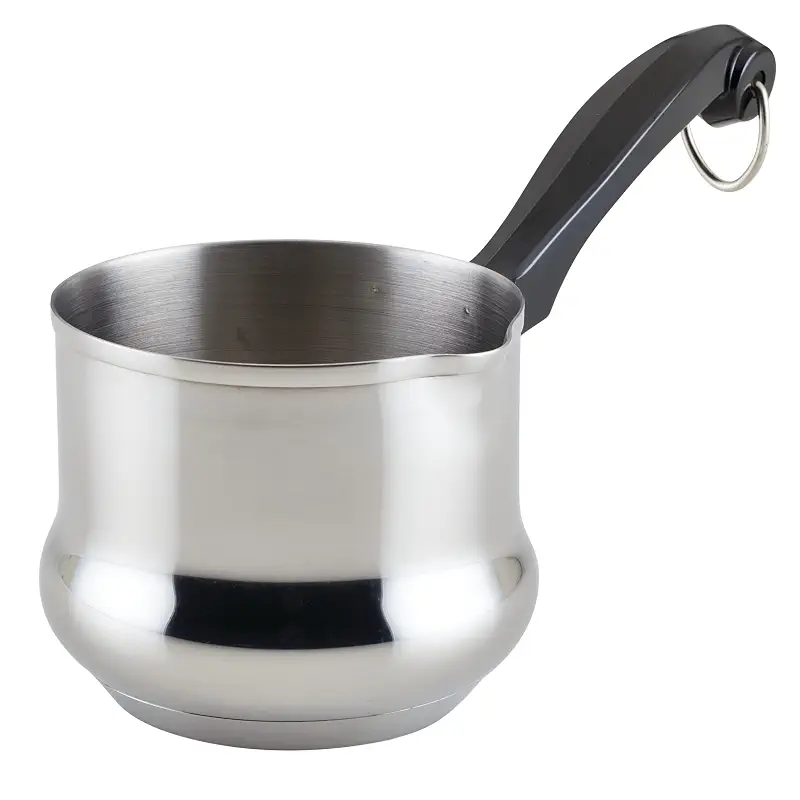
Farberware Classic Series Stainless Steel Butter Warmer Melting Pot | Easy pouring, stainless steel pot for melting butter and heating milk, small pot, spout, dishwasher safe, oven safe
4.6(38,812)
Classic workhorse butter warmer that excels at heating milk and small portions with proven durability.
Ideal for: Single cooks, parents heating infant portions, gravy and sauce warming daily.
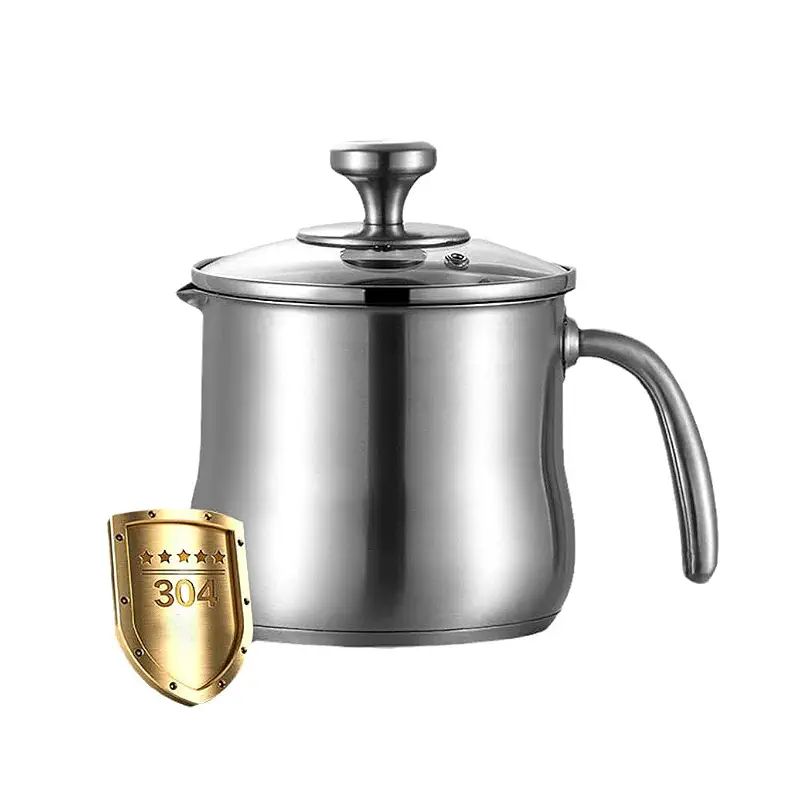
Farberware's butter warmer has earned its reputation through decades of reliable performance. The stainless steel body with full-cap aluminum core ensures even heat distribution across the bottom, which matters when you're preventing scorching. At roughly 0.625 quarts, it's frankly small, and that's the entire point: it's sized perfectly for heating single servings of milk, warming sauce, or reheating gravy without waste. I'd choose this over larger pots if you cook for one or two people regularly and value simplicity. The spout pours without dripping when you tip the pot at a normal angle, and the mirror-polished finish looks intentional in any kitchen.
Owners consistently praise the lightweight feel and quick heating. The handle stays relatively cool during stovetop use, though the product is oven-safe to 350°F if you need that flexibility. Dishwasher safety means cleanup takes moments. The trade-off is capacity: if you regularly need to boil milk for a family recipe or large batch, you'll want something bigger.
This pot has been in Farberware's lineup for years, and reviewers who replaced lost or aged versions report identical build quality. That longevity speaks louder than marketing. The few complaints center on handle durability over years of dishwasher cycles, though hand-washing would mitigate that.
Pros
Rapid, even heating from thick aluminum core
Precision pour spout without drips
Lightweight and quick to clean
Cons
Tiny 0.625-quart capacity limits batch size
Handle material can dull with repeated dishwashing
Key features
Full-cap aluminum core sandwiched in stainless steel
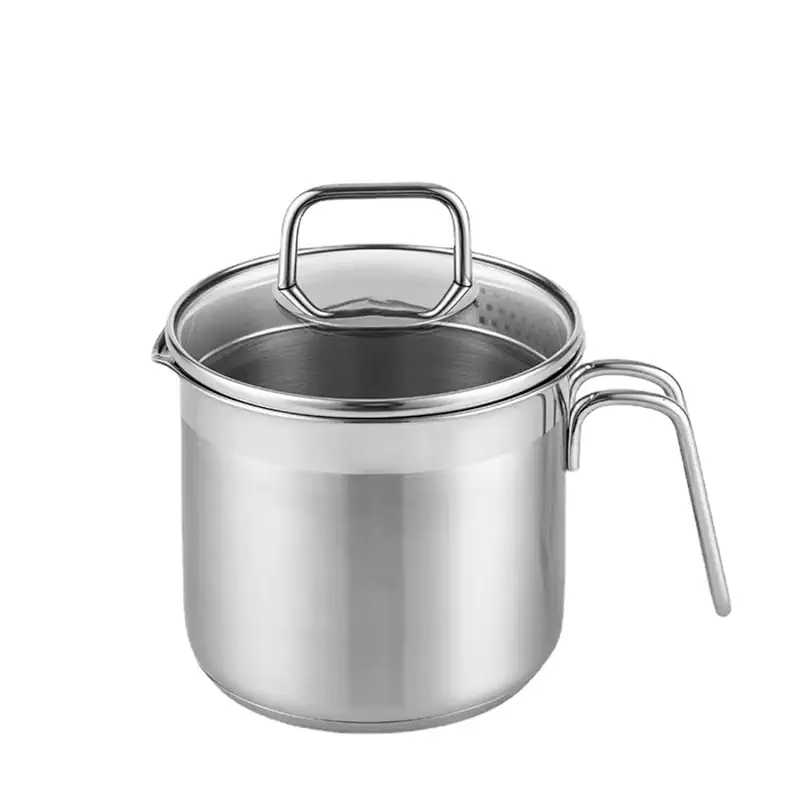
Ideal for: Home cooks who make pasta regularly, canners, tea enthusiasts, anyone needing a mid-size multipurpose pot.
Dcigna's 2.5-quart pan is the workhorse if you're not just warming milk but actually cooking pasta, making soup, or handling larger batches. The five-ply bonded base (alternating stainless steel and aluminum layers) distributes heat evenly and resists warping, a real concern when boiling water or cooking at high temperatures. I'd pick this if you already own the Farberware but need something for family-sized tasks: this fills that gap perfectly without redundancy.
What sets this apart is the glass lid with integrated straining holes on both sides. Turn the lid one way to seal in steam; rotate it the other direction to drain pasta or vegetables without dirtying a separate colander. The pour spout works in tandem with the straining lid, letting you pour off cooking water with precision. Owners report using this for everything from hummingbird nectar to canning, and they praise the heavy-gauge construction and secure riveted handles.
The matte interior finish resists scratches, and the measurement marks inside (0.5L, 1.0L, 1.5L) help with recipes calling for specific volumes. One limitation: the lid isn't a tight fit, so steam can escape; reviewers suggest holding the lid in place when draining. The base diameter is 5 inches, so it's best paired with smaller burners.
Pros
Five-ply base ensures even heating and no warping
Dual-hole straining lid doubles as colander
Measurement marks and clear glass lid for monitoring
Cons
Lid does not seal tightly; steam escapes during cooking
Smaller 5-inch base requires careful burner placement
Key features
2.5-quart capacity with dual-size straining holes on lid
Ideal for: Apartment dwellers, small households, cooks who value storage efficiency and elegant design.
Quienkitch's 1.5-quart pot bridges the Farberware and the Dcigna: bigger than a butter warmer, smaller than a full sauce pan, with a handle design that doesn't stick straight out sideways. This matters in tight galley kitchens or apartment cooking where counter and cabinet space is sacred. The tri-ply bonded construction (stainless steel exterior and interior wrapped around aluminum) heats evenly, and owners report the handle stays surprisingly cool even during extended cooking.
Comparison to the Dcigna reveals a philosophy difference: where that pan focused on capacity and straining features, Quienkitch prioritized compact practicality. The 1.5-quart size is ideal for reheating coffee, boiling eggs, cooking side dishes, or preparing ramen for two: exactly what most home cooks actually do daily. The glass lid has straining holes, and the spout pours without mess. Food-grade 18/10 stainless steel resists pitting and discoloration over years of use.
Owners particularly love this pot for pasta: one reviewer noted it works perfectly for Kraft mac and cheese or spaghetti for two, with enough room to strain without overflow. Hand-washing is recommended to keep the polished finish pristine, though it's technically dishwasher-safe.
Pros
Clever angled handle saves cabinet and drawer space
Cool-grip handle stays comfortable during cooking
Tri-ply base with excellent heat distribution
Cons
Straining lid design can allow boil-over if not monitored
Hand-washing recommended to preserve polished finish
Key features
1.5-quart capacity with smart angled handle design
Ideal for: Cooks avoiding nonstick surfaces, traditionalists with gas or electric stovetops, anyone skeptical of coating longevity.
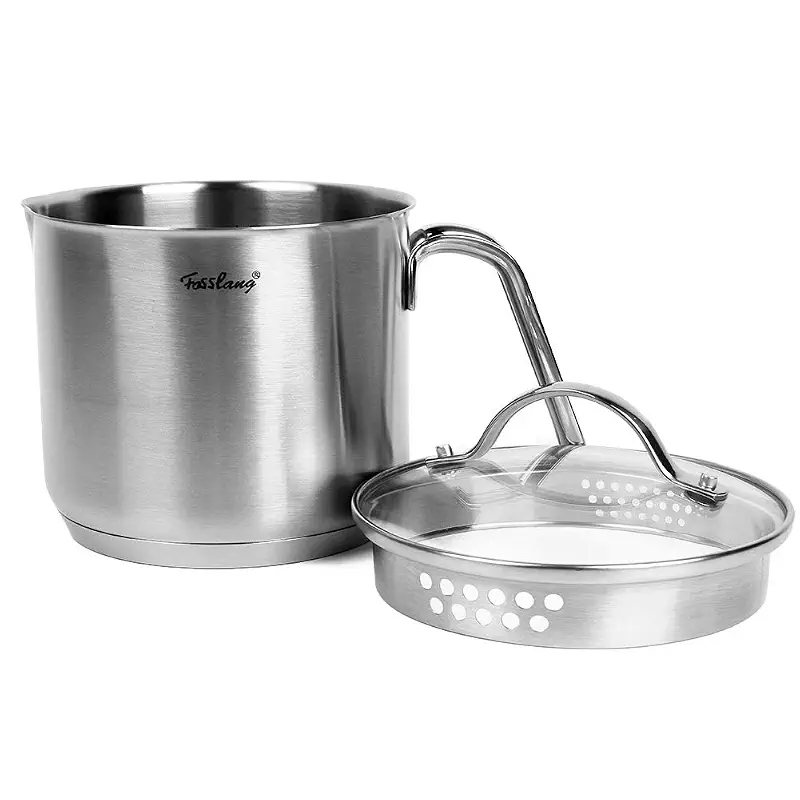
Kllkr's 1.8-quart pot positions itself against the modern trend of nonstick coatings by offering honest stainless steel: no PTFE, no PFOA, no synthetic layers to wear away. If you worry about coatings breaking down under heat or prefer traditional cookware, this appeals directly. The double-layer composite bottom provides even heat distribution without relying on fancy engineering, just stacked metal doing its job.
I'd reach for this if you dislike nonstick alternatives and want something that mirrors what professional kitchens prefer: bare steel that gets better with proper use and hand-washing. The matte interior finish resists scratches, and the pour spout plus straining lid mirror features found on pricier competitors. Buyers report using this for boiling water, making tea, and heating milk without complications. If you're building your kitchen around robust fundamentals rather than trendy features, this aligns with choosing the best pot for chili or the best pot for gumbo: durable vessels that do one thing exceptionally well.
The elephant in the room: several reviews flag induction compatibility issues. Kllkr claims induction-readiness, but owners report mixed results, with at least two stating the pot does not work on induction stovetops. If you own an induction cooktop, verify before committing. The handle does get hot during extended cooking, so pot holders are essential: the manufacturer acknowledges this upfront. Overall, it's a no-fuss option for gas or electric ranges.
Handle becomes hot; pot holders required for safe handling
Key features
1.8-quart capacity, PTFE and PFOA-free interior
Double-layer composite bottom for thermal distribution
Glass lid with integrated straining holes and pour spout
Works on gas, electric, and radiant stovetops
#5 Pick
Best Premium Build
Cuisinart
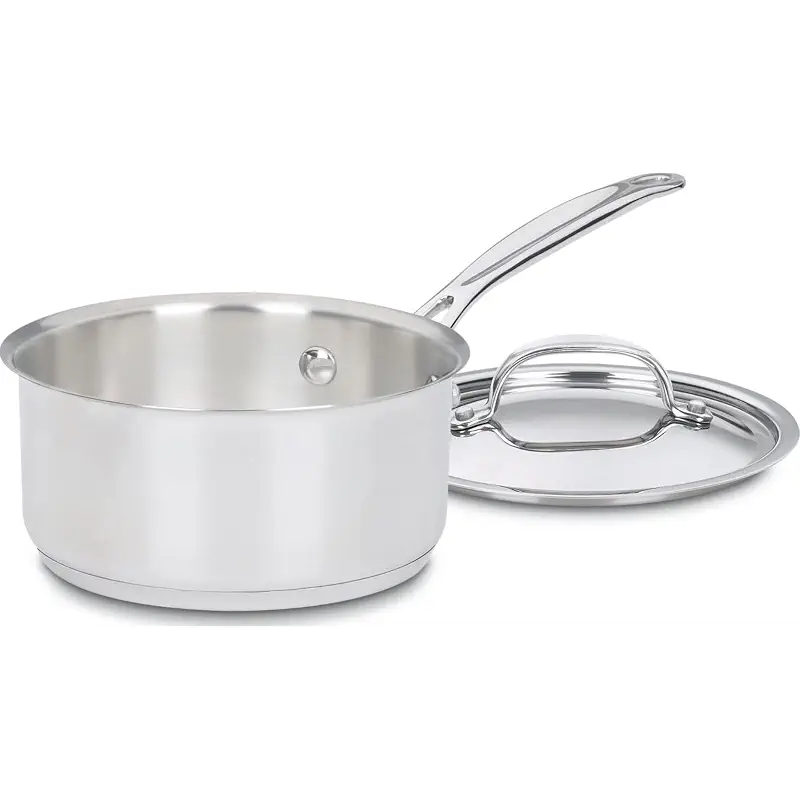
Cuisinart 1.5 Quart Sauce Pan with Cover, Stainless Steel Pot with Lid, Small Kitchen Pots, Dishwasher Safe, Compatible with Induction, Electric, Gas Cooktops, Oven Safe Saucepan, Cool Grip Handles | Stainless steel saucepan with aluminum encapsulated base for quick heating, dishwasher safe & oven safe to 550°F, 719-16
4.6(11,062)
Cuisinart's polished professional saucepan delivers consistent performance backed by lifetime warranty and proven longevity.
Ideal for: Professional home cooks, warranty-conscious buyers, anyone seeking 20+ year investment in one reliable pot.
Cuisinart's Chef's Classic line is engineered for professionals and home cooks who refuse compromise. The encapsulated aluminum base surrounded by stainless steel heats rapidly and distributes warmth evenly: no hot spots when you're making a delicate sauce or heating milk. The cool-grip stainless steel handles are riveted solidly, and reviewers note they stay remarkably cool even during vigorous boiling; one owner said they could grab the pan by the handle even when boiling water without using a mitt, though taking a second is safer.
At 1.5 quarts, this sits between the compact Quienkitch and the spacious Dcigna, giving you genuine multipurpose flexibility. Measurement markings inside simplify recipes, and the lid fits snugly without rattling. The mirror-polished stainless finish looks intentional on an open shelf or stovetop. Owners consistently report durability spanning decades: one reviewer has owned their 1-quart Cuisinart for 26 years and still uses it daily for oatmeal and finds it cleans perfectly.
The lifetime warranty backs the craftsmanship, and dishwasher safety plus oven-safe-to-550°F design expands versatility beyond milk heating into baking and finishing dishes. Compared to the mid-range Quienkitch, Cuisinart's more industrial aesthetic may appeal if you prefer European polish over minimalist Japanese design. The trade-off is weight: it's heavier than budget options, a plus for stability but a minor minus for those with hand weakness.
Pros
Encapsulated aluminum base heats rapidly and evenly
Cool-grip handles stay comfortable during boiling
Lifetime warranty and proven 25+ year durability
Cons
Heavier than budget options; tiring for weak-grip users
Premium positioning means higher initial investment than competitors
Key features
1.5-quart capacity with encapsulated aluminum-core base
Cool-grip stainless steel riveted handles
Drip-free pouring spout and measurement markings inside
Oven-safe to 550°F, dishwasher-safe, lifetime warranty
How to Choose a Pot for Boiling Milk
Four trade-offs that actually matter when matching a pot for boiling milk to your kitchen.
Size Matters More Than You Think
A milk pot sized for your actual need prevents waste and cleanup. Heating milk for one cup of coffee or baby food calls for the tiny Farberware: no excess to scrub. Cooking pasta for dinner for two or three people demands something larger like the Dcigna 2.5-quart. Start with the milk pot sizing guide to match capacity to household size. Oversizing means more milk to burn on the bottom; undersizing means multiple batches. Most home cooks find themselves using a 1.5-quart size most frequently.
Base Construction Determines Heat Control
Thick, bonded bases (whether three-ply or five-ply) prevent scorching by distributing heat evenly across the bottom. Thin single-layer pots create hot spots where milk burns instantly. Look for encapsulated or bonded aluminum sandwiched between stainless steel layers. The Farberware's full-cap base and Cuisinart's encapsulation both excel here. For induction cooktops, confirm the pot has a ferromagnetic base; some cheaper pots skip this despite claims.
Pour Spout and Lid Design Prevent Mess
A shaped spout keeps milk from running down the outside of the pot onto your stovetop. Straining lids (found on Dcigna, Quienkitch, and Kllkr models) double as colanders for pasta, saving dishwashing. If you boil pasta regularly, the dual-function lid saves counter space. For milk-only heating, a simple tight-fitting glass lid suffices. Test-fit lids when shopping; some sit loose and allow steam escape.
Material Quality and Warranty Protection
Food-grade 18/10 stainless steel resists pitting and staining better than lower-grade alloys. Coated interiors (nonstick surfaces) eventually wear; bare stainless steel lasts indefinitely if hand-washed. The Cuisinart's lifetime warranty reflects manufacturer confidence. Farberware's proven 50-year track record speaks to durability without warranty marketing. Budget options work fine for five to ten years but may show wear faster. Whether you're seeking a pot for gumbo or milk heating, the underlying principle remains: solid construction beats feature bloat.
Handle Heat and Storage Fit
Cool-grip handles matter when you're boiling water repeatedly. Riveted handles outlast welded ones. Consider whether the handle sticks straight out (taking cabinet space) or angles inward (Quienkitch's clever design). In small kitchens, a compact footprint saves real estate. On gas ranges, handles over flame get hotter than electric cooktops, so pot holders are always smart.
Frequently asked
Quick answers to the questions readers ask most.
Can I boil milk directly in a stainless steel pot without scorching?
Yes, if the pot has a thick, bonded base: aluminum sandwiched between stainless steel layers. This distributes heat evenly and prevents the high-heat spots that burn milk. Start with medium heat, stir occasionally, and watch it closely. Even perfect pots can scorch if you leave milk unattended at high heat. The Farberware and Cuisinart excel at this because of their encapsulated bases.
Are these pots safe for induction cooktops?
Most are, but not all. Dcigna, Quienkitch, and Cuisinart explicitly support induction with ferromagnetic bases. The Farberware butter warmer (being older-design) and Kllkr report mixed induction results despite claims. If you own an induction stove, check the product specs for the induction symbol or buy from sellers offering returns.
What's the difference between tri-ply and five-ply construction?
Both work well; five-ply adds extra layers of aluminum for slightly better heat distribution and warping resistance. Tri-ply (like Quienkitch) is simpler and lighter but still performs excellently. Five-ply (Dcigna) handles larger batches and aggressive heat without warping. For boiling milk in a 1.5-quart pot, either is sufficient.
Should I hand-wash or use the dishwasher?
Stainless steel survives dishwashers, but hand-washing preserves the polished finish longer. The matte interior finish on most pots resists scratching, but abrasive detergents can dull it over time. If you hand-wash and dry immediately, any pot lasts noticeably longer and looks newer. Many owners swear by hand-washing to keep the mirror polish pristine.
Why do some milk pots have straining lids?
Straining lids let you boil pasta or vegetables and drain them without dirtying a colander: the lid holes align with the spout for controlled pouring. It's a convenience feature for small kitchens, but not essential if you use a separate colander. If pasta is part of your weekly routine, a straining lid saves cleanup.