Best Pan to Cook Fish: Cast Iron, Nonstick & Grill Options
Find the best pan to cook fish with expert comparisons of cast iron, nonstick, and specialty grill pans. Compare features, heat retention, and ease of use.
Ideal for: Grill enthusiasts and cast iron veterans cooking whole fish and fillets.
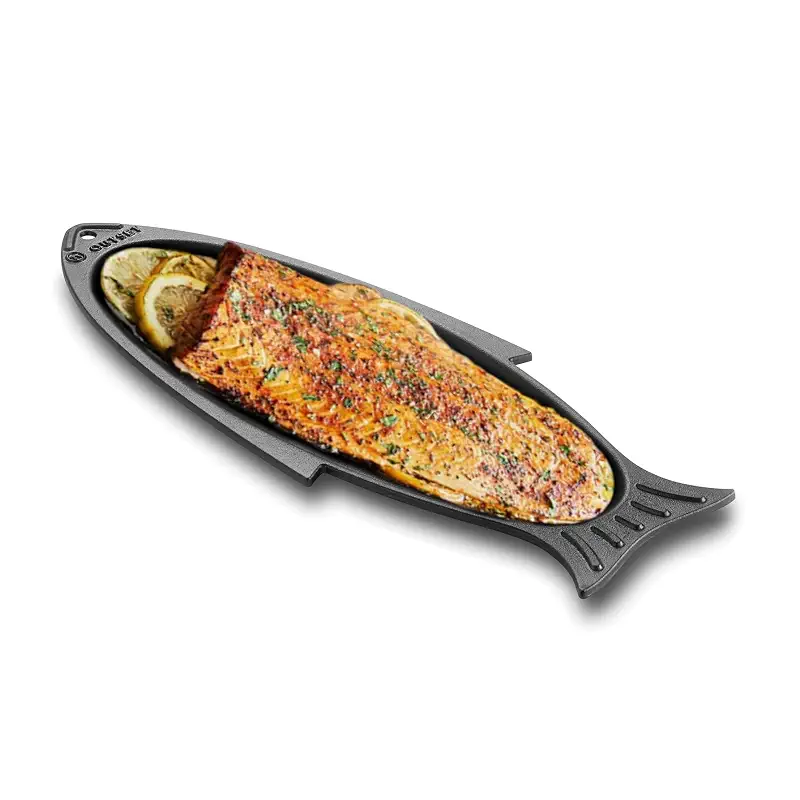
This Outset pan cuts to the core of what makes fish cooking easier: a surface wide enough for fillets to lie flat without curling, and the grill ridges that keep delicate skin from sticking while creating that light char home cooks chase. Cast iron's reputation for longevity is well-earned here; owners report it performs better after months of use as the seasoning deepens. You'll appreciate the weight and heat retention, especially if you move from cooktop to grill without worrying about temperature swings.
The trade-off is the manual seasoning and hand-washing routine cast iron demands. Unlike the Sensarte nonstick skillet, you won't rinse this in the dishwasher, and it needs immediate drying to prevent rust. That said, owners consistently report easy cleanup after fish, often just scraping and rinsing without soap. The rectangular shape fits salmon and whole trout better than a round pan, which is why this lands ahead of round cast iron options for fish specifically.
If you're already cast iron fluent, this is the pick. If you're new to the material and want fuss-free fish cooking, the nonstick alternative makes more sense. This excels on the grill or over an open flame, where its heat-retention power truly shines.
Pros
Rectangular shape fits long fillets without crowding
Grill ridges prevent sticking and sear effectively
Pre-seasoned and improves with continued use
Cons
Requires hand washing and immediate drying to prevent rust
Heavier than nonstick or aluminum alternatives
Key features
Cast iron construction with pre-seasoned grill ridges
Rectangular 18.9 x 7.28 inch cooking surface for whole fish
Oven, stovetop, and grill safe with excellent heat retention
Food-safe seasoning develops richer flavor over months of use
Multi-purpose for searing, frying, and table service
#2 Pick
Best for No-Rust Durability
Wilton Armetale
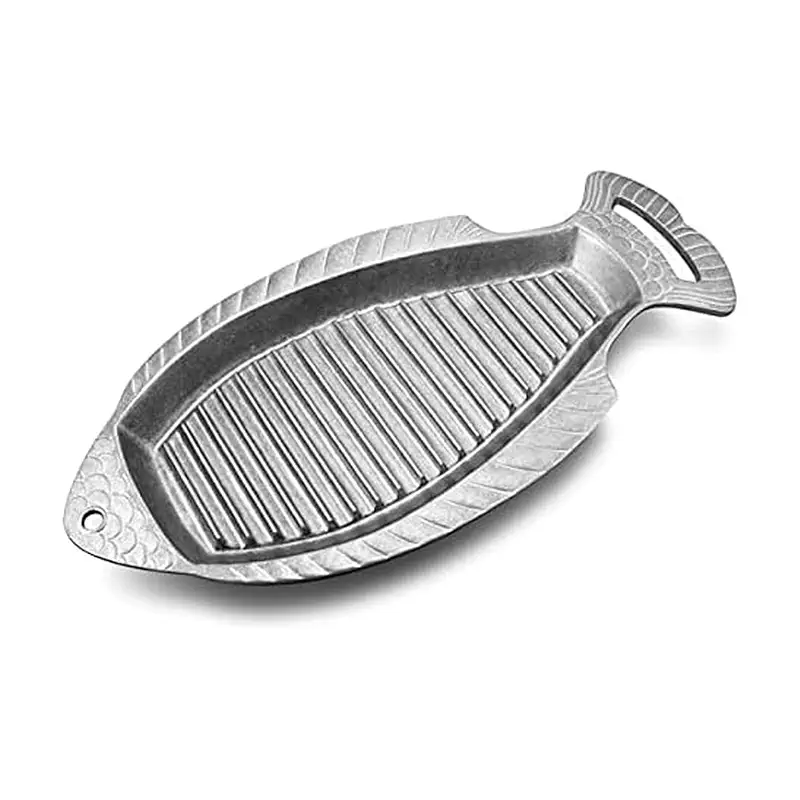
Wilton Armetale Gourmet Grillware Fish Griller Pan - Heat Safe to 1000°F, 18.75 x 8.5 Inches - Cookware for Grill, Stovetop, Oven, Camping, Tailgating
4.6(85)
Heat-resistant aluminum alloy griddle that won't rust or chip and cleans up faster than cast iron.
Wilton Armetale's recycled aluminum alloy removes the seasoning anxiety entirely. It won't rust, won't chip, and holds heat to 1000 degrees Fahrenheit, making it stable across gas grill, charcoal, and even stovetop use. Where the Outset cast iron demands ritualistic care, this pan accepts hand-washing with hot soapy water and a dry towel, then calls it done. Owners who've compared this to traditional cast iron appreciate skipping the rust-prevention dance, especially if the pan lives outdoors or in a damp garage.
The catch is that cleanup, while still straightforward, can leave burnt oil residue that requires a scrubbing pad rather than just a quick rinse. One reviewer noted oils tend to burn into the surface, which is worth factoring in if you're timing dinner prep tightly. The thermal performance isn't quite as aggressive as cast iron's slow, deep heat, so searing on high heat happens faster but cools faster too.
Compared to the nonstick Sensarte, this trades the ultra-slick surface for better outdoor durability and no coating risk. It's the right choice if you want cast iron's grill power without the seasoning commitment, and it outperforms many round skillets when you need a top pan for cooking fish.
Pros
100% recycled aluminum resists rust, chips, and corrosion
Heats to 1000°F for aggressive searing across stovetop and grill
Larger surface than the Outset (18.75 x 8.5 inches) for side vegetables
Cons
Burnt oil residue can require scrubbing pad, not just rinsing
Cools faster than cast iron between sears
Key features
100% recycled aluminum-alloy with no rust or chip risk
Heat-resistant to 1000°F for stovetop, grill, and oven use
18.75 x 8.5 inch rectangular griddle for whole fish and vegetables
Hand-wash only, quick cleanup without seasoning upkeep
Food-safe alloy designed for lifetime durability
#3 Pick
Best for Everyday Stovetop Cooking
Sensarte
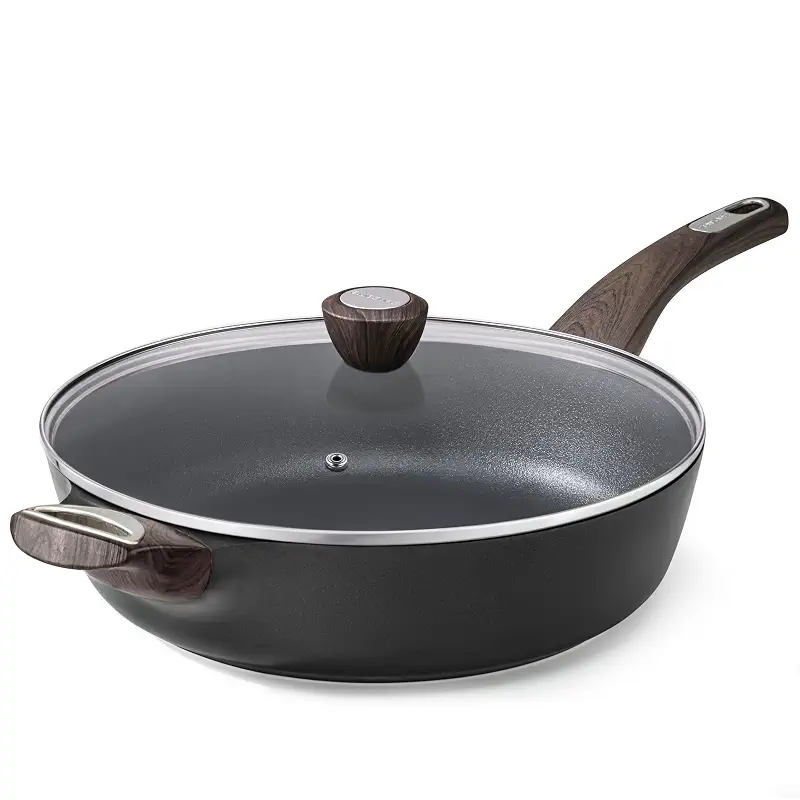
SENSARTE Nonstick Frying Pan Skillet with Lid, 12 Inch Large Deep Frying Pan, 5 Qt Non Stick Saute Pan with Cover, Induction Pan, Healthy Non Toxic Cooking Pan with Helper Handle, PFOA PFOS Free
4.5(7,759)
Large 12-inch nonstick skillet with ceramic coating and glass lid, ideal for fish fillets and low-oil cooking.
Ideal for: Home cooks seeking fuss-free nonstick performance for indoor fish and low-oil cooking.
The Sensarte brings nonstick convenience to fish cooking without the cast iron learning curve. Its 12-inch width and shallow 5-quart depth give you room to lay out multiple fillets at once, and the ceramic surface (PFOA and PFOS-free) releases fish so readily that owners report cooking with almost no oil. For home cooks who panic about fillets breaking apart, this eliminates that stress; the food simply slides onto the plate. The included glass lid with air vent lets you watch gentle poaching without lifting the pan, which matters for delicate white fish.
The nonstick coating does scratch over time, especially if loaded into a dishwasher despite the hand-wash recommendation. One owner noted fine scratches after a few months of daily use, with some sticking returning in those spots, though they'd still buy another. The bakelite handle feels cool during cooking and the helper handle on the opposite side makes it easier to lift when full. Where cast iron dominates the grill, this excels for weeknight stovetop meals.
Compared to the Qelunaro cast iron pan, this trades heat retention and outdoor versatility for ease of use and speed of cleanup. If you cook fish indoors on gas or electric heat more often than on a grill, this saves you the seasoning overhead and delivers faster results.
Pros
Swiss ceramic nonstick coating eliminates PFOA and PFOS risks
12-inch width and 5-quart depth handle multiple fillets easily
Includes glass lid with steam vent and dual handles for safe lifting
Cons
Nonstick coating scratches over time; hand-wash only recommended
Not suitable for grill or outdoor high-heat use
Key features
12-inch ceramic nonstick skillet with PFOA and PFOS-free coating
Heavy-duty cast aluminum with induction-compatible base
Heat-resistant bakelite handles and explosion-proof glass lid included
Deeper sidewalls reduce splatter during searing and simmering
Hand-wash recommended; easy cleanup in seconds with soap and water
#4 Pick
Best Compact Cast Iron Option
Qelunaro
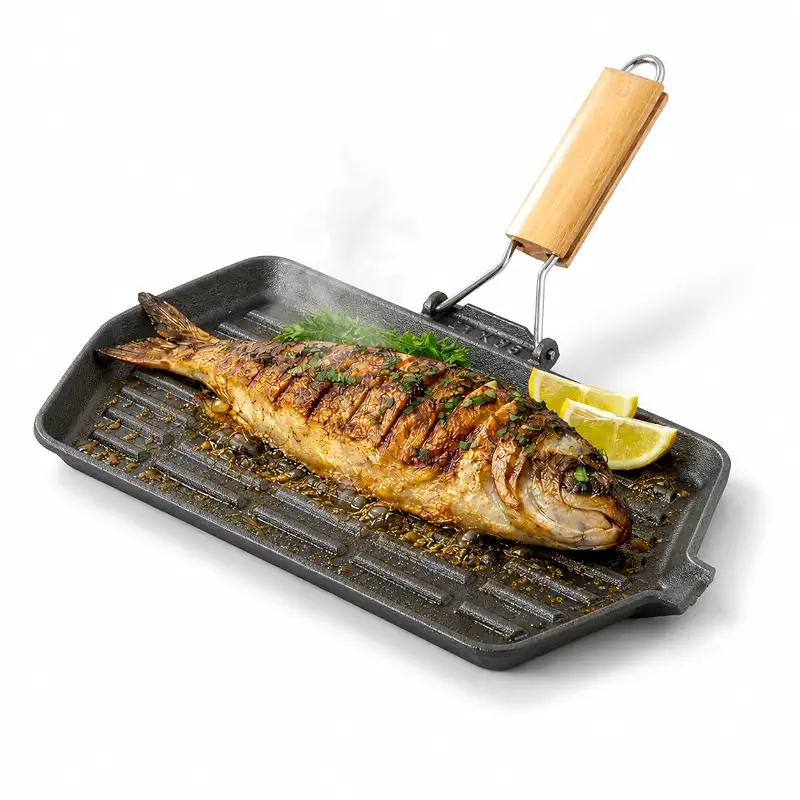
Sartén Para Freír Pescado, 14 x 8 in Cast Iron Fish Grill Pan | Rectangular ridged skillet with wood handle for fish fillets, seafood and vegetables on stovetops
5.0(1)
Smaller rectangular cast iron grill pan with ridged surface, ideal for single fillets and tight stovetop space.
Ideal for: Single diners or couples wanting compact cast iron grill performance without oversized cookware.
Qelunaro's 14 x 8 inch grill pan splits the difference between full-size cast iron and cramped cookware. The ridged surface mimics outdoor grill marks while keeping fish lifted above rendered juices, and the rectangular footprint accommodates salmon fillets better than round pans. The wooden handle adds traditional skillet warmth without the metal bar heating up. At this more compact size, it heats quickly and fits standard stovetops without dominating counter or burner real estate.
The single review (5-star) praises it for stovetop grilling and easy seasoning, so volume feedback is limited compared to the Outset or Wilton options. Based on the feature set, it shares cast iron's durability and heat-retention advantages, but you'll want to confirm performance with additional research if you're making this your primary fish pan. The wood handle, while aesthetic and comfortable, requires the same care as any cast iron to avoid water damage over time.
Versus the larger Outset pan, this trades cooking width for storage ease and faster heating. If your kitchen is tight or you usually cook single portions, this compact footprint makes more practical sense for cooking fish fillets without sticking.
Pros
14 x 8 inch rectangular size fits salmon fillets in tight spaces
Cast iron ridged surface creates grill texture on stovetop
Wooden handle adds comfort and traditional skillet feel
Cons
Limited owner feedback (one review) compared to established options
Smaller cooking surface limits batch cooking or family meals
Key features
Rectangular cast iron grill pan with ridged cooking surface
14 x 8 inch cooking area optimized for salmon and single fillets
Wooden handle for familiar, comfortable skillet handling
Cast iron heat retention for consistent browning and searing
Stovetop-focused design with compact footprint for easy storage
#5 Pick
Best for Deep-Frying Large Batches
Gas One
Gas One Aluminum Cooking Pot Deep Fryer with Basket – 10QT Aluminum Fry Pot with Easy Grip Handle – Durable Food Grade Outdoor Fryer with Perforated Strainer Basket – Ideal for Seafood, Chicken
4.3(1,517)
10-quart aluminum pot with perforated basket, designed for high-volume seafood frying and outdoor cooking.
Ideal for: Outdoor cooks and entertaining hosts preparing large quantities of fried fish and seafood.
When you're feeding a crowd or want to fry multiple fish fillets in one batch, this Gas One pot handles volume that smaller skillets can't match. The 10-quart capacity and perforated basket let you submerge shrimp, fish, and wings without crowding, which keeps oil temperature stable and ensures even browning. Aluminum construction heats oil quickly and won't rust, making it ideal for backyard fish fries or outdoor burner setups. Owners report it's light enough to handle despite the size and cleans reasonably well for a large pot.
This is a specialized tool, not a daily-use pan. It's missing a lid, which some owners flagged as a safety gap, and the basket won't hang on the side to drain (you'll need a slotted spoon or paper towels). If you're cooking stovetop fillets or grilling individual portions, the Sensarte or cast iron options serve you better. But for breaded fish, tempura, or backyard shrimp boils, this pot's capacity and heat speed make it irreplaceable. One reviewer noted quality feels cheap, though others praised durability; the price-to-performance ratio appeals to occasional fryers more than daily cooks.
Unlike the Sensarte's elegant nonstick finish or approaches to cooking fish fillets without sticking, this fills an entirely different need: communal, high-oil cooking.
Pros
10-quart aluminum capacity handles multiple fish batches without crowding
Lightweight aluminum heats oil quickly and resists rust
Perforated basket and ergonomic handles simplify frying logistics
Cons
No lid included; opening exposed to splashing or debris
Basket won't hang on side to drain; requires slotted spoon
Key features
10-quart food-grade aluminum pot with rapid heat-up time
Perforated strainer basket for submerged frying and easy removal
Ergonomic anti-burn handles with safe non-slip grip design
Versatile for chicken, seafood, French fries, and outdoor burner use
Lightweight aluminum construction resists rust and cleans efficiently
How to Choose the Right Fish Cooking Pan
Four trade-offs that actually matter when matching a pan to cook fish to your kitchen.
Cast Iron vs. Nonstick: Heat Retention vs. Convenience
Cast iron excels at building and holding heat, making it the workhorse for searing fish skin crispy and browning whole fillets evenly. It improves with age as seasoning layers build. Nonstick ceramic surfaces, like the Sensarte, prioritize ease and speed; they release fish without sticking, require no seasoning ritual, and cleanup takes seconds. The trade-off: nonstick coatings eventually scratch and lose their grip, while cast iron demands immediate drying to prevent rust. For grill cooking, cast iron is unmatched. For busy weeknight stovetop meals, nonstick wins. Consider cast iron vs nonstick fish based on your primary cooking method and willingness to maintain seasoning.
Pan Shape: Rectangular vs. Round
Rectangular pans accommodate long salmon fillets, whole trout, and side vegetables (asparagus, zucchini) without crowding. Round skillets force you to curl fillets or work in tight batches. A pan for cooking fish should match the shape of what you're cooking; rectangular griddles align your fish from head to tail, which makes plating and visual presentation easier. If you cook whole fish or love the look of a pristine fillet lying flat, rectangular is worth the slight space trade-off. For general-purpose cooking beyond fish, round pans offer more flexibility.
Grill Ridges and Searing Surface
Ridged grill surfaces on cast iron pans lift food slightly above rendered juices and fats, preventing stewing and creating those desirable grill marks. This matters for achieving crispy skin on salmon or attractive char on firm fish like halibut. Flat nonstick surfaces prioritize easy release over visual texture. If presentation and that outdoor-grilled finish matter to you, go for ridges. If you're poaching delicate white fish in a gentle sauce, flat surfaces like the Sensarte work fine.
Stovetop vs. Grill: Material Matters
Nonstick pans (Sensarte) work beautifully on stovetops but shouldn't go on outdoor grills or open flame; high heat can damage the coating. Cast iron and aluminum griddles (Outset, Wilton Armetale, Qelunaro) handle grill grates, charcoal, and gas flame without worry. The Gas One aluminum pot is built specifically for outdoor burners. If your primary cooking happens indoors, nonstick speed is hard to beat. If you grill regularly, prioritize cast iron or aluminum griddles. Some cooks maintain both a stovetop option and a best pan to cook rice or grains alongside their fish pan to streamline meal prep.
Batch Size and Volume
For cooking family dinners or entertaining, pan width and depth matter. The Sensarte's 12-inch width and 5-quart depth handle four to six fillets comfortably. The Outset and Wilton Armetale rectangular pans fit two to three large fillets or a whole fish. The Gas One 10-quart pot handles high-volume frying for parties. Single diners or couples may find smaller pans (like the Qelunaro) more practical for storage and faster heating.
Frequently asked
Quick answers to the questions readers ask most.
Can I put a nonstick fish pan in the dishwasher?
The Sensarte ceramic nonstick pan is technically dishwasher-safe on the lid, but hand-washing the pan itself extends the nonstick coating's lifespan significantly. Dishwasher heat and detergents can degrade ceramic finishes and cause fine scratches that reduce nonstick performance. Most owners who hand-wash report the coating stays effective much longer, making the few seconds of extra cleanup worthwhile for durability.
How do I prevent fish skin from sticking to cast iron?
Preheat the cast iron thoroughly (2-3 minutes over medium-high heat) until water droplets dance on the surface. Add a small amount of oil with a high smoke point (avocado, grapeseed) and let it shimmer. Lay the fillet skin-side down and resist moving it for 3-4 minutes; the skin will release naturally when the proteins have set. A well-seasoned pan improves over time, making sticking less likely with each use.
Is aluminum safe for cooking fish?
Food-grade aluminum, like that used in the Wilton Armetale and Gas One pots, is safe for cooking fish and seafood. These materials are FDA-approved and won't leach harmful substances into your food under normal cooking conditions. Avoid storing acidic foods (lemon juice, vinegar) in aluminum pans for extended periods, as acid can react with the metal, but cooking fish with these pans poses no safety concern.
What's the best heat setting for cooking fish fillets?
Medium to medium-high heat works best for most fish. Too-high heat can dry out delicate fillets before the center cooks through. Preheat your pan well, then reduce to medium once you add the fish; this prevents the exterior from burning while the inside remains raw. Thick fillets (over 1 inch) and whole fish benefit from slightly lower heat and longer cooking. The Sensarte's even heat distribution helps here; cast iron's retained heat can be more aggressive, so adjust temperature accordingly.
Do cast iron fish pans need re-seasoning every time I use them?
Not every time, but many cast iron cooks light-oil the pan between uses to maintain the seasoning layer. The Outset comes pre-seasoned, so you can cook immediately. After cooking, simply wipe the hot pan with a paper towel and a thin coat of oil while it's still warm; this builds seasoning gradually. A formal re-seasoning (oven-baked coating) once or twice a year keeps the pan in peak condition, but daily light-oiling is the habit that keeps fish from sticking over time.