Verdict, analysis, and key features for each pick.
#1 Pick
Best Overall Value
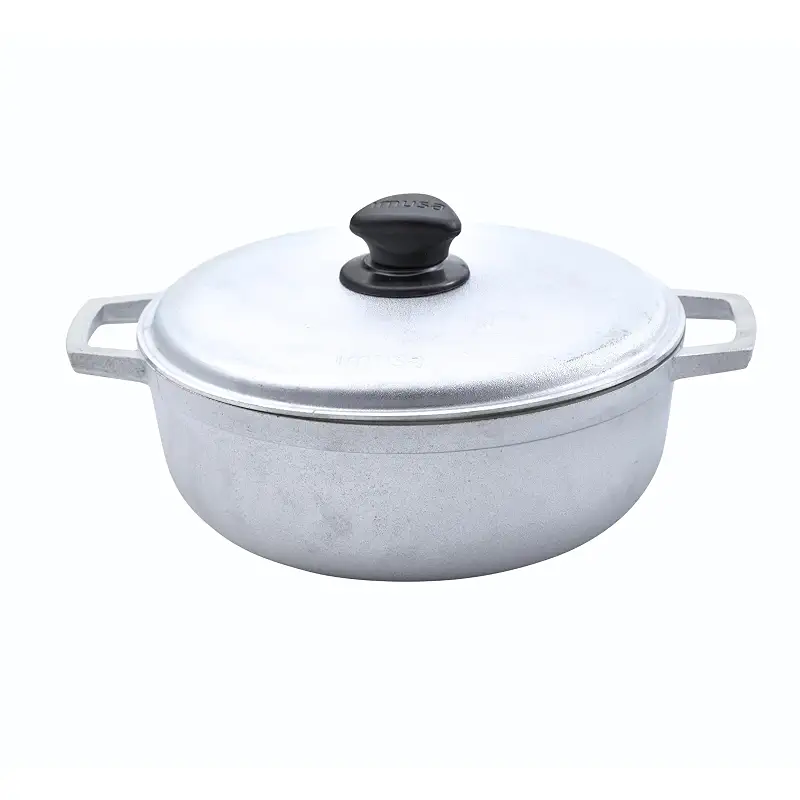
Imusa
IMUSA 2.6 Quart Traditional Natural Made in Colombia Caldero with Lid for Cooking and Serving, Silver | Natural Finish, Glass Lid with Easy-Grip Handles, Ideal for Rice and Stews, Perfect for Everyday Cooking
4.4(14,788)
A trusted classic for rice and stews with strong heat distribution, though lid consistency issues are a documented concern.
Ideal for: Budget-conscious cooks comfortable seasoning aluminum, making traditional rice and stews.
The Imusa caldero has earned its reputation in Hispanic kitchens for a reason. Cast aluminum construction delivers steady, even heat across a 2.6-quart vessel, and the traditional design (with its tapered sides and rounded bottom) encourages proper rice circulation and moisture control. Most buyers report excellent results for rice, beans, and soups once the pan is seasoned. The thick walls hold heat well, and the natural aluminum finish develops a patina over time, much like cast iron, which many cooks prefer to nonstick coatings.
The significant caveat here is the lid. Multiple owners report inconsistent fit, with gaps that prevent proper steam retention. Some receive pots where the lid sits flush; others find theirs rocks or tilts. This is not a minor annoyance if you're counting on a sealed environment for rice. If your lid arrives fitting properly, you have a bargain workhorse. If it doesn't, you're looking at a frustration. Compare this to the square Universal caldero, which reports fewer lid complaints and offers 6 quarts instead of 2.6.
The pot itself remains affordable and delivers on durability and cooking performance. Oven-safe without the lid, easy to season, and genuinely loved by cooks who have gotten a good copy. The inconsistent quality control is the real risk here, not the cookware design itself.
Pros
Excellent heat distribution for even rice cooking
Affordable entry point for caldero style
Natural aluminum surface develops patina with use
Cons
Lid fit inconsistency across units; some rock or gap
Quality control varies; occasional shipping damage reported
Key features
2.6-quart cast aluminum caldero with natural finish
Tight-fitting glass lid with steam vent and side handles
Oven-safe without lid; seasons over time for nonstick quality
Traditional tapered design promotes even heat and moisture control
#2 Pick
Best for Small Portions
Bobikuke
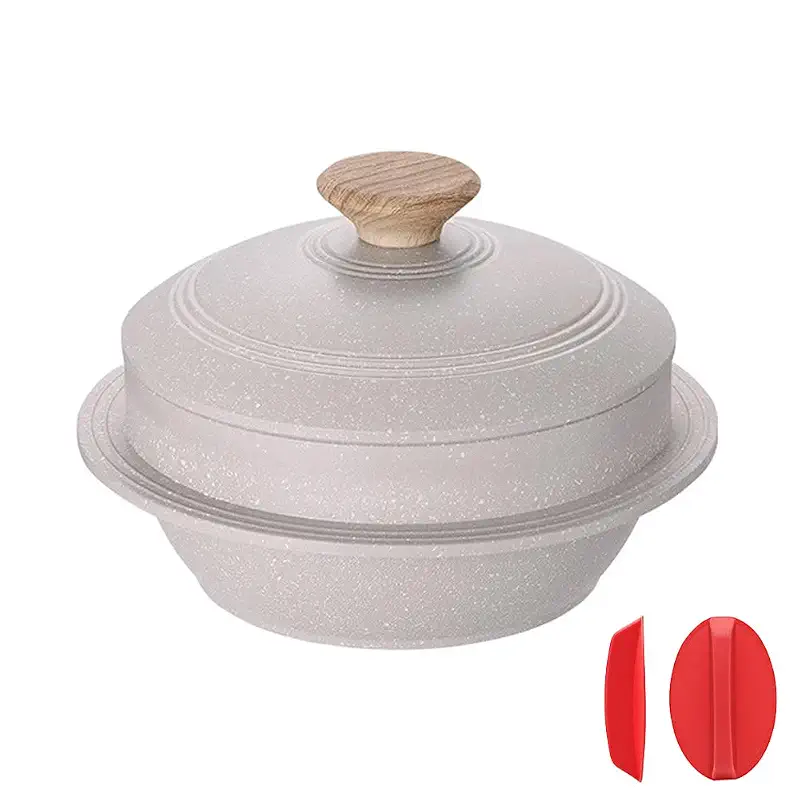
Korean Dutch Oven, Rice Pot, 63 oz Enameled Cast Aluminum Pot with Lid, Korean Stone Bowl for Induction, White
4.5(130)
A specialized Korean-style pot with nonstick coating and strong heat retention, ideal for two-person households or small-batch cooking.
Ideal for: Small households cooking for one or two; cooks prioritizing nonstick convenience over seasoning routines.
The Bobikuke Korean Dutch oven takes a different approach to rice and soup cooking. At 63 ounces, it's designed for smaller households or single meals without leftovers. The enameled aluminum body with PFOA-free nonstick coating removes the seasoning requirement that traditional calderos demand, and buyers praise how evenly it heats and how long it stays warm after cooking. The protruding handles make it easier to grab safely, and the included silicone potholder set shows thoughtful design.
Where this diverges from a caldero is material and maintenance. Buyers note the lightweight aluminum construction, which some interpret as less durable than cast aluminum. The nonstick surface, while convenient, will eventually wear, and once it does, you lose the benefit of easy cleanup. This is a trade-off: simpler day-to-day cooking versus long-term investment durability. If you cook rice several times a week and value minimal scrubbing, this works. If you're looking for a pot you'll hand down, a seasoned caldero has the edge.
The Korean-style design does excel at retaining heat and serving directly to the table, and it works across all cooktops including induction. One buyer reported receiving a dusty unit despite good packaging, so inspect on arrival.
Pros
Even heat retention and distribution for fluffy rice
PFOA-free nonstick coating eliminates seasoning need
Compact 63-ounce size perfect for two-person meals
Cons
Lightweight aluminum less robust than cast metal
Nonstick coating will eventually wear with regular use
Key features
63-ounce enameled aluminum Korean-style pot
PFOA-free nonstick interior; food slides easily without oil
Works on induction and all cooktop types
Includes wooden knob lid and silicone protective potholders
#3 Pick
Best for Large Batches
universal
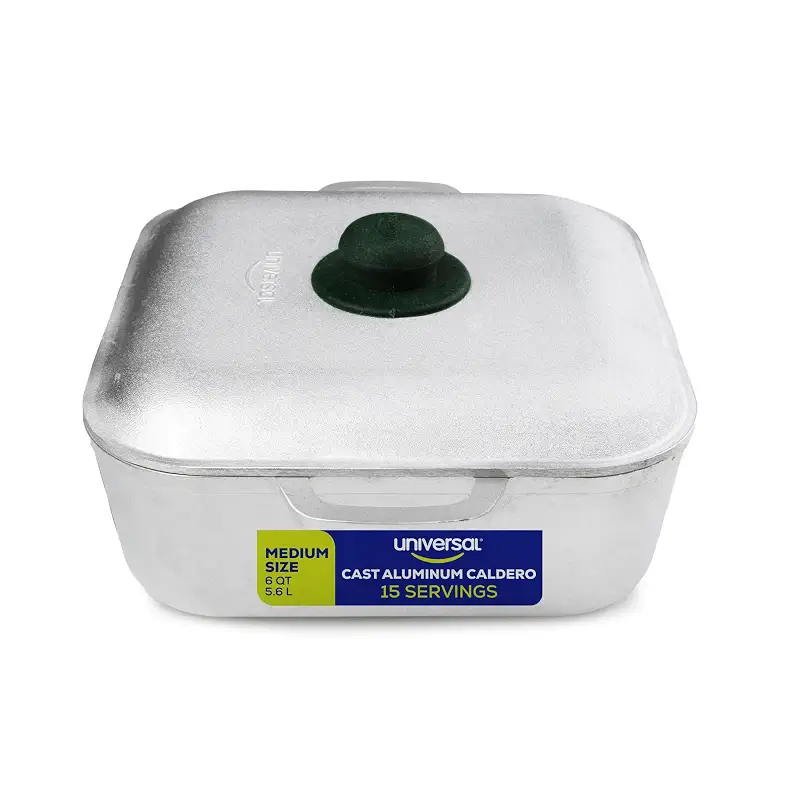
Universal (6 Quart - 15 Cups) Square Caldero – Cast Aluminum Cooking Pot with Lid, Oven Safe Dutch Oven Pot for Rice, Soups, Stews, Roasting & Everyday Cooking
4.6(419)
A 6-quart square caldero with modern design and spacious cooking surface, though handle heat remains a practical consideration.
Ideal for: Families and meal-prep cooks needing 6+ quarts; those prioritizing usable surface area and durability.
Universal's square caldero challenges convention by trading the round shape for 10-inch sides and a 6-quart capacity. This design choice has merit: more usable cooking surface means better rice circulation, easier access for stirring or serving, and room for family-sized portions without crowding. Cast aluminum construction ensures quick, even heating, and owners consistently report good performance for rice, stews, and braises. The square design fits flush against counters and cabinets, saving kitchen space compared to traditional round calderos of equivalent volume.
The lid fit is tighter than what some Imusa buyers report, though a few owners mention that one corner doesn't sit perfectly flush. This appears to be rarer than the Imusa issues, and the larger size may help offset minor gaps. Like the Frynest and Imusa models, the uncoated aluminum handles get extremely hot during cooking, requiring oven mitts at all times. This is inherent to the material choice, not a flaw, but it's worth knowing if you have small children in the kitchen or if you prefer cool handles.
Compared to the Bobikuke, this caldero trades nonstick ease for larger capacity and a more durable aluminum body. If you're cooking for more than two people regularly, the extra 3+ quarts justify the slight learning curve of managing hot handles.
Pros
Large 6-quart capacity with square design for better space and accessibility
Fast, even heating with minimal hot spots across wide base
Dishwasher-safe aluminum resists rust and warps
Cons
Aluminum handles become very hot; pot holders essential
Occasional reports of lid not sealing flush in one corner
Key features
6-quart square cast aluminum caldero with 10-inch width
Heavy-duty construction heats quickly and evenly
Oven-safe design; lid not oven-safe; induction-compatible base
Eco-friendly rice husk lid knob; non-slip bottom
#4 Pick
Best for Induction Cooktops
Frynest
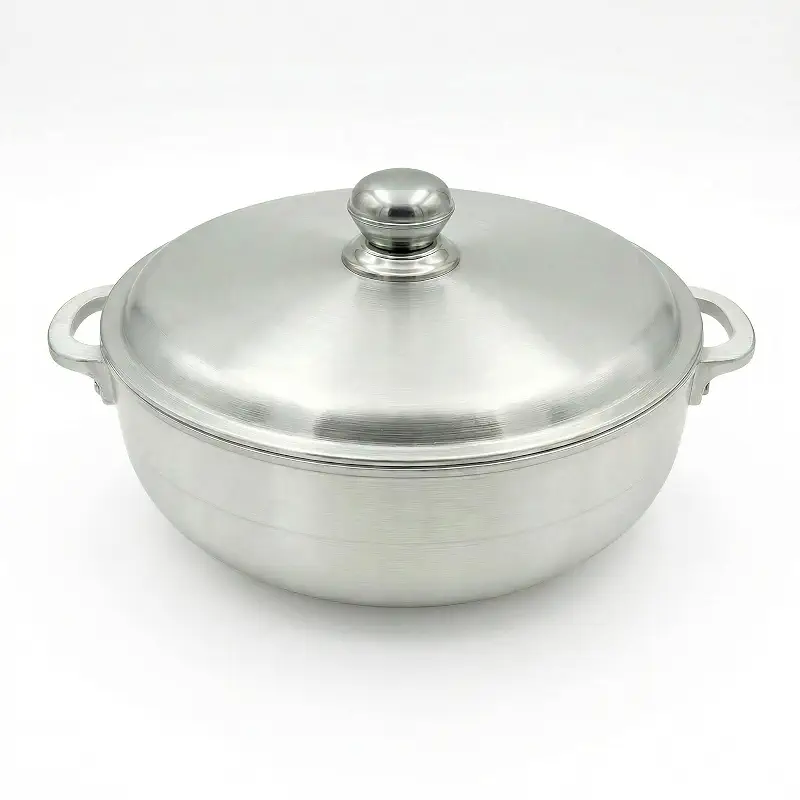
5.5-Quart 11-Inch Traditional Caldero Pot with Silver Aluminum Lid, Aluminum Rice Pot for Arroz, Beans, Soups and Stews, Induction Compatible
4.7(39)
A 5.5-quart traditional caldero explicitly designed for induction with quality construction, though handle temperature and sizing surprises have caught some buyers off-guard.
Ideal for: Cooks with induction cooktops seeking traditional caldero performance in a mid-size 5.5-quart capacity.
Frynest's caldero positions itself for modern kitchens with an induction-compatible flat base and a promise of work across all cooktop types. The 5.5-quart size sits between the Imusa's 2.6 and the Universal's 6 quarts, hitting a sweet spot for small families. One verified owner gave a detailed account of searing chicken and simmering stews with excellent heat distribution and rapid warmup, calling it "top-tier" build quality. The tight-fitting metal lid does its job, and rice comes out fluffy when the pot is sealed correctly.
Several buyers report a consistent issue: ordering the smaller 5.5-quart pot and receiving a larger 8.2-quart instead. This suggests a fulfillment or labeling problem on Amazon's end or the seller's side, not a product flaw, but it's worth being alert at delivery. One owner also noted that despite the induction-compatible claim, their specific induction cooktop wouldn't recognize the pot. Induction compatibility varies by cooktop sensitivity and base material thickness; "induction-ready" label guarantees better results across more models, but this caldero appears to work on most standard induction stoves.
Like the Universal and Imusa, the solid aluminum handles get hot and demand protection. Where the Frynest differentiates is in its mid-range capacity and competitive pricing for the build quality.
Pros
Flat base confirmed induction-compatible across most cooktops
Thick cast aluminum warps less and distributes heat evenly
Metal lid oven-safe up to 350°F for flexible cooking methods
Cons
Aluminum side handles become very hot during cooking
Reported size mislabeling; some receive larger pot than ordered
Key features
5.5-quart traditional caldero with flat induction-compatible base
Uncoated aluminum interior; responsive heat for stovetop cooking
Metal lid oven-safe to 350°F; hand wash recommended
Dishwasher-safe; works on gas, electric, ceramic, and induction
#5 Pick
Best Nonstick Alternative
Utopia Kitchen
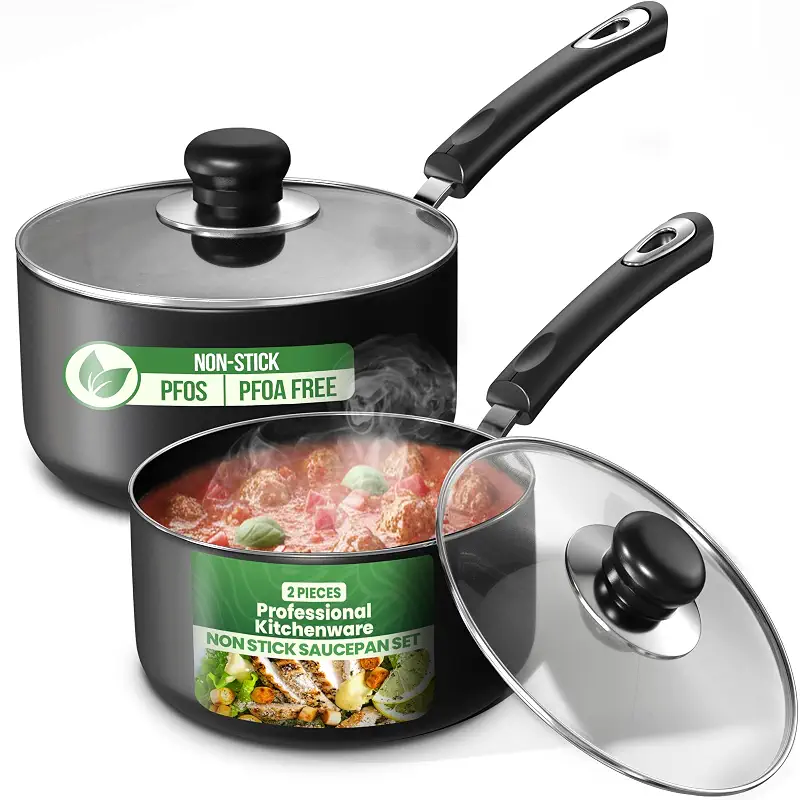
Utopia Kitchen Nonstick Saucepan Set with Lids 1 QT 2 QT Pots PFOS Free | Multipurpose Cooking Pots Set, Nonstick Coating, Even Heat Distribution, Durable, Bakelite Handles, Dishwasher Safe
4.6(14,033)
A compact two-piece nonstick saucepan set for small-batch rice and soups, proven durable but subject to occasional quality-control gaps.
Ideal for: Apartment dwellers and small households cooking single rice portions; cooks seeking no-seasoning nonstick simplicity.
The Utopia Kitchen saucepan set takes the opposite path from traditional calderos. Rather than aluminum that seasons over time, you get a PFOA-free nonstick coating on a 1-quart and 2-quart pair. For rice cooking, the smaller sizes mean you're making portions for one or two people, or prepping components for larger dishes. Owners who have kept these for years report lasting performance, easy cleanup, and no sticking once food releases. The deep saucepan design and fitted lids with steam vents help rice cook evenly, and the see-through lids let you monitor progress without lifting.
This set competes less with the caldero lineup and more with the Bobikuke's nonstick convenience for small households. Where calderos excel at volume and rustic durability, this set prioritizes ease and compact storage. However, quality control has been inconsistent. A handful of buyers received units with bent lid rims or non-circular pot bodies that prevent the lid from sealing. After four years of regular use, one long-term owner had to retire theirs due to nonstick coating scratching, even with gentle care. This suggests good near-term value but potential wear after years of daily use.
Compared to a traditional caldero, you sacrifice seasoning and the potential for decades-long lifespan. But if you value minimal fuss and small portions, and you're willing to replace the set after 5-7 years, the convenience wins.
Pros
See-through glass lids let you monitor rice without opening pot
PFOA-free nonstick coating with minimal oil needed
Lightweight and compact; easy storage in small kitchens
Cons
Limited sizes (1-qt and 2-qt); not suitable for large family meals
Occasional quality-control issues with lid fit and pot circularity
Key features
Two-piece nonstick saucepan set with 1-quart and 2-quart pots
PFOA-free nonstick coating; uniform heat distribution
Deep design with fitted lids featuring steam vents
Dishwasher-safe; works on induction and all cooktop types
How to Choose the Right Rice-Cooking Pan
Four trade-offs that actually matter when matching a pan for cooking rice to your kitchen.
Capacity: How Much Are You Making?
Rice-cooking pans range from 1 quart to 6 quarts. Single people and couples thrive with 1- to 2-quart saucepans or the 63-ounce Bobikuke. Small families work well in the 2.6- or 5.5-quart caldero range. Larger gatherings or meal prep demand 6 quarts or more. Oversizing means longer heating times and less responsive temperature control; undersizing means frequent batches and spill risk. Think about your typical rice meal, then add 25 percent buffer for flexibility.
Material and Durability: Nonstick vs. Seasoned Aluminum
Nonstick coated pans (like the Utopia or Bobikuke) require no seasoning and offer easy cleanup, but the coating wears in 5-10 years of regular use. Traditional uncoated aluminum calderos season over time like cast iron, develop a natural nonstick patina, and can last decades if cared for. Nonstick is convenient upfront; seasoned aluminum is a long-term investment. Consider your cooking frequency, patience for maintenance, and how long you want to keep the pan.
Heat Distribution and Lid Fit
Even heat across the pan bottom prevents scorching and ensures fluffy rice. Thicker aluminum and cast aluminum excel here. The lid is equally critical: a gap lets steam escape, leaving rice undercooked or unevenly hydrated. When comparing options, read recent reviews specifically about lid fit and check if the seller has addressed reported seal issues. A poor lid fit will frustrate you with every batch. The caldero versus regular pot comparison shows why traditional round calderos retain steam better than wide, shallow pans, but modern square designs can match that performance if the lid seats properly.
Cooktop Compatibility and Handle Safety
Gas, electric, ceramic, and induction cooktops each have different requirements. Most aluminum calderos work on gas and electric but require a flat base for induction. Check the product specs before buying if you have an induction stove. A separate concern: uncoated aluminum handles get extremely hot during cooking. Nonstick saucepans often have bakelite or insulated handles. If you have children in the kitchen or prefer hands-free operation, prioritize pots with cool-touch handles or plan to always use oven mitts. The cooking rice in caldero guide covers handling techniques that help manage hot handles safely.
Frequently asked
Quick answers to the questions readers ask most.
What's the difference between a caldero and a regular saucepan for rice?
A caldero typically has a wider, rounded bottom, sloped sides, and traditional material that seasons over time. Saucepans are narrower and often nonstick-coated. Calderos distribute heat evenly across a large surface, promoting better rice circulation and moisture retention. Saucepans work for small batches but tend to heat less uniformly and may have hotter spots. For large rice dishes and stews, calderos are the traditional choice; for one- or two-person portions, saucepans suffice.
Do I need to season an aluminum caldero before first use?
Yes, seasoning an uncoated aluminum caldero helps develop a natural nonstick surface and extends its life. Rinse the pot, dry it completely, then rub a thin layer of oil over the interior. Heat it on the stove until it smokes slightly, then wipe out excess oil. This creates a protective patina. Some cooks season by making rice or cooking fatty foods first. Nonstick-coated calderos (like the Bobikuke) don't require seasoning out of the box.
Why does my rice stick or burn in my caldero?
Sticking usually means the lid isn't sealing properly, allowing steam to escape and the rice to dry out. Check that your lid sits flush; if it rocks or gaps, replace it or return the pot if it's new. Burning on the bottom suggests too-high heat. Use medium heat for rice cooking and ensure your liquid-to-rice ratio is accurate. Under-seasoned calderos also stick more until they build up patina from repeated cooking.
Can I use a rice cooker instead of a caldero?
Rice cookers are convenient and reliable, but calderos and saucepans offer more versatility. Once rice is done, you can simmer stews, braise meats, or fry directly in a caldero without switching pots. Calderos also go straight to the table for serving, creating a rustic presentation. Rice cookers excel at set-it-and-forget-it convenience but limit you to rice and soft grains. For traditional cooking or large batches, a good caldero outperforms a rice cooker.
What size caldero is best for a family of four?
A 5.5- to 6-quart caldero is ideal for four people. This capacity handles a typical family rice dish with leftovers for lunch, plus room to stir and adjust seasoning without risk of overflow. The 2.6-quart calderos work if you eat smaller portions or cook daily. The 1- to 2-quart saucepans require at least two batches for four people. Match capacity to your typical meal size, cooking frequency, and storage space.